





AMOLED
Display Type

Snapdragon 8 Elite Gen 5
Processor

16+ 512GB
Ram And Memory

50+50+50 MP
Camera

7400mAh
Battery

100W
Fast Charging

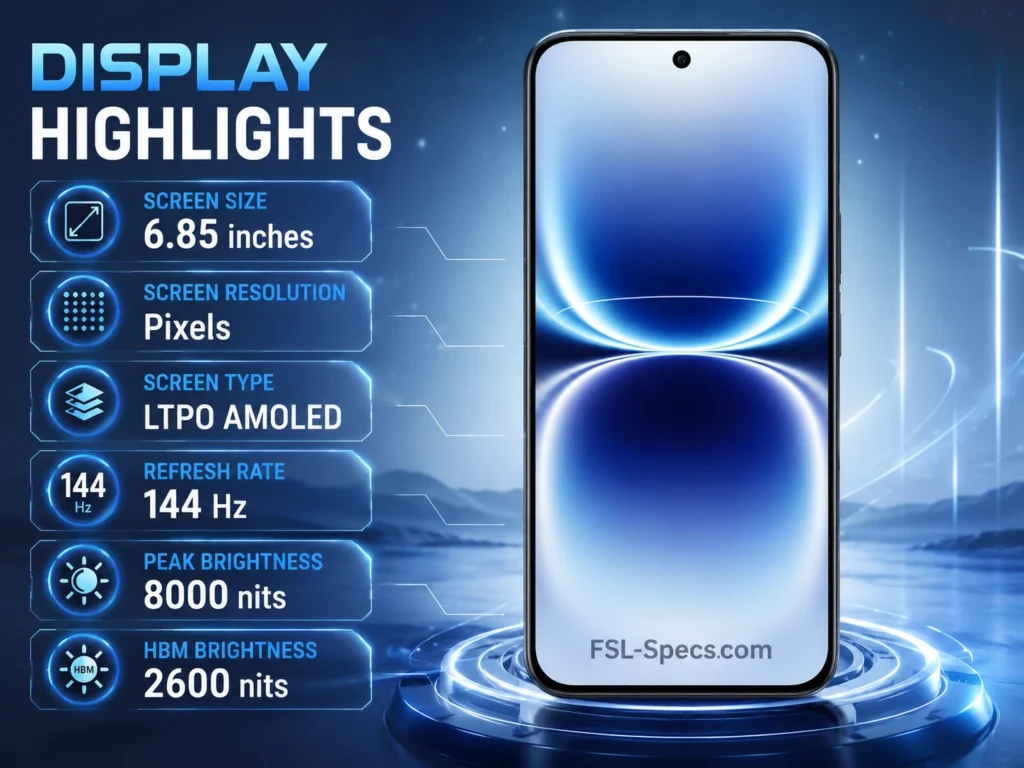
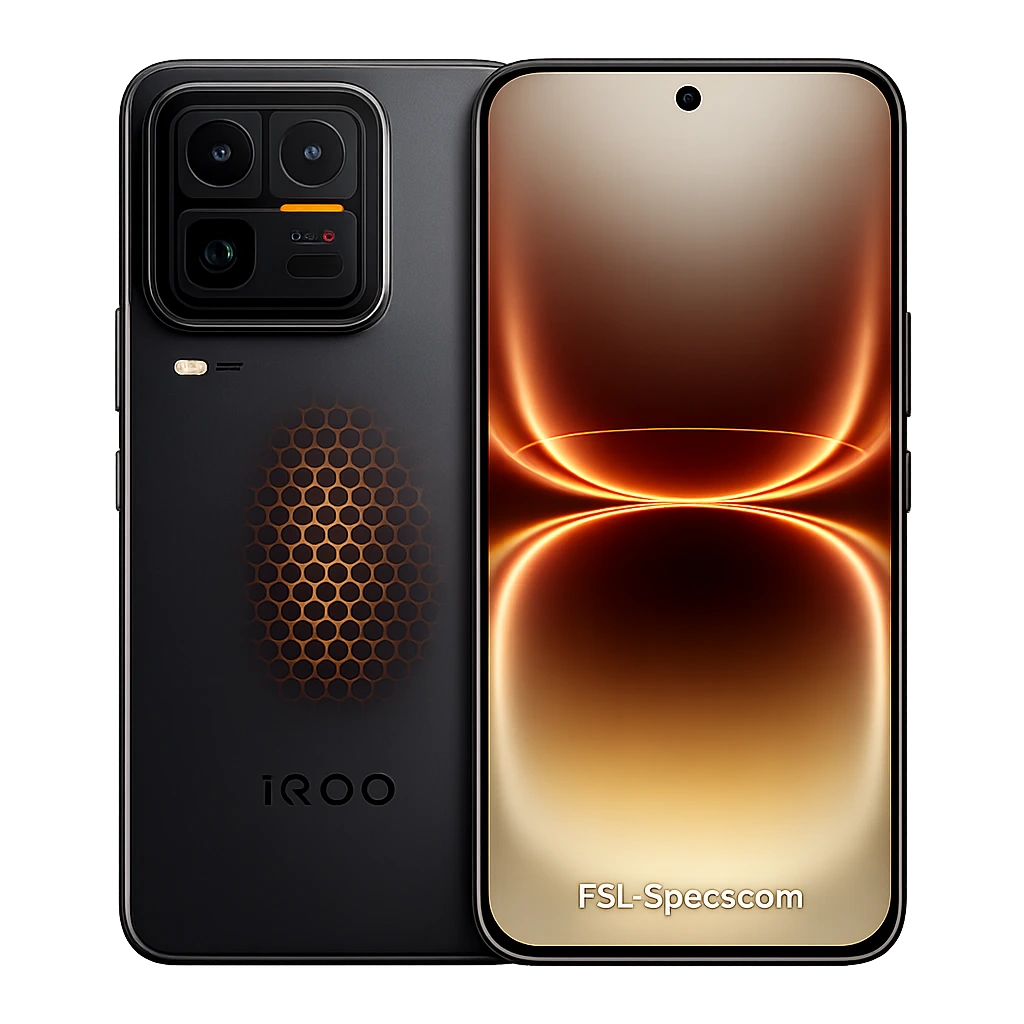
The iQOO 15 Ultra sports a large 6.85-inch LTPO AMOLED panel that genuinely impresses in day-to-day use. Scrolling and animations feel exceptionally fluid thanks to the 144Hz refresh rate, and the LTPO technology means the phone can dial that back intelligently to save battery when you don’t need it. Where this screen really stands out, though, is brightness an 8000-nit peak means direct sunlight is practically a non-issue, and even at sustained high brightness levels around 2600 nits, outdoor readability stays comfortable without squinting.
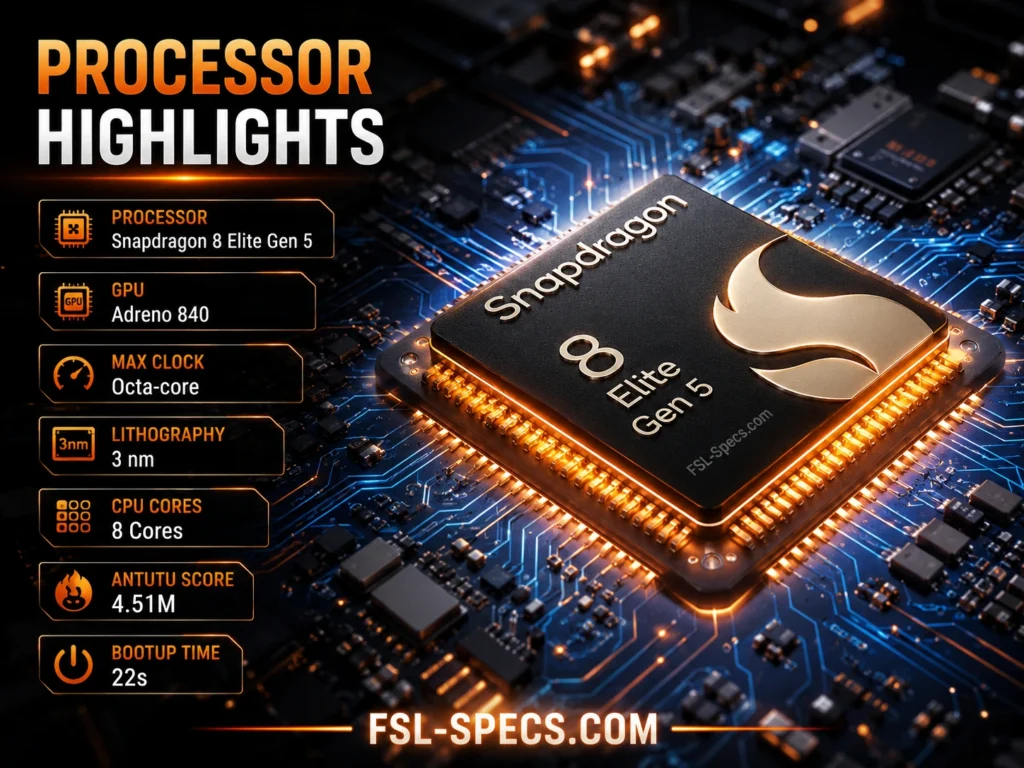
The iQOO 15 Ultra runs on Qualcomm’s Snapdragon 8 Elite Gen 5, built on a 3nm process, and it’s comfortably one of the fastest chips you’ll find in a smartphone right now. The octa-core setup pairs two high-performance Oryon V2 Phoenix L cores pushing up to 4.32 GHz with six efficiency-focused cores at 3.53 GHz in practice, that balance means the phone handles heavy tasks without constantly draining the battery to do it. The Adreno 840 GPU in iqoo 15 ultra keeps up on the graphics side, making demanding titles run smoothly without the thermal throttling that plagued older flagships. An Antutu score of around 4.51 million puts it well ahead of most competitors, though benchmark numbers only tell part of the story what matters more is that app launches, multitasking, and transitions feel immediate rather than just fast. The 22-second boot time is respectable, and day-to-day snappiness reflects a chip that’s genuinely efficient rather than just powerful on paper,.
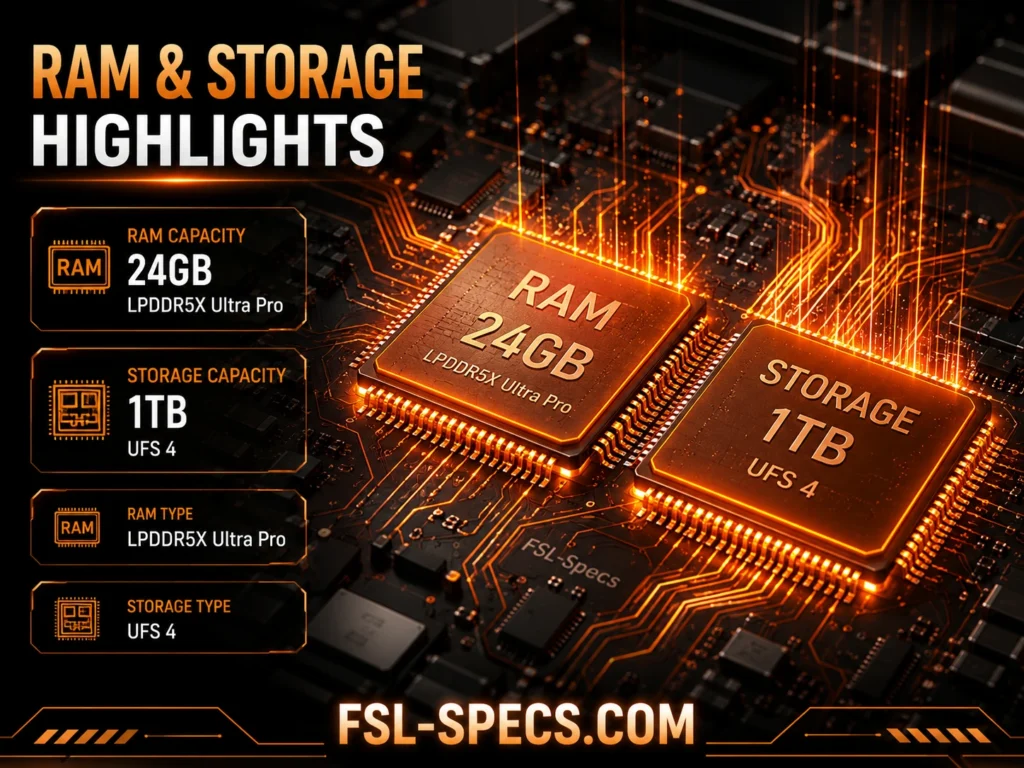
The iQOO 15 Ultra comes in four variants, starting at 16GB of RAM with 256GB of storage and topping out at 24GB paired with 1TB so there’s a configuration for most buyers, whether you want to save money or just never worry about space again. The RAM itself is LPDDR5X Ultra Pro, which is currently the fastest mobile memory available, and the real-world payoff is noticeable: heavy apps stay loaded in the background, switching between tasks feels instant, and there’s none of that annoying reload stutter you get on phones with slower memory. Storage runs on UFS 4.1, which means file transfers, app installs, and loading large game assets happen quickly rather than making you wait. For most people, the 16GB variants will handle daily use without any complaints the 24GB top-end configuration is more relevant for power users running demanding workflows or keeping a lot open at once. The 1TB option is genuinely useful if you shoot a lot of video or prefer keeping your media locally rather than relying on cloud storage. Across the board, the memory setup here is well-matched to the Snapdragon 8 Elite Gen 5 neither component is bottlenecking the other.
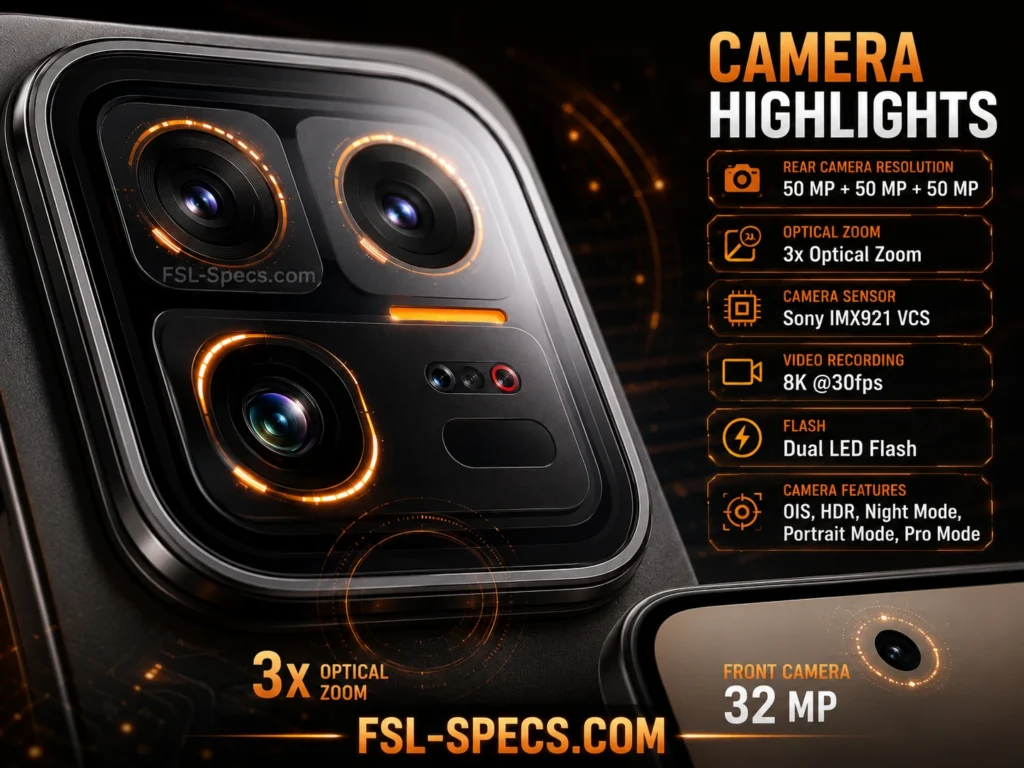
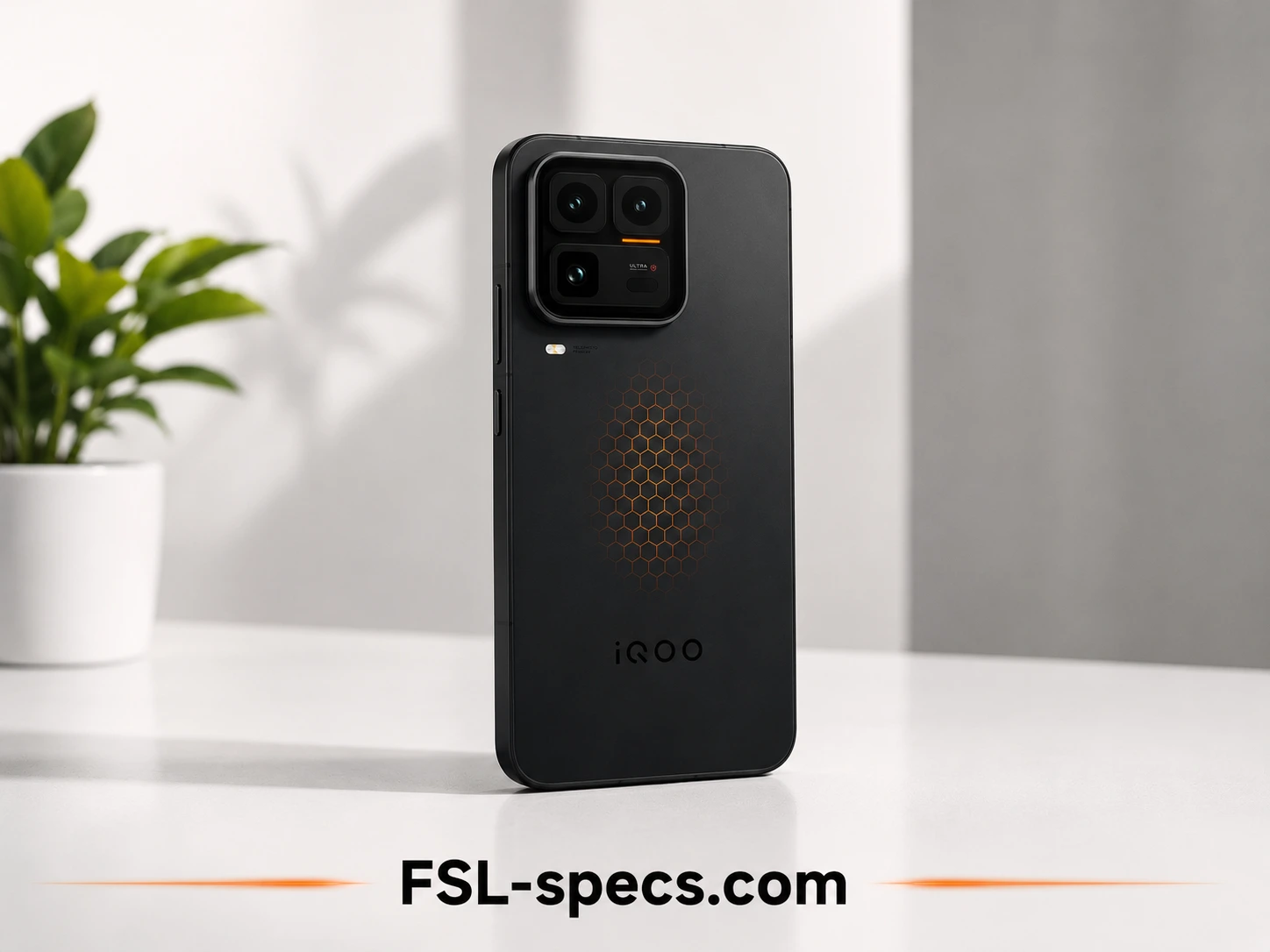
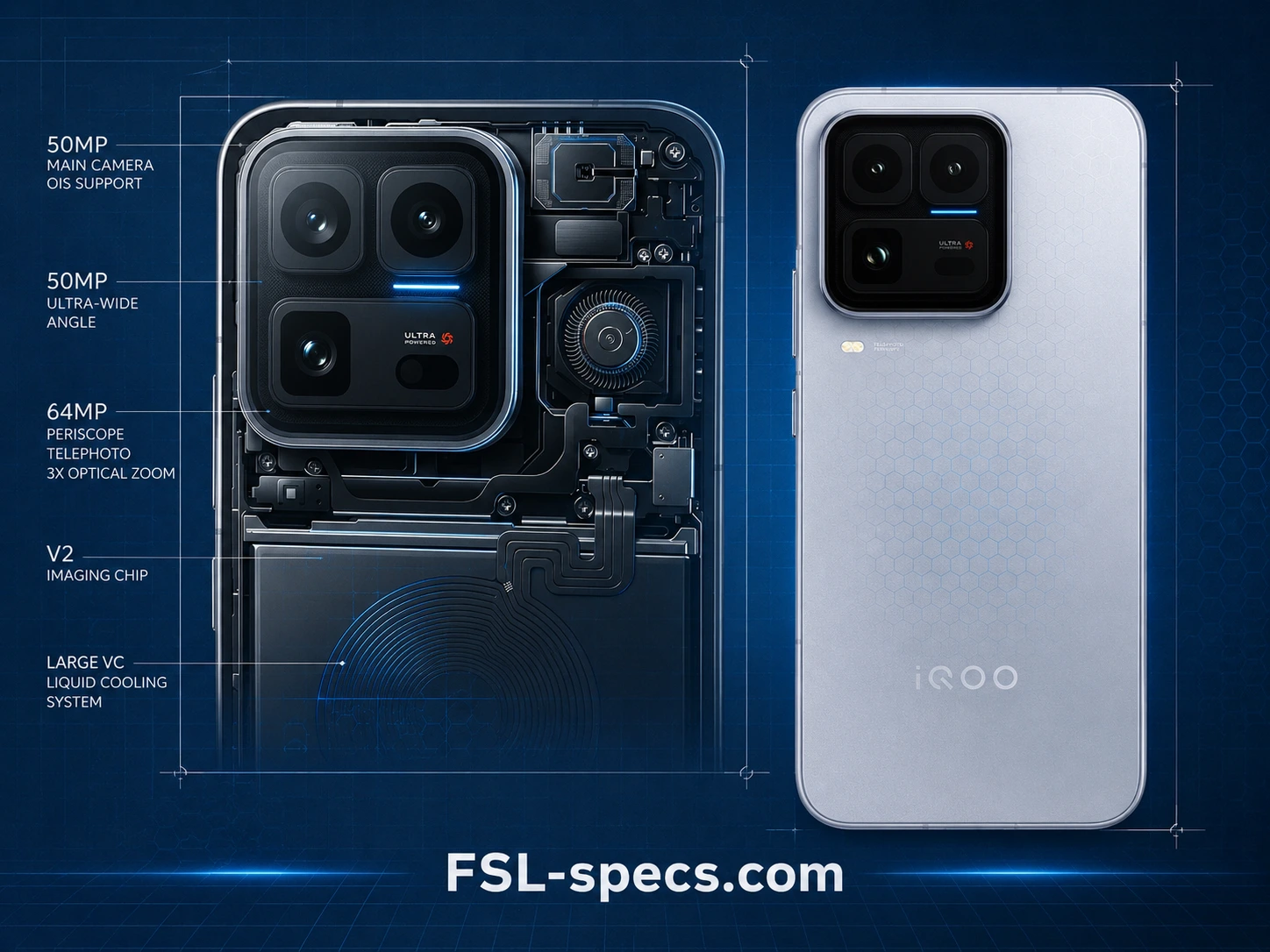
The iQOO 15 Ultra runs a triple 50+50+50MP setup across all three rear cameras, which on paper sounds balanced, but what actually matters is the sensor quality behind those numbers the primary Sony IMX921 and the telephoto Sony IMX882 are both capable sensors that tend to hold up well in mixed lighting conditions. The main shooter of iqoo 15 ultra resolves images at 8160 × 6144 pixels, giving you enough detail to crop aggressively without things falling apart, while the 3x optical zoom backed by the IMX882 handles medium-distance shots without leaning on digital trickery. in iqoo 15 ultra 100x digital zoom is there if you need it, though realistically anything past 20–30x starts losing usable detail, as is the case with every phone on the market. On the video side, 8K at 30fps is the headline spec, but the more practical options are the 4K modes with gyro-EIS stabilization, which should handle handheld footage reasonably well across 24, 30, and 60fps. Slow-motion goes up to 1080p at 240fps, which covers most casual use cases. Up front, the 32MP selfie camera using a Galaxy Core GC32 sensor shoots up to 4K at 60fps, which is more than enough for video calls or content creation, though how well it handles skin tones and dynamic range will really depend on iQOO’s processing tuning rather than the resolution alone.
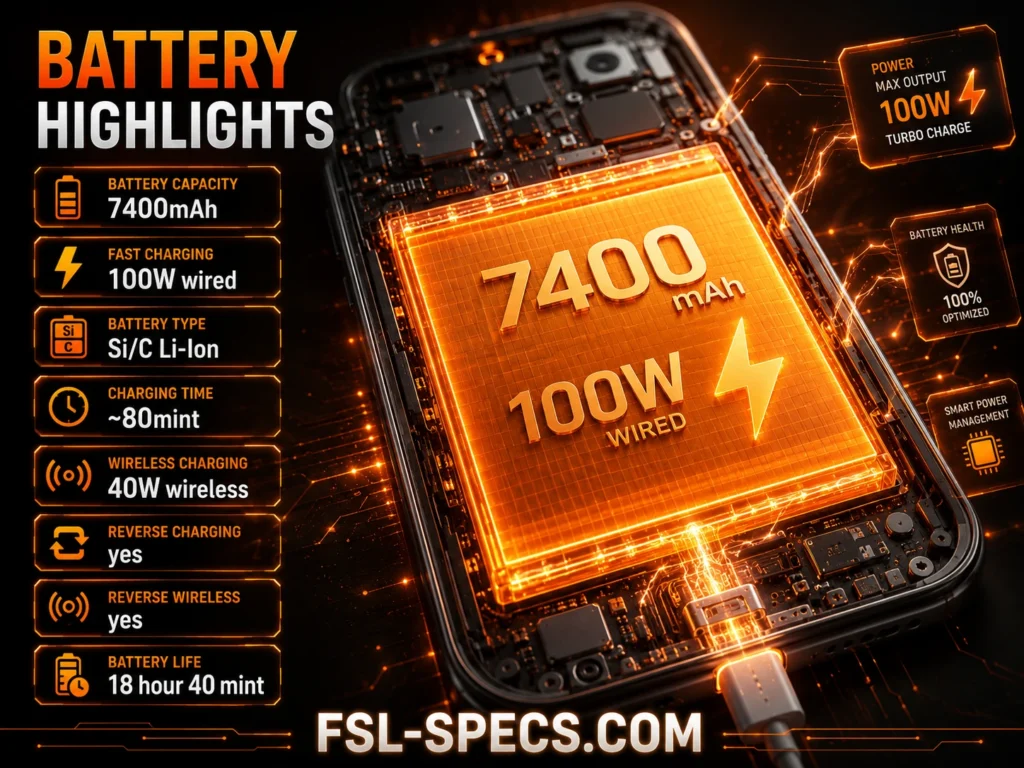
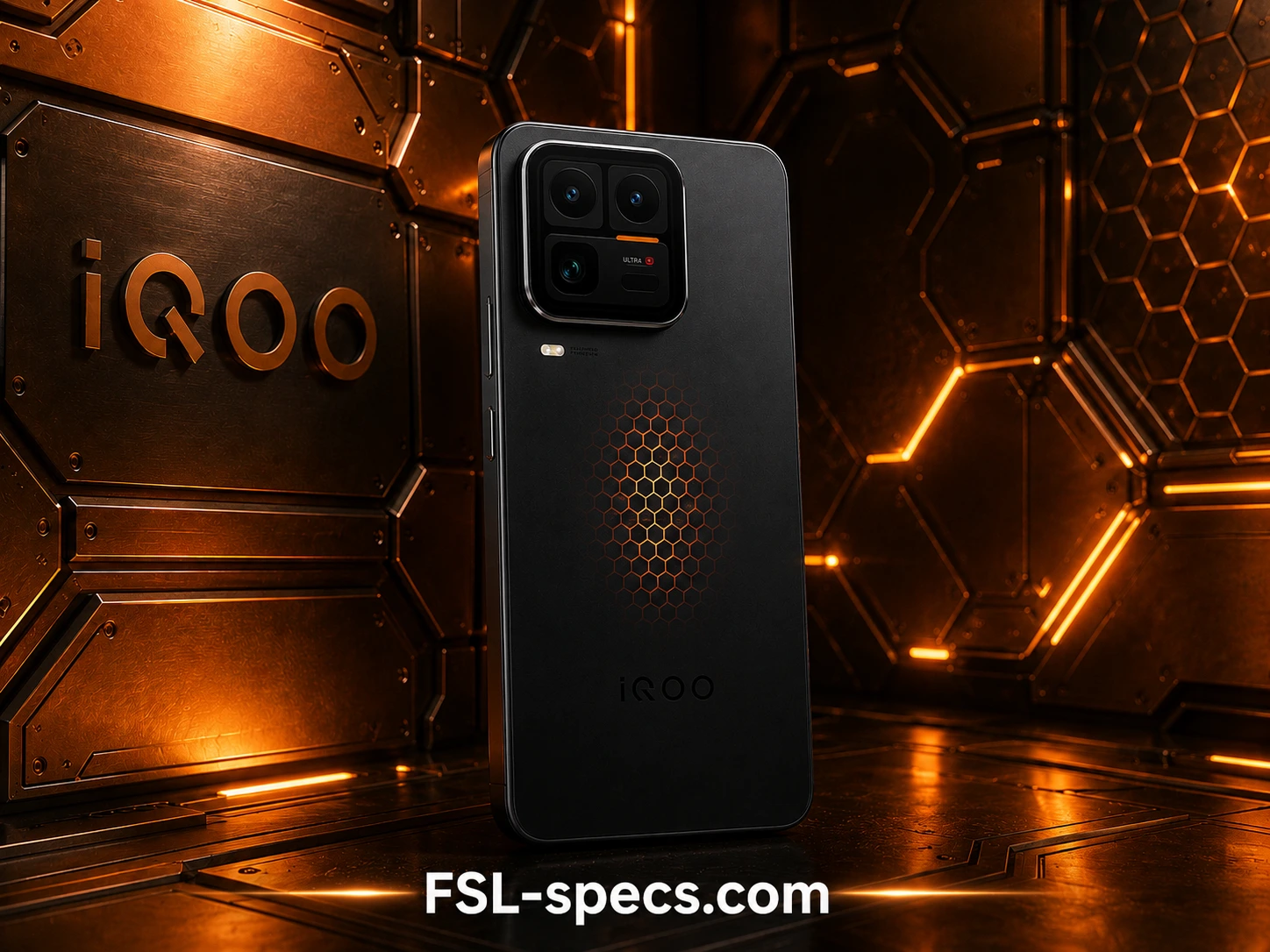
The 7,400mAh Silicon-Carbon battery in the iQOO 15 Ultra is one of the more generous capacities you’ll find in a flagship right now, and the PCMark score of 18 hours 40 minutes suggests it backs that up in real use most people will get through a full day of heavy usage without watching the percentage anxiously. IQOO 15 Ultra Charging is handled by 100W wired, which gets the job done in around 80 minutes; not the fastest in class, but reasonable for a battery this size, and 40W wireless is a welcome addition for those who prefer the convenience of a pad over a cable. Reverse wireless charging rounds out the package, handy if you want to top up earbuds or a smartwatch without carrying an extra charger. Beyond the battery, the phone weighs 227 grams, which you’ll feel in the hand it’s not uncomfortable, but it’s a phone built for performance over pocketability. The metal frame feels appropriately premium, Wi-Fi 7 and Bluetooth 5.4 keep connectivity current, and the built-in active cooling fan paired with the honeycomb back structure is an interesting engineering choice that should help the Snapdragon 8 Elite Gen 5 breathe during extended gaming sessions. The Hyper Sonic front fingerprint sensor and dual stereo speakers round things out, and NFC means contactless payments work without any workarounds.