
Infinix Hot 50 Pro Plus vs Infinix Hot 70 Pro
| Specification | Infinix Hot 50 Pro Plus | Infinix Hot 70 Pro |
|---|---|---|
| General Information | ||
| Product Name | Infinix Hot 50 Pro Plus | Infinix Hot 70 Pro |
| Brand | infinix | infinix |
| Mobile Image |
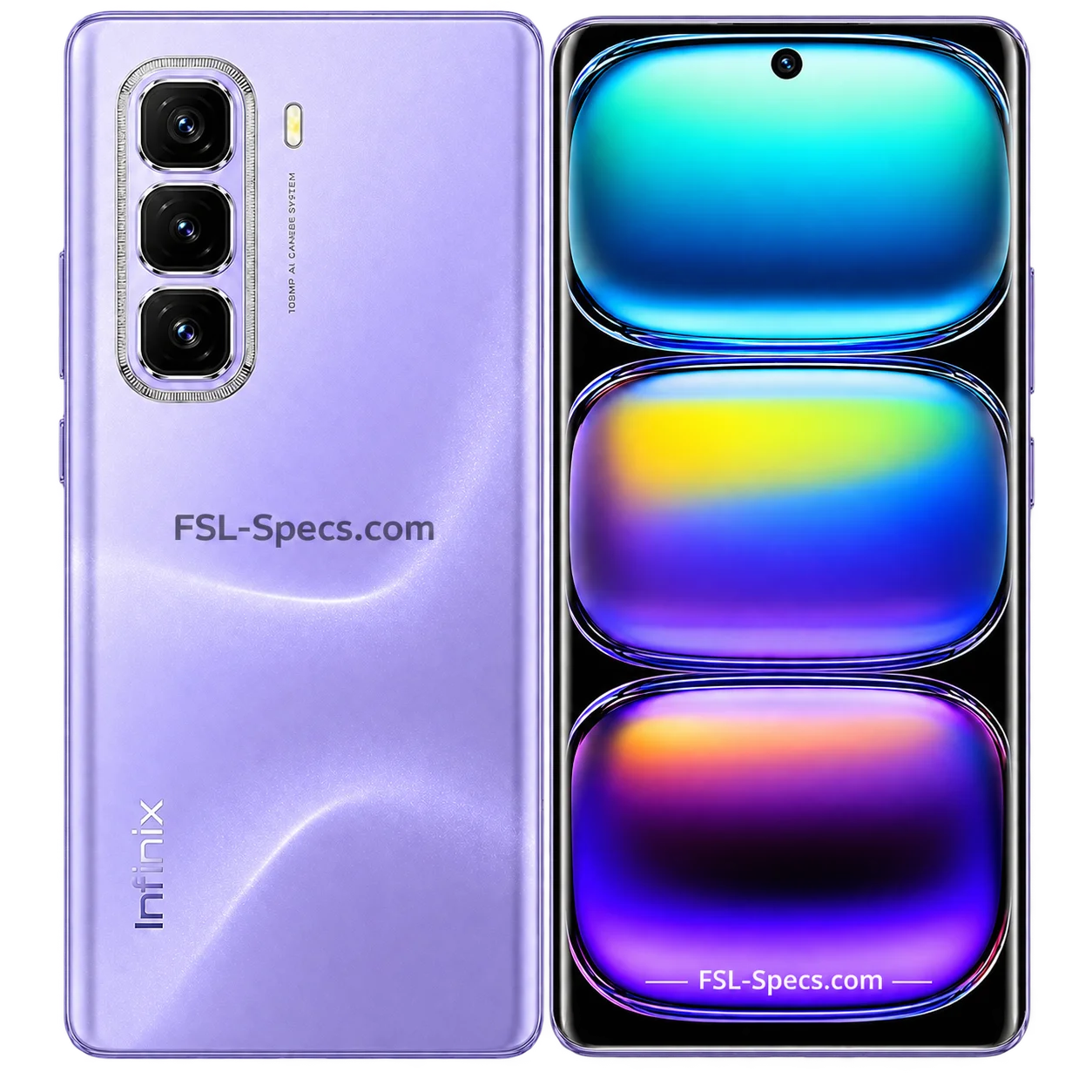 |
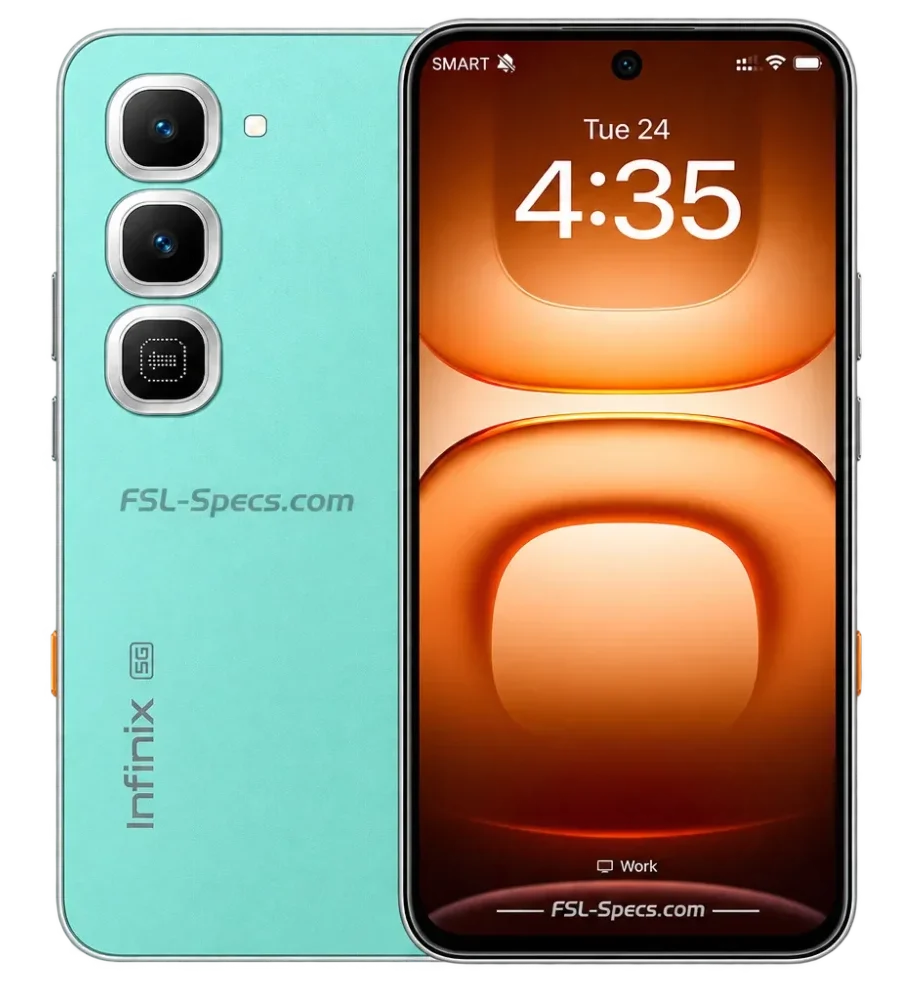 |
| Price | 52000 | 85000 |
| Price India | 17000 | 27000 |
| Price USD | $170 | $290 |
| Price USA | 170 | 290 |
| Variants Prices | 8 + 256 GB | 8 + 128 GB |
| Display | ||
| Phone Dimensions | 164.1 x 74.4 x 6.8 mm | 166.9 x 79.5 x 7.9 mm |
| Screen Size | 6.78 inch | 6.76 inch |
| Screen Resolution | 1080 x 2436 Pixels | 1080 x 2344 pixels |
| Refresh Rate | 120 Hz | 144 Hz |
| Screen Type | AMOLED | IPS LCD |
| Peak Brightness | 1300 nits | Not Confirm |
| HBM Brightness | 550 Nits | 950 Nits |
| Performance | ||
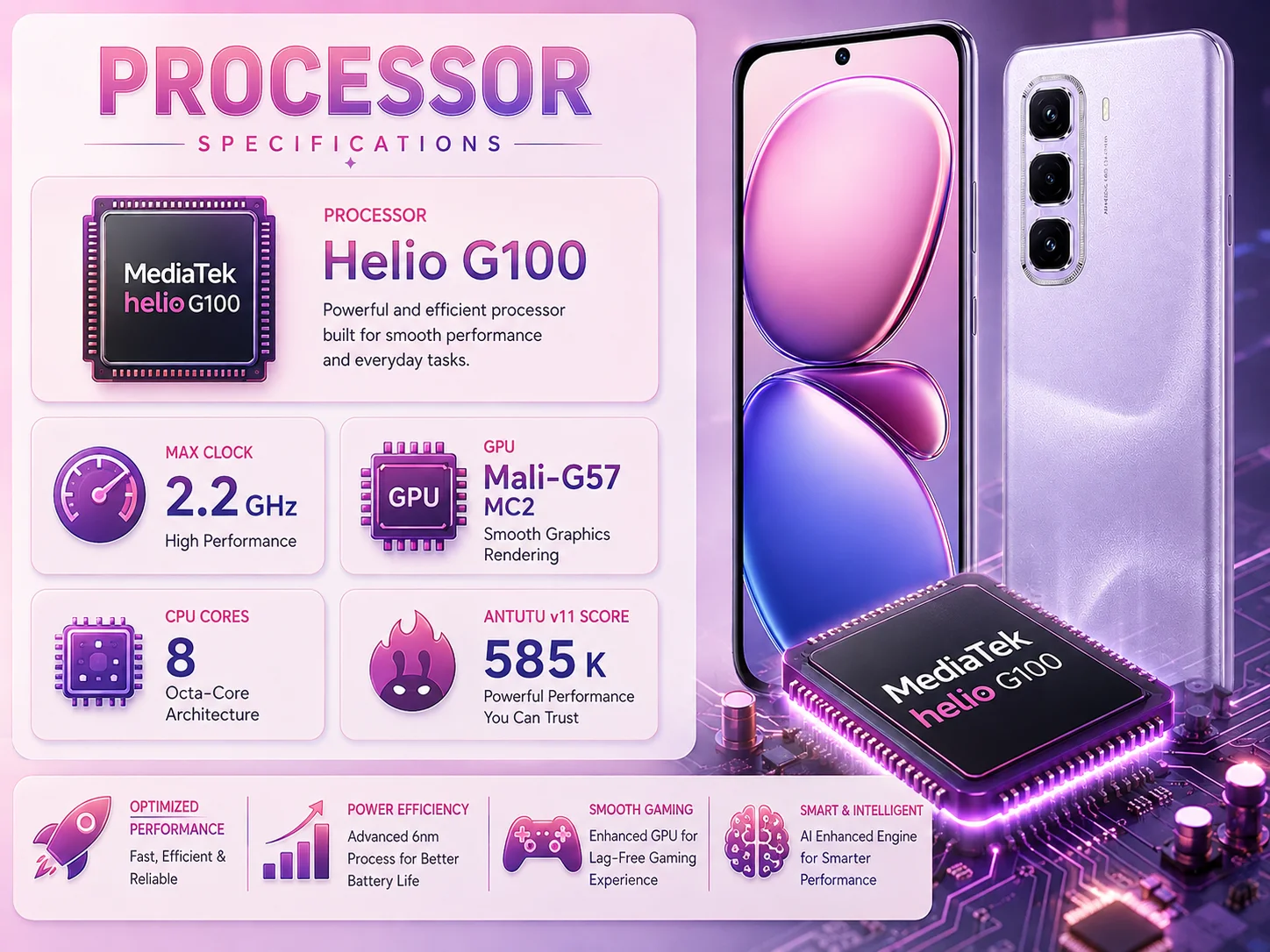
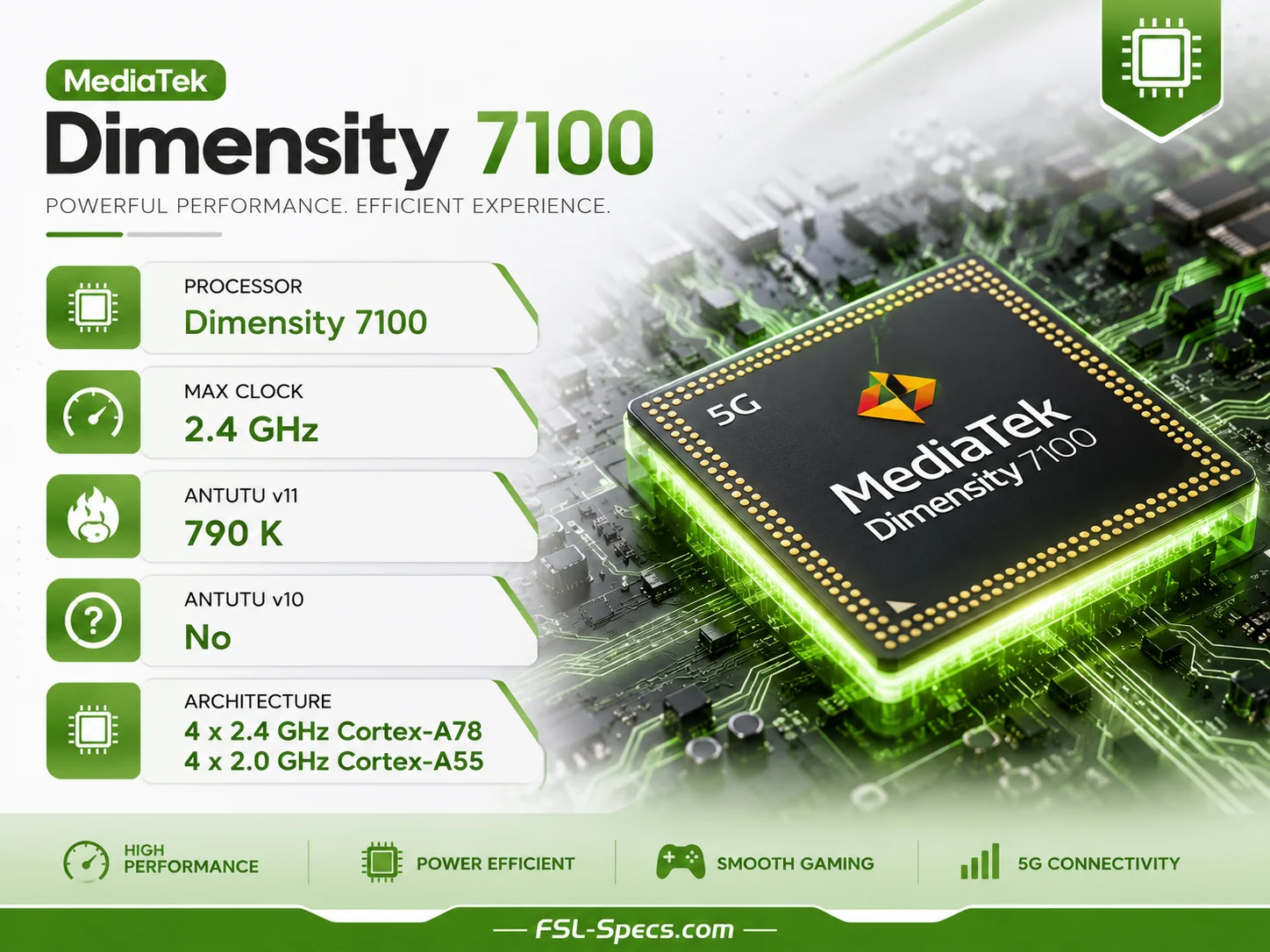
| Processor | Helio G100 | Dimensity 7100 |
| Lithography Process | 6 nm | 6 nm |
| Max Clock | 2.2 GHz | 2.4 GHz |
| CPU Cores | 8 Cores | 8 Cores |
| Architecture | 2 cores at 2.2 GHz: Cortex A76 | 4 x 2.4 GHz Cortex-A78 |
| GPU | Mali-G57 MC2 | Mali-G610 MC2 |
| AnTuTu Benchmark | 585 K | 790 K |
| Bootup Time | - | - |
| Memory | ||
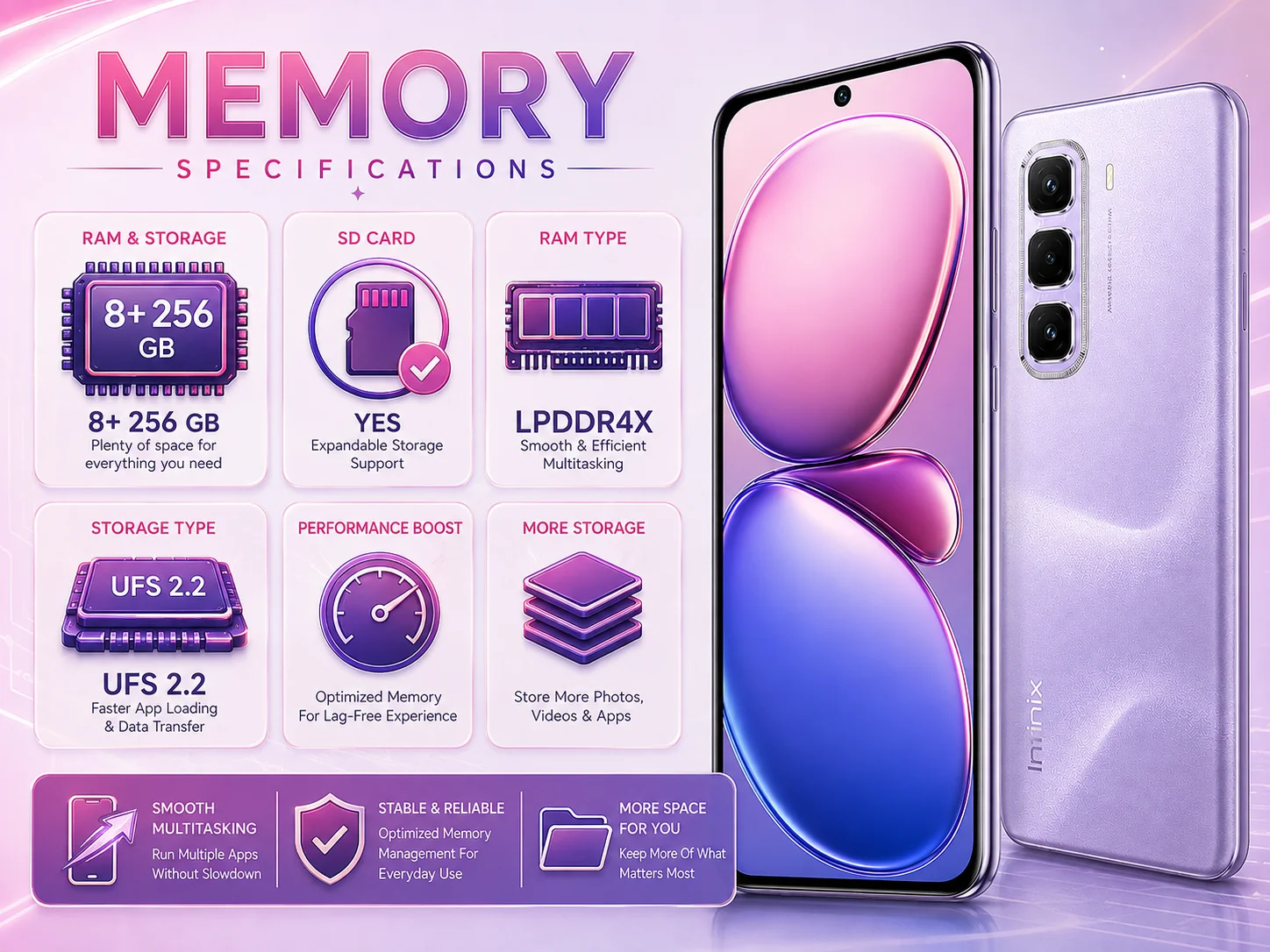
| RAM Memory | 8+ 256 GB | 8 + 128 GB |
| RAM Type | LPDDR4X | LPDDR4X |
| Storage Type | UFS 2.2 | UFS 2.2 |
| Card Slot | Yes | Yes |
| Variants | 8 + 128 GB | 6 + 128GB |
| Rear Camera | ||
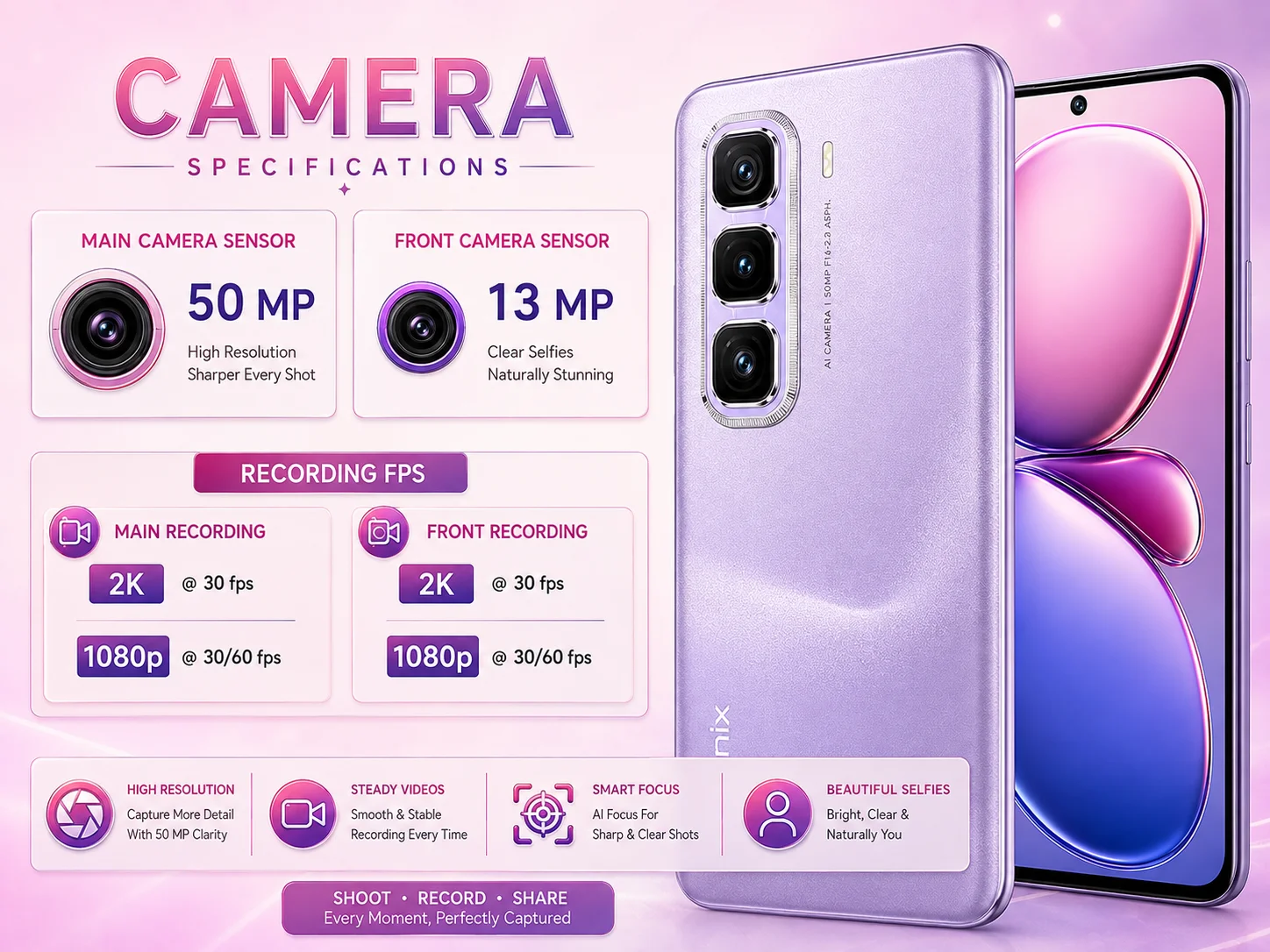
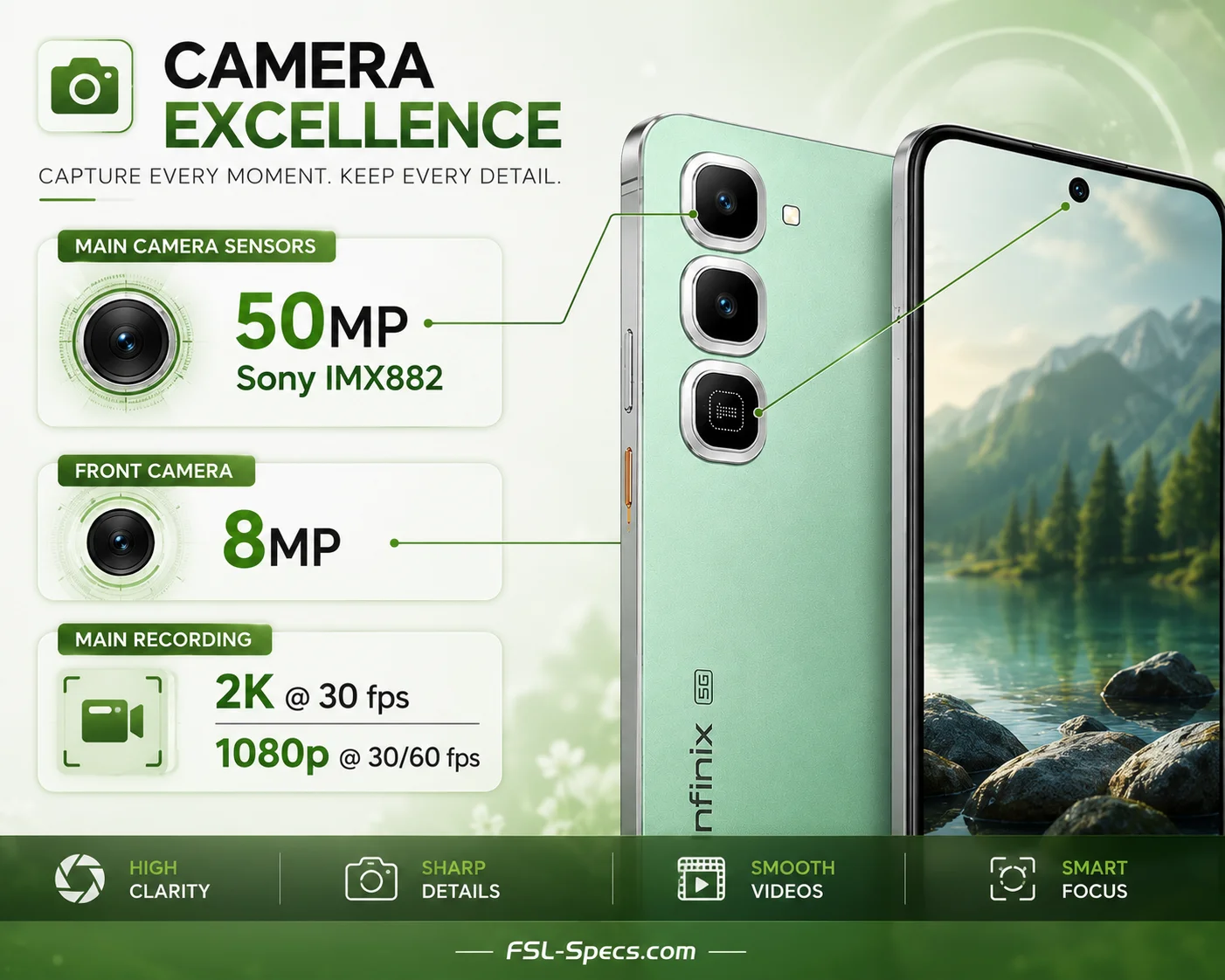
| Camera | 50 MP | 50 MP |
| Image Resolution | 8160 × 6144 pixels | 8160 × 6144 pixels |
| Camera Sensor | 50 MP = Not Confirm | 50 M = Sony IMX882 |
| Zoom | No | No |
| Digital Zoom | 10 X | 10 X |
| Video Recording | 2K @ 30 fps | 2K @ 30 fps |
| Flash | LED Flash | LED Flash |
| Front Camera | ||
| Front Camera | 13 MP | 8 MP |
| Front Sensor | 13 MP = Not Confirm | – |
| Front Resolution | 4200 x 3100 pixels | 3,266 × 2,449 Pixels |
| Front Recording | 2K @ 30 fps | 2K @ 30 fps |
| Front Flash | LED Flash | Dual-LED Flash |
| Battery | ||
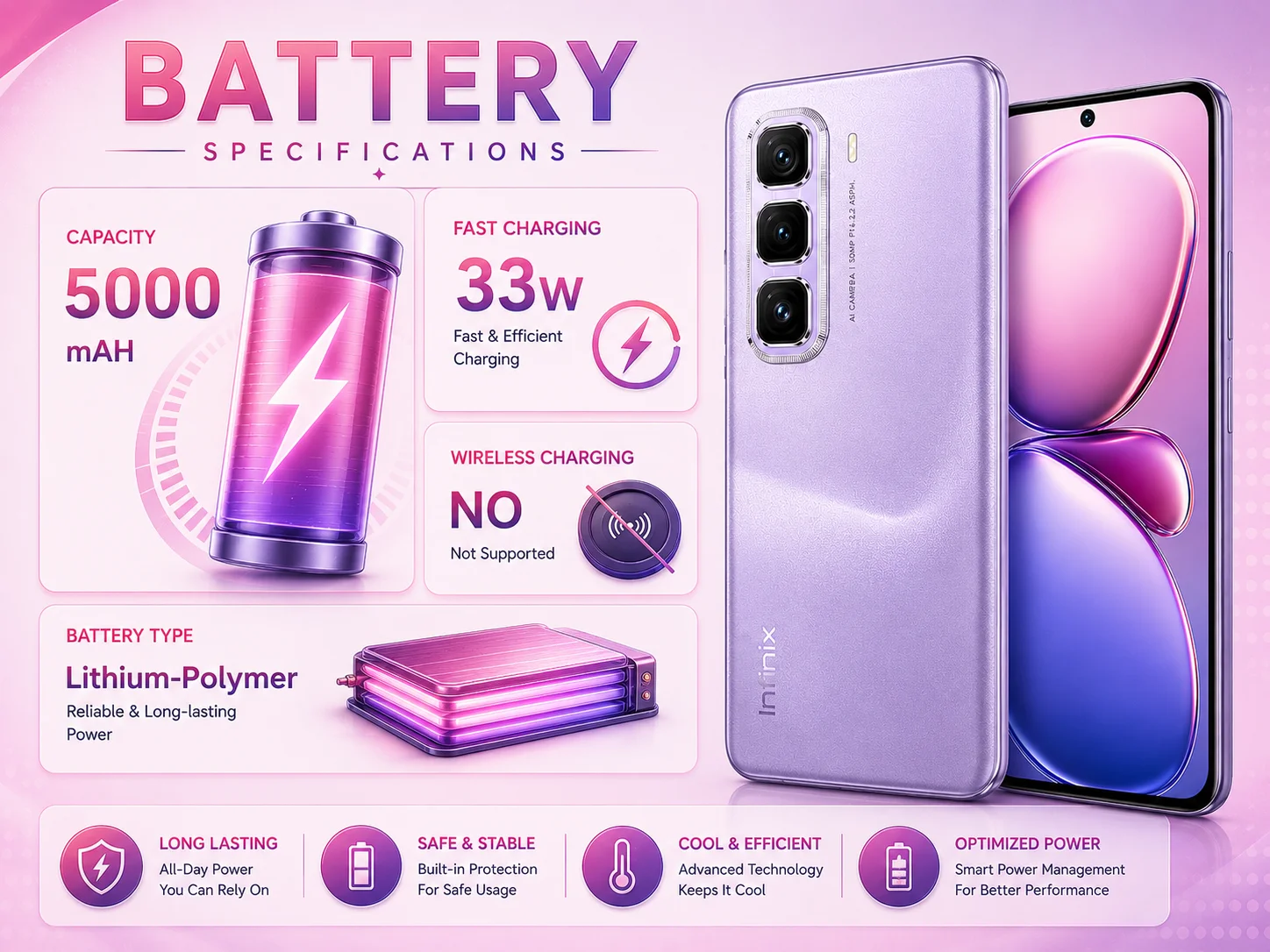
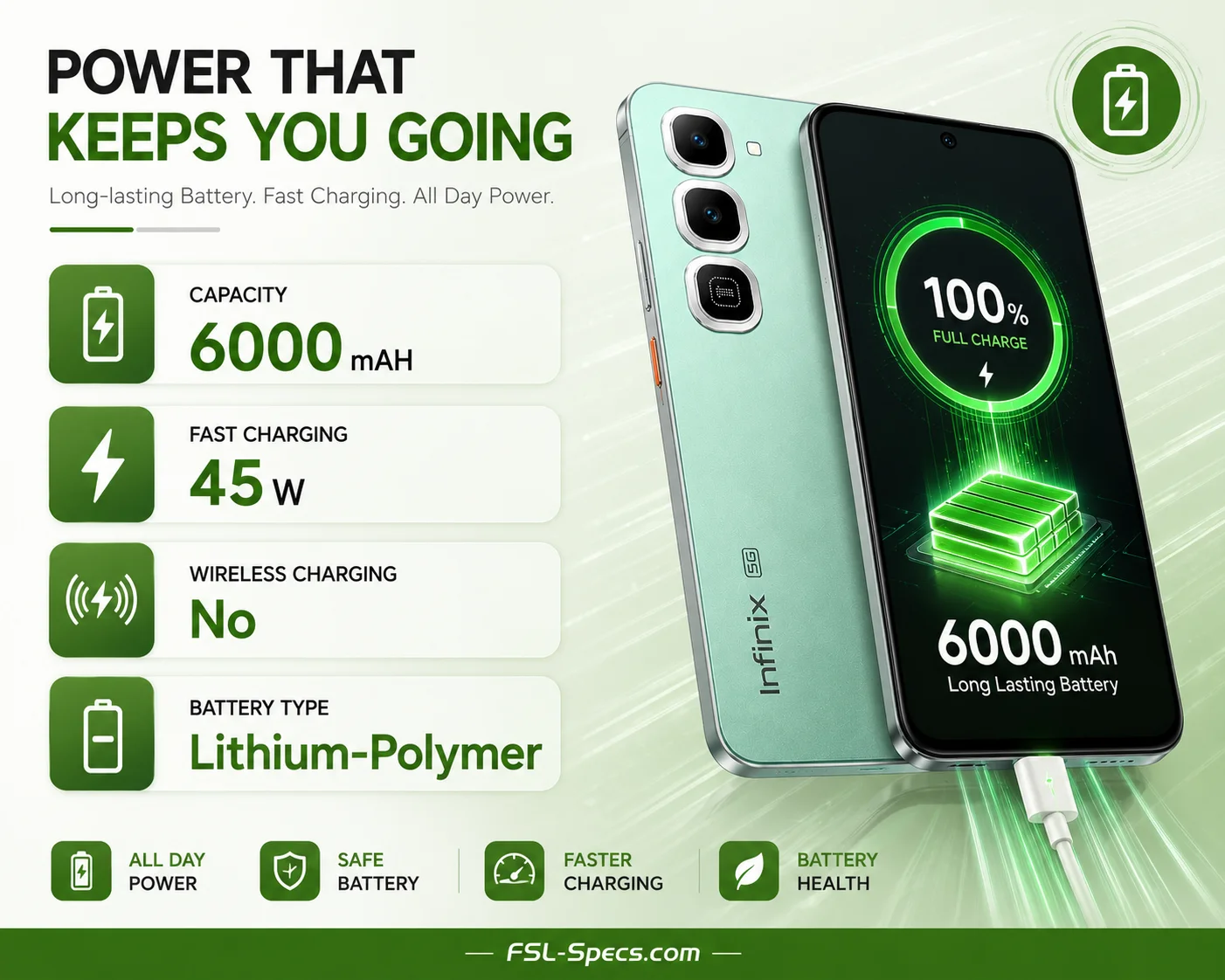
| Battery | 5000 mAH | 6000 mAH |
| Charging Watts | 33 W | 45 W |
| Battery Type | Lithium-Polymer | Lithium-Polymer |
| Wireless Charging | No | No |
| Reverse Charging | 10 W | Yes |
| Reverse Wireless | - | Not confirm |
| Battery Life (PC Mark) | - | Not confirm |
| Charging Time | Not Confirm | 50-70 minutes (0 To 100%) |
| Software | ||
| Model Number | X6880 | X6896 |
| Release Date | 1 November, 2026 | 16 July, 2026 |
| Year | 2024 | 2025 |
| Series Name | Hot Series | Hot Series |
| Category | Mid-range | Budget |
| Android OS | Android 14, up to 1 major OS updates | Android 17, (2 major upgrades) |
| Body | ||
| Weight | 162 g | 204 g |
| Build | Plastic ( Frame & Back ) | Frame And Back ( Plastic ) |
| Special Features | — | Active Matrix Cube / RGB Halo lighting on the back side , It can provide notification and ambient lighting effects. |
| Connectivity | ||
| SIM | Nano-SIM + Nano-SIM | Nano-SIM + Nano-SIM |
| Network | 4G / 4G+ | 4G / 4G+ / 5G |
| WiFi | Wi-Fi 5 | Wi-Fi 5 |
| Bluetooth | 5.4 | 5.4 |
| NFC | Yes | Yes |
| Security & Audio | ||
| Speakers | Dual Stereo Speaker | Dual Stereo Speaker |
| Fingerprint | Front Finger | Side Mounted |
| Other Sensors | – Proximity sensor | – Proximity sensor |
| Highlights | ||
| Display Highlights |
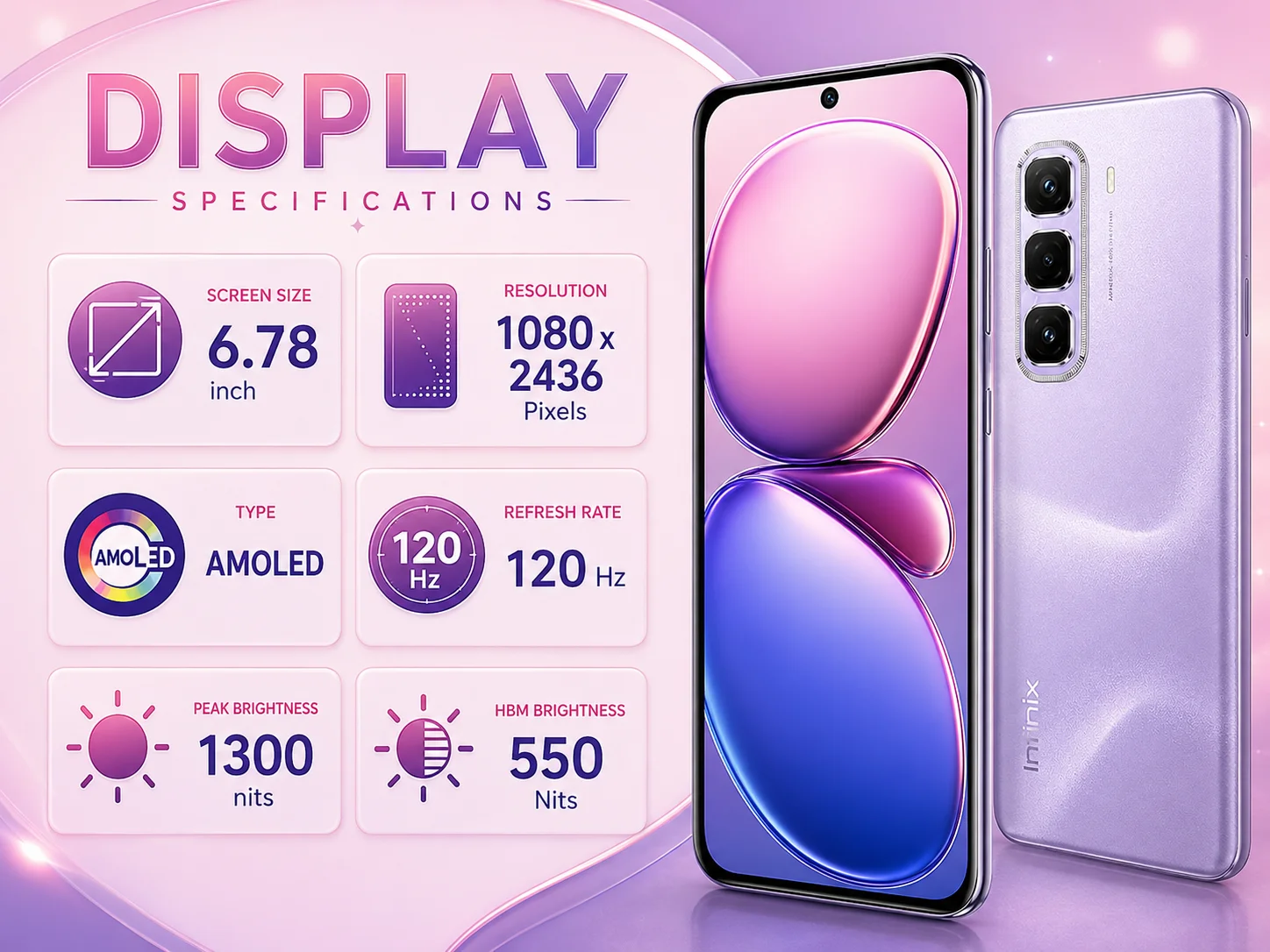 |
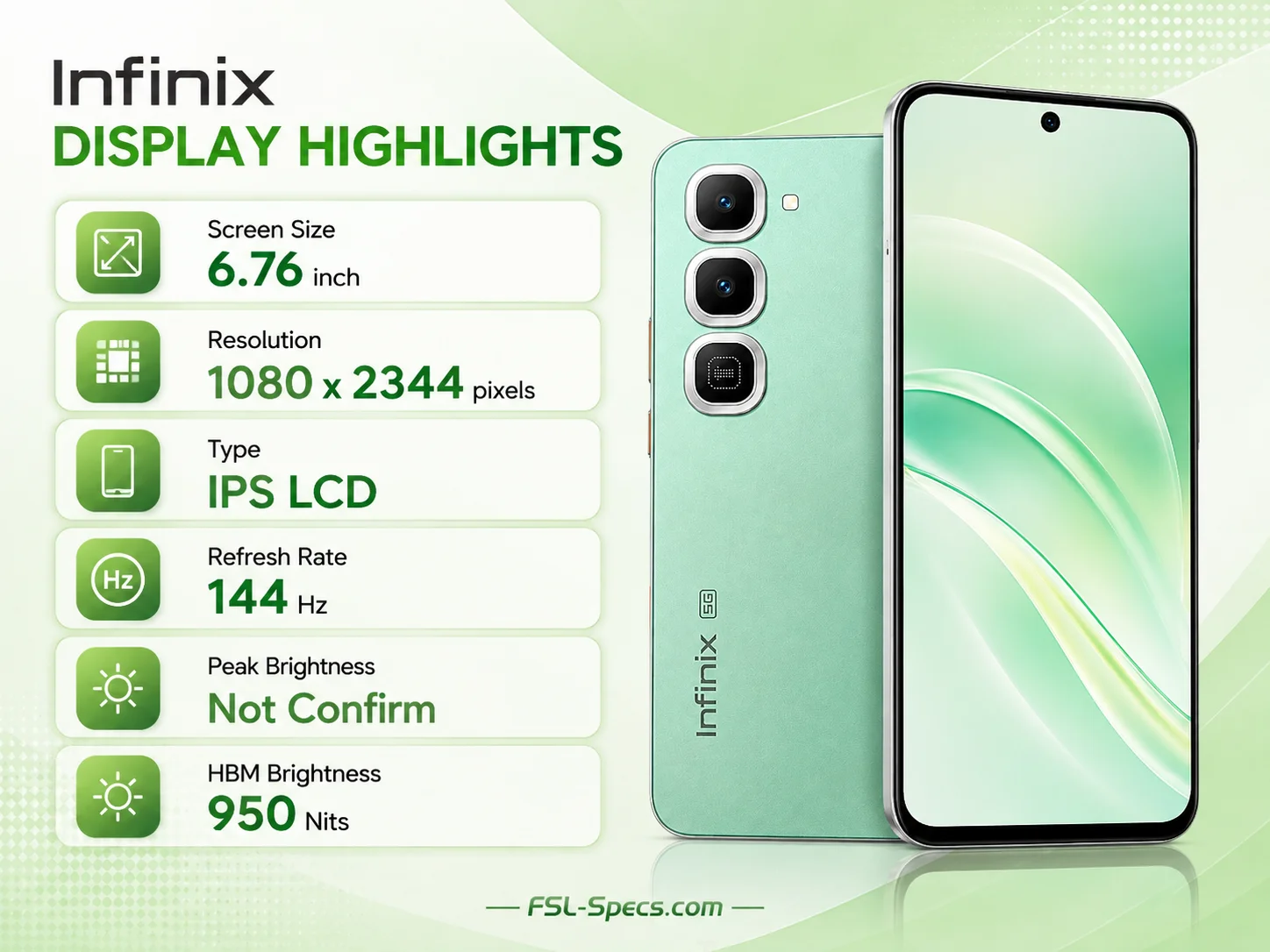 |
| Processor Highlights |
 |
 |
| Memory Highlights |
 |
|
| Camera Highlights |
 |
 |
| Battery Highlights |
 |
 |
| Verdict | ||
| Pros | Slim Premium Design ✅ |
|
| Cons | No NFC ❌ |
|
| Best For | Smooth Display Experience 🎯 |
|
| Not Best For | Professional Photography 🚫 |
|