


















• Mobiles
  • Processors
  • Mobiles
  • Processors
  • Mobiles
  • Processors

✪ Honor X8d ✪

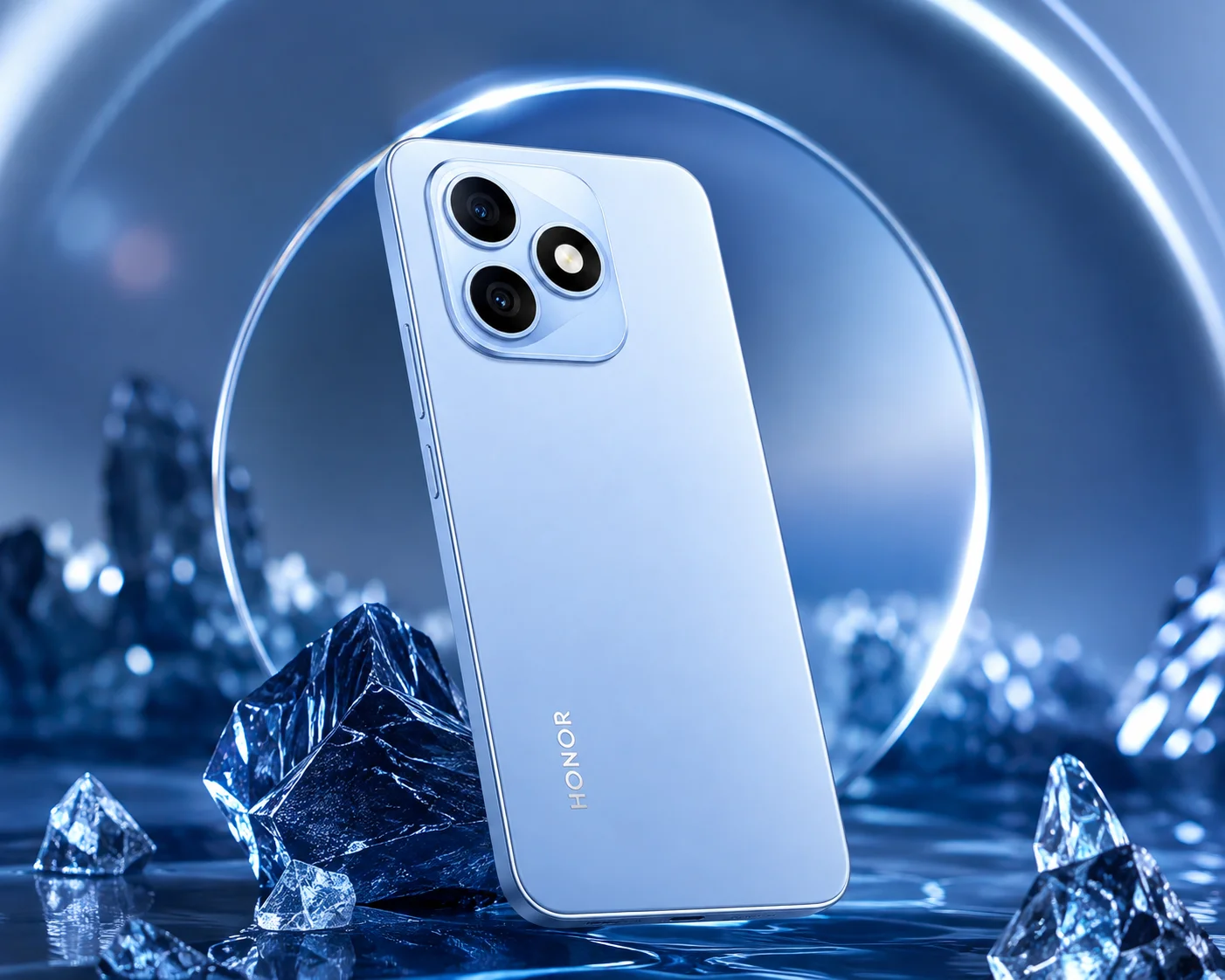
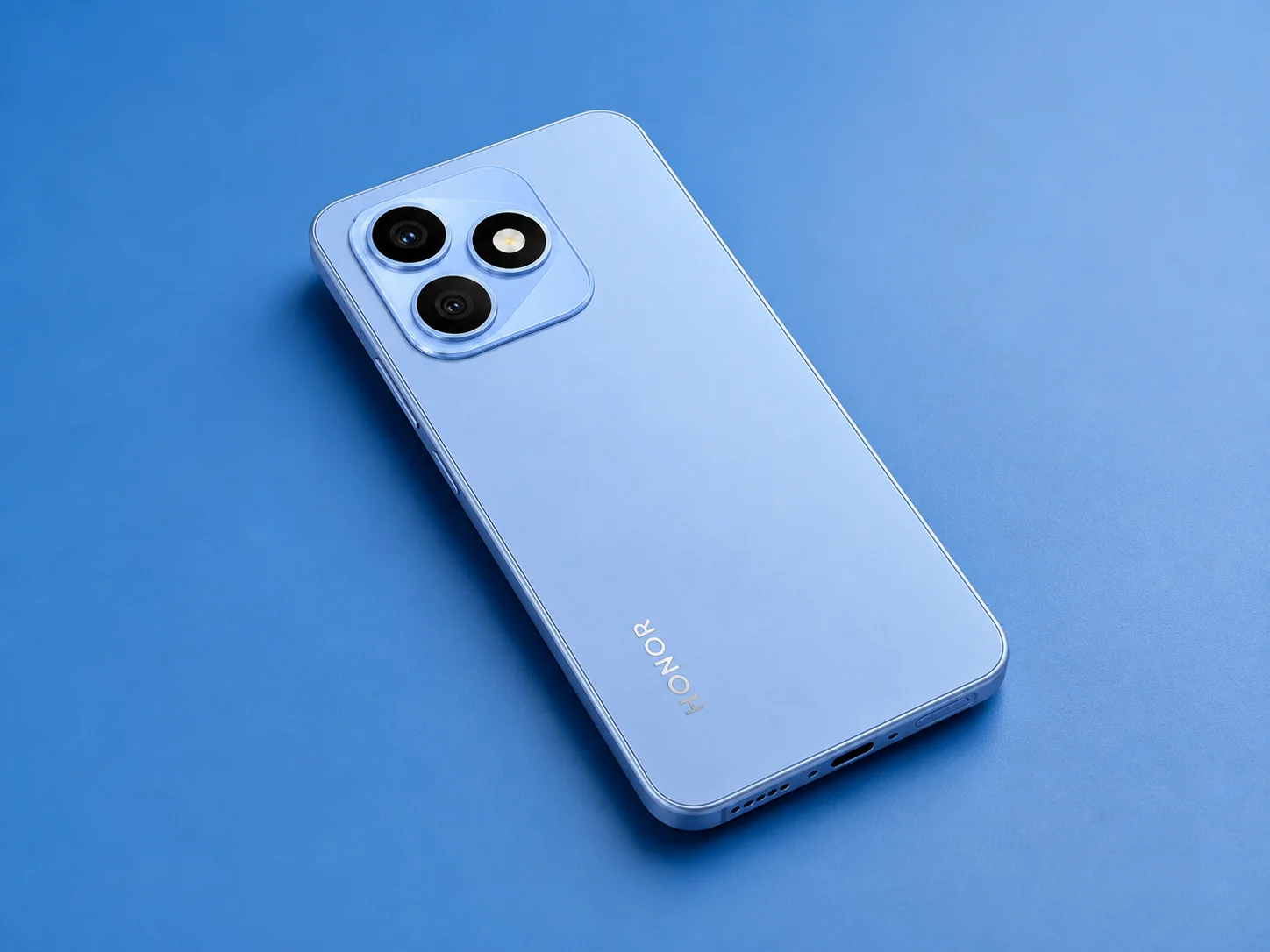
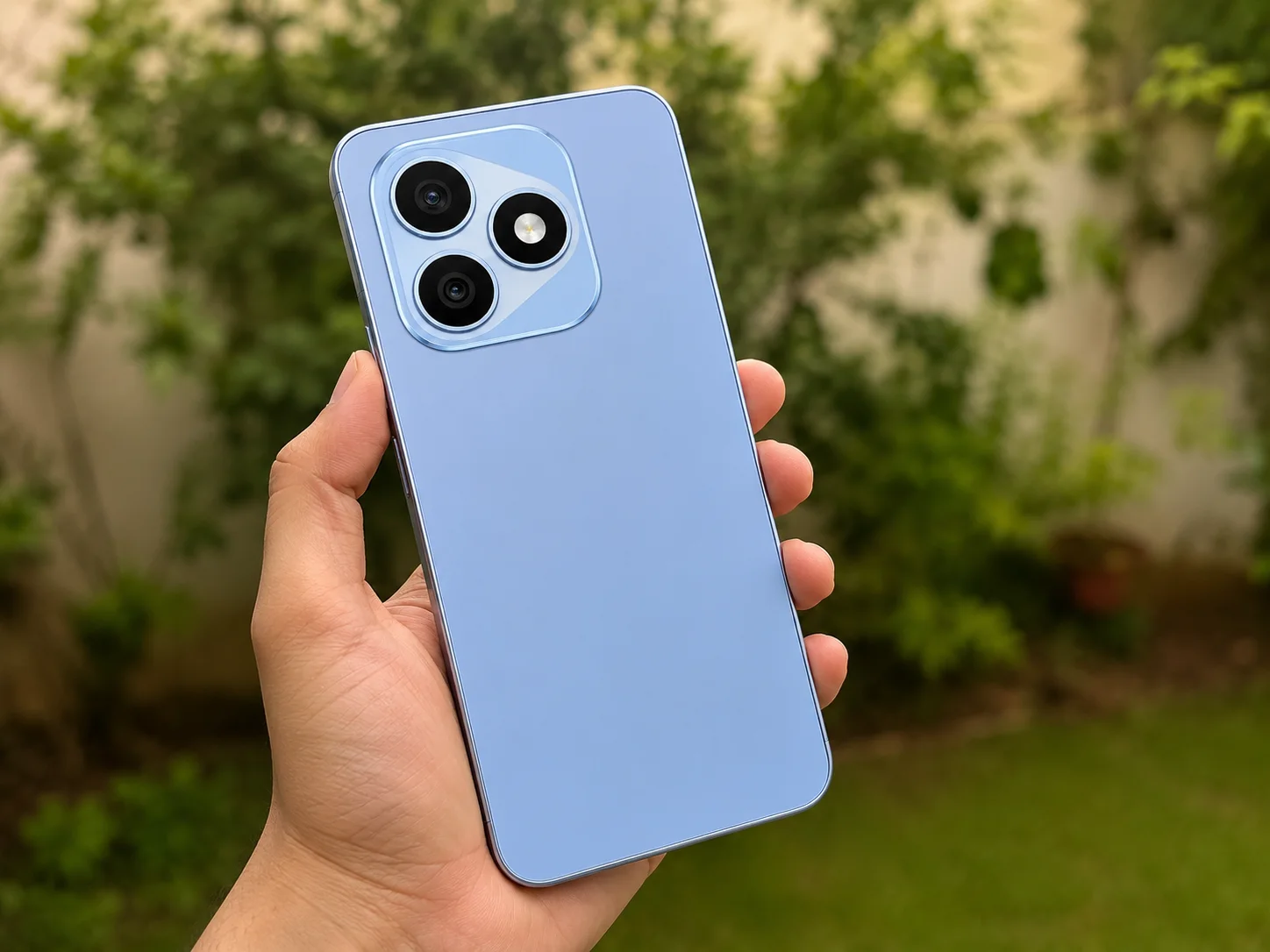
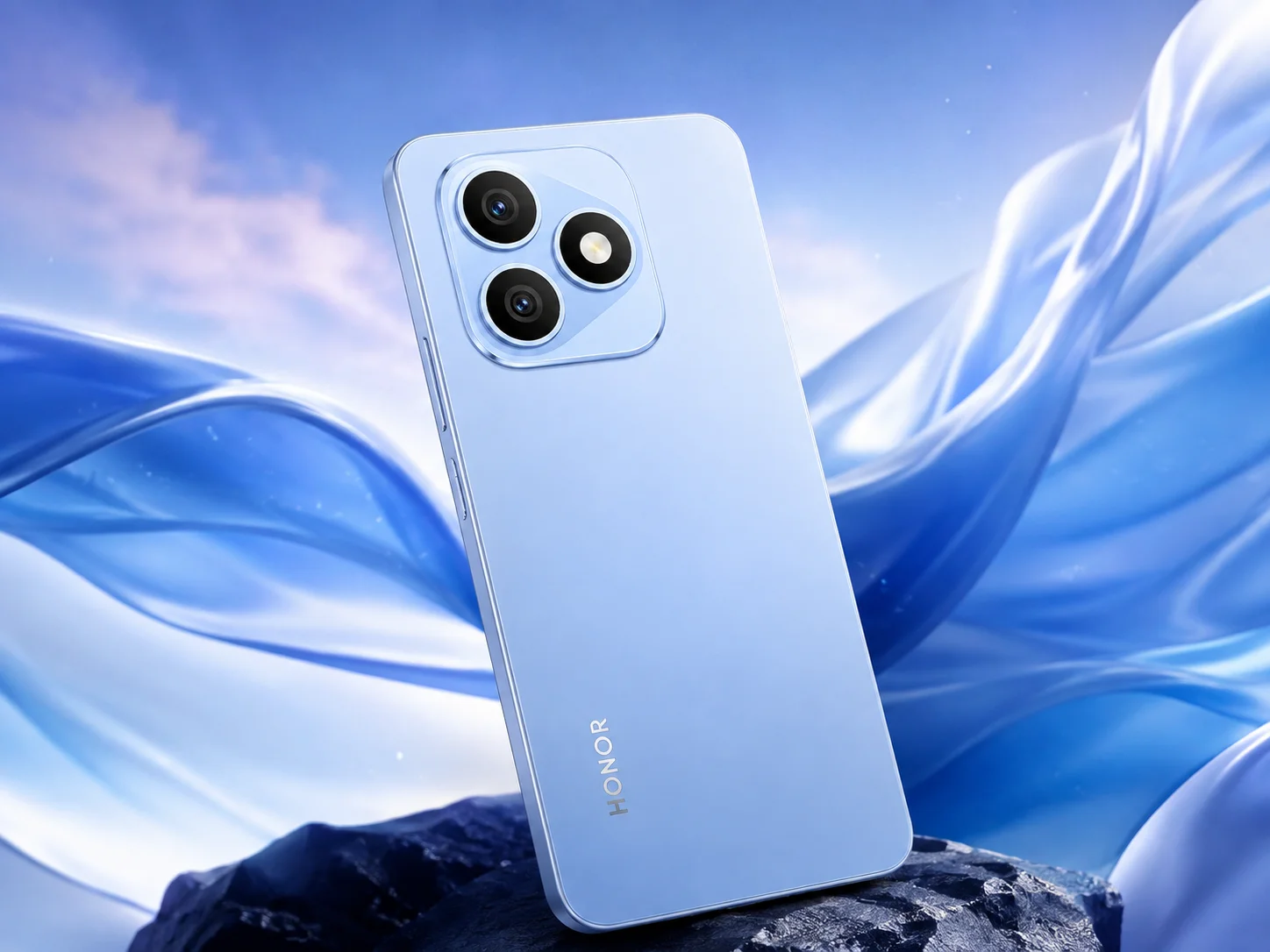
Honor X8d Specs, Price, Camera, Battery & Best Review (2026)
United States flag United States
$240 USD
…
Pakistan flag Pakistan (PKR)
75,000 PKR
India flag India (INR)
₹22,000 INR

✪ Honor X8d ✪

Honor X8d Specs, Price, Camera, Battery & Best Review (2026)
Last Time Update : 7 October, 2026
0

Quick Specifications

Amoled

Display Type

Snapdragon 6s Gen 2

Processor

8 + 256 GB

Ram And Memory

108 + 5 MP

Camera

7000 mAh

Battery

45 W

Fast Charging

Full Specification

BASIC INFO
Mobile
Honor X8d
Model
LNA-LX2
Series
Honor Number
Category
Mid Range
Release Date
1 December,2025
Year
2025
CONNECTIVITY
Sim
Nano-SIM + Nano-SIM
Network
4G
WiFi
WiFi 5
Bluetooth
5.0
NFC
Yes (market/region dependent)
OS
Android 16
BODY
Dimensions
162.9 x 76.3 x 7.5 mm
Build
Frame And Back ( Plastic )
KG Weight
188 g
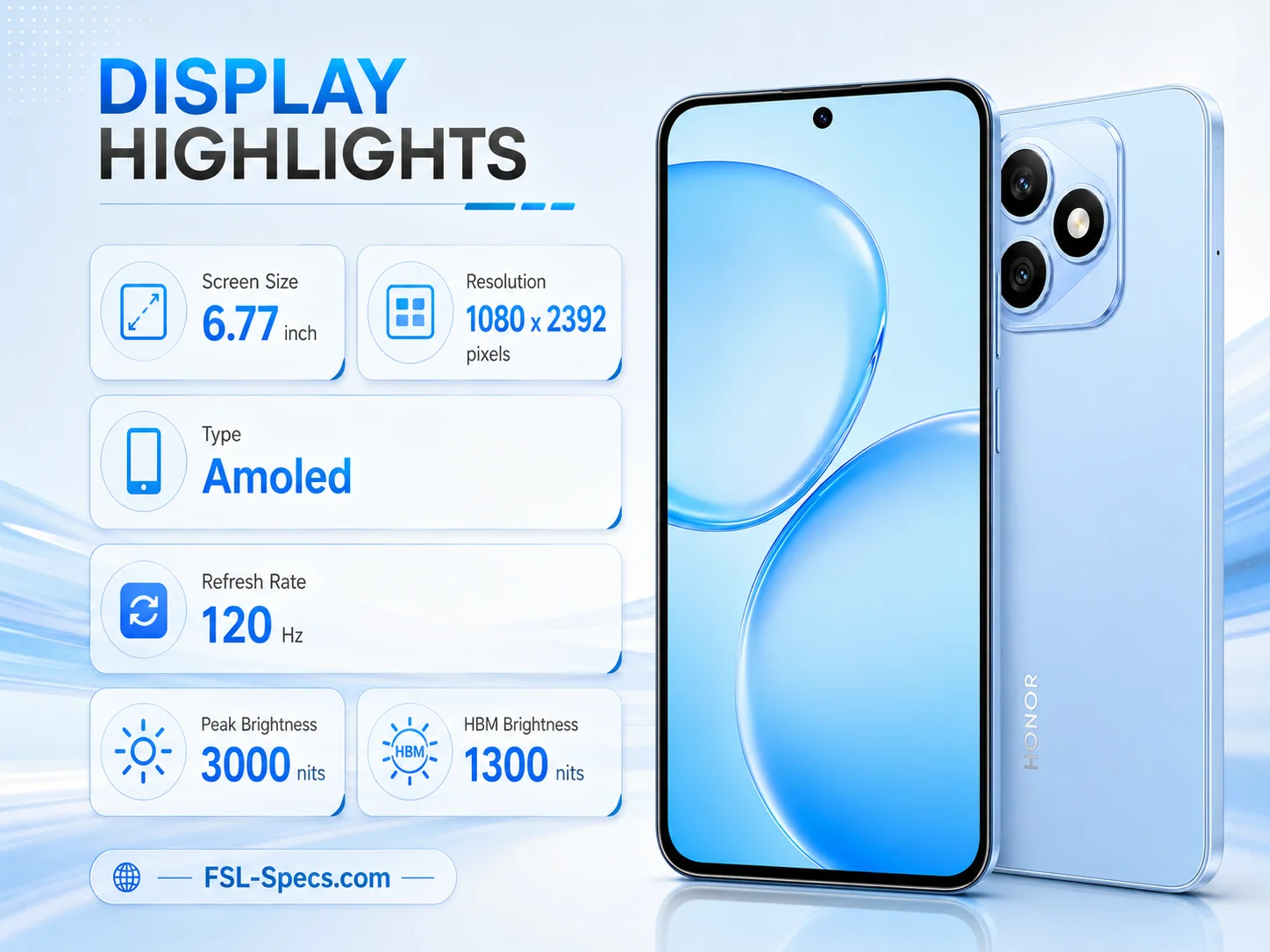
Screen Size
6.77 inch
Resolution
1080 x 2392 pixels
Type
Amoled
Refresh Rate
120 Hz
Peak Brightness
3000 nits
HBM Brightness
1300 nits
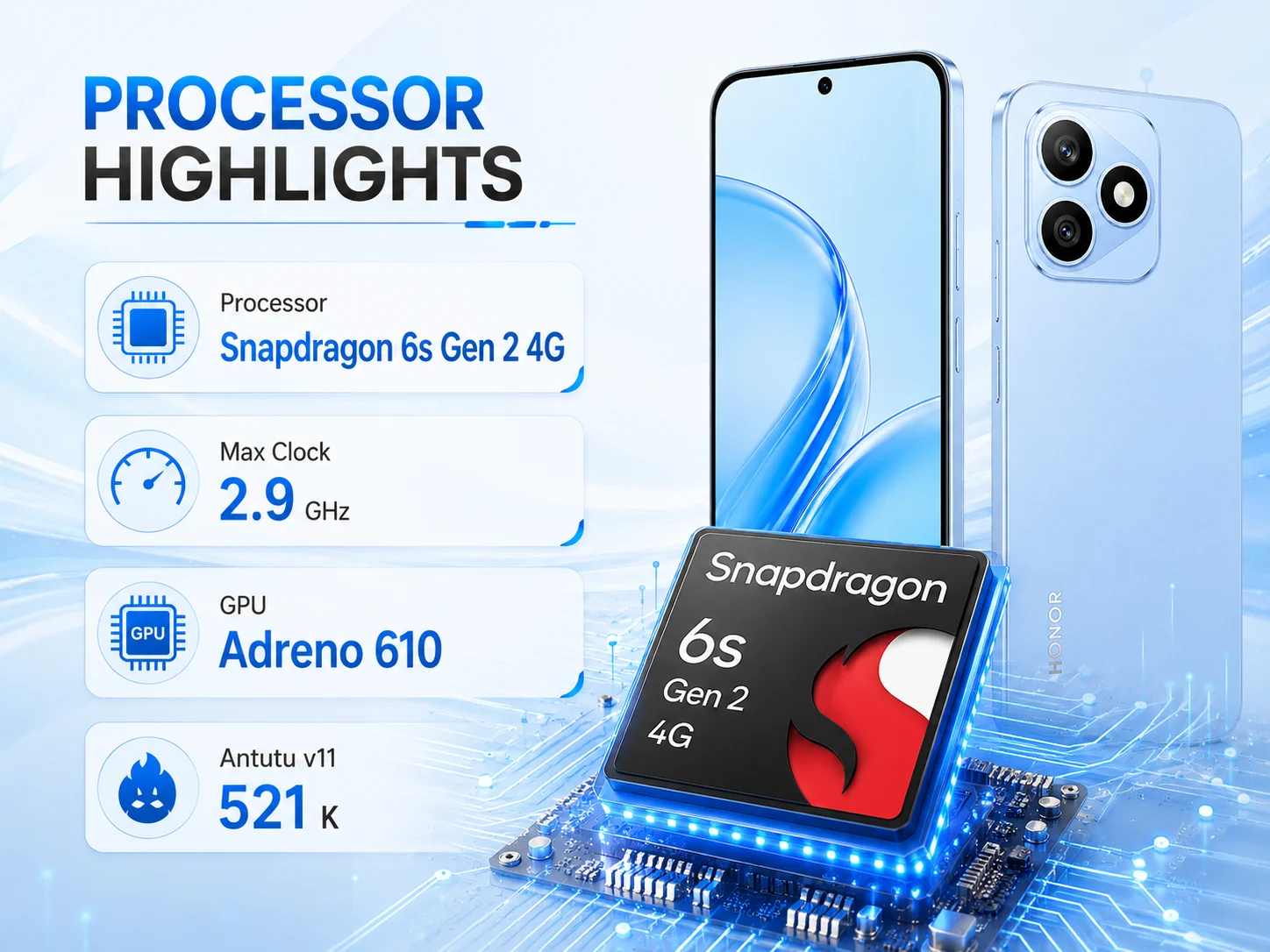
Processor
Snapdragon 6s Gen 2
Max Clock
2.9 GHz
Lithography
6 nm
GPU
Adreno 610
CPU Cores
8 Cores
Antutu v11
521 K
Antutu v10
-
Bootup Time
-
Architecture
4 x 2.9 GHz – Cortex-A73
4 x 1.9 GHz – Cortex-A53
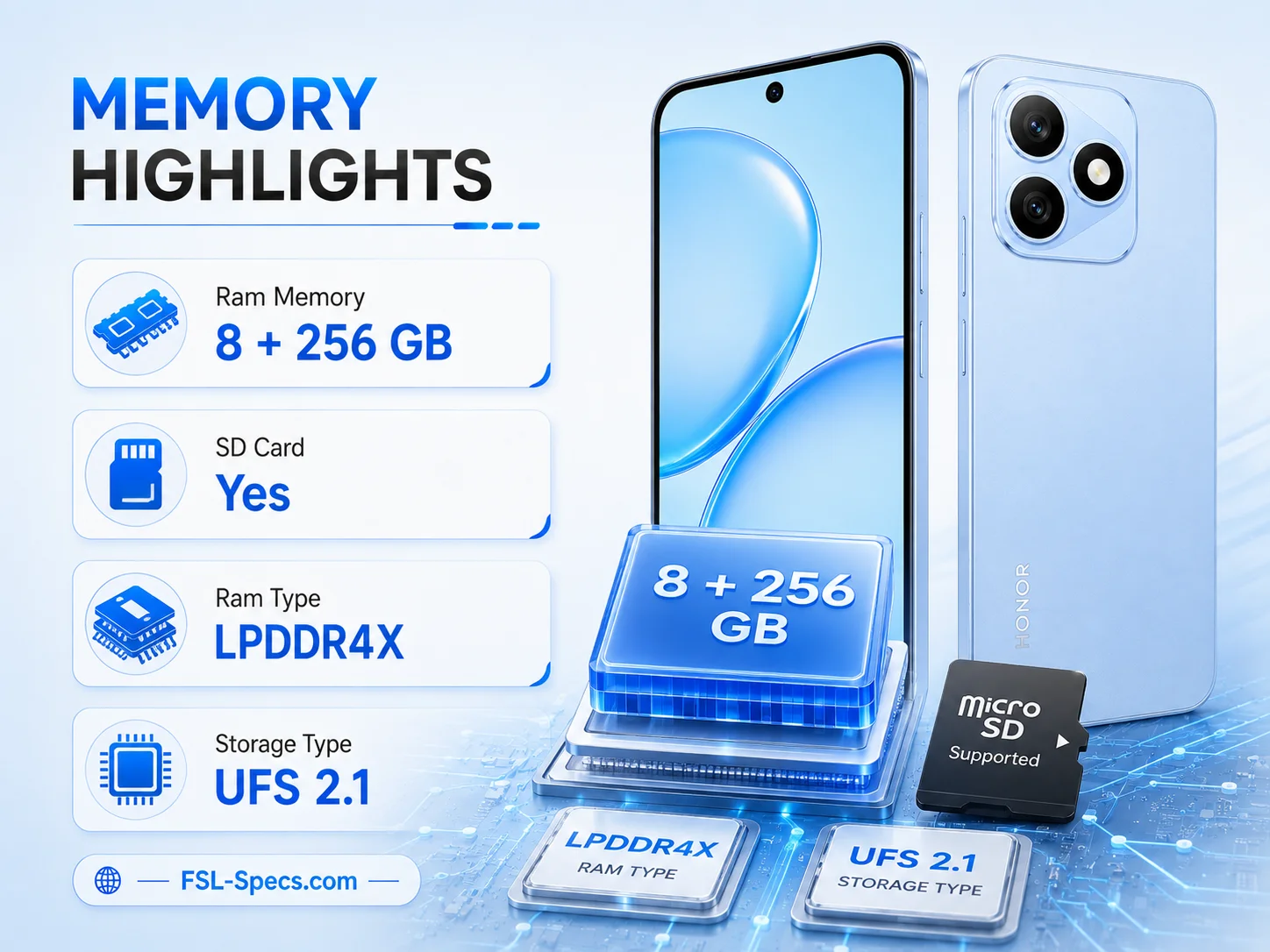
Ram Memory
8 + 256 GB
Ram Type
LPDDR4X
Storage Type
UFS 2.1
SD Card
Yes
Variants
8 + 128 GB
8 + 256 GB
8 + 512 GB
MP
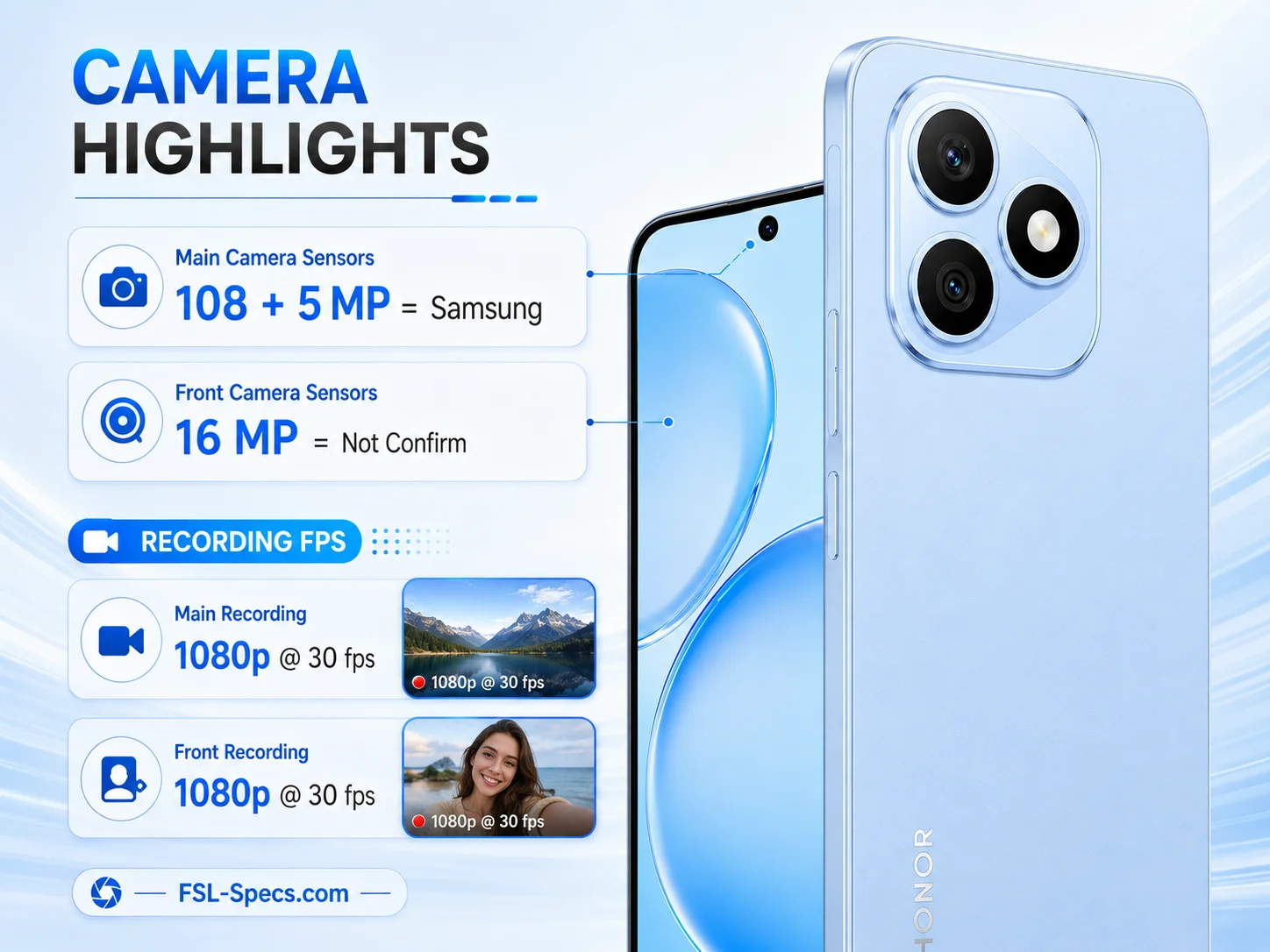
Rear Camera
108 + 5 MP
Front Camera
16 MP
SENSORS
Camera Sensors
108 MP = Samsung
Front Sensors
16 MP = Not Confirm
RECORDING FPS
Main Recording
1080p @ 30 fps
Front Recording
1080p @ 30 fps
RESOLUTION
Main Resolution
12,000 × 9,000 pixels
Front Resolution
4616 × 3462 Pixels
ZOOM
Optical Zoom
-
D Digital Zoom
-
Stabilization
Yes
FLASH
Flash
Yes
Front Flash
Screen Flash
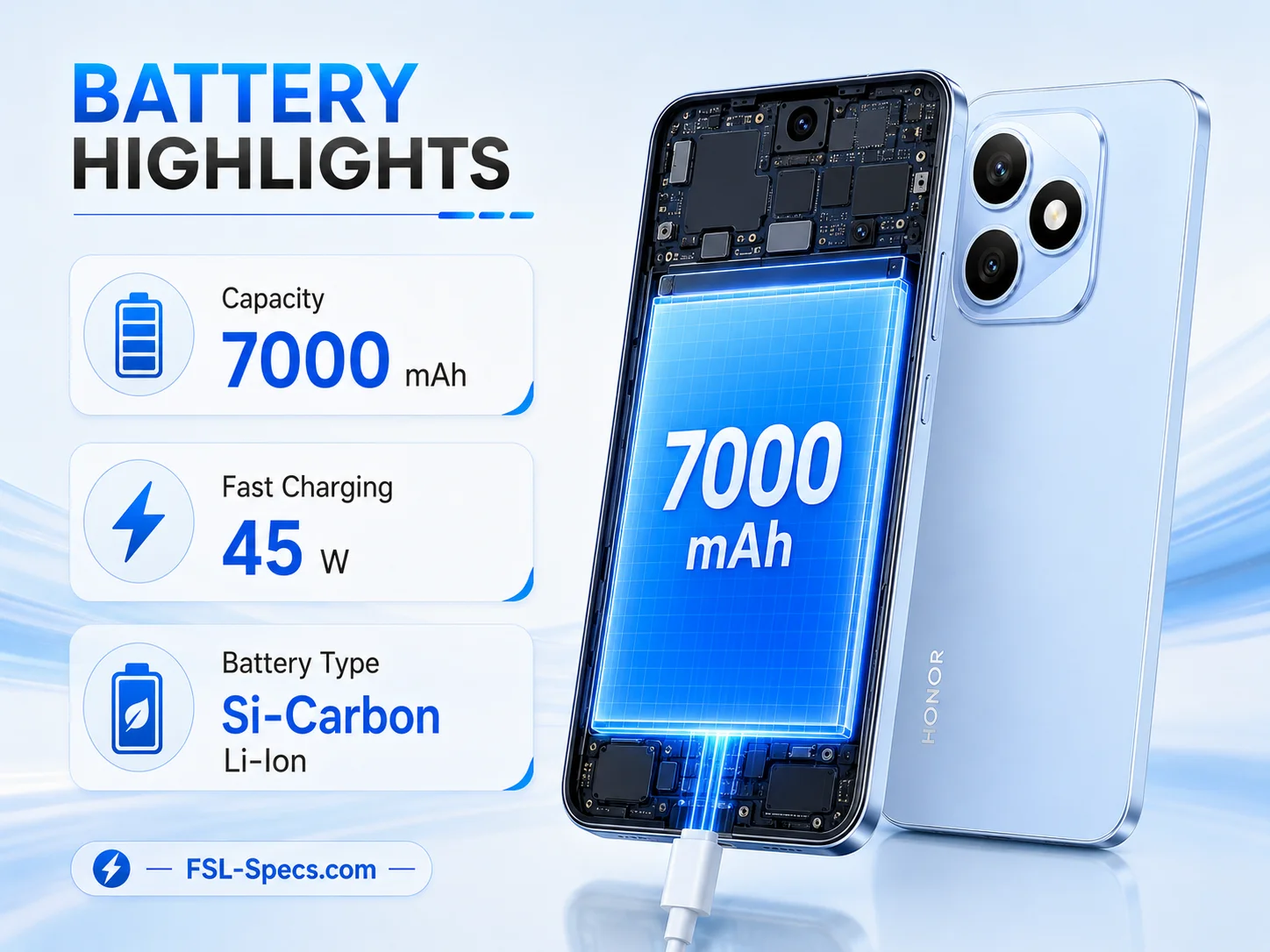
Capacity
7000 mAh
Fast Charging
45 W
Wireless Charging
No
Li Battery Type
Si-Carbon Li-Ion
REVERSE
Reverse Wired
6 W
Reverse Wireless
Not confirm
OTHER
Battery PC Marks
Not Confirm
Charging Time
Not Confirm
AUDIO & SENSORS
Speaker
Single Mono Speaker
Fingerprint Sensor
Front Finger
Other Sensors
Accelerometer
Gyroscope
Proximity
Compass
etc
BASIC INFO
Mobile
Honor X8d
Model
LNA-LX2
Series
Honor Number
Category
Mid Range
Release Date
1 December,2025
Year
2025
CONNECTIVITY
Sim
Nano-SIM + Nano-SIM
Network
4G
WiFi
WiFi 5
Bluetooth
5.0
NFC
Yes (market/region dependent)
OS
Android 16
BODY
Dimensions
162.9 x 76.3 x 7.5 mm
Build
Frame And Back ( Plastic )
KG Weight
188 g
Screen Size
6.77 inch
Resolution
1080 x 2392 pixels
Type
Amoled
Refresh Rate
120 Hz
Peak Brightness
3000 nits
HBM Brightness
1300 nits
Processor
Snapdragon 6s Gen 2
Max Clock
2.9 GHz
Lithography
6 nm
GPU
Adreno 610
CPU Cores
8 Cores
Antutu v11
521 K
Antutu v10
-
Bootup Time
-
Architecture
4 x 2.9 GHz – Cortex-A73
4 x 1.9 GHz – Cortex-A53
Ram Memory
8 + 256 GB
SD Card
Yes
Ram Type
LPDDR4X
Storage Type
UFS 2.1
Variants
8 + 128 GB
8 + 256 GB
8 + 512 GB
MP
Rear Camera
108 + 5 MP
Front Camera
16 MP
SENSORS
Main Camera Sensors
108 MP = Samsung
Front Camera Sensors
16 MP = Not Confirm
RECORDING FPS
Main Recording
1080p @ 30 fps
Front Recording
1080p @ 30 fps
RESOLUTION
Main Resolution
12,000 × 9,000 pixels
Front Resolution
4616 × 3462 Pixels
ZOOM
Optical Zoom
-
D Digital Zoom
-
Stabilization
Yes
FLASH
Flash
Yes
Front Flash
Screen Flash
Capacity
7000 mAh
Fast Charging
45 W
Wireless Charging
No
Li Battery Type
Si-Carbon Li-Ion
REVERSE
Reverse Wired
6 W
Reverse Wireless
Not confirm
OTHER
Battery Life PCMark
Not Confirm
Charging Time
Not Confirm
AUDIO & SENSORS
Speaker
Single Mono Speaker
Fingerprint Sensor
Front Finger
Other Sensors
Accelerometer
Gyroscope
Proximity
Compass
etc

Highlights & Review Of Honor X8d

Display Review:

The Honor X8d uses a 6.77-inch AMOLED display with 1080 × 2392 resolution and a 120Hz refresh rate. At your target price of PKR 72,000, its screen is competitive, but the rivals offer some important differences. The Redmi Note 14 Pro 4G at PKR 73,000 has a smaller 6.67-inch AMOLED panel with 1080 × 2400 resolution and 120Hz, giving it a very similar pixel density, while adding 10-bit color, DCI-P3, and Gorilla Glass Victus 2. Xiaomi also rates it at 1200 nits HBM and 1800 nits peak brightness.

The Tecno Spark 40 Pro Plus, priced at PKR 68,000, takes a different approach with a larger 6.78-inch AMOLED panel rated at 1224 × 2720 and 144Hz, plus 1600 nits HBM and 4500 nits peak brightness on FSL Specs. However, FSL Specs also notes a hardware limitation where the Helio G200 platform cannot natively drive the advertised resolution and refresh combination, making those headline numbers less straightforward than they appear.

The Redmi Note 15 8+256GB, at your target PKR 71,000, has a 6.77-inch FHD+ AMOLED display with 1080 × 2392 resolution and 120Hz, essentially matching the Honor X8d in size, resolution, and refresh rate. Xiaomi lists up to 3200 nits peak brightness, along with 12-bit color, DCI-P3, and 3840Hz PWM dimming, giving the Redmi a stronger feature set on paper.

Verdict: The Honor X8d delivers a good 120Hz AMOLED experience, but the Redmi Note 14 Pro offers a more premium display package, while the Redmi Note 15 adds stronger display features. The Spark 40 Pro Plus wins the headline brightness and refresh-rate battle, but with a resolution caveat.

Processor Review:

The Honor X8d uses the Snapdragon 6s Gen 2, a 6nm octa-core chipset clocked up to 2.9GHz with an Adreno 610 GPU. FSL Specs lists an AnTuTu v11 score of 521K, while NanoReview’s current measured result is 505,682, so benchmark results vary by test conditions.

At PKR 73,000, the Redmi Note 14 Pro 4G uses the Helio G100 Ultra and records 558,203 AnTuTu v11, making it approximately 10% faster than the Honor X8d . Its higher score gives it a modest advantage for heavier multitasking and graphics workloads.

The Tecno Spark 40 Pro Plus, priced at PKR 68,000, runs the Helio G200 and scores 616,665 in NanoReview’s AnTuTu v11 results. That is approximately 18% higher than the Honor’s FSL-listed 521K score, making the Tecno the strongest performer among these three rivals on benchmark results.

The Redmi Note 15 4G at PKR 71,000 uses a chipset that NanoReview records at 581,234 AnTuTu v11, approximately 12% higher than the Honor X8d’s 521K. This places it between the Redmi Note 14 Pro and Spark 40 Pro Plus for raw benchmark performance.

Verdict: The Honor X8d is the weakest performer of this group on the available AnTuTu v11 figures, while the Tecno Spark 40 Pro Plus offers roughly 18% more benchmark performance for PKR 4,000 less, making it the clear performance-value winner.

Ram & Memory Review:

The Honor X8d comes in the target 8GB RAM + 256GB storage configuration at PKR 72,000. Its 256GB capacity is enough for a large collection of apps, photos and videos, but the biggest limitation is expansion: the available specifications list no microSD card slot.

The Redmi Note 14 Pro 4G costs PKR 73,000 for 8GB + 256GB and has a more flexible memory setup. Xiaomi specifies LPDDR4X RAM + UFS 2.2 storage, with expandable storage up to 1TB. The microSD uses the shared SIM slot, so users must choose between storage expansion and using two SIMs.

The Tecno Spark 40 Pro Plus is cheaper at PKR 68,000 while offering the same 8GB physical RAM + 256GB storage. TECNO also advertises up to 8GB Extended RAM, but this is virtual RAM using internal storage, not additional physical RAM. It also supports a dedicated microSD slot, giving it a practical advantage for users who store lots of videos, photos or offline files.

The Redmi Note 15 at PKR 71,000 also provides 8GB + 256GB, using LPDDR4X RAM + UFS 2.2 storage and supporting expandable storage up to 2TB. Its shared-slot expansion is more flexible than the Honor X8d, although it can require sacrificing the second SIM.

Verdict: The Honor X8d matches all three rivals at 8GB + 256GB, but its lack of microSD expansion puts it behind the Redmi Note 15 for maximum storage flexibility and the Spark 40 Pro Plus for users wanting a dedicated memory-card slot.

Cameras Review:

The Honor X8d at PKR 72,000 features a 108MP main camera with f/1.8 aperture, 1/1.67-inch sensor, PDAF and OIS, paired with a 5MP ultrawide camera. Its front camera is 16MP, while rear and front video recording are limited to 1080p at 30fps. The combination of a large main sensor and OIS gives the Honor a solid hardware foundation for everyday photography and more stable handheld shots.

The Redmi Note 14 Pro 4G, priced at PKR 73,000, is considerably stronger on camera hardware. Its 200MP main camera uses a much larger 1/1.4-inch sensor, f/1.65 aperture, OIS, and 16-in-1 pixel binning, alongside an 8MP ultrawide and 2MP macro. It also has a higher-resolution 32MP selfie camera. Rear video reaches 1080p at 60fps, giving Xiaomi a clear advantage over the Honor’s 30fps limit.

The Tecno Spark 40 Pro Plus at PKR 68,000 takes a simpler approach with a 50MP EIS main camera and 13MP front camera. TECNO specifically identifies the rear camera as a 50MP EIS camera, but the official specifications do not disclose a sensor size or OIS. That makes it less convincing than Honor’s 108MP OIS setup for buyers prioritizing camera hardware.

The Redmi Note 15, at PKR 71,000, uses a 108MP f/1.7 main camera with a 1/1.67-inch sensor, plus a 2MP depth camera and 20MP selfie camera. Xiaomi lists 1080p video at 60fps, giving it an advantage over the Honor for video recording, although the camera configuration is less versatile because it lacks an ultrawide camera.

Verdict: The Redmi Note 14 Pro 4G is the clear camera winner, while the Honor X8d offers stronger camera hardware than the cheaper Spark 40 Pro Plus and remains competitive with the Redmi Note 15.

Battery Review:

The Honor X8d packs a 7000mAh silicon-carbon battery with 45W wired charging, giving it the largest battery in this comparison. HONOR lists 7000mAh typical capacity, with a 6800mAh rated capacity, and claims up to two days of battery life in its testing. At your target price of PKR 72,000, this is one of the strongest reasons to choose the X8d, particularly for users who spend long hours on mobile data, social media and video.

The Redmi Note 14 Pro 4G, at PKR 73,000, has a 5500mAh battery and 45W turbo charging. That is 1500mAh less than the Honor, while charging speed is identical. Xiaomi claims up to 23 hours of social media, 14 hours of video streaming, and 64 hours of music playback in its internal testing, so the Redmi still offers strong endurance, but its battery capacity is clearly behind the X8d.

The Tecno Spark 40 Pro Plus, costing PKR 68,000, uses a 5200mAh battery with 45W wired charging and adds 30W wireless charging plus 5W reverse wireless charging. Its battery is 1800mAh smaller than the Honor, but wireless charging gives Tecno a feature advantage that the X8d does not offer. TECNO also states a full charge can take around 55 minutes under its specified conditions.

The Redmi Note 15, at PKR 71,000, has a 6000mAh battery with 33W turbo charging. Its capacity is 1000mAh lower than the Honor, while its charging speed is also slower. Xiaomi advertises up to two-day battery life and up to 24 hours of video playback.

Verdict: The Honor X8d wins battery capacity and endurance potential, while the Spark 40 Pro Plus is the better choice if wireless charging matters more than maximum battery capacity.

Final Verdict :

At your target prices, the Honor X8d 8GB + 256GB at PKR 72,000 is not the strongest all-round value, but it has a clear identity: 7000mAh battery, OIS camera, AMOLED display, and a relatively slim design. Its biggest weakness is performance. The Snapdragon 6s 4G Gen 2 trails the Helio G200 in the Spark 40 Pro Plus and the Helio G100 Ultra in the Redmi Note 14 Pro and Redmi Note 15.

The Tecno Spark 40 Pro Plus at PKR 68,000 is the strongest choice for buyers prioritizing performance, display features and charging flexibility. Its Helio G200 scores around 616K AnTuTu v11, while its 144Hz AMOLED display and 30W wireless charging give it features the Honor does not offer. Its main compromises are the weaker camera hardware and lack of microSD expansion.

The Redmi Note 14 Pro 4G at PKR 73,000 is the best option for camera-focused users. Its 200MP OIS main camera, larger 1/1.4-inch sensor and 32MP selfie camera make it the most camera-oriented phone in this group. Its performance is also slightly ahead of the Honor, although the difference is not dramatic.

The Redmi Note 15 at PKR 71,000 is the balanced alternative. It matches the Honor’s 8GB + 256GB, 6.77-inch AMOLED and 120Hz setup while offering a faster Helio G100 Ultra platform and microSD expansion.

Overall ranking:
1. Redmi Note 14 Pro 4G — Best camera + strong overall package
2. Tecno Spark 40 Pro Plus — Best performance/value
3. Honor X8d — Best battery + OIS + balanced experience
4. Redmi Note 15 — Good balanced alternative, but fewer standout advantages

Pros And Cons of Honor X8d

Pros of Mobile

7000 mAh Battery 🔋
108 MP OIS 📸
120 Hz AMOLED 🖥️
7.5 mm Thin 📏
188 g Lightweight ⚖️
IP65 Protection 💧

Cons of Mobile

4G-Only Chipset 📶
Weak Gaming Performance 🎮
1080p Video Limit 🎥
Single Speaker 🔊
No Headphone Jack 🎧

Best For - Not Best For

Best For

Long Battery Life 🔋
Casual Photography 📸
AMOLED Entertainment 🖥️
Everyday Usage 📱
Lightweight Handling ⚖️
Casual Gaming 🎮

Not Best For

Heavy Gaming 🎮
5G Connectivity 📶
Fast Charging ⚡
Stereo Audio 🔊
Flagship Performance 🚀

Trailer And Unboxing of Honor X8d

Disassembly Or Teardown And Gaming Test of Honor X8d

Camera Test Honor X8d

Tecno Spark 40 Pro Plus
Redmi Note 15 Pro 4G
Redmi Note 15
Redmi Note 14 Pro 4G

Honor Series Row
Picture of Faisal Ur Rehman

Faisal Ur Rehman

Faisal Rehman is the founder and editor of FSL Specs, where he publishes in-depth smartphone specifications, comparisons, buying guides, and technology insights. With extensive experience in mobile hardware research and technical analysis, he provides accurate and up-to-date information on Android smartphones, processors, displays, cameras, batteries, performance benchmarks, and software features. His goal is to simplify complex specifications and help readers choose the right device with confidence.

FAQs Questions

It runs on the Qualcomm Snapdragon 6s 4G Gen 2, an octa-core chip paired with an Adreno 610 GPU. It's a 4G-only entry-level processor, so it's built for everyday browsing and social apps rather than demanding games or heavy multitasking.

The main sensor is 108MP with OIS and PDAF, which is a genuinely useful combination since the OIS helps stabilize shots at that resolution. It pairs with just a 5MP ultrawide, so the setup covers everyday photography well but doesn't include a dedicated telephoto or macro lens.

It has a large 7000mAh silicon-carbon battery with 45W wired charging and no wireless charging option. That capacity is well above average for this segment, so it should comfortably handle a full day or more of typical daily use.

Yes, it carries an IP65 rating, protecting against dust and low-pressure water jets like rain or splashes. It's not built for submersion, so avoid taking it into a pool or dropping it in water.

It's available with 8GB of RAM across 128GB, 256GB, and 512GB storage options, and it supports a microSD card for further expansion. That flexibility is a nice touch at this price point for anyone who needs extra space for photos and videos.

It uses a 6.77-inch AMOLED panel with a 120Hz refresh rate, 1080x2392 resolution, and up to 3000 nits peak brightness according to Honor's official specs. That brightness figure is notably high for a budget 4G phone, making outdoor visibility a genuine strength here.

No, it's a 4G-only device, which is reflected in its Snapdragon 6s 4G Gen 2 chipset. If 5G connectivity is a priority for you, you'll need to look at a different model in Honor's lineup.

8+256 GB
72,000 PKR | 21,000 | 230 $

Scroll to Top