











• Mobiles
  • Processors
  • Mobiles
  • Processors
  • Mobiles
  • Processors

✪ Samsung Galaxy S25 Plus ✪

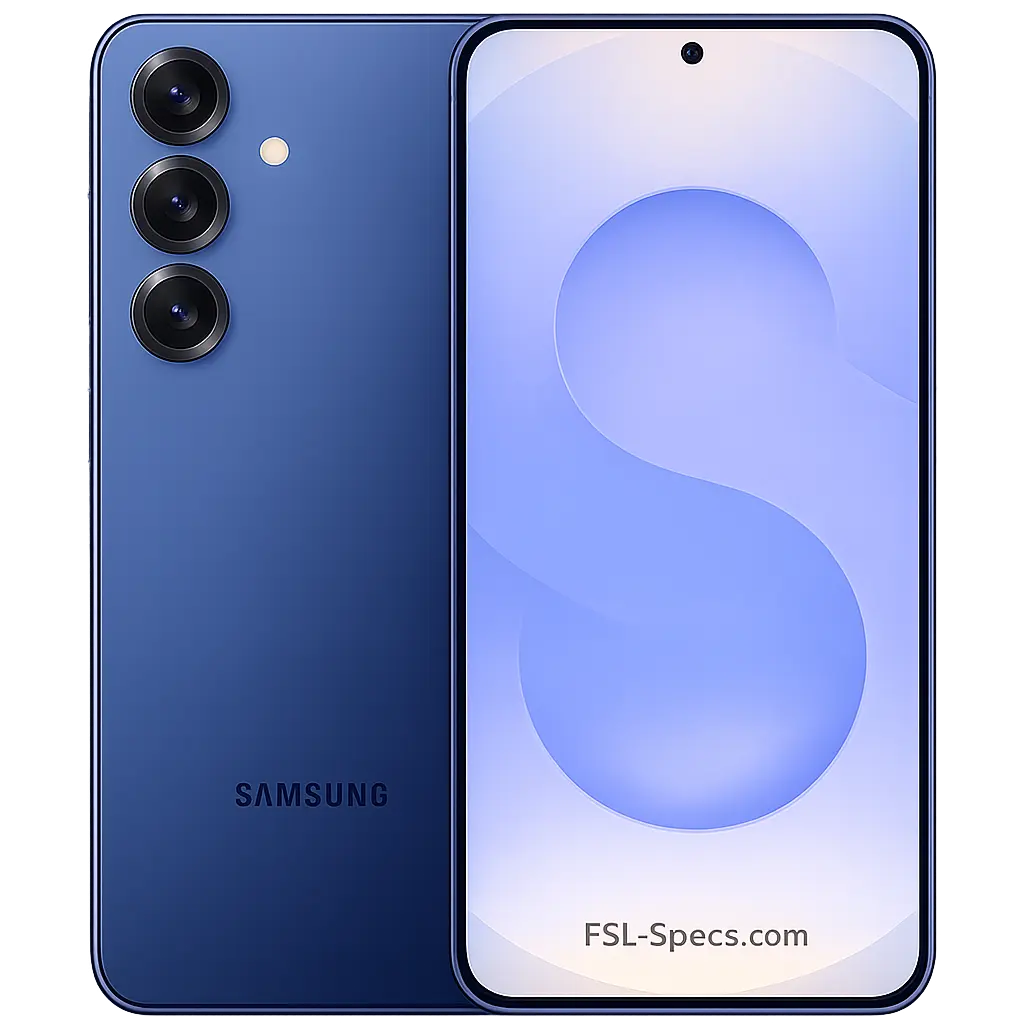
Samsung Galaxy S25 Plus Specs, Price, Camera, Battery & Best Review
United States flag United States
$950 USD
…
Pakistan flag Pakistan (PKR)
300,000 PKR
India flag India (INR)
₹88,000 INR

✪ Samsung Galaxy S25 Plus ✪

Samsung Galaxy S25 Plus Specs, Price, Camera, Battery & Best Review
Last Time Update : 19 July, 2026
0

Quick Specifications

Dynamic AMOLED 2X

Display Type

Snapdragon 8 Elite

Processor

12 + 512 GB

Ram And Memory

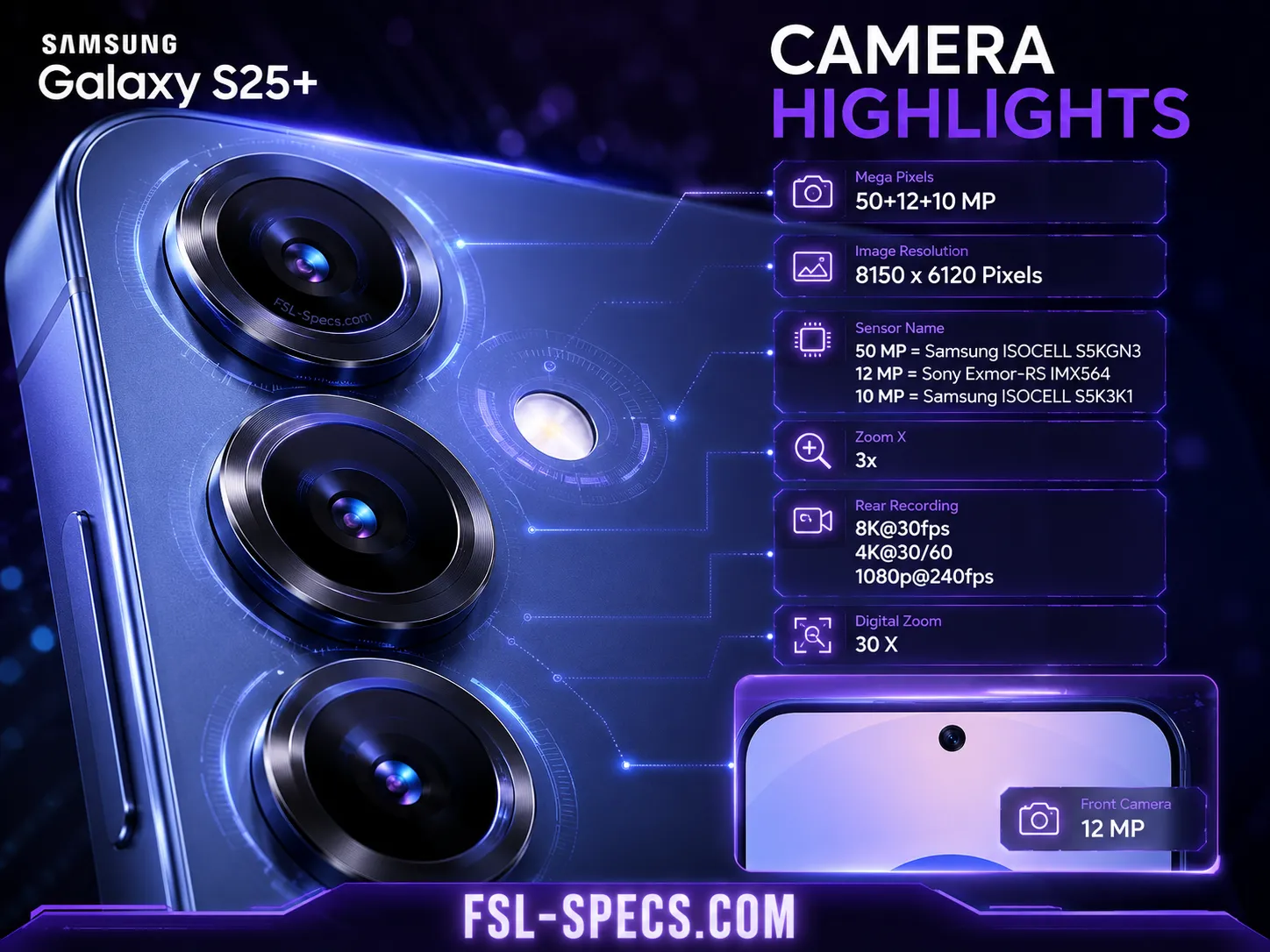
50+12+10 MP

Camera

4,900 mAh

Battery

45 W

Fast Charging

Full Specification

BASIC INFO
Mobile
Samsung Galaxy S25 Plus
Model
SM-S936
Series
S Series
Category
Flagship
Release Date
3 February,2025
Year
2025
CONNECTIVITY
Sim
Nano-SIM + Nano-SIM / E-Sim
Network
4G / 4G+ / 5G/ 5G+
WiFi
Wi-Fi 7
Bluetooth
v5.4
NFC
Yes
OS
Android 17
BODY
Dimensions
158.4 x 75.8 x 7.3 mm
Build
Gorilla Glass Victus 2 (Front/Back), Aluminum Frame
KG Weight
190 g
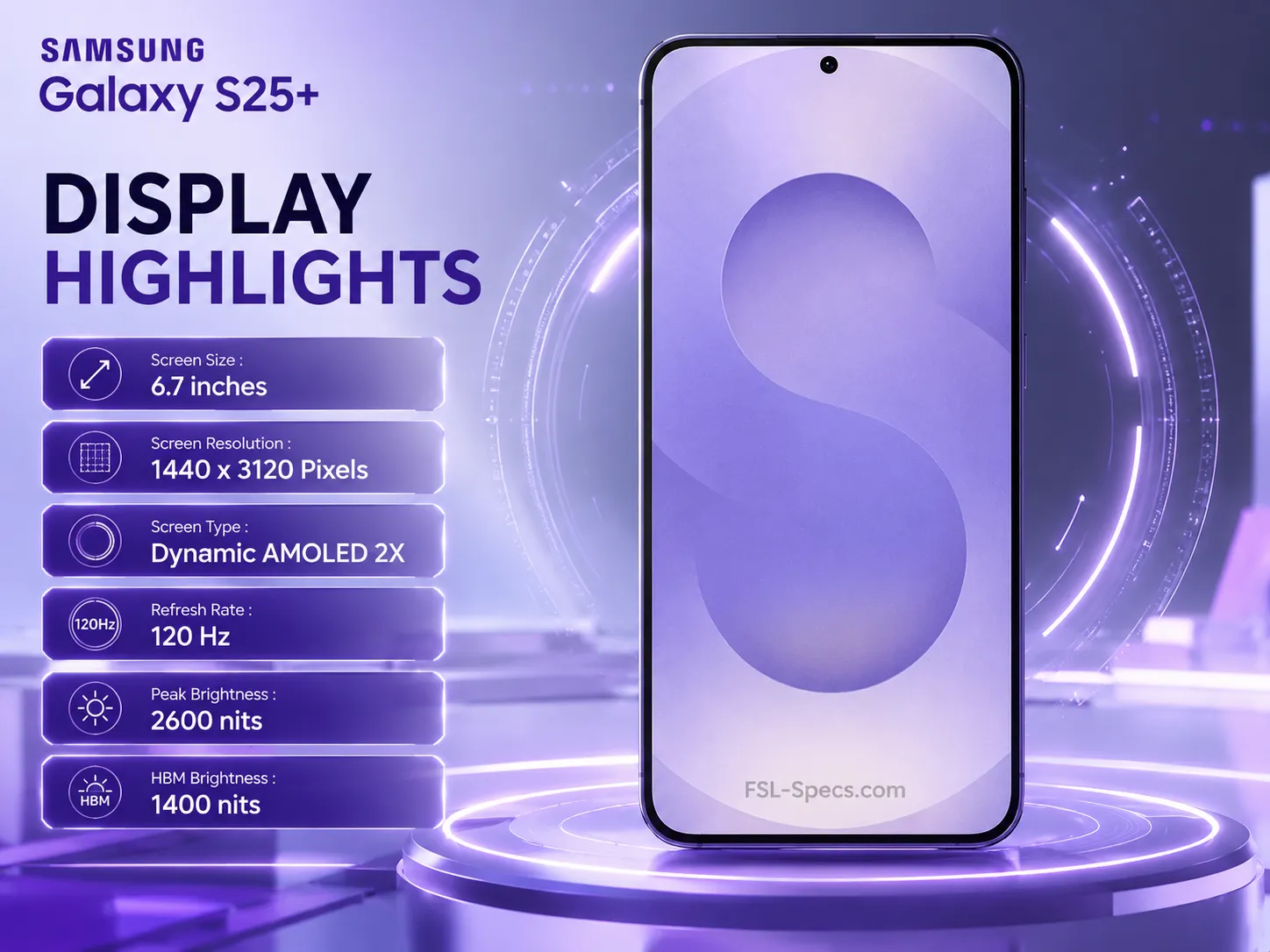
Screen Size
6.7 inches
Resolution
1440 x 3120 Pixels
Type
Dynamic AMOLED 2X
Refresh Rate
120 Hz
Peak Brightness
2600 nits
HBM Brightness
1400 nits
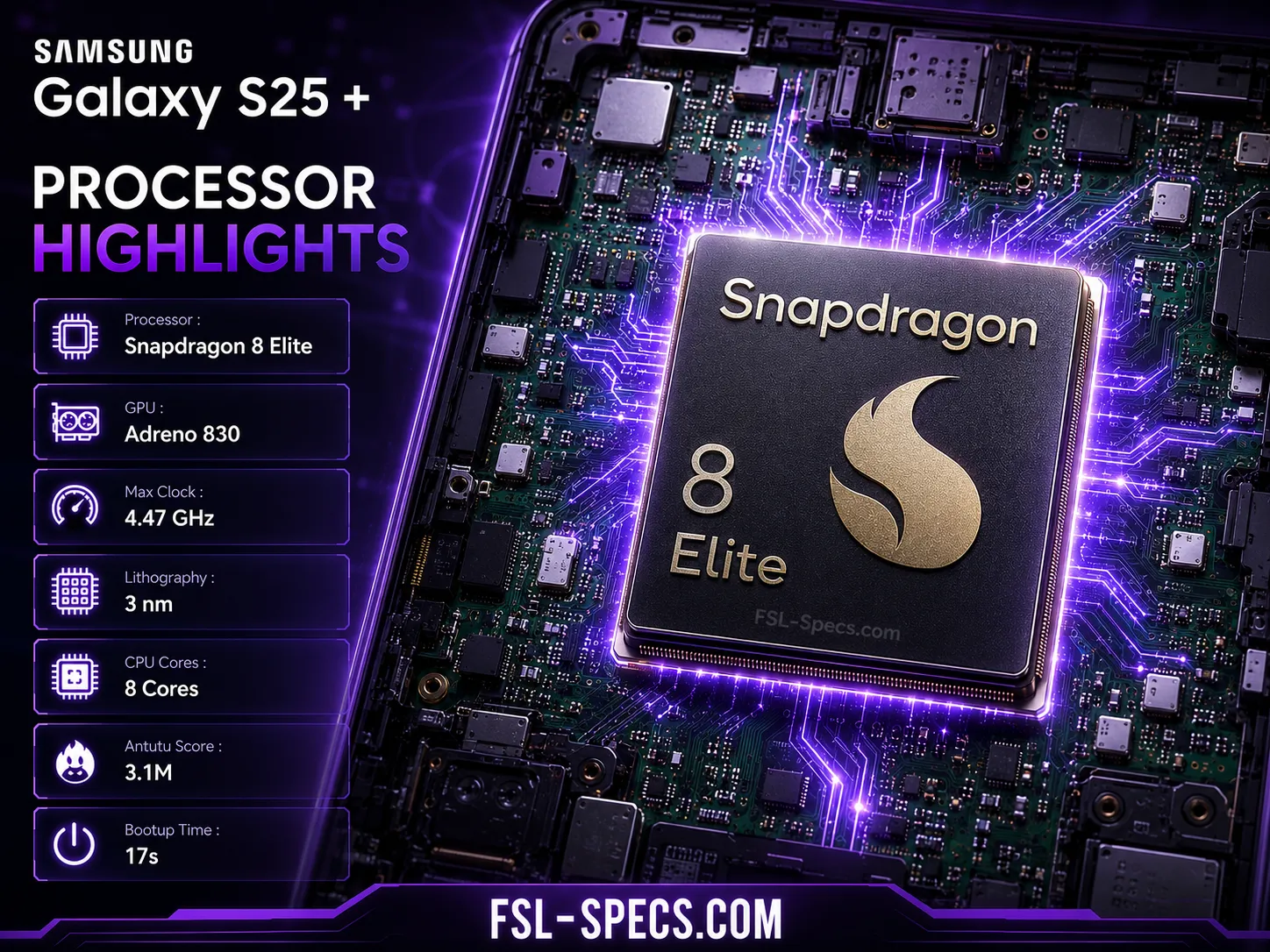
Processor
Snapdragon 8 Elite
Max Clock
4.47 GHz
Lithography
3 nm
GPU
Adreno 830
CPU Cores
8 Cores
Antutu v11
3.1 M
Bootup Time
17s
Architecture
2 x 4.47 GHz Oryon V2 Phoenix L
6 x 3.53 GHz Oryon V2 Phoenix M 
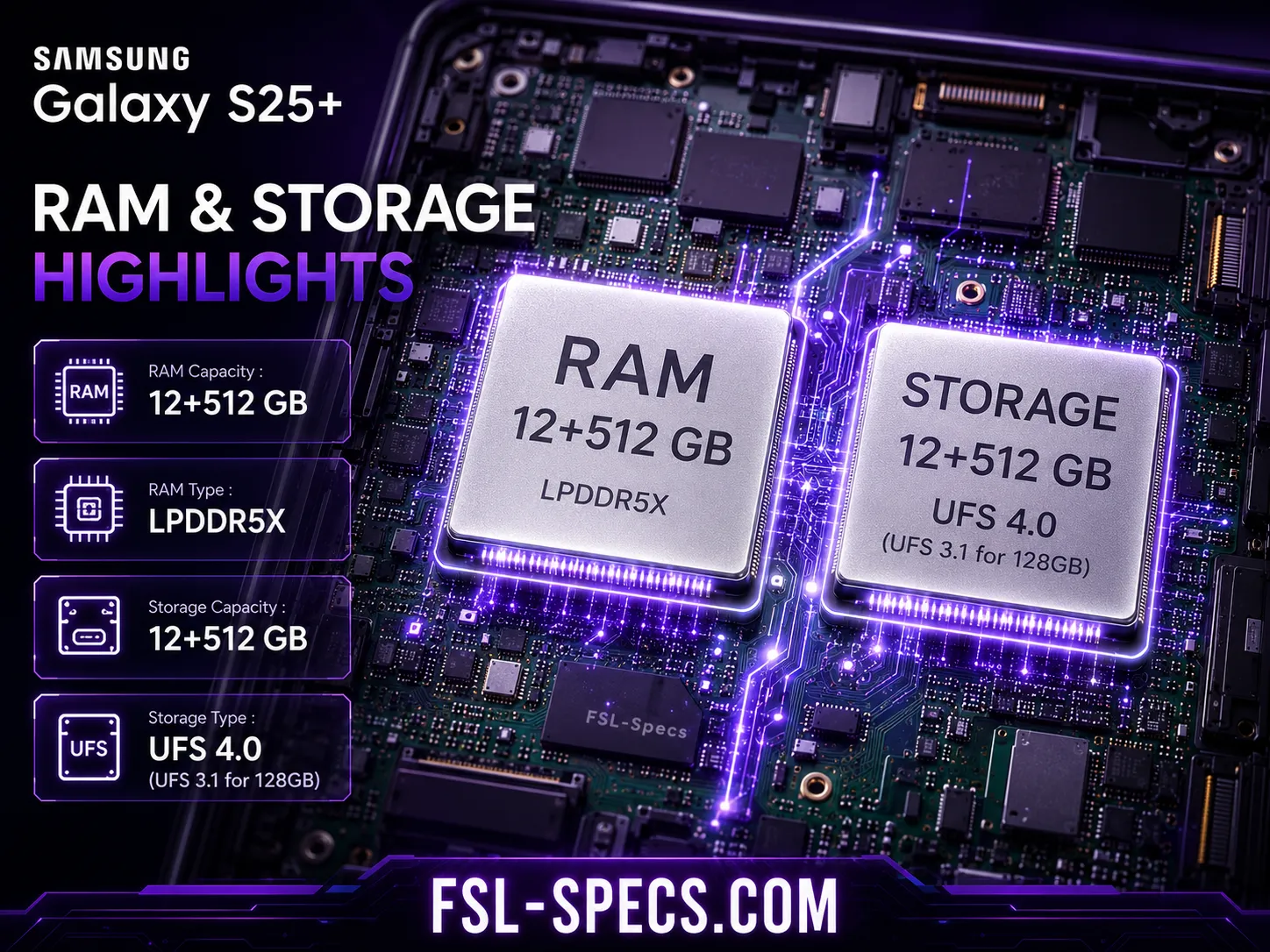
Ram Memory
12 + 512 GB
Ram Type
LPDDR5X
Storage Type
UFS 4.0 (UFS 3.1 for 128GB)
SD Card
No
Variants
12 + 256 GB
12 + 512 GB
MP
Rear Camera
50+12+10 MP
Front Camera
12 MP
SENSORS
Camera Sensors
50 MP = Samsung ISOCELL S5KGN3
12 MP = Sony Exmor-RS IMX564
10 MP = Samsung ISOCELL S5K3K1
Front Sensors
12 MP = Samsung ISOCELL S5K3LU
RECORDING FPS
Main Recording
8K@30fps
4K@30/60
1080p@240fps
Front Recording
4K@30/60
RESOLUTION
Main Resolution
8150 x 6120 Pixels
Front Resolution
4128 x 3096 Pixels
ZOOM
Optical Zoom
3x
D Digital Zoom
30 X
FLASH
Flash
LED Flash
Front Flash
-
Capacity
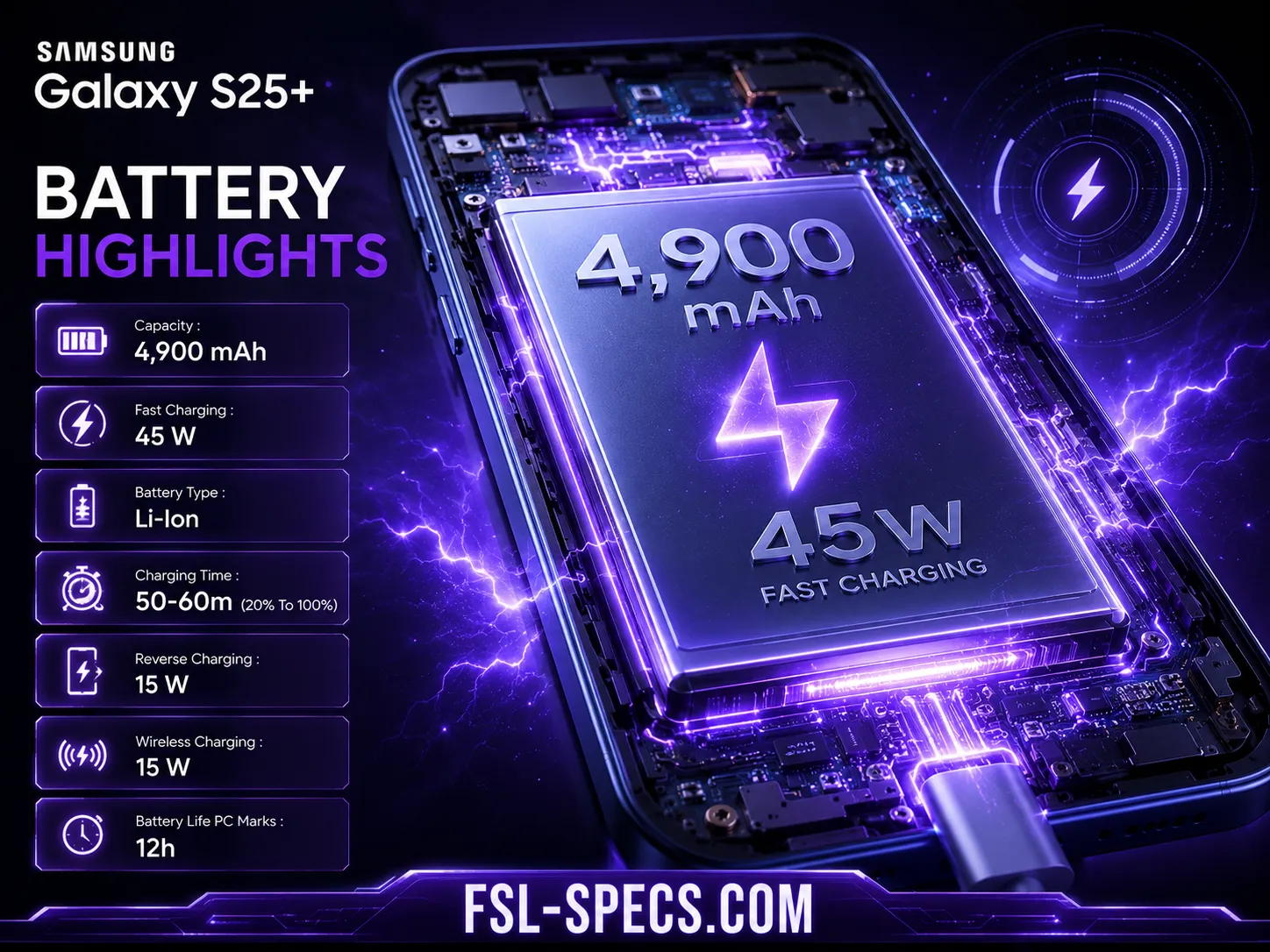
4,900 mAh
Fast Charging
45 W
Wireless Charging
15 W
Li Battery Type
Li-Ion
REVERSE
Reverse Wired
-
Reverse Wireless
4.5 W
OTHER
Battery PC Marks
12h
Charging Time
50-60m (20% To 100%)
AUDIO & SENSORS
Speaker
Dual Stereo Speaker
Fingerprint Sensor
Hyper Sonic Front Finger
Other Sensors
Accelerometer
gyro
proximity
compass
barometer
Special Features

–

BASIC INFO
Mobile
Samsung Galaxy S25 Plus
Model
SM-S936
Series
S Series
Category
Flagship
Release Date
3 February,2025
Year
2025
CONNECTIVITY
Sim
Nano-SIM + Nano-SIM / E-Sim
Network
4G / 4G+ / 5G/ 5G+
WiFi
Wi-Fi 7
Bluetooth
v5.4
NFC
Yes
OS
Android 17
BODY
Dimensions
158.4 x 75.8 x 7.3 mm
Build
Gorilla Glass Victus 2 (Front/Back), Aluminum Frame
KG Weight
190 g
Screen Size
6.7 inches
Resolution
1440 x 3120 Pixels
Type
Dynamic AMOLED 2X
Refresh Rate
120 Hz
Peak Brightness
2600 nits
HBM Brightness
1400 nits
Processor
Snapdragon 8 Elite
Max Clock
4.47 GHz
Lithography
3 nm
GPU
Adreno 830
CPU Cores
8 Cores
Antutu v11
3.1 M
Bootup Time
17s
Architecture
2 x 4.47 GHz Oryon V2 Phoenix L
6 x 3.53 GHz Oryon V2 Phoenix M 
Ram Memory
12 + 512 GB
SD Card
No
Ram Type
LPDDR5X
Storage Type
UFS 4.0 (UFS 3.1 for 128GB)
Variants
12 + 256 GB
12 + 512 GB
MP
Rear Camera
50+12+10 MP
Front Camera
12 MP
SENSORS
Main Camera Sensors
50 MP = Samsung ISOCELL S5KGN3
12 MP = Sony Exmor-RS IMX564
10 MP = Samsung ISOCELL S5K3K1
Front Camera Sensors
12 MP = Samsung ISOCELL S5K3LU
RECORDING FPS
Main Recording
8K@30fps
4K@30/60
1080p@240fps
Front Recording
4K@30/60
RESOLUTION
Main Resolution
8150 x 6120 Pixels
Front Resolution
4128 x 3096 Pixels
ZOOM
Optical Zoom
3x
D Digital Zoom
30 X
FLASH
Flash
LED Flash
Front Flash
-
Capacity
4,900 mAh
Fast Charging
45 W
Wireless Charging
15 W
Li Battery Type
Li-Ion
REVERSE
Reverse Wired
-
Reverse Wireless
4.5 W
OTHER
Battery Life PCMark
12h
Charging Time
50-60m (20% To 100%)
AUDIO & SENSORS
Speaker
Dual Stereo Speaker
Fingerprint Sensor
Hyper Sonic Front Finger
Other Sensors
Accelerometer
gyro
proximity
compass
barometer
Special Features

–

Highlights & Review Of Samsung Galaxy S25 Plus

Display Review:

The Samsung Galaxy S25 Plus has the largest display in this comparison, using a 6.7-inch Dynamic AMOLED 2X panel with a sharp 3120 × 1440 QHD+ resolution, approximately 513 ppi, HDR10+ support, and an adaptive 1–120Hz refresh rate. Samsung rates peak brightness at 2,600 nits, while independent testing measured up to 765 nits with Extra Brightness enabled under manual control. Its key advantage is screen size and resolution: the Galaxy S25 Plus provides visibly more workspace for split-screen apps, videos, browsing, and reading than the compact rivals.

The vivo X300 FE takes a different direction with a compact 6.31-inch LTPO AMOLED display. It delivers a 2640 × 1216 resolution, around 461 ppi, a dynamic 1–120Hz refresh rate, HDR10+, 10-bit color, and up to 5,000 nits peak brightness. The smaller panel is easier to use one-handed, yet it remains sharper than the Galaxy S26 and nearly matches Xiaomi 17 in pixel density. For users who want a flagship-grade screen without a large body, the vivo X300 FE is the strongest compact-display option in this group

The Samsung Galaxy S26 has a 6.3-inch Dynamic AMOLED 2X display with a 2340 × 1080 FHD+ resolution, 120Hz adaptive refresh rate, and 2,600 nits peak brightness. Its display is smooth and bright, but at roughly 409 ppi, it is less detailed than the Galaxy S25+, vivo X300 FE, and Xiaomi 17. At PKR 330,000, the S26’s FHD+ screen is the weakest value proposition in this four-phone display comparison, especially beside the higher-resolution Xiaomi 17 at PKR 220,000

The Xiaomi 17 combines a compact 6.3-inch CrystalRes OLED display with a 2656 × 1220 resolution, approximately 460 ppi, 12-bit color, HDR10+, Dolby Vision, and an adaptive 1–120Hz refresh rate. Xiaomi also lists 3,500 nits multi-scenario peak brightness, making outdoor visibility a major strength. Its 300Hz touch sampling rate, DC dimming, and wet-touch support are useful additions for gaming, scrolling, and use in humid conditions. At the same PKR 220,000 price as the Galaxy S25 Plus, Xiaomi 17 provides almost identical sharpness to the vivo X300 FE in a similarly compact size.

Verdict: The Samsung Galaxy S25 Plus is the best choice for buyers who need the largest and sharpest 6.7-inch QHD+ display, while the Xiaomi 17 offers the strongest compact-screen value at the same PKR 220,000 price with 1–120Hz, 12-bit color, Dolby Vision, and 3,500 nits brightness. The vivo X300 FE is the premium compact alternative with a brighter claimed 5,000-nit LTPO AMOLED panel, whereas the Samsung Galaxy S26 has a smooth, bright screen but its lower FHD+ resolution is difficult to justify at PKR 330,000.

Processor Review:

The Samsung Galaxy S25 Plus is powered by the Snapdragon 8 Elite for Galaxy, paired here with 12GB RAM and 512GB storage. NanoReview lists a 2,432,637 AnTuTu v10 average for the 12GB/512GB configuration, while v11 results from comparison sources vary substantially, from around 2.87 million to 3.14 million depending on software version, cooling, and benchmark run.

The important practical point is that the Galaxy S25 Plus remains a flagship-level performer for gaming, camera processing, multitasking, DeX-style productivity, and long-term daily use, but it is now a generation behind the Snapdragon 8 Elite Gen 5 phones.

The vivo X300 FE runs on the Snapdragon 8 Gen 5, not the higher-tier Snapdragon 8 Elite Gen 5 used by the Samsung Galaxy S26 and Xiaomi 17. vivo claims 3,161,598 AnTuTu v11 points in its laboratory test, but independent reviews have measured lower scores between roughly 2.66 million and 2.89 million. This difference should be stated clearly because the official figure is not directly comparable with every third-party result. Even using the independent range, the X300 FE is extremely fast for a compact phone, with enough power for high-refresh gaming, 4K editing, and demanding camera processing.

The Samsung Galaxy S26 steps up to the Snapdragon 8 Elite Gen 5 for Galaxy in supported markets. A tested Galaxy S26 result reached 3,851,425 AnTuTu v11 points, though chipset and regional variation matters: some markets use Exynos 2600, and reports indicate the Snapdragon version can be around 20.4% faster in AnTuTu v11. The S26 is therefore highly capable, but its PKR 330,000 price is much higher than the Galaxy S25 Plus and Xiaomi 17.

The Xiaomi 17 also uses the Snapdragon 8 Elite Gen 5, and its reported AnTuTu v11 average is 3,492,556 points. That score puts it well above the Galaxy S25 Plus and ahead of the independently tested vivo X300 FE results. At around PKR 220,000 for the 12GB + 512GB version, Xiaomi 17 offers the strongest price-to-performance balance in this group, although sustained gaming performance can still vary with room temperature, software updates, and thermal control.

ComparisonAnTuTu v11 scoreApproximate difference
Samsung Galaxy S26 vs Xiaomi 173.85M vs 3.49MGalaxy S26 is 10% faster
Xiaomi 17 vs vivo X300 FE3.49M vs 2.89M independent resultXiaomi 17 is 21% faster
Xiaomi 17 vs Samsung Galaxy S25 Plus3.49M vs 2.87M comparable v11 figureXiaomi 17 is 22% faster
Samsung Galaxy S26 vs Samsung Galaxy S25 Plus3.85M vs 2.87MGalaxy S26 is 34% faster
vivo X300 FE vs Samsung Galaxy S25 Plus2.89M vs 2.87MNearly tied, about 1% faster for vivo

Verdict: The Samsung Galaxy S26 posts the highest available AnTuTu v11 result, but the Xiaomi 17 is the smarter performance buy because it delivers roughly 91% of the S26’s benchmark score for about PKR 110,000 less. The vivo X300 FE and Samsung Galaxy S25+ are close in real-world speed, but the X300 FE benefits from a newer chipset generation, while the Galaxy S25 Plus remains a strong choice only if its software ecosystem, larger QHD+ display, and Samsung features matter more than benchmark value.

Ram & Memory Review:

The Samsung Galaxy S25+ in the 12GB + 512GB variant uses LPDDR5X RAM and UFS 4.0 storage. This remains flagship-grade hardware for fast app opening, quick camera processing, high-resolution video editing, and keeping many heavy apps in memory. The 512GB capacity is a major practical advantage over the vivo X300 FE’s 256GB version, particularly for users who save 4K videos, offline Netflix downloads, games such as Genshin Impact or PUBG Mobile, and large photo libraries. However, the Galaxy S25 Plus has no microSD card slot, so 512GB is the permanent storage limit.

The vivo X300 FE configuration in this comparison has 12GB LPDDR5X Ultra RAM and 256GB UFS 4.1 storage. UFS 4.1 is newer than UFS 4.0 and can improve sustained file transfers, app installation, and heavy storage operations, although the difference is rarely dramatic in normal social-media use. Its weakness is capacity, not speed: 256GB is half the storage of the Galaxy S25 Plus, Galaxy S26, and Xiaomi 17 versions in this comparison. vivo does not support expandable storage, so buyers who record frequent 4K video should consider the 12GB + 512GB version instead.

The Samsung Galaxy S26 with 12GB + 512GB is listed with LPDDR5X RAM and UFS 4.0 storage. Its memory specification is effectively equal to the Galaxy S25+ for this configuration, giving both Samsung phones the same internal-storage capacity and similar loading performance. The S26 does not offer microSD expansion either, but 512GB is sufficient for most flagship buyers. At PKR 330,000, though, its memory hardware does not provide a clear generational advantage over the S25+ at PKR 220,000.

The Xiaomi 17 in 12GB + 512GB form combines LPDDR5X RAM with UFS 4.1 storage, matching the largest capacity in this comparison while using the newest confirmed storage standard. It also lacks microSD expansion, but the 512GB internal storage means most buyers will not need it. At the same PKR 220,000 price as the Galaxy S25 Plus, Xiaomi 17 provides faster-generation storage on paper, equal capacity, and stronger value than the much more expensive Galaxy S26.

Verdict: The Xiaomi 17 offers the best RAM-and-storage value with 12GB LPDDR5X + 512GB UFS 4.1 at PKR 220,000, while the Samsung Galaxy S25 Plus is equally strong for capacity with 512GB UFS 4.0. The vivo X300 FE has fast UFS 4.1 storage but its 256GB configuration is less suitable for heavy media users, and the Samsung Galaxy S26 matches the Galaxy S25 Plus memory setup without delivering enough storage advantage to justify its PKR 330,000 price.

Cameras Review:

The Samsung Galaxy S25 Plus uses a versatile but older triple-camera system: a 50MP main camera with f/1.8, a large 1/1.56-inch sensor, Dual Pixel PDAF, and OIS; a 10MP telephoto with OIS and 3x optical zoom; and a 12MP ultrawide with a 120° field of view. The 12MP front camera supports autofocus. Rear video reaches 8K@30fps and 4K@60fps, while the front camera records up to 4K@60fps. The Galaxy S25 Plus remains reliable for daylight photos, natural-looking portraits, stabilized video, and 3x portraits, but its lower-resolution telephoto hardware is no longer class-leading at PKR 220,000.

The vivo X300 FE has the strongest camera package in this group. Its ZEISS-tuned rear setup includes a 50MP Sony IMX921 main camera with a 1/1.56-inch sensor, f/1.57 aperture, PDAF, and OIS; a 50MP Sony IMX882 periscope telephoto with a 1/1.95-inch sensor, OIS, and 3x optical zoom; plus an 8MP ultrawide camera. The 50MP autofocus selfie camera is a substantial advantage over the Samsung phones’ 12MP front cameras. It also supports 8K@30fps, 4K@120fps, and 4K@60fps rear recording. The 8MP ultrawide is the compromise, but the main, telephoto, and selfie cameras make the vivo X300 FE a highly capable camera-focused flagship.

The Samsung Galaxy S26 largely retains Samsung’s familiar setup: 50MP main camera with OIS, 10MP 3x telephoto with OIS, 12MP ultrawide, and a 12MP autofocus selfie camera. Its main camera hardware closely matches the Galaxy S25+, so image quality improvements primarily depend on the newer processor and computational processing rather than a major sensor upgrade. At PKR 330,000, the S26 provides good, consistent cameras and polished video, but its 10MP telephoto and 12MP front camera are difficult to justify against the vivo X300 FE’s 50MP telephoto and 50MP AF selfie camera at PKR 250,000.

The Xiaomi 17 offers the best-balanced hardware after the vivo X300 FE, with a Leica-tuned triple 50MP camera system. It includes a 50MP main camera built around the Light Fusion 950 sensor, a 50MP telephoto camera, and a 50MP ultrawide camera with a 102° field of view. The front camera is also 50MP with autofocus and supports 4K recording at 30fps and 60fps, including Dolby Vision video. Compared with the Samsung Galaxy S25 Plus at the same PKR 220,000 price, Xiaomi 17 offers higher-resolution hardware across every rear camera and a far more capable selfie camera on paper. Specific optical-zoom and rear-video limits should be checked for the exact Pakistani retail unit, because regional software configurations can vary.

Verdict: The vivo X300 FE is the best camera choice for most buyers because it combines a stabilized 50MP main camera, a stabilized 50MP 3x periscope telephoto, and a 50MP autofocus selfie camera at PKR 250,000. The Xiaomi 17 is the strongest value alternative at PKR 220,000, with its Leica-tuned triple 50MP rear system and 50MP AF front camera. The Galaxy S25 Plus and Galaxy S26 remain dependable for consistent photos and video, but their 10MP 3x telephoto and 12MP selfie hardware look dated beside the vivo and Xiaomi options, especially when the Galaxy S26 costs PKR 330,000.

Battery Review:

The Samsung Galaxy S25+ has a 4,900 mAh battery with 45W wired charging, 15W Qi2 wireless charging, and 4.5W reverse wireless charging. Its battery capacity is reasonable for a 6.7-inch QHD+ 120Hz phone, but it is the smallest cell among the large-screen options in this comparison. The 45W charging support is adequate, yet it is clearly slower than vivo’s 90W and Xiaomi’s 100W systems. The Galaxy S25 Plus suits buyers who value Samsung software, a larger QHD+ display, and wireless-charging convenience, but it does not lead on battery capacity or recharge speed at PKR 220,000.

The vivo X300 FE delivers an exceptional battery specification for a compact 6.31-inch flagship: a 6,500 mAh battery with 90W wired FlashCharge and 40W wireless FlashCharge. vivo states its typical capacity as 6,500 mAh, with a rated capacity of 6,350 mAh. This is a major practical advantage over the Galaxy S25 Plus and Galaxy S26 because the X300 FE combines a much bigger cell with much faster wired and wireless charging. At PKR 250,000, it is the strongest option for buyers who want compact dimensions without sacrificing endurance or recharge convenience.

The Samsung Galaxy S26 has the weakest battery package here, with a 4,300 mAh battery and 25W wired charging. It supports wireless charging, but the wired speed is significantly behind every rival in this comparison. Samsung claims around 55% charge in 30 minutes, but the lower capacity and slower charging make the S26 less suitable for heavy users, gamers, and frequent travellers. At PKR 330,000, the battery hardware is difficult to justify when the Xiaomi 17 costs far less and offers a dramatically larger cell plus 100W charging.

The Xiaomi 17 offers the most balanced battery package. Its 6,330 mAh silicon-carbon battery is only slightly smaller than the vivo X300 FE’s 6,500 mAh unit, but it supports faster 100W wired HyperCharge and high-speed wireless charging. The Xiaomi 17 can therefore deliver flagship-level endurance in a compact 6.3-inch body while also reducing charging downtime more effectively than the Galaxy S25 Plus and Galaxy S26. At PKR 220,000 for 12GB + 512GB, it provides a major value advantage over both Samsung phones.

Verdict: The vivo X300 FE has the largest battery at 6,500 mAh and the best compact-phone endurance, while the Xiaomi 17 is the best charging-value choice with a 6,330 mAh battery and 100W wired charging at PKR 220,000. The Samsung Galaxy S25 Plus offers acceptable 4,900 mAh capacity with wireless charging, but the Samsung Galaxy S26 ranks last because its 4,300 mAh battery and 25W charging are substantially behind all three rivals despite its PKR 330,000 price.

Final Verdict :

The Samsung Galaxy S25+ (12GB + 512GB) remains a premium, well-rounded flagship at the user-reported PKR 220,000 close-market price. Its biggest strengths are the large 6.7-inch QHD+ Dynamic AMOLED 2X display, 512GB UFS 4.0 storage, proven Snapdragon 8 Elite performance, polished One UI experience, DeX productivity features, and dependable main-camera video. It is still a sensible option for buyers who specifically want Samsung software, a large high-resolution screen, and generous internal storage. However, its 4,900 mAh battery, 45W wired charging, and older 10MP 3x telephoto hardware are no longer the best specifications for its price.

The vivo X300 FE (12GB + 256GB) is the best option for camera and battery users. Its compact 6.31-inch LTPO AMOLED body contains a large 6,500 mAh battery, 90W wired charging, 40W wireless charging, a ZEISS-tuned 50MP main camera, 50MP 3x periscope telephoto, and 50MP autofocus front camera. It is also extremely powerful with the Snapdragon 8 Gen 5. The key compromise is its 256GB storage in this specific version, which is half the capacity of the S25+, S26, and Xiaomi 17 variants compared here. Its market price should be checked carefully: a Pakistan retail listing placed the official 12GB + 256GB version at PKR 269,999, not PKR 250,000.

The Samsung Galaxy S26 (12GB + 512GB) is the fastest Samsung option in this comparison, but it is the least convincing value purchase. Its Snapdragon 8 Elite Gen 5 performance is excellent, yet it retains a relatively modest 6.3-inch FHD+ display, 4,300 mAh battery, 25W wired charging, 10MP 3x telephoto, and 12MP selfie camera. Pakistan prices also appear higher than the supplied PKR 330,000 figure: official and major retail listings place the 12GB + 512GB unit around PKR 356,999, although some promotional or grey-market offers can be lower. It should be chosen primarily by buyers who want a compact Samsung flagship with the newest Samsung software support, not by buyers seeking the strongest specifications per rupee.

The Xiaomi 17 (12GB + 512GB) is the strongest overall value choice at the user-reported PKR 220,000 price. It matches the Galaxy S25+ in 12GB + 512GB capacity, improves the storage specification to UFS 4.1, uses the newer Snapdragon 8 Elite Gen 5, and delivers a compact but sharp 6.3-inch 1.5K 120Hz OLED display. Its 6,330 mAh silicon-carbon battery, 100W wired charging, Leica-tuned triple 50MP rear cameras, and 50MP autofocus selfie camera give it a much more aggressive hardware package than both Samsung models at the stated price. The choice only becomes less clear if Samsung’s software ecosystem, official local warranty, DeX, and longer-term brand preference are more important to the buyer than raw value.

Bottom line: The Xiaomi 17 is the best overall buy for users seeking flagship performance, cameras, battery, charging, and 512GB storage at around PKR 220,000. Choose the Samsung Galaxy S25+ if a larger QHD+ display and Samsung software experience are more important than charging speed and camera hardware; choose the vivo X300 FE for the best camera-and-battery combination in a compact body; and choose the Samsung Galaxy S26 only if you specifically want the newest compact Samsung flagship and accept its weaker price-to-spec ratio.

Ranking:

  1. Xiaomi 17 (12GB + 512GB) – PKR 220,000 (market price)
    Best overall value, with flagship Snapdragon performance, 512GB UFS 4.1, a triple 50MP Leica camera system, 6,330 mAh battery, and 100W charging.

  2. Samsung Galaxy S25+ (12GB + 512GB) – PKR 220,000 (close-market price)
    Best large-screen Samsung option, with a 6.7-inch QHD+ display, stable flagship performance, 512GB storage, and a refined software ecosystem.

  3. vivo X300 FE (12GB + 256GB) – PKR 250,000 user-reported market price, with a reported official listing at PKR 269,999
    Best compact camera-and-battery phone, with a 50MP 3x periscope, 50MP AF selfie camera, 6,500 mAh battery, 90W wired charging, and 40W wireless charging. Its lower 256GB storage keeps it below the first two choices.

  4. Samsung Galaxy S26 (12GB + 512GB) – PKR 330,000 user-reported market price, with official listings around PKR 356,999
    Fastest Samsung option, but last for value because its 4,300 mAh battery, 25W charging, FHD+ display, and older camera hardware do not justify the much higher price.

Pros And Cons of Samsung Galaxy S25 Plus

Pros of Mobile

✅Stunning Display
✅Flagship Performance
✅Fast Charging
✅Excellent Cameras
✅Premium Build
✅Wireless Charging

Cons of Mobile

❌No Charger
❌No SD Card
❌Premium Price
❌Limited Zoom
❌No IR Blaster
❌Small Upgrade

Best For - Not Best For

Best For

✅Mobile Gaming
✅Content Streaming
✅Photography Lovers
✅Daily Multitasking
✅Power Users
✅Media Consumption

Not Best For

❌Budget Buyers
❌Zoom Photography
❌Expandable Storage
❌Compact Phones
❌Charger Included
❌Value Seekers

Trailer And Unboxing of Samsung Galaxy S25 Plus

Disassembly Or Teardown And Gaming Test of Samsung Galaxy S25 Plus

Camera Test Samsung Galaxy S25 Plus

Samsung Mobile Series

Samsung Mobile Series

FAQs Questions

The Samsung Galaxy S25 Plus features a 6.7-inch Dynamic AMOLED 2X display with up to 2600 nits peak brightness and a smooth 120Hz refresh rate.

The Galaxy S25 Plus is powered by the Snapdragon 8 Elite processor with an Adreno 840 GPU, delivering flagship-level speed and efficiency.

It comes with 12GB LPDDR5X RAM and UFS 4.0 storage, ensuring fast multitasking, quick app launches, and high-speed data transfers.

The Galaxy S25 Plus features a 50MP + 12MP + 10MP triple rear camera setup and a 12MP front camera with a 4000 × 3000 pixels (4:3) photo resolution.

The Galaxy S25 Plus packs a 4,900mAh battery with 45W wired, 15W wireless, and 4.5W reverse wireless charging support.

12 + 256 GB
~240,000 PKR | ₹90,000| 850 $

_______________________________

12 + 512 GB
~290,000PKR | ₹110,000| 1080 $

_______________________________

Scroll to Top