














✪ Xiaomi 15 Ultra ✪

Xiaomi 15 Ultra Specs, Price, Camera, Battery & Best Review (2026)
United States flag United States
$900 USD
Pakistan flag Pakistan (PKR)
382,000 PKR
India flag India (INR)
₹90,000 INR

✪ Xiaomi 15 Ultra ✪

Xiaomi 15 Ultra Specs, Price, Camera, Battery & Best Review (2026)
Last Time Update : 21 August, 2026
0

Quick Specifications

AMOLED

Display Type

Snapdragon 8 Elite

Processor

16 + 512 GB

Ram And Memory

200+50+50+50 MP

Camera

5410 mAh

Battery

90 W

Fast Charging

Full Specification

BASIC INFO
Mobile
Xiaomi 15 Ultra
Model
25010PN30G
Series
Xiaomi Number
Category
Flagship
Release Date
27 February,2025
Year
2025
CONNECTIVITY
Sim
Nano-SIM / E-Sim
Network
4G / 4G+ / 5G
WiFi
Wi-Fi 7
Bluetooth
6.0
NFC
Yes / region dependent
OS
Android 15
BODY
Dimensions
161.3 × 75.3 × 9.35–9.48 mm
Build
Metal Frame And Back glass-fiber reinforced plastic
KG Weight
226 g or 229 g
Screen Size
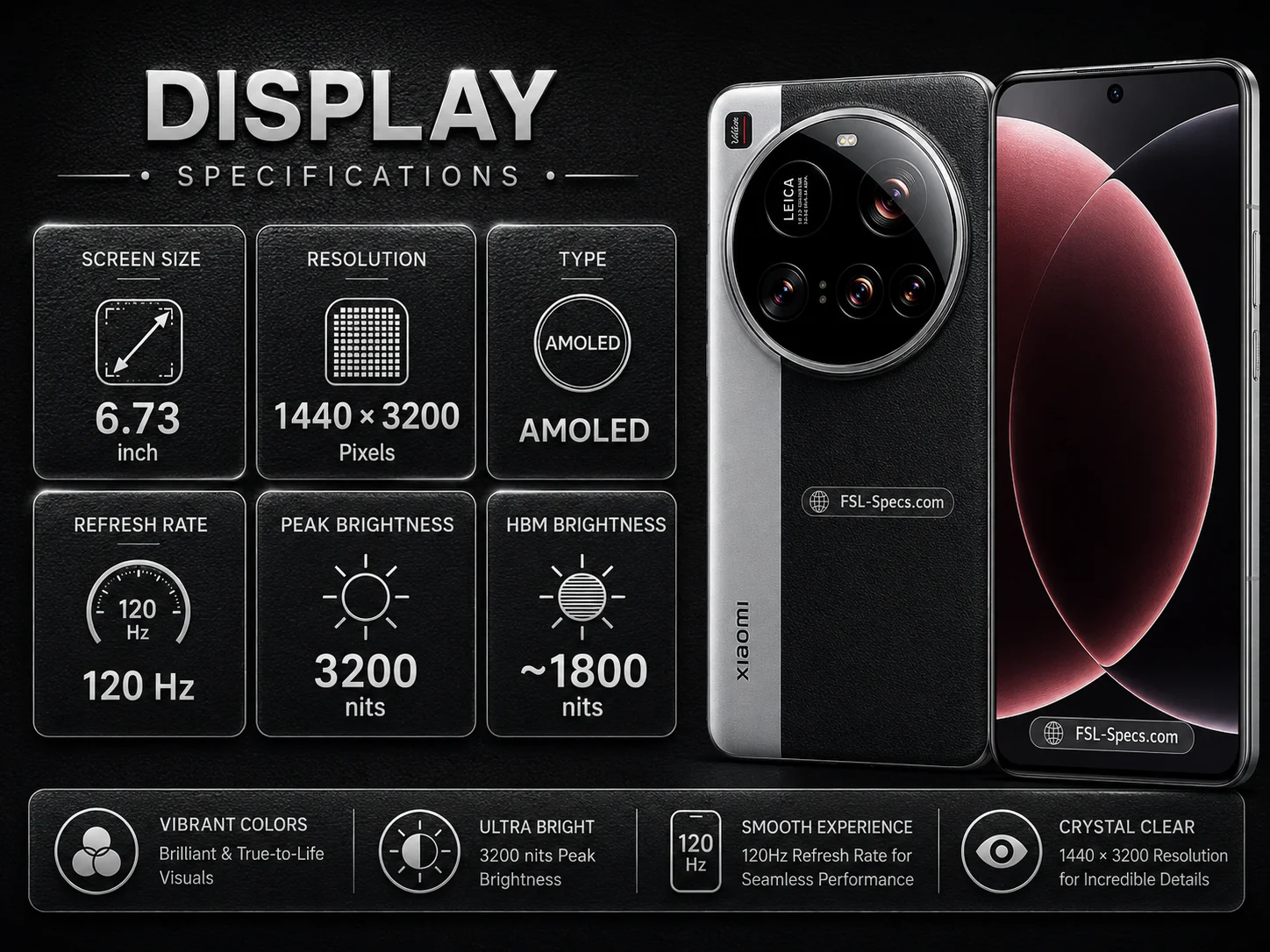
6.73 inch
Resolution
1440 × 3200 Pixels
Type
AMOLED
Refresh Rate
120 Hz
Peak Brightness
3200 nits
HBM Brightness
~1800 nits
Processor
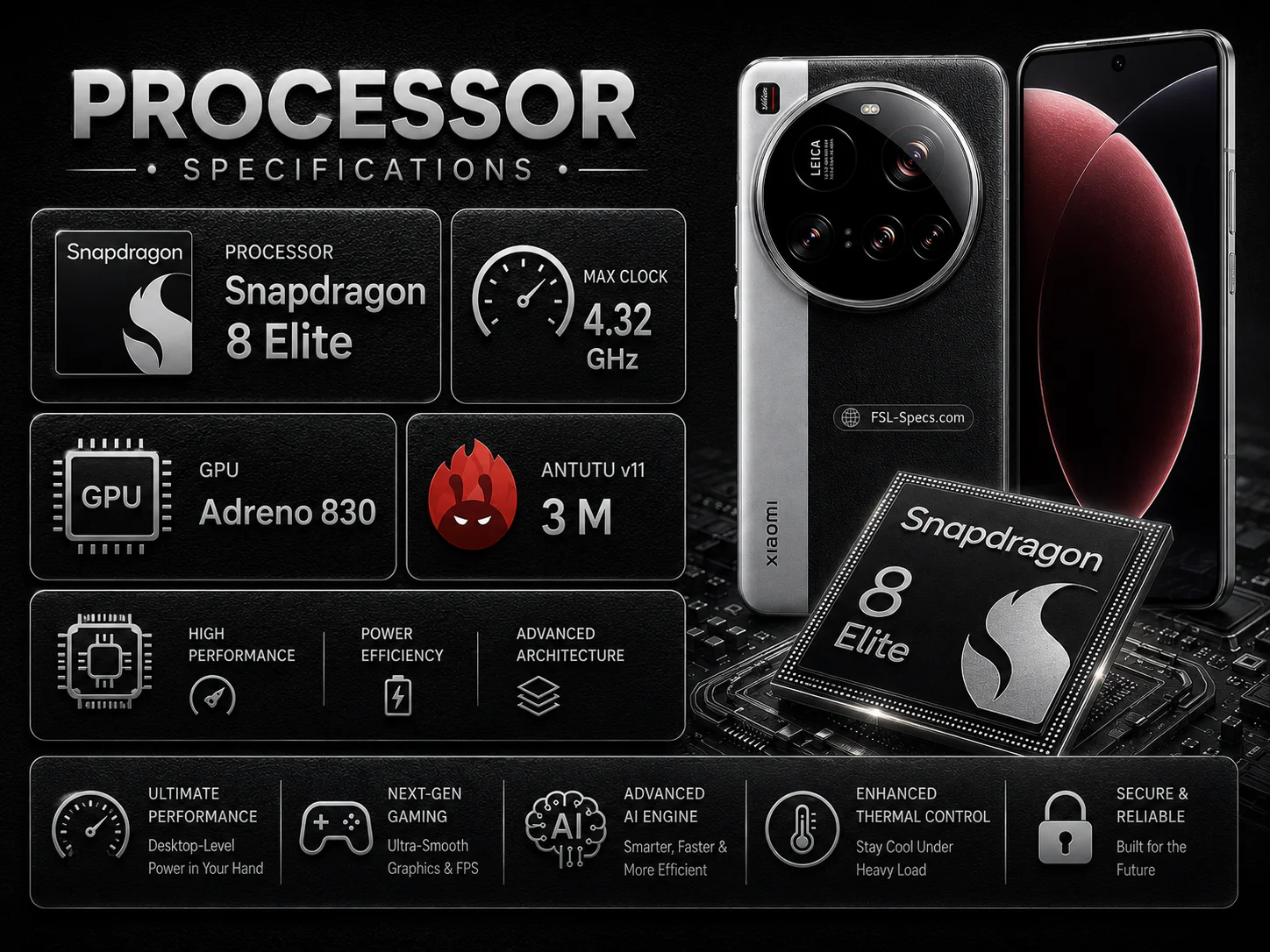
Snapdragon 8 Elite
Max Clock
4.32 GHz
Lithography
3 nm
GPU
Adreno 830
CPU Cores
Octa-core
Antutu v11
3 M
Antutu v10
2.5 M
Bootup Time
13s
Architecture
2 x 4.32 GHz Oryon V2 Phoenix L
6 x 3.53 GHz Oryon V2 Phoenix M
Ram Memory
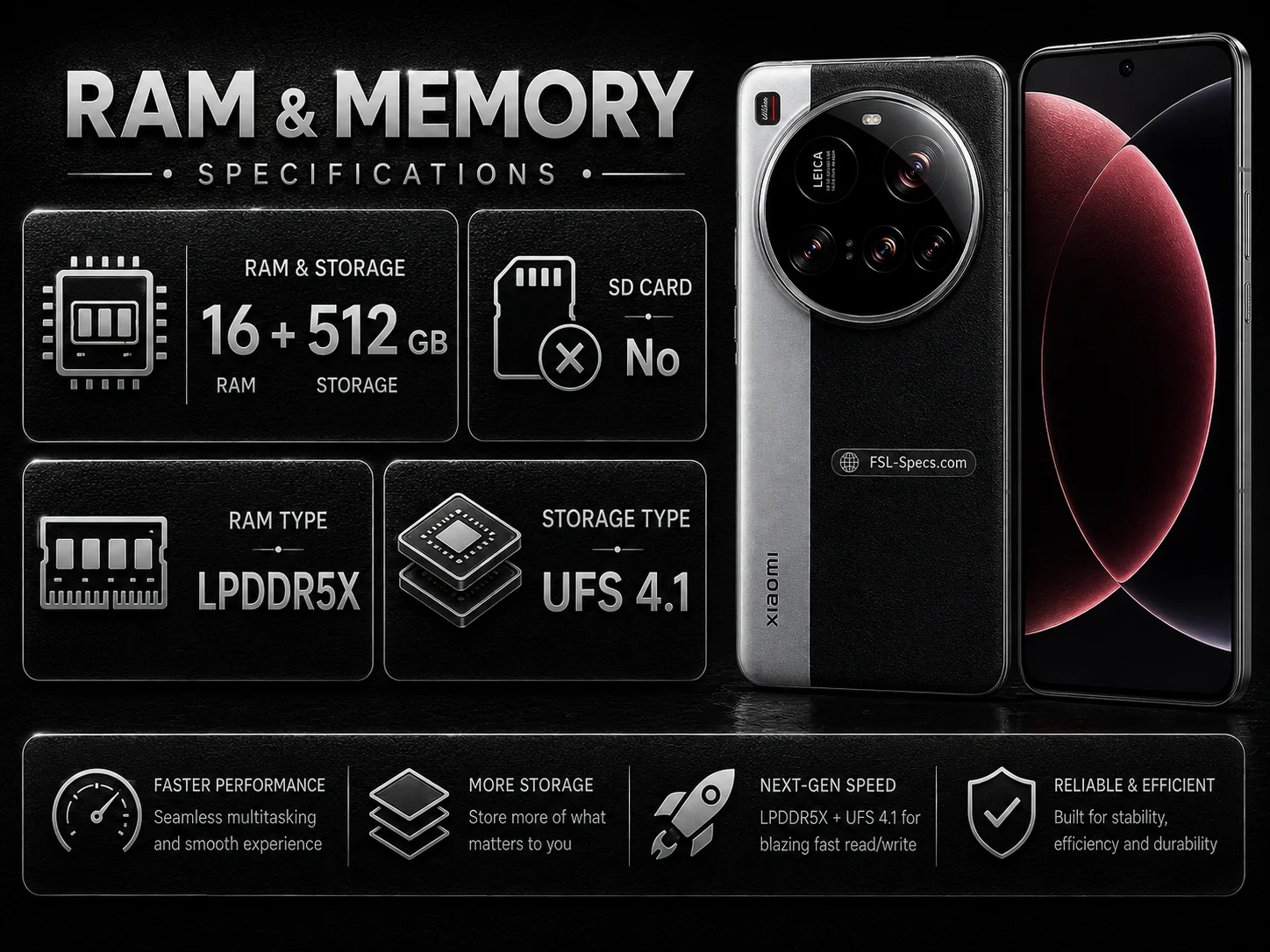
16 + 512 GB
Ram Type
LPDDR5X
Storage Type
UFS 4.1
SD Card
No
Variants
12 + 256 GB
16 + 512 GB
16 + 1 TB
MP
Rear Camera
200+50+50+50 MP
Front Camera
32 MP
SENSORS
Camera Sensors
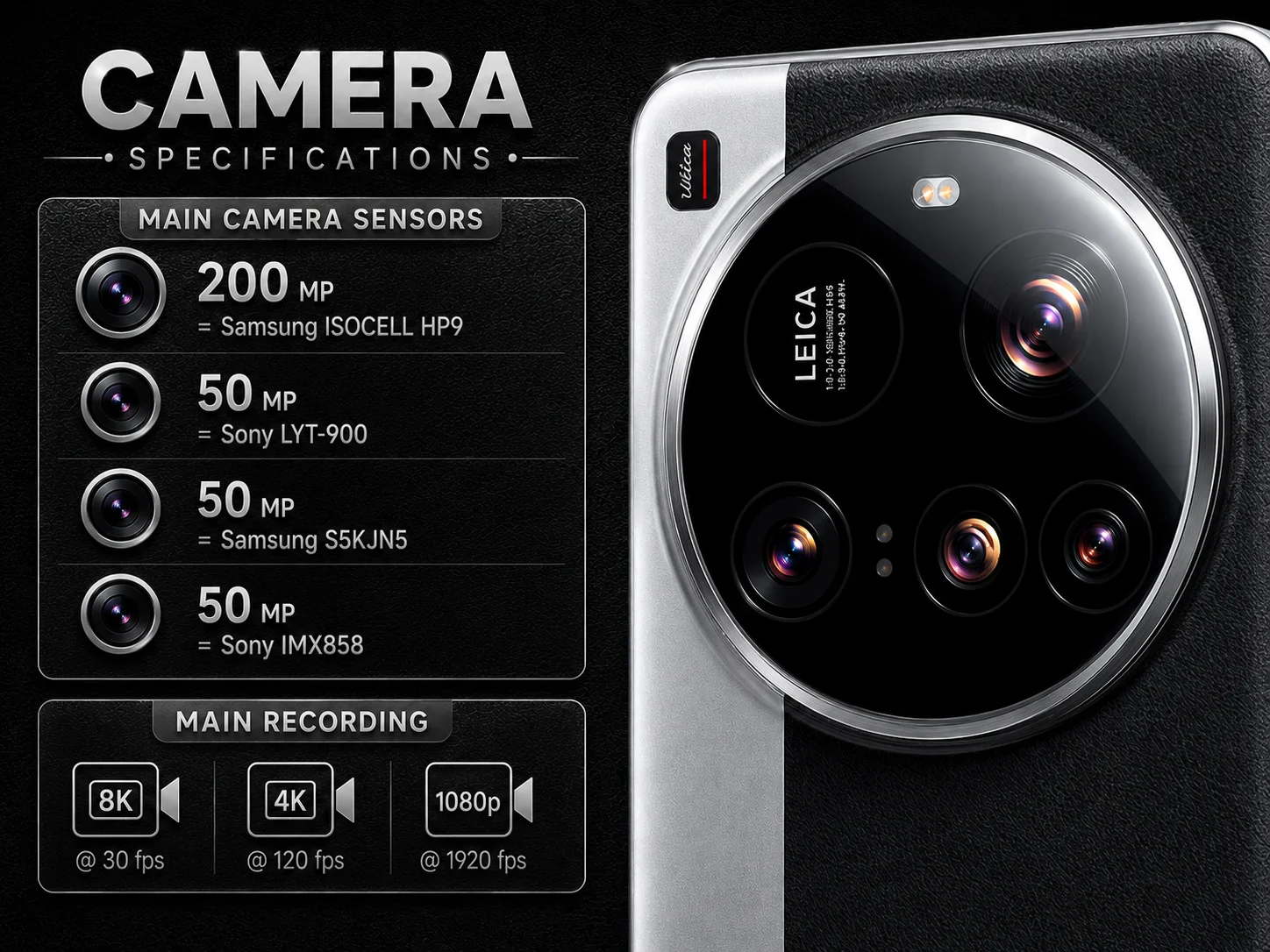
200 MP    = Samsung ISOCELL HP9
50 MP    = Sony LYT-900
50 MP    = Samsung S5KJN5
50 MP    = Sony IMX858
Front Sensors
32 MP = OmniVision OV32B
RECORDING FPS
Main Recording
8K@ 30 fps
4K @ 120 fps
1080p@ 1920 fps
Front Recording
4K @ 60 fps
1080p@ 60 fps
RESOLUTION
Main Resolution
8150 x 6150 Pixels
Front Resolution
6528 × 4896 Pixels
ZOOM
Optical Zoom
4.3 x
D Digital Zoom
120 x
Stabilization
Yes
FLASH
Flash
Dual LED
Front Flash
Screen Flash
Capacity
5410 mAh
Fast Charging
90 W
Wireless Charging
80 W
Li Battery Type
Silicon-Carbon
REVERSE
Reverse Wired
Yes
Reverse Wireless
10 W
OTHER
Battery PC Marks
12h 07m
Charging Time
47 min (20–100%) / 51 min full-charge test
AUDIO & SENSORS
Speaker
Dual Stereo Speaker
Fingerprint Sensor
Hyper Sonic Front Finger
Other Sensors
Proximity sensor
Gyroscope
Accelerometer
Ambient light sensor
Compass, TOF 3D
color spectrum sensor
Special Features

Leica camera system,Laser autofocus,Color spectrum sensor,
120× digital zoom, 4.3× periscope optical zoom,Dolby Vision video,
Dolby Atmos,80 W wireless charging,Wi-Fi 7,USB 3.2,
Vapor chamber cooling,Two-way satellite communication on China model,

BASIC INFO
Mobile
Xiaomi 15 Ultra
Model
25010PN30G
Series
Xiaomi Number
Category
Flagship
Release Date
27 February,2025
Year
2025
CONNECTIVITY
Sim
Nano-SIM / E-Sim
Network
4G / 4G+ / 5G
WiFi
Wi-Fi 7
Bluetooth
6.0
NFC
Yes / region dependent
OS
Android 15
BODY
Dimensions
161.3 × 75.3 × 9.35–9.48 mm
Build
Metal Frame And Back glass-fiber reinforced plastic
KG Weight
226 g or 229 g
Screen Size
6.73 inch
Resolution
1440 × 3200 Pixels
Type
AMOLED
Refresh Rate
120 Hz
Peak Brightness
3200 nits
HBM Brightness
~1800 nits
Processor
Snapdragon 8 Elite
Max Clock
4.32 GHz
Lithography
3 nm
GPU
Adreno 830
CPU Cores
Octa-core
Antutu v11
3 M
Antutu v10
2.5 M
Bootup Time
13s
Architecture
2 x 4.32 GHz Oryon V2 Phoenix L
6 x 3.53 GHz Oryon V2 Phoenix M
Ram Memory
16 + 512 GB
SD Card
No
Ram Type
LPDDR5X
Storage Type
UFS 4.1
Variants
12 + 256 GB
16 + 512 GB
16 + 1 TB
MP
Rear Camera
200+50+50+50 MP
Front Camera
32 MP
SENSORS
Main Camera Sensors
200 MP    = Samsung ISOCELL HP9
50 MP    = Sony LYT-900
50 MP    = Samsung S5KJN5
50 MP    = Sony IMX858
Front Camera Sensors
32 MP = OmniVision OV32B
RECORDING FPS
Main Recording
8K@ 30 fps
4K @ 120 fps
1080p@ 1920 fps
Front Recording
4K @ 60 fps
1080p@ 60 fps
RESOLUTION
Main Resolution
8150 x 6150 Pixels
Front Resolution
6528 × 4896 Pixels
ZOOM
Optical Zoom
4.3 x
D Digital Zoom
120 x
Stabilization
Yes
FLASH
Flash
Dual LED
Front Flash
Screen Flash
Capacity
5410 mAh
Fast Charging
90 W
Wireless Charging
80 W
Li Battery Type
Silicon-Carbon
REVERSE
Reverse Wired
Yes
Reverse Wireless
10 W
OTHER
Battery Life PCMark
12h 07m
Charging Time
47 min (20–100%) / 51 min full-charge test
AUDIO & SENSORS
Speaker
Dual Stereo Speaker
Fingerprint Sensor
Hyper Sonic Front Finger
Other Sensors
Proximity sensor
Gyroscope
Accelerometer
Ambient light sensor
Compass, TOF 3D
color spectrum sensor
Special Features

Leica camera system,Laser autofocus,Color spectrum sensor,
120× digital zoom, 4.3× periscope optical zoom,Dolby Vision video,
Dolby Atmos,80 W wireless charging,Wi-Fi 7,USB 3.2,
Vapor chamber cooling,Two-way satellite communication on China model,

Highlights & Review Of Xiaomi 15 Ultra

Display Review:

Xiaomi 15 Ultra features a 6.73-inch AMOLED display with WQHD+ 3200 x 1440 resolution and a 1-120Hz LTPO refresh rate, hitting 522 ppi and peaking at 3200 nits. At PKR 382,000, it undercuts two of the three rivals here.

The Samsung Galaxy S26 Ultra (PKR 395,000) counters with a larger 6.9-inch Dynamic LTPO AMOLED 2X panel at 1440 x 3120, still 120Hz, but a lower 2600 nits peak brightness, meaning you get more screen real estate but slightly less punch in direct sun.

Apple’s iPhone 17 Pro (PKR 435,000) is the smallest of the four at 6.3-inch LTPO Super Retina XDR OLED, 1206 x 2622, 460 ppi, yet Apple rates it at 1000 nits typical, 1600 nits HBM, and 3000 nits peak, and it’s the only phone here with confirmed Dolby Vision support alongside HDR10, giving it an HDR playback edge despite the smaller panel.

The ZTE Nubia RedMagic 11 Pro (PKR 296,000, the cheapest here) trades resolution for speed: its 6.85-inch AMOLED panel runs up to 144Hz, the highest refresh rate in this group, but its 1216 x 2688 resolution and 431 ppi trail all three rivals, and its 1800 nits peak brightness is the lowest of the four.

For sharpness and color depth, the Xiaomi and Samsung panels are the closest match, while the RedMagic clearly prioritizes competitive gaming fluidity over pixel density, and the iPhone leans on brightness and HDR certification rather than resolution.

Verdict: The Xiaomi 15 Ultra offers a genuinely competitive display at a lower price than the Samsung or Apple flagships, but if buttery-smooth motion is the priority, the RedMagic 11 Pro’s 144Hz panel is unmatched here, and HDR content watchers may still lean toward the iPhone 17 Pro for its Dolby Vision support.

Processor Review:

Xiaomi 15 Ultra runs on the Snapdragon 8 Elite (Gen 4) paired with an Adreno 830 GPU, scoring 3,030,376 on AnTuTu v11. At PKR 382,000, it’s now a generation behind the newer chips in this group. Both the Samsung Galaxy S26 Ultra (PKR 395,000) and the ZTE Nubia RedMagic 11 Pro (PKR 296,000) step up to the Snapdragon 8 Elite Gen 5, with the S26 Ultra scoring 3,934,365 and the RedMagic scoring even higher at roughly 3,943,354 on AnTuTu v11, meaning both rivals offer a noticeably larger CPU and GPU headroom for heavy multitasking and sustained gaming than the Xiaomi’s older silicon.

The RedMagic’s edge is helped by its built-in fan and liquid cooling, so it can hold that performance longer under load than the S26 Ultra’s more compact chassis.

Apple’s iPhone 17 Pro (PKR 435,000) uses the A19 Pro with a 6-core CPU and 6-core GPU, posting 2,538,751 on AnTuTu v11, the lowest raw AnTuTu figure here, but iOS and Android AnTuTu scores aren’t measured on a directly comparable basis, and the iPhone’s Geekbench 6 multi-core score of 10,688 actually sits ahead of the Xiaomi’s 9,710, showing the AnTuTu gap doesn’t fully capture real-world CPU performance.

In practical terms, the Xiaomi 15 Ultra still handles everyday multitasking and most games at high settings comfortably, but it no longer leads this group in raw power the way it once did against older rivals.

Verdict: Gamers wanting the most headroom should look at the RedMagic 11 Pro or Galaxy S26 Ultra, both on the newer Snapdragon 8 Elite Gen 5, while the Xiaomi 15 Ultra remains capable but is the only phone here still on last year’s chipset.

Ram & Memory Review:

Xiaomi 15 Ultra ships in 16GB+512GB, using LPDDR5X RAM and UFS 4.1 storage, with no microSD slot. At PKR 382,000, it’s the only phone here running a full 16GB of RAM, giving it more headroom for background apps staying alive during heavy multitasking.

The Samsung Galaxy S26 Ultra (PKR 395,000) drops to 12GB+256GB on LPDDR5X/UFS 4.0, also with no microSD, meaning it trails the Xiaomi by 4GB of RAM and 256GB of storage despite costing more, a real gap for anyone storing 200MP camera samples or 4K video locally.

Apple’s iPhone 17 Pro (PKR 435,000) matches Samsung’s 12GB+256GB configuration on fast NVMe storage, and while iOS traditionally manages RAM more efficiently than Android, the iPhone still offers less raw memory and storage than the Xiaomi at the highest price point in this comparison, with no expandable storage either.

The ZTE Nubia RedMagic 11 Pro (PKR 296,000, the cheapest of the four) comes in 12GB+512GB on LPDDR5T RAM and UFS 4.1 Pro storage, matching the Xiaomi’s 512GB capacity while undercutting it by 4GB of RAM, though its faster LPDDR5T standard partly offsets the smaller pool. None of these four phones support microSD expansion, so the onboard storage tier buyers pick at checkout is final.

Verdict: The Xiaomi 15 Ultra offers the best RAM-to-storage balance of the group at 16GB+512GB, but budget-focused buyers who don’t need the extra RAM can get the same 512GB storage tier from the RedMagic 11 Pro for over PKR 86,000 less.

Cameras Review:

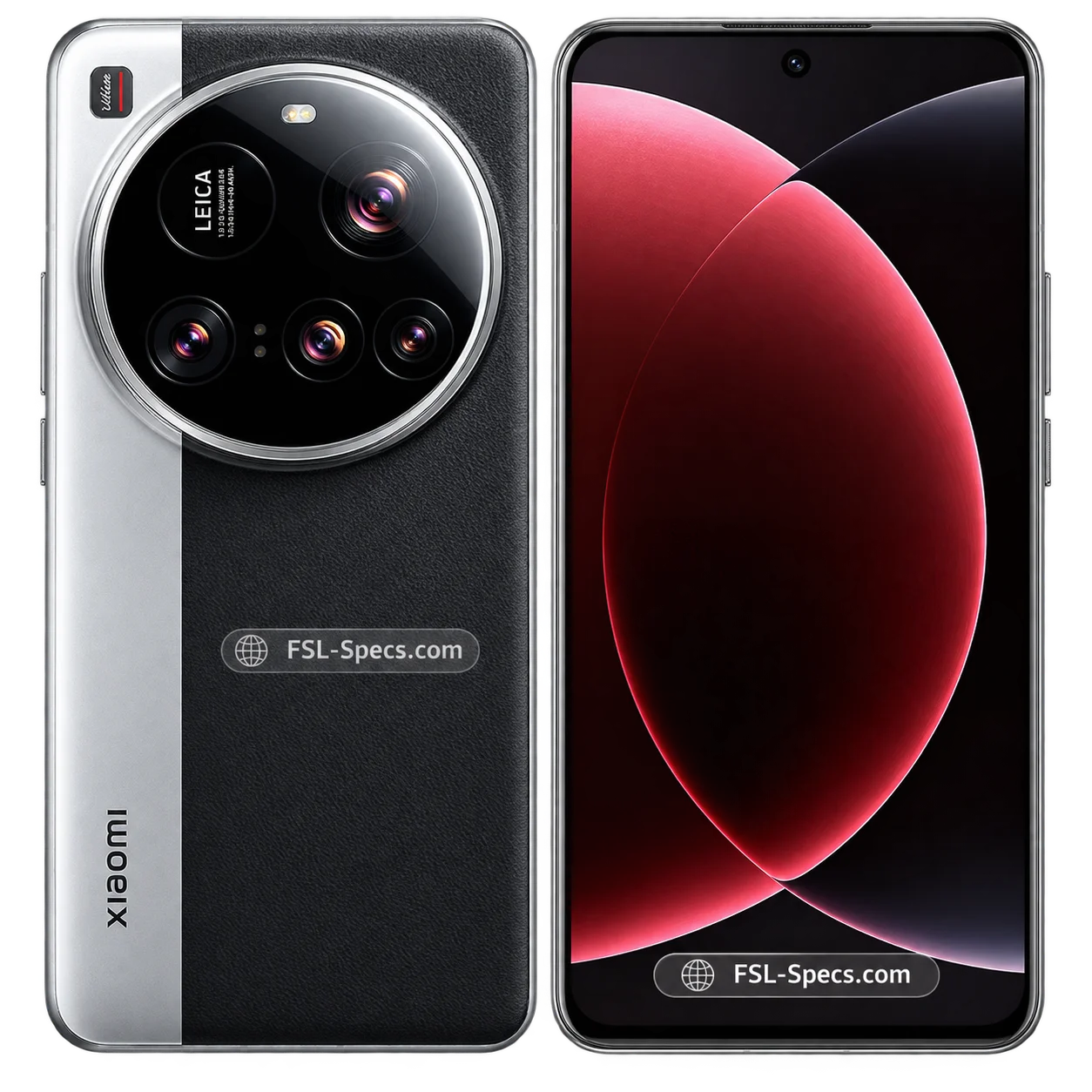
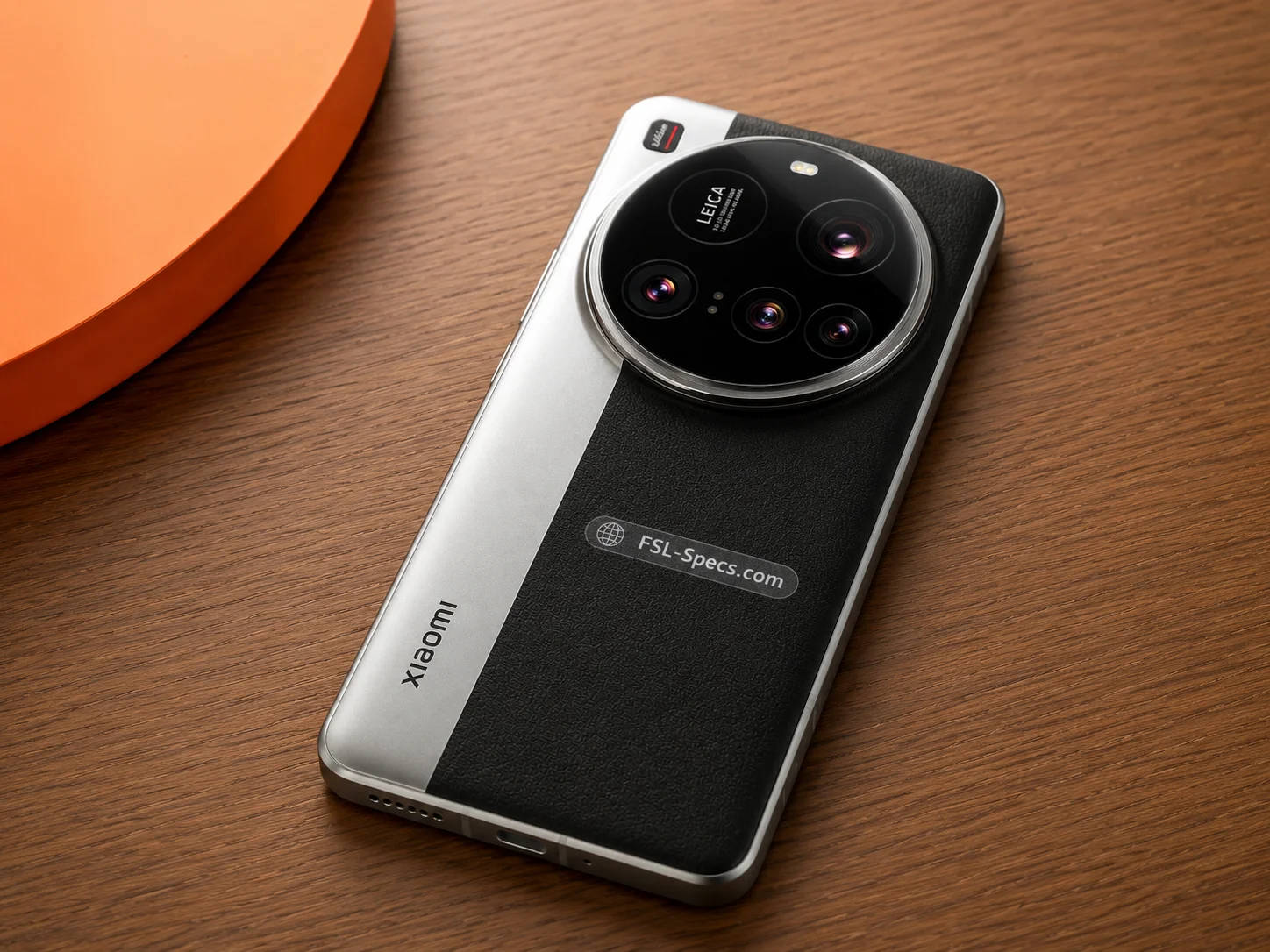
Xiaomi 15 Ultra runs a Leica-tuned quad system: a 50MP Sony LYT-900 main sensor at a full 1-inch size, f/1.63, with OIS, backed by a 50MP Samsung S5KJN5 ultra-wide at f/2.2, a 50MP 70mm telephoto at f/1.8 with OIS, and a 200MP 100mm periscope telephoto at f/2.6 with OIS. Every sensor here is named and verifiable, which is rare at this level. Front camera is a 32MP OmniVision OV32B at f/2.0. Rear video hits 8K30 across all four lenses, with 4K120 on the main and periscope telephoto; front video tops out at 4K60.

The Samsung Galaxy S26 Ultra (PKR 395,000) counters with a 200MP Samsung ISOCELL HP2 main sensor at f/1.7, a 50MP Samsung JN3 ultra-wide at f/1.9, a 10MP Sony IMX754 3x telephoto, and a 50MP Sony IMX854 5x periscope telephoto, both OIS-equipped. Its 12MP front camera and 8K30/4K120 rear video are solid, but the 3x telephoto’s 10MP resolution is noticeably lower than Xiaomi’s telephoto pairing.

Apple’s iPhone 17 Pro (PKR 435,000) uses three matched 48MP Sony sensors (main f/1.78 with sensor-shift OIS, ultra-wide f/2.2, 4x telephoto f/2.8 with OIS) plus an 18MP Sony IMX914 front camera, and it’s the only phone here offering ProRes and Dolby Vision capture up to 4K120.

The ZTE Nubia RedMagic 11 Pro (PKR 296,000) is the honest weak point: its 50MP OmniVision OV50E40 main camera (f/1.9, OIS) and 50MP ultra-wide are fine for a gaming phone, but the third rear sensor is a 2MP unit with no stated purpose, essentially a spec-sheet filler, and its 16MP under-display selfie camera caps out at just 1080p30 video, well behind the 4K front cameras on every rival here.

Verdict: For photography confidence, the Xiaomi 15 Ultra and iPhone 17 Pro have the most transparent, well-rounded hardware, while the RedMagic 11 Pro’s camera setup is clearly the afterthought in this lineup and shouldn’t be a deciding factor for buyers who care about photos or selfies.

Battery Review:

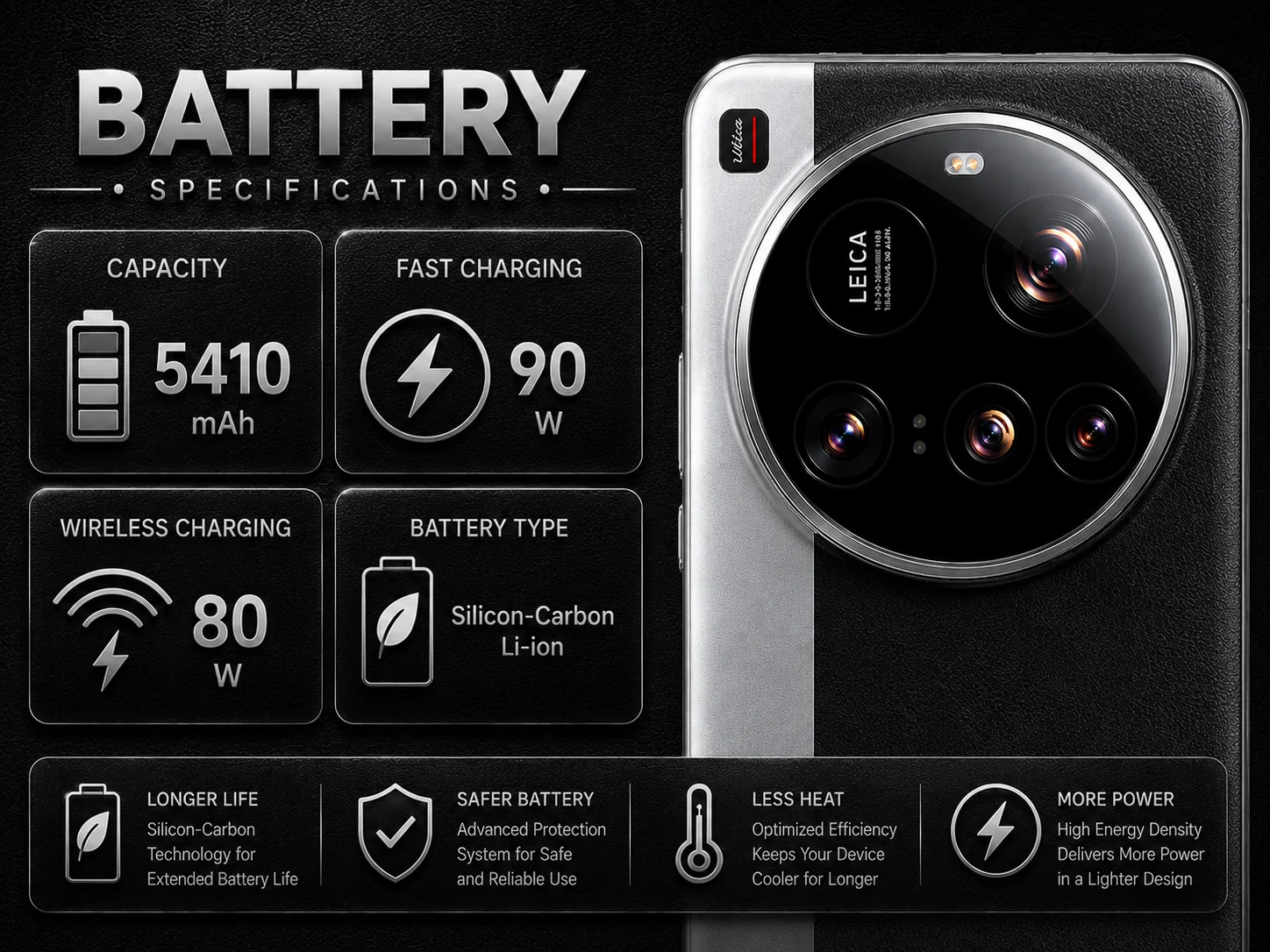
Xiaomi 15 Ultra packs a 5410mAh Surge battery with 90W wired HyperCharge, reaching 0-100% in about 50-51 minutes, plus 80W wireless charging (roughly 85 minutes full) and 10W reverse wireless charging. At PKR 382,000, it beats the wired charging speed of both pricier rivals.

The Samsung Galaxy S26 Ultra (PKR 395,000) has the smallest capacity here at 5000mAh, though it finally moved to 60W wired charging this generation, hitting full charge in around 42 minutes in independent tests, faster than Xiaomi 15 Ultra despite the smaller cell, along with 25W Qi2 wireless charging and reverse wireless support.

Apple’s iPhone 17 Pro (PKR 435,000, the priciest phone in this group) has the smallest battery of all four at 3998mAh and the slowest charging, peaking around 35W wired for a 1 hour 18 minute full charge and 25W wireless via MagSafe or Qi2, and it only supports 4.5W reverse wired charging with no reverse wireless at all, a real gap against three Android rivals that all offer it.

The ZTE Nubia RedMagic 11 Pro (PKR 296,000, the cheapest here) leads outright with a massive 7500mAh cell, 80W wired charging reaching full in about 55 minutes despite the bigger capacity, and 80W wireless charging to match, plus bypass charging for gaming without battery wear.

In honest terms, capacity and charging speed both favor the Android side of this comparison, and the iPhone 17 Pro’s battery specs are its clearest weakness against these three rivals regardless of price.

Verdict: The RedMagic 11 Pro wins outright on battery capacity and all-round charging speed for the lowest price, while the iPhone 17 Pro, despite costing the most, has the weakest battery and charging setup of the four.

Final Verdict :

Across display, processor, RAM, camera, and battery, no single phone in this comparison wins every category, but the Xiaomi 15 Ultra comes closest to an all-round win at PKR 382,000. It leads on RAM and storage with 16GB+512GB, fields the most complete and verifiable camera hardware alongside the iPhone 17 Pro, and backs that with a strong 90W wired/80W wireless battery setup, its only real weakness being a now one-generation-old Snapdragon 8 Elite (Gen 4) chipset next to the Snapdragon 8 Elite Gen 5 in the Samsung and RedMagic.

The ZTE Nubia RedMagic 11 Pro is the sharpest value play at PKR 296,000, the cheapest phone here by a wide margin, with the newest chipset, the biggest battery at 7500mAh, and the fastest overall charging, but its camera system, especially the unexplained 2MP third rear sensor and 1080p-only selfie video, is honestly the weakest in this group.

The Samsung Galaxy S26 Ultra (PKR 395,000) brings the biggest screen and this year’s welcome jump to 60W wired charging, but its 5000mAh battery is the smallest of the four Android phones and its 12GB+256GB memory trails the Xiaomi despite the higher price.

The iPhone 17 Pro (PKR 435,000) is the most expensive phone here yet posts the smallest battery, the slowest charging, and the lowest AnTuTu figures, though iOS efficiency and its ProRes/Dolby Vision video toolkit are genuine strengths for content creators who prioritize video over raw benchmarks or charging speed.

Bottom line: The Xiaomi 15 Ultra is the best-balanced flagship of the four, but buyers chasing pure performance and battery life per rupee should seriously consider the RedMagic 11 Pro instead.

Ranking (best to worst overall value):

  1. Xiaomi 15 Ultra — most balanced spec sheet, best camera and RAM, priced below Samsung and Apple
  2. ZTE Nubia RedMagic 11 Pro — cheapest, newest chipset, biggest battery, but the weakest camera setup
  3. Samsung Galaxy S26 Ultra — biggest display and much-improved charging, let down by the smallest battery and 12GB RAM at a higher price
  4. Apple iPhone 17 Pro — most expensive, smallest battery, slowest charging, and lowest AnTuTu scores, but strongest video-recording toolkit

Pros And Cons of Xiaomi 15 Ultra

Pros of Mobile

✅ Leica Quad Cameras 📸
✅ Snapdragon 8 Elite ⚡
✅ Large 1-inch Sensor 🎯
✅ Big Battery (5410mAh) 🔋
✅ 90W Wired Charging ⚡
✅ IP68 Rated 💧

Cons of Mobile

❌ Bulky Camera Module 📦
❌ Premium Price Tag 💰
❌ Heavy Weight (~230g) ⚖️
❌ No Charger Included 🔌
❌ Limited Global Availability 🌍
❌ Curved Display Glare ✨

Best For - Not Best For

Best For

🎯 Mobile Photography Pros 📸
🎯 Flagship Performance Seekers 🚀
🎯 Zoom Photography Lovers 🔭
🎯 Premium Build Lovers 💎
🎯 Long Battery Life 🔋
🎯 Leica Camera Fans 📷

Not Best For

🚫 Budget Conscious Buyers 💰
🚫 Compact Phone Lovers 📏
🚫 Lightweight Phone Seekers ⚖️
🚫 Casual Basic Users 📱
🚫 One-Hand Users 🤏
🚫 Minimalist Camera Bump 📐

Trailer And Unboxing of Xiaomi 15 Ultra

Disassembly Or Teardown And Gaming Test of Xiaomi 15 Ultra

Camera Test Xiaomi 15 Ultra

Samsung Galaxy S26 Ultra
Samsung Galaxy S25 Ultra
vivo X200 Ultra
OPPO Find X8 Ultra
iPhone 16 Pro Max

Xiaomi Series Row
Redmi Series Row
POCO Series Row
Picture of Faisal Ur Rehman

Faisal Ur Rehman

Faisal Rehman is the founder and editor of FSL Specs, where he publishes in-depth smartphone specifications, comparisons, buying guides, and technology insights. With extensive experience in mobile hardware research and technical analysis, he provides accurate and up-to-date information on Android smartphones, processors, displays, cameras, batteries, performance benchmarks, and software features. His goal is to simplify complex specifications and help readers choose the right device with confidence.

FAQs Questions

It runs on the Qualcomm Snapdragon 8 Elite chipset built on a 3nm process, paired with an Adreno 830 GPU. It's a genuine flagship-grade processor that handles heavy gaming and multitasking with ease

It features a quad Leica camera system: a 50MP f/1.6 main lens with OIS, a 50MP f/1.8 telephoto with 3x zoom, a 200MP f/2.6 periscope telephoto with 4.3x zoom, and a 50MP f/2.2 ultrawide lens. This makes it one of the most capable camera phones on the market right now

The global version packs a 5410mAh battery with 90W wired and 80W wireless charging support. The China variant gets a larger 6000mAh cell instead

It's a 6.73-inch LTPO AMOLED display with a 1440x3200 resolution, 120Hz refresh rate, and peak brightness of 3200 nits. It also supports Dolby Vision and HDR10+ for rich, detailed visuals

It's available in 12GB or 16GB RAM options, paired with 256GB, 512GB, or 1TB of UFS 4.1 storage. There's no microSD slot, so your storage choice at purchase is final.

Yes, it carries an IP68 rating for dust and water resistance. That's standard flagship protection against rain, splashes, and brief submersion.

The Black and White models measure 161.3 x 75.3 x 9.35mm and weigh 226 grams, while the Silver Chrome edition is slightly thicker at 9.48mm and 229 grams. It's noticeably heavier than most rival flagships in this price range

12 + 256 GB
₨190,000 | ₹60,000 | $600

12 + 512 GB
₨218,000 | ₹64,000 | $670

Leave a Reply

Your email address will not be published. Required fields are marked *

Scroll to Top