
Google Tensor G6
Google Tensor G6 is a 7-core flagship mobile chipset announced in August 2026, featuring a 4.11GHz maximum frequency, PowerVR CXTP-48-1536 graphics, LPDDR5X memory and a 3nm TSMC process.
Benchmark Scores
Benchmark scores and sub-scores from the supplied Google Tensor G6 XLSX data.
Measures CPU, GPU, memory and UX performance across different workloads.
Geekbench CPU and GPU compute results supplied for the Google Tensor G6.
No 3DMark result is provided in the supplied XLSX.
No PCMark 3.0 result is provided in the supplied XLSX.
CPU & AI Performance
Graphics, Memory & Storage
Multimedia (Camera & ISP)
Connectivity
General Info
information About Tensor G6
Quick Answer: Dimensity 8450 is the strongest overall chip in this comparison based on NanoReview’s current AnTuTu 11 and gaming results, while Tensor G6 has a major CPU benchmark advantage in Geekbench 6. Dimensity 8450 also delivers the strongest listed GPU performance. All three receive a 91 Battery Life score, so efficiency is a three-way tie in NanoReview’s rating.
Introduction
The Tensor G6 vs Dimensity 8400 vs Dimensity 8450 comparison is particularly interesting because Google’s newest Tensor processor competes against two MediaTek chips built around a different performance strategy. Tensor G6 was announced in August 2026 and uses a 3nm TSMC process with a seven-core CPU. Dimensity 8400 launched in December 2024, while Dimensity 8450 arrived in May 2025, with both using TSMC’s 4nm process and an eight-core Cortex-A725 CPU.
NanoReview’s current results show a split verdict. Tensor G6 is dramatically ahead in Geekbench 6 CPU testing, but Dimensity 8450 has the highest AnTuTu 11 score, the strongest NanoReview gaming score and substantially higher listed GPU FLOPS. Dimensity 8400 remains close to the 8450 because both use the same listed CPU and GPU specifications.
Processor Overview
Tensor G6 is the most advanced processor by manufacturing node and CPU architecture, but Dimensity 8450 has the strongest overall NanoReview score and AnTuTu result. Tensor G6 is a seven-core flagship SoC manufactured by TSMC on a 3nm process. Its CPU combines one C1-Ultra core at 4.11GHz, four C1-Pro cores at 3.38GHz and two C1-Pro cores at 2.65GHz.
Dimensity 8400 and Dimensity 8450 use essentially the same core configuration and GPU specification in NanoReview’s current data. Both have one Cortex-A725 at 3.25GHz, three Cortex-A725 cores at 3.0GHz and four Cortex-A725 cores at 2.1GHz. Both use the Mali-G720 MP7 at 1300MHz and have 6MB of L3 cache.
The important distinction is that the 8450 currently produces better benchmark results despite sharing the listed CPU and GPU specifications with the 8400. NanoReview reports 2,016,572 in AnTuTu 11 for the 8450 versus 1,948,428 for the 8400. That is roughly a 3.5% advantage for the newer chip in the current results.
CPU Architecture & Processing Power
Tensor G6 is the clear CPU benchmark winner, with a very large lead over both Dimensity processors in Geekbench 6.
Tensor G6 scores 2,755 in Geekbench 6 single-core and 7,563 in multi-core. Dimensity 8400 scores 1,576 and 6,239, while Dimensity 8450 records 1,612 and 6,210.
That puts Tensor G6 approximately 75% ahead of Dimensity 8450 in single-core performance and around 22% ahead in multi-core performance based on NanoReview’s listed results. Against Dimensity 8400, the gaps are approximately 75% in single-core and 21% in multi-core.
This is the strongest evidence in favor of Tensor G6 for CPU-intensive workloads. The G6 also uses the newer ARMv9.3-A instruction set and has 8MB of L3 cache, compared with ARMv9.2-A and 6MB L3 on both Dimensity processors.
Dimensity 8400 and 8450 are much closer to one another. Their Geekbench multi-core results are almost identical, with the 8400 at 6,239 and the 8450 at 6,210. The 8400 therefore actually has a tiny lead in this particular CPU benchmark, despite the 8450’s newer release.
For heavy CPU workloads, compilation, multitasking and applications that benefit from strong single-thread performance, Tensor G6 has the strongest benchmark evidence.
GPU & Gaming Performance
Dimensity 8450 is the clear gaming winner according to NanoReview, while Dimensity 8400 has the same listed GPU hardware and Tensor G6 has a lower theoretical FLOPS figure.
Tensor G6 uses the PowerVR CXTP-48-1536 GPU at 1286MHz and is listed at 1,975.3 GFLOPS. Both Dimensity 8400 and Dimensity 8450 use the Mali-G720 MP7 at 1300MHz and are listed at 2,329.6 GFLOPS.
The Dimensity chips therefore have approximately 18% higher theoretical GPU FLOPS than Tensor G6. Dimensity 8400 and 8450 are tied on this specification because NanoReview lists the same GPU configuration and theoretical compute figure for both.
NanoReview’s Gaming Performance scores create an even clearer difference. Tensor G6 receives 30, Dimensity 8400 receives 47, and Dimensity 8450 receives 50.
That makes Dimensity 8450 the strongest documented gaming choice in this comparison. Its gaming score is about 67% higher than Tensor G6’s according to NanoReview’s rating system.
The 8400 is also substantially ahead of Tensor G6 in NanoReview’s gaming score, although the 8450 holds a 3-point advantage over the 8400. This makes the 8450 the most compelling option for users who prioritize sustained 3D gaming rather than CPU benchmark performance.
The result is an important reminder that CPU leadership does not automatically translate into gaming leadership. Tensor G6’s massive Geekbench advantage does not carry over to NanoReview’s gaming score.
Manufacturing Process & Efficiency
Tensor G6 has the most advanced manufacturing process, but all three processors receive the same NanoReview Battery Life score of 91.
Tensor G6 is manufactured on TSMC’s 3nm process, while Dimensity 8400 and Dimensity 8450 use TSMC’s 4nm process.
A smaller process node can provide transistor-density and power-efficiency advantages, but the NanoReview battery indicator does not give Tensor G6 a higher score. All three processors currently receive a Battery Life score of 91.
Therefore, efficiency is a three-way tie according to NanoReview’s published rating. It would be inaccurate to call Tensor G6 the efficiency winner simply because it uses 3nm manufacturing.
The Dimensity 8400 and 8450 are both listed with a 7W sustained power limit, while the Tensor G6 page does not provide the same TDP figure. Consequently, there is not enough equivalent data to calculate a meaningful power-efficiency percentage between all three chips.
RAM, Memory & Storage Support
All three processors support LPDDR5X at 4266MHz and provide 68.2GB/s of listed memory bandwidth, making memory specifications essentially a three-way tie.
Tensor G6 uses LPDDR5X at 4266MHz with a 4×16-bit bus and 68.2GB/s maximum bandwidth. Dimensity 8400 and Dimensity 8450 use the same LPDDR5X 4266MHz memory configuration and 68.2GB/s maximum bandwidth.
The difference comes in maximum supported RAM. Tensor G6 is listed for up to 16GB, while both Dimensity 8400 and Dimensity 8450 support up to 24GB.
Storage support is also split. Tensor G6 supports UFS 4.0 and UFS 4.1, Dimensity 8400 supports UFS 4.0 and UFS 4.1, while Dimensity 8450 is listed with UFS 4.0. This gives Tensor G6 and Dimensity 8400 the broader documented storage support.
For memory bandwidth, there is no winner. For maximum RAM capacity, the Dimensity chips have the advantage.
AI & NPU Capabilities
All three processors include dedicated neural-processing hardware, but the available NanoReview specifications do not provide a common AI benchmark that supports a definitive winner.
Tensor G6 is listed with a dedicated NPU, while both Dimensity 8400 and Dimensity 8450 use the MediaTek NPU 880.
Because NanoReview does not provide a directly comparable TOPS figure or common AI benchmark result for all three chips on the supplied pages, it would be speculative to rank their generative-AI or on-device AI performance.
Tensor G6’s strong CPU results should also not automatically be described as proof of superior AI performance. CPU performance and NPU performance are separate parts of a modern SoC.
For an evidence-based comparison, the correct conclusion is that all three provide dedicated AI acceleration, while no definitive AI winner can be established from the available NanoReview data.
ISP, Camera & Video Capabilities
Tensor G6 has the strongest listed video capability, while Dimensity 8400 and 8450 advertise a higher maximum camera-resolution ceiling.
Tensor G6 supports a maximum listed camera resolution of 200MP and can capture video at 8K 30FPS or 4K 120FPS. Its video playback capability is also listed at 8K30 and 4K120.
Dimensity 8400 and Dimensity 8450 are both listed with support for one 320MP camera or three 32MP cameras, but their maximum video capture and playback are listed as 4K at 60FPS.
Therefore, the camera comparison depends on the requirement. For maximum theoretical camera resolution, the two Dimensity chips lead. For maximum video resolution and frame rate, Tensor G6 clearly leads with 8K30 and 4K120.
Tensor G6 also supports H.264, H.265, AV1 and VP9 video codecs. Both Dimensity processors support the same four video codecs.
These are SoC-level capabilities, not guarantees that every phone will implement every supported camera mode. Actual camera quality still depends on the smartphone’s sensors, lenses, stabilization and software.
Display Support
Tensor G6 has the highest listed maximum display resolution by a significant margin.
NanoReview lists Tensor G6 with support for up to 3840×2400, while both Dimensity 8400 and Dimensity 8450 are listed at 2960×1440.
This gives Tensor G6 the strongest documented display pipeline in terms of maximum resolution. It supports approximately 25% more horizontal pixels and 67% more vertical pixels than the 2960×1440 maximum listed for the Dimensity chips.
However, maximum SoC display resolution should not be confused with the display resolution used by an actual smartphone. Manufacturers choose the panel, refresh rate and display configuration independently within the platform’s capabilities.
Modem, 5G & Connectivity
Tensor G6 has the strongest connectivity specification overall, particularly for maximum theoretical download speed and Wi-Fi generation.
Tensor G6 uses the MediaTek M90 modem, supports 5G, and is listed with a maximum download speed of 12,000Mbps. It also supports Wi-Fi 7 and Bluetooth 6.0.
Dimensity 8400 and Dimensity 8450 both support 5G with a maximum listed download speed of 5,170Mbps, Wi-Fi 6 and Bluetooth 6.0.
Tensor G6 therefore has more than twice the theoretical maximum download speed listed for the two Dimensity processors. Its Wi-Fi 7 support also represents a newer wireless standard than Wi-Fi 6.
Bluetooth is a tie because all three support Bluetooth 6.0.
As always, these modem figures are theoretical maximums. Real-world cellular and Wi-Fi speeds depend on network infrastructure, carrier aggregation, spectrum, signal conditions, router capability and the phone manufacturer’s implementation.
Benchmark Comparison
Dimensity 8450 leads AnTuTu 11, while Tensor G6 dominates Geekbench 6 CPU testing.
NanoReview reports an AnTuTu 11 score of 2,016,572 for Dimensity 8450, compared with 1,948,428 for Dimensity 8400 and 1,933,536 for Tensor G6.
Dimensity 8450 therefore leads Tensor G6 by approximately 4.3% in the current AnTuTu 11 results. It also leads Dimensity 8400 by about 3.5%.
The component scores explain this result. Tensor G6 has a huge CPU score of 876,037, compared with 656,057 for Dimensity 8450. But the 8450 has a much stronger GPU score of 641,242, compared with 288,736 for Tensor G6.
Tensor G6 does have the higher memory score at 304,202 compared with 256,365 for Dimensity 8450, while their UX scores are relatively close.
This produces a useful distinction: Tensor G6 is the CPU benchmark leader, but Dimensity 8450 is the stronger combined AnTuTu performer.
Geekbench 6 reverses the result. Tensor G6 scores 2,755 single-core and 7,563 multi-core, compared with 1,612 and 6,210 for Dimensity 8450. Dimensity 8400 records 1,576 and 6,239.
The benchmark evidence therefore does not support a simple statement that one processor wins every workload. Tensor G6 is dramatically stronger in the CPU-focused Geekbench results, while Dimensity 8450 leads the broader AnTuTu result and gaming score.
Real-World Performance
Dimensity 8450 is the better all-round performance choice in NanoReview’s current scoring, while Tensor G6 is the stronger CPU-focused processor.
For application performance and CPU-intensive workloads, Tensor G6’s Geekbench results are difficult to ignore. Its 2,755 single-core score is far ahead of both Dimensity chips, while its 7,563 multi-core score is also substantially higher.
For gaming, the situation changes completely. Dimensity 8450 receives a 50 Gaming Performance score, compared with 47 for Dimensity 8400 and 30 for Tensor G6.
This makes Dimensity 8450 the strongest documented choice for users who prioritize GPU-heavy workloads and gaming. Its Mali-G720 MP7 also has the highest listed theoretical FLOPS among the three.
For efficiency, there is no winner. NanoReview gives all three a Battery Life score of 91. Therefore, the correct conclusion is a three-way tie based on the published rating.
For video creation, Tensor G6 has the more capable documented capture specification with 8K30 and 4K120. For connectivity, Tensor G6 also has a clear advantage with Wi-Fi 7 and a 12Gbps theoretical maximum download speed.
Dimensity 8400 is particularly interesting because it remains close to the 8450 despite being an older model. Its AnTuTu 11 score is about 3.5% below the 8450, and its Geekbench multi-core score is actually slightly higher in NanoReview’s current results.
Strengths & Weaknesses
Tensor G6
Strengths
- Highest Geekbench 6 single-core score.
- Highest Geekbench 6 multi-core score.
- 3nm TSMC manufacturing.
- 8MB L3 cache.
- 8K30 and 4K120 video support.
- Up to 3840×2400 display resolution.
- Wi-Fi 7.
- 12Gbps theoretical maximum download speed.
- LPDDR5X 4266MHz.
Weaknesses
- Lower AnTuTu 11 score than both Dimensity chips.
- Lower listed GPU FLOPS than Dimensity 8400 and 8450.
- Much lower NanoReview gaming score.
- Maximum RAM listed at 16GB versus 24GB on the Dimensity chips.
- Maximum camera resolution listed at 200MP versus 320MP on the Dimensity processors.
Dimensity 8400
Strengths
- Strong AnTuTu 11 score of 1,948,428.
- 2,329.6 GFLOPS theoretical GPU performance.
- NanoReview gaming score of 47.
- LPDDR5X 4266MHz and 68.2GB/s bandwidth.
- Up to 24GB RAM.
- UFS 4.0 and UFS 4.1 support.
- 320MP maximum camera resolution.
- 91 Battery Life score.
Weaknesses
- Much lower Geekbench single-core score than Tensor G6.
- Lower multi-core score than Tensor G6.
- Wi-Fi 6 rather than Wi-Fi 7.
- 4K60 maximum listed video capture.
- Slightly lower overall NanoReview score than Dimensity 8450.
Dimensity 8450
Strengths
- Highest AnTuTu 11 score at 2,016,572.
- Highest NanoReview Gaming Performance score at 50.
- 2,329.6 GFLOPS GPU performance.
- LPDDR5X 4266MHz.
- 68.2GB/s memory bandwidth.
- Up to 24GB RAM.
- 320MP camera support.
- 91 Battery Life score.
Weaknesses
- Geekbench CPU scores are far below Tensor G6.
- Wi-Fi 6 instead of Wi-Fi 7.
- 4K60 maximum listed video capture.
- UFS 4.0 rather than the UFS 4.0/4.1 combination listed for Tensor G6 and Dimensity 8400.
Best Processor For Different Users
Best overall: Dimensity 8450, because it has the highest AnTuTu 11 score and NanoReview overall score, while also leading the gaming comparison.
Best CPU: Tensor G6, with a large Geekbench 6 advantage in both single-core and multi-core performance.
Best gaming: Dimensity 8450, based on NanoReview’s Gaming Performance score of 50 and its 2,329.6 GFLOPS listed GPU performance.
Best efficiency: Three-way tie. Tensor G6, Dimensity 8400 and Dimensity 8450 all receive a 91 Battery Life score from NanoReview.
Best memory configuration: Three-way tie for bandwidth. All three support LPDDR5X at 4266MHz with 68.2GB/s maximum bandwidth. Dimensity 8400 and 8450 win on maximum supported RAM at 24GB.
Best video capability: Tensor G6, with 8K30 and 4K120 recording support.
Best display capability: Tensor G6, with a maximum listed resolution of 3840×2400.
Best connectivity: Tensor G6, thanks to Wi-Fi 7 and a 12Gbps theoretical maximum download speed.
Best camera-resolution support: Dimensity 8400 and Dimensity 8450, with up to 320MP listed camera support.
Final Verdict & Ranking
1. Dimensity 8450 — Best Overall
Dimensity 8450 takes first place because it combines the highest AnTuTu 11 score, the highest NanoReview Gaming Performance score and the highest overall NanoReview score among the three. Its 2,016,572 AnTuTu result is approximately 4.3% above Tensor G6’s current score.
2. Tensor G6 — Best CPU & Multimedia Platform
Tensor G6 ranks second overall but is the clear CPU specialist. Its Geekbench 6 scores are dramatically higher than both Dimensity chips, while its 3nm process, 8MB L3 cache, 8K video support, 3840×2400 display capability and Wi-Fi 7 make it a technically advanced platform. Its main weakness in this comparison is graphics performance, where NanoReview strongly favors both Dimensity processors.
3. Dimensity 8400 — Strong Value-Oriented Rival
Dimensity 8400 ranks third, but the gap to Dimensity 8450 is relatively small. It uses the same listed CPU and GPU configuration as the 8450 and actually records a slightly higher Geekbench 6 multi-core score in NanoReview’s current data. Its 1,948,428 AnTuTu 11 result and 47 Gaming Performance score also make it a strong performer.
Bottom Line
The Dimensity 8450 is the best overall choice of these three according to NanoReview’s current combined results, particularly for gaming and general system performance. Tensor G6 is the clear CPU benchmark winner and offers superior documented video, display and connectivity capabilities, but its gaming score and GPU compute results trail the Dimensity chips. Dimensity 8400 remains highly competitive and sits close to the 8450, making this a comparison where the newest chip is not automatically the winner in every category.
Efficiency is a confirmed three-way tie: Tensor G6, Dimensity 8400 and Dimensity 8450 all have a 91 Battery Life score on NanoReview.
Winner Summary
| Category | Winner | Key Reason |
|---|---|---|
| 🏆 Overall | Dimensity 8450 | Highest AnTuTu 11 and NanoReview overall score |
| ⚡ CPU | Tensor G6 | Much higher Geekbench 6 single and multi-core results |
| 🎮 Gaming | Dimensity 8450 | NanoReview gaming score of 50 |
| 🔋 Efficiency | Three-way tie | All score 91 for Battery Life |
| 🧠 AI | Not determined | No directly comparable AI benchmark supplied |
| 🎨 GPU Compute | Dimensity 8400 / 8450 | 2,329.6 GFLOPS |
| 💾 Memory | Three-way tie | All use LPDDR5X 4266MHz and 68.2GB/s |
| 📦 Storage | Tensor G6 / Dimensity 8400 | Both list UFS 4.0 and UFS 4.1 |
| 📸 Camera Resolution | Dimensity 8400 / 8450 | Up to 320MP listed |
| 🎥 Video | Tensor G6 | 8K30 and 4K120 support |
| 🖥️ Display | Tensor G6 | Up to 3840×2400 |
| 📶 Connectivity | Tensor G6 | 12Gbps download, Wi-Fi 7 and Bluetooth 6.0 |
Images Of Tensor G6
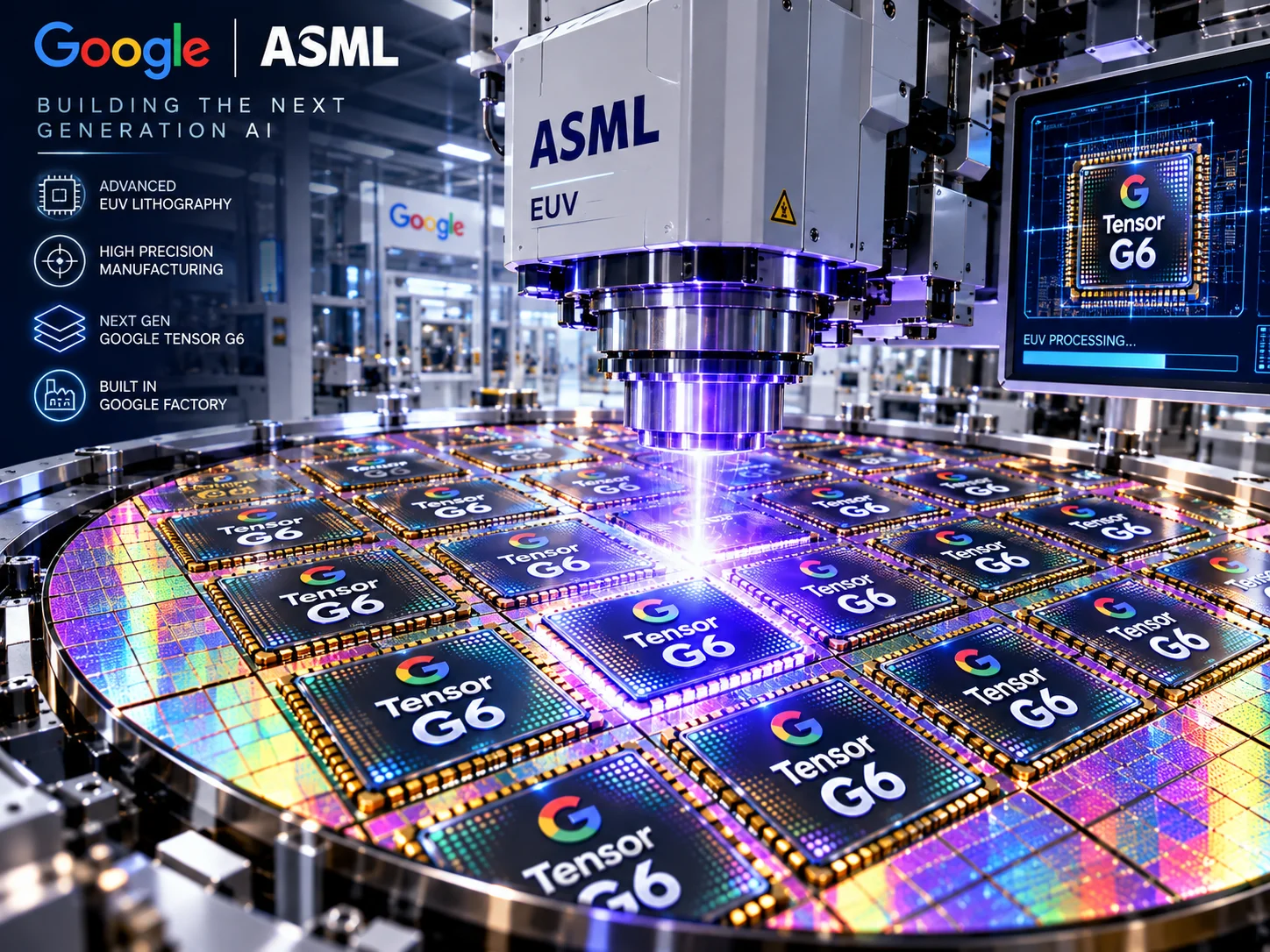
Trailer Of Tensor G6

Author & Post Info
Faisal Ur Rehman
Faisal Rehman is the founder and editor of FSL Specs, where he publishes in-depth smartphone specifications, comparisons, buying guides, and technology insights. With extensive experience in mobile hardware research and technical analysis, he provides accurate and up-to-date information on Android smartphones, processors, displays, cameras, batteries, performance benchmarks, and software features. His goal is to simplify complex specifications and help readers choose the right device with confidence.
Explore FSL Specs
Questions About Tensor G6
What are the main specifications of the Apple A20 Pro?
The Apple A20 Pro is a high-end smartphone chipset designed for demanding performance. Its key specifications include a powerful CPU, a next-generation Apple GPU, advanced AI/ML capabilities, and an efficient manufacturing process. It is designed to handle intensive gaming, photography, video processing, and everyday multitasking smoothly.
How powerful is the Apple A20 Pro?
The Apple A20 Pro is positioned as a flagship-level processor, focusing on both high performance and power efficiency. Its CPU is built to deliver fast app launches, smooth multitasking, and strong performance in demanding workloads, while the integrated GPU is designed for graphics-intensive games and applications.
What is the Apple A20 Pro AnTuTu score?
The AnTuTu score of the Apple A20 Pro can vary depending on the device, software version, cooling system, and benchmark version used. For this reason, benchmark results should be treated as performance indicators rather than a fixed specification. Check the latest tested result for the exact A20 Pro device when comparing it with other chipsets.
Does the Apple A20 Pro support AI features?
Yes. AI and machine-learning processing are an important part of the A20 Pro's design. Its neural processing capabilities help with tasks such as computational photography, voice processing, image recognition, generative AI features, and other on-device machine-learning workloads.
Is Apple A20 Pro good for gaming?
Yes, the A20 Pro is designed for high-end gaming. Its powerful CPU and GPU can handle demanding 3D games, high-resolution graphics, advanced visual effects, and sustained workloads. Actual gaming performance can still vary based on the phone's cooling system, game optimization, display resolution, and software.
How does Apple A20 Pro compare with other flagship processors?
The Apple A20 Pro competes in the flagship smartphone chipset segment. When comparing it with processors such as the Dimensity 9600 Pro or Snapdragon 8 Elite Extreme Gen 6, it is better to look at CPU performance, GPU performance, AI capabilities, power efficiency, benchmark results, and real-world gaming rather than relying on a single benchmark number.