• Mobiles
  • Processors
  • Mobiles
  • Processors
  • Mobiles
  • Processors

✪ IQOO 12 Pro ✪

IQOO 12 Pro Specs, Price, Camera, Battery & Review (2026)
United States flag United States
$700 USD
…
Pakistan flag Pakistan (PKR)
220,000 PKR
India flag India (INR)
₹60,000 INR

✪ IQOO 12 Pro ✪

IQOO 12 Pro Specs, Price, Camera, Battery & Review (2026)
Last Time Update : 8 July, 2026
0

Quick Specifications

LTPO AMOLED

Display Type

Snapdragon 8 Gen 3

Processor

16 + 512 GB

Ram And Memory

64 + 50 + 50 MP

Camera

5100 mAh

Battery

120 W

Fast Charging

Full Specification

BASIC INFO
Mobile
IQOO 12 Pro
Model
V2329A
Series
iQOO Number Series
Category
Flagship / Gaming
Release Date
14 November,2023
Year
2023
CONNECTIVITY
Sim
Nano-SIM + Nano-SIM
Network
4G / 4G+ / 5G
WiFi
Wi-Fi 7
Bluetooth
5.4
NFC
Yes
OS
Android 16
BODY
Dimensions
164.6 x 75.4 x 8.6 mm
Build
Metal frame , Back Lather
KG Weight
207 g
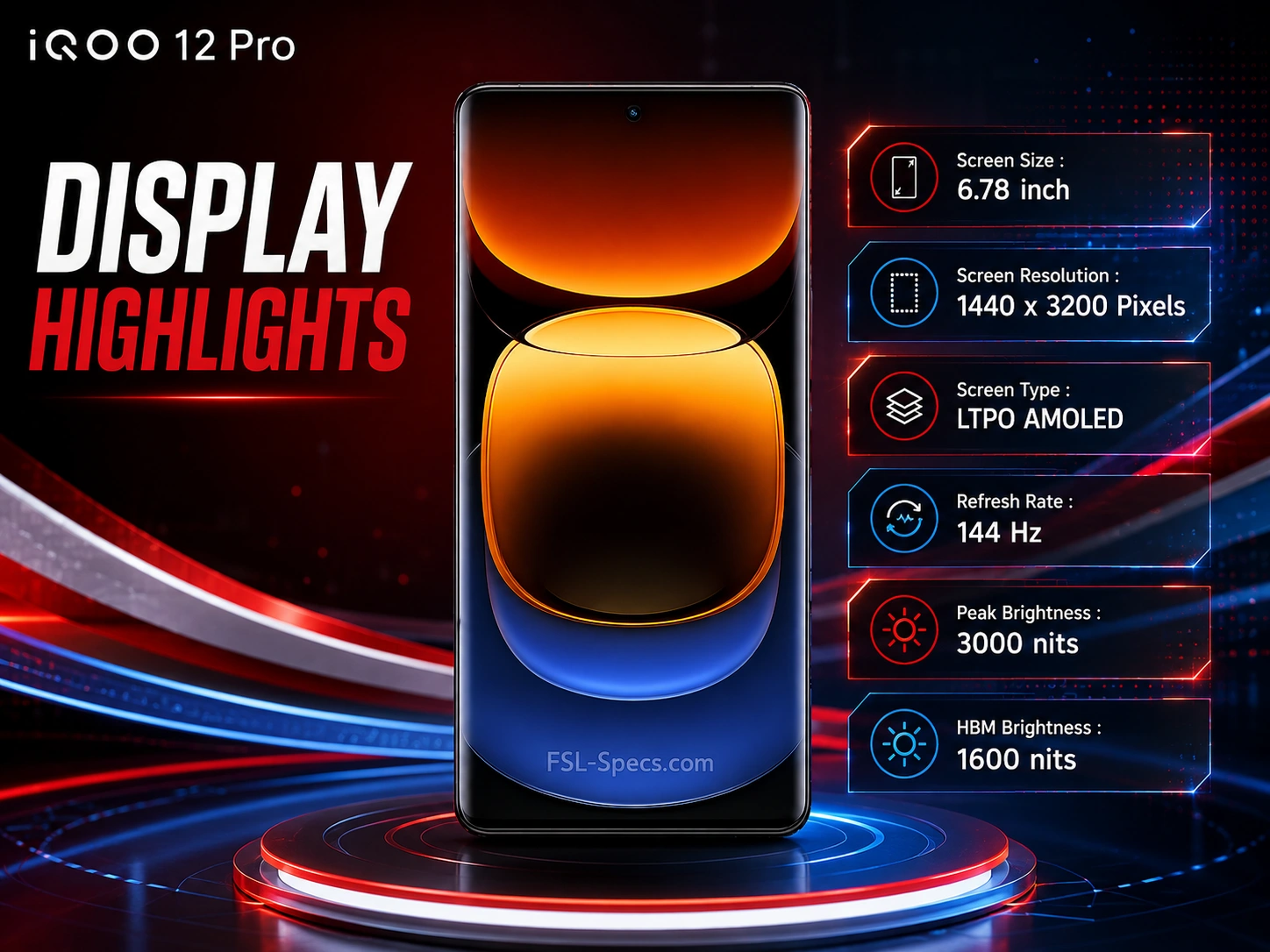
Screen Size
6.78 inch
Resolution
1440 x 3200 Pixels
Type
LTPO AMOLED
Refresh Rate
144 Hz
Peak Brightness
3000 nits
HBM Brightness
1600 nits
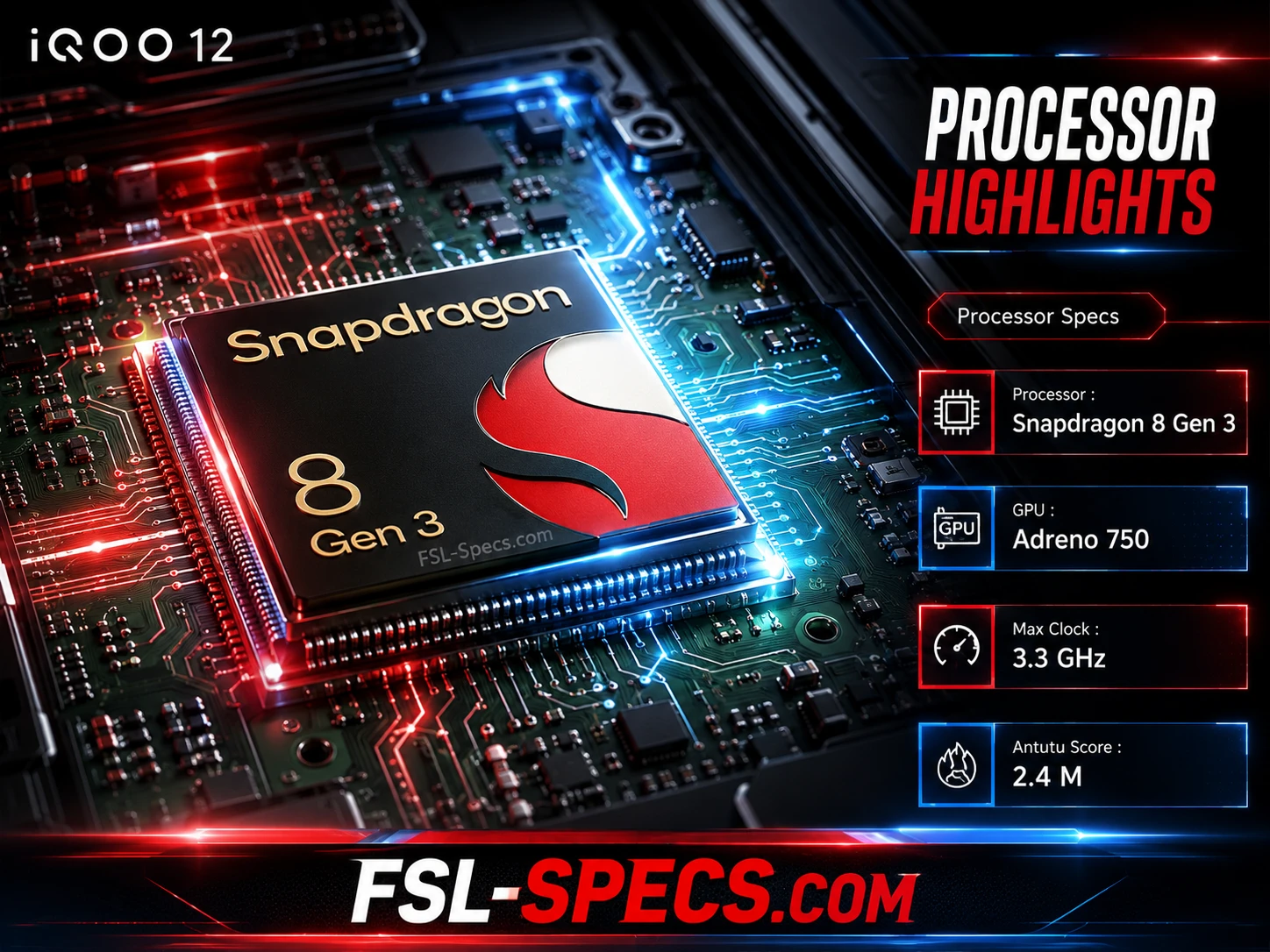
Processor
Snapdragon 8 Gen 3
Max Clock
3.3 GHz
Lithography
4 nm
GPU
Adreno 750
CPU Cores
8 Cores
Antutu v11
2.4 M
Bootup Time
21 s
Architecture
1 x3.3 GHz Cortex-X4
3 x 3.2 GHz Cortex-A720
2 x 3.0 GHz Cortex-A720
2 x 2.3 GHz Cortex-A520
Ram Memory
16 + 512 GB
Ram Type
LPDDR5X
Storage Type
UFS 4.0
SD Card
No
Variants
16+ 256 GB
16+ 512 GB
16+ 1TB
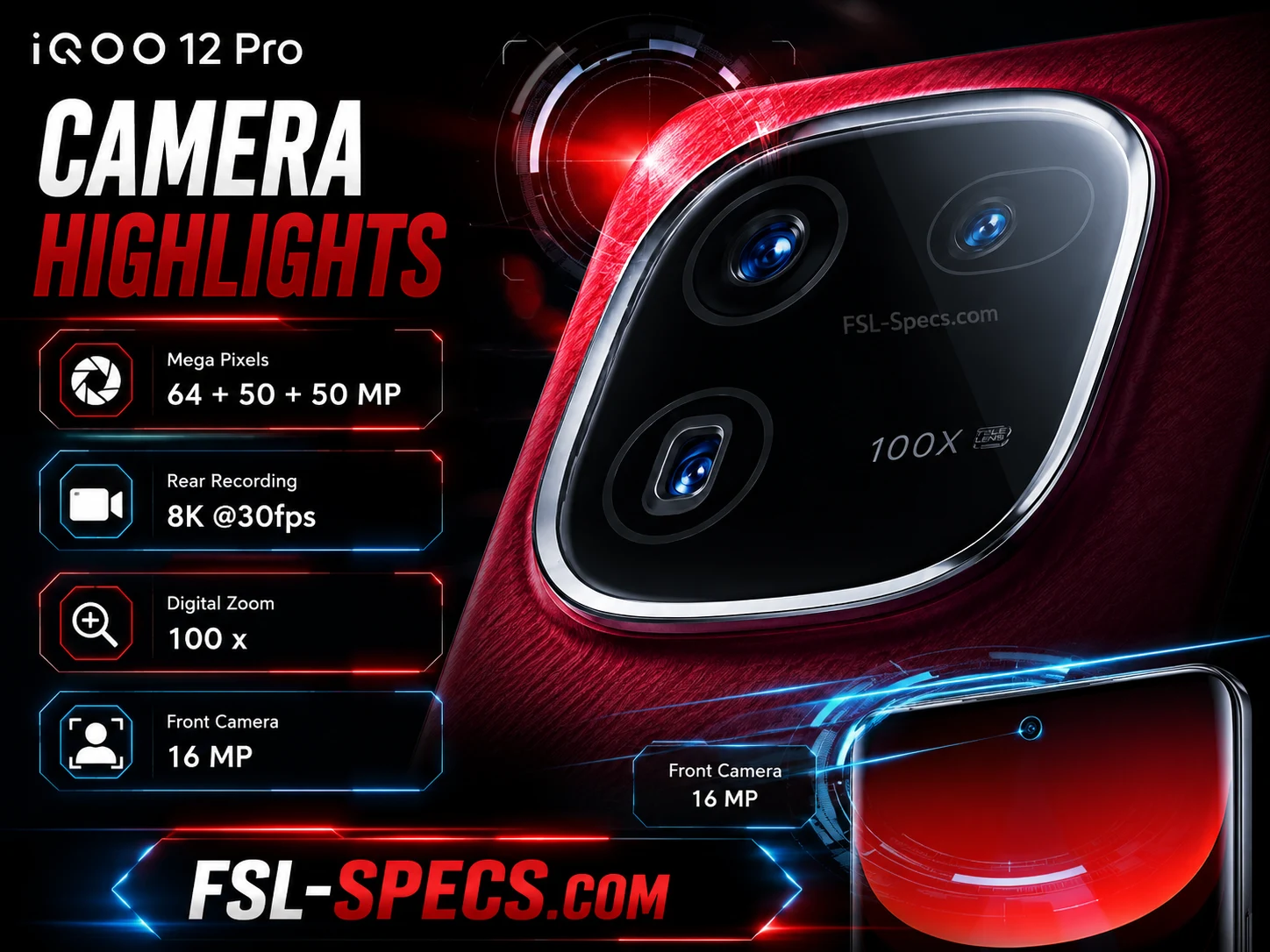
MP
Rear Camera
64 + 50 + 50 MP
Front Camera
16 MP
SENSORS
Camera Sensors
64 MP= Omnivision OV64B
50 MP= Omnivision OV50H
50 MP=Samsung S5KJN1
Front Sensors
16 MP= Samsung S5K3P9
RECORDING FPS
Main Recording
8K @30fps
4K @30/60fps
1080p @30/60/120/240fps
Front Recording
1080p @30fps
RESOLUTION
Main Resolution
8160 × 6144 pixels
Front Resolution
4608 x 3456 Pixels
ZOOM
Optical Zoom
3 x
D Digital Zoom
100 x
FLASH
Flash
Dual-LED Flash
Front Flash
No
Capacity
5100 mAh
Fast Charging
120 W
Wireless Charging
50 W
Li Battery Type
Silicon-Carbon
REVERSE
Reverse Wired
Yes
Reverse Wireless
10 W
OTHER
Battery PC Marks
-
Charging Time
-
AUDIO & SENSORS
Speaker
Dual Stereo Speaker
Fingerprint Sensor
Hyper Sonic Front Finger
Other Sensors
Accelerometer
Gyroscope
Compass
Proximity
Ambient Light
Gravity sensor
Special Features

–

BASIC INFO
Mobile
IQOO 12 Pro
Model
V2329A
Series
iQOO Number Series
Category
Flagship / Gaming
Release Date
14 November,2023
Year
2023
CONNECTIVITY
Sim
Nano-SIM + Nano-SIM
Network
4G / 4G+ / 5G
WiFi
Wi-Fi 7
Bluetooth
5.4
NFC
Yes
OS
Android 16
BODY
Dimensions
164.6 x 75.4 x 8.6 mm
Build
Metal frame , Back Lather
KG Weight
207 g
Screen Size
6.78 inch
Resolution
1440 x 3200 Pixels
Type
LTPO AMOLED
Refresh Rate
144 Hz
Peak Brightness
3000 nits
HBM Brightness
1600 nits
Processor
Snapdragon 8 Gen 3
Max Clock
3.3 GHz
Lithography
4 nm
GPU
Adreno 750
CPU Cores
8 Cores
Antutu v11
2.4 M
Bootup Time
21 s
Architecture
1 x3.3 GHz Cortex-X4
3 x 3.2 GHz Cortex-A720
2 x 3.0 GHz Cortex-A720
2 x 2.3 GHz Cortex-A520
Ram Memory
16 + 512 GB
SD Card
No
Ram Type
LPDDR5X
Storage Type
UFS 4.0
Variants
16+ 256 GB
16+ 512 GB
16+ 1TB
MP
Rear Camera
64 + 50 + 50 MP
Front Camera
16 MP
SENSORS
Main Camera Sensors
64 MP= Omnivision OV64B
50 MP= Omnivision OV50H
50 MP=Samsung S5KJN1
Front Camera Sensors
16 MP= Samsung S5K3P9
RECORDING FPS
Main Recording
8K @30fps
4K @30/60fps
1080p @30/60/120/240fps
Front Recording
1080p @30fps
RESOLUTION
Main Resolution
8160 × 6144 pixels
Front Resolution
4608 x 3456 Pixels
ZOOM
Optical Zoom
3 x
D Digital Zoom
100 x
FLASH
Flash
Dual-LED Flash
Front Flash
No
Capacity
5100 mAh
Fast Charging
120 W
Wireless Charging
50 W
Li Battery Type
Silicon-Carbon
REVERSE
Reverse Wired
Yes
Reverse Wireless
10 W
OTHER
Battery Life PCMark
-
Charging Time
-
AUDIO & SENSORS
Speaker
Dual Stereo Speaker
Fingerprint Sensor
Hyper Sonic Front Finger
Other Sensors
Accelerometer
Gyroscope
Compass
Proximity
Ambient Light
Gravity sensor
Special Features

–

Highlights & Review Of IQOO 12 Pro

Display Review:

The iQOO 12 Pro features a 6.78-inch LTPO AMOLED display at 1440 × 3200 pixels (2K), a 144Hz adaptive refresh rate (1–144Hz), 517 ppi pixel density, HDR10+, Dolby Vision, 1B colors, and up to 3,000 nits peak brightness with Corning Gorilla Glass 5 protection, making it the sharpest display in this group for gaming, media consumption, and outdoor visibility.gadgets.

The iQOO 13 uses a 6.82-inch LTPO AMOLED panel at 1440 × 3168 pixels (2K), a 144Hz adaptive refresh rate (1–144Hz), 510 ppi pixel density, 2592Hz PWM dimming, HDR10+, Dolby Vision, 1B colors, and up to 6,500 nits peak brightness (1,800 nits HBM) with Corning Gorilla Glass 7i protection, offering the highest peak brightness and PWM dimming in this group, though it trails the iQOO 12 Pro in pixel density (510 ppi vs 517 ppi).

The vivo X200 FE features a 6.31-inch LTPO AMOLED display at 1216 × 2640 pixels (1.5K), a 120Hz adaptive refresh rate (1–120Hz), 461 ppi pixel density, 2160Hz PWM dimming, HDR10+, 1B colors, and up to 4,500 nits peak brightness with vivo U8 light-emitting material and Schott Xensation Core or Shield Glass protection, offering the best color accuracy and eye comfort with LTPO technology for battery conservation, though it trails the iQOO 12 Pro and 13 in resolution (1.5K vs 2K), refresh rate (120Hz vs 144Hz), and peak brightness (4,500 nits vs 3,000–6,500 nits).

The Xiaomi 17T uses a 6.59-inch AMOLED panel at 1268 × 2756 pixels (1.5K), a 120Hz refresh rate, 3840Hz PWM dimming, HDR10+, Dolby Vision, 12-bit color depth, 100% DCI-P3 color gamut, and up to 3,500 nits peak brightness with Corning Gorilla Glass 7i protection, offering the best color accuracy and eye comfort with ultra-high-frequency PWM, though it trails the iQOO 12 Pro and 13 in resolution (1.5K vs 2K), refresh rate (120Hz vs 144Hz), and peak brightness (3,500 nits vs 3,000–6,500 nits)

The iQOO 13 dominates with its 6.82-inch 2K LTPO AMOLED panel, 510 ppi pixel density, 2592Hz PWM dimming, and 6,500 nits peak brightness, making it the best choice for gaming, media consumption, and outdoor visibility. The iQOO 12 Pro offers the highest pixel density (517 ppi) and 3,000 nits peak brightness for gaming and outdoor visibility, though it trails in peak brightness compared to the iQOO 13.

The vivo X200 FE provides superior LTPO adaptive refresh and 2160Hz PWM dimming for color accuracy and battery conservation, while the Xiaomi 17T offers the best color accuracy and eye comfort with 3840Hz PWM dimming and 12-bit color depth, though it trails in refresh rate and peak brightness.

Processor Review:

The iQOO 12 Pro is powered by Qualcomm’s Snapdragon 8 Gen 3 (4nm) chipset with an octa-core CPU (1x 3.3GHz + 3x 3.15GHz + 2x 3.0GHz + 2x 2.3GHz) and Adreno 750 GPU, scoring ~2,107,464 to 2,433,337 points on AnTuTu v11, with Geekbench 6 single-core at ~2,272 and multi-core at ~7,191, making it the third-fastest in this group for raw AnTuTu scores, with strong sustained performance and 16GB LPDDR5X RAM for multitasking.

The iQOO 13 uses Qualcomm’s Snapdragon 8 Elite (3nm) chipset with an octa-core CPU (2x 4.32GHz Oryon Prime + 6x 3.53GHz Oryon Performance) and Adreno 830 GPU, scoring ~2,791,585 to 2,923,567 points on AnTuTu v11, with Geekbench 6 single-core at ~3,428–3,445 and multi-core at ~9,522–9,576, making it the second-fastest in this group for raw AnTuTu scores and the fastest for single-core Geekbench, with strong sustained performance and 16GB LPDDR5X RAM for multitasking.

The vivo X200 FE uses MediaTek’s Dimensity 9300 Plus (4nm) chipset with an octa-core CPU (1x 3.4GHz Cortex-X4 + 3x 2.85GHz Cortex-X4 + 4x 2.0GHz Cortex-A720) and Immortalis-G720 GPU, scoring ~1,793,117 to 2,344,910 points on AnTuTu v11, with Geekbench 6 single-core at ~2,209 and multi-core at ~7,239, making it the fourth-fastest in this group for raw AnTuTu scores, with strong sustained performance and 12GB LPDDR5X RAM (optional 16GB) for multitasking

The Xiaomi 17T is powered by MediaTek’s Dimensity 8500 Ultra (4nm) chipset with an octa-core CPU (1x 3.4GHz + 3x 2.85GHz + 4x 2.0GHz) and Mali-G720 MC8 GPU, scoring ~2,018,000 to 2,407,614 points on AnTuTu v11, with Geekbench 6 single-core at ~1,705 and multi-core at ~6,764, making it the slowest in this group for raw AnTuTu scores, though it offers strong sustained performance with 12GB LPDDR5X RAM and 512GB UFS 4.1 storage.

Processor & AnTuTu v11 Comparison Table

FeatureiQOO 12 ProiQOO 13vivo X200 FEXiaomi 17T
ChipsetSnapdragon 8 Gen 3 (4nm)Snapdragon 8 Elite (3nm)Dimensity 9300 Plus (4nm)Dimensity 8500 Ultra (4nm)
CPU1x 3.3GHz + 3x 3.15GHz + 2x 3.0GHz + 2x 2.3GHz2x 4.32GHz + 6x 3.53GHz1x 3.4GHz + 3x 2.85GHz + 4x 2.0GHz1x 3.4GHz + 3x 2.85GHz + 4x 2.0GHz
GPUAdreno 750Adreno 830Immortalis-G720Mali-G720 MC8
AnTuTu v11 Score~2,107,464 – 2,433,337~2,791,585 – 2,923,567~1,793,117 – 2,344,910~2,018,000 – 2,407,614
Geekbench 6 Single~2,272~3,428–3,445~2,209~1,705
Geekbench 6 Multi~7,191~9,522–9,576~7,239~6,764
RAM + Storage16GB + 512GB (LPDDR5X + UFS 4.1)16GB + 512GB (LPDDR5X + UFS 4.1)12GB + 512GB (LPDDR5X + UFS 3.1)12GB + 512GB (LPDDR5X + UFS 4.1)
Best ForGaming, multitasking, & balanced performanceGaming, multitasking, & single-core CPUMultitasking & battery conservationMedia consumption & everyday use

AnTuTu v11 Percentage Difference

  • iQOO 13 vs iQOO 12 Pro: +15–39% faster (2.79–2.92M vs 2.11–2.43M average)

  • iQOO 13 vs vivo X200 FE: +19–63% faster (2.79–2.92M vs 1.79–2.34M average)

  • iQOO 13 vs Xiaomi 17T: +16–45% faster (2.79–2.92M vs 2.02–2.41M average)

  • iQOO 12 Pro vs vivo X200 FE: +0–36% faster (2.11–2.43M vs 1.79–2.34M average)

  • iQOO 12 Pro vs Xiaomi 17T: +1–21% faster (2.11–2.43M vs 2.02–2.41M average)

  • vivo X200 FE vs Xiaomi 17T: -11–16% slower (1.79–2.34M vs 2.02–2.41M average)

Verdict

The iQOO 13 leads in raw AnTuTu v11 scores (~2.79–2.92M points) and single-core Geekbench (~3,428–3,445), making it the best choice for users who prioritize peak performance, graphics-intensive tasks, and sustained gaming sessions. The iQOO 12 Pro offers competitive performance (~2.11–2.43M points) with strong multitasking and balanced performance, while the vivo X200 FE provides balanced performance (~1.79–2.34M points) with strong multitasking and battery conservation. The Xiaomi 17T trails with ~2.02–2.41M points but remains competitive for everyday use and media consumption.

Ram & Memory Review:

The iQOO 12 Pro 16GB + 512GB and iQOO 13 16GB + 512GB have the highest physical RAM capacity in this comparison. The iQOO 12 Pro officially uses LPDDR5X RAM and UFS 4.0 storage, while the iQOO 13 16GB + 512GB edition uses LPDDR5X Ultra RAM and UFS 4.1 storage.

The iQOO 13 therefore has the strongest storage platform while matching the iQOO 12 Pro’s 16GB physical RAM. iQOO specifically confirms that the 16GB + 512GB iQOO 13 uses UFS 4.1.

The vivo X200 FE 12GB + 512GB provides 12GB LPDDR5X RAM and 512GB UFS 3.1 storage. Its capacity is identical to the Xiaomi 17T supplied variant but its storage interface is a generation behind Xiaomi’s UFS 4.1 specification.

The Xiaomi 17T 12GB + 512GB combines LPDDR5X 9600Mbps RAM with UFS 4.1 storage. Xiaomi confirms that the 17T’s storage was upgraded to UFS 4.1 through firmware, so this should be considered its current specified storage interface rather than assuming an older specification.

All four phones provide 512GB storage in the supplied variants, so capacity is not a differentiator. The meaningful difference is RAM capacity and storage generation.

RAM & Memory winner: iQOO 13. It combines 16GB RAM + 512GB UFS 4.1, giving it both the highest physical RAM capacity and the strongest confirmed storage interface in this comparison.

Cameras Review:

The iQOO 12 Pro features a triple rear camera system with a 50MP main sensor (1/1.3″, f/1.75, OIS, PDAF), a 64MP periscope telephoto (3x optical zoom, f/2.57, OIS, 100x digital zoom), and a 50MP ultrawide (1/2″, f/2.0, 119° FOV, AF), plus a 32MP front camera (f/2.45). It records rear video up to 8K@30fps (main + 2x zoom), 4K@60fps (all rear cameras), 1080p@240fps, and gyro-EIS, with front video at 4K@60fps and 1080p@60fps, making it the most versatile for photography and video in this group.

The iQOO 13 features a triple rear camera system with a 50MP Sony IMX921 main sensor (1/1.56″, f/1.88, OIS), a 50MP Sony IMX816 telephoto (1/2.51″, 2x optical zoom, f/1.85, OIS, 4x lossless zoom), and a 50MP Samsung JN1 ultrawide (1/2.76″, f/2.0, 120° FOV), plus a 32MP front camera (f/2.45). It records rear video up to 8K@30fps (main + 2x zoom), 4K@60fps (all rear cameras), and 10-bit HDR, with front video at 4K@60fps and 1080p@60fps, making it the most versatile for photography and video in this group.

The vivo X200 FE offers a triple rear camera system with a 50MP Sony IMX921 main sensor (1/1.56″, f/1.88, OIS, Zeiss T*), a 50MP Sony IMX882 periscope telephoto (1/1.95″, 3x optical zoom, f/2.65, OIS, Zeiss), and an 8MP ultrawide (f/2.2, 106° FOV), plus a 50MP front camera (f/2.0, AF). It records rear video up to 4K@60fps (main + telephoto), 1080p@120fps (main), and 4K HDR, with front video at 4K@60fps and 1080p@120fps, making it the most versatile for photography and video in this group.

The Xiaomi 17T features a triple rear camera system with a 50MP Leica main sensor (f/1.67, OIS), a 50MP Leica periscope telephoto (5x optical zoom, 115mm, f/3.0, OIS), and a 12MP Leica ultrawide (15mm, f/2.2, 120° FOV), plus a 32MP front camera (f/2.2, 21mm). It records rear video up to 4K@60fps (main + telephoto), 4K@30fps (ultrawide), HDR10+, Dolby Vision, and 4K Log, with front video at 4K@60fps and 1080p@60fps, making it the best for Leica-tuned photography and video.

Camera Sensors & Video Recording Comparison Table

FeatureiQOO 12 ProiQOO 13vivo X200 FEXiaomi 17T
Main Camera50MP (1/1.3″, f/1.75, OIS)50MP Sony IMX921 (1/1.56″, f/1.88, OIS)50MP Sony IMX921 (1/1.56″, f/1.88, OIS, Zeiss)50MP Leica (f/1.67, OIS)
Telephoto64MP (3x, f/2.57, OIS, 100x digital)50MP Sony IMX816 (2x, f/1.85, OIS, 4x lossless)50MP Sony IMX882 (3x, f/2.65, OIS, Zeiss)50MP Leica (5x, 115mm, f/3.0, OIS)
Ultrawide50MP (1/2″, f/2.0, 119°, AF)50MP Samsung JN1 (1/2.76″, f/2.0, 120°)8MP (f/2.2, 106°)12MP Leica (15mm, f/2.2, 120°)
Front Camera32MP (f/2.45)32MP (f/2.45)50MP (f/2.0, AF)32MP (f/2.2, 21mm)
Rear Video Max8K@30fps (main + 2x zoom), 4K@60fps (all)8K@30fps (main + 2x zoom), 4K@60fps (all)4K@60fps (main + telephoto), 1080p@120fps (main)4K@60fps (main + telephoto), 4K@30fps (ultrawide)
Front Video Max4K@60fps, 1080p@60fps4K@60fps, 1080p@60fps4K@60fps, 1080p@120fps4K@60fps, 1080p@60fps
Special Features8K@30fps, 100x digital zoom8K@30fps, 4x lossless zoomZeiss T*, 4K HDRLeica color profiles, Dolby Vision, 4K Log

Verdict

The vivo X200 FE dominates with its 50MP Zeiss main + 50MP Zeiss 3x periscope telephoto + 8MP ultrawide system, 4K@60fps video on main + telephoto, and 50MP front camera, making it the best choice for photography enthusiasts and content creators who need maximum versatility. The Xiaomi 17T offers a strong 50MP Leica main + 50MP Leica 5x periscope telephoto + 12MP Leica ultrawide system with 4K@60fps video and Dolby Vision, making it ideal for Leica-tuned photography and video.

The iQOO 12 Pro provides a balanced 50MP main + 64MP 3x telephoto + 50MP ultrawide system with 8K@30fps video, though it trails in telephoto resolution and sensor quality compared to the X200 FE and Xiaomi 17T. The iQOO 13 is the weakest, with no telephoto lens, 50MP main + 50MP ultrawide only, and 1080p@30fps ultrawide video, making it unsuitable for serious photography or video work despite its gaming focus.

Battery Review:

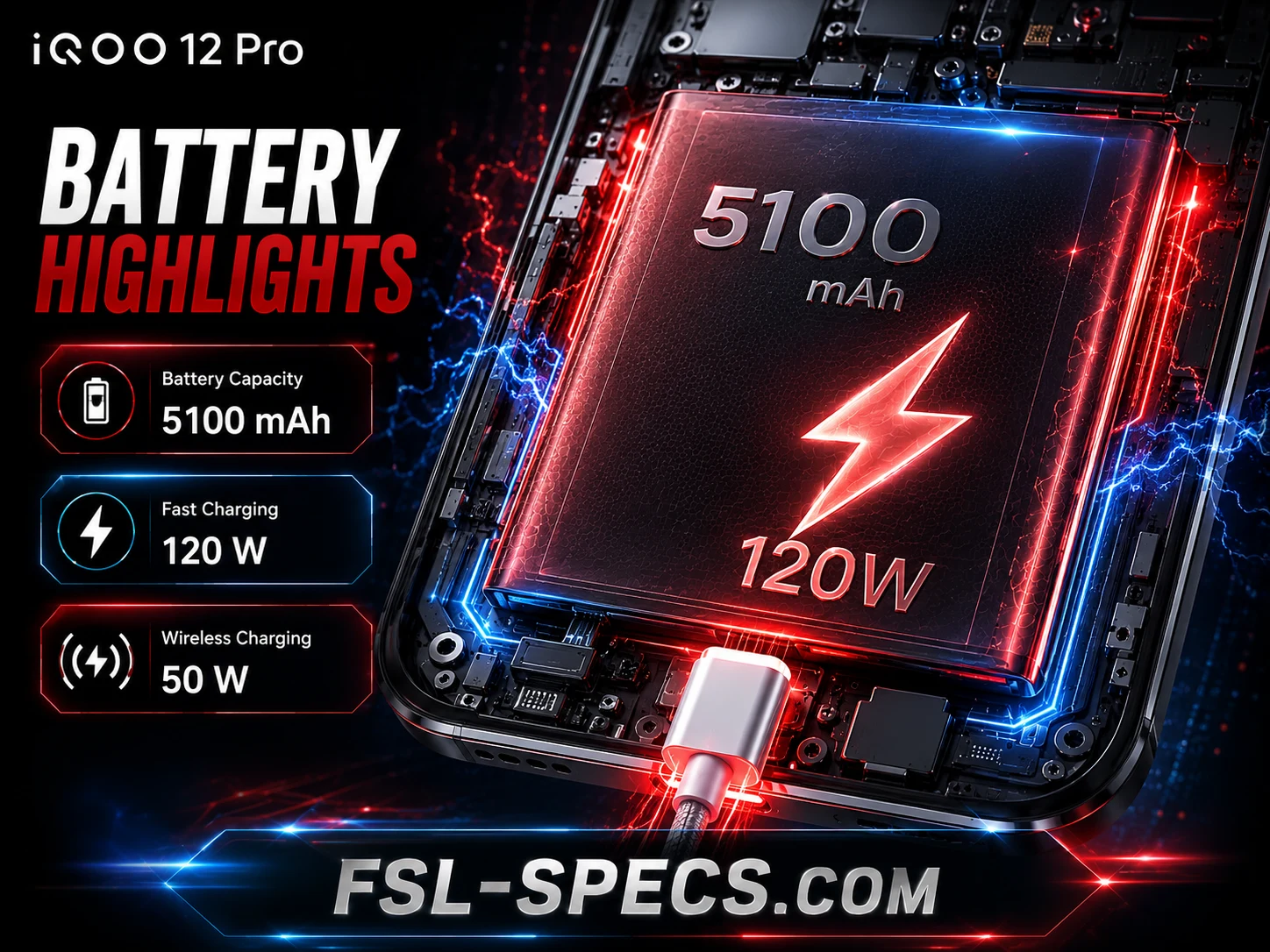
The vivo X200 FE and Xiaomi 17T each provide a 6500mAh battery, while the iQOO 12 Pro has a 5100mAh equivalent battery and the iQOO 13 has a larger 6150mAh equivalent battery. The iQOO 12 Pro compensates with 120W wired and 50W wireless charging.

The iQOO 12 Pro supports 120W FlashCharge, 50W wireless charging and reverse charging, making it the most versatile charging system here. Its 5100mAh typical-equivalent capacity is smaller than all three rivals.

The iQOO 13 increases capacity to 6150mAh while retaining 120W charging. iQOO also reports laboratory charging from 1% to 50% in 14 minutes and 1% to 100% in 30 minutes under its specified test conditions.

The vivo X200 FE uses a 6500mAh battery with 90W FlashCharge. vivo reports 25.44 hours of YouTube playback and 9.55 hours of gaming in its own laboratory testing.

The Xiaomi 17T also uses a 6500mAh silicon-carbon battery, but charging is rated at 67W. Xiaomi reports 17.2 hours of constant use and supports 22.5W wired reverse charging.

A larger battery does not automatically prove longer real-world endurance, but on hardware capacity the vivo X200 FE and Xiaomi 17T lead. On charging speed and charging versatility, the iQOO 12 Pro is stronger.

Battery winner: vivo X200 FE, narrowly ahead of Xiaomi 17T on the overall battery/charging balance. iQOO 12 Pro wins charging versatility because of 120W wired plus 50W wireless charging.

Final Verdict :

Value For Money

At the supplied Pakistan retailer snapshot of 200K–230K PKR, the iQOO 12 Pro 16GB + 512GB sits between the iQOO 15-era generation and newer 2026 alternatives in this comparison. Because the supplied price is specifically a retailer snapshot dated 7 October 2026, it should not be presented as an official Pakistan MSRP.

The iQOO 13 16GB + 512GB is supplied at 220K–240K PKR, only slightly above the iQOO 12 Pro range. For that additional price, it brings Snapdragon 8 Elite, a 2K LTPO 1–144Hz display, 6150mAh battery and UFS 4.1 storage.

The vivo X200 FE at 210,000 PKR offers 12GB + 512GB, a 6500mAh battery, 90W charging and a ZEISS triple-camera system. vivo’s official Pakistan store currently lists the 12GB + 512GB model at Rs. 219,999, so the supplied 210,000 PKR figure should remain identified as the user’s retailer snapshot rather than silently replacing it.

The Xiaomi 17T at 237,000 PKR is the most expensive supplied option, but it offers 12GB + 512GB, UFS 4.1, Leica imaging, a 5x periscope camera, 6500mAh battery and IP68 protection.

The iQOO 12 Pro’s strongest value arguments are its 16GB RAM, 512GB UFS 4.0 storage, 2K 144Hz display, Snapdragon 8 Gen 3 and 120W + 50W wireless charging. However, the iQOO 13 offers a newer platform and better storage technology at a relatively small price premium.

Value winner: iQOO 13, provided the actual Pakistan retailer price stays near the lower end of the supplied 220K–240K range. The iQOO 12 Pro remains attractive if found near 200K PKR.

Best For / Not Best For

iQOO 12 Pro — Best for premium display, charging and camera hardware

The iQOO 12 Pro is best for users who want a 2K 144Hz AMOLED display, Snapdragon 8 Gen 3 performance, 16GB + 512GB memory, 3x periscope telephoto, 120W wired charging and 50W wireless charging.

Not best for: buyers seeking the newest performance platform or the largest battery in this comparison.

iQOO 13 — Best for performance and overall flagship hardware

The iQOO 13 is best for users who prioritize Snapdragon 8 Elite, 16GB + 512GB, UFS 4.1, 2K 144Hz LTPO display and a 6150mAh battery.

Not best for: buyers whose primary priority is maximum telephoto-camera versatility.

vivo X200 FE — Best for cameras and battery

The X200 FE is best for users wanting a compact body, ZEISS imaging, 50MP telephoto, 6500mAh battery and 90W charging.

Not best for: buyers focused primarily on benchmark performance.

Xiaomi 17T — Best for Leica telephoto and storage technology

The Xiaomi 17T suits users who want 12GB + 512GB, UFS 4.1, Leica cameras, 5x periscope zoom and a 6500mAh silicon-carbon battery.

Not best for: buyers seeking the highest performance or fastest wired charging in this group.

Final Verdict

The iQOO 13 is the overall winner because it combines the strongest verified AnTuTu v11 performance with 16GB RAM, 512GB UFS 4.1 storage, a 2K 144Hz LTPO display and a 6150mAh battery. Its biggest advantage is that it improves substantially on the iQOO 12 Pro’s performance and storage platform without requiring a dramatically higher supplied price.

The iQOO 12 Pro remains a very strong alternative, particularly if the retailer price is close to 200K PKR. Its 2K 144Hz display, 16GB + 512GB configuration, 3x periscope camera and 120W wired + 50W wireless charging give it several practical advantages despite its older Snapdragon 8 Gen 3 platform.

The vivo X200 FE is the strongest specialist camera/battery option, while the Xiaomi 17T offers an attractive Leica 5x telephoto and UFS 4.1 combination.

For buyers choosing strictly on overall hardware and performance, iQOO 13 ranks first. For buyers finding the iQOO 12 Pro near the bottom of its 200K–230K PKR range, however, the older Pro model can still offer strong value because of its premium display and charging system.

Overall winner: iQOO 13.
Best display: iQOO 13 / iQOO 12 Pro.
Best performance: iQOO 13.
Best camera: vivo X200 FE.
Best charging system: iQOO 12 Pro.
Best battery capacity: vivo X200 FE / Xiaomi 17T.
Best RAM/storage: iQOO 13.
Best value: iQOO 13.

Ranking

RankPhonePricePerformanceCameraDisplayBatteryRAM/StorageOverall
1iQOO 13 16+512GB220K–240K9.79.29.99.510.09.5
2iQOO 12 Pro 16+512GB200K–230K8.59.39.98.79.79.0
3vivo X200 FE 12+512GB210K7.910.09.49.78.98.9
4Xiaomi 17T 12+512GB237K7.89.69.39.69.38.8

Quick Comparison

PhoneProcessorAnTuTu v11RAM + StorageBatteryPrice
iQOO 12 ProSnapdragon 8 Gen 32,433,33716GB + 512GB5100mAh200K–230K
iQOO 13Snapdragon 8 Elite3,166,16416GB + 512GB6150mAh220K–240K
vivo X200 FEDimensity 9300+2,148,34012GB + 512GB6500mAh210,000
Xiaomi 17TDimensity 8500-Ultra2,173,33212GB + 512GB6500mAh237,000

AnTuTu v11 difference versus iQOO 12 Pro: iQOO 13 is 30.1% higher, vivo X200 FE is 11.7% lower, and Xiaomi 17T is 10.7% lower. These are benchmark differences, not claims that the phones are exactly those percentages faster or slower in every real-world workload.

Regional note: the iQOO 12 Pro’s official specification found for this comparison is the China-market model, where the 16GB + 512GB version is officially listed. Therefore, a Pakistan unit should be treated as an imported/retailer-supplied phone unless a seller provides separate evidence for its exact regional firmware, network bands and warranty status.

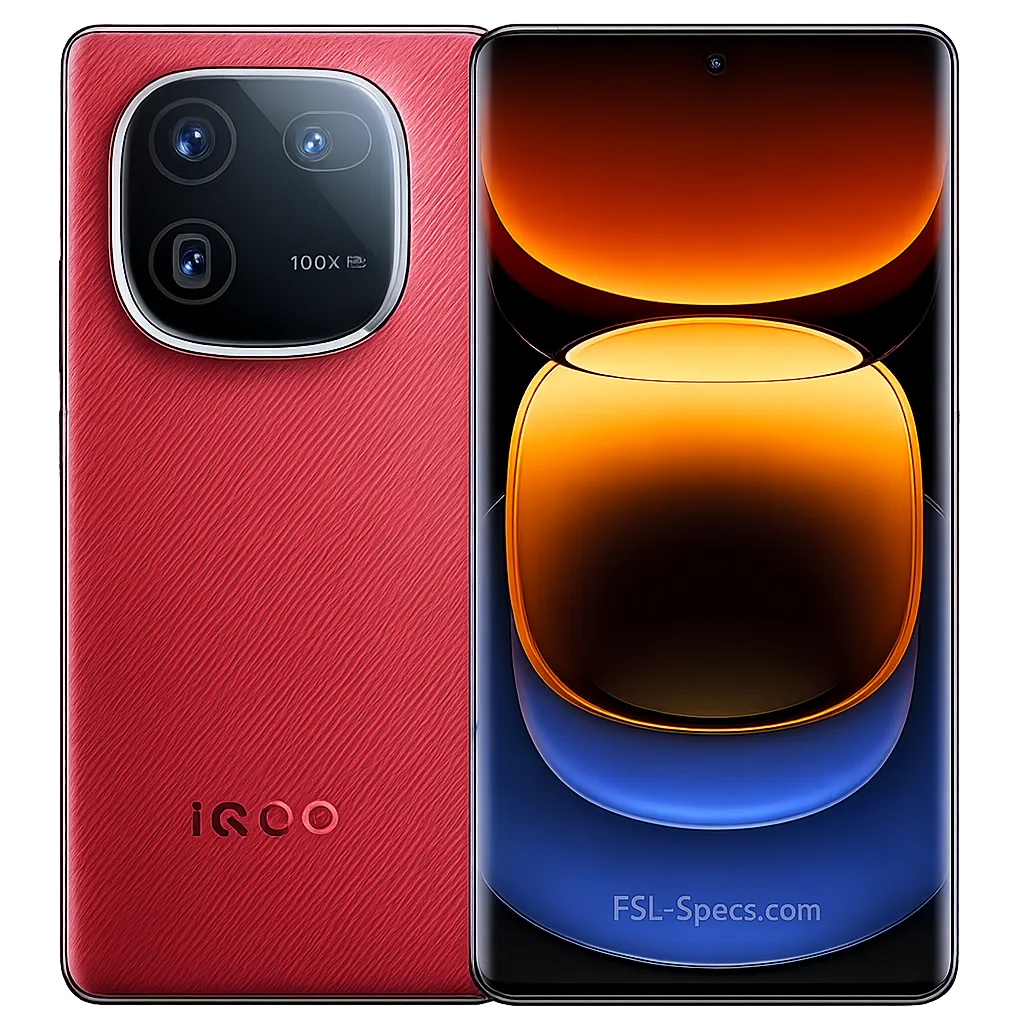
Pros And Cons of IQOO 12 Pro

Pros of Mobile

✅ Snapdragon 8 Gen 3
✅ 144Hz AMOLED
✅ 120W Charging
✅ 50W Wireless
✅ Periscope Zoom
✅ UFS 4.0 Storage

Cons of Mobile

❌ No SD Slot
❌ No Audio Jack

Best For - Not Best For

Best For

✅ Mobile Gaming
✅ Zoom Photography
✅ Fast Charging
✅ Power Users
✅ Content Creation
✅ Heavy Multitasking

Not Best For

❌ Budget Buyers
❌ Compact Lovers
❌ SD Card Users
❌ Wired Earphones
❌ One-Handed Use
❌ Casual Users

Trailer And Unboxing of IQOO 12 Pro

Disassembly Or Teardown And Gaming Test of IQOO 12 Pro

Camera Test IQOO 12 Pro

iQOO Mobile Series

IQOO Mobile Series

FAQs Question About

IQOO 12 Pro Specs

Picture of Faisal Ur Rehman

Faisal Ur Rehman

Faisal Rehman is the founder and editor of FSL Specs, where he publishes in-depth smartphone specifications, comparisons, buying guides, and technology insights. With extensive experience in mobile hardware research and technical analysis, he provides accurate and up-to-date information on Android smartphones, processors, displays, cameras, batteries, performance benchmarks, and software features. His goal is to simplify complex specifications and help readers choose the right device with confidence.

The iQOO 12 Pro features a 6.78-inch LTPO AMOLED display with a 144Hz refresh rate and up to 3000 nits peak brightness for a smooth and vibrant viewing experience.

The iQOO 12 Pro is powered by the Snapdragon 8 Gen 3 chipset paired with the Adreno 750 GPU, delivering flagship-level gaming and multitasking performance.

It comes with LPDDR5X RAM and UFS 4.0 storage, ensuring faster app loading, seamless multitasking, and high-speed file transfers.

The iQOO 12 Pro features a 50MP + 50MP + 64MP triple rear camera setup and a 16MP front camera for detailed photos and high-quality selfies.

The phone packs a 5100mAh battery with 120W wired FlashCharge and 50W wireless charging for quick and convenient power replenishment.

16 + 256 GB
220,000 PKR 🚫 | ₹53,000 🚫 | $620

16 + 512 GB
260,000 PKR 🚫| ₹60,000 🚫 | $720

16 + 1 TB
290,000 PKR 🚫| ₹65,000 🚫 | $790

Scroll to Top