• Mobiles
  • Processors
  • Mobiles
  • Processors
  • Mobiles
  • Processors

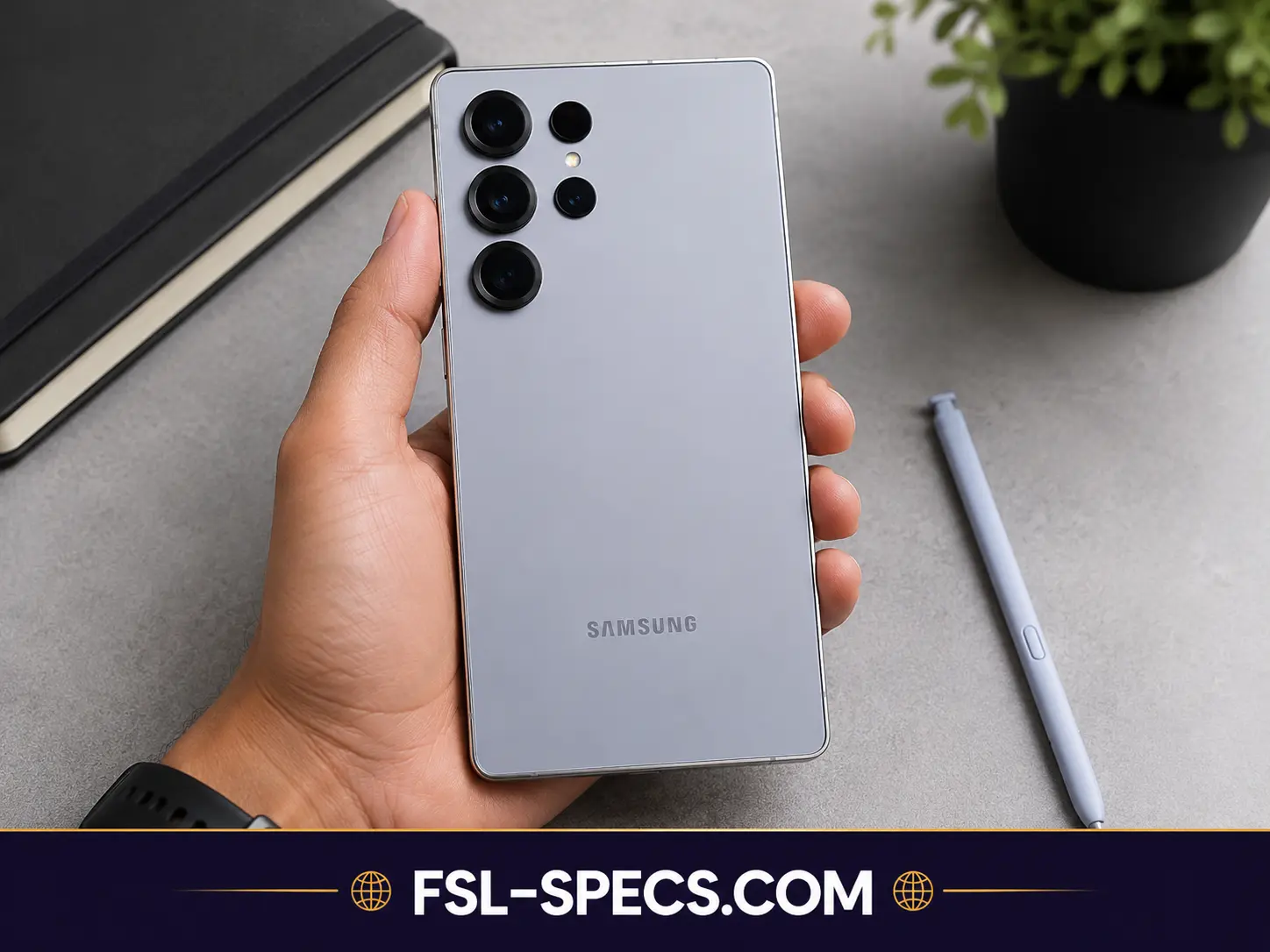
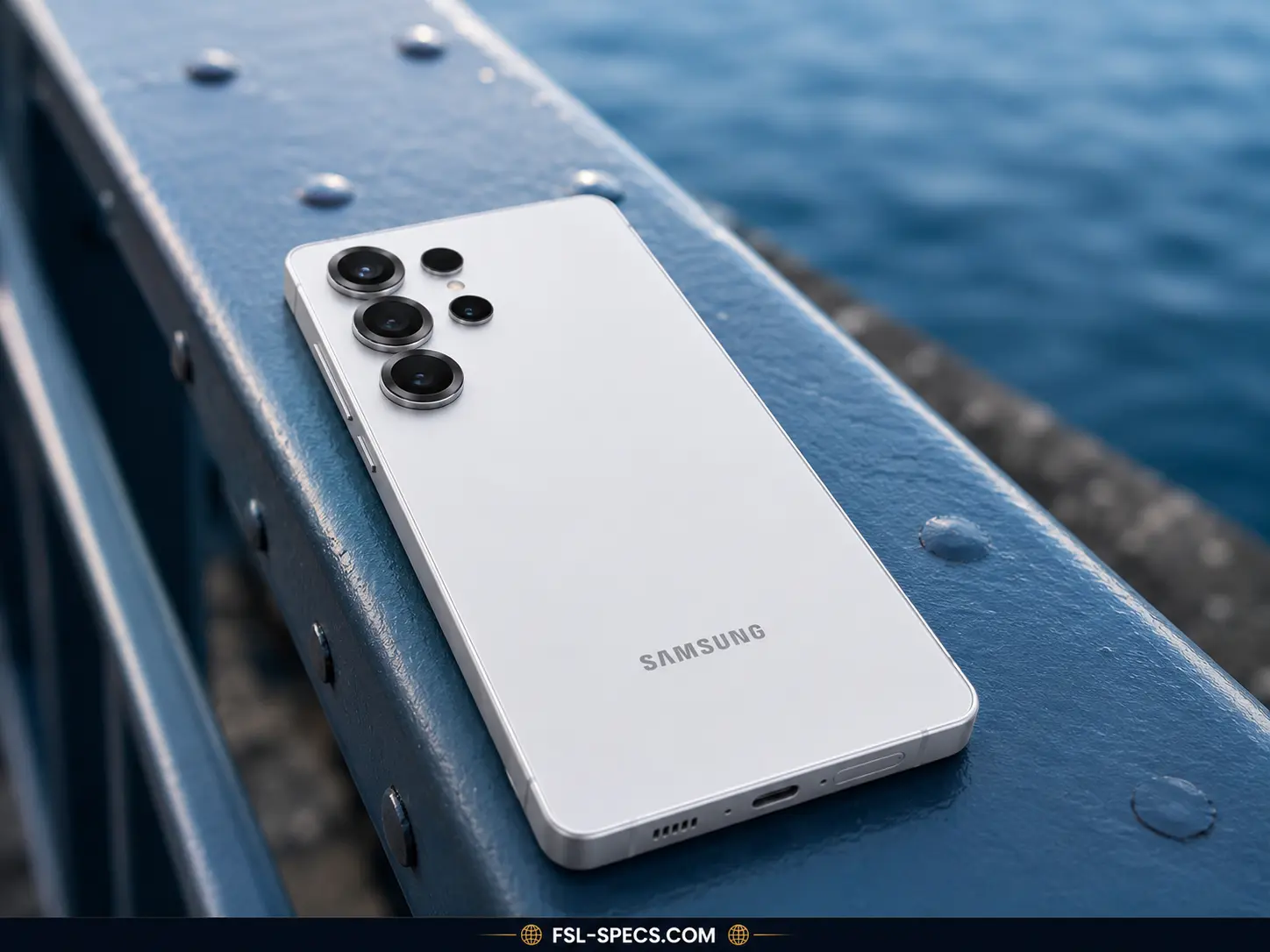
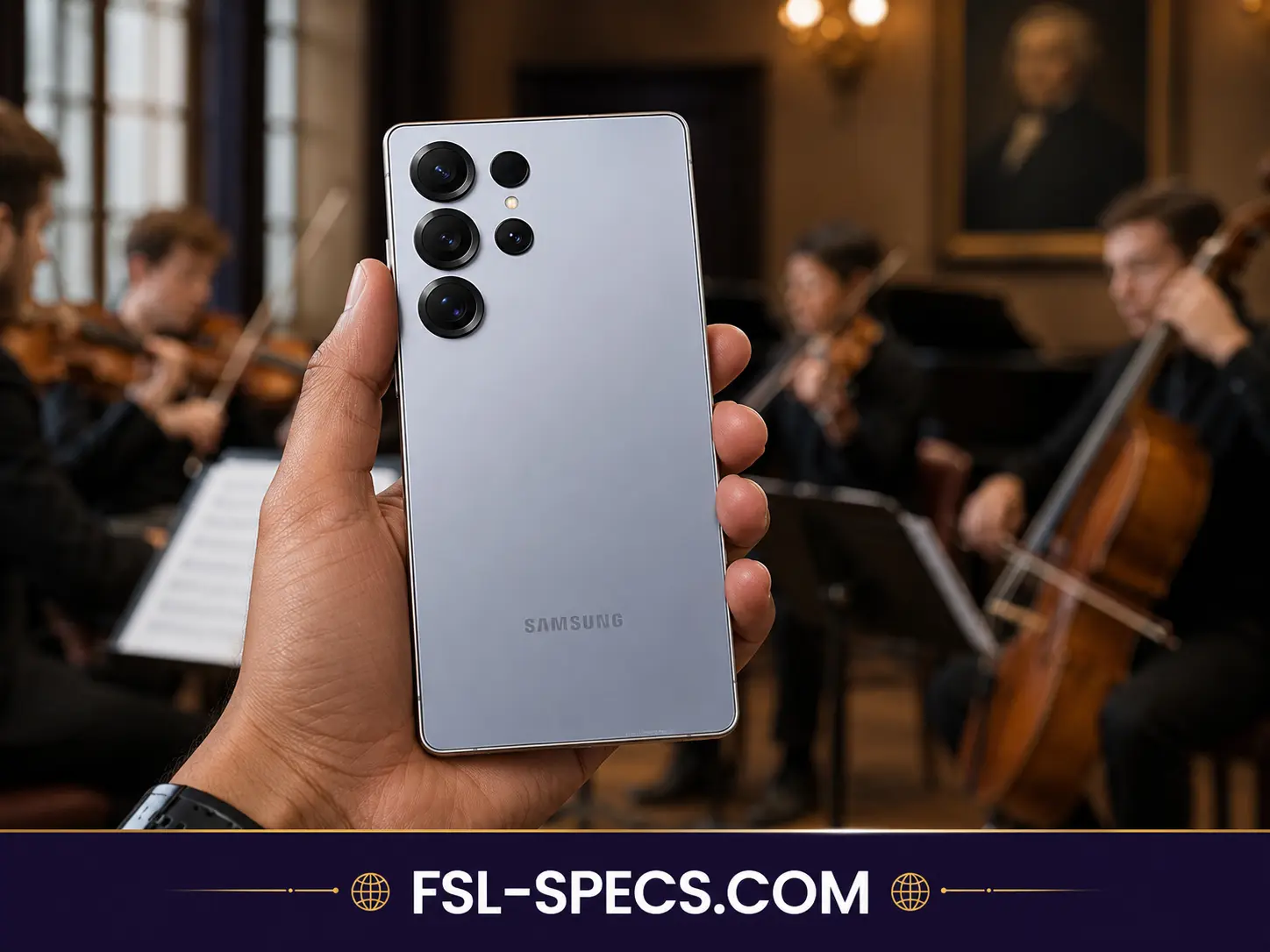
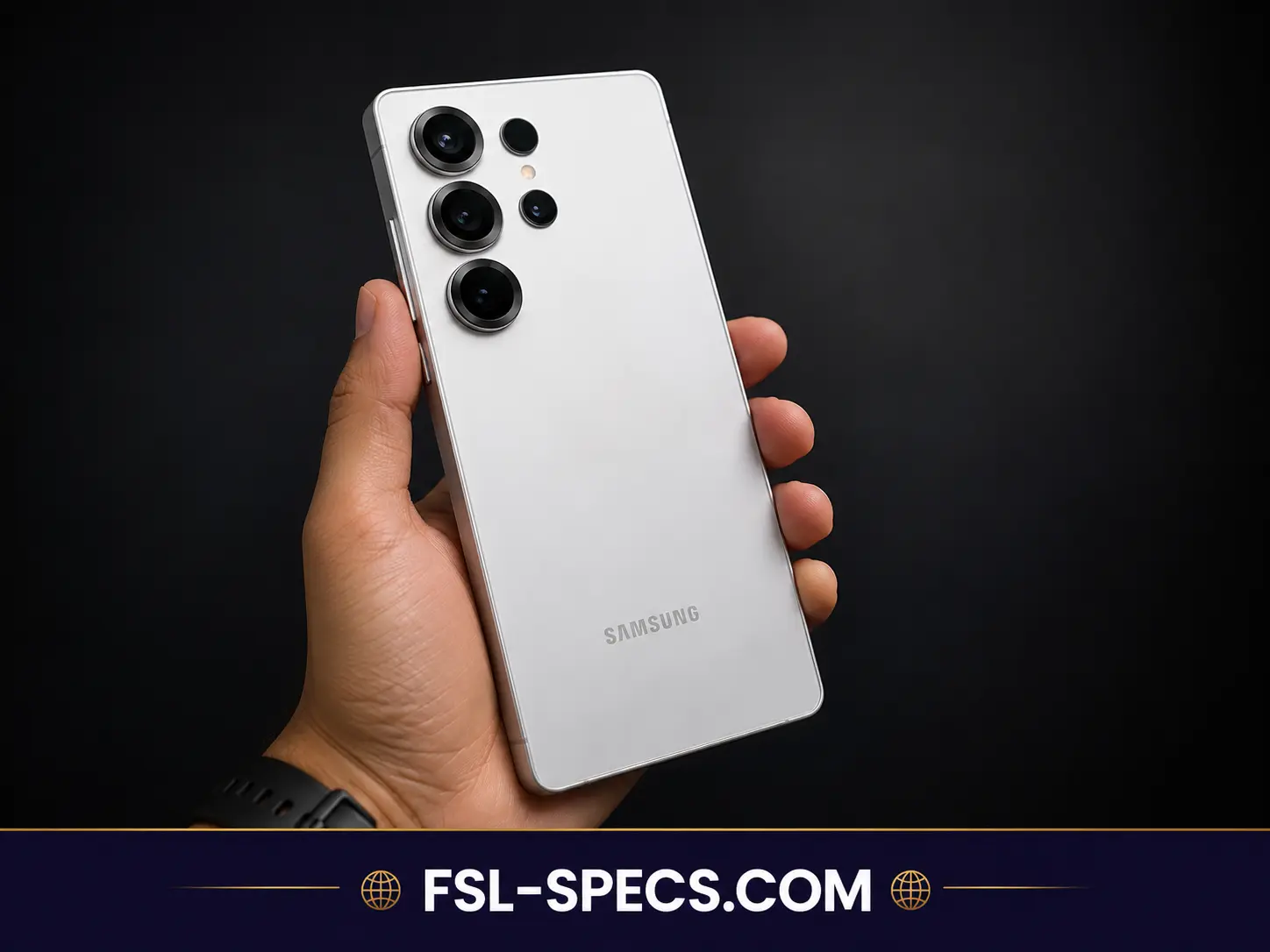
✪ Samsung Galaxy S25 Ultra ✪

Samsung Galaxy S25 Ultra Specs, Price, Camera, Battery & Best Review (2026)
United States flag United States
$1,200 USD
…
Pakistan flag Pakistan (PKR)
385,000 PKR
India flag India (INR)
₹115,000 INR

✪ Samsung Galaxy S25 Ultra ✪

Samsung Galaxy S25 Ultra Specs, Price, Camera, Battery & Best Review (2026)
Last Time Update : 19 July, 2026
0

Quick Specifications

Dynamic AMOLED 2X

Display Type

Snapdragon 8 Elite

Processor

12 + 512 GB

Ram And Memory

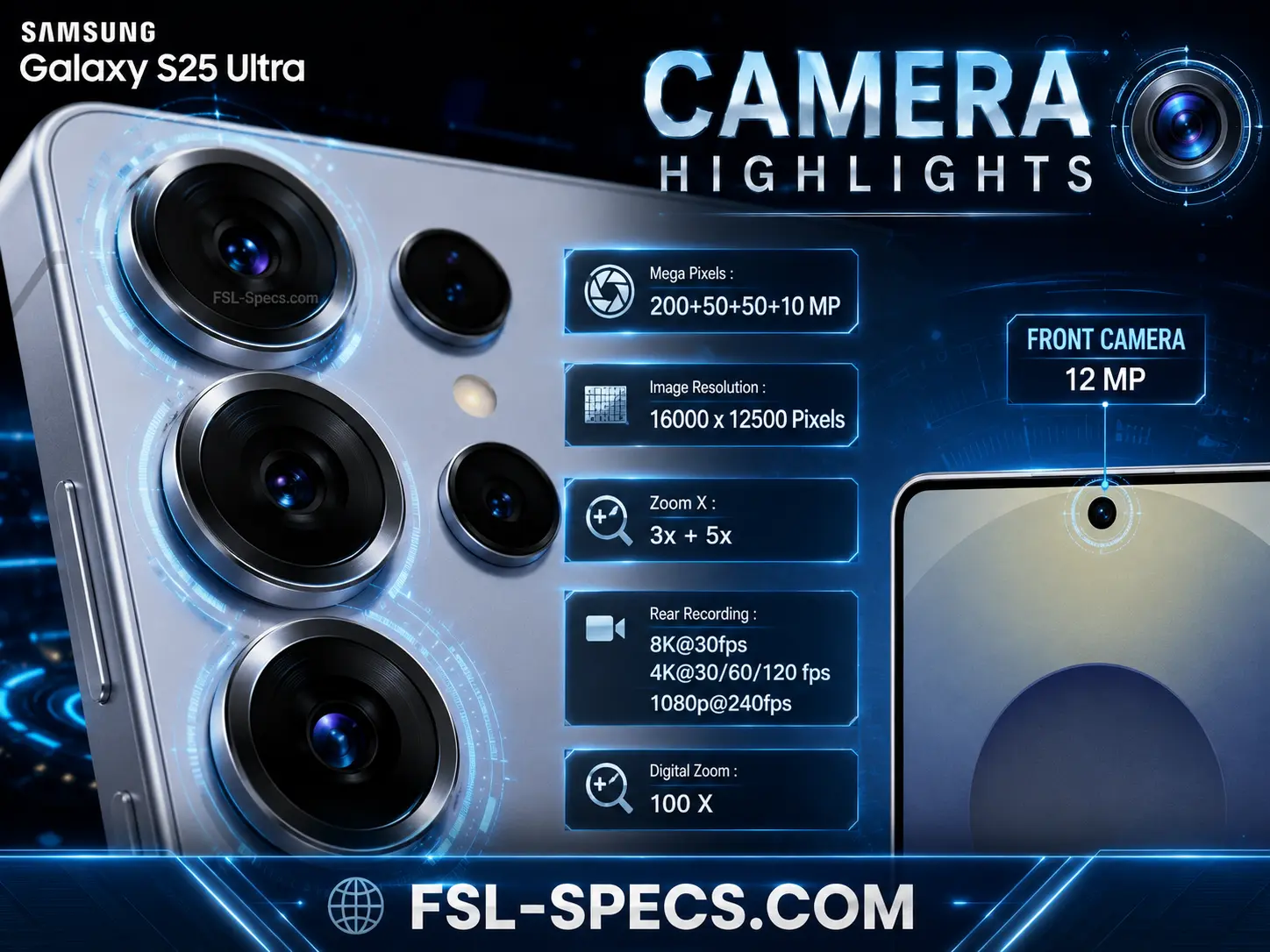
200 + 50 + 50 + 10 MP

Camera

5000 mAH

Battery

45 W

Fast Charging

Full Specification

BASIC INFO
Mobile
Samsung Galaxy S25 Ultra
Model
SM-S938B (S938B/DS)
Series
S Series
Category
Flagship
Release Date
3 February,2025
Year
2025
CONNECTIVITY
Sim
Nano-SIM/ E-SIM
Network
4G / 4G+ / 5G/ 5G+
WiFi
Wi-Fi 7
Bluetooth
5.4 v
NFC
Yes
OS
Android 17
BODY
Dimensions
162.8 x 77.6 x 8.2 mm
Build
Titanium frame, Gorilla Glass Armor 2 front, Gorilla Glass
KG Weight
218 g
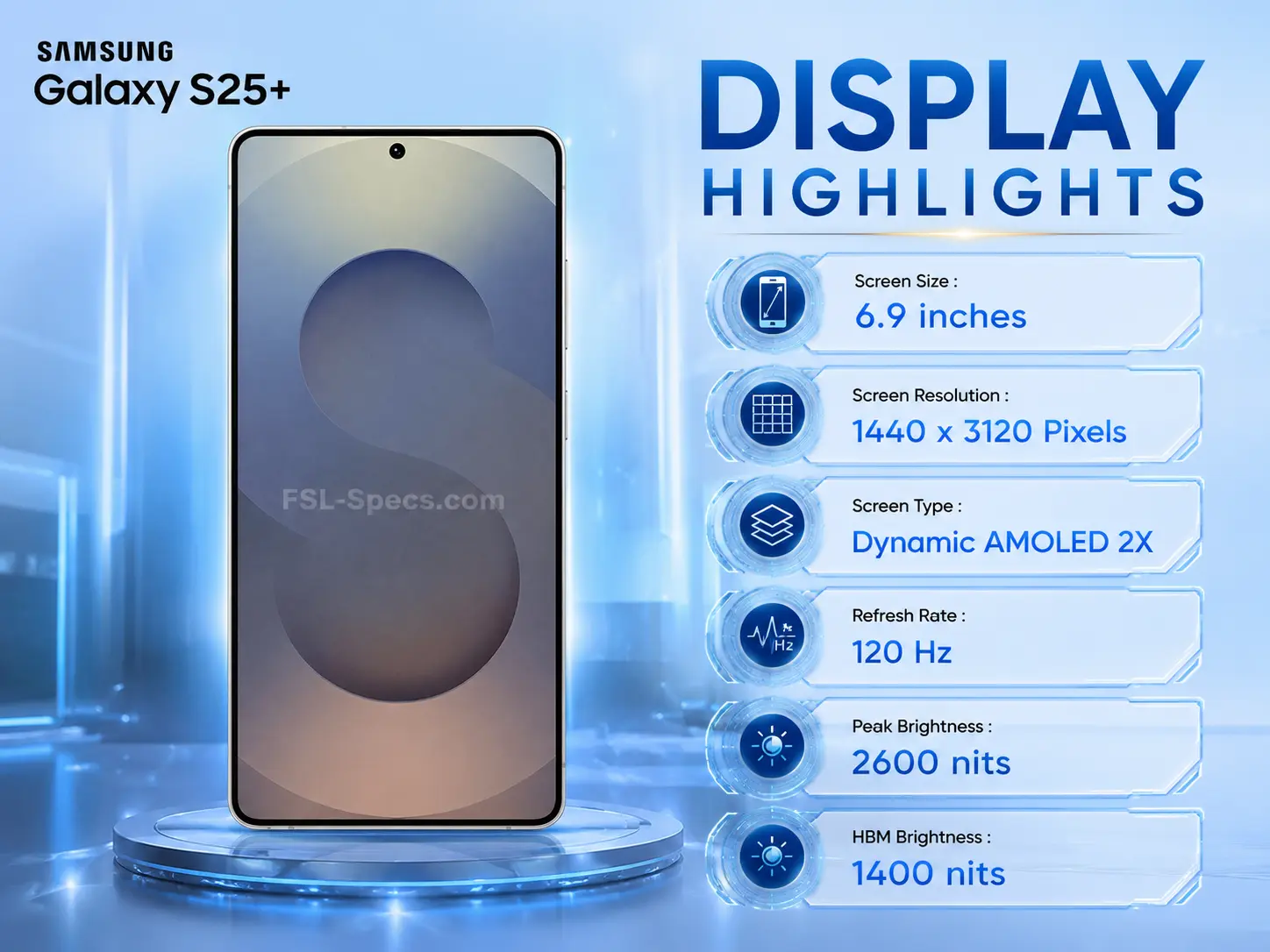
Screen Size
6.9 inches
Resolution
1440 x 3120 Pixels
Type
Dynamic AMOLED 2X
Refresh Rate
120 Hz
Peak Brightness
2600 nits
HBM Brightness
1400 nits
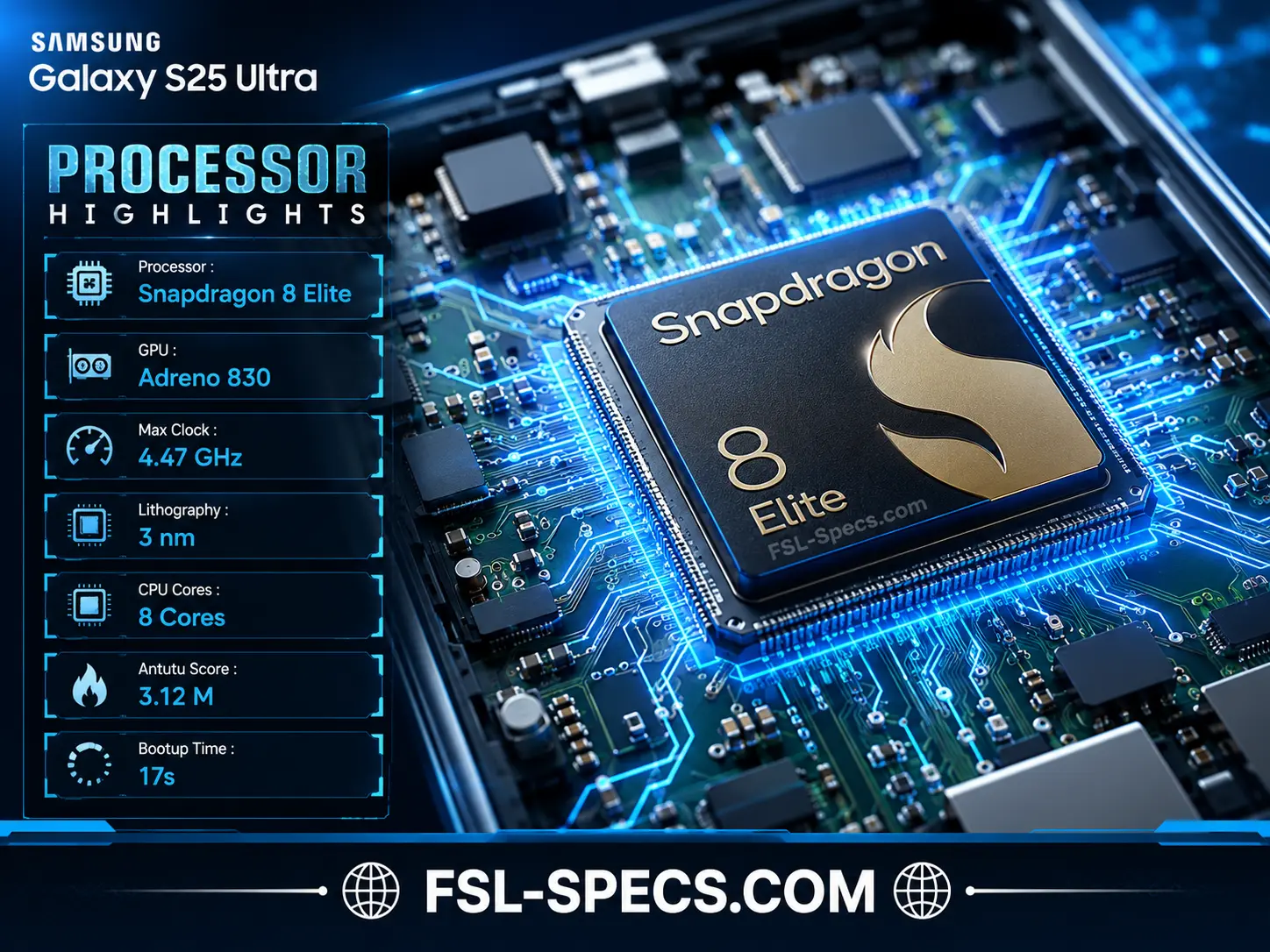
Processor
Snapdragon 8 Elite
Processor Link
Max Clock
4.47 GHz
Lithography
3 nm
GPU
Adreno 830
CPU Cores
8 Cores
Antutu v11
3.12 M
Bootup Time
17s
Architecture
2 x 4.47 GHz Oryon V2 Phoenix L
6 x 3.53 GHz Oryon V2 Phoenix M
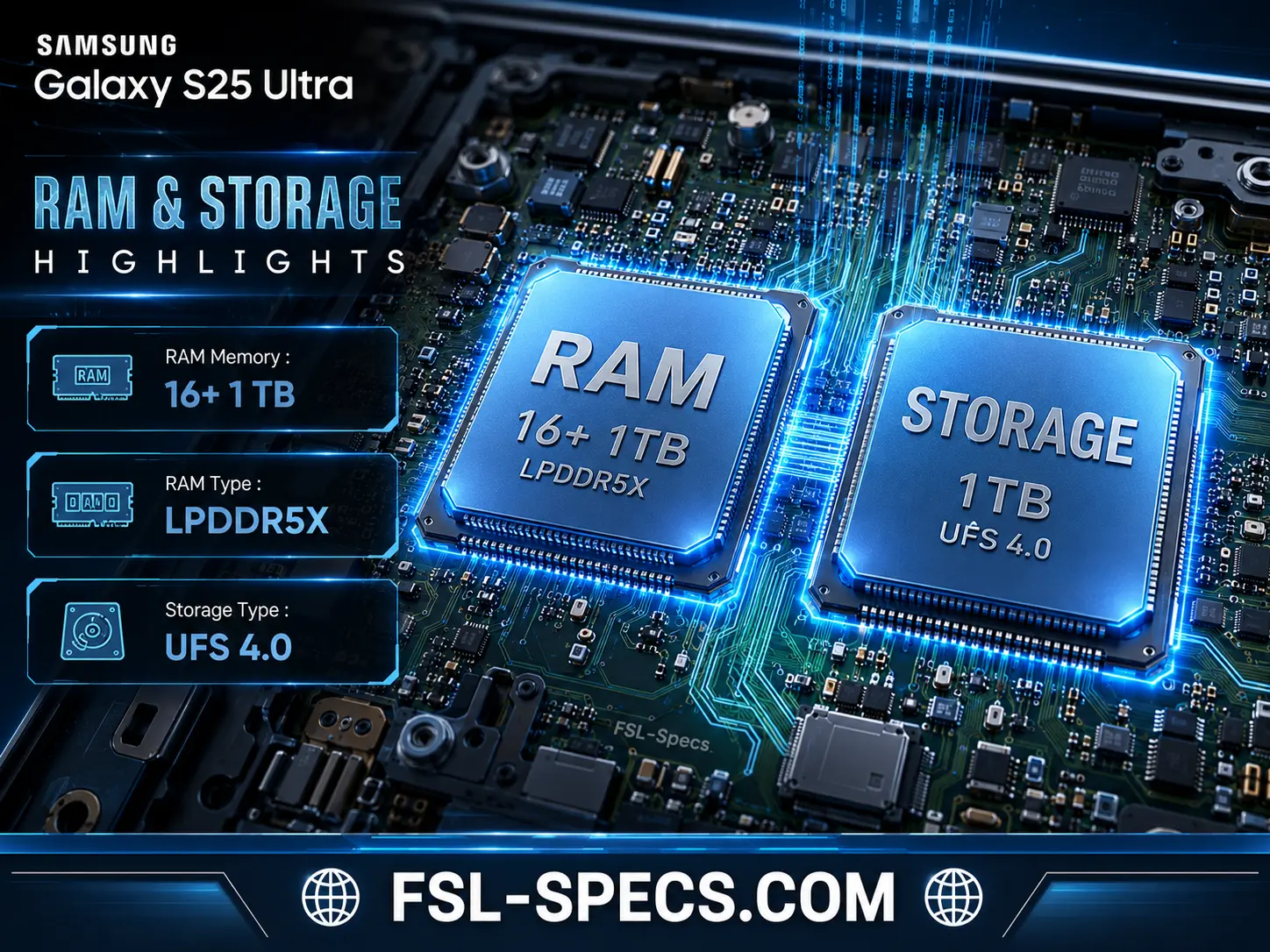
Ram Memory
12 + 512 GB
Ram Type
LPDDR5X
Storage Type
UFS 4.0
SD Card
No
Variants
12 + 256 GB
12 + 512 GB
16 + 1 TB
MP
Rear Camera
200 + 50 + 50 + 10 MP
Front Camera
12 MP
SENSORS
Camera Sensors
200 MP =Samsung ISOCELL HP2 (main)
50 MP = Samsung JN3 (ultrawide)
50 MP = Sony IMX754 (3x tele)
10 MP = Sony IMX854 (5x periscope)
Front Sensors
12 MP = Samsung S5K3LU
RECORDING FPS
Main Recording
8K@30fps
4K@30/60/120 fps
1080p@240fps
Front Recording
4K@30/60
RESOLUTION
Main Resolution
16000 x 12500 Pixels
Front Resolution
4032 × 3024 Pixels
ZOOM
Optical Zoom
5x
D Digital Zoom
100 X
FLASH
Flash
LED Flash
Front Flash
-
Capacity
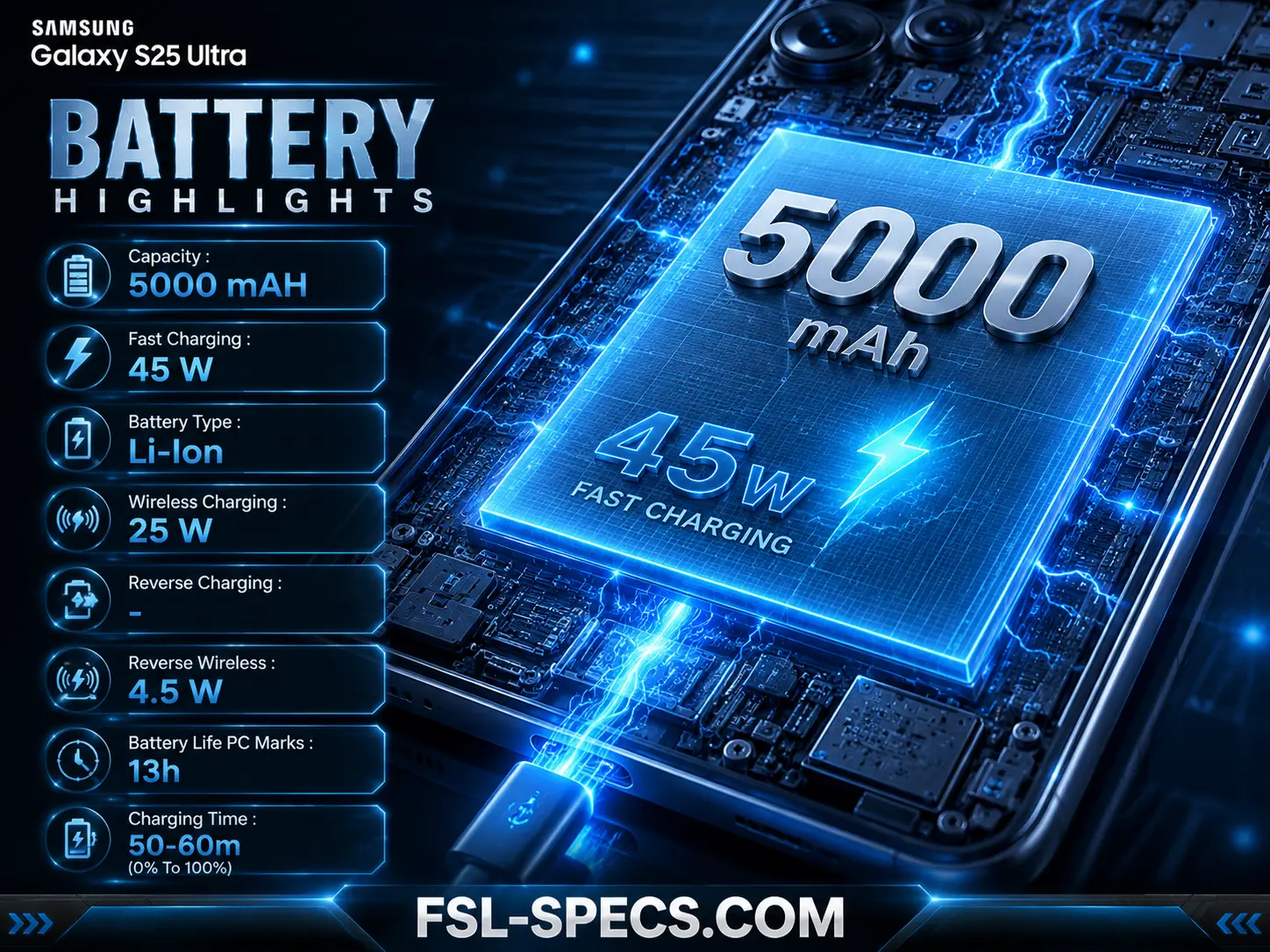
5000 mAH
Fast Charging
45 W
Wireless Charging
25 W
Li Battery Type
Li-Ion
REVERSE
Reverse Wired
-
Reverse Wireless
4.5 W
OTHER
Battery PC Marks
13h
Charging Time
50-60m (0% To 100%)
AUDIO & SENSORS
Speaker
Dual Stereo Speaker
Fingerprint Sensor
Hyper Sonic Front Finger
Other Sensors
Accelerometer
gyro
proximity
compass
barometer
Special Features

–

BASIC INFO
Mobile
Samsung Galaxy S25 Ultra
Model
SM-S938B (S938B/DS)
Series
S Series
Category
Flagship
Release Date
3 February,2025
Year
2025
CONNECTIVITY
Sim
Nano-SIM/ E-SIM
Network
4G / 4G+ / 5G/ 5G+
WiFi
Wi-Fi 7
Bluetooth
5.4 v
NFC
Yes
OS
Android 17
BODY
Dimensions
162.8 x 77.6 x 8.2 mm
Build
Titanium frame, Gorilla Glass Armor 2 front, Gorilla Glass
KG Weight
218 g
Screen Size
6.9 inches
Resolution
1440 x 3120 Pixels
Type
Dynamic AMOLED 2X
Refresh Rate
120 Hz
Peak Brightness
2600 nits
HBM Brightness
1400 nits
Processor
Snapdragon 8 Elite
Processor Link
Max Clock
4.47 GHz
Lithography
3 nm
GPU
Adreno 830
CPU Cores
8 Cores
Antutu v11
3.12 M
Bootup Time
17s
Architecture
2 x 4.47 GHz Oryon V2 Phoenix L
6 x 3.53 GHz Oryon V2 Phoenix M
Ram Memory
12 + 512 GB
SD Card
No
Ram Type
LPDDR5X
Storage Type
UFS 4.0
Variants
12 + 256 GB
12 + 512 GB
16 + 1 TB
MP
Rear Camera
200 + 50 + 50 + 10 MP
Front Camera
12 MP
SENSORS
Main Camera Sensors
200 MP =Samsung ISOCELL HP2 (main)
50 MP = Samsung JN3 (ultrawide)
50 MP = Sony IMX754 (3x tele)
10 MP = Sony IMX854 (5x periscope)
Front Camera Sensors
12 MP = Samsung S5K3LU
RECORDING FPS
Main Recording
8K@30fps
4K@30/60/120 fps
1080p@240fps
Front Recording
4K@30/60
RESOLUTION
Main Resolution
16000 x 12500 Pixels
Front Resolution
4032 × 3024 Pixels
ZOOM
Optical Zoom
5x
D Digital Zoom
100 X
FLASH
Flash
LED Flash
Front Flash
-
Capacity
5000 mAH
Fast Charging
45 W
Wireless Charging
25 W
Li Battery Type
Li-Ion
REVERSE
Reverse Wired
-
Reverse Wireless
4.5 W
OTHER
Battery Life PCMark
13h
Charging Time
50-60m (0% To 100%)
AUDIO & SENSORS
Speaker
Dual Stereo Speaker
Fingerprint Sensor
Hyper Sonic Front Finger
Other Sensors
Accelerometer
gyro
proximity
compass
barometer
Special Features

–

Highlights & Review Of Samsung Galaxy S25 Ultra

Display Review:

The Samsung Galaxy S25 Ultra uses a 6.9-inch Dynamic LTPO AMOLED 2X display with a sharp 1440 × 3120 Quad HD+ resolution, around 498 ppi, and an adaptive 1Hz–120Hz refresh rate. This is a large, detailed panel designed for flagship tasks, including high-resolution video, split-screen multitasking, gaming, reading, photo editing, and S Pen work. The Galaxy S25 Ultra also supports HDR10+ and has a claimed 2,600-nit peak brightness, while its anti-reflective Gorilla Armor protection is particularly useful outdoors because reducing reflections can matter as much as the headline brightness figure in direct sunlight.

The Samsung Galaxy S25 Ultra and Samsung Galaxy S26 Ultra are effectively tied on core display hardware. Both use a 6.9-inch QHD+ 1440 × 3120 AMOLED panel, around 498 ppi, adaptive 1Hz–120Hz refresh, and a claimed 2,600-nit peak brightness. As a result, display quality alone is not a convincing reason to move from the Galaxy S25 Ultra to the S26 Ultra. The S25 Ultra is particularly attractive at around PKR 350,000 in the compared 12GB + 512GB version, while the S26 Ultra costs roughly PKR 390,000 for only 12GB + 256GB

The Xiaomi 15 Ultra has the sharpest panel in this group. Its 6.73-inch WQHD+ LTPO AMOLED display reaches 3200 × 1440 resolution and around 522 ppi, ahead of the Galaxy S25 Ultra’s 498 ppi. Xiaomi also rates it at 3,200 nits peak brightness, includes Dolby Vision and HDR10+, and offers both 1,920Hz PWM dimming and DC dimming. Its smaller panel may offer slightly less workspace than Samsung’s 6.9-inch screen, but it is the better choice for users who prioritize pixel density, HDR flexibility, and low-brightness eye-comfort options.

The Xiaomi 17T Pro provides the strongest refresh-rate value with its 6.83-inch AMOLED, 1280 × 2772 resolution, approximately 447 ppi, and 144Hz refresh rate. It is smoother on paper than the S25 Ultra’s 120Hz panel, but it is less sharp than both QHD+ Ultra phones. At around PKR 260,000, it remains an excellent gaming-oriented alternative, although the Galaxy S25 Ultra provides higher pixel density and a more productivity-friendly screen size.

Verdict: The Samsung Galaxy S25 Ultra remains the best large-screen Samsung display choice because its 6.9-inch QHD+ 1Hz–120Hz Dynamic AMOLED 2X panel offers flagship sharpness, strong outdoor readability, and S Pen-friendly workspace at around PKR 350,000 with 512GB storage; the Xiaomi 15 Ultra is sharper and more HDR-focused, while the Xiaomi 17T Pro offers the best 144Hz gaming value.

Processor Review:

The Samsung Galaxy S25 Ultra in the 12GB + 512GB variant uses the Snapdragon 8 Elite for Galaxy with the Adreno 830 GPU. It remains a very fast flagship chipset for 4K video editing, Samsung DeX, emulation, camera processing, and high-frame-rate gaming. NanoReview reports an average AnTuTu v10 score of 2,795,139 for the S25 Ultra, while an AnTuTu v11 database result reaches 3,326,148. Because benchmark databases use different device samples, software builds, cooling conditions, and sometimes memory variants, the v11 figure should be treated as a reference result rather than a guaranteed score for every Pakistan-market 12GB + 512GB unit.

The Xiaomi 15 Ultra uses the standard Snapdragon 8 Elite chipset, also paired with Adreno 830 graphics. Its available AnTuTu v11 score is 2,985,023, while NanoReview lists 2,544,373 in AnTuTu v10. In the v11 comparison, the Galaxy S25 Ultra’s 3,326,148 result is approximately 11.4% higher than the Xiaomi 15 Ultra.

In actual use, however, both phones are flagship-grade and can handle demanding games, 4K editing, advanced AI tools, and large photo processing without meaningful slowdown. The performance difference is smaller than the difference in benchmark figures may suggest because both use the same Snapdragon generation.

The Samsung Galaxy S26 Ultra moves to the newer Snapdragon 8 Elite Gen 5 for Galaxy chipset. A tested result of 3,864,000 in AnTuTu v11 is available, placing it above the Galaxy S25 Ultra and Xiaomi 15 Ultra. Based on the reported v11 figures, the S26 Ultra is about 16.2% faster than the S25 Ultra and about 29.4% faster than the Xiaomi 15 Ultra. This gives the S26 Ultra more long-term headroom for demanding games, on-device AI, sustained rendering, and future Android versions, although it costs around PKR 390,000 for the lower 12GB + 256GB configuration.

The Xiaomi 17T Pro is powered by the MediaTek Dimensity 9500 chipset and achieves 3,348,357 AnTuTu v11 points in an independent test. That places it below the Galaxy S26 Ultra by approximately 13.5%, but ahead of the Galaxy S25 Ultra by around 0.7% and ahead of the Xiaomi 15 Ultra by about 12.2%. At approximately PKR 260,000 for the 12GB + 512GB configuration, it provides near-Samsung-Ultra performance for substantially less money, making it the strongest pure performance-value option here.

PhoneChipsetAnTuTu v11Difference vs Galaxy S25 Ultra
Samsung Galaxy S26 UltraSnapdragon 8 Elite Gen 5 for Galaxy3,864,000+16.2%
Xiaomi 17T ProDimensity 95003,348,357+0.7%
Samsung Galaxy S25 UltraSnapdragon 8 Elite for Galaxy3,326,148Baseline
Xiaomi 15 UltraSnapdragon 8 Elite2,985,023−10.3%

Verdict: The Samsung Galaxy S26 Ultra is the outright performance winner, but the Xiaomi 17T Pro delivers almost the same AnTuTu v11 score as the Galaxy S25 Ultra while costing roughly PKR 90,000 less and offering 512GB storage. The Galaxy S25 Ultra remains highly capable at PKR 350,000, while the Xiaomi 15 Ultra prioritizes camera hardware and display quality rather than leading this group on benchmark performance.

Ram & Memory Review:

The Samsung Galaxy S25 Ultra in the compared 12GB + 512GB configuration uses LPDDR5X RAM and UFS 4.0 storage. This is still premium-class hardware for maintaining many apps in memory, loading large games quickly, recording high-bitrate video, editing photos, and using DeX-style multitasking. The 512GB capacity is especially practical for users who save 4K or 8K footage, large RAW photo files, offline content, and multiple high-storage games. The Galaxy S25 Ultra has no microSD card slot, so the internal 512GB cannot be expanded.

The Xiaomi 15 Ultra takes the memory lead among the first-generation Snapdragon 8 Elite flagships. Its 16GB + 512GB configuration includes faster LPDDR5X 8533Mbps RAM and UFS 4.1 storage, giving it 4GB more physical RAM than the Galaxy S25 Ultra and a newer storage generation. In practical use, the extra RAM helps most with keeping more heavy apps, browser tabs, editing projects, and camera processes open at the same time, while UFS 4.1 benefits large transfers and sustained storage tasks. It has no expandable storage, but its 512GB capacity remains generous for camera-focused users.

The Samsung Galaxy S26 Ultra in the supplied 12GB + 256GB version uses LPDDR5X RAM and UFS 4.0 storage. Its memory speed is broadly comparable to the S25 Ultra, but its 256GB storage is only half the capacity of the S25 Ultra and Xiaomi 15 Ultra variants in this comparison. This is an important downside at approximately PKR 390,000, especially for users shooting 200MP photos, 4K/8K video, or downloading large AAA-quality mobile games. Samsung offers 512GB and 1TB variants in other markets, but the compared Pakistani-market configuration is strictly 12GB + 256GB, with no microSD expansion.

The Xiaomi 17T Pro in the stated 12GB + 512GB version combines LPDDR5X RAM with UFS 4.1 storage. It matches the Galaxy S25 Ultra’s 512GB capacity, doubles the S26 Ultra’s 256GB storage, and improves the storage standard from UFS 4.0 to UFS 4.1. At around PKR 260,000, this is a meaningful value advantage for buyers who want large internal storage but do not want to pay Ultra-tier Samsung pricing. It also has no microSD slot, so the built-in 512GB capacity is its long-term storage limit.

Verdict: The Xiaomi 15 Ultra has the strongest memory specification with 16GB LPDDR5X 8533Mbps RAM + 512GB UFS 4.1, making it the best option for intensive camera work and heavy multitasking. The Xiaomi 17T Pro is the best storage-value choice at PKR 260,000, offering 12GB + 512GB with UFS 4.1. The Samsung Galaxy S25 Ultra remains a strong and practical 12GB + 512GB UFS 4.0 option at PKR 350,000, while the Galaxy S26 Ultra ranks last for storage value because its 12GB + 256GB variant costs the most despite having half the storage of its major rivals.

Cameras Review:

The Samsung Galaxy S25 Ultra has the most flexible Samsung camera system in this comparison. Its quad rear setup includes a 200MP main camera with OIS, a 50MP ultrawide camera, a 50MP 5x periscope telephoto camera with OIS, and a 10MP 3x telephoto camera with OIS. The front camera is 12MP with autofocus. This gives the Galaxy S25 Ultra two true optical zoom positions, 3x for portraits and mid-range framing plus 5x for distant subjects, which remains more flexible than a single-telephoto setup.

For video, the Galaxy S25 Ultra records rear video at 8K@30fps, 4K@30fps/60fps/120fps, 1080p@30fps/60fps/120fps/240fps, and slow motion up to 720p@960fps. The 4K@120fps option is especially useful for cinematic slow motion, while 8K@30fps gives extra room for cropping. Its front camera records up to 4K@60fps. At around PKR 350,000 for the 12GB + 512GB variant, it remains a reliable choice for users who need versatile zoom, stable handheld footage, long recording support, and polished Samsung video processing.

The Xiaomi 15 Ultra has the strongest photography-focused hardware. Its Leica quad-camera system includes a 50MP 1-inch main camera with OIS, a 50MP ultrawide, a 50MP 3x floating telephoto, and a high-resolution 200MP 4.3x periscope telephoto with OIS. The 32MP front camera is lower in resolution than the Xiaomi 17T Pro’s selfie camera, but it remains suitable for video calls and 4K selfie recording. The large 1-inch main sensor and 200MP periscope make the Xiaomi 15 Ultra particularly strong for detailed photos, portraits, low-light scenes, and distant subjects.

Xiaomi 15 Ultra records 8K@30fps, 4K@30fps/60fps, and 4K@120fps. Crucially, both its 23mm main camera and 100mm periscope telephoto support 4K@120fps, so slow-motion footage can use either standard or long-range framing. This is a meaningful advantage for sports, wildlife, stage events, and creative videography. Its front camera supports up to 4K@60fps.

The Samsung Galaxy S26 Ultra continues with a premium quad-camera approach, using a 200MP main camera with OIS, a 50MP ultrawide, a 50MP 5x periscope telephoto, and a 10MP 3x telephoto. It retains Samsung’s practical two-telephoto flexibility and a 12MP autofocus front camera. Its camera hardware is close to the Galaxy S25 Ultra, so the meaningful differences come from newer processing, improved AI tools, and the newer Snapdragon chipset rather than a major change in sensor resolution.

The Galaxy S26 Ultra supports rear 8K@30fps, 4K@30fps/60fps/120fps, 1080p@30fps/60fps, and high-frame-rate slow motion modes. Its front camera records up to 4K@60fps. It is highly capable for video, but at around PKR 390,000 for only 12GB + 256GB, it is difficult to recommend over the S25 Ultra unless the newer Samsung software and processing improvements are a major priority.gadgetsnow.

The Xiaomi 17T Pro is the strongest video-value phone in this group. Its Leica camera system includes a 50MP main camera, a 50MP 5x telephoto camera, and a 50MP ultrawide camera, paired with a 32MP front camera. It does not match Xiaomi 15 Ultra’s 1-inch main sensor or 200MP 4.3x periscope, but it provides a far more complete camera setup than most phones near PKR 260,000, particularly due to its dedicated 5x optical telephoto.

The Xiaomi 17T Pro supports rear 8K@30fps, 4K@120fps, 4K HDR10+@30fps/60fps, 1080p HDR10+@30fps/60fps, and 720p@30fps, alongside Log video recording for creators who want to colour-grade footage. Its front camera records up to 4K@60fps. At roughly PKR 260,000 for 12GB + 512GB, it offers high-end video modes, a dedicated 5x zoom camera, and twice the storage of the compared Galaxy S26 Ultra.mi+2

Verdict: The Xiaomi 15 Ultra is the camera winner because its 1-inch 50MP main sensor, 200MP 4.3x periscope, dual telephoto system, and 4K@120fps on both main and periscope cameras provide the most complete photography and creative-video package. The Samsung Galaxy S25 Ultra remains the best choice for buyers who want dependable Samsung video quality and both 3x and 5x optical zoom.

The Xiaomi 17T Pro is the strongest value option, offering 8K@30fps, 4K@120fps, Log video, and a 5x telephoto at approximately PKR 260,000, while the Galaxy S26 Ultra is powerful but hard to justify at its higher price when its camera hardware remains broadly similar to the S25 Ultra.

Battery Review:

The Samsung Galaxy S25 Ultra has a 5,000 mAh battery with 45W wired charging, Qi2-compatible wireless charging, and Wireless PowerShare reverse wireless charging. Its capacity is the smallest in this four-phone group, but Samsung’s software optimization, LTPO display, and efficient Snapdragon 8 Elite chipset help it remain reliable for a full day of normal flagship use. For heavy gaming, extended 4K video recording, or continuous navigation, the smaller 5,000 mAh cell gives it less endurance headroom than the Xiaomi rivals.

The Xiaomi 15 Ultra improves on the Galaxy S25 Ultra with a 5,410 mAh silicon-carbon battery, 90W wired HyperCharge, and 80W wireless HyperCharge. The battery capacity advantage is only 8.2% over the Galaxy S25 Ultra, but the charging hardware is much more aggressive, especially wirelessly. Its large camera hardware and bright QHD+ display can demand significant power during extended photography, GPS use, or 4K recording, but the larger cell and rapid charging make it more flexible for camera-focused users.

The Samsung Galaxy S26 Ultra retains a 5,000 mAh battery, but upgrades its wired charging to 60W and supports 25W wireless charging plus 4.5W reverse wireless charging. Compared with the Galaxy S25 Ultra, the capacity remains unchanged, so the main improvement is faster wired charging rather than longer theoretical endurance. At approximately PKR 390,000 for the 12GB + 256GB version, the unchanged battery capacity is a noticeable compromise when both Xiaomi competitors provide substantially larger cells and faster charging systems.

The Xiaomi 17T Pro dominates this category with a massive 7,000 mAh silicon-carbon battery, 100W wired HyperCharge, 50W wireless HyperCharge, and 22.5W wired reverse charging. Its capacity is 40% larger than the Galaxy S25 Ultra and Galaxy S26 Ultra batteries, while it also has the highest wired charging rating in this comparison.

This is a meaningful practical benefit for mobile gamers, travellers, creators shooting long video sessions, and users who rely heavily on 5G data. At around PKR 260,000 for 12GB + 512GB, the Xiaomi 17T Pro offers a flagship-level battery advantage without Ultra-level Samsung pricing.

Verdict: The Xiaomi 17T Pro is the clear battery winner with its 7,000 mAh silicon-carbon battery, 100W wired, 50W wireless, and 22.5W reverse wired charging. The Xiaomi 15 Ultra ranks second because it combines a larger 5,410 mAh cell with excellent 90W wired and 80W wireless charging. The Samsung Galaxy S26 Ultra improves charging speed over the S25 Ultra but keeps the same 5,000 mAh capacity, while the Galaxy S25 Ultra remains dependable but has the least competitive battery hardware in this comparison.

Final Verdict :

The Samsung Galaxy S25 Ultra (12GB + 512GB) is still a powerful and highly complete flagship at the supplied close-market price of around PKR 350,000. It combines a large 6.9-inch QHD+ LTPO AMOLED display, Snapdragon 8 Elite for Galaxy performance, 512GB storage, S Pen functionality, polished One UI software, and an unusually flexible camera system with both 3x and 5x optical zoom.

Its key weakness is value: the 5,000 mAh battery and 45W charging are now modest beside Xiaomi’s larger silicon-carbon batteries and much faster charging, while its performance trails newer 2026 flagships.

The Xiaomi 15 Ultra (16GB + 512GB) is the best camera-first alternative. It adds 16GB LPDDR5X RAM, UFS 4.1 storage, a sharper 522 ppi QHD+ LTPO AMOLED display, a 5,410 mAh silicon-carbon battery, and a Leica quad-camera setup led by a 1-inch 50MP main sensor plus a 200MP 4.3x periscope camera. Its 90W wired and 80W wireless charging are much stronger than both Samsung Ultra phones. It does not lead in benchmark performance, but it is the strongest option for buyers who place photography, telephoto detail, and creative video above gaming benchmarks.

The Samsung Galaxy S26 Ultra (12GB + 256GB) is the fastest phone in this group, with the Snapdragon 8 Elite Gen 5 for Galaxy scoring around 3.86 million in AnTuTu v11, approximately 16% ahead of the Galaxy S25 Ultra. It also retains a premium QHD+ display, S Pen, dual optical-zoom cameras, and Samsung’s polished video processing. However, the compared 256GB configuration costs about PKR 390,000 and has half the storage of the other three models.

Its 5,000 mAh battery is unchanged from the S25 Ultra, so it is difficult to justify as the best-value choice unless maximum Samsung performance, current-generation software support, and S Pen productivity are your specific priorities. Samsung Pakistan’s discounted official price for the 12GB + 256GB model is PKR 393,999, with retail listings ranging higher depending on seller and promotion.

The Xiaomi 17T Pro (12GB + 512GB) is the value leader and the strongest recommendation for most buyers. Its Dimensity 9500 reaches about 3.35 million in AnTuTu v11, essentially matching the Galaxy S25 Ultra while staying only about 13.5% behind the S26 Ultra.

It provides 512GB UFS 4.1 storage, a 144Hz AMOLED display, Leica 50MP main + 50MP ultrawide + 50MP 5x telephoto cameras, 8K@30fps, 4K@120fps, Log video, and a huge 7,000 mAh silicon-carbon battery with 100W wired and 50W wireless charging. At around PKR 260,000, it undercuts the Galaxy S25 Ultra by approximately PKR 90,000 and the S26 Ultra by approximately PKR 130,000, while offering stronger battery hardware and storage value.

Bottom line: Choose the Xiaomi 17T Pro if you want the best balance of flagship speed, 512GB storage, long battery life, fast charging, 5x zoom, and price. Choose the Xiaomi 15 Ultra if camera quality is your highest priority. Choose the Samsung Galaxy S25 Ultra only if you specifically value the S Pen, Samsung software, and dual 3x + 5x zoom flexibility, while the Galaxy S26 Ultra is best for buyers who want the newest and fastest Samsung flagship and can accept paying more for 256GB storage.

Ranking:

  1. Xiaomi 17T Pro (12GB + 512GB) – PKR 260,000
    Best overall value, with near-Galaxy S25 Ultra performance, 512GB UFS 4.1, Leica triple 50MP cameras with 5x optical zoom, a 7,000 mAh battery, 100W wired charging, and 50W wireless charging.

  2. Xiaomi 15 Ultra (16GB + 512GB) – PKR 380,000
    Best camera flagship, with a 1-inch 50MP main sensor, 200MP 4.3x periscope, QHD+ LTPO display, 16GB RAM, and 90W wired / 80W wireless charging.

  3. Samsung Galaxy S25 Ultra (12GB + 512GB) – PKR 350,000
    Best Samsung value, with S Pen support, a large QHD+ LTPO display, 512GB storage, dependable video quality, and both 3x and 5x optical zoom cameras.

  4. Samsung Galaxy S26 Ultra (12GB + 256GB) – PKR 390,000, with official Pakistan discounted pricing listed at PKR 393,999

Pros And Cons of Samsung Galaxy S25 Ultra

Pros of Mobile

✅ Stunning Display
✅ Elite Performance
✅ 200MP Camera
✅ Premium Build
✅ Long Battery
✅ Fast Storage

Cons of Mobile

❌ Premium Price
❌ No Charger
❌ No SD Card
❌ Heavy Design
❌ Large Size
❌ No Headphone

Best For - Not Best For

Best For

✅ Mobile Gaming
✅ Professional Photography
✅ Content Creation
✅ Heavy Multitasking
✅ Video Recording
✅ Power Users

Not Best For

❌ Budget Buyers
❌ Compact Phones
❌ Expandable Storage
❌ Charger Included
❌ Lightweight Users
❌ Casual Users

Trailer And Unboxing of Samsung Galaxy S25 Ultra

Disassembly Or Teardown And Gaming Test of Samsung Galaxy S25 Ultra

Camera Test Samsung Galaxy S25 Ultra

Samsung Mobile Series

Samsung Mobile Series

FAQs Questions

The Samsung Galaxy S25 Ultra features a 6.9-inch Dynamic AMOLED 2X display with 2600 nits peak brightness and 1400 nits HBM, delivering vibrant visuals and excellent outdoor visibility.

The Samsung Galaxy S25 Ultra is powered by the Snapdragon 8 Elite processor, built on a 3nm process, paired with the Adreno 830 GPU for flagship-level performance.

The Galaxy S25 Ultra uses LPDDR5X RAM and UFS 4.0 storage, offering ultra-fast multitasking, quick app launches, and high-speed file transfers.

The phone features a 200MP + 50MP + 50MP + 10MP quad rear camera setup and a 12MP front camera capable of capturing sharp photos and 4K videos.

The Samsung Galaxy S25 Ultra packs a 5000mAh battery with 45W wired fast charging, 25W wireless charging, and 4.5W reverse wireless charging.

12 + 256 GB
~310,000 PKR | ~₹90,000 | ~900 $

_______________________________

12 + 512 GB
~340,000 PKR |~ ₹ 112,000 | ~1150 $

_______________________________

12 + 1TB
~520,000 PKR | ~₹ 165,000 | ~1650 $

_______________________________

Scroll to Top