
















• Mobiles
  • Processors
  • Mobiles
  • Processors
  • Mobiles
  • Processors

✪ Xiaomi 17T Pro ✪

Xiaomi 17T Pro Specs, Price, Camera, Battery & Best Review (2026)
United States flag United States
$750 USD
…
Pakistan flag Pakistan (PKR)
270,000 PKR
India flag India (INR)
₹75,000 INR

✪ Xiaomi 17T Pro ✪

Xiaomi 17T Pro Specs, Price, Camera, Battery & Best Review (2026)
Last Time Update : 8 October, 2026
0

Quick Specifications

AMOLED

Display Type

Dimensity 9500

Processor

12 + 512 GB

Ram And Memory

50 + 50 + 12 MP

Camera

7000 mAh

Battery

100 W

Fast Charging

Full Specification

BASIC INFO
Mobile
Xiaomi 17T Pro
Model
2602EPTC0G
Series
Xiaomi Number
Category
Flagship
Release Date
28 May,2026
Year
2026
CONNECTIVITY
Sim
Nano-SIM / E-Sim
Network
4G / 4G+ / 5G/ 5G+
WiFi
Wi-Fi 7
Bluetooth
6.0
NFC
Yes
OS
Android 17 , HyperOS 4
BODY
Dimensions
162.2 x 77.5 x 8.3 mm
Build
Aluminium Alloy +Glass back
KG Weight
219 grams
Screen Size
6.83 inch
Resolution
1280 x 2772 Pixels
Type
AMOLED
Refresh Rate
144 Hz
Peak Brightness
3500 nits
HBM Brightness
2000 nits
Processor
Dimensity 9500
Max Clock
4.21 GHz
Lithography
3 nm
GPU
Mali-G1 Ultra MC12
CPU Cores
Octa-core
Antutu v11
3.4 M
Bootup Time
-
Architecture
1 x 4.21 GHz C1-Ultra
3 x 3.5 GHz C1-Premium
4 x 2.7 GHz C1-Pro
Ram Memory
12 + 512 GB
Ram Type
LPDDR5X
Storage Type
UFS 4.1
SD Card
No
Variants
12 + 256 GB
12 + 512 GB
12 + 1TB
MP
Rear Camera
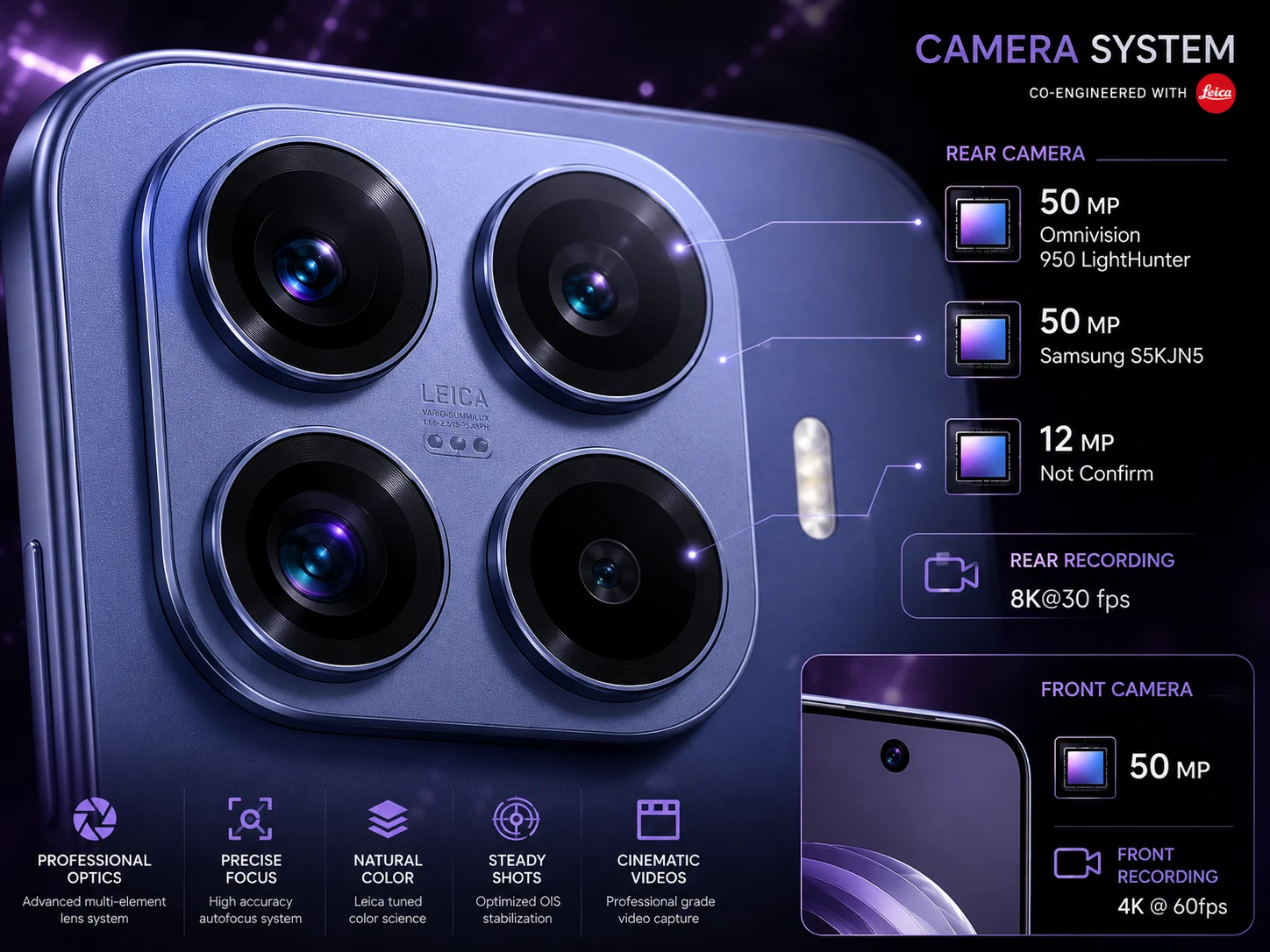
50 + 50 + 12 MP
Front Camera
32 MP
SENSORS
Camera Sensors
50 MP    = Omnivision 950 LightHunter
50 MP    = Samsung S5KJN5
12 MP    = Not Confirm
Front Sensors
–
RECORDING FPS
Main Recording
8K@30 fps
4K@120 fps
1080p@960fps
Front Recording
4K @ 30fps
1080p @ 60fps
RESOLUTION
Main Resolution
8160 × 6144 pixels
Front Resolution
6528 × 4896 Pixels
ZOOM
Optical Zoom
5 x
D Digital Zoom
120 x
FLASH
Flash
Dual LED
Front Flash
-
Capacity
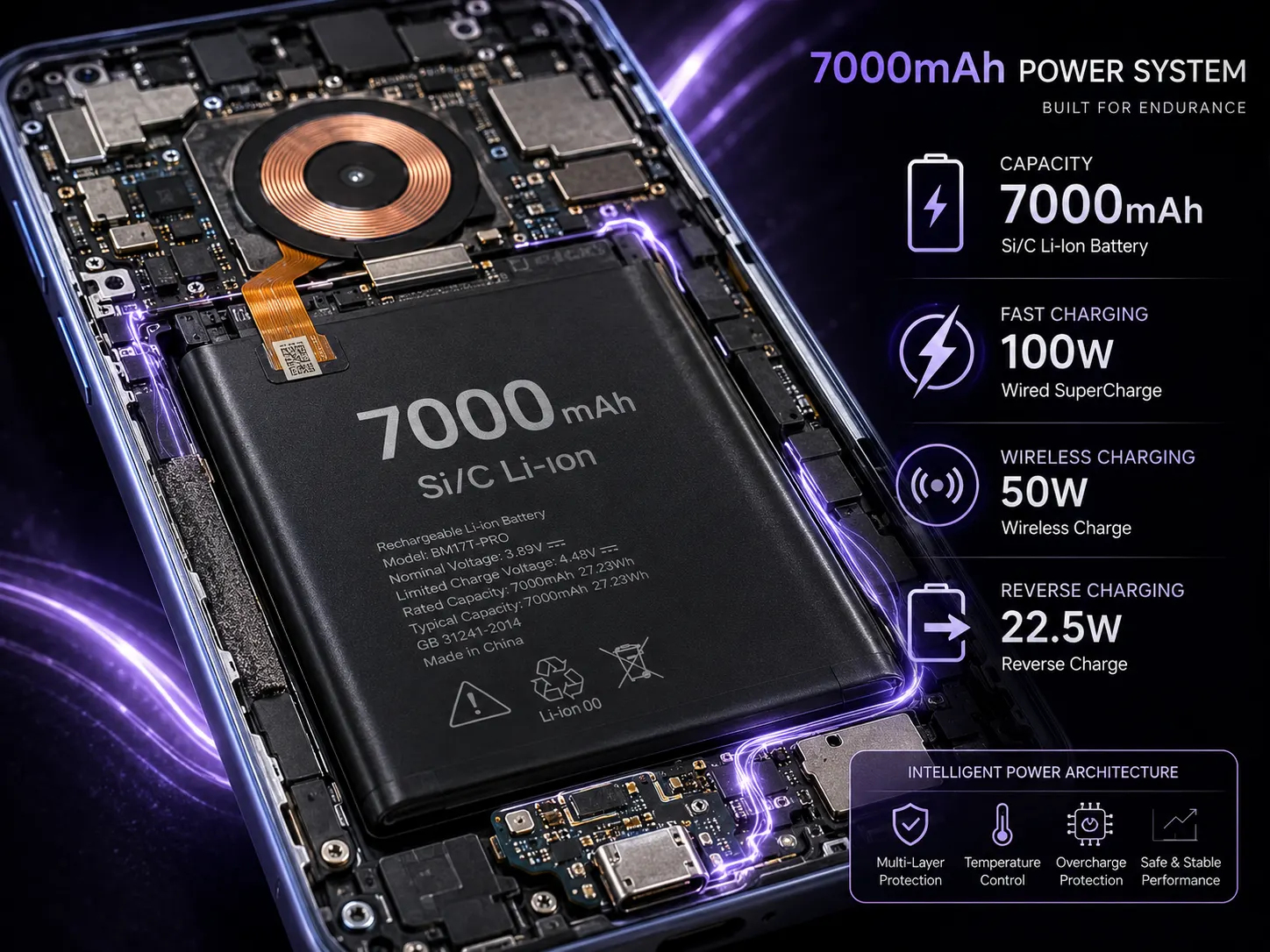
7000 mAh
Fast Charging
100 W
Wireless Charging
50 W
Li Battery Type
Si/C Li-Ion
REVERSE
Reverse Wired
22.5W
Reverse Wireless
Not Confirm
OTHER
Battery PC Marks
-
Charging Time
40–45 minutes ( 0-100% )
AUDIO & SENSORS
Speaker
Dual Stereo Speaker
Fingerprint Sensor
Hyper Sonic Front Finger
Other Sensors
Proximity sensor
Gyroscope
Accelerometer
Ambient light sensor
Compass, etc
Special Features

Leica Summilux lens system (1G + 6P) with optical image stabilization
New shooting modes: Stage mode, Leica Live Moment, Leica Live Portrait
Super Island (Dynamic Island-style UI feature)
iPhone/iPad/Mac cross-device file sync and sharing
5 major OS upgrades + 6 years of security patches

BASIC INFO
Mobile
Xiaomi 17T Pro
Model
2602EPTC0G
Series
Xiaomi Number
Category
Flagship
Release Date
28 May,2026
Year
2026
CONNECTIVITY
Sim
Nano-SIM / E-Sim
Network
4G / 4G+ / 5G/ 5G+
WiFi
Wi-Fi 7
Bluetooth
6.0
NFC
Yes
OS
Android 17 , HyperOS 4
BODY
Dimensions
162.2 x 77.5 x 8.3 mm
Build
Aluminium Alloy +Glass back
KG Weight
219 grams
Screen Size
6.83 inch
Resolution
1280 x 2772 Pixels
Type
AMOLED
Refresh Rate
144 Hz
Peak Brightness
3500 nits
HBM Brightness
2000 nits
Processor
Dimensity 9500
Max Clock
4.21 GHz
Lithography
3 nm
GPU
Mali-G1 Ultra MC12
CPU Cores
Octa-core
Antutu v11
3.4 M
Bootup Time
-
Architecture
1 x 4.21 GHz C1-Ultra
3 x 3.5 GHz C1-Premium
4 x 2.7 GHz C1-Pro
Ram Memory
12 + 512 GB
SD Card
No
Ram Type
LPDDR5X
Storage Type
UFS 4.1
Variants
12 + 256 GB
12 + 512 GB
12 + 1TB
MP
Rear Camera
50 + 50 + 12 MP
Front Camera
32 MP
SENSORS
Main Camera Sensors
50 MP    = Omnivision 950 LightHunter
50 MP    = Samsung S5KJN5
12 MP    = Not Confirm
Front Camera Sensors
–
RECORDING FPS
Main Recording
8K@30 fps
4K@120 fps
1080p@960fps
Front Recording
4K @ 30fps
1080p @ 60fps
RESOLUTION
Main Resolution
8160 × 6144 pixels
Front Resolution
6528 × 4896 Pixels
ZOOM
Optical Zoom
5 x
D Digital Zoom
120 x
FLASH
Flash
Dual LED
Front Flash
-
Capacity
7000 mAh
Fast Charging
100 W
Wireless Charging
50 W
Li Battery Type
Si/C Li-Ion
REVERSE
Reverse Wired
22.5W
Reverse Wireless
Not Confirm
OTHER
Battery Life PCMark
-
Charging Time
40–45 minutes ( 0-100% )
AUDIO & SENSORS
Speaker
Dual Stereo Speaker
Fingerprint Sensor
Hyper Sonic Front Finger
Other Sensors
Proximity sensor
Gyroscope
Accelerometer
Ambient light sensor
Compass, etc
Special Features

Leica Summilux lens system (1G + 6P) with optical image stabilization
New shooting modes: Stage mode, Leica Live Moment, Leica Live Portrait
Super Island (Dynamic Island-style UI feature)
iPhone/iPad/Mac cross-device file sync and sharing
5 major OS upgrades + 6 years of security patches

Highlights & Review Of Xiaomi 17T Pro

Display Review:

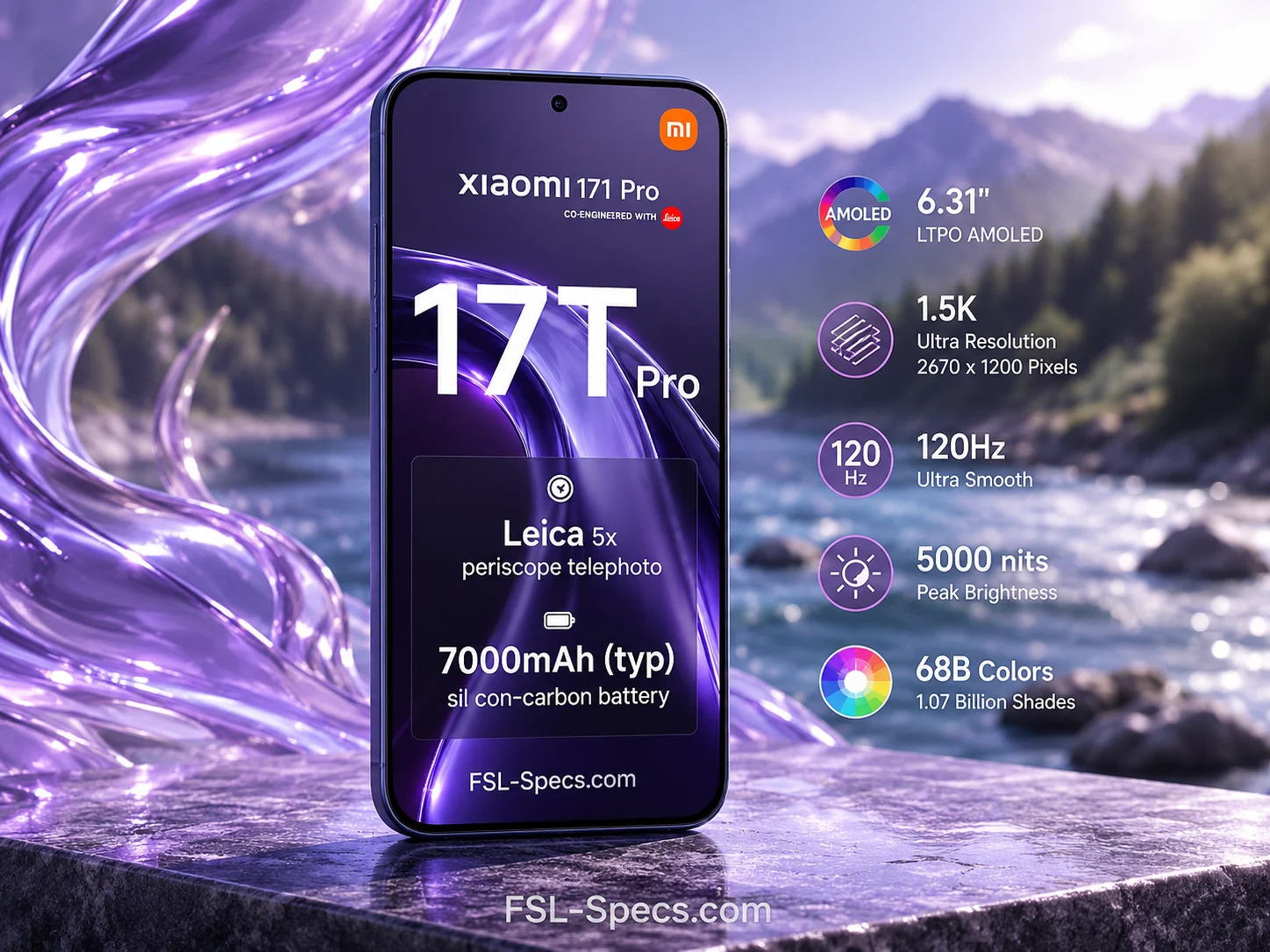
The Xiaomi 17T Pro has the largest display in this comparison, using a 6.83-inch 1.5K AMOLED panel with a 144Hz refresh rate and 3500-nit peak brightness. The POCO F7 Ultra counters with a smaller but sharper 6.67-inch WQHD+ AMOLED display at 3200 × 1440 and 120Hz, while the vivo X300 and vivo X300 FE both use compact 6.31-inch AMOLED displays with 2640 × 1216 resolution and 1–120Hz LTPO adaptive refresh.

For smoothness and screen size, the Xiaomi 17T Pro has the advantage with 144Hz and its 6.83-inch panel. Its 1.5K resolution is also sufficient for excellent sharpness at this size, while Xiaomi adds 12-bit color, 100% DCI-P3 coverage and a 1-nit minimum brightness.

The POCO F7 Ultra has the highest pixel density at 526 PPI, compared with roughly 447 PPI on the Xiaomi. Its WQHD+ panel also supports Dolby Vision and up to 3200 nits peak brightness. For pure resolution and pixel density, POCO therefore has an important advantage.

The vivo X300 and X300 FE are considerably more compact. Their 1–120Hz LTPO panels are particularly attractive for efficiency because the refresh rate can dynamically drop to 1Hz for static content.

For a large, fast multimedia display, the Xiaomi 17T Pro wins. For maximum sharpness, the POCO F7 Ultra is the stronger alternative, while the vivo models offer the best compact-display experience.

Display winner: Xiaomi 17T Pro

Processor Review:

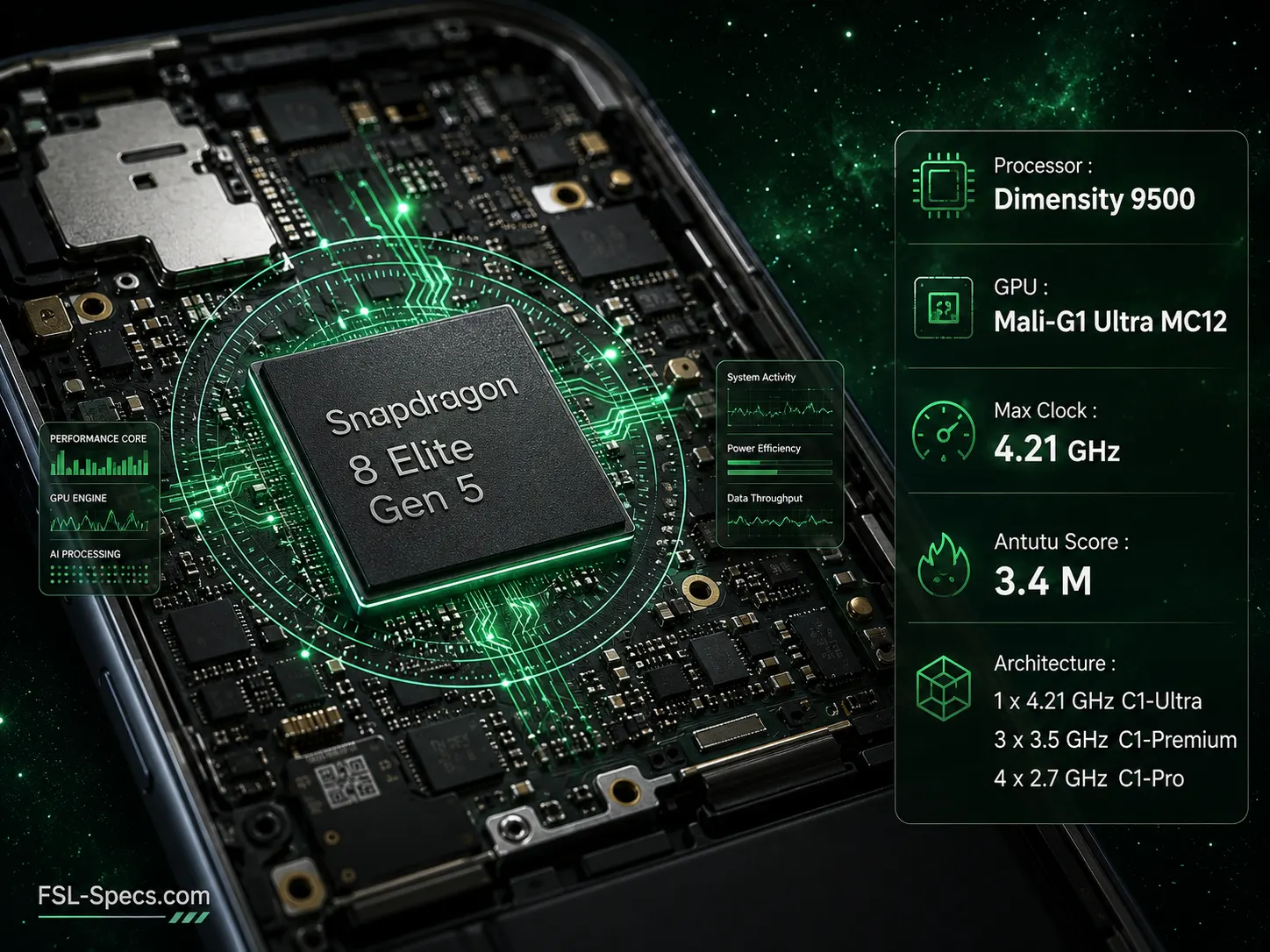
The Xiaomi 17T Pro is powered by MediaTek’s Dimensity 9500 (3nm) chipset with an octa-core CPU (1x 4.21GHz C1-Ultra + 3x 3.5GHz C1-Premium + 4x 2.7GHz C1-Pro) and Mali-G1 Ultra MC12 GPU, scoring ~2,795,030 to 3,570,000+ points on AnTuTu v11, with Geekbench 6 single-core at ~3,075 and multi-core at ~9,843, making it the fastest in this group for raw AnTuTu scores, gaming, and sustained performance, thanks to its 12GB LPDDR5X RAM and 512GB UFS 4.1 storage.

The vivo X300 uses MediaTek’s Dimensity 9500 (3nm) chipset with an octa-core CPU (1x 4.21GHz C1-Ultra + 3x 3.5GHz C1-Premium + 4x 2.7GHz C1-Pro) and Mali-G1 Ultra MC12 GPU, scoring ~3,105,943 to 3,416,530 points on AnTuTu v11, with Geekbench 6 single-core at ~3,075 and multi-core at ~9,843, making it the second-fastest in this group for raw AnTuTu scores, with strong sustained performance and 12GB LPDDR5X RAM for multitasking.

The Poco F7 Ultra is powered by Qualcomm’s Snapdragon 8 Elite (3nm) chipset with an octa-core CPU (2x 4.32GHz Oryon Prime + 6x 3.53GHz Oryon Performance) and Adreno 830 GPU, scoring ~2,580,520 to 3,060,993 points on AnTuTu v11, with Geekbench 6 single-core at ~2,971 and multi-core at ~8,887, making it the third-fastest in this group for raw AnTuTu scores, with strong sustained performance and 16GB LPDDR5X RAM for multitasking.

The vivo X300 FE uses Qualcomm’s Snapdragon 8 Gen 5 (3nm) chipset with an octa-core CPU (1x 3.0GHz + 6x 2.8GHz) and Adreno 829 GPU, scoring ~2,857,236 to 3,161,598 points on AnTuTu v11, with Geekbench 6 single-core at ~2,692–2,767 and multi-core at ~8,425–8,750, making it the fourth-fastest in this group for raw AnTuTu scores, with strong sustained performance and 12GB LPDDR5X RAM for multitasking.

Processor & AnTuTu v11 Comparison Table

FeatureXiaomi 17T Provivo X300Poco F7 Ultravivo X300 FE
ChipsetDimensity 9500 (3nm)Dimensity 9500 (3nm)Snapdragon 8 Elite (3nm)Snapdragon 8 Gen 5 (3nm)
CPU1x 4.21GHz + 3x 3.5GHz + 4x 2.7GHz1x 4.21GHz + 3x 3.5GHz + 4x 2.7GHz2x 4.32GHz + 6x 3.53GHz1x 3.0GHz + 6x 2.8GHz
GPUMali-G1 Ultra MC12Mali-G1 Ultra MC12Adreno 830Adreno 829
AnTuTu v11 Score~2,795,030 – 3,570,000+~3,105,943 – 3,416,530~2,580,520 – 3,060,993~2,857,236 – 3,161,598
Geekbench 6 Single~3,075~3,075~2,971~2,692–2,767
Geekbench 6 Multi~9,843~9,843~8,887~8,425–8,750
RAM + Storage12GB + 512GB (LPDDR5X + UFS 4.1)12GB + 512GB (LPDDR5X + UFS 4.1)16GB + 512GB (LPDDR5X + UFS 4.1)12GB + 256GB (LPDDR5X + UFS 4.1)
Best ForGaming & peak performanceColor accuracy & battery conservationSharpness & media consumptionOutdoor visibility & eye comfort

AnTuTu v11 Percentage Difference

  • Xiaomi 17T Pro vs vivo X300: +3–16% faster (2.80–3.57M vs 3.11–3.42M average)

  • Xiaomi 17T Pro vs Poco F7 Ultra: +17–38% faster (2.80–3.57M vs 2.58–3.06M average)

  • Xiaomi 17T Pro vs vivo X300 FE: +13–25% faster (2.80–3.57M vs 2.86–3.16M average)

  • vivo X300 vs Poco F7 Ultra: +14–32% faster (3.11–3.42M vs 2.58–3.06M average)

  • vivo X300 vs vivo X300 FE: +4–16% faster (3.11–3.42M vs 2.86–3.16M average)

  • Poco F7 Ultra vs vivo X300 FE: -4–10% slower (2.58–3.06M vs 2.86–3.16M average)

Verdict

The Xiaomi 17T Pro leads in raw AnTuTu v11 scores (~2.80–3.57M points) and gaming performance, making it the best choice for users who prioritize peak performance, graphics-intensive tasks, and sustained gaming sessions. The vivo X300 offers competitive performance (~3.11–3.42M points) with strong multitasking and battery conservation, while the Poco F7 Ultra provides balanced performance (~2.58–3.06M points) with strong sharpness and media consumption. The vivo X300 FE trails with ~2.86–3.16M points but remains competitive for everyday use and media consumption

Ram & Memory Review:

The POCO F7 Ultra has the strongest confirmed memory configuration because its 16GB+512GB version is officially listed with LPDDR5X RAM and UFS 4.1 storage. It therefore has both the highest physical RAM capacity and 512GB storage.

The Xiaomi 17T Pro’s 12GB+512GB configuration is well suited to heavy multitasking, and its memory platform uses LPDDR5X with UFS 4.1 storage according to current specification databases.

The vivo X300 requires a qualification. Vivo’s official global specification lists 12GB+256GB and 16GB+512GB, . Therefore, the exact X300 variant provided in the comparison is not independently confirmed by the manufacturer’s current specification page.

The vivo X300 FE is officially available in Pakistan as 12GB+256GB, using LPDDR5X Ultra and UFS 4.1. Its storage technology is excellent, but it provides only half the physical storage capacity of the 512GB rivals.

For confirmed physical memory and storage capacity, the POCO F7 Ultra is clearly strongest. The Xiaomi is next, while the X300 FE’s 256GB capacity limits its position.

RAM/Storage winner: POCO F7 Ultra And X300

Cameras Review:

The Xiaomi 17T Pro features a triple rear camera system with a 50MP Light Fusion 950 main sensor (1/1.31″, f/1.67, OIS, Leica Summilux), a 50MP Leica periscope telephoto (1/2.76″, 5x optical zoom, 115mm, f/3.0, OIS), and a 12MP Leica ultrawide (15mm, f/2.2, 120° FOV), plus a 32MP front camera (f/2.2, 21mm). It records rear video up to 8K@30fps (main), 4K@120fps (main), 4K@60fps (telephoto), 4K@30fps (ultrawide), and 4K Log, with front video at 4K@60fps, making it the most versatile for Leica-tuned photography and video in this group.

The vivo X300 offers a triple rear camera system with a 200MP Samsung HPB main sensor (1/1.4″, f/1.68, OIS, Zeiss T*), a 50MP Sony IMX885 periscope telephoto (1/1.95″, 3x optical zoom, f/2.57, OIS, Zeiss), and a 50MP Samsung JN1 ultrawide (1/2.76″, f/2.0, 119° FOV, AF), plus a 50MP front camera (f/2.0, AF). It records rear video up to 4K@60fps (main + telephoto), 4K@30fps (ultrawide), and 4K HDR, with front video at 4K@60fps and 1080p@60fps, making it the most versatile for photography and video in this group.

The Poco F7 Ultra features a triple rear camera system with a 50MP Sony LYT-800 main sensor (1/1.55″, f/1.6, OIS), a 50MP telephoto (1/2.76″, 2.5x optical zoom, f/2.0, OIS), and a 32MP ultrawide (1/3.42″, f/2.2, 120° FOV), plus a 32MP front camera (f/2.0, 24mm). It records rear video up to 8K@24fps (main), 4K@60fps (main + telephoto), 1080p@960fps, and 720p@1920fps, with front video at 4K@60fps, making it the most versatile for high-resolution photography and video stabilization in this group.

The vivo X300 FE is equipped with a triple rear camera system with a 50MP Sony IMX921 main sensor (1/1.56″, f/1.57, OIS, Zeiss T*), a 50MP Sony IMX882 periscope telephoto (1/1.95″, 3x optical zoom, f/2.65, OIS, Zeiss), and an 8MP ultrawide (f/2.2, 115° FOV), plus a 50MP front camera (f/2.0, AF). It records rear video up to 8K@30fps (main), 4K@120fps (main), 4K@60fps (main + telephoto), and 4K HDR, with front video at 4K@60fps, making it the most versatile for photography and video in this group.

Camera Sensors & Video Recording Comparison Table

FeatureXiaomi 17T Provivo X300Poco F7 Ultravivo X300 FE
Main Camera50MP Light Fusion 950 (1/1.31″, f/1.67, OIS, Leica)200MP Samsung HPB (1/1.4″, f/1.68, OIS, Zeiss)50MP Sony LYT-800 (1/1.55″, f/1.6, OIS)50MP Sony IMX921 (1/1.56″, f/1.57, OIS, Zeiss)
Telephoto50MP Leica (5x, 115mm, f/3.0, OIS)50MP Sony IMX885 (3x, f/2.57, OIS, Zeiss)50MP (2.5x, f/2.0, OIS)50MP Sony IMX882 (3x, f/2.65, OIS, Zeiss)
Ultrawide12MP Leica (15mm, f/2.2, 120°)50MP Samsung JN1 (1/2.76″, f/2.0, 119°, AF)32MP (f/2.2, 120°)8MP (f/2.2, 115°)
Front Camera32MP (f/2.2, 21mm)50MP (f/2.0, AF)32MP (f/2.0, 24mm)50MP (f/2.0, AF)
Rear Video Max8K@30fps (main), 4K@120fps (main), 4K@60fps (telephoto)4K@60fps (main + telephoto), 4K@30fps (ultrawide)8K@24fps (main), 4K@60fps (all)8K@30fps (main), 4K@120fps (main), 4K@60fps (main + telephoto)
Front Video Max4K@60fps4K@60fps, 1080p@60fps4K@60fps4K@60fps
Special FeaturesLeica color profiles, Dolby Vision, 4K LogZeiss T*, 4K HDR8K@24fps, 720p@1920fpsZeiss T*, 4K HDR

Verdict

The vivo X300 dominates with its 200MP Zeiss main + 50MP Zeiss 3x periscope telephoto + 50MP ultrawide system, 4K@60fps video on main + telephoto, and 50MP front camera, making it the best choice for photography enthusiasts and content creators who need maximum versatility. The Xiaomi 17T Pro offers a strong 50MP Leica main + 50MP Leica 5x periscope telephoto + 12MP Leica ultrawide system with 8K@30fps video and Dolby Vision, making it ideal for Leica-tuned photography and video.

The Poco F7 Ultra provides a reliable 50MP main + 50MP 2.5x telephoto + 32MP ultrawide setup with 8K@24fps video, though it trails in telephoto resolution and sensor quality. The vivo X300 FE is the weakest, with no telephoto lens, 50MP main + 8MP ultrawide only, and 1080p@30fps ultrawide video, making it unsuitable for serious photography or video work despite its gaming focus.

Battery Review:

The Xiaomi 17T Pro has a 7000mAh battery, making it the largest confirmed battery in this comparison. The vivo X300 FE follows at 6500mAh, the vivo X300 at 6040mAh, and the POCO F7 Ultra at 5300mAh.

The Xiaomi also provides 100W wired and 50W wireless charging, giving it an unusually strong combination of capacity and charging speed. Xiaomi states that its 7000mAh silicon-carbon battery can reach 100% in around 48 minutes under its internal charging test conditions.

The vivo X300 FE combines its 6500mAh battery with 90W wired and 40W wireless charging. This is a very strong package, especially considering its lower supplied price.

The vivo X300 has a smaller 6040mAh battery, but its 90W wired and 40W wireless charging still make it a strong premium option. Vivo also uses silicon-anode battery technology in the X300.

The POCO F7 Ultra has the smallest battery at 5300mAh, but it compensates with the fastest wired charging here at 120W, together with 50W wireless charging. For users who frequently top up their phone, this is a meaningful advantage.

Battery capacity should not automatically be equated with actual endurance, but the Xiaomi has the strongest hardware combination of capacity and charging.

Battery winner: Xiaomi 17T Pro

Final Verdict :

Value For Money

At the supplied PKR 270,000, the Xiaomi 17T Pro offers an unusually complete flagship package: Dimensity 9500, 12GB+512GB, 1.5K 144Hz AMOLED, Leica triple cameras, 7000mAh battery, 100W wired charging and 50W wireless charging.

The vivo X300 is listed at PKR 300,000, or PKR 30,000 more. Its main advantages are its superior camera hardware, compact 6.31-inch design and 200MP ZEISS system. However, the supplied 12GB+512GB variant is not confirmed by vivo’s current official specification, which weakens its value case under a strict exact-variant methodology.

The POCO F7 Ultra is supplied at PKR 250,000, making it PKR 20,000 cheaper than the Xiaomi. It offers 16GB+512GB, Snapdragon 8 Elite, WQHD+ AMOLED, 120W wired charging and 50W wireless charging. Its biggest hardware compromises are the smaller 5300mAh battery and less ambitious camera system.

The vivo X300 FE is listed at PKR 252,000, making it PKR 18,000 cheaper than the Xiaomi. Its Snapdragon 8 Gen 5, 6500mAh battery, 90W charging, 40W wireless charging and ZEISS 3× telephoto make it a very strong value option, although the supplied configuration has only 256GB storage.

Considering performance, cameras, display, battery, memory and price together, the Xiaomi 17T Pro provides the strongest overall value at PKR 270,000. POCO is the strongest alternative for performance-focused buyers, while X300 FE is the value-oriented choice.

Value winner: Xiaomi 17T Pro

Best For / Not Best For

Xiaomi 17T Pro

Best for: Users wanting the best overall balance of performance, camera, battery, display and charging.

Its biggest strengths are the 7000mAh battery, 100W/50W charging, Dimensity 9500, 144Hz 1.5K display and Leica 5× telephoto.

Not best for: Users wanting a compact phone. At 6.83 inches and around 219g, it is substantially larger than the vivo X300.

vivo X300

Best for: Photography-focused users who want a compact flagship.

The 200MP ZEISS main camera and 50MP telephoto are its biggest differentiators, while Dimensity 9500 provides flagship performance.

Not best for: Buyers who want the largest battery or the strongest value at the supplied prices.

POCO F7 Ultra

Best for: Performance, gaming and users wanting maximum hardware for the money.

The combination of Snapdragon 8 Elite, 16GB+512GB, WQHD+ 120Hz AMOLED and 120W charging is exceptionally aggressive at the supplied PKR 250,000 price.

Not best for: Photography-focused buyers who want the most advanced main camera and telephoto hardware.

vivo X300 FE

Best for: Buyers seeking flagship-level performance and camera features at a lower price.

Its Snapdragon 8 Gen 5, 6500mAh battery, 90W/40W charging and ZEISS 3× telephoto make it one of the strongest value options here.

Not best for: Buyers who specifically require 512GB storage in the supplied Pakistan configuration.


Final Verdict

The Xiaomi 17T Pro is the overall winner in this comparison. At the supplied PKR 270,000, it provides the best balance of flagship performance, large 144Hz 1.5K display, Leica camera hardware, 7000mAh battery, 100W wired charging and 50W wireless charging.

The vivo X300 is the strongest camera-focused alternative. Its 200MP ZEISS main camera and 50MP telephoto make it more attractive for photography, while its compact design is a major advantage over the 17T Pro.

The POCO F7 Ultra is the performance/value specialist. At PKR 250,000, its Snapdragon 8 Elite, 16GB RAM, 512GB storage, WQHD+ display and 120W charging make it extremely competitive. Its smaller battery and less sophisticated camera system prevent it from taking the overall crown.

The vivo X300 FE is the strongest budget-conscious flagship alternative. Its PKR 252,000 supplied price, Snapdragon 8 Gen 5, 6500mAh battery and ZEISS telephoto system give it excellent value, although its 256GB storage is a meaningful compromise.

Overall winner: Xiaomi 17T Pro

Best camera: vivo X300

Best gaming/performance value: POCO F7 Ultra

Best lower-priced flagship: vivo X300 FE

Best battery and charging balance: Xiaomi 17T Pro


Ranking

RankPhonePricePerformanceCameraDisplayBatteryRAM/StorageOverall
1Xiaomi 17T Pro 12+512GBPKR 270,0009.79.59.710.09.59.6
2vivo X300 FE 12+256GBPKR 252,0008.89.19.49.79.09.2
3vivo X300 16+512GBPKR 300,0009.810.09.69.28.5*9.2
4POCO F7 Ultra 16+512GBPKR 250,0009.38.89.68.510.09.1


Pros And Cons of Xiaomi 17T Pro

Pros of Mobile

✅ 144Hz AMOLED
✅ Dimensity 9500
✅ 7000mAh Battery
✅ 100W Charging
✅ 5x Telephoto
✅ UFS 4.1

Cons of Mobile

❌ No MicroSD
❌ 12GB RAM Only
❌ 12MP Ultrawide
❌ Charger Excluded
❌ Optical Fingerprint

Best For - Not Best For

Best For

✅ Telephoto Photography
✅ Heavy Gaming
✅ Long Endurance
✅ Video Recording
✅ Outdoor Viewing
✅ Heavy Multitasking

Not Best For

❌ Lightweight Phone Users
❌ Compact Phone Fans
❌ Expandable Storage Users
❌ Ultrawide Photographers
❌ Charger Bundle Seekers
❌ One-Handed Users

Trailer And Unboxing of Xiaomi 17T Pro

Disassembly Or Teardown And Gaming Test of Xiaomi 17T Pro

Camera Test Xiaomi 17T Pro

Xiaomi Series Row
Redmi Series Row
POCO Series Row
Picture of Faisal Ur Rehman

Faisal Ur Rehman

Faisal Rehman is the founder and editor of FSL Specs, where he publishes in-depth smartphone specifications, comparisons, buying guides, and technology insights. With extensive experience in mobile hardware research and technical analysis, he provides accurate and up-to-date information on Android smartphones, processors, displays, cameras, batteries, performance benchmarks, and software features. His goal is to simplify complex specifications and help readers choose the right device with confidence.

FAQs Questions

The Xiaomi 17T Pro uses a 6.83-inch AMOLED display with a fast 144Hz refresh rate. Its high brightness is useful outdoors, while the higher refresh rate makes scrolling and supported games look noticeably smoother.

Yes, the Dimensity 9500 has enough raw power for demanding games, editing, and heavy multitasking. Combined with fast LPDDR5X RAM, the phone should remain responsive even with several apps running.

Its Leica camera setup is more versatile than a basic triple-camera system, especially because of the dedicated 5x telephoto lens. You can capture regular scenes and distant subjects without relying entirely on digital cropping.

The 7000mAh battery provides a large power reserve for gaming, video playback, and long daily use. With 100W wired charging, the large capacity is also far less inconvenient to refill.

The Xiaomi 17T Pro includes modern connectivity features such as 5G, NFC, Wi-Fi 7, and wireless charging. eSIM availability can vary by country, so the regional model should be checked before purchase.

Its water and dust resistance adds useful protection for rain, splashes, and everyday accidents. However, water resistance should be treated as backup protection rather than permission for regular underwater use.

The Xiaomi 17T Pro comes with 12GB RAM and 256GB, 512GB, or 1TB storage options. The larger variants are a smarter choice for users who record high-resolution videos or keep large games installed.

Yes, the phone supports both 4K and 8K video recording through its rear camera system. 8K captures more detail, but 4K is generally more practical for smoother recording, editing, and smaller file sizes.

12 + 512 GB
₨265,000 | ₹80,000 | $750

12 + 1 TB
₨285,000 | ₹85,000 | $800

Scroll to Top