















• Mobiles
  • Processors
  • Mobiles
  • Processors
  • Mobiles
  • Processors

✪ iQOO Neo 11 Ultra ✪

iQOO Neo 11 Ultra png image
United States flag United States
$650 USD
…
Pakistan flag Pakistan (PKR)
240,000 PKR
India flag India (INR)
₹60,000 INR

✪ iQOO Neo 11 Ultra ✪

iQOO Neo 11 Ultra png image
Last Time Update : 12 October, 2026
0

Quick Specifications

AMOLED

Display Type

Dimensity 9500M

Processor

16+ 512 GB

Ram And Memory

50 + 8 MP

Camera

9100 mAh

Battery

100 W

Fast Charging

Full Specification

BASIC INFO
Mobile
iQOO Neo 11 Ultra
Model
V2573A
Series
Neo Series
Category
Flagship / Gaming
Release Date
18 August,2026
Year
2026
CONNECTIVITY
Sim
Nano-SIM + Nano-SIM
Network
4G / 4G+ / 5G/ 5G+
WiFi
Wi-Fi 7
Bluetooth
5.4
NFC
Yes
OS
Android 16
BODY
Dimensions
163.4 x 75.9 x 8.6 mm
Build
Aluminum frame , Back Glass
KG Weight
225 g
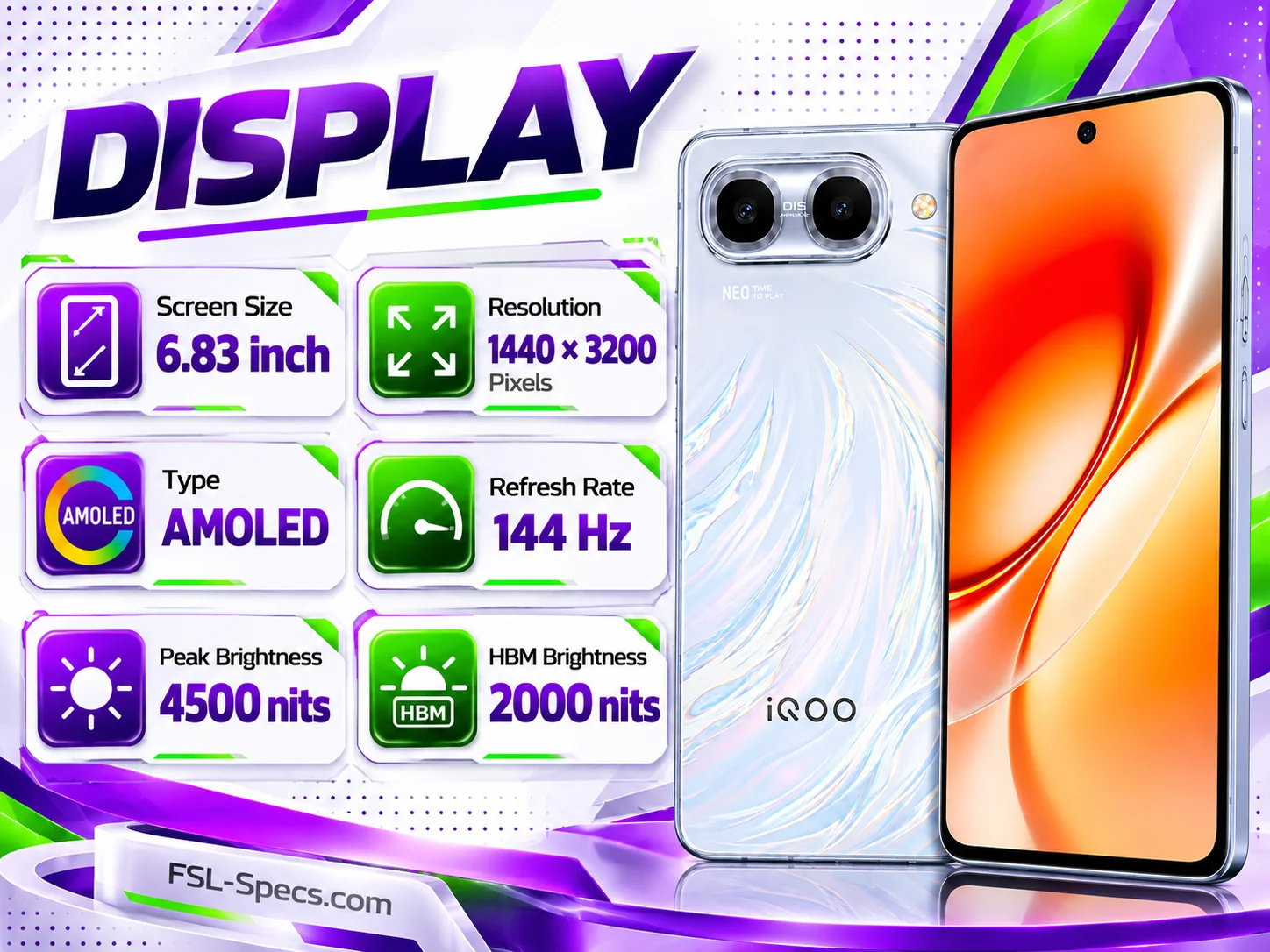
Screen Size
6.83 inch
Resolution
1440 × 3200 Pixels
Type
AMOLED
Refresh Rate
144 Hz
Peak Brightness
4500 nits
HBM Brightness
2000 nits
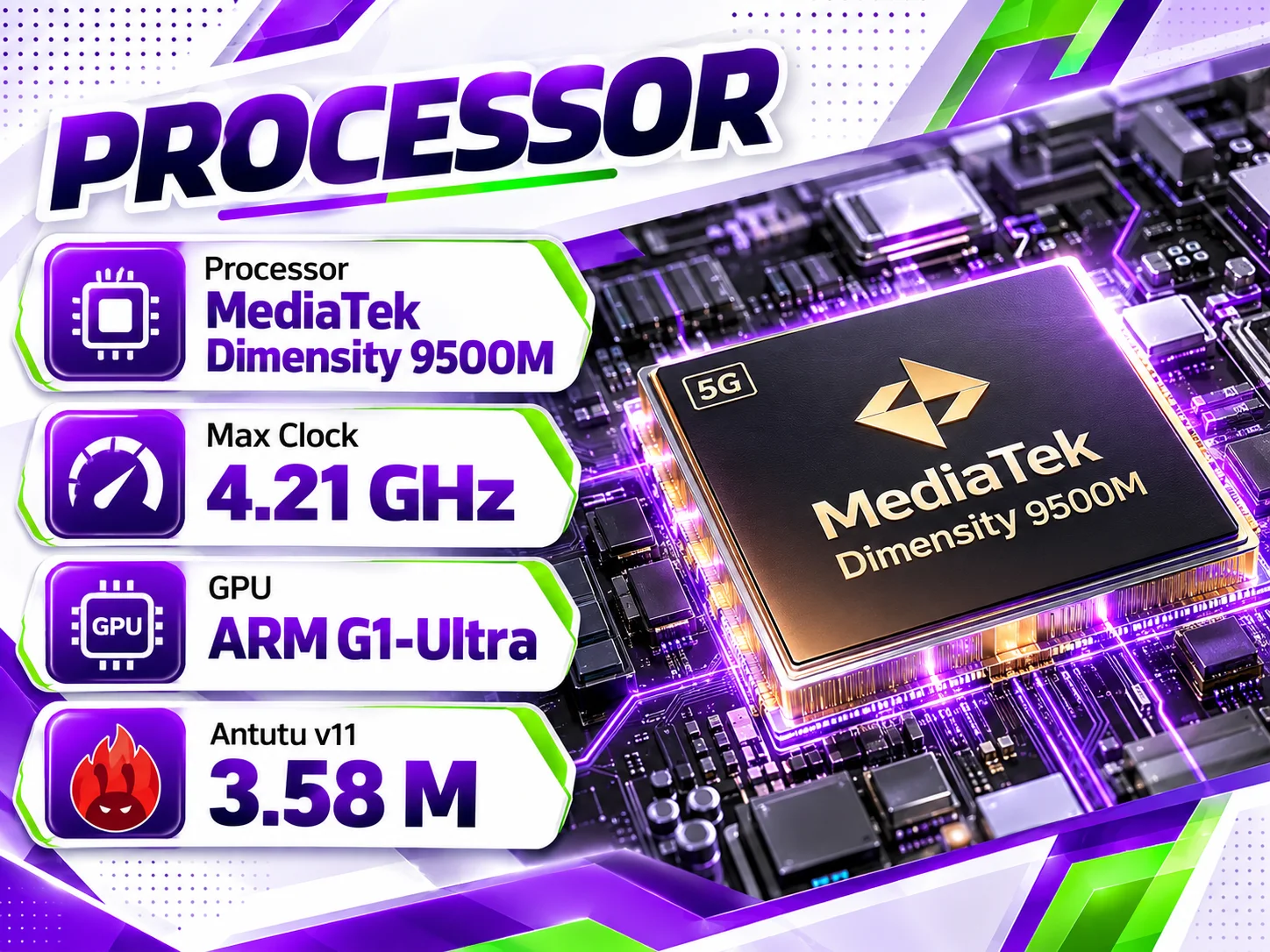
Processor
Dimensity 9500M
Processor Link
Max Clock
4.21 GHz
Lithography
3 nm
GPU
ARM G1-Ultra
CPU Cores
8 Cores
Antutu v11
3.58 M
Architecture
1 × 4.21 GHz 
3 × 3.5 GHz 
4 × 2.7 GHz 
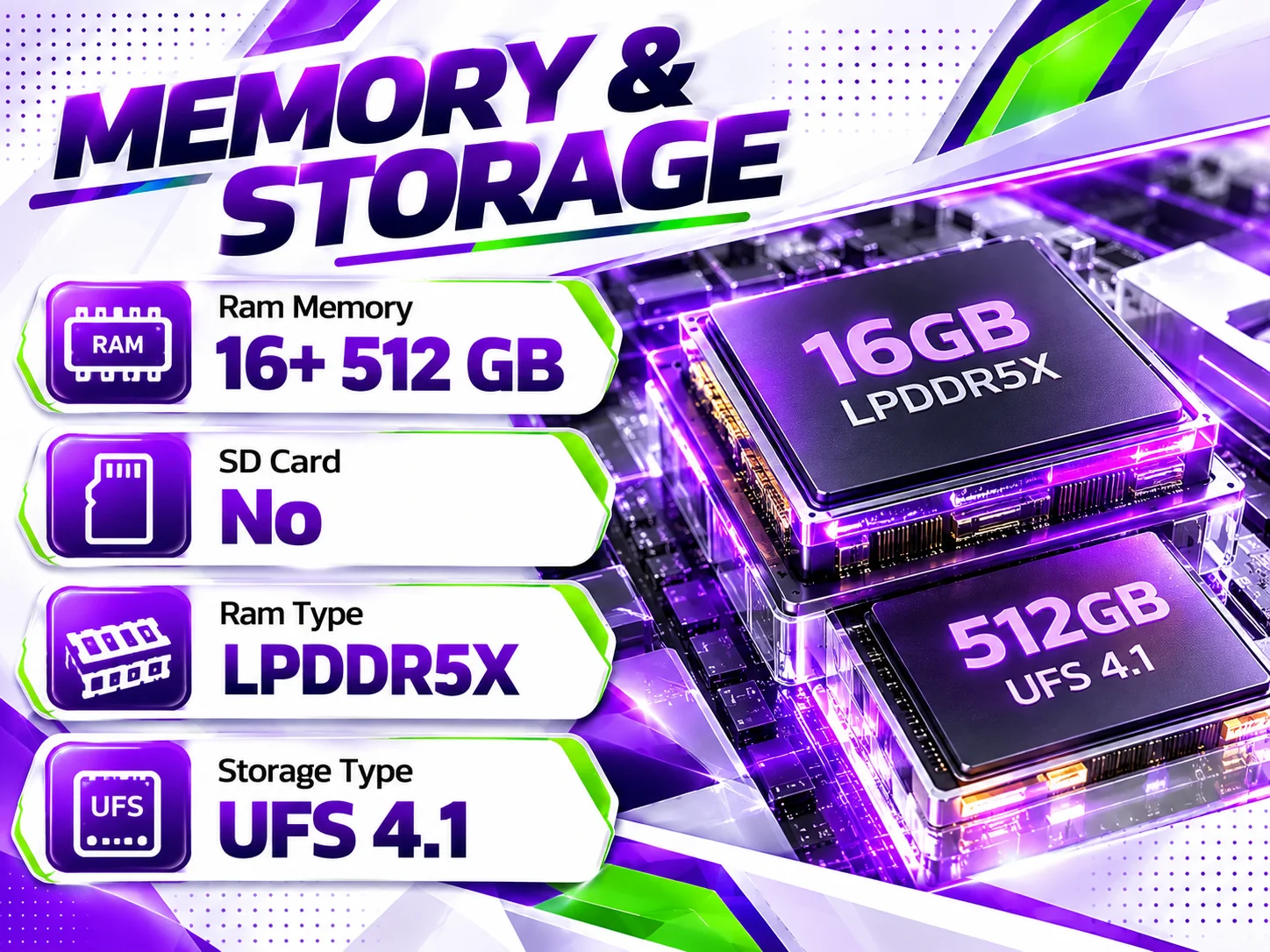
Ram Memory
16+ 512 GB
Ram Type
LPDDR5X
Storage Type
UFS 4.1
SD Card
No
Variants
12+ 256 / 512GB
16+ 256 / 512 GB
MP
Rear Camera
50 + 8 MP
Front Camera
16 MP
SENSORS
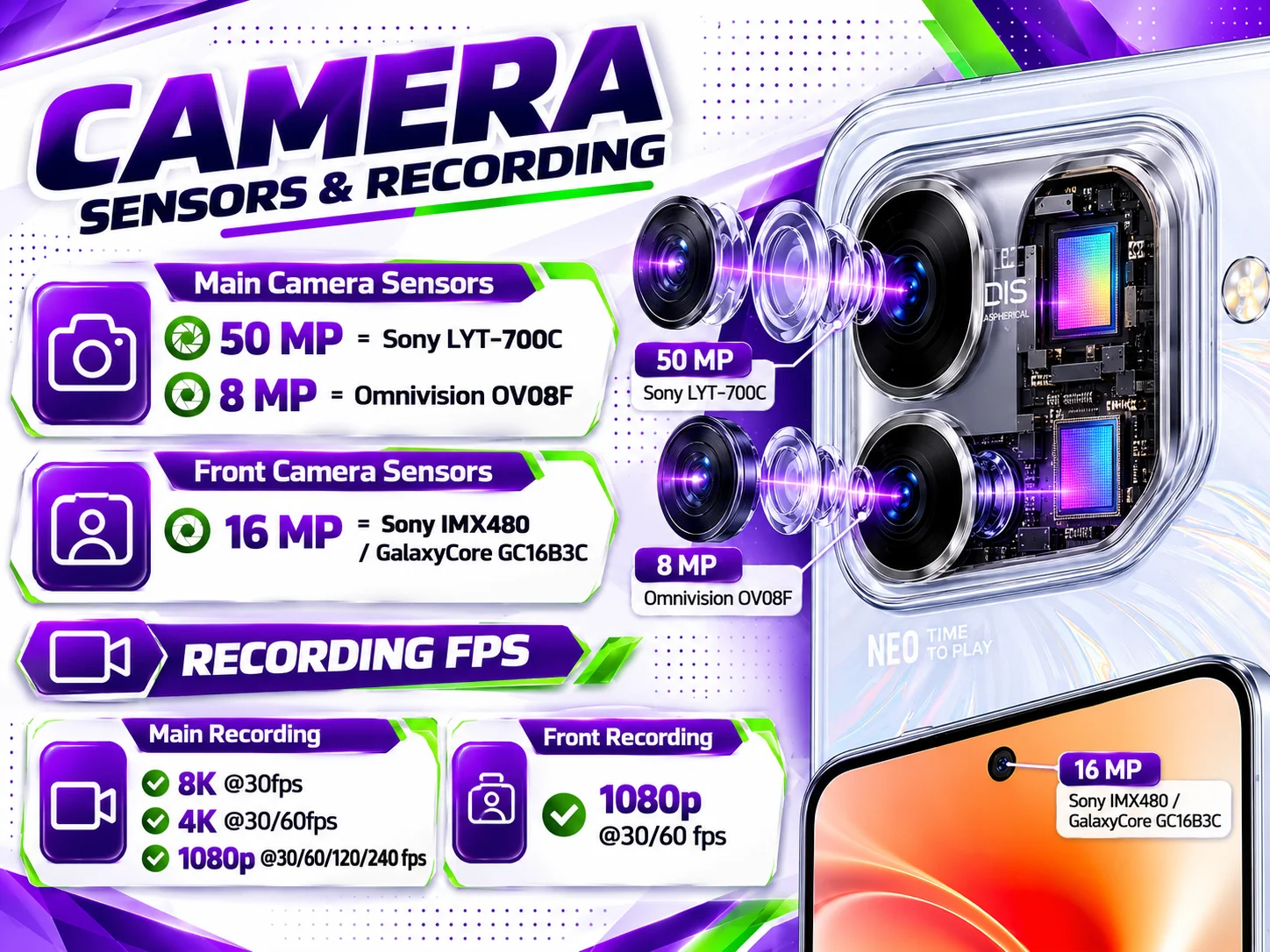
Camera Sensors
50 MP = Sony LYT-700C
8 MP = Omnivision OV08F
Front Sensors
16 MP = Sony IMX480 / GalaxyCore GC16B3C
RECORDING FPS
Main Recording
8K @30fps
4K @30/60fps
1080p @30/60/120/240 fps
Front Recording
1080p @30/60 fps
RESOLUTION
Main Resolution
8150 x 6150 pixels
Front Resolution
4608 × 3456 pixels
Stabilization
Yes
FLASH
Flash
LED Flash
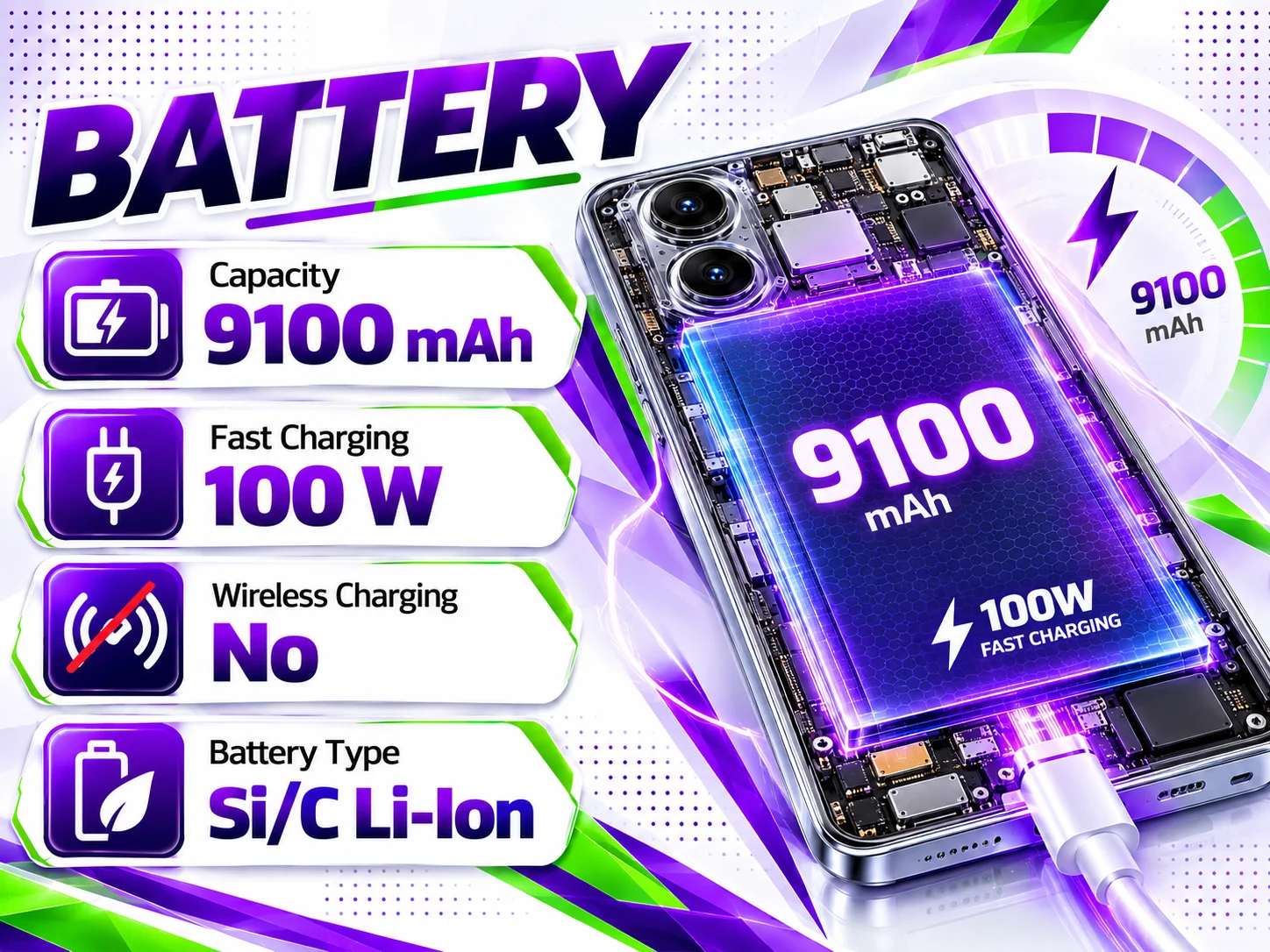
Capacity
9100 mAh
Fast Charging
100 W
Wireless Charging
No
Li Battery Type
Si/C Li-Ion
REVERSE
Reverse Wireless
Yes
OTHER
Charging Time
1:20 hr
AUDIO & SENSORS
Speaker
Dual Stereo Speaker
Fingerprint Sensor
Hyper Sonic Front Finger
BASIC INFO
Mobile
iQOO Neo 11 Ultra
Model
V2573A
Series
Neo Series
Category
Flagship / Gaming
Release Date
18 August,2026
Year
2026
CONNECTIVITY
Sim
Nano-SIM + Nano-SIM
Network
4G / 4G+ / 5G/ 5G+
WiFi
Wi-Fi 7
Bluetooth
5.4
NFC
Yes
OS
Android 16
BODY
Dimensions
163.4 x 75.9 x 8.6 mm
Build
Aluminum frame , Back Glass
KG Weight
225 g
Screen Size
6.83 inch
Resolution
1440 × 3200 Pixels
Type
AMOLED
Refresh Rate
144 Hz
Peak Brightness
4500 nits
HBM Brightness
2000 nits
Processor
Dimensity 9500M
Processor Link
Max Clock
4.21 GHz
Lithography
3 nm
GPU
ARM G1-Ultra
CPU Cores
8 Cores
Antutu v11
3.58 M
Architecture
1 × 4.21 GHz 
3 × 3.5 GHz 
4 × 2.7 GHz 
Ram Memory
16+ 512 GB
SD Card
No
Ram Type
LPDDR5X
Storage Type
UFS 4.1
Variants
12+ 256 / 512GB
16+ 256 / 512 GB
MP
Rear Camera
50 + 8 MP
Front Camera
16 MP
SENSORS
Main Camera Sensors
50 MP = Sony LYT-700C
8 MP = Omnivision OV08F
Front Camera Sensors
16 MP = Sony IMX480 / GalaxyCore GC16B3C
RECORDING FPS
Main Recording
8K @30fps
4K @30/60fps
1080p @30/60/120/240 fps
Front Recording
1080p @30/60 fps
RESOLUTION
Main Resolution
8150 x 6150 pixels
Front Resolution
4608 × 3456 pixels
Stabilization
Yes
FLASH
Flash
LED Flash
Capacity
9100 mAh
Fast Charging
100 W
Wireless Charging
No
Li Battery Type
Si/C Li-Ion
REVERSE
Reverse Wireless
Yes
OTHER
Charging Time
1:20 hr
AUDIO & SENSORS
Speaker
Dual Stereo Speaker
Fingerprint Sensor
Hyper Sonic Front Finger

Highlights & Review Of iQOO Neo 11 Ultra

Display Review:

The iQOO Neo 11 Ultra uses a 6.83-inch LTPS AMOLED display with a 3200 × 1440 (1.5K) resolution, approximately 450 ppi, and a 144Hz refresh rate. Its peak brightness is rated up to 4,500 nits, with a typical brightness of 1,000 nits on a full white screen. The panel supports HDR10+ and HDR10, with a 500Hz touch sampling rate for responsive gaming. It uses Visionox F2 luminescent material and a flat design, with Gorilla Glass protection. At approximately PKR 230,000–250,000 for the 16GB + 512GB variant, it offers a large, sharp, and gaming-focused display with excellent brightness and smoothness.

The Xiaomi 17T Pro has a slightly smaller 6.83-inch AMOLED display with a 1280 × 2772 (1.5K) resolution, around 447 ppi, and a 144Hz refresh rate. Its peak brightness is rated at 3,500 nits, with a typical brightness of 600 nits and an HBM figure of 2,000 nits. It supports Dolby Vision, HDR10+, 3,840Hz PWM dimming, and 12-bit color depth with 100% DCI-P3 coverage. Independent testing measured a maximum brightness of around 1,069 nits on a large white surface and nearly 3,500 nits on a small patch, confirming strong HDR performance. At approximately PKR 270,000 for the 12GB + 512GB variant, it offers a premium display with excellent eye-care features and color accuracy.

The iQOO 13 uses a 6.82-inch LTPO AMOLED display with a higher 1440 × 3168 resolution, approximately 510 ppi, and a 144Hz refresh rate. Its peak brightness is rated at 4,500 nits, with a typical brightness of 800 nits and an HBM figure of 1,800 nits. It supports HDR10+, 2,592Hz PWM dimming, and 1B colors. Independent testing measured a maximum brightness of around 1,804 nits, which is the highest real-world result in this group. At approximately PKR 220,000–240,000 for the 16GB + 512GB variant, it offers the sharpest and brightest display here, with LTPO technology that can reduce power consumption during static content.

The vivo X300 FE has a more compact 6.31-inch LTPO AMOLED display with a 1216 × 2640 resolution, around 461 ppi, and a 120Hz refresh rate. Its peak brightness is rated at 5,000 nits, the highest headline figure in this group, with a typical brightness of 800 nits and an HBM figure of 1,800 nits. It supports HDR10+, 2,160Hz PWM dimming, and 1B colors. Independent testing measured a maximum brightness of around 1,774 nits, which is close to the iQOO 13’s real-world result. At approximately PKR 250,000 for the 12GB + 256GB variant, it offers a smaller but very sharp and bright display with LTPO efficiency, though its lower refresh rate and smaller size make it less ideal for gaming than the iQOO Neo 11 Ultra or Xiaomi 17T Pro

Verdict: The iQOO Neo 11 Ultra has one of the largest and brightest displays in this group with its 6.83-inch 144Hz 1.5K LTPS AMOLED and 4,500-nit peak brightness, closely matched in sharpness by the Xiaomi 17T Pro; the iQOO 13 is the sharpest with its 510 ppi panel and LTPO efficiency, while the vivo X300 FE offers the highest claimed brightness at 5,000 nits but in a smaller, lower-refresh-rate package.

Processor Review:

The iQOO Neo 11 Ultra uses the MediaTek Dimensity 9500M chipset on a 3nm process, paired with the Mali-G1 Ultra MC12 GPU. In AnTuTu v11 testing, it averages around 3,579,952 points, with roughly 983,039 CPU, 1,327,484 GPU, 460,333 memory, and 809,096 UX sub-scores. This places the Neo 11 Ultra firmly in the flagship tier, with enough power for demanding games, 4K video editing, heavy multitasking, and AI-driven camera processing. At approximately PKR 230,000–250,000 for the 16GB + 512GB variant, it offers exceptional performance per rupee, though its 3nm chipset can throttle under prolonged heavy load due to thermal limits.

The Xiaomi 17T Pro is powered by the standard MediaTek Dimensity 9500 chipset, also on a 3nm process with the Mali-G1 Ultra GPU. Its AnTuTu v11 score averages around 3,352,325 points, with independent testing confirming this figure across multiple review units. Compared to the Neo 11 Ultra, the 17T Pro is about 6.4% slower in AnTuTu v11, but both phones share the same core architecture and 3nm process, so real-world gaming and multitasking differences are minimal. At approximately PKR 270,000 for the 12GB + 512GB variant, the 17T Pro offers strong performance with better thermal management and a more refined software experience.

The iQOO 13 runs on the Qualcomm Snapdragon 8 Elite chipset (non-Gen 5) with the Adreno 830 GPU. Its AnTuTu v10 score averages around 2,790,956 points, with some user submissions reaching over 3.1 million, while AnTuTu v11 results are not widely published for this model. Using the available v10 data, the iQOO 13 is roughly 21.9% slower than the Neo 11 Ultra in v11 terms, though this comparison is imperfect due to the benchmark version mismatch. In real-world use, the iQOO 13 remains a flagship-level performer for gaming and heavy tasks, but it is a generation behind the Dimensity 9500 phones. At approximately PKR 220,000–240,000 for the 16GB + 512GB variant, it offers strong value for buyers who prioritize raw power over the newest chipset generation.

The vivo X300 FE uses the Qualcomm Snapdragon 8 Gen 5 chipset with the Adreno 829 GPU. Its AnTuTu v11 score averages around 2,659,452 points, with roughly 825,845 CPU, 869,516 GPU, 403,896 memory, and 560,195 UX sub-scores. This places the X300 FE about 25.7% slower than the Neo 11 Ultra and 20.7% slower than the Xiaomi 17T Pro in v11 terms. At approximately PKR 250,000 for the 12GB + 256GB variant, it offers solid flagship performance but is the weakest in this group for gaming and heavy workloads, with less RAM and storage than the other three phones.

Using the most consistent AnTuTu v11 figures for these four phones, the approximate percentage differences are:

ComparisonAnTuTu v11 scoreApproximate difference
iQOO Neo 11 Ultra vs Xiaomi 17T Pro3,579,952 vs 3,352,325Neo 11 Ultra is +6.4% faster
iQOO Neo 11 Ultra vs vivo X300 FE3,579,952 vs 2,659,452Neo 11 Ultra is +25.7% faster
Xiaomi 17T Pro vs vivo X300 FE3,352,325 vs 2,659,45217T Pro is +20.7% faster
iQOO 13 vs vivo X300 FE~2,790,956 (v10) vs 2,659,452 (v11)iQOO 13 is roughly +4.9% faster, but benchmark versions differ
iQOO Neo 11 Ultra vs iQOO 133,579,952 (v11) vs ~2,790,956 (v10)Neo 11 Ultra is roughly +21.9% faster, but benchmark versions differ

Verdict: The iQOO Neo 11 Ultra is the performance leader with roughly 3.58 million AnTuTu v11 points, followed closely by the Xiaomi 17T Pro at about 3.35 million; the vivo X300 FE ranks third with around 2.66 million, while the iQOO 13 cannot be fairly ranked in v11 terms due to the benchmark version mismatch, but its v10 results place it roughly level with the X300 FE in real-world speed.

Ram & Memory Review:

The iQOO Neo 11 Ultra in the compared 16GB + 512GB variant uses LPDDR5X Ultra RAM running at 9600Mbps and UFS 4.1 storage. This is the highest RAM capacity in this group, with 16GB physical memory that supports virtual expansion up to +16GB for a theoretical maximum of 32GB RAM. The UFS 4.1 storage standard offers fast app loading, quick game asset streaming, and efficient large-file transfers. At approximately PKR 230,000–250,000, the Neo 11 Ultra provides flagship-grade memory hardware that is well-suited for heavy multitasking, gaming, 4K video editing, and AI-driven camera processing. It has no microSD card slot, so 512GB is the fixed internal storage limit.

The Xiaomi 17T Pro in the 12GB + 512GB variant uses LPDDR5X RAM running at 9600Mbps and UFS 4.1 storage. Its 12GB physical RAM is slightly lower than the Neo 11 Ultra’s 16GB, but the memory speed is identical at 9600Mbps, and the storage standard matches at UFS 4.1. Xiaomi offers 12GB + 256GB, 12GB + 512GB, and 12GB + 1TB variants, with no microSD expansion on any of them. At approximately PKR 270,000, the 17T Pro provides flagship-grade memory hardware that is well-suited for gaming, camera work, and heavy multitasking, though it does not match the Neo 11 Ultra’s extra 4GB of RAM

The iQOO 13 in the 16GB + 512GB variant uses LPDDR5X Ultra RAM running at 9600Mbps and UFS 4.1 storage. This matches the Neo 11 Ultra in both RAM capacity and speed, with 16GB physical memory and virtual expansion up to +16GB for a theoretical maximum of 32GB RAM. The UFS 4.1 storage offers fast read/write speeds, with iQOO claiming a 36% improvement in read speeds over UFS 4.0 in fragmented conditions. At approximately PKR 220,000–240,000, the iQOO 13 provides the same high-end memory hardware as the Neo 11 Ultra but at a lower price, making it a strong value option for heavy multitasking and gaming. It has no microSD card slot, so 512GB is the fixed internal storage limit

The vivo X300 FE in the 12GB + 256GB variant uses LPDDR5X Ultra RAM and UFS 4.1 storage. Its 12GB physical RAM is lower than the Neo 11 Ultra and iQOO 13’s 16GB, and its 256GB storage is half the capacity of the other three phones in this comparison. vivo offers 8GB + 256GB, 12GB + 256GB, and 12GB + 512GB variants, with no microSD expansion on any of them. At approximately PKR 250,000, the X300 FE provides solid flagship-grade memory hardware but is the weakest in this group for RAM capacity and storage size, making it less ideal for heavy multitasking or large media libraries.

Verdict: The iQOO Neo 11 Ultra and iQOO 13 share the strongest memory hardware with 16GB LPDDR5X Ultra RAM + 512GB UFS 4.1, but the iQOO 13 offers this at a lower price, making it the better value for heavy multitasking and gaming. The Xiaomi 17T Pro matches the storage standard with UFS 4.1 but has less RAM at 12GB, while the vivo X300 FE ranks last with 12GB + 256GB, offering the least RAM and storage in this group.

Cameras Review:

The iQOO Neo 11 Ultra has a dual rear camera system with a 50MP main camera using a 1/1.56-inch sensor, f/1.9 aperture, PDAF, and OIS, plus an 8MP ultrawide camera with a f/2.2 aperture. It does not include a dedicated telephoto lens. The front camera is 16MP with f/2.5 aperture. Rear video recording reaches 8K@30fps, 4K@60fps, and 1080p@30/60fps, with gyro-EIS and OIS stabilization. The front camera records up to 1080p@30fps. At approximately PKR 230,000–250,000 for the 16GB + 512GB variant, the Neo 11 Ultra offers strong main-camera quality with OIS and 8K video, but its lack of a telephoto lens and lower-resolution front camera limit its versatility for zoom photography and selfies

The Xiaomi 17T Pro has the most complete camera system here. Its Leica-tuned triple rear setup includes a 50MP main camera using the Light Fusion 950 (OmniVision OVX9500) sensor with a large 1/1.3-inch size, f/1.67 aperture, OIS, and multi-directional PDAF; a 50MP Samsung JN5 periscope telephoto with 5x optical zoom, OIS, and PDAF; plus a 13MP ultrawide with fixed focus. The front camera is 32MP with fixed focus. Rear video recording reaches 8K@30fps, 4K@120fps, 4K@60fps, and 1080p@60fps, with HDR10+ recording and Log video support. The front camera records up to 4K@30fps and 1080p@60fps. At approximately PKR 270,000 for the 12GB + 512GB variant, the 17T Pro offers flagship-level photography, strong 5x zoom, and the most advanced video features in this group.

The iQOO 13 uses a triple rear camera system with a 50MP main camera with OIS, a 50MP ultrawide camera, and a 50MP telephoto camera with 2x optical zoom. The front camera is 32MP. Rear video recording reaches 8K@30fps and 4K@60fps, with OIS and gyro-EIS stabilization. The front camera records up to 4K@60fps. At approximately PKR 220,000–240,000 for the 16GB + 512GB variant, the iQOO 13 offers a balanced triple-camera setup with 8K video and a capable selfie camera, though its 2x telephoto is less powerful than the Xiaomi 17T Pro’s 5x periscope.

The vivo X300 FE has the strongest camera hardware for photography-focused users. Its ZEISS-tuned triple rear setup includes a 50MP main camera with a 1/1.56-inch sensor, f/1.57 aperture, PDAF, and OIS; a 50MP ZEISS periscope telephoto with a 1/1.95-inch sensor, OIS, and 3x optical zoom; plus a 50MP ZEISS ultrawide camera. The front camera is a 50MP ZEISS unit with autofocus and a 92° field of view. Rear video recording reaches 8K@30fps, 4K@120fps, and 4K@60fps, while the front camera records up to 4K@30fps. At approximately PKR 250,000 for the 12GB + 256GB variant, the X300 FE offers the best camera hardware in this group, with superior selfie quality and consistent 4K video across all lenses.

FeatureiQOO Neo 11 Ultra (16GB + 512GB)Xiaomi 17T Pro (12GB + 512GB)iQOO 13 (16GB + 512GB)vivo X300 FE (12GB + 256GB)
Price (PKR)230,000–250,000270,000220,000–240,000250,000
Rear Camera Count2333
Main Camera50MP, f/1.9, 1/1.56″, PDAF, OIS50MP, f/1.67, 1/1.3″ Light Fusion 950, OIS, PDAF50MP, OIS50MP, f/1.57, 1/1.56″ Samsung GNJ, OIS, ZEISS
Telephoto CameraNone50MP, 5x optical zoom, OIS, PDAF50MP, 2x optical zoom50MP, 3x optical zoom, OIS, ZEISS
Ultrawide Camera8MP, f/2.213MP, fixed focus50MP50MP, ZEISS
Front Camera16MP, f/2.532MP, fixed focus32MP50MP, AF, 92° FOV, ZEISS
Rear Video (Max)8K@30fps, 4K@60fps8K@30fps, 4K@120fps, HDR10+, Log8K@30fps, 4K@60fps8K@30fps, 4K@120fps
Front Video (Max)1080p@30fps4K@30fps, 1080p@60fps4K@60fps4K@30fps
Optical ZoomNone5x2x3x
OISMain onlyMain + TelephotoMain + TelephotoMain + Telephoto
Best ForGaming, 8K video, large batteryBest all-round camera, 5x zoom, Log videoBalanced triple camera, fastest wired chargingBest photography, selfies, compact design

Verdict: The vivo X300 FE is the camera winner with its triple 50MP ZEISS system, 50MP AF front camera, and 4K@120fps video; the Xiaomi 17T Pro is a close second with its larger 1/1.3-inch main sensor and 5x periscope telephoto; the iQOO 13 offers a balanced triple-camera setup with 8K video but a weaker 2x telephoto; while the iQOO Neo 11 Ultra ranks last for camera versatility with its dual-camera setup, no telephoto lens, and lower-resolution front camera.

Battery Review:

The iQOO Neo 11 Ultra has a massive 9,100 mAh silicon-carbon battery with 100W wired FlashCharge and OTG reverse wired charging. It does not support wireless charging. This is the largest battery in this comparison, with iQOO claiming up to 36.5 days of 4G single-SIM standby time or 33.5 hours of 4G VoLTE talk time. The silicon-carbon chemistry allows a high-capacity cell in a relatively slim 8.6mm chassis. At approximately PKR 230,000–250,000 for the 16GB + 512GB variant, the Neo 11 Ultra offers exceptional endurance for gaming, travel, and heavy daily use, though its lack of wireless charging is a notable omission at this price.

The Xiaomi 17T Pro has a 7,000 mAh silicon-carbon battery with 100W wired HyperCharge, 50W wireless HyperCharge, and 22.5W wired reverse charging. Xiaomi claims up to 1.5 days of battery life on a single charge, and independent testing confirmed the phone easily lasts through a full day and often into a second morning. The 100W wired charger is included in the box, and the 50W wireless charging is among the fastest in this segment. At approximately PKR 270,000 for the 12GB + 512GB variant, the 17T Pro offers a strong balance of large capacity, fast wired and wireless charging, and reverse charging, though its battery is 23% smaller than the Neo 11 Ultra’s.

The iQOO 13 has a 6,150 mAh battery with 120W FlashCharge wired charging. It does not support wireless charging or reverse charging. The 120W wired charging is the fastest in this group, though the battery capacity is the smallest here. iQOO uses a dual-cell design in some markets and a single-cell design in others, which affects charging architecture but not the headline capacity. At approximately PKR 220,000–240,000 for the 16GB + 512GB variant, the iQOO 13 offers solid endurance for a flagship but is clearly behind the Neo 11 Ultra and Xiaomi 17T Pro in battery capacity.

The vivo X300 FE has a 6,500 mAh silicon-carbon battery with 90W wired FlashCharge and 40W wireless FlashCharge. vivo claims up to 1.5 days of battery life on a single charge. The 40W wireless charging is slower than the Xiaomi 17T Pro’s 50W but still faster than most mid-range competitors. At approximately PKR 250,000 for the 12GB + 256GB variant, the X300 FE offers a large battery in a compact 6.31-inch body, making it the best option for users who want flagship endurance in a smaller form factor.

Verdict: The iQOO Neo 11 Ultra is the battery winner with its massive 9,100 mAh silicon-carbon cell and 100W wired charging, though it lacks wireless charging. The Xiaomi 17T Pro ranks second with a 7,000 mAh battery, 100W wired, 50W wireless, and 22.5W reverse charging. The vivo X300 FE offers the best compact-phone endurance with a 6,500 mAh battery and 90W wired / 40W wireless charging, while the iQOO 13 has the smallest capacity at 6,150 mAh but compensates with the fastest 120W wired charging in this group.

Final Verdict :

The iQOO Neo 11 Ultra (16GB + 512GB) is the performance and battery leader in this comparison. Its Dimensity 9500M chipset delivers roughly 3.58 million AnTuTu v11 points, about 6.4% ahead of the Xiaomi 17T Pro, while its massive 9,100 mAh silicon-carbon battery is the largest here by a wide margin. It also offers 16GB LPDDR5X Ultra RAM, 512GB UFS 4.1 storage, a sharp 6.83-inch 144Hz 1.5K LTPS AMOLED display with 4,500-nit peak brightness, and 8K@30fps video recording. However, it lacks a telephoto lens, wireless charging, and reverse wireless charging, and its camera system is the least versatile in this group. At approximately PKR 230,000–250,000, it is the best choice for users who prioritize raw performance, gaming, and maximum battery life over camera flexibility.

The Xiaomi 17T Pro (12GB + 512GB) is the best all-rounder. Its Dimensity 9500 chipset scores around 3.35 million AnTuTu v11 points, only about 6.4% behind the Neo 11 Ultra, while offering a more complete package: a Leica-tuned triple camera with a 50MP 1/1.3-inch main sensor, 50MP 5x periscope telephoto, and 13MP ultrawide; a 7,000 mAh silicon-carbon battery with 100W wired, 50W wireless, and 22.5W reverse charging; and a sharp 6.83-inch 144Hz 1.5K AMOLED display with 3,500-nit peak brightness and 3,840Hz PWM dimming. At approximately PKR 270,000, it is the strongest choice for users who want a balance of performance, camera versatility, battery, and charging convenience.

The vivo X300 FE (12GB + 256GB) is the best camera and compact-phone option. Its ZEISS-tuned triple 50MP rear system (main, 3x periscope, ultrawide) and 50MP AF front camera offer the most complete imaging hardware here, with 4K@120fps video on the main camera and 8K@30fps on the rear. Its 6,500 mAh silicon-carbon battery with 90W wired and 40W wireless charging provides excellent endurance in a compact 6.31-inch body. However, its 12GB + 256GB configuration has the least RAM and storage in this group, and its Snapdragon 8 Gen 5 chipset scores around 2.66 million AnTuTu v11 points, about 25.7% behind the Neo 11 Ultra. At approximately PKR 250,000, it is ideal for users who prioritize camera quality and portability over maximum performance.

The iQOO 13 (16GB + 512GB) is the value pick for raw power and memory. It matches the Neo 11 Ultra’s 16GB LPDDR5X Ultra RAM + 512GB UFS 4.1 storage at a lower price of approximately PKR 220,000–240,000, and its 120W wired charging is the fastest in this group. Its Snapdragon 8 Elite chipset scores around 2.79 million in AnTuTu v10 (no reliable v11 average), placing it roughly a generation behind the Dimensity 9500 phones in benchmark terms, though real-world gaming and multitasking remain flagship-level. Its triple camera with a 2x telephoto and 8K@30fps video is solid but less versatile than the Xiaomi 17T Pro or vivo X300 FE. It has no wireless or reverse charging.

Bottom line: Choose the iQOO Neo 11 Ultra if maximum performance and battery life matter most; choose the Xiaomi 17T Pro if you want the best all-round balance of camera, battery, charging, and performance; choose the vivo X300 FE for the best camera and compact design; and choose the iQOO 13 for the lowest-priced 16GB + 512GB flagship with the fastest wired charging.

Quick Ranking:

  1. iQOO Neo 11 Ultra (16GB + 512GB) – PKR 230,000–250,000
    Best performance, battery, and gaming value.

  2. Xiaomi 17T Pro (12GB + 512GB) – PKR 270,000
    Best all-rounder with the most complete camera, battery, and charging package.

  3. vivo X300 FE (12GB + 256GB) – PKR 250,000
    Best camera and compact-phone option.

  4. iQOO 13 (16GB + 512GB) – PKR 220,000–240,000
    Best value for raw power and memory, with the fastest wired charging.

Pros And Cons of iQOO Neo 11 Ultra

Pros of Mobile

✅ 9100mAh Battery 🔋
✅ 2K 144Hz AMOLED 📱
✅ Dimensity 9500M ⚡
✅ 100W Fast Charging 🚀
✅ 50MP OIS Camera 📸
✅ IP68/IP69 Protection 🛡️

Cons of Mobile


❌ 8MP Ultrawide Camera 📷
❌ No Telephoto Camera 🔭
❌ No Wireless Charging 🔋
❌ China-OriginOS Software 🌏

Best For - Not Best For

Best For

🎯 Heavy Gaming 🎮
🎯 Long Battery Life 🔋
🎯 High-Refresh Gaming ⚡
🎯 Media Consumption 🎬
🎯 Power Users 💪
🎯 Performance Enthusiasts 🚀

Not Best For


🚫 Photography Enthusiasts 📸
🚫 Zoom Photography 🔭
🚫 Wireless Charging Users 🔋
🚫 Compact Phone Lovers 📱
🚫 Global Software Fans 🌍

Trailer And Unboxing of iQOO Neo 11 Ultra

Disassembly Or Teardown And Gaming Test of iQOO Neo 11 Ultra

Camera Test iQOO Neo 11 Ultra

iQOO Mobile Series

IQOO Mobile Series
Picture of Faisal Ur Rehman

Faisal Ur Rehman

Faisal Rehman is the founder and editor of FSL Specs, where he publishes in-depth smartphone specifications, comparisons, buying guides, and technology insights. With extensive experience in mobile hardware research and technical analysis, he provides accurate and up-to-date information on Android smartphones, processors, displays, cameras, batteries, performance benchmarks, and software features. His goal is to simplify complex specifications and help readers choose the right device with confidence.

FAQs Questions

The iQOO Neo 11 Ultra is powered by the MediaTek Dimensity 9500M, a 3nm flagship-class chipset with a peak clock speed of up to 4.21GHz. It is built for demanding gaming and heavy everyday performance

It features a large 6.83-inch 2K AMOLED display with a smooth 144Hz refresh rate. The screen also supports HDR10+ and can reach up to 4500 nits peak brightness.

The Neo 11 Ultra is strongly focused on gaming, combining the Dimensity 9500M, Q2 gaming chip and 8K Ice Dome 3D VC liquid cooling. Its 144Hz display and large battery also make long gaming sessions more practical.

The phone packs a huge 9,100mAh silicon-carbon battery, paired with 100W fast charging. That makes battery life one of its biggest strengths, especially for gaming, streaming and heavy daily use.

The rear setup includes a 50MP Sony LYTIA main camera with OIS and an 8MP ultrawide camera, while the front has a 16MP selfie camera. It can also record up to 8K video.

Yes, the iQOO Neo 11 Ultra comes with IP68 and IP69 dust and water resistance. This gives the phone stronger protection against water and dust than many performance-focused smartphones.

The phone is available with up to 16GB RAM and 512GB storage, with LPDDR5X memory and UFS 4.1 storage listed by current specification sources. There is no microSD card slot for expansion.

India; current Indian listings are based on the China launch. Availability and an official Indian price should therefore be confirmed before buying an imported unit.

Scroll to Top