
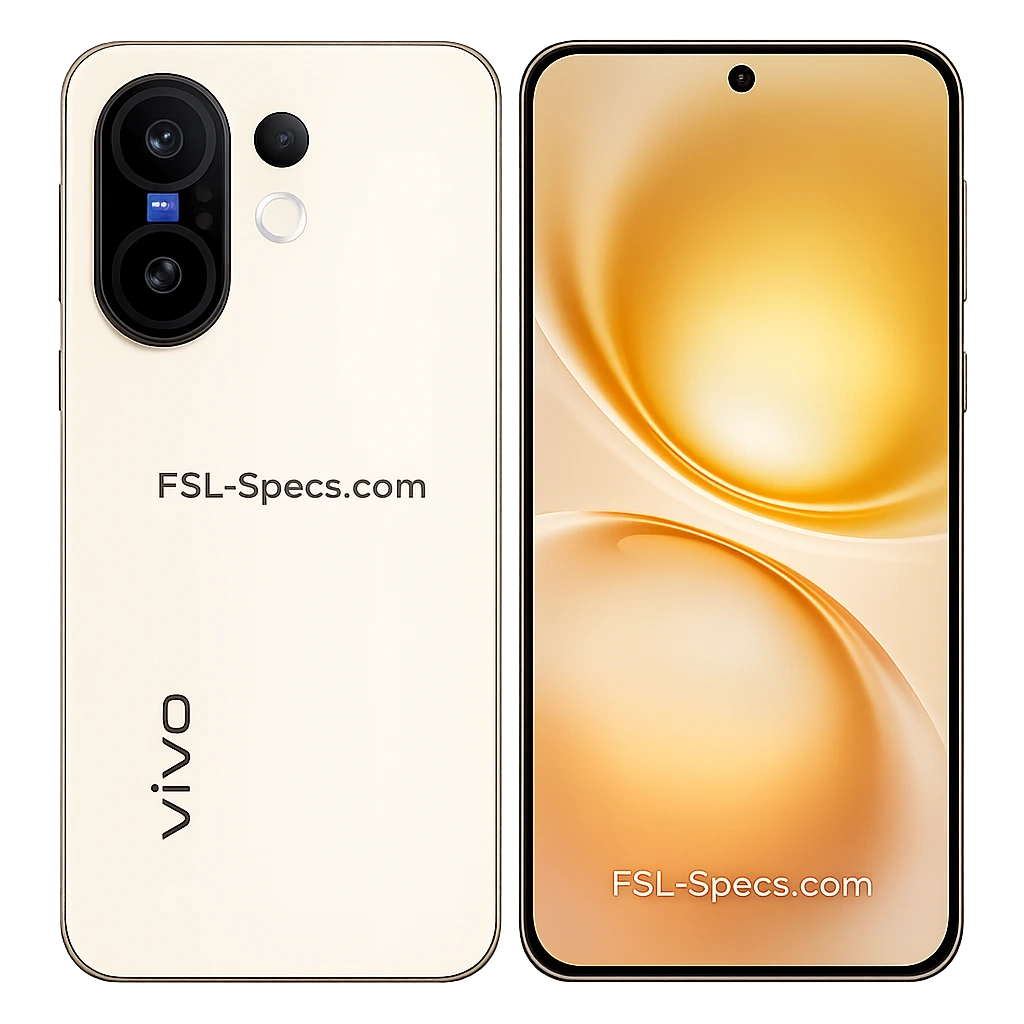



















✪ Vivo X200 FE ✪

Vivo x200 FE Specs, Price, Camera, Battery & Best Review (2026)
United States flag United States
$560 USD
Pakistan flag Pakistan (PKR)
195,000 PKR
India flag India (INR)
₹55,000 INR

✪ Vivo X200 FE ✪

Vivo x200 FE Specs, Price, Camera, Battery & Best Review (2026)
Last Time Update : 13 August, 2026
0

Quick Specifications

LTPO Amoled

Display Type

Dimensity 9300+

Processor

12 + 512 GB

Ram And Memory

50 + 50 + 8 MP

Camera

6500 mAh

Battery

90 W

Fast Charging

Full Specification

BASIC INFO
Mobile
Vivo X200 FE
Model
V2503
Series
Vivo X Series
Category
Flagship
Release Date
5 July,2025
Year
2025
CONNECTIVITY
Sim
Nano-SIM / E-Sim
Network
4G / 4G+ / 5G
WiFi
WiFi 7 (802.11be)
Bluetooth
5.4
NFC
Yes
OS
Android 17 Now
BODY
Dimensions
150.8 × 71.8 × 8.0 mm
Build
Frame Aluminum And Glass Back
KG Weight
186 g
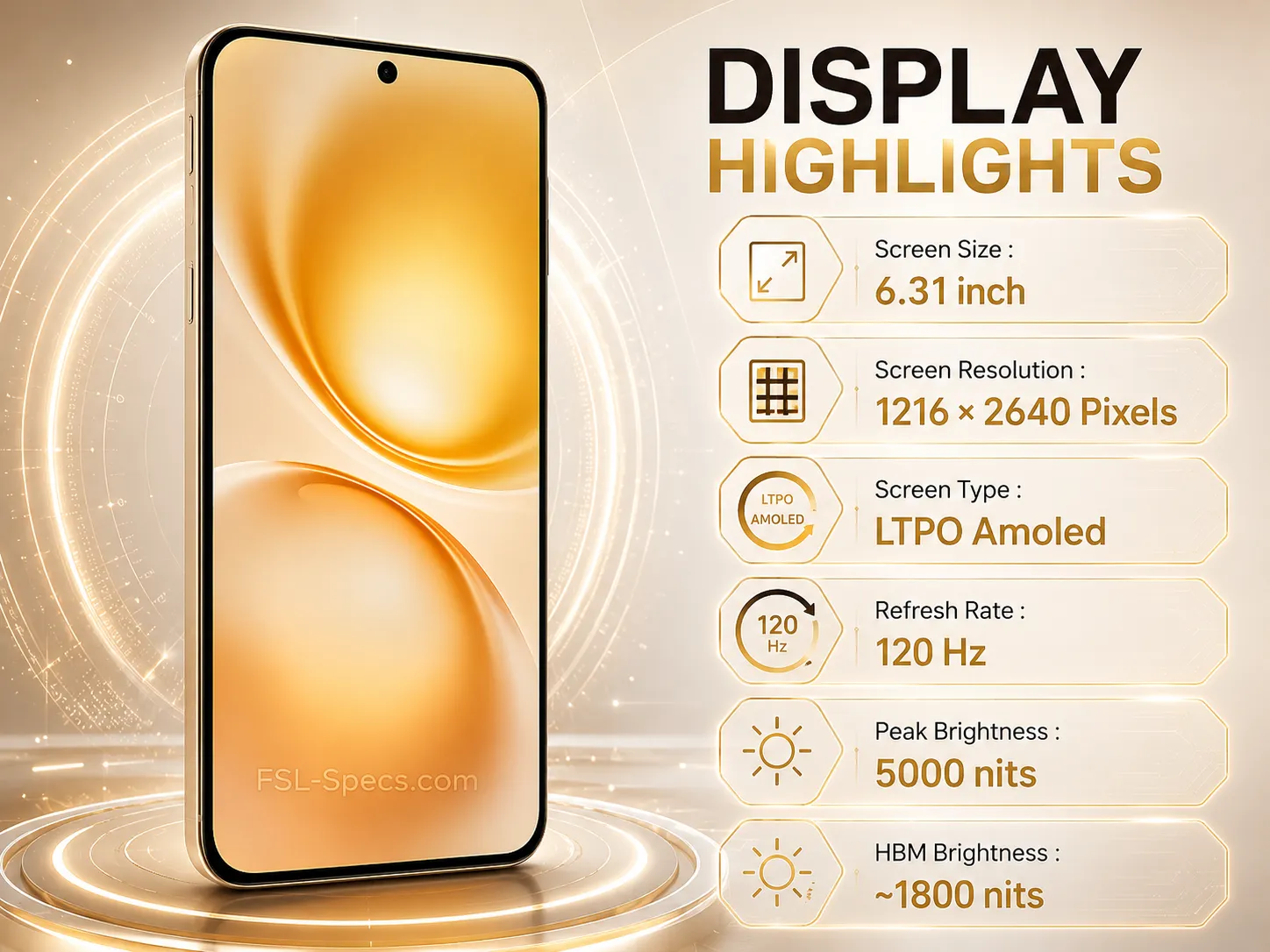
Screen Size
6.31 inch
Resolution
1216 × 2640 Pixels
Type
LTPO Amoled
Refresh Rate
120 Hz
Peak Brightness
5000 nits
HBM Brightness
~1800 nits
Processor
Dimensity 9300+
Max Clock
3.4 GHz
Lithography
4 nm
GPU
Immortalis-G720 MC12
CPU Cores
8 Cores
Antutu v11
2.3 M
Antutu v10
1.8 M
Bootup Time
Not Confirm
Architecture
1 × 3.4 GHz Cortex-X4
3 × 2.85 GHz Cortex-X4/X2
4 × 2.0 GHz Cortex-A720
Ram Memory
12 + 512 GB
Ram Type
LPDDR5X
Storage Type
UFS 3.1
SD Card
No
Variants
12 + 256 GB
12 + 512 GB
16 + 512 GB
MP
Rear Camera
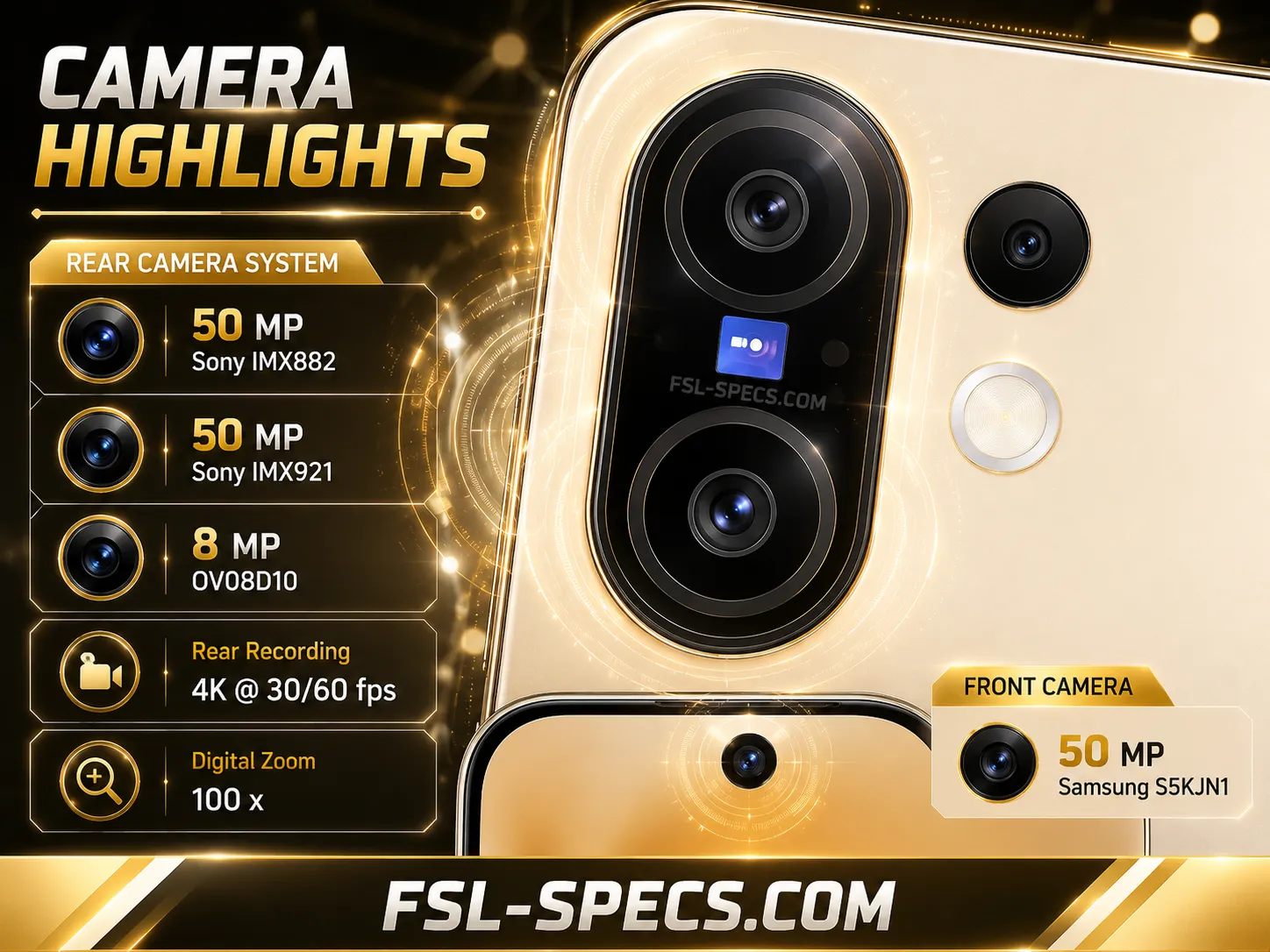
50 + 50 + 8 MP
Front Camera
50 MP
SENSORS
Camera Sensors
50 MP= Sony IMX882
50 MP= Sony IMX921
8 MP = OV08D10
Front Sensors
50 MP=Samsung S5KJN1
RECORDING FPS
Main Recording
4K @ 30/60 fps
1080p @ 30/60/120 fps
Front Recording
4K @ 60 fps
RESOLUTION
Main Resolution
8160 × 6144 pixels
Front Resolution
8192 x 6144 Pixels
ZOOM
Optical Zoom
3 x
D Digital Zoom
100 x
FLASH
Flash
-
Front Flash
No
Capacity
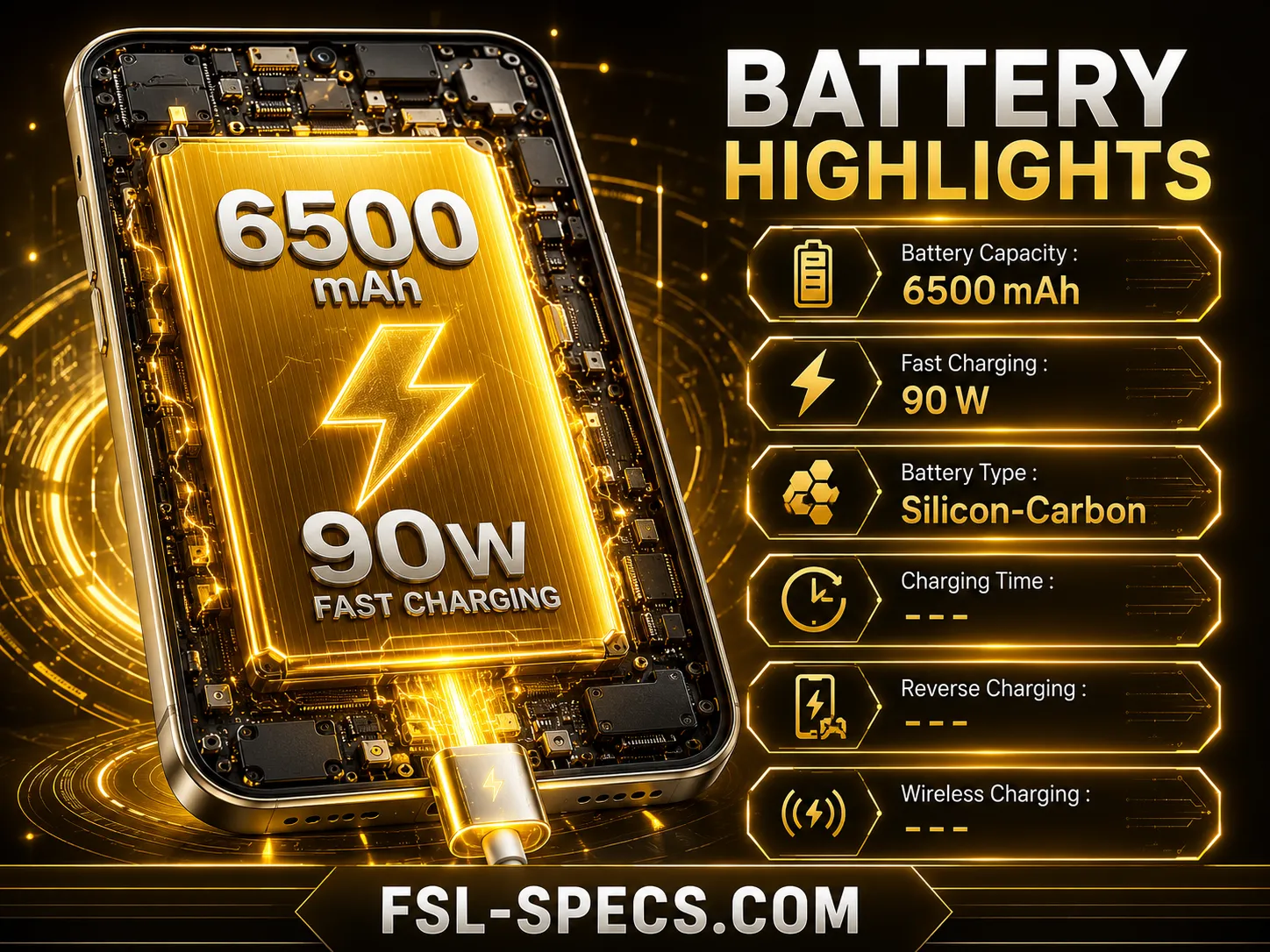
6500 mAh
Fast Charging
90 W
Wireless Charging
No
Li Battery Type
Silicon-Carbon
REVERSE
Reverse Wired
Yes
Reverse Wireless
Yes
OTHER
Battery PC Marks
-
Charging Time
50-60 mints ( 0-100%)
AUDIO & SENSORS
Speaker
Dual Stereo Speaker
Fingerprint Sensor
Hyper Sonic Front Finger
Other Sensors
Accelerometer
Gyroscope
Proximity
Compass
Hall sensor
RGB/color spectrum sensor
Special Features

Zeiss optics, Zeiss T* lens coating,
Gimbal stabilization system, cinematic mode,
ultra-stable video, EU battery endurance 58:09h/800 cycles rated,
EU repairability Class C, EU free-fall Class C (100 drops)

BASIC INFO
Mobile
Vivo X200 FE
Model
V2503
Series
Vivo X Series
Category
Flagship
Release Date
5 July,2025
Year
2025
CONNECTIVITY
Sim
Nano-SIM / E-Sim
Network
4G / 4G+ / 5G
WiFi
WiFi 7 (802.11be)
Bluetooth
5.4
NFC
Yes
OS
Android 17 Now
BODY
Dimensions
150.8 × 71.8 × 8.0 mm
Build
Frame Aluminum And Glass Back
KG Weight
186 g
Screen Size
6.31 inch
Resolution
1216 × 2640 Pixels
Type
LTPO Amoled
Refresh Rate
120 Hz
Peak Brightness
5000 nits
HBM Brightness
~1800 nits
Processor
Dimensity 9300+
Max Clock
3.4 GHz
Lithography
4 nm
GPU
Immortalis-G720 MC12
CPU Cores
8 Cores
Antutu v11
2.3 M
Antutu v10
1.8 M
Bootup Time
Not Confirm
Architecture
1 × 3.4 GHz Cortex-X4
3 × 2.85 GHz Cortex-X4/X2
4 × 2.0 GHz Cortex-A720
Ram Memory
12 + 512 GB
SD Card
No
Ram Type
LPDDR5X
Storage Type
UFS 3.1
Variants
12 + 256 GB
12 + 512 GB
16 + 512 GB
MP
Rear Camera
50 + 50 + 8 MP
Front Camera
50 MP
SENSORS
Main Camera Sensors
50 MP= Sony IMX882
50 MP= Sony IMX921
8 MP = OV08D10
Front Camera Sensors
50 MP=Samsung S5KJN1
RECORDING FPS
Main Recording
4K @ 30/60 fps
1080p @ 30/60/120 fps
Front Recording
4K @ 60 fps
RESOLUTION
Main Resolution
8160 × 6144 pixels
Front Resolution
8192 x 6144 Pixels
ZOOM
Optical Zoom
3 x
D Digital Zoom
100 x
FLASH
Flash
-
Front Flash
No
Capacity
6500 mAh
Fast Charging
90 W
Wireless Charging
No
Li Battery Type
Silicon-Carbon
REVERSE
Reverse Wired
Yes
Reverse Wireless
Yes
OTHER
Battery Life PCMark
-
Charging Time
50-60 mints ( 0-100%)
AUDIO & SENSORS
Speaker
Dual Stereo Speaker
Fingerprint Sensor
Hyper Sonic Front Finger
Other Sensors
Accelerometer
Gyroscope
Proximity
Compass
Hall sensor
RGB/color spectrum sensor
Special Features

Zeiss optics, Zeiss T* lens coating,
Gimbal stabilization system, cinematic mode,
ultra-stable video, EU battery endurance 58:09h/800 cycles rated,
EU repairability Class C, EU free-fall Class C (100 drops)

Highlights & Review Of Vivo X200 FE

Display Review:

The Vivo X200 FE runs a 6.31-inch LTPO AMOLED display at 1216×2640 resolution, 120Hz adaptive refresh (1-120Hz), and a class-leading 4500-5000 nit peak brightness, protected by Vivo’s own Shield Glass. It’s a compact panel, easily the smallest of the three phones here, but the LTPO tech and brightness ceiling put it at the top of this bracket technically.

Against the Samsung Galaxy S25 FE (205,000 PKR): the Vivo wins decisively on panel spec sheet. The S25 FE runs a 6.7-inch AMOLED at only 1080×2340, a notably lower resolution than the X200 FE’s 1216×2640, and it lacks LTPO entirely, meaning no variable refresh rate for power savings. For 10,000 PKR more, Samsung’s display is actually the weaker one on paper here, though Samsung’s Gorilla Glass Victus+ and long-term panel calibration reputation still count for something.

Against the Xiaomi Poco F7 Pro (195,000 PKR): this is the closest fight in the whole comparison. The F7 Pro runs a 6.67-inch OLED at a sharper 1440×3200 (526ppi) resolution, out-resolving the X200 FE’s panel in pure pixel density, and it matches the same 120Hz refresh rate with a similar 3200-nit peak brightness. The F7 Pro’s WQHD+ resolution is arguably overkill for the size, but it does edge out the Vivo on paper sharpness. The X200 FE counters with genuine LTPO efficiency, something the F7 Pro’s fixed 120Hz panel doesn’t offer.

What this means day to day: the Vivo X200 FE has the most power-efficient display of the three thanks to LTPO, and its brightness ceiling is the highest in the group. The S25 FE is clearly outgunned on display, a real weak point for a phone priced above both rivals. The F7 Pro is the only genuine sharpness competitor, but even there the Vivo holds its ground with better efficiency.

The honest verdict: for display quality alone, the Vivo X200 FE is the strongest pick in this bracket, it beats the pricier Samsung outright and trades blows evenly with the Poco F7 Pro. The only trade-off is physical size, if you want a bigger canvas, both rivals offer more screen real estate.

Processor Review:

The Vivo X200 FE runs on the MediaTek Dimensity 9300+ (4nm), an octa-core chip with 1×3.4GHz Cortex-X4 + 3×2.85GHz Cortex-X4 + 4×2.0GHz Cortex-A720 cores, all-big-core design with no small efficiency cores dragging down peak performance, paired with a 12-core Immortalis-G720 GPU. It scores 2,344,910 on AnTuTu v11, one of the strongest results in this entire price bracket across every comparison we’ve done so far.

Against the Samsung Galaxy S25 FE (205,000 PKR): the Vivo pulls ahead clearly. The S25 FE’s Exynos 2400 scores 2,075,966 on AnTuTu v11, that’s about 13% lower than the X200 FE despite Samsung’s phone costing 10,000 PKR more. Independent testing has also flagged the Exynos 2400 for heavy thermal throttling under sustained load, so the real-world gap during long gaming sessions is likely even wider than the benchmark number suggests.

Against the Xiaomi Poco F7 Pro (195,000 PKR): this is essentially a dead heat. The F7 Pro’s Snapdragon 8 Gen 3 scores 2,341,443 on AnTuTu v11, just 3,467 points behind the Vivo, a difference of well under 1%, statistically identical performance. Both chips are last-generation flagship silicon repurposed into upper-midrange phones, and it shows: whichever you pick, raw processing power won’t be the deciding factor between these two.

What this means day to day: the Vivo X200 FE and Poco F7 Pro are functionally tied on performance, both will handle gaming, multitasking, and heavy apps without breaking a sweat. The Samsung S25 FE brings up the rear, and its known throttling behavior means that gap likely widens further during extended gaming sessions rather than staying at a flat 13%.

The honest verdict: if raw performance is the deciding factor, the Vivo X200 FE and Poco F7 Pro are both excellent choices and essentially interchangeable on the spec sheet, the F7 Pro’s VisionBoost D7 graphics chip may give it a slight edge in sustained gaming frame stability, but that’s a real-world nuance benchmarks don’t fully capture. The Samsung S25 FE, despite its higher price, is the weakest performer of the three, a genuine concern for a phone positioned above both rivals.

Ram & Memory Review:

The Vivo X200 FE, in your specified 12+256GB configuration, pairs LPDDR5X RAM with UFS 3.1 storage, no microSD card slot. LPDDR5X is current-generation memory, but UFS 3.1 storage is a step behind where flagship-tier rivals in this bracket now sit.

Against the Samsung Galaxy S25 FE (205,000 PKR, 8+512GB): Samsung actually gives less RAM but faster storage. The S25 FE runs 8GB LPDDR5X RAM (4GB less than the Vivo) paired with UFS 4.0 storage, a full generation ahead of the X200 FE’s UFS 3.1. So it’s a genuine trade-off, the Vivo has more headroom for multitasking with its 12GB, but the Samsung’s storage will feel faster for app installs, large file transfers, and game asset loading despite the smaller RAM pool. Samsung also gives you double the storage capacity at 512GB against the Vivo’s 256GB.

Against the Xiaomi Poco F7 Pro (195,000 PKR, 12+512GB): this is where the Vivo falls behind on both fronts. The F7 Pro matches the X200 FE’s 12GB LPDDR5X RAM exactly, but pairs it with UFS 4.0 storage, again a generation ahead of the Vivo’s UFS 3.1, and doubles the storage capacity to 512GB. For 5,000 PKR less than the Vivo, the F7 Pro genuinely out-specs it on memory across the board, same RAM, faster storage, more capacity.

What this means day to day: the Vivo X200 FE is the only phone in this comparison still on UFS 3.1, both rivals have moved to UFS 4.0. In practice this shows up in file transfer speeds, game install times, and how quickly large camera files get written to storage, areas where the Vivo will feel a step behind despite its strong processor.

The honest verdict: memory is a clear weak point for the Vivo X200 FE in this bracket. The Poco F7 Pro matches its RAM and beats it on storage speed and capacity for less money, making it the better value pick here outright. The Samsung S25 FE trades RAM capacity for storage speed, a reasonable compromise depending on how you use the phone, but neither rival lets the Vivo win this round.

Cameras Review:

The Vivo X200 FE runs a Zeiss-tuned triple system: 50MP main (Sony IMX921, f/1.88, OIS), a 50MP telephoto (Sony IMX882, 3x optical zoom, OIS), and an 8MP ultrawide (OmniVision OV08D10, fixed focus, no OIS). Front camera is a strong 50MP (Samsung ISOCELL JN1, PDAF). Video hits 4K@60fps on both main and telephoto plus the selfie camera, with only the ultrawide capped at 1080p@30fps.

Against the Samsung Galaxy S25 FE (205,000 PKR): camera hardware is close but the Vivo pulls ahead on zoom quality. The S25 FE runs 50MP main (Samsung GN3, f/1.8, OIS) + 12MP ultrawide + 8MP telephoto (OmniVision OV08A10, 3x optical, OIS). Samsung’s ultrawide has more resolution than the Vivo’s 8MP, but its telephoto sensor is smaller than the Vivo’s dedicated 50MP zoom unit, meaning cropped and low-light zoom shots should hold up better on the X200 FE. Samsung wins clearly on video though, with 8K@30fps and 4K@120fps rear recording, capabilities the Vivo doesn’t offer at all.

Against the Xiaomi Poco F7 Pro (195,000 PKR): this is where the Vivo’s camera advantage is largest. The F7 Pro skips the telephoto entirely, running just 50MP main (Light Fusion 800, f/1.6, OIS) + 8MP ultrawide (fixed focus), so there’s no real optical zoom option at all against the Vivo’s dedicated 3x periscope. The F7 Pro does technically beat both rivals on rear video specs with 8K@24fps and slow-motion up to 1080p@960fps, useful for content creators who want extreme slow-mo, but its 20MP front camera with fixed focus is noticeably behind the Vivo’s 50MP autofocus selfie shooter.

What this means day to day: the Vivo X200 FE offers the most complete and versatile camera system of the three, real optical zoom, a strong selfie camera, and Zeiss-tuned processing. The Poco F7 Pro’s camera is its clear weak point despite winning on raw video fps numbers, no zoom lens is a real limitation at this price. The Samsung S25 FE is close to the Vivo overall, trading zoom sensor size for higher-resolution video.

The honest verdict: for photography versatility, especially anyone who actually uses zoom, the Vivo X200 FE is the strongest camera phone in this bracket. The Samsung S25 FE is a close second with better video specs but a smaller telephoto sensor. The Poco F7 Pro trails both on camera despite matching them on performance, its missing telephoto lens is the one spec that clearly separates it from the other two.

Battery Review:

The Vivo X200 FE packs a 6500mAh silicon-carbon battery with 90W wired charging (no wireless), reaching 100% in about 57 minutes in GSMArena’s testing, plus reverse wired charging. It’s the largest capacity of the three phones in this comparison by a wide margin.

Against the Samsung Galaxy S25 FE (205,000 PKR): the Vivo wins decisively on capacity. The S25 FE’s 4900mAh battery is 1600mAh smaller, nearly a third less capacity than the Vivo despite costing 10,000 PKR more. Samsung’s 45W wired charging is also slower on paper, though its 15W wireless charging and reverse wireless support are conveniences the Vivo doesn’t offer at all. So the trade-off is stark: significantly more battery and faster wired charging on the Vivo, versus wireless charging flexibility on the Samsung.

Against the Xiaomi Poco F7 Pro (195,000 PKR): the gap narrows but the Vivo still leads. The F7 Pro’s 6000mAh battery is 500mAh smaller than the Vivo’s, and while both share the same 90W wired charging ceiling, GSMArena clocked the F7 Pro’s real-world full charge at 34-37 minutes, genuinely faster than the Vivo’s 57-minute result despite the identical wattage rating, likely down to charging curve tuning rather than raw power difference.

What this means day to day: the Vivo X200 FE has the biggest tank of the three, meaningful for anyone who’s heavy on camera use, gaming, or long days away from a charger. But the Poco F7 Pro actually charges noticeably faster in real testing despite a smaller battery and identical wattage spec, an important nuance the spec sheet alone doesn’t reveal.

The honest verdict: if raw battery life matters most, the Vivo X200 FE’s larger capacity wins outright, and it beats the Samsung on every battery metric except wireless charging. But if you value quick top-ups over pure capacity, the Poco F7 Pro’s faster real-world charging time at a similar wattage makes it the more convenient choice day to day, and it’s the cheapest of the three phones here.

Final Verdict :

Across five rounds, display, processor, RAM & memory, camera, and battery, the Vivo X200 FE comes out as the strongest all-round performer of the three, winning outright in three categories and staying competitive in the other two.

Where it wins clearly: display (beats the pricier Samsung outright, trades evenly with the Poco F7 Pro), camera (the only phone with a genuine telephoto lens, plus the strongest selfie camera), and battery (largest capacity by a meaningful margin over both rivals).

Where it’s tied or close: processor performance is essentially a dead heat with the Poco F7 Pro, and RAM capacity matches the F7 Pro exactly, though the Vivo trails both rivals on storage speed (UFS 3.1 vs UFS 4.0).

Where it loses: memory and storage speed is the one clear weak spot, both rivals have moved to UFS 4.0 while the Vivo sits on UFS 3.1, and the Poco F7 Pro genuinely out-charges it in real-world testing despite an identical wattage rating.

Ranking by priority:

All-round buyers who want the strongest overall package → Vivo X200 FE (195,000 PKR). Best camera, best battery, and top-tier display in a genuinely compact body. It’s also priced identically to the Poco F7 Pro despite winning most of the spec battles against it.

Performance and value focused buyers → Xiaomi Poco F7 Pro (195,000 PKR). Matches the Vivo on processor and RAM, beats it on storage type and real-world charging speed, at the same price. The clear pick if raw performance and fast top-ups matter more than camera versatility.

Buyers who specifically want Samsung’s ecosystem and long-term support → Samsung Galaxy S25 FE (205,000 PKR). The weakest phone across nearly every spec in this comparison, smaller battery, lower resolution display, weaker processor, but Samsung’s seven-year update commitment and One UI ecosystem integration are things neither rival offers, worth the premium only for buyers who specifically value that.

The honest bottom line: the Vivo X200 FE earns the top spot in this bracket through camera versatility and battery capacity, backed by a genuinely excellent display, real strengths that matter every single day. Its only weakness, UFS 3.1 storage, is a minor real-world inconvenience rather than a dealbreaker. The Poco F7 Pro is a legitimate alternative at the same price if you’d rather have faster storage and charging over the telephoto lens. The Samsung S25 FE, despite the highest price of the three, is the weakest value proposition here on pure specifications.

Pros And Cons of Vivo X200 FE

Pros of Mobile

✅ Compact flagship body 📱 150.8×71.8×8mm, 186g
✅ Huge battery life 🔋 6500mAh silicon-carbon cell
✅ Fast charging speed ⚡ 90W, ~57 min full charge
✅ Flagship-grade chipset 🚀 Dimensity 9300+ (4nm)
✅ Bright vivid display ☀️ LTPO AMOLED, 120Hz, 4500 nits
✅ Strong dust/water resistance 💧 IP68 & IP69 rated

Cons of Mobile

❌ No expandable storage 🗂️ no microSD card slot
❌ Weaker ultrawide sensor 📷 only 8MP ultrawide lens
❌ UFS 3.1 not 4.0 💾 slightly behind flagship storage speed

Best For - Not Best For

Best For

🎯 Compact phone lovers 🤏
🎯 One-handed users ✋
🎯 Long battery seekers 🔋
🎯 Zeiss camera fans 📸
🎯 Fast charging users ⚡

Not Best For

🚫 MicroSD storage needs 🗂️
🚫 Wide-angle photographers 🌄
🚫 Stock Android fans 🤖
🚫 Heavy customization users 🎛️

Trailer And Unboxing of Vivo X200 FE

Disassembly Or Teardown And Gaming Test of Vivo X200 FE

Camera Test Vivo X200 FE

Xiaomi 17T
POCO F7 Pro
Samsung Galaxy S25 FE
Realme GT 7

Vivo Mobile Series

Vivo Mobile Series

Picture of Faisal Ur Rehman

Faisal Ur Rehman

Faisal Rehman is the founder and editor of FSL Specs, where he publishes in-depth smartphone specifications, comparisons, buying guides, and technology insights. With extensive experience in mobile hardware research and technical analysis, he provides accurate and up-to-date information on Android smartphones, processors, displays, cameras, batteries, performance benchmarks, and software features. His goal is to simplify complex specifications and help readers choose the right device with confidence.

FAQs Questions

The vivo X200 FE features a 6.31-inch LTPO AMOLED display with a 120Hz adaptive refresh rate and 1.5K resolution. It reaches up to 5000 nits local peak brightness, making the display sharp and easy to view even outdoors

Yes. Powered by the MediaTek Dimensity 9300+, along with LPDDR5X RAM and UFS 3.1 storage, it delivers flagship-level performance. It easily handles demanding games, multitasking, and everyday apps with excellent efficiency.

The phone features a ZEISS-tuned triple camera system with a 50MP main camera, 50MP telephoto lens, and 8MP ultrawide camera, plus a 50MP selfie camera. It produces detailed photos, natural colors, and impressive portrait shots with reliable zoom performance.

The global version packs a 6500mAh battery that comfortably lasts a full day or more, even with heavy use. It also supports 90W FlashCharge, allowing the phone to recharge quickly when needed.

Yes, the vivo X200 FE supports 5G, NFC, Bluetooth 5.4, and Wi-Fi 7. eSIM support is available on some regional models, while wireless charging is not supported.

Yes. The phone is certified with IP68 and IP69 ratings, providing strong resistance against dust and water. This makes it more durable for everyday use, though prolonged underwater exposure is still not recommended.

The vivo X200 FE is available in 12GB + 256GB, 12GB + 512GB, and 16GB + 512GB variants. These configurations provide plenty of speed and storage for gaming, photography, and long-term use

The vivo X200 FE supports 4K video recording with both the front and rear cameras, delivering sharp and stable footage. It does not support 8K recording, focusing instead on optimized 4K video quality.

12 + 256 GB
 | ~₹53,000 | ~$550

12 + 512 GB
| ~₹56,000 | ~$ 580 | ~197,000 PKR

16 + 512 GB
 | ~₹59,000 | ~$ 610


Leave a Reply

Your email address will not be published. Required fields are marked *

Scroll to Top