
Dimensity 7300
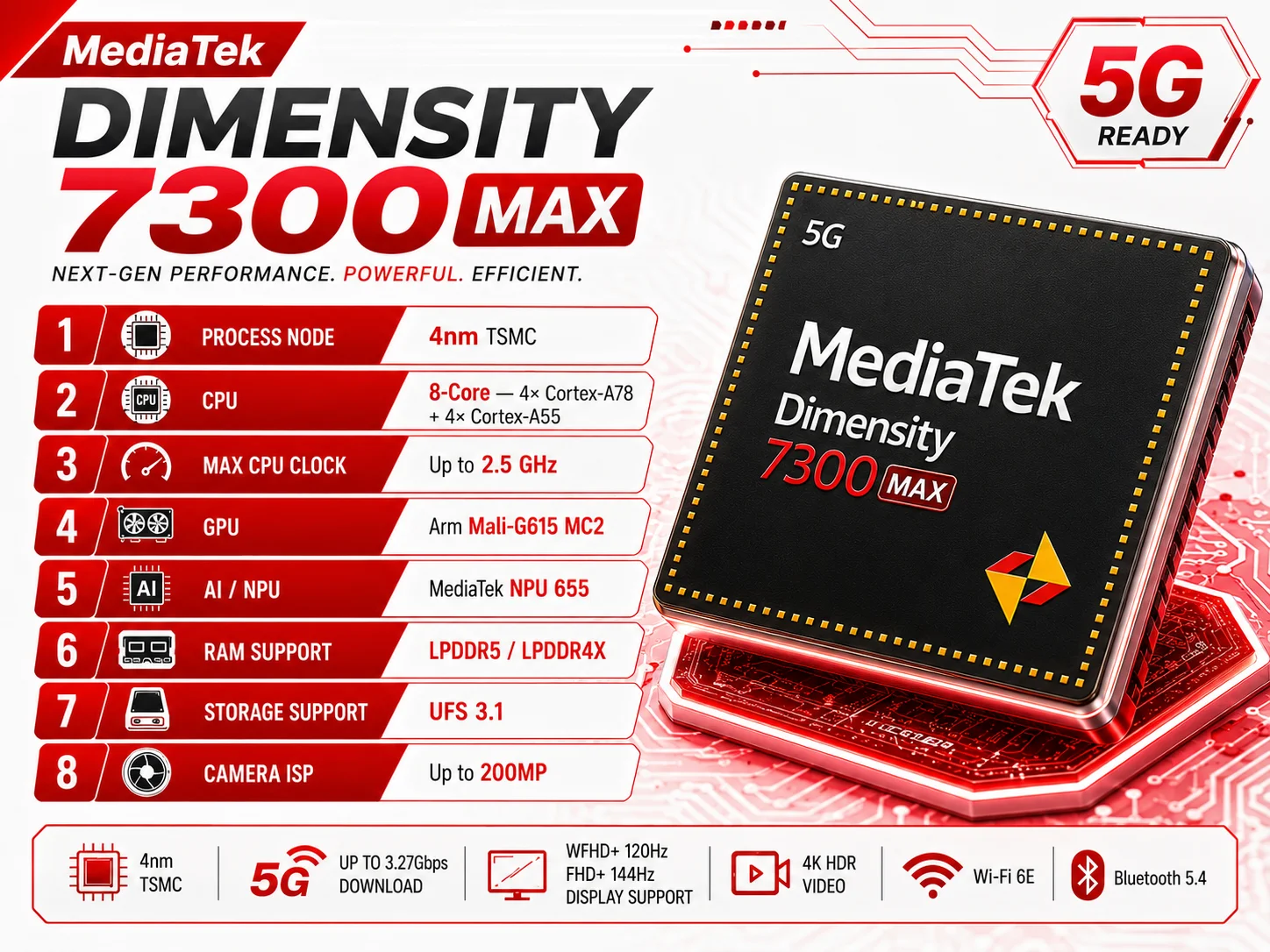
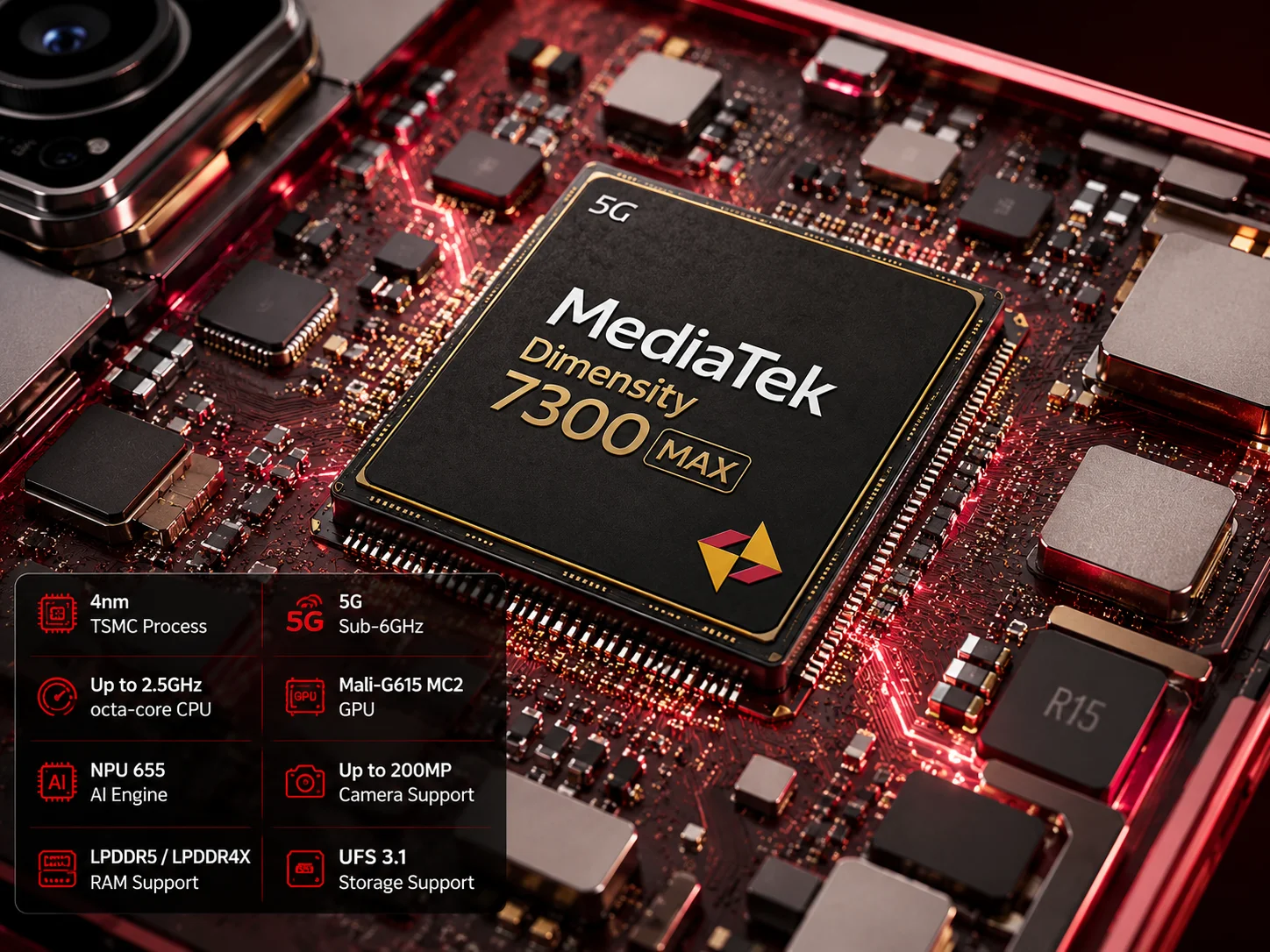
The MediaTek Dimensity 7300 is a mid‑range 5G chipset built on a 4nm process, using 4× Cortex‑A78 cores up to 2.5GHz and 4× Cortex‑A55 cores up to 2GHz, paired with a Mali‑G615 MP2 GPU. With LPDDR5 memory, up to UFS 3.1 storage, the MediaTek APU 655 for on-device AI, Wi‑Fi 6, and Bluetooth 5.4, it's built for smooth everyday performance.
Benchmark Scores
Measures CPU, GPU, RAM, and I/O performance in different scenarios.
Shows raw single-threaded CPU performance across real-world workloads. Only category scores are published for this chipset — no overall headline total.
Cross-platform benchmark assessing graphics performance in Vulkan/Metal.
Evaluates overall system performance in everyday workloads. Only category scores are published for this chipset — no overall headline total.
CPU & AI Performance
4× Cortex‑A55 up to 2GHz
Graphics, Memory & Storage
Multimedia (Camera, Display & ISP)
Connectivity
General Info
information About MediaTek Dimensity 7300
Introduction
A six-year-old Huawei flagship chip going up against two much newer MediaTek mid-rangers sounds like an easy win for the newer silicon, but the benchmark data tells a more complicated story. This Dimensity 7300 vs Dimensity 7360 vs Kirin 990 (5G) comparison uses verified NanoReview specification and benchmark data to explain how these three chips perform in CPU work, gaming, camera processing, and connectivity, and whether newer really means better here.
1. Processor Overview
The Dimensity 7300, announced June 2024, is an 8-core chip built on TSMC’s 4nm process, pairing 4x Cortex-A78 cores at 2.5GHz with 4x Cortex-A55 efficiency cores at 2.0GHz, alongside a Mali-G615 MP2 GPU.
The Dimensity 7360, announced September 2025, shares an essentially identical specification sheet with the Dimensity 7300: the same 4x Cortex-A78 at 2.5GHz plus 4x Cortex-A55 at 2.0GHz layout, the same Mali-G615 MP2 GPU, and the same TDP, memory type, and connectivity figures. On paper, it reads as a refresh rather than a redesign.
The HiSilicon Kirin 990 (5G), announced October 2019 and by far the oldest chip in this comparison, uses an 8-core three-tier layout on Huawei’s own 7nm process: 2x Cortex-A76 at 2.86GHz, 2x Cortex-A76 at 2.36GHz, and 4x Cortex-A55 at 1.95GHz, paired with a much larger 16-core Mali-G76 MP16 GPU, reflecting its original flagship positioning in the Huawei P40 series.
Despite being announced nearly five years before the Dimensity 7300 and six years before the Dimensity 7360, the Kirin 990 5G’s larger GPU and higher-clocked CPU cores make this a genuinely close contest, as the benchmarks below show.
2. CPU Architecture & Processing Power
All three chips use the same ARMv8.2-A instruction set with Cortex-A76/A78 and A55 core combinations, though the Kirin 990 5G uses a three-tier clock arrangement rather than the simple 4+4 split used by both Dimensity chips.
In Geekbench 6 single-core, all three chips are remarkably close: the Dimensity 7360 leads narrowly with 1025, ahead of the Kirin 990 5G (1018, about 0.7% lower) and the Dimensity 7300 (1011, about 1.4% lower than the Dimensity 7360). Less than 1.5% separates all three chips in this test.
Multi-core is where the age gap reverses dramatically: the Kirin 990 5G leads clearly with 3387, about 16.9% higher than the Dimensity 7300 (2813) and about 17.5% higher than the Dimensity 7360 (2882). Despite using only 8 cores like both Dimensity chips, the Kirin 990 5G’s higher-clocked Cortex-A76 cores clearly outperform the newer chips’ Cortex-A78 cores in sustained multi-threaded work.
3. GPU & Gaming Performance
This is where the older chip’s advantage becomes overwhelming. The Kirin 990 5G’s Mali-G76 MP16 has 16 pipelines, eight times either Dimensity chip’s Mali-G615 MP2, though its lower GPU clock (600MHz versus 1047MHz) and fewer shading units mean its theoretical FLOPS rating is actually lower on paper: 460.8 Gigaflops versus 536.1 Gigaflops for both Dimensity chips.
Geekbench 6 GPU Compute tells a very different story from the theoretical numbers: the Kirin 990 5G scores 4811, nearly double the Dimensity 7300 (2507, about 47.9% lower) and Dimensity 7360 (2525, about 47.5% lower), which are themselves virtually tied with each other. In 3DMark Steel Nomad Light, the two Dimensity chips are again nearly identical (346 for the Dimensity 7300, 343 for the Dimensity 7360); no 3DMark data is disclosed for the Kirin 990 5G, likely because this benchmark postdates the chip’s 2019 launch.
Uniquely among the three, the Kirin 990 5G has real-world gaming FPS data supplied by NanoReview, showing strong results at Ultra settings: PUBG Mobile at 58 FPS, World of Tanks Blitz at 60 FPS, and Mobile Legends: Bang Bang at 59 FPS on a reference device. No equivalent gaming FPS table is supplied for either Dimensity chip. NanoReview’s own Gaming Performance sub-score also favors the Kirin 990 5G (16) over the Dimensity 7360 (13) and Dimensity 7300 (13).
4. Manufacturing Process & Efficiency
The two Dimensity chips share the newer TSMC 4nm process, while the Kirin 990 5G uses an older TSMC 7nm node. TDP favors the Dimensity chips clearly: both are disclosed at 4W, versus the Kirin 990 5G’s 6W.
NanoReview’s battery-life sub-scores confirm this efficiency gap: both Dimensity chips score 91, notably higher than the Kirin 990 5G’s 81. This is a meaningful real-world difference and reflects the combined benefit of the newer 4nm process and lower-power memory standard used by both Dimensity chips.
5. RAM, Memory & Storage Support
Both Dimensity chips use identical LPDDR5 memory at 3200MHz, delivering 25.6Gb/s bandwidth and supporting up to 16GB RAM. The Kirin 990 5G uses the older LPDDR4X standard at 2133MHz, with lower bandwidth (34.1Gb/s despite the older standard, thanks to its wider 4×16-bit bus) and a lower maximum of 12GB RAM.
Storage support favors the Dimensity chips, which both support UFS 2.2 and UFS 3.1. The Kirin 990 5G supports the older UFS 2.1 and UFS 3.0 standards.
6. AI & NPU Capabilities
Both Dimensity chips use a named MediaTek APU 655, and the Kirin 990 5G uses Huawei’s own Da Vinci NPU architecture. None of the three chips has a disclosed TOPS figure in the supplied data, so no numeric AI performance ranking can be established, though all three confirm dedicated AI hardware is present.
7. ISP, Camera & Video Capabilities
Camera resolution favors the two Dimensity chips, both supporting a maximum single sensor resolution of 200MP; no maximum camera resolution is disclosed for the Kirin 990 5G in the supplied data.
Video capability favors the Kirin 990 5G, which supports 4K at 60FPS for both capture and playback, double the frame rate of both Dimensity chips’ 4K/30FPS limit. Codec support tells a different story: both Dimensity chips support the newer H.264, H.265, and VP9 codecs, while the Kirin 990 5G’s supplied codec list includes H.264, H.265, and the much older VC-1 standard, without VP9 or AV1 support, a real limitation for compatibility with modern streaming content.
8. Display Support
The Kirin 990 5G supports the highest maximum display resolution at 3360 x 1440, ahead of both Dimensity chips’ shared 2520 x 1080 ceiling, reflecting its original flagship-class positioning.
9. Modem, 5G & Connectivity
The Kirin 990 5G, via its Balong 5000 modem, has the fastest disclosed 5G download speed at 4600 Mbps, ahead of both Dimensity chips’ shared 3270 Mbps figure. No upload speed is disclosed for any of the three chips.
Wi-Fi 6 is common to all three. Bluetooth clearly favors the Dimensity chips, both at the newer 5.4 version, versus the Kirin 990 5G’s much older 5.0. GNSS support is also broader on the Dimensity chips, both including QZSS and NAVIC alongside GPS, GLONASS, Beidou, and Galileo; the Kirin 990 5G’s supplied list includes only GPS, GLONASS, and Beidou, notably missing Galileo. These are theoretical maximums; real-world network speeds depend on carrier infrastructure and will not always reach these ceilings.
10. Benchmark Comparison
All benchmark figures below use AnTuTu 11 and Geekbench 6, so comparisons are apples-to-apples.
AnTuTu 11 Total:
- Dimensity 7360: 925,409
- Kirin 990 (5G): 887,876 (Dimensity 7300 trails the Dimensity 7360 by about 4.9%, and trails the Kirin 990 5G by about 0.9%)
- Dimensity 7300: 879,714 (the lowest of the three, despite being newer than the Kirin 990 5G)
Geekbench 6 Single-Core: Dimensity 7360 leads narrowly with 1025, ahead of the Kirin 990 5G (1018, about 0.7% lower) and Dimensity 7300 (1011, about 1.4% lower than the Dimensity 7360).
Geekbench 6 Multi-Core: Kirin 990 5G leads clearly at 3387, about 16.9% higher than the Dimensity 7300 (2813) and about 17.5% higher than the Dimensity 7360 (2882).
Geekbench 6 GPU Compute: Kirin 990 5G leads by a wide margin at 4811, nearly double the Dimensity 7300 (2507) and Dimensity 7360 (2525), which are essentially tied.
3DMark Steel Nomad Light: The Dimensity 7300 (346) and Dimensity 7360 (343) are nearly identical; not disclosed for the Kirin 990 5G.
PCMark 3.0: Dimensity 7300 leads (13,626), well ahead of the Dimensity 7360 (10,678, about 21.6% lower); not disclosed for the Kirin 990 5G. This is a notable internal inconsistency between the two closely related Dimensity chips, though the Dimensity 7360’s result is based on a much smaller sample of tested phones.
The overall picture strongly favors the Kirin 990 5G in raw compute and GPU benchmarks despite its age, while the Dimensity 7360 edges out its own predecessor, the Dimensity 7300, in nearly every test except PCMark.
11. Real-World Performance
Everyday users should see nearly identical single-core responsiveness across all three chips, with differences under 1.5%.
Multitaskers benefit substantially more from the Kirin 990 5G’s higher multi-core throughput, a genuine surprise given its age relative to both Dimensity chips.
Gamers get the clearest advantage from the Kirin 990 5G, which is the only chip with disclosed real-world gaming FPS data and leads GPU Compute by a wide margin, though its lack of modern video codec support may matter for some use cases.
Content creators benefit from the Kirin 990 5G’s 4K/60FPS video ceiling, double the frame rate of either Dimensity chip, but should note its missing VP9 and AV1 codec support compared to both newer chips.
AI users cannot be meaningfully differentiated here, since none of the three chips has a disclosed NPU TOPS figure.
Connectivity-focused users get the fastest disclosed 5G download speed from the Kirin 990 5G, though the Dimensity chips offer newer Bluetooth and broader GNSS support.
Battery-conscious users should clearly favor either Dimensity chip, both with a meaningfully higher NanoReview battery-life score than the Kirin 990 5G.
12. Strengths & Weaknesses
MediaTek Dimensity 7300
- Strengths: Highest PCMark score of the three; tied for the highest battery-life sub-score and lowest TDP (4W); highest disclosed camera resolution tied with the Dimensity 7360.
- Weaknesses: Lowest AnTuTu 11 total score of the three despite being newer than the Kirin 990 5G; trails the Kirin 990 5G by nearly 48% in GPU Compute and 17% in multi-core.
MediaTek Dimensity 7360
- Strengths: Highest AnTuTu 11 total score of the three; highest Geekbench single-core score; tied for the lowest TDP and highest battery-life sub-score.
- Weaknesses: Notably lower PCMark score than its near-identical predecessor, the Dimensity 7300; trails the Kirin 990 5G by a wide margin in multi-core and GPU Compute; largely a specification-for-specification repeat of the Dimensity 7300.
HiSilicon Kirin 990 (5G)
- Strengths: Leads Geekbench multi-core and GPU Compute by wide margins; only chip with disclosed real-world gaming FPS data; highest max display resolution and video frame rate (4K/60FPS); fastest disclosed 5G download speed; highest NanoReview composite score (39).
- Weaknesses: Lowest NanoReview battery-life sub-score (81); highest TDP (6W); oldest Bluetooth version (5.0); missing VP9 and AV1 video codec support; no disclosed camera resolution; narrower GNSS support (no Galileo).
13. Best Processor For Different Users
- Best for Gaming: HiSilicon Kirin 990 (5G)
- Best for AI: Not determinable from supplied data
- Best for Efficiency: MediaTek Dimensity 7300 and Dimensity 7360 (tied)
- Best for Camera Processing: MediaTek chips (resolution), Kirin 990 5G (video frame rate, minus modern codec support)
- Best for Connectivity: HiSilicon Kirin 990 (5G) for speed, MediaTek chips for Bluetooth and GNSS breadth
- Best for Balanced Performance: MediaTek Dimensity 7360
Final Verdict
This Dimensity 7300 vs Dimensity 7360 vs Kirin 990 (5G) comparison is a striking example of how release date does not guarantee performance. The Kirin 990 5G, announced nearly five years before the Primary Processor, the Dimensity 7300, still beats it in AnTuTu total score, multi-core, and GPU Compute by wide margins.
Final Verdict
1. HiSilicon Kirin 990 (5G) — Best for Raw Performance It leads Geekbench multi-core and GPU Compute by wide margins, has the highest NanoReview composite score, and is the only chip with confirmed real-world gaming FPS data, despite being the oldest chip in this comparison by roughly five to six years.
2. MediaTek Dimensity 7360 — Best Overall Value It leads the composite AnTuTu 11 score and Geekbench single-core, while offering the best battery-life score and lowest TDP of the three, making it the most balanced modern option even though it trails the Kirin 990 5G in raw compute and GPU benchmarks.
3. MediaTek Dimensity 7300 — Best For PCMark It leads the everyday-workload PCMark test by a wide margin over its own successor, but posts the lowest AnTuTu total score of the three despite being newer than the Kirin 990 5G, making it the least compelling of the group on balance.
Best for Gaming: HiSilicon Kirin 990 (5G) Best for AI: Not determinable from supplied data Best for Efficiency: MediaTek Dimensity 7300 and Dimensity 7360 Best Balanced Choice: MediaTek Dimensity 7360
Bottom Line: This comparison underscores that a chip’s announcement date says little about its actual benchmark performance. The Kirin 990 5G, despite launching in 2019, still outperforms both much newer Dimensity chips in multi-core and GPU Compute by wide margins, and offers the only real-world gaming FPS data in this group. Buyers prioritizing raw compute and graphics performance should weigh the Kirin 990 5G’s strengths against its weaker battery life, older codec support, and higher TDP. For most everyday buyers, the Dimensity 7360 offers the best modern balance of AnTuTu score, efficiency, and connectivity, while the Dimensity 7300 is the least compelling of the three despite being a close sibling of the 7360.
Images Of MediaTek Dimensity 7300
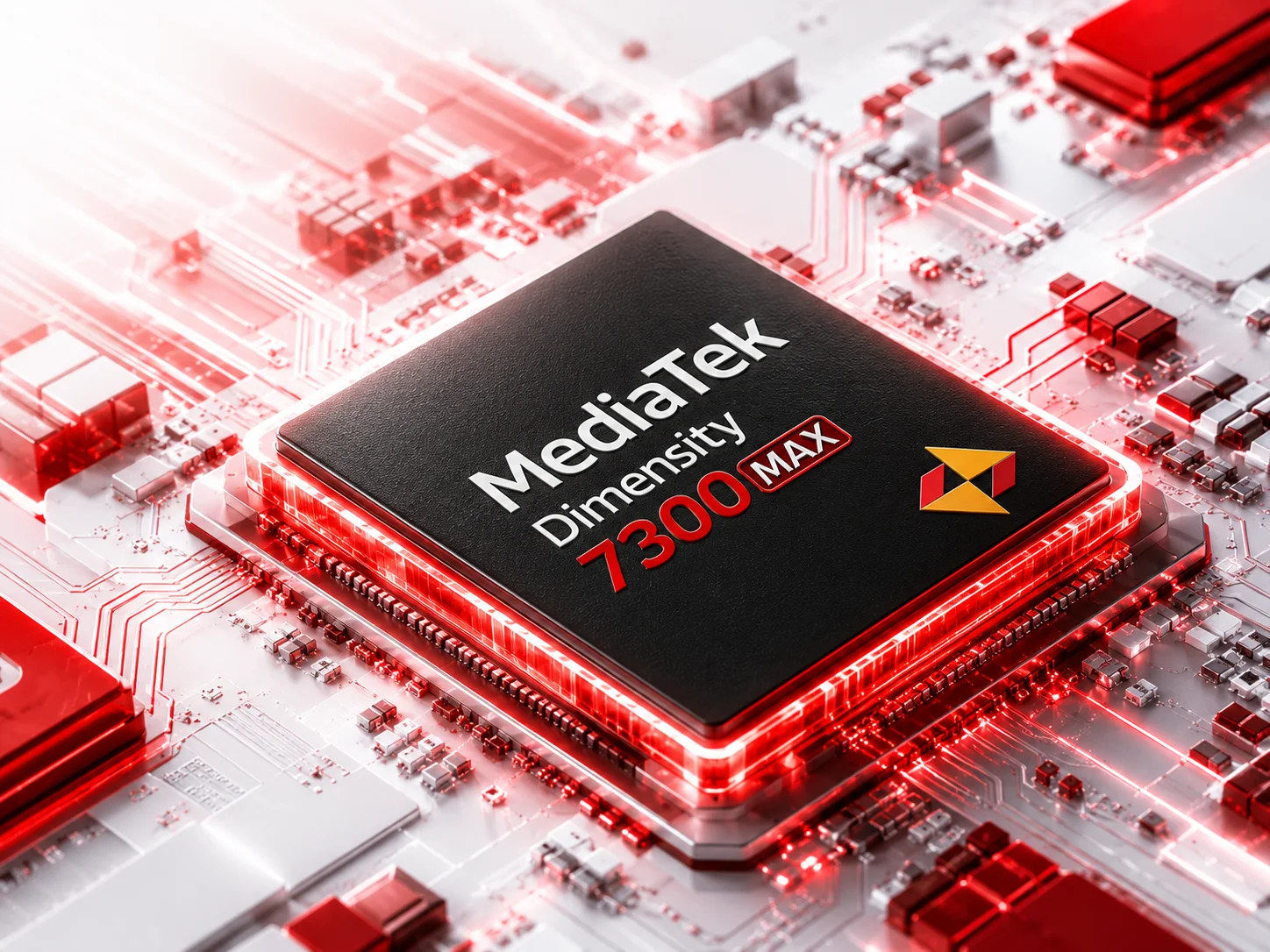
Trailer Of MediaTek Dimensity 7300

Author & Post Info
Faisal Ur Rehman
Faisal Rehman is the founder and editor of FSL Specs, where he publishes in-depth smartphone specifications, comparisons, buying guides, and technology insights. With extensive experience in mobile hardware research and technical analysis, he provides accurate and up-to-date information on Android smartphones, processors, displays, cameras, batteries, performance benchmarks, and software features. His goal is to simplify complex specifications and help readers choose the right device with confidence.
Explore FSL Specs
Questions About MediaTek Dimensity 7300
What is the MediaTek Dimensity 7300?
The MediaTek Dimensity 7300 is a 4nm 5G chipset built for mid-range and upper-mid-range smartphones. It focuses on a good balance of performance, gaming, AI features, and battery efficiency.
How powerful is the Dimensity 7300?
It features an 8-core CPU with 4× Cortex-A78 performance cores and 4× Cortex-A55 efficiency cores, with speeds up to 2.5GHz. This makes it capable of handling multitasking, social media, streaming, and demanding apps comfortably.
Is Dimensity 7300 good for gaming?
Yes, the Arm Mali-G615 MC2 GPU delivers strong graphics performance for a mid-range chipset. Games such as PUBG Mobile and Call of Duty Mobile can run smoothly with appropriate graphics and frame-rate settings.
Does Dimensity 7300 support 5G?
Yes, the Dimensity 7300 has an integrated 5G modem supporting fast 5G connectivity. It is a suitable choice for 5G phones in markets such as Pakistan, India, and other Asian regions.
What camera does Dimensity 7300 support?
The chipset supports camera sensors of up to 200MP and includes MediaTek's imaging and AI processing technologies. Actual camera quality will still depend heavily on the phone's sensor, ISP tuning, and camera software.
What display does Dimensity 7300 support?
It supports Full HD+ displays up to 144Hz, allowing smooth scrolling, animations, and gaming. This makes it a good match for smartphones featuring high-refresh-rate AMOLED or LCD panels.
What video recording does Dimensity 7300 support?
The Dimensity 7300 supports 4K video recording with advanced hardware-based video processing. The final recording resolution and frame rates can vary depending on how each smartphone manufacturer implements the chipset.