Introduction
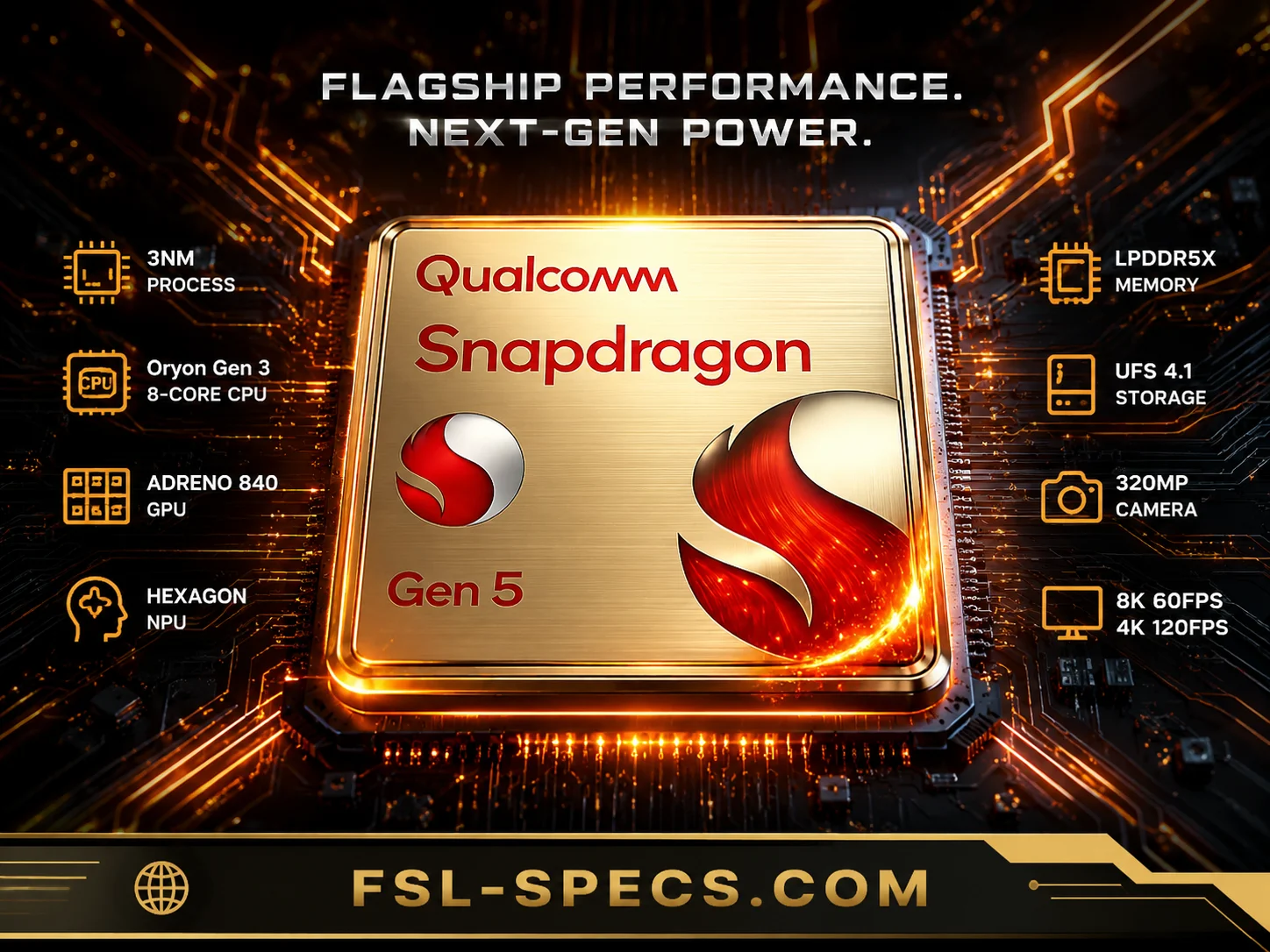
The Snapdragon 8 Elite Gen 5, MediaTek Dimensity 9500, and Samsung Exynos 2600 are three of the most important flagship mobile processors of this generation. Qualcomm uses its third-generation Oryon CPU, MediaTek continues its all-big-core strategy with Arm’s C1 architecture, while Samsung moves to an industry-first 2nm GAA process.
The overall picture is clear from current benchmark testing: Snapdragon 8 Elite Gen 5 leads peak CPU and GPU performance, Dimensity 9500 is a very close competitor with impressive sustained graphics and video capabilities, while Exynos 2600 brings the most advanced manufacturing process and a strong AI-focused architecture.
CPU Architecture & Performance
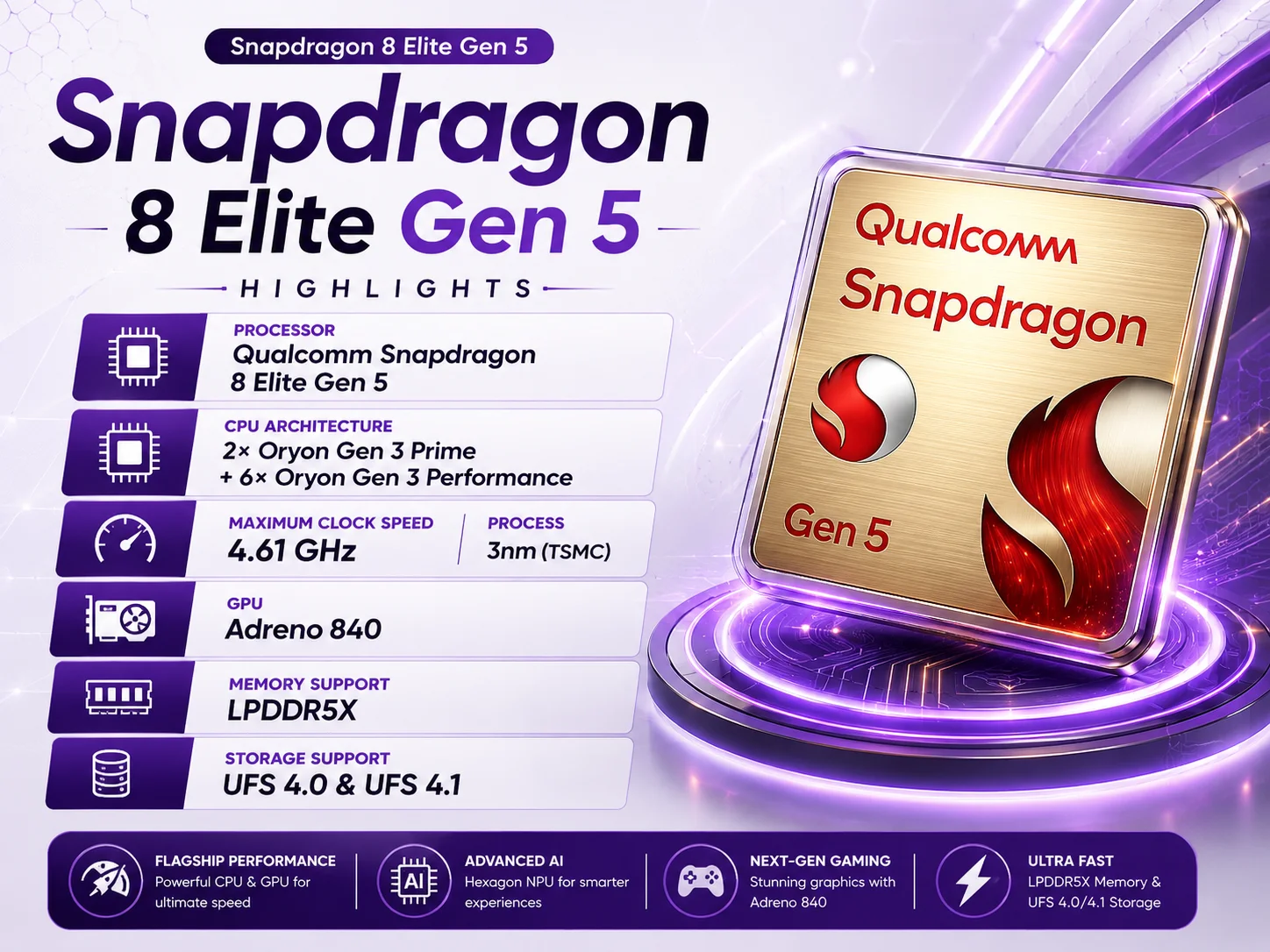
The Snapdragon 8 Elite Gen 5 uses Qualcomm’s third-generation Oryon CPU with a maximum clock speed of 4.74GHz. Its custom architecture gives it the strongest CPU benchmark results in the cited comparison.
The Dimensity 9500 uses an octa-core all-big-core design consisting of 1x C1-Ultra at 4.21GHz, 3x C1-Premium at 3.5GHz and 4x C1-Pro at 2.7GHz. It also has 16MB L3 cache and 10MB SLC. MediaTek says the platform delivers up to 32% higher single-core performance versus Dimensity 9400.
The Exynos 2600 uses a 10-core design and is manufactured on Samsung’s 2nm GAA process. Its architecture differs from both rivals, focusing on a combination of high CPU throughput, efficiency and AI processing.
In the cited Geekbench test, Snapdragon scored 3,725 single-core and 11,318 multi-core, versus 3,452 / 10,128 for Dimensity 9500 and 3,040 / 10,290 for Exynos 2600. Snapdragon therefore has the strongest CPU result overall, while Exynos narrowly beats Dimensity in multi-core.
CPU winner: Snapdragon 8 Elite Gen 5.
GPU & Gaming
Snapdragon uses the latest Adreno GPU, supporting advanced ray tracing, Vulkan 1.3 and Qualcomm’s gaming technologies. Qualcomm also claims improvements in GPU performance, efficiency and ray tracing over the previous generation.
Dimensity 9500 uses the Mali-G1 Ultra MC12 and adds a Dynamic Cache Architecture, advanced ray tracing and Unreal Engine technologies. MediaTek specifically positions it for console-grade gaming.
Exynos 2600 uses Xclipse 960, with hardware ray tracing and Samsung’s AI-based Exynos Neural Super Sampling for supported games.
The cited 3DMark Wild Life Extreme result gives Snapdragon the highest peak score at 7,786, followed by Dimensity 9500 at 7,163 and Exynos 2600 at 7,061. However, Dimensity recorded the strongest stability at 57%, compared with 48.2% for Snapdragon and 46.4% for Exynos.
This creates an important distinction: Snapdragon wins peak gaming performance, while Dimensity has the stronger result for sustained benchmark stability.
Gaming winner: Snapdragon 8 Elite Gen 5 for peak performance.
Manufacturing & Efficiency
Snapdragon 8 Elite Gen 5 and Dimensity 9500 are both built using 3nm processes, while Exynos 2600 uses Samsung’s 2nm GAA technology.
The Exynos therefore has the most advanced process node on paper. Samsung also integrates thermal technology designed to improve heat dissipation. However, a smaller manufacturing node does not automatically mean a processor is faster. Architecture, clocks, GPU design, software and smartphone cooling all affect actual results.
Technology winner: Exynos 2600.
Memory & Storage
All three are flagship-level platforms supporting LPDDR5X memory. Dimensity 9500 officially supports LPDDR5X-10667 and four-lane UFS 4.1 storage.
In the cited AnTuTu comparison, Exynos 2600 achieved the highest memory sub-score at 413,700, compared with 411,037 for Snapdragon and 385,723 for Dimensity.
The differences are relatively small, but all three processors provide the memory technology expected from premium 2026 flagship phones.
Memory winner: Exynos 2600 in the cited benchmark.
AI & NPU
Snapdragon 8 Elite Gen 5 integrates Qualcomm’s Hexagon NPU and Qualcomm AI Engine, with support for on-device multimodal and agentic AI. Qualcomm also integrates AI acceleration closely with its camera and sensing systems.
Dimensity 9500 uses MediaTek NPU 990, supporting generative and agentic AI. Its platform includes dedicated technology for large AI models, memory compression and efficient on-device inference.
Exynos 2600 also places heavy emphasis on on-device AI, combining its NPU with Samsung’s visual-processing and gaming technologies.
There is no single directly comparable AI benchmark in the supplied evidence that justifies declaring an absolute winner.
AI verdict: Snapdragon has the strongest overall documented AI platform, but all three are genuine flagship AI processors.
Camera & Video Processing
The Dimensity 9500 is particularly strong for video. It supports cameras up to 320MP, 8K60 capture and 4K120 with EIS, alongside MediaTek Imagiq 1190.
Snapdragon’s platform uses advanced AI camera processing through its Spectra ISP, enabling computational photography, semantic segmentation and professional video features.
Exynos 2600 combines its ISP and NPU for AI-based visual processing, including advanced image and video enhancement.
For raw documented video capability, Dimensity has the strongest specification.
Camera/video winner: Dimensity 9500.
Display & Connectivity
Dimensity 9500 supports up to WQHD+ at 180Hz, making it particularly attractive for high-refresh flagship gaming displays. It also supports Wi-Fi 7, with a listed peak rate of 7.3Gbps, and Bluetooth 6.0.
Snapdragon 8 Elite Gen 5 uses Qualcomm’s X85 5G Modem-RF, supporting up to 12.5Gbps download and 3.7Gbps upload, alongside advanced 5G aggregation and FastConnect connectivity.
Exynos 2600 also targets premium 5G and Wi-Fi connectivity, but theoretical modem speeds should not be treated as real-world network speeds because carrier, bands and signal conditions have a major impact.
Connectivity winner: Snapdragon 8 Elite Gen 5 for the overall modem platform.
Benchmark Comparison
| Benchmark | Snapdragon 8 Elite Gen 5 | Dimensity 9500 | Exynos 2600 |
|---|
| Geekbench Single | 3,725 | 3,452 | 3,040 |
| Geekbench Multi | 11,318 | 10,128 | 10,290 |
| AnTuTu | 3,893,781 | 3,548,426 | 3,210,573 |
| 3DMark Extreme | 7,786 | 7,163 | 7,061 |
| 3DMark Stability | 48.2% | 57% | 46.4% |
These results come from different phones, so they should be treated as useful indicators rather than perfectly controlled processor-only laboratory measurements.
The benchmark picture nevertheless gives Snapdragon a clear lead in peak performance, while Dimensity’s stability result is particularly impressive.
Real-World Performance
For everyday use, all three processors provide far more performance than normal Android applications require. Their differences become more important during gaming, video editing, AI workloads and long CPU/GPU sessions.
Snapdragon 8 Elite Gen 5 is the best choice for users who want maximum CPU/GPU performance, gaming performance and a mature flagship platform.
Dimensity 9500 is the strongest alternative for gamers who care about sustained performance and users who want advanced video capabilities such as 8K60 and 4K120.
Exynos 2600 is the most technically distinctive option because of its 2nm GAA process, 10-core CPU and strong AI/thermal focus.
Best Processor For Different Users
- Best Overall: Snapdragon 8 Elite Gen 5
- Best Peak Gaming: Snapdragon 8 Elite Gen 5
- Best Sustained Gaming: Dimensity 9500
- Best CPU: Snapdragon 8 Elite Gen 5
- Best Video: Dimensity 9500
- Best Manufacturing Technology: Exynos 2600
- Best AI Platform: Snapdragon 8 Elite Gen 5
- Best Balanced Choice: Snapdragon 8 Elite Gen 5
Final Verdict & Ranking
🥇 1. Snapdragon 8 Elite Gen 5 — Best Overall
The Snapdragon 8 Elite Gen 5 wins because it delivers the strongest combination of CPU, GPU, gaming, AI and connectivity performance. Its benchmark lead is substantial enough to make it the safest overall flagship choice.
🥈 2. MediaTek Dimensity 9500 — Best Gaming Stability & Video
The Dimensity 9500 is the closest competitor. Its all-big-core CPU, Mali-G1 Ultra GPU, 57% 3DMark stability, 8K60 video and 4K120 recording make it an excellent alternative to Snapdragon.
🥉 3. Samsung Exynos 2600 — Best 2nm Technology
The Exynos 2600 ranks third overall because its benchmark performance trails the other two in the cited tests, but it brings the industry’s first 2nm GAA process and strong AI, thermal and gaming technology.
Bottom Line: Snapdragon 8 Elite Gen 5 is the best overall processor, Dimensity 9500 is the strongest alternative for sustained gaming and video creation, while Exynos 2600 is the most technologically ambitious with its 2nm GAA process and AI-focused design.