






• Mobiles
  • Processors
  • Mobiles
  • Processors
  • Mobiles
  • Processors

iphone 17 Specs, Price, Camera, Battery & Best Review (2026)

✪ iPhone 17 ✪

iphone 17 - FSL Specs
United States flag United States
$850 USD
…
Pakistan flag Pakistan (PKR)
400,000 PKR
India flag India (INR)
₹80,000 INR

✪ iPhone 17 ✪

iphone 17 - FSL Specs
Last Time Update : 7 October, 2026
0

Quick Specifications

OLED

Display Type

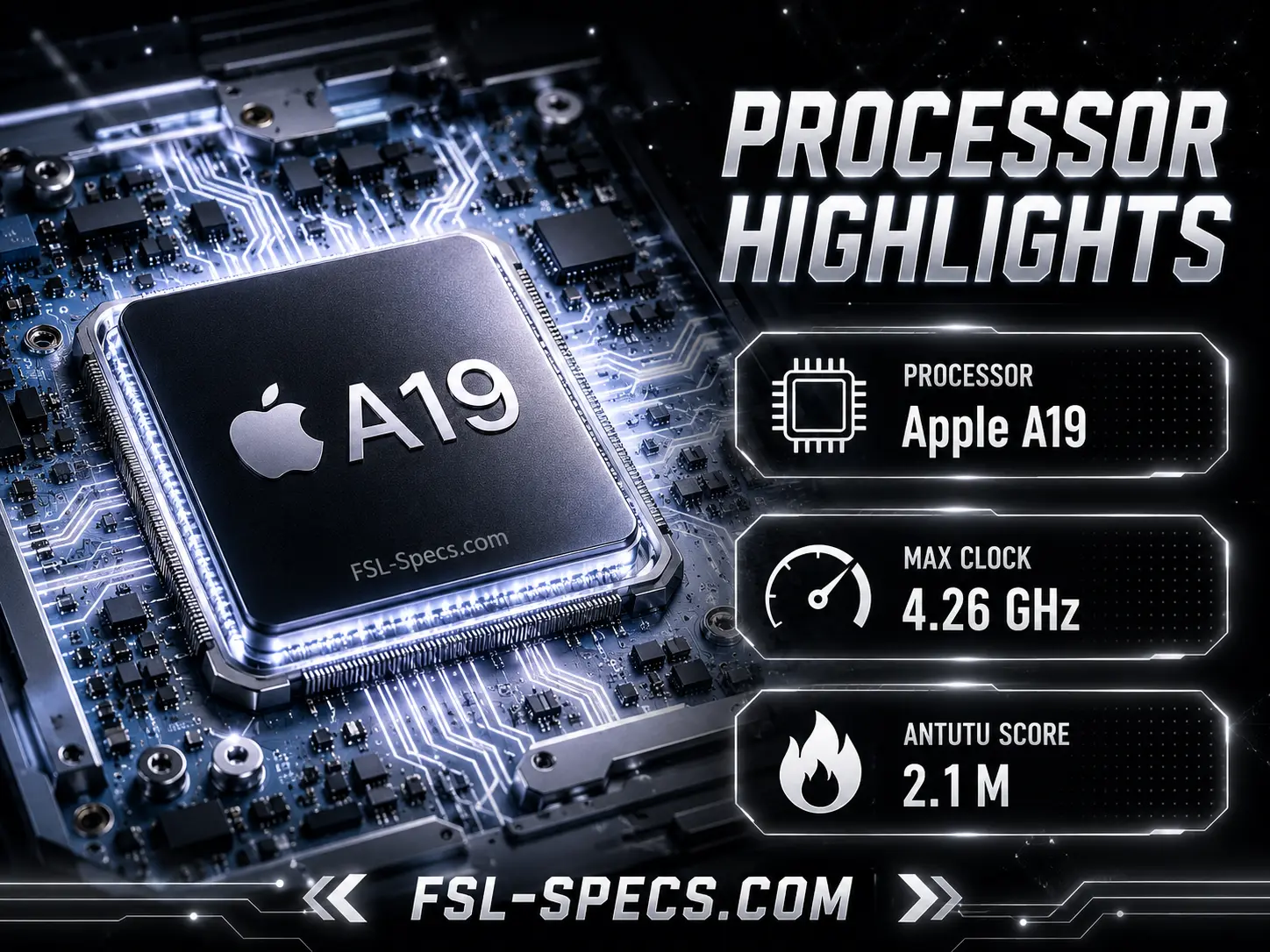
Apple A19

Processor

8 + 256GB

Ram And Memory

48+48 MP

Camera

3692 mAH

Battery

40 W

Fast Charging

Full Specification

BASIC INFO
Mobile
iPhone 17
Series
iPhone 17 Series
Category
Flagship
Release Date
19 September,2025
Year
2024
CONNECTIVITY
Sim
Nano-SIM / E-Sim
Network
4G / 4G+ / 5G/ 5G+
WiFi
Wi-Fi 7 (802.11 a/b/g/n/ac/6e/be)
Bluetooth
6.0
NFC
Yes
OS
iOS 27
BODY
Dimensions
149.6 x 71.5 x 8 mm
Build
Frame And Back Aluminum
KG Weight
177 g
Screen Size
6.3 inch
Resolution
1206 × 2622 Pixels
Type
OLED
Refresh Rate
120 Hz
Peak Brightness
3000 nits
HBM Brightness
1600 nits
Processor
Apple A19
Max Clock
4.26 GHz
Lithography
3 nm
GPU
Apple GPU
CPU Cores
6 Cores
Antutu v11
2.1 M
Bootup Time
-
Architecture
2×4.26 GHz
4×2.60 GHz
Ram Memory
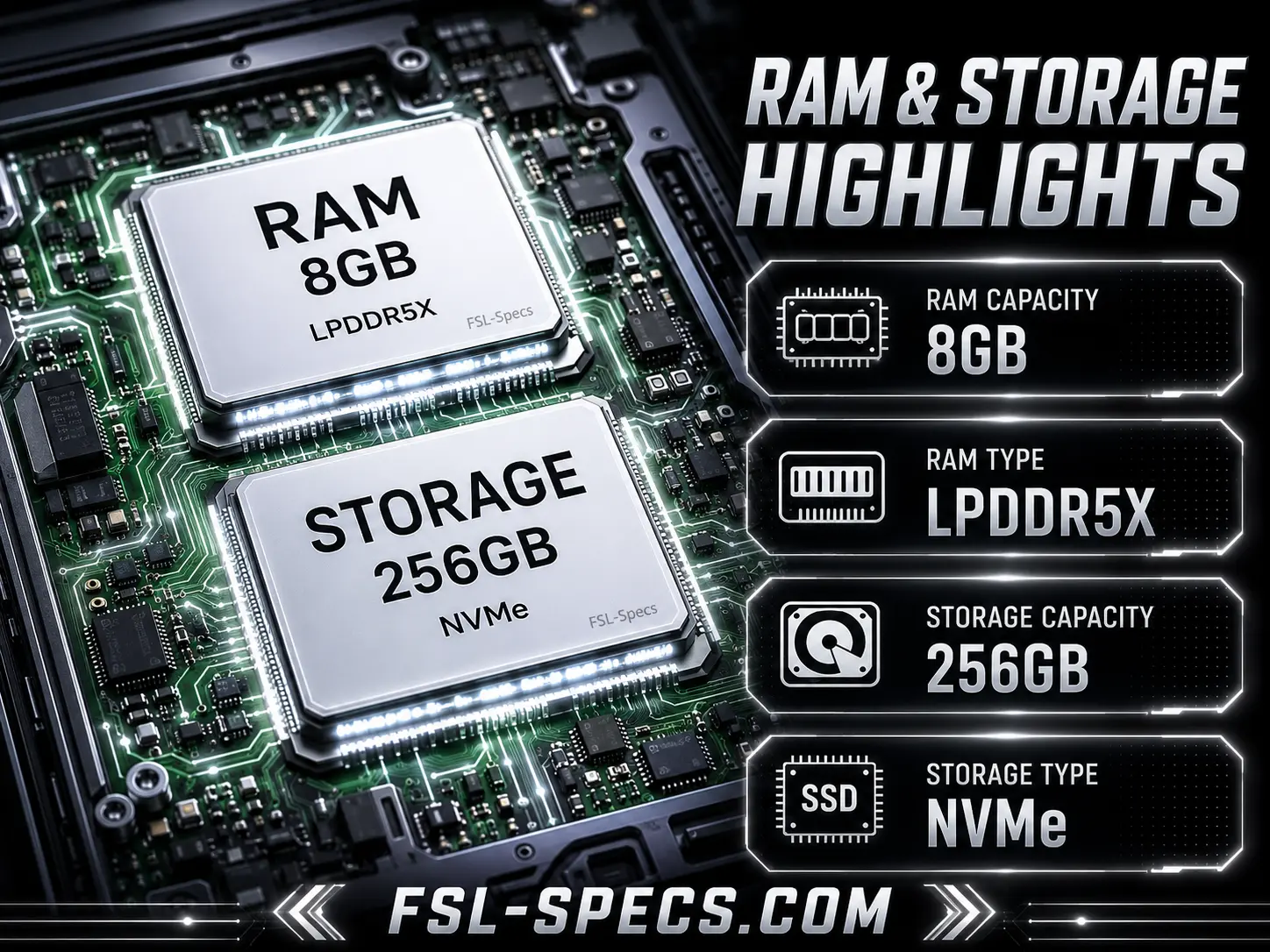
8 + 256GB
Ram Type
LPDDR5X
Storage Type
NVMe
SD Card
No
Variants
8 + 256GB
8 + 512GB
MP
Rear Camera
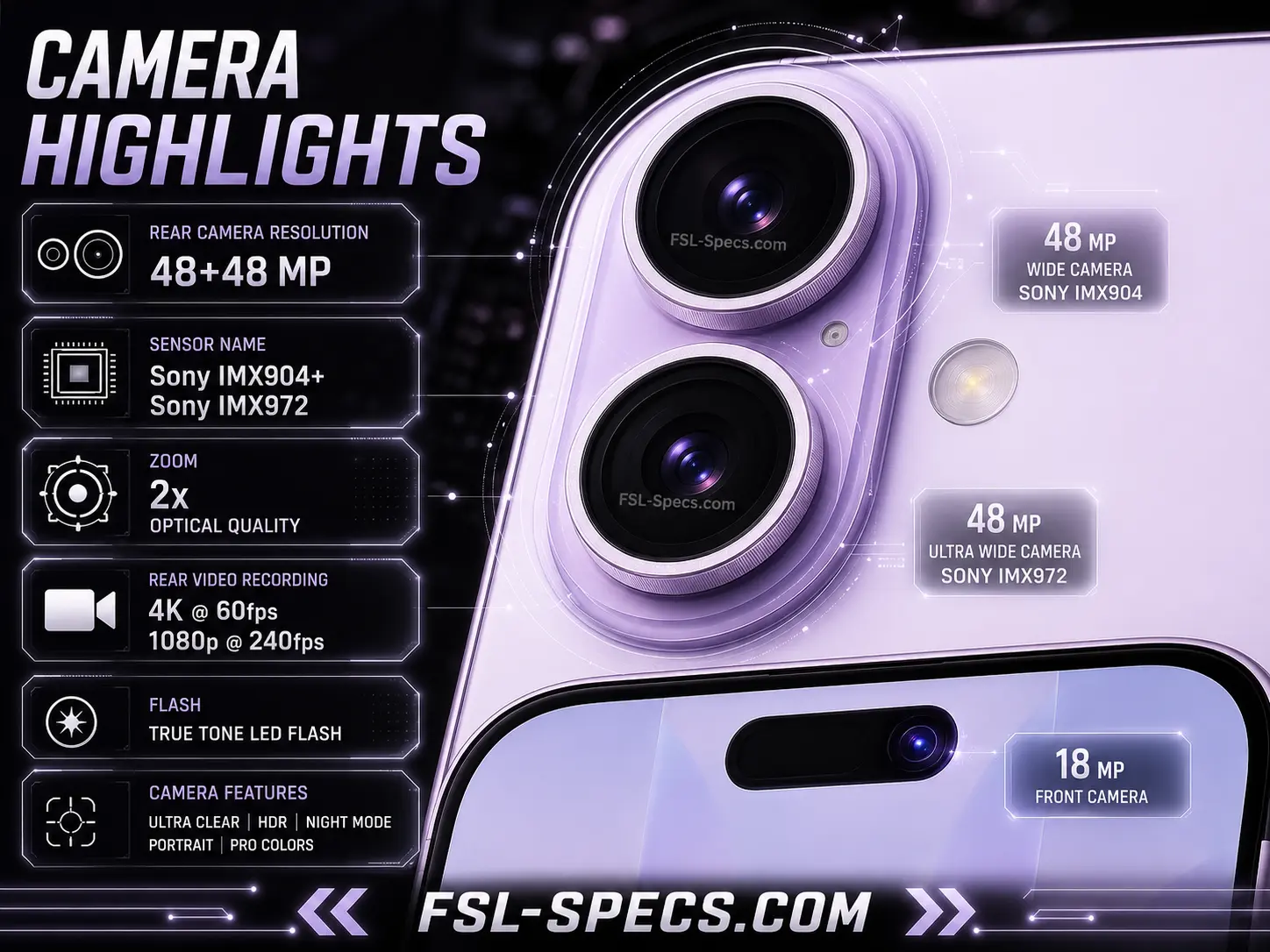
48+48 MP
Front Camera
18 MP
SENSORS
Camera Sensors
48 MP = Sony IMX904
48 MP = Sony IMX972
Front Sensors
18 MP = Sony IMX914
RECORDING FPS
Main Recording
4K @ 60fps
1080p@ 240 fps
Front Recording
4K @60 fps
1080p @ 120 fps
RESOLUTION
Main Resolution
8064 x 6048 pixels
Front Resolution
4896 × 3672 Pixels
ZOOM
Optical Zoom
-
D Digital Zoom
10 X
FLASH
Flash
dual-tone flash
Front Flash
-
Capacity
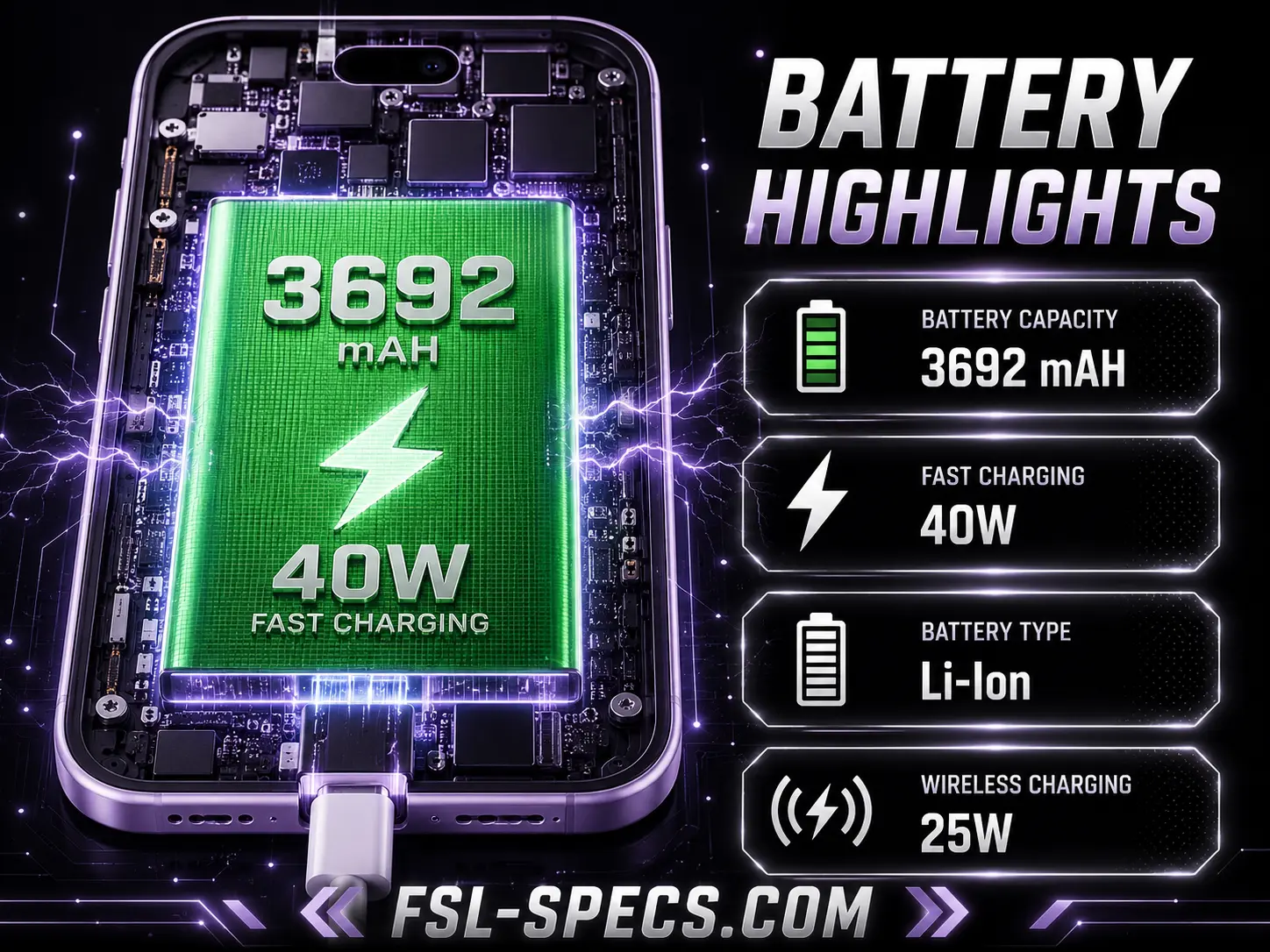
3692 mAH
Fast Charging
40 W
Wireless Charging
25 W
Li Battery Type
Li-Ion
REVERSE
Reverse Wired
4.5 W
Reverse Wireless
No
OTHER
Battery PC Marks
-
Charging Time
-
AUDIO & SENSORS
Speaker
Dual Stereo Speaker
Fingerprint Sensor
Face ID
Other Sensors
Face ID
Barometer
Gyroscope
Accelerometer
Proximity
Light sensors
Magnetometer
UWB (Spatial)
Force/Touch
Special Features

Emergency SOS via Satellite

BASIC INFO
Mobile
iPhone 17
Series
iPhone 17 Series
Category
Flagship
Release Date
19 September,2025
Year
2024
CONNECTIVITY
Sim
Nano-SIM / E-Sim
Network
4G / 4G+ / 5G/ 5G+
WiFi
Wi-Fi 7 (802.11 a/b/g/n/ac/6e/be)
Bluetooth
6.0
NFC
Yes
OS
iOS 27
BODY
Dimensions
149.6 x 71.5 x 8 mm
Build
Frame And Back Aluminum
KG Weight
177 g
Screen Size
6.3 inch
Resolution
1206 × 2622 Pixels
Type
OLED
Refresh Rate
120 Hz
Peak Brightness
3000 nits
HBM Brightness
1600 nits
Processor
Apple A19
Max Clock
4.26 GHz
Lithography
3 nm
GPU
Apple GPU
CPU Cores
6 Cores
Antutu v11
2.1 M
Bootup Time
-
Architecture
2×4.26 GHz
4×2.60 GHz
Ram Memory
8 + 256GB
SD Card
No
Ram Type
LPDDR5X
Storage Type
NVMe
Variants
8 + 256GB
8 + 512GB
MP
Rear Camera
48+48 MP
Front Camera
18 MP
SENSORS
Main Camera Sensors
48 MP = Sony IMX904
48 MP = Sony IMX972
Front Camera Sensors
18 MP = Sony IMX914
RECORDING FPS
Main Recording
4K @ 60fps
1080p@ 240 fps
Front Recording
4K @60 fps
1080p @ 120 fps
RESOLUTION
Main Resolution
8064 x 6048 pixels
Front Resolution
4896 × 3672 Pixels
ZOOM
Optical Zoom
-
D Digital Zoom
10 X
FLASH
Flash
dual-tone flash
Front Flash
-
Capacity
3692 mAH
Fast Charging
40 W
Wireless Charging
25 W
Li Battery Type
Li-Ion
REVERSE
Reverse Wired
4.5 W
Reverse Wireless
No
OTHER
Battery Life PCMark
-
Charging Time
-
AUDIO & SENSORS
Speaker
Dual Stereo Speaker
Fingerprint Sensor
Face ID
Other Sensors
Face ID
Barometer
Gyroscope
Accelerometer
Proximity
Light sensors
Magnetometer
UWB (Spatial)
Force/Touch
Special Features

Emergency SOS via Satellite

Highlights & Review Of iPhone 17

Display Review:

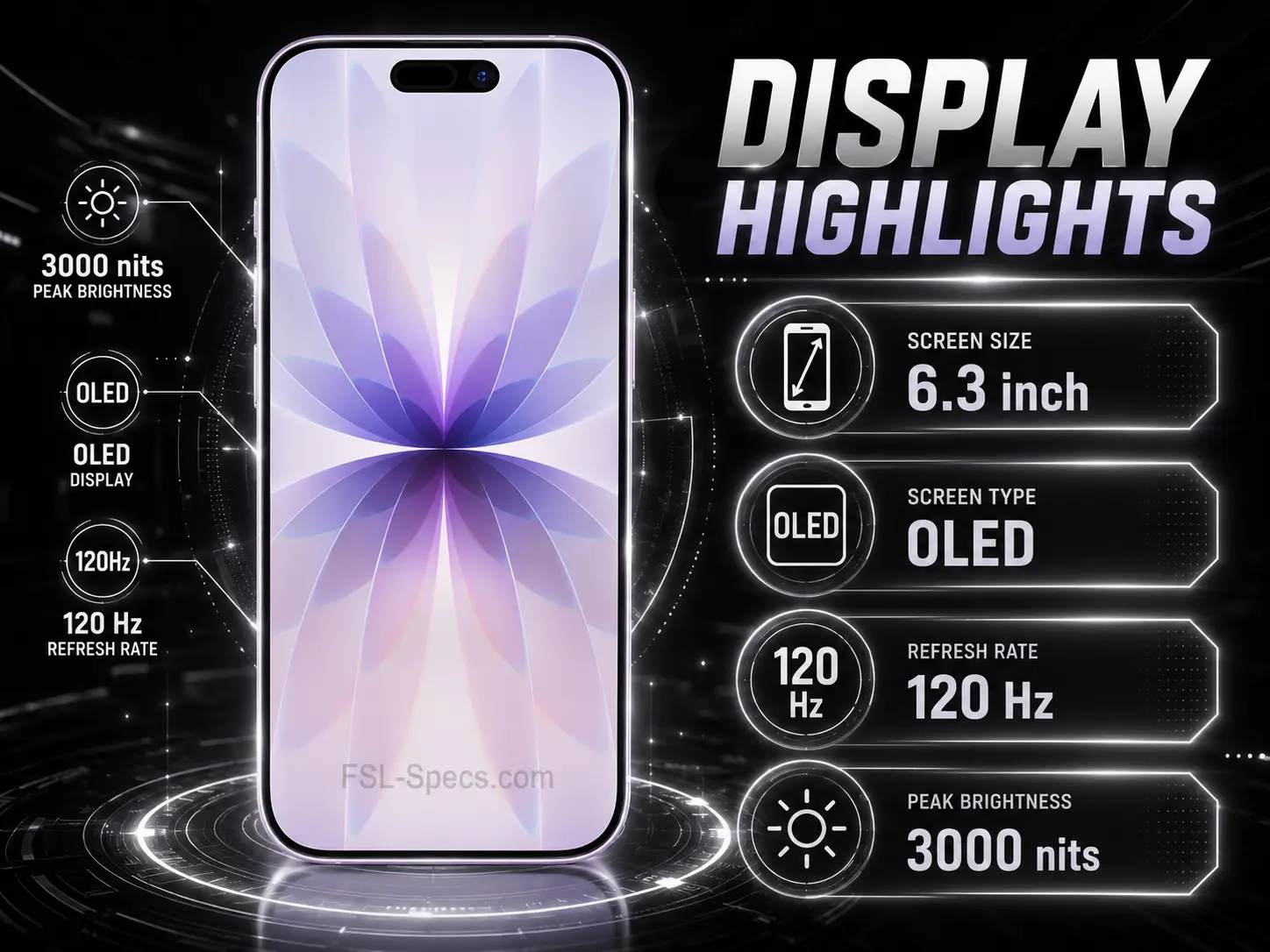
The iPhone 17 features a 6.3-inch LTPO Super Retina XDR OLED display with 2622 × 1206 resolution, 460 ppi, and adaptive 120Hz ProMotion. Apple rates it at 1,000 nits typical, 1,600 nits HDR peak, and up to 3,000 nits outdoor brightness, while Always-On display, HDR, P3 wide color and an anti-reflective coating strengthen its everyday viewing experience.

The Samsung Galaxy S26 Ultra takes the lead in screen size and resolution with a 6.9-inch Dynamic LTPO AMOLED 2X panel at 3120 × 1440 and around 500 ppi. Its 120Hz refresh rate matches the iPhone, while its 2,600-nit peak brightness is excellent for HDR and outdoor use. Samsung also adds a DX anti-reflective coating and Privacy Display, giving the Ultra a more feature-rich panel for large-screen users.

The Samsung Galaxy S26 Plus uses a 6.7-inch Dynamic AMOLED 2X display with 3120 × 1440 resolution, approximately 516 ppi, 120Hz refresh rate and 2,600 nits peak brightness. Its pixel density is actually the highest in this comparison, giving the S26 Plus excellent text and image sharpness, although it lacks the 144Hz gaming refresh rate of the RedMagic 11 Pro

The ZTE nubia RedMagic 11 Pro is designed around gaming, with a 6.85-inch BOE X10 AMOLED panel offering 2688 × 1216 resolution, 431 ppi, and a class-leading 144Hz refresh rate. Its 1,800-nit peak brightness, 100% DCI-P3 coverage, 360Hz touch sampling and up to 3,000Hz instant touch sampling prioritize gaming responsiveness, although its lower brightness and pixel density trail Samsung’s flagships.

Verdict: Samsung Galaxy S26 Ultra wins the overall display comparison for its 6.9-inch QHD+ 120Hz panel, while the iPhone 17 offers exceptional brightness and compact LTPO OLED quality; Galaxy S26 Plus delivers the highest pixel density, and RedMagic 11 Pro is the best choice specifically for 144Hz gaming.

Processor Review:

The iPhone 17 is powered by the Apple A19, a 3nm chipset with a 6-core CPU reaching 4.26GHz and a 5-core Apple GPU. Its current NanoReview average is 2,156,126 AnTuTu v11, with 598,735 CPU, 803,562 GPU, 200,566 memory, and 553,263 UX points. The A19 also records 3,736 single-core and 9,226 multi-core in Geekbench 6, showing that the iPhone 17 remains very capable in everyday and CPU-intensive workloads despite its much lower AnTuTu total.

The Samsung Galaxy S26 Ultra uses the Snapdragon 8 Elite Gen 5, a 3nm 8-core processor clocked up to 4.74GHz with Adreno 840 graphics. Its 3,939,244 AnTuTu v11 average is approximately 82.7% higher than the iPhone 17. The Ultra also reaches 1,168,602 CPU and 1,520,337 GPU points, giving it a substantial advantage in sustained multitasking and graphics-heavy workloads.

The Pakistan-market Samsung Galaxy S26 Plus is officially listed with the Exynos 2600, a 2nm deca-core chipset reaching 3.8GHz with Xclipse 960 graphics. Its current 3,119,822 AnTuTu v11 average is about 44.7% above the iPhone 17, with 1,002,073 CPU and 1,194,326 GPU points. Samsung also says the S26+ uses an improved vapor chamber that raises thermal performance by 29%, which is relevant for maintaining performance during longer workloads.

The ZTE nubia RedMagic 11 Pro is the raw-performance leader, using the Snapdragon 8 Elite Gen 5 and a gaming-focused cooling system. Its current AnTuTu v11 average is 4,106,597, around 90.5% higher than the iPhone 17 and about 4.2% ahead of the Galaxy S26 Ultra. Its average benchmark breakdown reaches 1,348,867 CPU, 1,418,303 GPU, 495,941 memory, and 843,486 UX points, making it the strongest choice here for sustained high-performance gaming.

Verdict: RedMagic 11 Pro ranks first for raw performance, followed by Galaxy S26 Ultra, Galaxy S26 Plus, and iPhone 17; the iPhone 17 remains highly capable for CPU-focused workloads, but its AnTuTu v11 score is substantially lower than all three Android rivals.

Ram & Memory Review:

The iPhone 17 8GB + 256GB variant has 8GB RAM and 256GB internal storage. Apple officially lists 256GB and 512GB capacities but does not publish the RAM amount or storage interface in its technical specifications. The 8GB RAM figure has been confirmed through Apple’s Xcode developer tools, making it reliable for comparison, but the storage technology should not be labelled as UFS or NVMe without a verified source.

The Samsung Galaxy S26 Ultra selected here has 12GB RAM + 256GB storage. Samsung officially confirms that both the 256GB and 512GB versions come with 12GB memory, while the 1TB version increases RAM to 16GB. Samsung does not advertise a microSD expansion slot, so the 256GB capacity is fixed. This gives the S26 Ultra 50% more RAM than the iPhone 17, although both offer the same 256GB storage capacity in the selected variants.

The Samsung Galaxy S26 Plus provides 12GB RAM + 512GB storage, giving it the largest storage capacity among the two Samsung phones while still matching the S26 Ultra’s RAM. Samsung confirms the 12GB + 512GB configuration, while current specification listings identify the storage as UFS 4.X. There is no microSD card slot, so users cannot expand the built-in storage.

The ZTE nubia RedMagic 11 Pro is the clear memory leader with 16GB LPDDR5T RAM + 512GB UFS 4.1 Pro storage in the selected configuration. It therefore offers double the iPhone 17’s storage and 8GB more RAM, while its UFS 4.1 Pro storage is specifically designed for fast loading and gaming workloads.

Verdict: RedMagic 11 Pro wins the RAM and memory comparison with 16GB LPDDR5T + 512GB UFS 4.1 Pro, Galaxy S26 Plus follows with 12GB + 512GB, Galaxy S26 Ultra offers 12GB + 256GB, while iPhone 17 has the smallest RAM and storage configuration at 8GB + 256GB.

Cameras Review:

The Samsung Galaxy S26 Ultra has the most versatile camera hardware in this comparison, combining a 200MP f/1.4 main camera, 50MP f/1.9 ultrawide, 50MP 5x telephoto, and 10MP 3x telephoto. Both telephoto cameras include OIS and autofocus, while the main camera also has OIS and multi-directional PDAF. Samsung supports up to 8K at 30fps and 4K at 120fps, giving the S26 Ultra the broadest range of focal lengths and video options here.

The iPhone 17 uses a 48MP Fusion Main with f/1.6, sensor-shift OIS and Focus Pixels, alongside a 48MP Fusion Ultra Wide with f/2.2 and 120° field of view. It can provide a 12MP 2x optical-quality telephoto from the main sensor, but it does not have a dedicated telephoto camera. Its 18MP Center Stage front camera adds autofocus and supports 4K Dolby Vision at 60fps, while the rear cameras also record 4K Dolby Vision up to 60fps.

The Samsung Galaxy S26 Plus offers a 50MP f/1.8 main camera with OIS and dual-pixel PDAF, a 10MP 3x telephoto with OIS, and a 12MP ultrawide. Its 12MP autofocus selfie camera supports 4K at 60fps, while rear recording reaches 8K at 30fps. It is considerably more versatile than the RedMagic, although its camera hardware is a clear step below the S26 Ultra.

The ZTE nubia RedMagic 11 Pro has a 50MP OmniVision OV50E40 main camera with OIS, plus a 50MP ultrawide. Its under-display 16MP selfie camera records only up to 1080p, and there is no dedicated telephoto camera. Rear video reaches 8K at 30fps and 4K at 60fps, but GSMArena found the still-camera results relatively unimpressive despite the capable hardware.

Verdict: Samsung Galaxy S26 Ultra wins the camera comparison, followed by iPhone 17 for its strong computational photography and video system, Galaxy S26 Plus for balanced versatility, and RedMagic 11 Pro last because it lacks a telephoto camera and has the weakest selfie-video capability.

Battery Review:

The ZTE nubia RedMagic 11 Pro is the clear battery-capacity leader in this comparison, packing a massive 7,500mAh silicon-carbon battery with 80W wired and 80W wireless charging. In GSMArena’s testing, it achieved a strong 20:02 hours Active Use Score, with 17:39 hours of web browsing, 27:33 hours of video playback, and 11:56 hours of gaming. It also reached a full charge in 55 minutes using the included 80W charger, making it the strongest choice here for long gaming sessions and heavy daily use.

The Samsung Galaxy S26 Ultra uses a 5,000mAh battery with 60W wired charging and 25W Qi2.2 wireless charging. Its battery is far smaller than the RedMagic’s, but the efficient Snapdragon 8 Elite Gen 5 and LTPO display help it deliver strong endurance. Gadgets 360 recorded around 15 hours 44 minutes in its PCMark battery test and found roughly a day and a half possible with casual use. It reached 51% in 30 minutes during the reviewer’s charging test.

The Samsung Galaxy S26 Plus carries a 4,900mAh battery with 45W wired charging and 25W wireless charging. Despite having only 100mAh less capacity than the S26 Ultra, its smaller display and efficient hardware can produce very competitive real-world endurance. TechRadar reported that it lasted a full day under focused use and more than two days with very light usage, while a complete 45W charge took about one hour.

The iPhone 17 has a 3,692mAh battery and supports up to 40W wired charging, 25W MagSafe wireless charging, and 25W Qi2 wireless charging. Apple claims up to 30 hours of video playback and 27 hours of streamed video playback, while GSMArena measured approximately 15 hours of Active Use, which is impressive considering its much smaller physical battery. Apple also rates 50% charging at around 20 minutes with a 40W adapter or higher.

Verdict: RedMagic 11 Pro wins the battery comparison with its 7,500mAh battery and 80W wired/wireless charging, followed by Galaxy S26 Ultra and Galaxy S26 Plus, while iPhone 17 has the smallest battery but achieves strong endurance through hardware and software efficiency.

Final Verdict :

At the listed Pakistan prices, the Samsung Galaxy S26 Ultra is the strongest overall phone in this comparison. At around PKR 390,000, it undercuts the iPhone 17 at PKR 400,000, while offering a larger 6.9-inch QHD+ 120Hz LTPO AMOLED display, 12GB + 256GB storage, a more versatile camera system with dedicated 3x and 5x telephoto cameras, and a 5,000mAh battery with faster charging options. Its Snapdragon 8 Elite Gen 5 also delivers around 3.94 million AnTuTu v11 points.

The ZTE nubia RedMagic 11 Pro is the performance and value specialist. At approximately PKR 310,000, its Snapdragon 8 Elite Gen 5 produces around 4.1 million AnTuTu v11 points, while the 16GB + 512GB configuration and 7,500mAh battery give it major hardware advantages over the iPhone 17 and Samsung S26+. Its gaming-focused cooling and 144Hz display make it particularly attractive to performance-oriented buyers, although its camera system is less versatile than the Samsung flagship.

The Samsung Galaxy S26 Plus takes third place at PKR 370,000. Its 12GB + 512GB configuration, 120Hz LTPO AMOLED display and strong battery life make it a well-rounded flagship, but it lacks the S26 Ultra’s camera hardware and premium extras. GSMArena also describes the S26+ as a capable flagship that is difficult to recommend when stronger alternatives are available.

The iPhone 17 ranks fourth. Its A19 platform, excellent camera/video processing and efficient iOS experience remain strong, but the selected 8GB + 256GB configuration is the weakest memory package here, while its 2.16 million AnTuTu v11 score is considerably below all three Android competitors.

Bottom line: Samsung Galaxy S26 Ultra is the best overall choice, RedMagic 11 Pro is the best gaming and performance-value option, Galaxy S26 Plus is the sensible Samsung alternative, while iPhone 17 is the best fit for buyers specifically prioritizing Apple’s ecosystem and camera/video experience.

Ranking:

  1. Samsung Galaxy S26 Ultra – PKR 390,000
  2. ZTE nubia RedMagic 11 Pro – PKR 310,000
  3. Samsung Galaxy S26 Plus – PKR 370,000
  4. iPhone 17 – PKR 400,000

Ranking Table:

RankPhonePakistan PriceRAM + StorageAnTuTu v11DisplayCameraBatteryOverall
1Samsung Galaxy S26 UltraPKR 390,00012GB + 256GB~3.94M6.9″ QHD+ 120Hz LTPOBest overall5,000mAhBest overall flagship
2ZTE nubia RedMagic 11 ProPKR 310,00016GB + 512GB~4.1M6.85″ 144Hz AMOLEDGood, less versatile7,500mAhBest gaming/value
3Samsung Galaxy S26 PlusPKR 370,00012GB + 512GB~3.12M*6.7″ QHD+ 120Hz LTPOVery good4,900mAhBest sensible Samsung option
4iPhone 17PKR 400,0008GB + 256GB~2.16M6.3″ 120Hz LTPO OLEDExcellent3,692mAhStrong, but weaker value here

*The Galaxy S26 Plus benchmark depends on the chipset variant. The Exynos 2600 version averages around 3.12M AnTuTu v11, while the Snapdragon version is around 3.81M. The Pakistan-market variant should therefore be identified separately before publishing a fixed benchmark claim.

Pros And Cons of iPhone 17

Pros of Mobile

✅ Fastest mobile chip
✅Pro-grade cameras
✅Fast USB 3.2
✅Compact Pro size
✅LiDAR scanner
✅Premium build

Cons of Mobile

❌ Very high price
❌ Divisive new design
❌ Still throttles heat
❌ eSIM only (US)

Best For - Not Best For

Best For

✅Professional content creators
✅Video creators
✅Mobile gamers
✅Apple ecosystem users
✅One-handed use
✅iPhone 14 upgraders

Not Best For

❌Budget shoppers
❌16 Pro owners
❌Big screen fans
❌Battery maximalists
❌Android switchers
❌Design purists

Trailer And Unboxing of iPhone 17

Disassembly Or Teardown And Gaming Test of iPhone 17

Camera Test iPhone 17

Related Comparisions

iphone Mobile Series

iphone Mobile Series

Picture of Faisal Ur Rehman

Faisal Ur Rehman

Faisal Rehman is the founder and editor of FSL Specs, where he publishes in-depth smartphone specifications, comparisons, buying guides, and technology insights. With extensive experience in mobile hardware research and technical analysis, he provides accurate and up-to-date information on Android smartphones, processors, displays, cameras, batteries, performance benchmarks, and software features. His goal is to simplify complex specifications and help readers choose the right device with confidence.

FAQs Questions

The iPhone 17 uses a 6.3-inch OLED Super Retina XDR display with a peak brightness of 3,000 nits outdoors and up to 120Hz ProMotion refresh rate.

The iPhone 17 is powered by the Apple A19 chip.

The iPhone 17 uses LPDDR5X RAM and NVMe storage.

The iPhone 17 has a 48+48 MP main camera and an 18 MP front camera.

The iPhone 17 has a 3,692 mAh battery with 40W fast charging support.

8+256 GB
₹83,000 INR | $870 | PKR 360,000


8+512 GB
₹102,000 INR | $1,050| PKR 480,000

Scroll to Top