



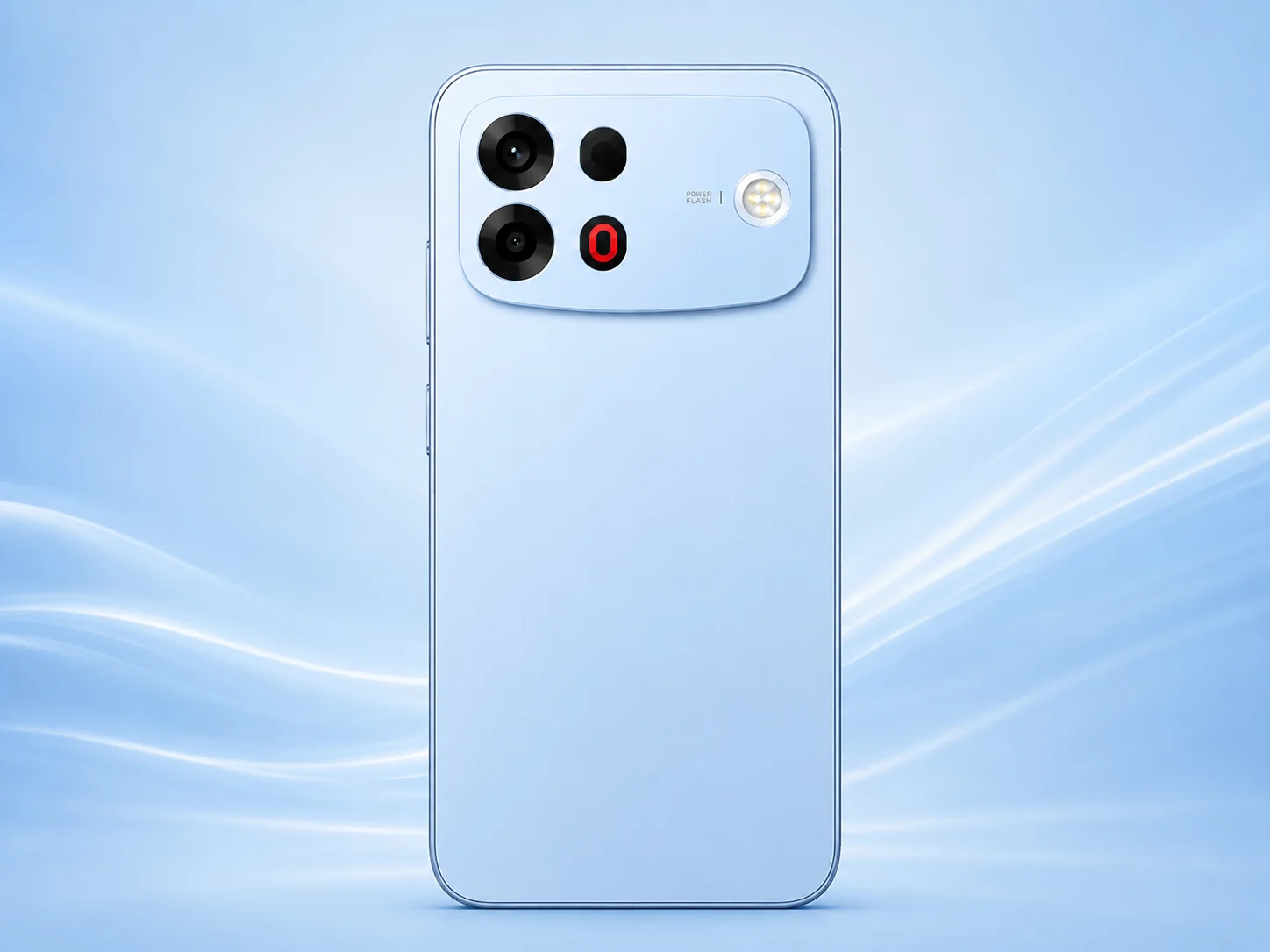
















✪ Oppo A7 Pro Max ✪

Oppo A7 Pro Max image
United States flag United States
$400 USD
Pakistan flag Pakistan (PKR)
130,000 PKR
India flag India (INR)
₹38,000 INR

✪ Oppo A7 Pro Max ✪

Oppo A7 Pro Max image
Last Time Update : 29 August, 2026
0

Quick Specifications

Amoled

Display Type

Snapdragon 4 Gen 5

Processor

12+256

Ram And Memory

50 MP

Camera

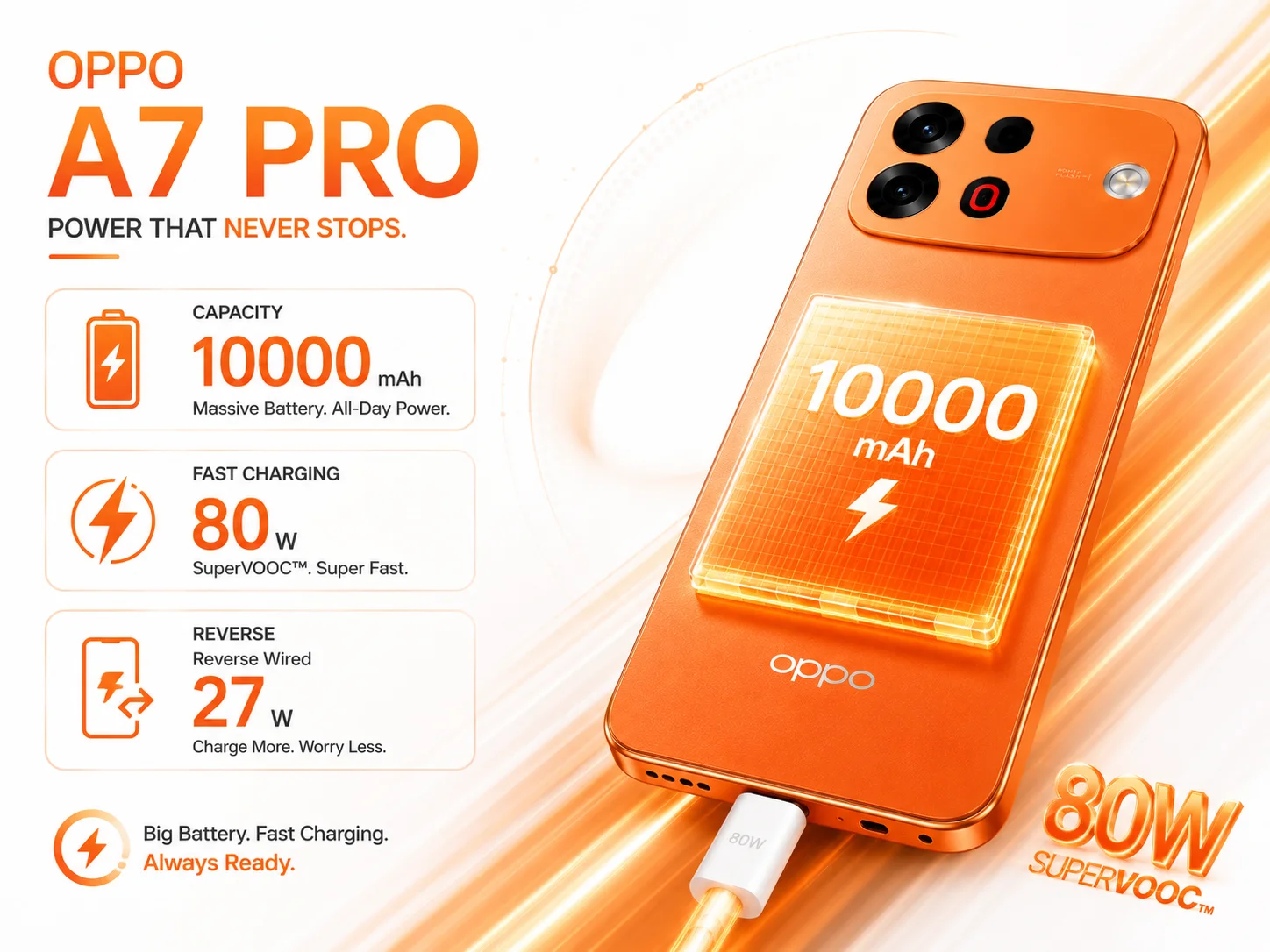
10000 mAh

Battery

80 W

Fast Charging

Full Specification

BASIC INFO
Mobile
Oppo A7 Pro Max
Model
PYC110
Series
Oppo A Series
Category
Mid Range
Release Date
16 July,2026
Year
2026
CONNECTIVITY
Sim
Dual Nano-SIM
Network
4G / 4G+ / 5G
WiFi
Wi-Fi 5
Bluetooth
5.1
NFC
Yes
OS
Android 16
BODY
Dimensions
162.98 × 77.97 × 8.57 mm
Build
Frame Plastic, Back Plastic
KG Weight
224 g
Screen Size
6.78 inch
Resolution
1272 × 2772 Pixels
Type
Amoled
Refresh Rate
120 Hz
Peak Brightness
-
HBM Brightness
1800 nits
Processor
Snapdragon 4 Gen 5
Max Clock
2.4 GHz
Lithography
4 nm
GPU
Adreno 629
CPU Cores
8 Cores
Antutu v11
650 K
Antutu v10
-
Bootup Time
-
Ram Memory
12+256
Ram Type
LPDDR4X
Storage Type
UFS 3.1
SD Card
No
MP
Rear Camera
50 MP
Front Camera
50 MP
SENSORS
Camera Sensors
Front Sensors
RECORDING FPS
Main Recording
1080p @ 30 fps
Front Recording
1080p @ 30 fps
RESOLUTION
Main Resolution
8150 x 6150 pixels
Front Resolution
8192 x 6144 Pixels
FLASH
Flash
Yes
Front Flash
-
Capacity
10000 mAh
Fast Charging
80 W
Wireless Charging
No
Li Battery Type
Si/C Li-Ion
REVERSE
Reverse Wired
27 W
Reverse Wireless
No
OTHER
Battery PC Marks
-
Charging Time
Not Confirm
AUDIO & SENSORS
Speaker
Dual Stereo Speaker
Fingerprint Sensor
Front Finger
Other Sensors
Accelerometer
Gyroscope
Proximity
Compass
etc.
Special Features

BASIC INFO
Mobile
Oppo A7 Pro Max
Model
PYC110
Series
Oppo A Series
Category
Mid Range
Release Date
16 July,2026
Year
2026
CONNECTIVITY
Sim
Dual Nano-SIM
Network
4G / 4G+ / 5G
WiFi
Wi-Fi 5
Bluetooth
5.1
NFC
Yes
OS
Android 16
BODY
Dimensions
162.98 × 77.97 × 8.57 mm
Build
Frame Plastic, Back Plastic
KG Weight
224 g
Screen Size
6.78 inch
Resolution
1272 × 2772 Pixels
Type
Amoled
Refresh Rate
120 Hz
Peak Brightness
-
HBM Brightness
1800 nits
Processor
Snapdragon 4 Gen 5
Max Clock
2.4 GHz
Lithography
4 nm
GPU
Adreno 629
CPU Cores
8 Cores
Antutu v11
650 K
Antutu v10
-
Bootup Time
-
Ram Memory
12+256
SD Card
No
Ram Type
LPDDR4X
Storage Type
UFS 3.1
MP
Rear Camera
50 MP
Front Camera
50 MP
SENSORS
Main Camera Sensors
Front Camera Sensors
RECORDING FPS
Main Recording
1080p @ 30 fps
Front Recording
1080p @ 30 fps
RESOLUTION
Main Resolution
8150 x 6150 pixels
Front Resolution
8192 x 6144 Pixels
FLASH
Flash
Yes
Front Flash
-
Capacity
10000 mAh
Fast Charging
80 W
Wireless Charging
No
Li Battery Type
Si/C Li-Ion
REVERSE
Reverse Wired
27 W
Reverse Wireless
No
OTHER
Battery Life PCMark
-
Charging Time
Not Confirm
AUDIO & SENSORS
Speaker
Dual Stereo Speaker
Fingerprint Sensor
Front Finger
Other Sensors
Accelerometer
Gyroscope
Proximity
Compass
etc.
Special Features

Highlights & Review Of Oppo A7 Pro Max

Display Review:

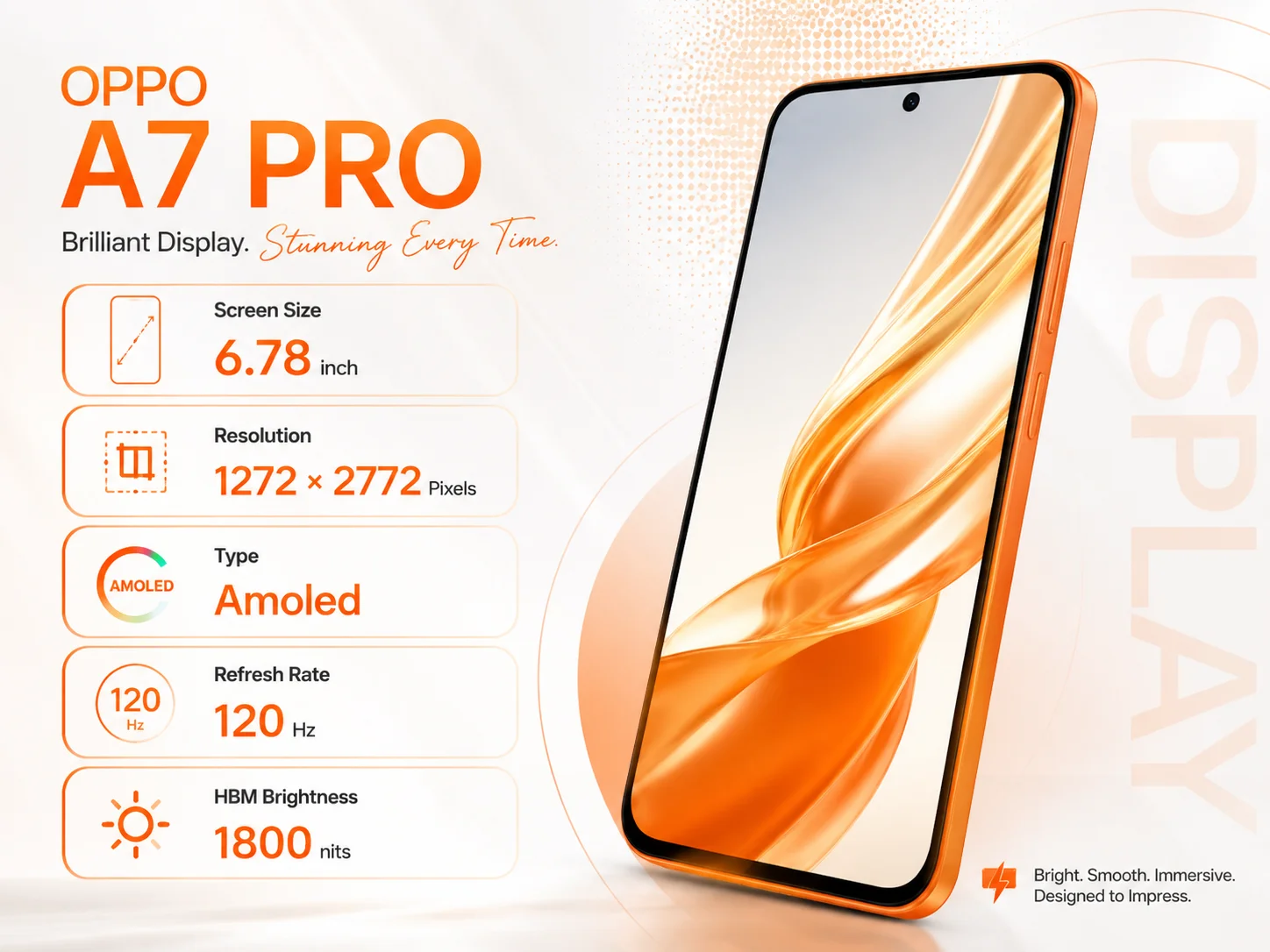
The Oppo A7 Pro Max (expected PKR 125,000-150,000 in Pakistan) uses a 6.78-inch AMOLED panel with 1272 x 2772 resolution, a 120Hz refresh rate, and 1,800-nit peak brightness. Against the Honor X9d (PKR 140,000), the gap opens on brightness. The X9d’s 6.79-inch AMOLED panel is rated for up to 6,000 nits peak, meaning it can hold visible, glare-free content in direct sunlight far more comfortably than the oppo A7 Pro Max, even though both share a 120Hz refresh rate and similar 1.5K-class resolution.

The Realme 15 Pro (PKR 132,000) pulls further ahead on both fronts, its 6.8-inch OLED panel runs at 144Hz versus the A7 Pro Max’s 120Hz, so scrolling and gaming feel visibly smoother, and its 1800 nits HBM, 6500 nits peak brightness again outclasses the Oppo’s 1,800-nit peak figure.

The vivo V70 FE (PKR 120,000) is the closest match, with a 6.83-inch AMOLED, 1260 x 2800 resolution, and 120Hz refresh rate nearly identical to the A7 Pro Max, though its 1,900-nit HBM brightness still edges out Oppo’s number slightly. Resolution-wise the Oppo A7 Pro Max’s 1272 x 2772 sits competitively among all three rivals, so sharpness is not the weak point here, brightness and refresh rate consistency are. Buyers who spend a lot of time outdoors or want the smoothest scrolling should note that three phones in this bracket now exceed the A7 Pro Max’s peak brightness rating.

Verdict: The Oppo A7 Pro Max has a solid, competitive AMOLED panel but not a class-leading one at this price. The Realme 15 Pro currently offers the strongest display in this group, and the Honor X9d is the pick for anyone prioritizing raw outdoor brightness.

Processor Review:

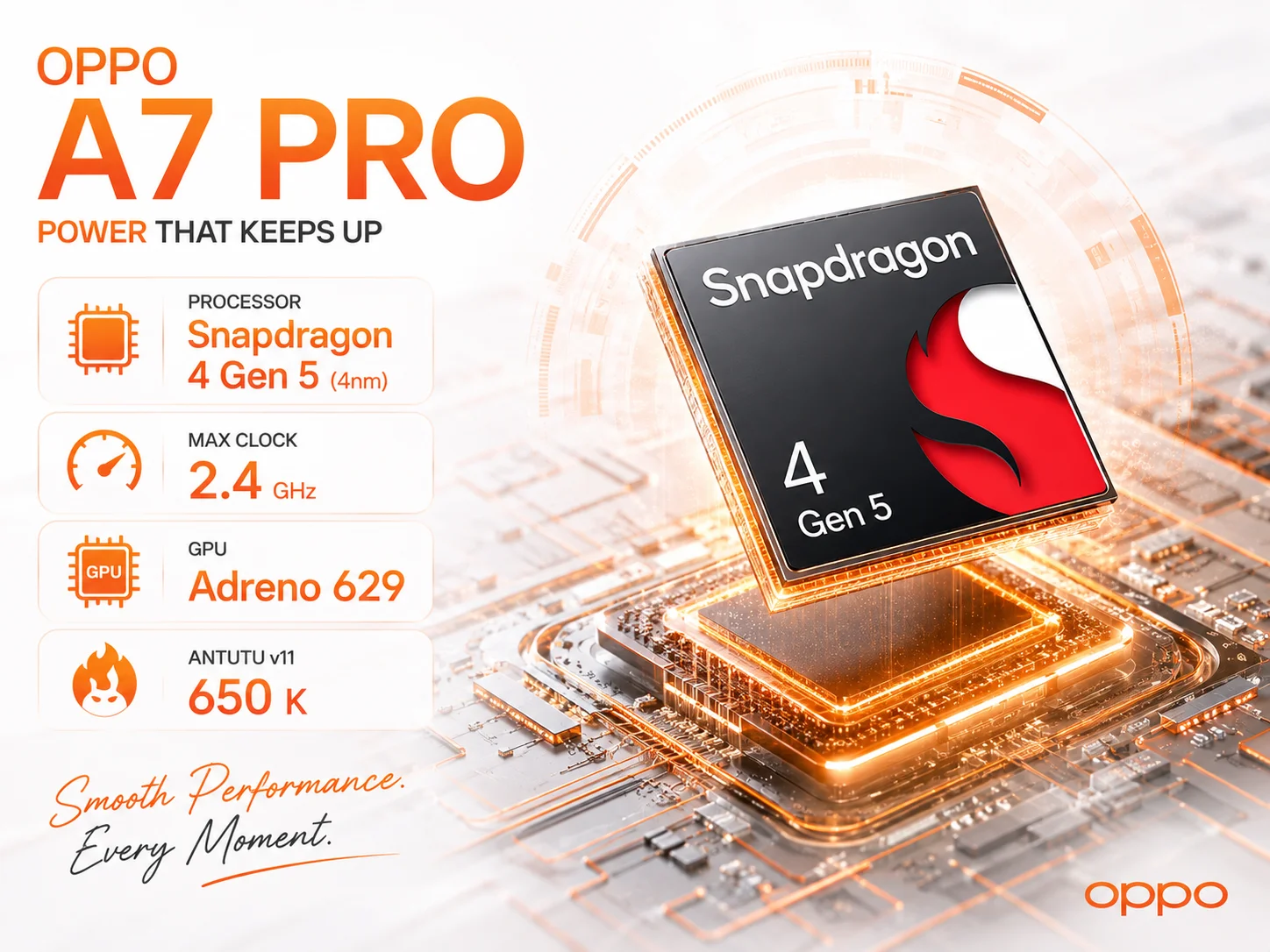
The Oppo A7 Pro Max runs on the Snapdragon 4 Gen 5 chipset with an Adreno 629 GPU, posting an AnTuTu v11 score of around 652,000 points according to early benchmark listings. Against the Honor X9d (PKR 140,000), the gap is significant. The X9d’s Snapdragon 6 Gen 4 with Adreno 810 GPU scores around 977,000 on AnTuTu v11, meaning noticeably faster app loading and more headroom for demanding games.

The Realme 15 Pro (PKR 132,000) widens that gap further, its Snapdragon 7 Gen 4 with Adreno 722 GPU clears 1,023,000 on AnTuTu, putting it comfortably ahead of the A7 Pro Max in both CPU and GPU-heavy tasks like video editing or high-setting gaming.

The vivo V70 FE (PKR 120,000) uses MediaTek’s Dimensity 7360 Turbo with a Mali-G615 MC2 GPU, scoring around 990,000 on AnTuTu v11, also well above the OPPO A7 Pro Max despite being the cheapest phone in this group. It is worth flagging that these AnTuTu figures come from different chipset generations and testing sources, so treat them as directional rather than lab-identical comparisons, though the gap between the A7 Pro Max and all three rivals is large enough that the ranking would not flip under stricter testing.

In practical terms, the OPPO A7 Pro Max’s Snapdragon 4-series chip is built for efficiency and everyday tasks rather than sustained gaming, while every rival here uses a higher performance tier chipset.

Verdict: The Oppo A7 Pro Max is the weakest performer of the four on raw benchmarks. Buyers who game frequently or multitask heavily should lean toward the Realme 15 Pro or Honor X9d instead.

Ram & Memory Review:

The Oppo A7 Pro Max in its 12GB+256GB configuration uses LPDDR4X RAM paired with UFS 3.1 storage, and there’s no microSD slot for expansion. Against the Honor X9d (12GB+256GB, PKR 140,000), the RAM type is the notable difference. The X9d runs LPDDR5 RAM, a faster standard than the A7 Pro Max’s LPDDR4X, meaning quicker app switching and slightly better multitasking headroom even at the same 12GB capacity. Storage on both is UFS 3.1, so raw file transfer and app-load speeds should be broadly comparable, and neither offers a memory card slot.

The Realme 15 Pro (12GB+512GB, PKR 132,000) matches the 12GB RAM figure but doubles the onboard storage to 512GB, giving substantially more room for photos, 4K video, and apps before hitting capacity, useful given none of these four phones support microSD expansion.

The vivo V70 FE (8GB+256GB, PKR 120,000) is the outlier here, its 8GB RAM trails the Oppo A7 Pro Max’s 12GB by a real margin, which can mean more background apps getting reloaded during heavy multitasking, though its UFS 3.1 storage keeps everyday speed reasonably close to the rest of the group. Across all four phones, the lack of microSD support is now standard at this price point in 2026, so buyers should choose their onboard storage tier carefully at purchase time since it cannot be expanded later.

Verdict: The Oppo A7 Pro Max’s 12GB RAM is competitive, but its older LPDDR4X standard and smaller 256GB storage put it a step behind the Realme 15 Pro’s 512GB option. For anyone who shoots a lot of video or installs many large apps, the Realme 15 Pro offers the most practical memory headroom of the group.

Cameras Review:

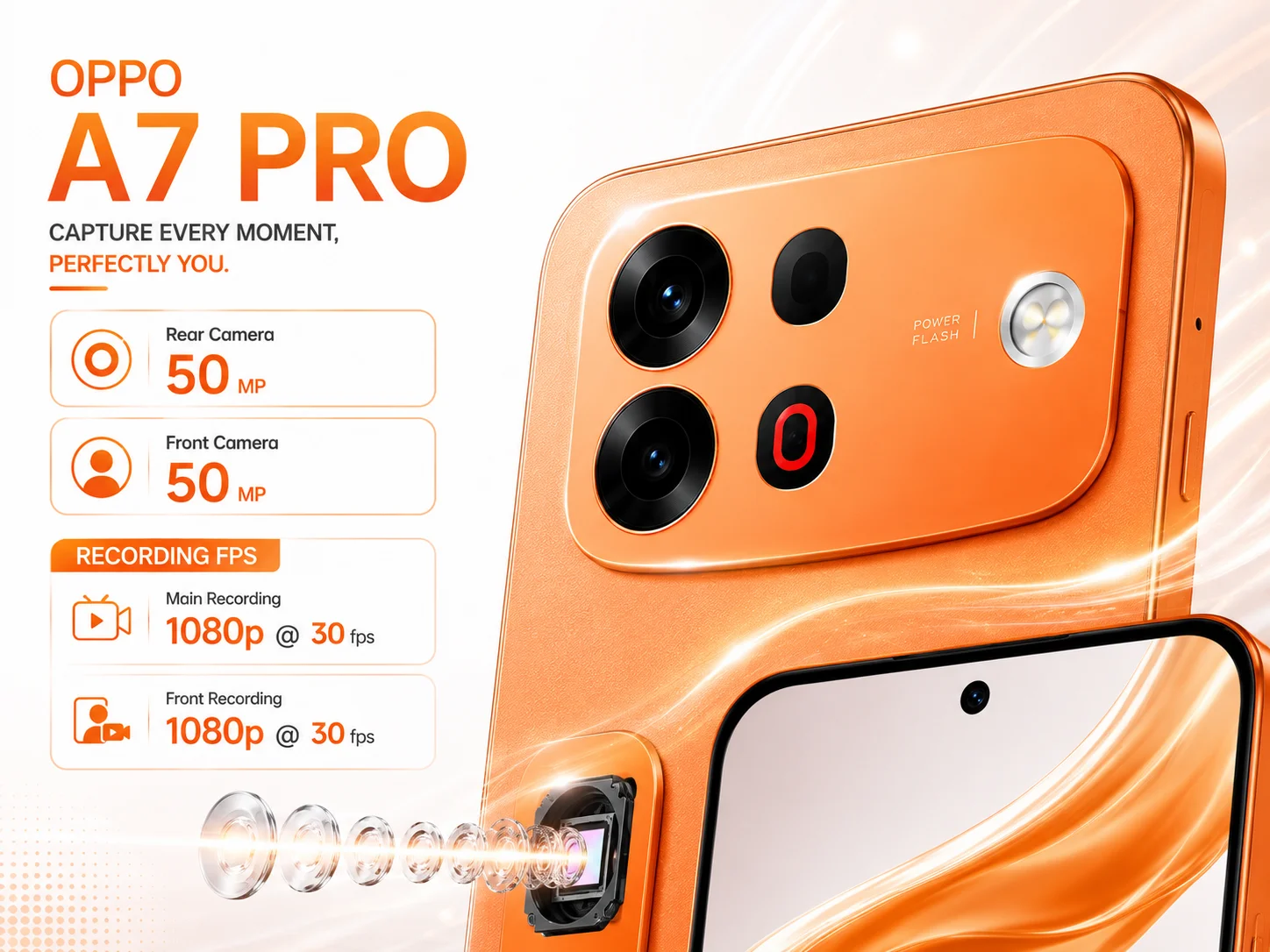
The Oppo A7 Pro Max pairs a 50MP f/1.8 main camera with OIS and a 2MP f/2.4 monochrome sensor on the rear, plus a 50MP f/2.0 front camera, with both rear and front video capped at 1080p 30fps. Oppo hasn’t disclosed the main sensor’s brand or model, so buyers are trusting resolution and aperture numbers alone rather than a verified sensor pedigree.

Against the Honor X9d (PKR 140,000), the rear hardware pulls ahead on paper, its 108MP Samsung ISOCELL HM6 main sensor with OIS offers a named, verifiable sensor and records up to 4K 30fps, meaning sharper crops and higher-detail footage than the A7 Pro Max can produce.

The Realme 15 Pro (PKR 132,000) goes further still, its 50MP Sony IMX896 OIS main camera and 50MP OmniVision OV50D ultrawide both record 4K 60fps, and its 50MP OmniVision OV50D front camera matches that same 4K 60fps ceiling, well beyond the A7 Pro Max’s 1080p 30fps front and rear limit.

The vivo V70 FE (PKR 120,000) uses a 200MP Samsung ISOCELL HP5 main sensor with OIS, shooting 4K 30fps rear video, while its 32MP front camera also tops out at 4K 30fps. In practical terms, all three rivals offer named, OIS-stabilized main sensors and meaningfully higher video resolution or frame rate ceilings than the A7 Pro Max, whose secondary rear camera is also the weakest of the group at just 2MP versus the 5MP to 8MP ultrawides on the rivals.

Verdict: The Oppo A7 Pro Max’s camera hardware is the least transparent and least capable on video in this group. Buyers who prioritize verified sensor quality and higher-resolution video should look at the Realme 15 Pro or vivo V70 FE instead.

Battery Review:

The Oppo A7 Pro Max packs a massive 10,000mAh battery with 80W wired charging and 27W reverse wired charging, but no wireless charging. Independent lab-tested 0-100% figures aren’t available yet since the phone is newly launched, and pre-launch claims range from a targeted 35 minutes to other reports suggesting 60-70 minutes, so treat the charging time as unconfirmed until reviewers verify it.

Against the Honor X9d (8,300mAh, PKR 140,000), the Oppo has nearly 1,700mAh more capacity but slower 66W wired charging and a lighter 7.5W reverse charging rate on the X9d’s side, with real-world testing showing the X9d needs close to 90 minutes for a full charge, meaning the A7 Pro Max’s bigger cell and faster wattage should translate to more usage per charge and comparable or better refill speed once verified.

The Realme 15 Pro (7,000mAh, PKR 132,000) charges at the same 80W but with a smaller battery, GSMArena’s lab test clocked it at just under 60 minutes for a full charge, roughly two-thirds done in just 30 minutes, a benchmark the A7 Pro Max’s larger battery will have to match despite carrying 3,000mAh more charge.

The vivo V70 FE (7,000mAh, PKR 120,000) uses 90W wired charging and reached 0-100% in 62 minutes in GSMArena’s test, again with less capacity than the A7 Pro Max. None of these four phones offer wireless charging.

Verdict: The Oppo A7 Pro Max offers the largest battery and reverse charging support in this group, a strong pick for heavy users, but its real-world charging speed is still unverified. Buyers who want a confirmed fast top-up should lean toward the Realme 15 Pro or vivo V70 FE until independent A7 Pro Max charging tests are published.

Final Verdict :

Across display, processor, memory, camera, and battery, the Realme 15 Pro (PKR 132,000) comes out on top overall. Its 144Hz, 6,500-nit AMOLED display, Snapdragon 7 Gen 4 chipset scoring over 1,023,000 on AnTuTu, dual 50MP OIS cameras with 4K 60fps on both rear lenses and the front camera, and a 60-minute full charge on its 7,000mAh battery outperform every rival in this comparison, including the pricier Oppo A7 Pro Max.

The Honor X9d (PKR 140,000) is the strongest runner-up, with a brighter peak display (6,000 nits), a 108MP OIS main camera with a verified sensor name, and solid AnTuTu scores around 977,000, though its 66W charging trails the group. The vivo V70 FE (PKR 120,000) undercuts all three on price and still delivers a competitive 200MP OIS main camera and fast 90W charging, but its 8GB RAM and smaller 256GB storage hold it back from matching the Realme or Honor on multitasking headroom.

The Oppo A7 Pro Max, despite its expected PKR 125,000-150,000 asking price and the largest 10,000mAh battery of the group, finishes last overall. It has the weakest display brightness, the lowest AnTuTu score by a wide margin, a camera system limited to 1080p 30fps video with an undisclosed main sensor, and charging speeds that remain unverified by independent testing. Its main advantages, battery capacity and reverse charging, aren’t enough to offset falling behind on nearly every other spec against phones at or below its price.

Bottom line: The Realme 15 Pro is the best all-round phone in this comparison, the Honor X9d is the strongest alternative for display brightness and camera hardware, the vivo V70 FE is the best budget pick, and the Oppo A7 Pro Max is the weakest value proposition of the four despite its battery size.

RankPhonePrice (PKR)
1Realme 15 Pro132,000
2Honor X9d140,000
3vivo V70 FE120,000
4Oppo A7 Pro Max125,000-150,000 (expected)

Pros And Cons of Oppo A7 Pro Max

Pros of Mobile

✅ Massive battery — 10,000 mAh 🔋
✅ Fast charging — 80W ⚡
✅ Smooth display — 120Hz OLED 📱
✅ Bright display — 1800 nits ☀️
✅ High selfie resolution — 50MP Front 🤳
✅ OIS main camera — 50MP OIS 📷

Cons of Mobile

❌ Weak chipset — Snapdragon 4 Gen 5 ⚠️
❌ Older RAM — LPDDR4X 💾
❌ Older storage — UFS 3.1 💾
❌ Limited cameras — 50MP + 2MP 📷
❌ No expansion — No microSD 🚫

Best For - Not Best For

Best For

🎯 Long battery — 10,000 mAh 🔋
🎯 Media viewing — 120Hz OLED 🎬
🎯 Fast charging — 80W ⚡
🎯 Selfie photography — 50MP Front 🤳
🎯 Everyday use — Snapdragon 4 Gen 5 📱
🎯 Outdoor viewing — 1800 nits ☀️

Not Best For

🚫 Heavy gaming — Snapdragon 4 Gen 5 🎮
🚫 Pro photography — 50MP + 2MP 📷
🚫 Expandable storage — No microSD 💾
🚫 Ultra-fast storage — UFS 3.1 ⚠️
🚫 Lightweight phones — 226g ⚖️
🚫 High-end performance — 4 Gen 5 🚀

Trailer And Unboxing of Oppo A7 Pro Max

Disassembly Or Teardown And Gaming Test of Oppo A7 Pro Max

Camera Test Oppo A7 Pro Max

Honor X9D
Realme 15 Pro
Vivo v70 FE
Realme P4 Power 5G
Vivo T5 Pro 5G
Tecno Pova 8 5G
Poco M8 Power

Related Comparisions

Picture of Faisal Ur Rehman

Faisal Ur Rehman

Faisal Rehman is the founder and editor of FSL Specs, where he publishes in-depth smartphone specifications, comparisons, buying guides, and technology insights. With extensive experience in mobile hardware research and technical analysis, he provides accurate and up-to-date information on Android smartphones, processors, displays, cameras, batteries, performance benchmarks, and software features. His goal is to simplify complex specifications and help readers choose the right device with confidence.

OPPO Series Row

FAQs Questions

The A7 Pro Max comes with a 6.78-inch AMOLED display running at 1272×2772 resolution and a smooth 120Hz refresh rate. With 1800 nits of HBM brightness, outdoor visibility stays decent, though it's not the brightest panel in its price class.

It runs on the Snapdragon 4 Gen 5 chipset paired with an Adreno 629 GPU, which handles everyday tasks fine but falls short for heavy gaming. Its AnTuTu scores trail well behind rivals like the Realme 15 Pro and Honor X9d.

The A7 Pro Max ships with 12GB LPDDR4X RAM and 256GB UFS 3.1 storage. There's no microSD slot, so once the storage fills up, you can't expand it later.

It features a 50MP f/1.8 OIS main camera with a 2MP monochrome sensor on the back, plus a 50MP front camera for selfies. Video recording caps out at 1080p 30fps on both cameras, so there's no 4K support here.

It packs a massive 10,000mAh battery with 80W wired fast charging and 27W reverse wired charging support. Independent charging tests aren't out yet, but early claims range from 35 to 70 minutes for a full charge.

No, wireless charging isn't included. You get 80W wired charging and 27W reverse wired charging, but no wireless pad support.

The phone weighs 224g with a plastic frame and plastic back, measuring 162.98 × 77.97 × 8.57mm. It feels a bit bulky in hand, mostly due to that large 10,000mAh battery inside.

The rear camera supports 4K video recording at 30fps, along with multiple 1080p recording modes for smoother videos. However, 8K video recording is not supported.

12 + 256 GB
 | ~₹38,000 | ~$400 | ~ 120-140k  PKR

Leave a Reply

Your email address will not be published. Required fields are marked *

Scroll to Top