








✪ Oppo Reno 12F ✪

OPPO Reno 12F Specs, Price, Camera, Battery & Best Review (2026)
Last Time Update : 22 October, 2026
United States flagUnited States
210USD
…iPrice NoteYour Country price depends on USD. Prices may be different in your region due to taxes and duties.
Pakistan flagPakistan (PKR)
70000PKR
India flagIndia (INR)
21000INR

✪ Oppo Reno 12F ✪

OPPO Reno 12F Specs, Price, Camera, Battery & Best Review (2026)
Quick Specs
Display
6.67 inchAmoled120 Hz
Processor
Dimensity 63002.4 GHz
RAM & Storage
8 + 256 GB
Rear Camera
50 + 8 + 2 MP
Front Camera
32 MP
Battery & Charging
5000 mAh45 W

Full Specification

!
IMPORTANT INFORMATION

Specifications Disclaimer

NOTICE

Specifications are collected from official manufacturers and trusted sources. Actual details may vary by region, model variant, or software updates. We strive for accuracy but cannot guarantee error-free information.

Basic Info

Mobile
Oppo Reno 12F
Model
CPH2637
Series
Oppo Reno Series
Category
Budget
Release Date
1 July,2024
Year
2024

Connectivity

SIM
Dual Nano-SIM
Network
4G / 4G+ / 5G
WiFi
Wi-Fi 5
Bluetooth
5.3
NFC
Yes
OS
Android 14 > 15

Body

Dimensions
163.1 x 75.8 x 7.8 mm
Build
Plastic
Weight
187 g
Screen Size
6.67 inch
Resolution
1080 x 2400 Pixels
Type
Amoled
Refresh Rate
120 Hz
Peak Brightness
2100
HBM Brightness
1200 nits
Processor Specs
Processor
Dimensity 6300
Max Clock
2.4 GHz
Lithography
6 nm
GPU
Mali-G57 MC2
CPU Cores
8 Cores
Antutu v11
-
Antutu v10
410 K
Bootup Time
-
Architecture
2 x 2.4 GHz Cortex-A76
6 x 2.0 GHz Cortex-A55
RAM & ROM Specs
RAM Memory
8 + 256 GB
RAM Type
LPDDR4X
Storage Type
UFS 2.2
SD Card
Yes
Variants
8 + 128/256 GB
12 + 256/512 GB
Camera Specs
MP
Rear Camera
50 + 8 + 2 MP
Front Camera
32 MP
Sensors
Front Sensors
–
Recording FPS
Main Recording
1080p @ 30/60 fps
Front Recording
1080p @ 30 fps
Zoom
Optical Zoom
-
Digital Zoom
-
Flash
Flash
Yes
Battery Specs
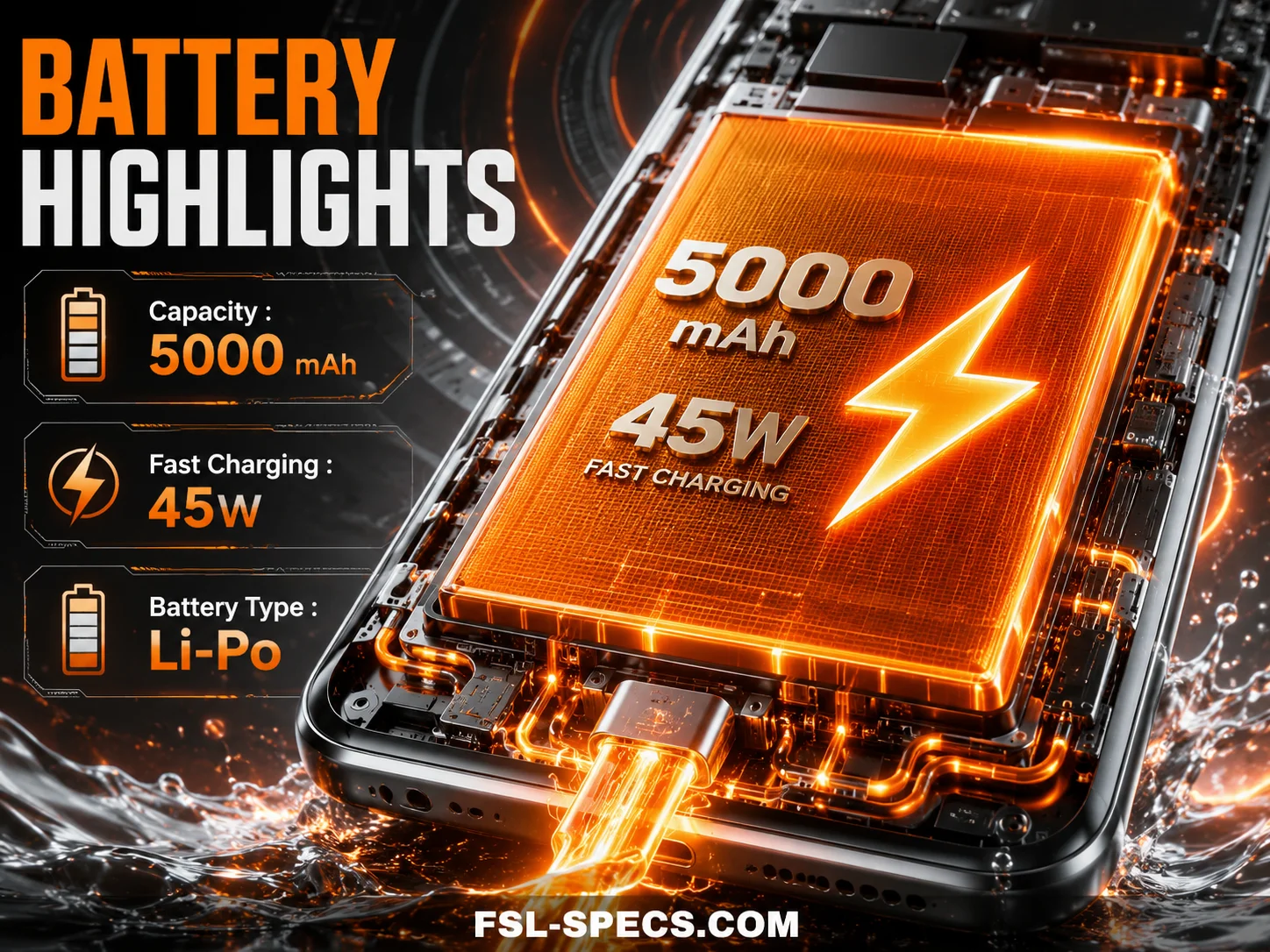
Capacity
5000 mAh
Fast Charging
45 W
Wireless Charging
No
Battery Type
Li-Polymer
Reverse
Reverse Wired
Yes
Reverse Wireless
No
Other
Battery PC Marks
-
Charging Time
~60-70 m (0% To 100%)
Other Specs
Audio & Sensors
Speaker
Dual Stereo Speaker
Fingerprint Sensor
Front Finger
Other Sensors
Accelerometer
Gyroscope
Proximity
Compass
etc.
Special Features

Asahi Glass AGC DT-Star2 protection
IP64 dust/splash resistance
Stereo speakers with Dolby Atmos + Hi-Res Audio
TÜV Rheinland Eye Comfort Certification (Kimovil)
DCI-P3, Full sRGB standard (Kimovil)
Infrared port (remote control)
Reverse wired charging

BASIC INFO
Mobile
Oppo Reno 12F
Model
CPH2637
Series
Oppo Reno Series
Category
Budget
Release Date
1 July,2024
Year
2024
CONNECTIVITY
Sim
Dual Nano-SIM
Network
4G / 4G+ / 5G
WiFi
Wi-Fi 5
Bluetooth
5.3
NFC
Yes
OS
Android 14 > 15
BODY
Dimensions
163.1 x 75.8 x 7.8 mm
Build
Plastic
Weight
187 g
Screen Size
6.67 inch
Resolution
1080 x 2400 Pixels
Type
Amoled
Refresh Rate
120 Hz
Peak Brightness
2100
HBM Brightness
1200 nits
Processor
Dimensity 6300
Max Clock
2.4 GHz
Lithography
6 nm
GPU
Mali-G57 MC2
CPU Cores
8 Cores
Antutu v11
-
Antutu v10
410 K
Bootup Time
-
Architecture
2 x 2.4 GHz Cortex-A76
6 x 2.0 GHz Cortex-A55
Ram Memory
8 + 256 GB
SD Card
Yes
Ram Type
LPDDR4X
Storage Type
UFS 2.2
Variants
8 + 128/256 GB
12 + 256/512 GB
MP
Rear Camera
50 + 8 + 2 MP
Front Camera
32 MP
SENSORS
Front Camera Sensors
–
RECORDING FPS
Main Recording
1080p @ 30/60 fps
Front Recording
1080p @ 30 fps
RESOLUTION
Main Resolution
8150 x 6150 pixels
Front Resolution
6532 × 4899 Pixels
ZOOM
Optical Zoom
-
Digital Zoom
-
FLASH
Flash
Yes
Capacity
5000 mAh
Fast Charging
45 W
Wireless Charging
No
Battery Type
Li-Polymer
REVERSE
Reverse Wired
Yes
Reverse Wireless
No
OTHER
Battery Life PCMark
-
Charging Time
~60-70 m (0% To 100%)
AUDIO & SENSORS
Speaker
Dual Stereo Speaker
Fingerprint Sensor
Front Finger
Other Sensors
Accelerometer Gyroscope Proximity Compass etc.
Special Features

Asahi Glass AGC DT-Star2 protection IP64 dust/splash resistance Stereo speakers with Dolby Atmos + Hi-Res Audio TÜV Rheinland Eye Comfort Certification (Kimovil) DCI-P3, Full sRGB standard (Kimovil) Infrared port (remote control) Reverse wired charging

Verify Mobile Specifications

Official information & trusted references

Official Manufacturer WebsiteExplore the original product information (opens in a new tab)

Trusted Specification Sources

Cross-reference · 5 sources

Links open third-party websites. The Purple ticks are a design marker only; they do not mean a source has verified these specifications or endorses FSL-Specs.

Last Time Update : 22 October, 2026

Highlights & Review Of Oppo Reno 12F

Display Highlights

Display Highlights

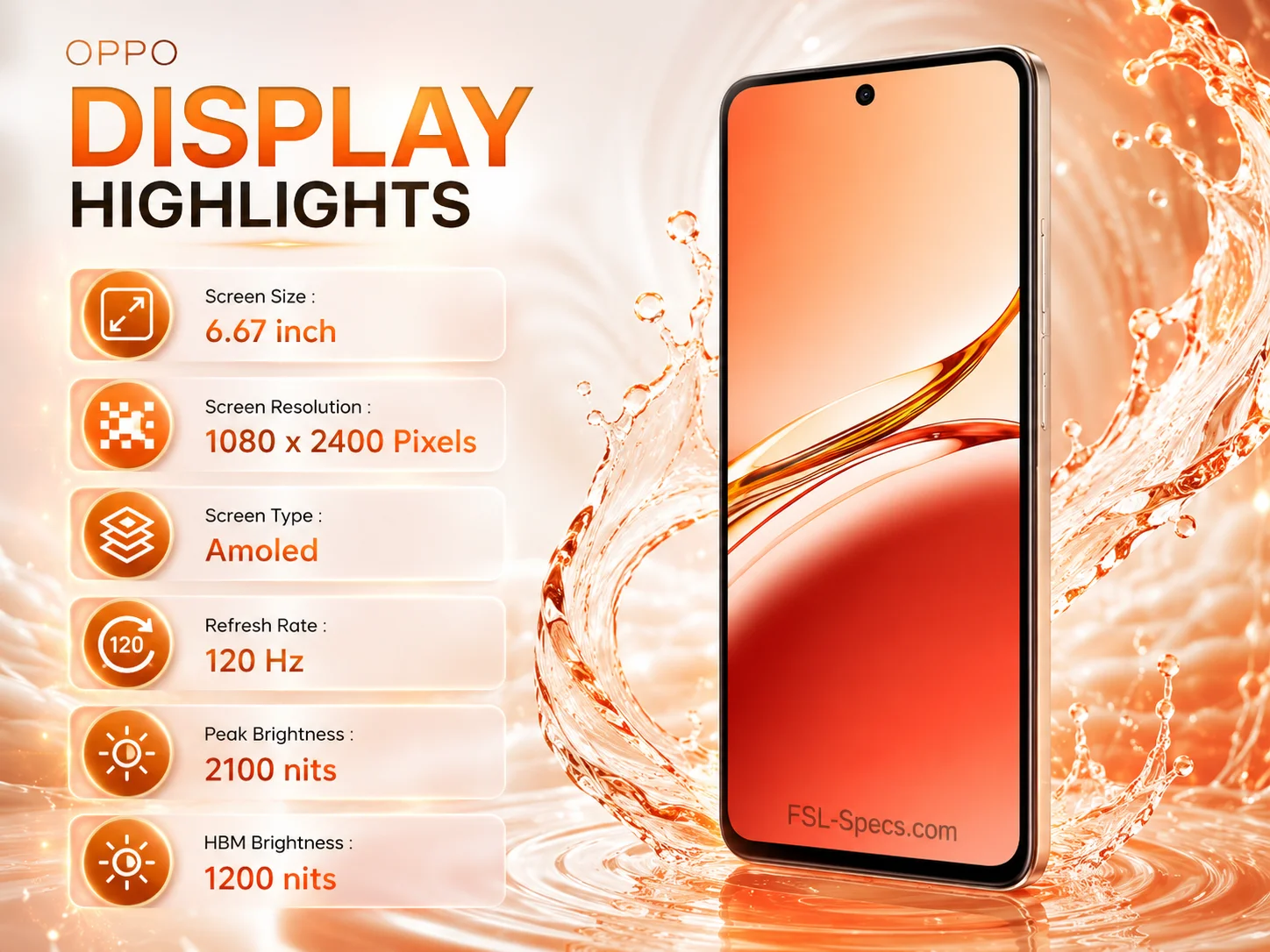
The OPPO Reno 12F 5G features a 6.67-inch flat OLED display with 1080 × 2400 resolution, a 120Hz refresh rate, and 394 PPI. At PKR 68,000, its display delivers the essential AMOLED advantages, but the competition becomes significantly stronger at almost the same price. OPPO rates the screen at 600 nits typical brightness, 1200 nits under direct sunlight, and 2100 nits local peak brightness, giving it good outdoor visibility while retaining a high peak-brightness figure.

The Tecno Spark 40 Pro Plus, priced at PKR 70,000, is the strongest display upgrade. It has a larger 6.78-inch 3D curved AMOLED panel with 1224 × 2720 1.5K resolution and a faster 144Hz refresh rate. Its 1600-nit HBM brightness is substantially higher than the oppo Reno 12F’s 1200 nits direct-sunlight rating, while its 4500-nit peak brightness is also much higher than OPPO’s 2100 nits. Tecno notes that its 1.5K output is achieved through upscaling, with native GPU output at 1080p.

The Redmi Note 15, at PKR 65,000, uses a 6.77-inch AMOLED panel with 2392 × 1080 resolution and 120Hz refresh rate. Its 3200-nit peak brightness beats oppo Reno 12f’s 2100 nits by about 52%, although Xiaomi lists only 800 nits typical brightness, so peak figures should not be treated as sustained outdoor brightness.

The Redmi Note 14, at PKR 66,000, offers a 6.67-inch AMOLED, 2400 × 1080 resolution, 120Hz, and 1800-nit peak brightness, plus 1200 nits HBM.

Verdict: The Oppo Reno 12F 5G has a good OLED display, but the Tecno Spark 40 Pro Plus wins the display comparison, while the Redmi Note 15 offers the best lower-priced alternative for brightness.

Performance Highlights

Performance Highlights

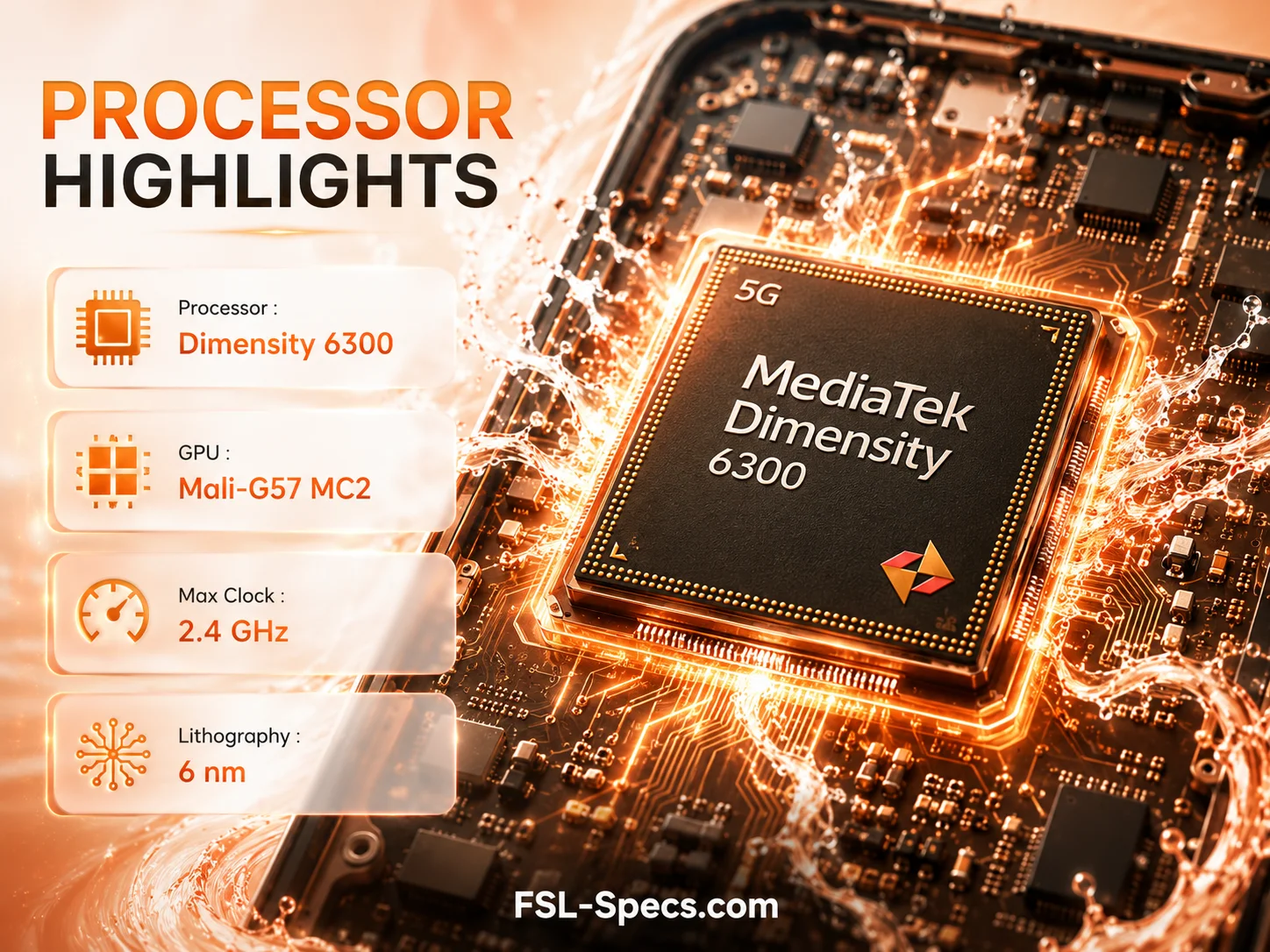
The OPPO Reno12 F 5G is powered by the MediaTek Dimensity 6300, built on a 6nm process with 2 × Cortex-A76 cores at 2.4GHz and 6 × Cortex-A55 cores at 2.0GHz, paired with the Mali-G57 MC2 GPU. OPPO officially confirms the Dimensity 6300 and Mali-G57 MC2 configuration.

For a fair comparison, using AnTuTu v11 figures, the Reno12 F 5G sits around the 590K performance level. The Tecno Spark 40 Pro Plus, priced at PKR 70,000, uses the newer Helio G200 and scores 616,665, making it approximately 4.5% faster than the Reno12 F. The difference is relatively small in overall AnTuTu performance, but the G200 has a faster 1.1GHz Mali-G57 MP2 GPU, compared with the Dimensity 6300’s Mali-G57 MC2, giving Tecno a modest advantage in graphics-heavy workloads.

The Redmi Note 15, available for PKR 65,000, uses the MediaTek Helio G100-Ultra. Its AnTuTu v11 result is around 581,234, which is approximately 1.5% lower than the Reno12 F’s estimated 590K score. This means the two are extremely close for everyday apps, social media, browsing and normal multitasking. NanoReview confirms the Redmi Note 15 4G uses the Helio G100-Ultra.

The Redmi Note 14, at PKR 66,000, uses the Helio G99-Ultra and scores around 571,570 in AnTuTu v11, approximately 3.1% behind the oppo Reno 12F. The Reno therefore has a small benchmark advantage, while the Redmi’s lower price makes that gap less significant from a value perspective.

Verdict: The Tecno Spark 40 Pro Plus is the performance winner, but only by about 4.5% over the oppo Reno 12F, while the Redmi Note 15 and Redmi Note 14 remain very close to OPPO in raw performance.

Memory & Storage Highlights

Memory & Storage Highlights

The OPPO Reno 12F 5G comes with 8GB RAM and 256GB storage, giving it a strong baseline for this price category. Its 8GB RAM is sufficient for normal multitasking, social media, browsing and switching between several everyday applications, while 256GB storage provides considerably more room for photos, videos and apps than a 128GB configuration. The Reno12 F 5G uses LPDDR4X RAM and UFS 2.2 storage, a combination aimed at balancing performance and cost.

The Tecno Spark 40 Pro Plus, priced at PKR 70,000, also provides 8GB RAM and 256GB storage, so there is no capacity advantage over the OPPO. However, its memory configuration uses LPDDR4X RAM with UFS 2.2 storage, making the two phones closely matched in basic memory hardware. At only PKR 2,000 more, Tecno therefore offers essentially the same RAM and storage capacity rather than a meaningful memory upgrade.

The Redmi Note 15, priced at PKR 65,000, also offers 8GB RAM and 256GB storage. Its LPDDR4X RAM and UFS 2.2 storage keep it broadly comparable with the Reno12 F, but Redmi costs PKR 3,000 less. For buyers focused purely on capacity, there is little reason to pay extra for OPPO.

The Redmi Note 14 follows the same 8GB + 256GB configuration, with LPDDR4X RAM and UFS 2.2 storage, while costing PKR 66,000. This makes all four phones remarkably close in memory capacity and technology.

Verdict: The OPPO Reno 12F 5G does not have a RAM or storage-capacity advantage, as all four phones offer 8GB + 256GB with similar memory technology. The Redmi Note 15 is the strongest value choice here because it provides the same configuration for PKR 3,000 less.

Camera Highlights

Camera Highlights

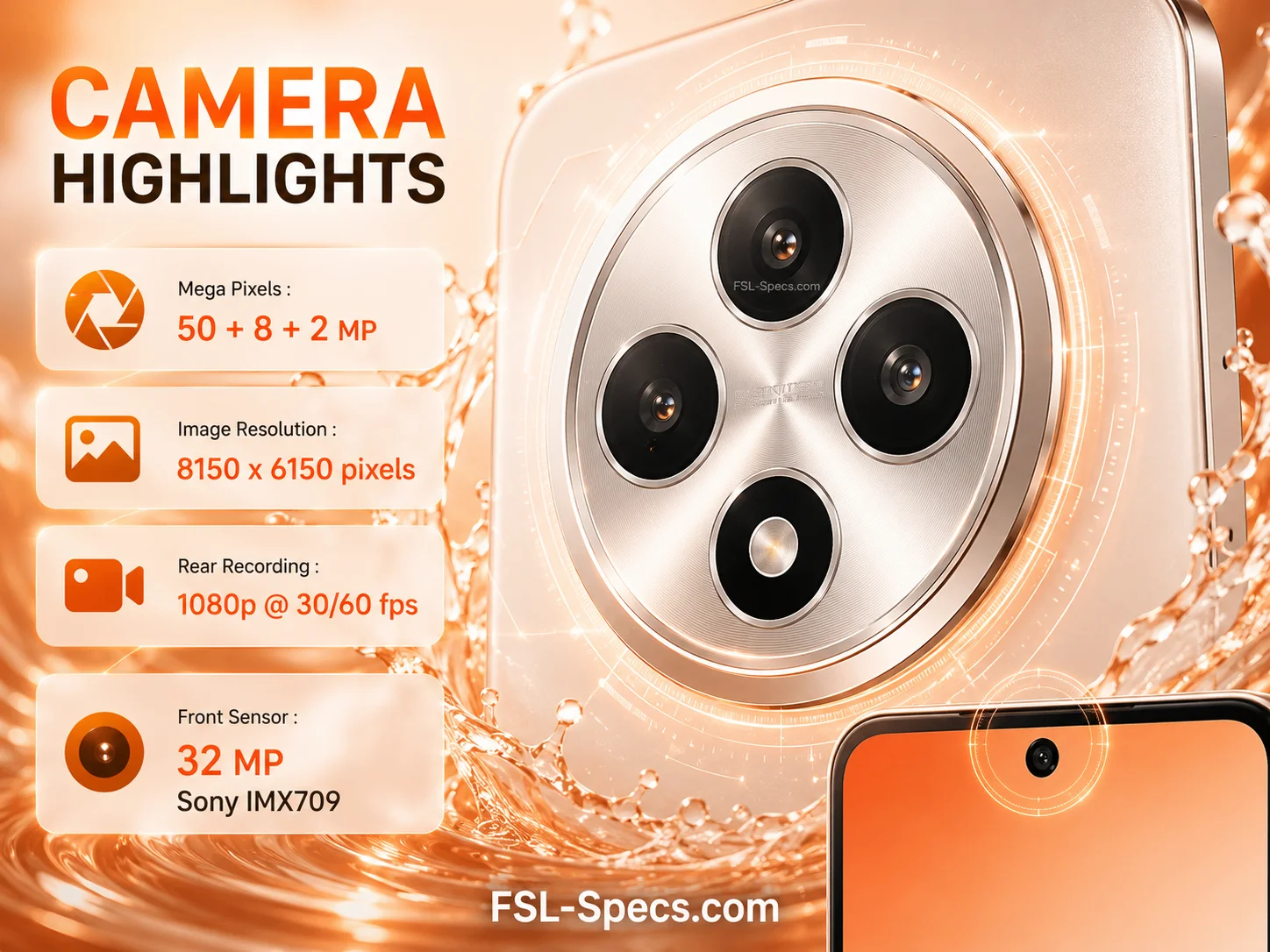
The OPPO Reno 12F 5G has the most versatile camera setup of these four phones, with a 50MP main camera, 8MP ultra-wide, and 2MP macro, plus a 32MP selfie camera. The main camera uses an f/1.8 aperture, autofocus and a 5P lens, while the ultra-wide provides a 112° field of view. OPPO’s official specifications do not disclose the exact manufacturer/model of the main image sensor, so it would be inaccurate to label it as a Sony or Samsung sensor without stronger verification.

The Tecno Spark 40 Pro Plus, priced at PKR 70,000, also has a 50MP main camera, but it uses a Hynix HI5022Q sensor according to independent testing. The sensor is 1/2.8-inch, with an f/1.6 lens and PDAF, but there is no OIS. Tecno officially confirms the 50MP rear camera and 13MP front camera, although it does not publish the sensor model. Compared with OPPO, the Reno12 F has the more useful overall setup because its 8MP ultra-wide camera adds a shooting option that the Spark 40 Pro Plus lacks.

The Redmi Note 15, at PKR 65,000, uses a 100MP Samsung S5KHM9 main sensor with a 1/1.67-inch sensor size and f/1.7 aperture. It also has a 20MP OmniVision OV20B40 selfie sensor. Xiaomi officially confirms these sensor models. This gives Redmi a larger main sensor than the Spark 40 Pro Plus and a higher-resolution main camera than OPPO, although megapixel count alone does not determine image quality.

The Redmi Note 14 uses a 108MP Samsung ISOCELL HM6, 1/1.67-inch sensor with an f/1.7 aperture, while its front camera is 20MP. It lacks OIS and does not have an ultra-wide camera.

Verdict: For overall camera versatility, OPPO Reno 12F 5G wins because of its 50MP + 8MP ultra-wide + 2MP macro system and 32MP selfie camera. For the best-known main sensor hardware, the Redmi Note 15’s Samsung S5KHM9 and Redmi Note 14’s Samsung HM6 are stronger on paper, while the Spark 40 Pro Plus’s Hynix HI5022Q is the weakest main sensor here due to its smaller 1/2.8-inch size and lack of OIS.

Battery & Charging Highlights

Battery & Charging Highlights

The OPPO Reno12 F 5G packs a 5,000mAh battery with 45W SUPERVOOC fast charging. OPPO rates its battery at 5,000mAh typical capacity, and its own testing claims a full 1-100% charge in around 71 minutes. At PKR 68,000, this gives the Reno12 F a good balance between battery capacity and charging speed, although it is not the largest battery in this comparison.

The Tecno Spark 40 Pro Plus, priced at PKR 70,000, increases capacity to 5,200mAh, about 4% more than the Reno12 F, while retaining 45W wired charging. More importantly, Tecno adds 30W wireless charging and 5W reverse wireless charging, features the OPPO does not officially list. Tecno also states that the Spark 40 Pro Plus can reach 100% in around 55 minutes, making it faster to fully recharge despite having the larger battery.

The Redmi Note 15, at PKR 65,000, has the largest battery here at 6,000mAh, which is 20% larger than the Reno12 F’s 5,000mAh cell. However, its 33W charging is slower than OPPO’s 45W, and Xiaomi quotes approximately 70 minutes for a full charge. It also supports 18W wired reverse charging, giving it useful power-sharing capability.

The Redmi Note 14 offers a 5,500mAh battery, 10% larger than OPPO’s, but its 33W charging is slower. Xiaomi reports around 40 minutes to 55% and 77 minutes to 100%, making it the slowest full-charge option among these phones.

Verdict: The Redmi Note 15 wins for battery endurance with its 6,000mAh capacity, while the Tecno Spark 40 Pro Plus is the best overall charging package with 45W wired + 30W wireless charging.

Final Verdict

The OPPO Reno12 F 5G is a well-balanced phone at PKR 68,000, particularly for buyers who value camera versatility, 5G connectivity and OPPO’s overall experience. Its 50MP + 8MP ultra-wide + 2MP macro camera system is more versatile than the Redmi alternatives, while its 5,000mAh battery and 45W charging provide a solid everyday combination. OPPO also offers 8GB + 256GB UFS 2.2 storage, with microSD support.

However, the Reno12 F 5G does not dominate this comparison. The Tecno Spark 40 Pro Plus is the strongest display and charging competitor, while the Redmi Note 15 offers a larger 6,000mAh battery at a lower PKR 65,000 price. The Redmi Note 14 is another strong value option, particularly for buyers who want a large battery and 108MP main camera at a lower price.

Bottom line: The OPPO Reno12 F 5G is the best choice for buyers who want a balanced package with a versatile camera system and 5G, but the Tecno Spark 40 Pro Plus is the stronger overall hardware package, while the Redmi Note 15 delivers the best battery/value combination.

Purpose / Best For:

OPPO Reno12 F 5G: Best for camera versatility, 5G connectivity, balanced everyday use and buyers who prefer OPPO’s software experience.

Tecno Spark 40 Pro Plus: Best for display enthusiasts, fast charging and users who want the strongest overall hardware package.

Redmi Note 15: Best for battery-focused users and buyers looking for maximum value at a lower price.

Redmi Note 14: Best for buyers who want a large battery, high-resolution main camera and a lower-cost alternative.

Overall Ranking:

RankPhoneBest Purpose
🥇 1Tecno Spark 40 Pro PlusBest overall hardware
🥈 2OPPO Reno12 F 5GBest balanced camera + 5G package
🥉 3Redmi Note 15Best battery/value
4Redmi Note 14Best budget alternative

Overall winner: Tecno Spark 40 Pro Plus.
Best camera versatility: OPPO Reno12 F 5G.
Best battery/value: Redmi Note 15.

Display Highlights

Display Highlights

The OPPO Reno 12F 5G features a 6.67-inch flat OLED display with 1080 × 2400 resolution, a 120Hz refresh rate, and 394 PPI. At PKR 68,000, its display delivers the essential AMOLED advantages, but the competition becomes significantly stronger at almost the same price. OPPO rates the screen at 600 nits typical brightness, 1200 nits under direct sunlight, and 2100 nits local peak brightness, giving it good outdoor visibility while retaining a high peak-brightness figure.

The Tecno Spark 40 Pro Plus, priced at PKR 70,000, is the strongest display upgrade. It has a larger 6.78-inch 3D curved AMOLED panel with 1224 × 2720 1.5K resolution and a faster 144Hz refresh rate. Its 1600-nit HBM brightness is substantially higher than the oppo Reno 12F’s 1200 nits direct-sunlight rating, while its 4500-nit peak brightness is also much higher than OPPO’s 2100 nits. Tecno notes that its 1.5K output is achieved through upscaling, with native GPU output at 1080p.

The Redmi Note 15, at PKR 65,000, uses a 6.77-inch AMOLED panel with 2392 × 1080 resolution and 120Hz refresh rate. Its 3200-nit peak brightness beats oppo Reno 12f’s 2100 nits by about 52%, although Xiaomi lists only 800 nits typical brightness, so peak figures should not be treated as sustained outdoor brightness.

The Redmi Note 14, at PKR 66,000, offers a 6.67-inch AMOLED, 2400 × 1080 resolution, 120Hz, and 1800-nit peak brightness, plus 1200 nits HBM.

Verdict: The Oppo Reno 12F 5G has a good OLED display, but the Tecno Spark 40 Pro Plus wins the display comparison, while the Redmi Note 15 offers the best lower-priced alternative for brightness.
Performance Highlights

Performance Highlights

The OPPO Reno12 F 5G is powered by the MediaTek Dimensity 6300, built on a 6nm process with 2 × Cortex-A76 cores at 2.4GHz and 6 × Cortex-A55 cores at 2.0GHz, paired with the Mali-G57 MC2 GPU. OPPO officially confirms the Dimensity 6300 and Mali-G57 MC2 configuration.

For a fair comparison, using AnTuTu v11 figures, the Reno12 F 5G sits around the 590K performance level. The Tecno Spark 40 Pro Plus, priced at PKR 70,000, uses the newer Helio G200 and scores 616,665, making it approximately 4.5% faster than the Reno12 F. The difference is relatively small in overall AnTuTu performance, but the G200 has a faster 1.1GHz Mali-G57 MP2 GPU, compared with the Dimensity 6300’s Mali-G57 MC2, giving Tecno a modest advantage in graphics-heavy workloads.

The Redmi Note 15, available for PKR 65,000, uses the MediaTek Helio G100-Ultra. Its AnTuTu v11 result is around 581,234, which is approximately 1.5% lower than the Reno12 F’s estimated 590K score. This means the two are extremely close for everyday apps, social media, browsing and normal multitasking. NanoReview confirms the Redmi Note 15 4G uses the Helio G100-Ultra.

The Redmi Note 14, at PKR 66,000, uses the Helio G99-Ultra and scores around 571,570 in AnTuTu v11, approximately 3.1% behind the oppo Reno 12F. The Reno therefore has a small benchmark advantage, while the Redmi’s lower price makes that gap less significant from a value perspective.

Verdict: The Tecno Spark 40 Pro Plus is the performance winner, but only by about 4.5% over the oppo Reno 12F, while the Redmi Note 15 and Redmi Note 14 remain very close to OPPO in raw performance.

Memory & Storage Highlights

Memory & Storage Highlights

The OPPO Reno 12F 5G comes with 8GB RAM and 256GB storage, giving it a strong baseline for this price category. Its 8GB RAM is sufficient for normal multitasking, social media, browsing and switching between several everyday applications, while 256GB storage provides considerably more room for photos, videos and apps than a 128GB configuration. The Reno12 F 5G uses LPDDR4X RAM and UFS 2.2 storage, a combination aimed at balancing performance and cost.

The Tecno Spark 40 Pro Plus, priced at PKR 70,000, also provides 8GB RAM and 256GB storage, so there is no capacity advantage over the OPPO. However, its memory configuration uses LPDDR4X RAM with UFS 2.2 storage, making the two phones closely matched in basic memory hardware. At only PKR 2,000 more, Tecno therefore offers essentially the same RAM and storage capacity rather than a meaningful memory upgrade.

The Redmi Note 15, priced at PKR 65,000, also offers 8GB RAM and 256GB storage. Its LPDDR4X RAM and UFS 2.2 storage keep it broadly comparable with the Reno12 F, but Redmi costs PKR 3,000 less. For buyers focused purely on capacity, there is little reason to pay extra for OPPO.

The Redmi Note 14 follows the same 8GB + 256GB configuration, with LPDDR4X RAM and UFS 2.2 storage, while costing PKR 66,000. This makes all four phones remarkably close in memory capacity and technology.

Verdict: The OPPO Reno 12F 5G does not have a RAM or storage-capacity advantage, as all four phones offer 8GB + 256GB with similar memory technology. The Redmi Note 15 is the strongest value choice here because it provides the same configuration for PKR 3,000 less.

Camera Highlights

Camera Highlights

The OPPO Reno 12F 5G has the most versatile camera setup of these four phones, with a 50MP main camera, 8MP ultra-wide, and 2MP macro, plus a 32MP selfie camera. The main camera uses an f/1.8 aperture, autofocus and a 5P lens, while the ultra-wide provides a 112° field of view. OPPO’s official specifications do not disclose the exact manufacturer/model of the main image sensor, so it would be inaccurate to label it as a Sony or Samsung sensor without stronger verification.

The Tecno Spark 40 Pro Plus, priced at PKR 70,000, also has a 50MP main camera, but it uses a Hynix HI5022Q sensor according to independent testing. The sensor is 1/2.8-inch, with an f/1.6 lens and PDAF, but there is no OIS. Tecno officially confirms the 50MP rear camera and 13MP front camera, although it does not publish the sensor model. Compared with OPPO, the Reno12 F has the more useful overall setup because its 8MP ultra-wide camera adds a shooting option that the Spark 40 Pro Plus lacks.

The Redmi Note 15, at PKR 65,000, uses a 100MP Samsung S5KHM9 main sensor with a 1/1.67-inch sensor size and f/1.7 aperture. It also has a 20MP OmniVision OV20B40 selfie sensor. Xiaomi officially confirms these sensor models. This gives Redmi a larger main sensor than the Spark 40 Pro Plus and a higher-resolution main camera than OPPO, although megapixel count alone does not determine image quality.

The Redmi Note 14 uses a 108MP Samsung ISOCELL HM6, 1/1.67-inch sensor with an f/1.7 aperture, while its front camera is 20MP. It lacks OIS and does not have an ultra-wide camera.

Verdict: For overall camera versatility, OPPO Reno 12F 5G wins because of its 50MP + 8MP ultra-wide + 2MP macro system and 32MP selfie camera. For the best-known main sensor hardware, the Redmi Note 15’s Samsung S5KHM9 and Redmi Note 14’s Samsung HM6 are stronger on paper, while the Spark 40 Pro Plus’s Hynix HI5022Q is the weakest main sensor here due to its smaller 1/2.8-inch size and lack of OIS.

Battery & Charging Highlights

Battery & Charging Highlights

The OPPO Reno12 F 5G packs a 5,000mAh battery with 45W SUPERVOOC fast charging. OPPO rates its battery at 5,000mAh typical capacity, and its own testing claims a full 1-100% charge in around 71 minutes. At PKR 68,000, this gives the Reno12 F a good balance between battery capacity and charging speed, although it is not the largest battery in this comparison.

The Tecno Spark 40 Pro Plus, priced at PKR 70,000, increases capacity to 5,200mAh, about 4% more than the Reno12 F, while retaining 45W wired charging. More importantly, Tecno adds 30W wireless charging and 5W reverse wireless charging, features the OPPO does not officially list. Tecno also states that the Spark 40 Pro Plus can reach 100% in around 55 minutes, making it faster to fully recharge despite having the larger battery.

The Redmi Note 15, at PKR 65,000, has the largest battery here at 6,000mAh, which is 20% larger than the Reno12 F’s 5,000mAh cell. However, its 33W charging is slower than OPPO’s 45W, and Xiaomi quotes approximately 70 minutes for a full charge. It also supports 18W wired reverse charging, giving it useful power-sharing capability.

The Redmi Note 14 offers a 5,500mAh battery, 10% larger than OPPO’s, but its 33W charging is slower. Xiaomi reports around 40 minutes to 55% and 77 minutes to 100%, making it the slowest full-charge option among these phones.

Verdict: The Redmi Note 15 wins for battery endurance with its 6,000mAh capacity, while the Tecno Spark 40 Pro Plus is the best overall charging package with 45W wired + 30W wireless charging.

Final Verdict

The OPPO Reno12 F 5G is a well-balanced phone at PKR 68,000, particularly for buyers who value camera versatility, 5G connectivity and OPPO’s overall experience. Its 50MP + 8MP ultra-wide + 2MP macro camera system is more versatile than the Redmi alternatives, while its 5,000mAh battery and 45W charging provide a solid everyday combination. OPPO also offers 8GB + 256GB UFS 2.2 storage, with microSD support.

However, the Reno12 F 5G does not dominate this comparison. The Tecno Spark 40 Pro Plus is the strongest display and charging competitor, while the Redmi Note 15 offers a larger 6,000mAh battery at a lower PKR 65,000 price. The Redmi Note 14 is another strong value option, particularly for buyers who want a large battery and 108MP main camera at a lower price.

Bottom line: The OPPO Reno12 F 5G is the best choice for buyers who want a balanced package with a versatile camera system and 5G, but the Tecno Spark 40 Pro Plus is the stronger overall hardware package, while the Redmi Note 15 delivers the best battery/value combination.

Purpose / Best For:

OPPO Reno12 F 5G: Best for camera versatility, 5G connectivity, balanced everyday use and buyers who prefer OPPO’s software experience.

Tecno Spark 40 Pro Plus: Best for display enthusiasts, fast charging and users who want the strongest overall hardware package.

Redmi Note 15: Best for battery-focused users and buyers looking for maximum value at a lower price.

Redmi Note 14: Best for buyers who want a large battery, high-resolution main camera and a lower-cost alternative.

Overall Ranking:

RankPhoneBest Purpose
🥇 1Tecno Spark 40 Pro PlusBest overall hardware
🥈 2OPPO Reno12 F 5GBest balanced camera + 5G package
🥉 3Redmi Note 15Best battery/value
4Redmi Note 14Best budget alternative

Overall winner: Tecno Spark 40 Pro Plus.
Best camera versatility: OPPO Reno12 F 5G.
Best battery/value: Redmi Note 15.

Pros and Cons

Pros

  • 50MP Main Camera 📸
  • 45W Fast Charging ⚡
  • 5000mAh Battery 🔋
  • 8MP Ultra-Wide 📷

Cons

  • No OIS 📸
  • No 4K Video 🎥
  • 600-Nit Typical Brightness ☀️

Who Is It Best For?

Best For

  • Camera Versatility 📸
  • Everyday Performance ⚙️
  • Fast Charging ⚡
  • 5G Connectivity 📶
  • Large Storage 💾

Not Best For

  • Heavy Gaming 🎮
  • Ultra-Bright Displays ☀️
Video Reviews & Tests
// hands-on videos for this phone

Official Trailer

Launch Teaser
Official Trailer

Unboxing

What's In The Box
Unboxing

Disassembly / Teardown

Inside Look
Disassembly / Teardown

PUBG Gaming Test

FPS & Heat Test
PUBG Gaming Test

Camera Test

Photo & Video Samples
Camera Test
Picture of Faisal Ur Rehman

Faisal Ur Rehman

Faisal Rehman is the founder and editor of FSL Specs, where he publishes in-depth smartphone specifications, comparisons, buying guides, and technology insights. With extensive experience in mobile hardware research and technical analysis, he provides accurate and up-to-date information on Android smartphones, processors, displays, cameras, batteries, performance benchmarks, and software features. His goal is to simplify complex specifications and help readers choose the right device with confidence.

OPPO Series Row

FAQs Questions

The OPPO Reno 12F 5G features a 6.67-inch AMOLED (OLED) display with FHD+ (1080 × 2400) resolution and a 120Hz refresh rate. It reaches 2100 nits peak brightness and 1200 nits in direct sunlight, making the screen clear and comfortable indoors and outdoors.

Yes. It is powered by the MediaTek Dimensity 6300 processor with a Mali-G57 MC2 GPU, offering smooth performance for daily tasks, multitasking, and popular games at balanced graphics settings.

The phone includes a 50MP + 8MP + 2MP rear camera system and a 32MP selfie camera. It captures detailed daylight photos, natural-looking portraits, and reliable selfies, making it a good choice for everyday photography and social media content.

The 5000mAh battery easily lasts through a full day of normal use, including streaming, browsing, and photography. When it's time to recharge, the 45W SUPERVOOC fast charging helps get you back up and running quickly

Yes, it supports 5G, NFC, Wi-Fi 5, and reverse wired charging for added convenience. eSIM support is not listed in the official specifications.

The phone has an IP64 rating, which helps protect it against dust and water splashes during everyday use. It also features AGC DT-Star2 glass for improved screen durability against daily scratches.

The OPPO Reno 12F 5G is available with 8GB or 12GB LPDDR4X RAM and 256GB or 512GB UFS 2.2 storage. It also supports microSD cards, making it easier to expand storage for photos, videos, and apps.

No. The official specifications list 1080p video recording for the rear camera, with support for smooth everyday recording, but 4K and 8K recording are not supported.

8 + 256 GB
 | ~₹23,000 | ~$240 | ~ 67,000 PKR

Scroll to Top