
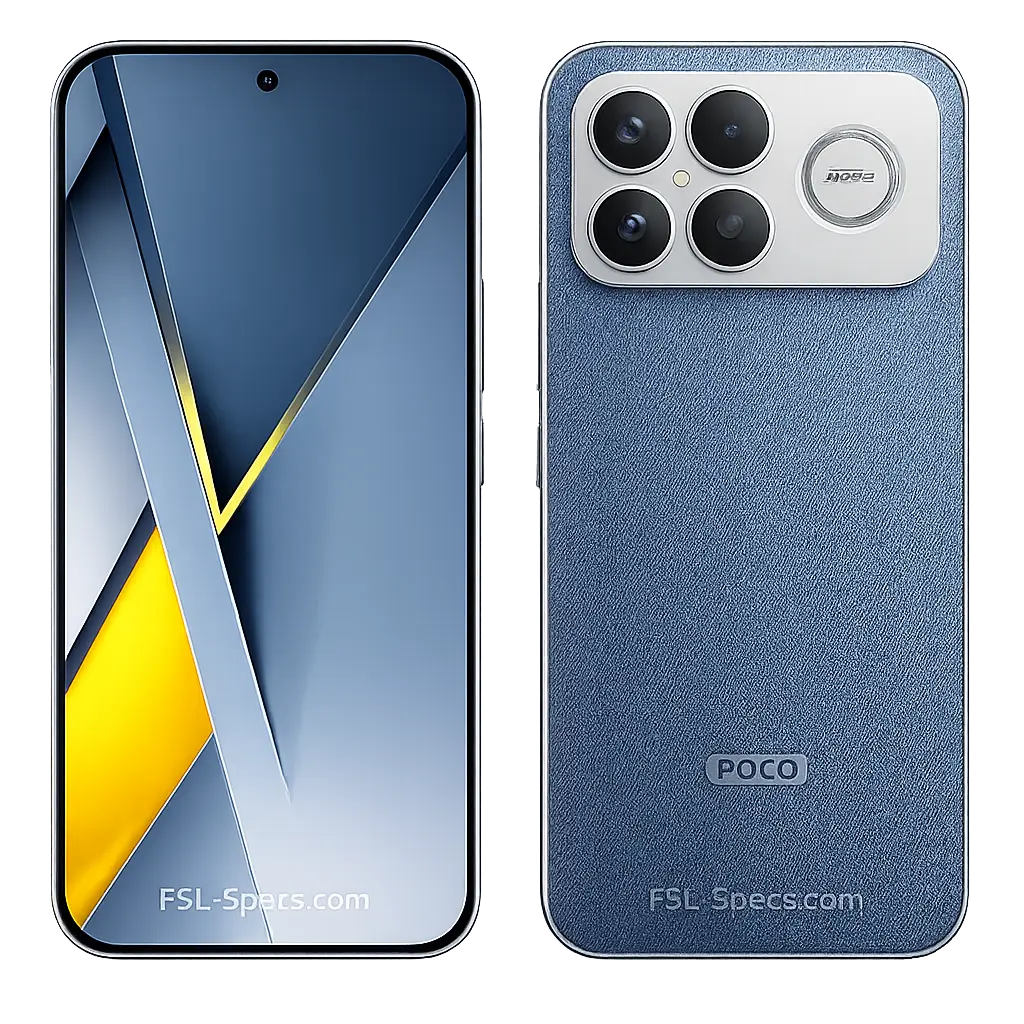


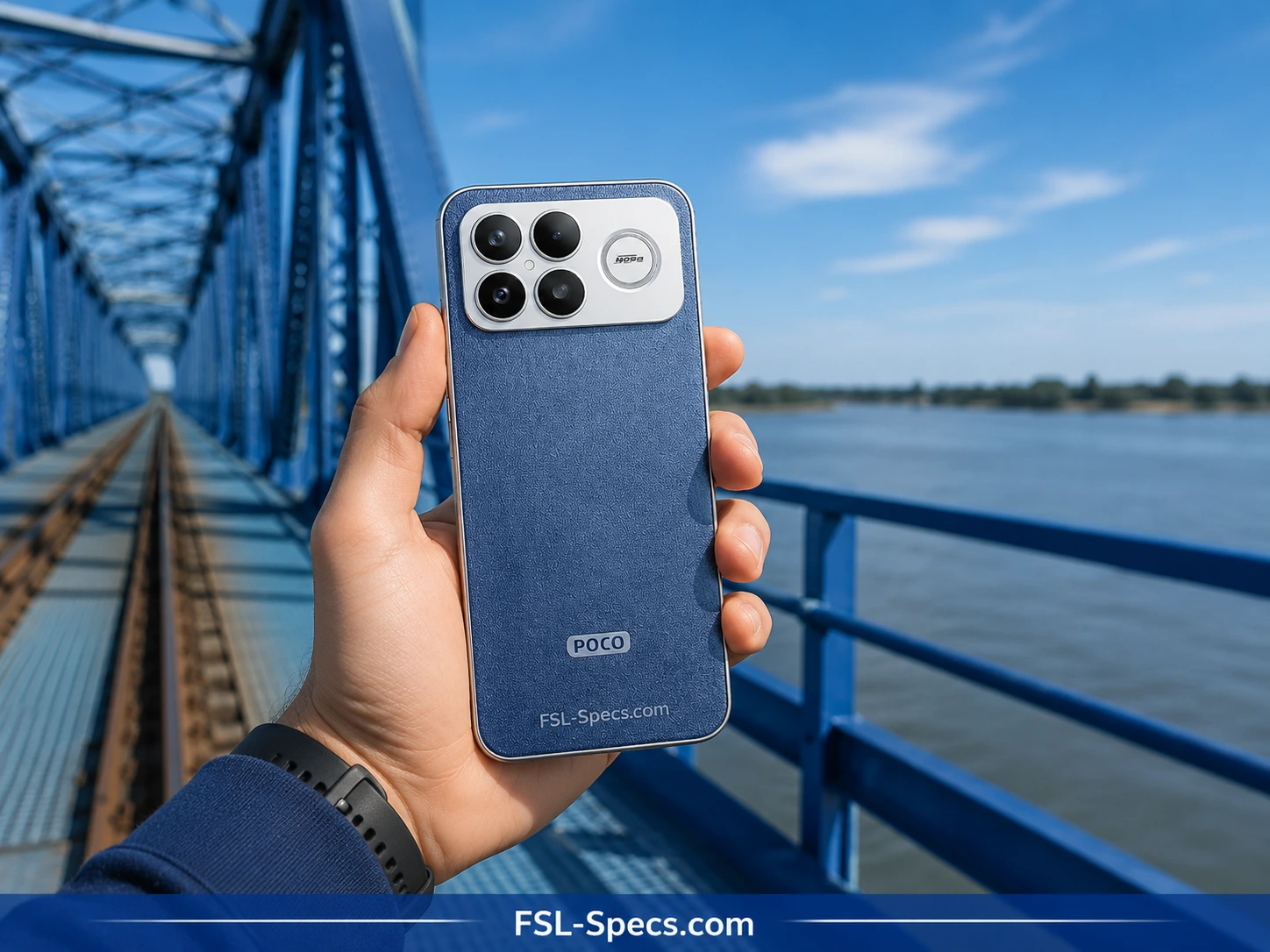









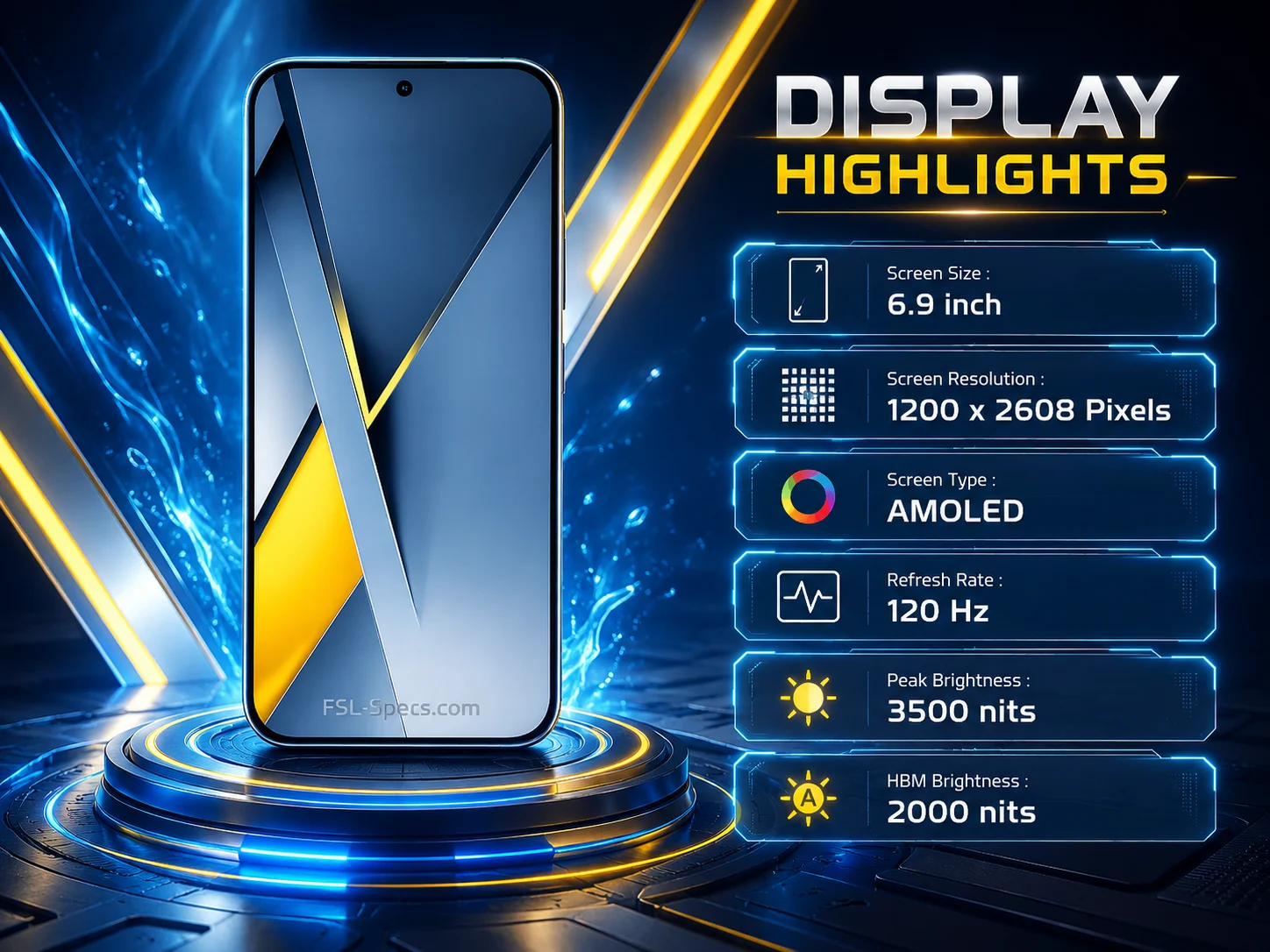
The POCO F8 Ultra 16GB/512GB has a 6.9-inch HyperRGB AMOLED display with 2608 × 1200 resolution, a 120Hz refresh rate, 12-bit colour, and claimed brightness of 2,000 nits HBM and 3,500 nits peak. It offers a larger viewing area than the POCO F7 Ultra, but the F7 Ultra’s 6.67-inch, 3200 × 1440 panel is sharper at 526 ppi, compared with 416 ppi on the F8 Ultra.
The F8 Ultra’s HyperRGB panel uses a full RGB subpixel structure, which POCO presents as a display-efficiency improvement. Its lower resolution does not necessarily mean poor everyday clarity, but fine text and small details should look crisper on the F7 Ultra’s higher-density screen. Both POCOs support 120Hz refresh rates and HDR formats, including Dolby Vision and HDR10+.
The Xiaomi 17T Pro 12GB/512GB raises the refresh-rate ceiling to 144Hz on a 6.83-inch, 2772 × 1280 AMOLED screen, rated at 447 ppi. Xiaomi lists 3,500-nit peak brightness; GSMArena measured more than 1,000 nits over a large white area in auto mode, and nearly 3,500 nits on a smaller highlight, illustrating why peak and sustained brightness figures should not be treated as equivalent.
The nubia RedMagic 11 Pro 16GB/512GB is the gaming-focused option, with a 6.85-inch, 2688 × 1216 AMOLED display, 144Hz refresh rate, and 431 ppi. GSMArena measured up to 1,569 nits across a 75% white area and 1,946 nits on a smaller 10% patch. Its 144Hz ceiling can deliver smoother motion in compatible games and interfaces, while the F8 Ultra prioritizes a larger screen and its distinctive full-RGB pixel layout.
For the supplied Pakistan retailer prices, the F8 Ultra is PKR 270,000–290,000, the F7 Ultra PKR 250,000, the Xiaomi 17T Pro PKR 270,000, and the RedMagic 11 Pro PKR 315,000. Those are the prices in your brief; independent Pakistani listings can differ by warranty and seller.
Verdict: The POCO F8 Ultra gives you the biggest display, but the POCO F7 Ultra is sharper, while the Xiaomi 17T Pro and RedMagic 11 Pro add 144Hz refresh rates for smoother supported content.