




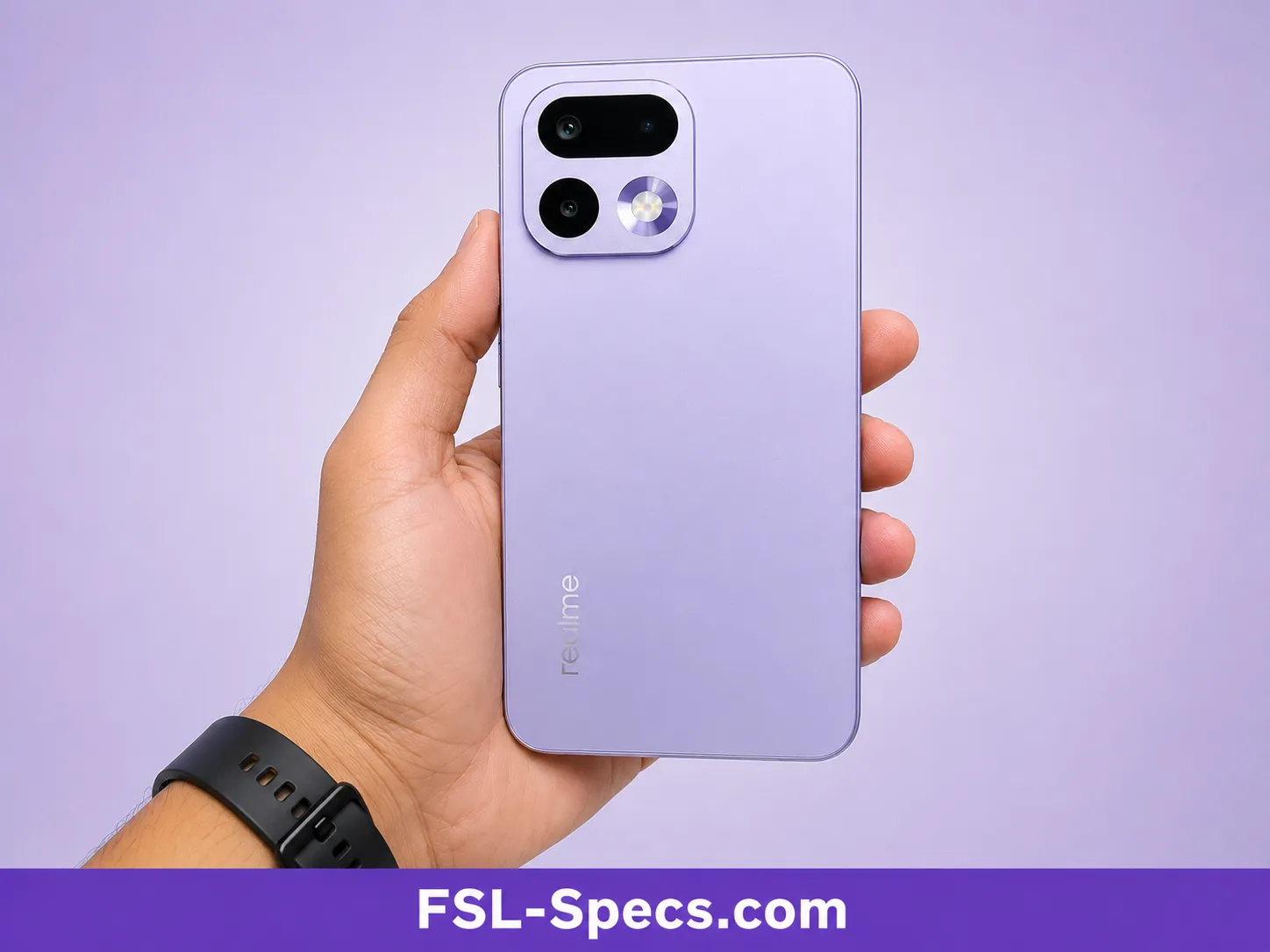







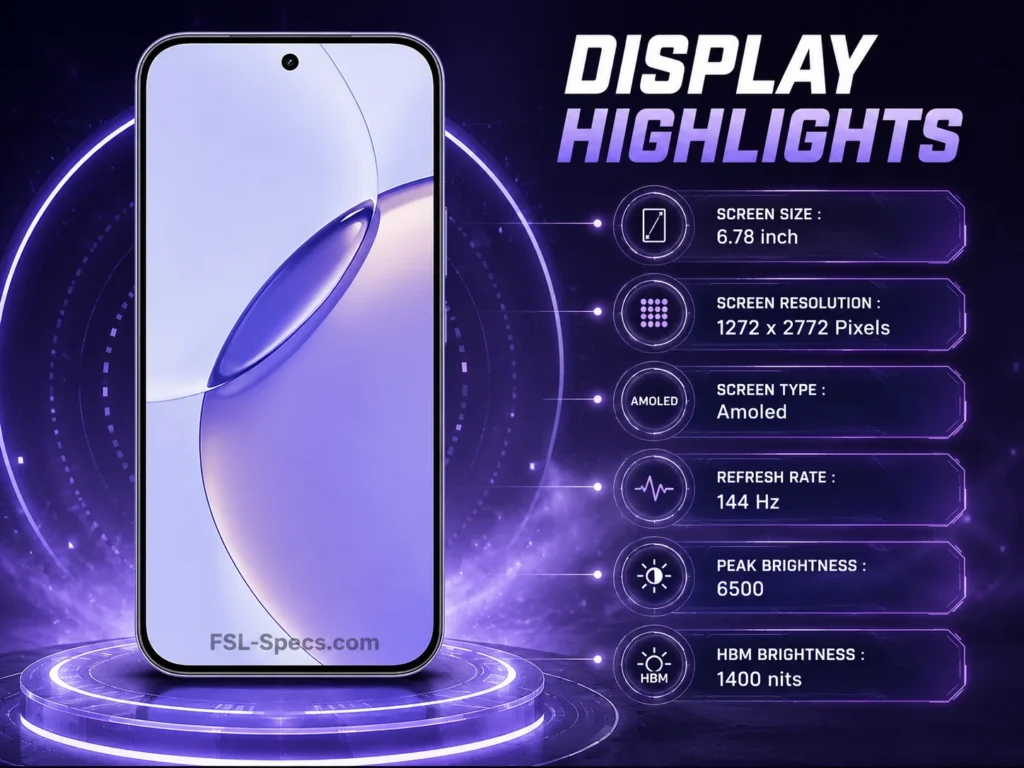


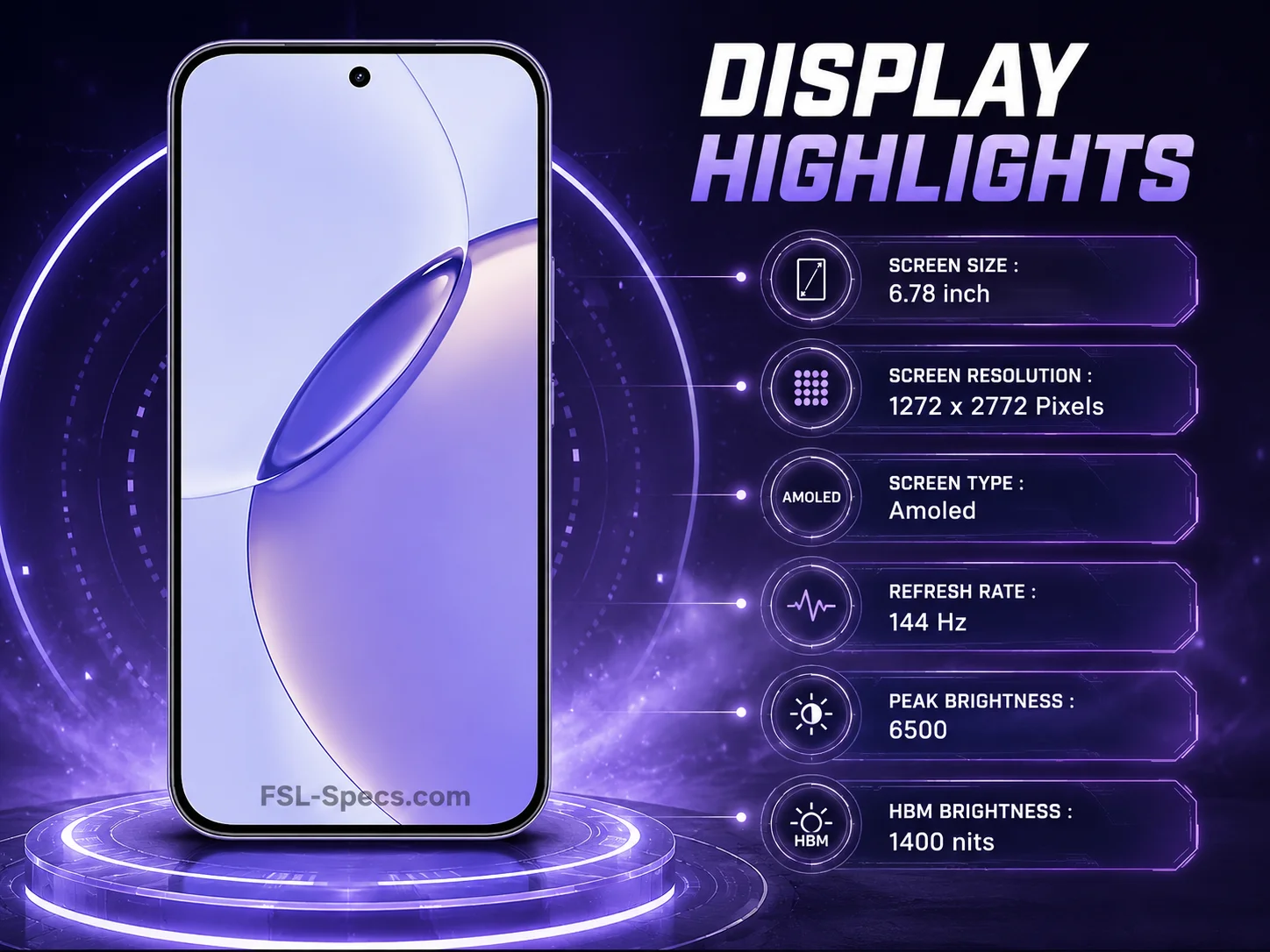
The Realme 16 Pro uses a 6.78-inch AMOLED display with 1272 × 2772 resolution, a 144Hz refresh rate, and 1400 nits HBM brightness. At PKR 170,000, its combination of a large 1.5K-class panel and 144Hz refresh rate makes it highly competitive, but each rival takes a different advantage.
The vivo X200 FE, priced at PKR 200,000, moves in the opposite direction with a smaller 6.31-inch LTPO AMOLED panel at 1216 × 2640 and 120Hz adaptive refresh rate. Its 461 PPI density is slightly higher than the Realme’s roughly 450 PPI, so fine text can look marginally sharper, while LTPO allows the refresh rate to adapt down to 60Hz for efficiency. The major advantage is brightness: vivo specifies up to 5000 nits peak and around 1800 nits in high-brightness conditions, giving it a substantial outdoor-visibility advantage.
The Motorola Edge 50 Ultra at PKR 170,000 offers a 6.7-inch pOLED display with 1220 × 2712 resolution, 144Hz, and up to 2500 nits peak brightness. Its 446 PPI density is slightly below the Realme 16 Pro, while its peak brightness rating is considerably higher. Motorola also specifies 10-bit color, 100% DCI-P3, and HDR10+, strengthening its multimedia credentials.
The cheaper Infinix GT 50 Pro, at PKR 160,000, has a larger 6.78-inch AMOLED, 1208 × 2644 resolution, and 144Hz refresh rate. Its 1600-nit HBM rating exceeds Realme 16 pro’s 1400 nits, although the resolution and pixel density are slightly lower.
Verdict: The Realme 16 Pro delivers one of the best-balanced displays here, but the vivo X200 FE wins for brightness and LTPO efficiency, while the Infinix GT 50 Pro offers the strongest cheaper alternative.