
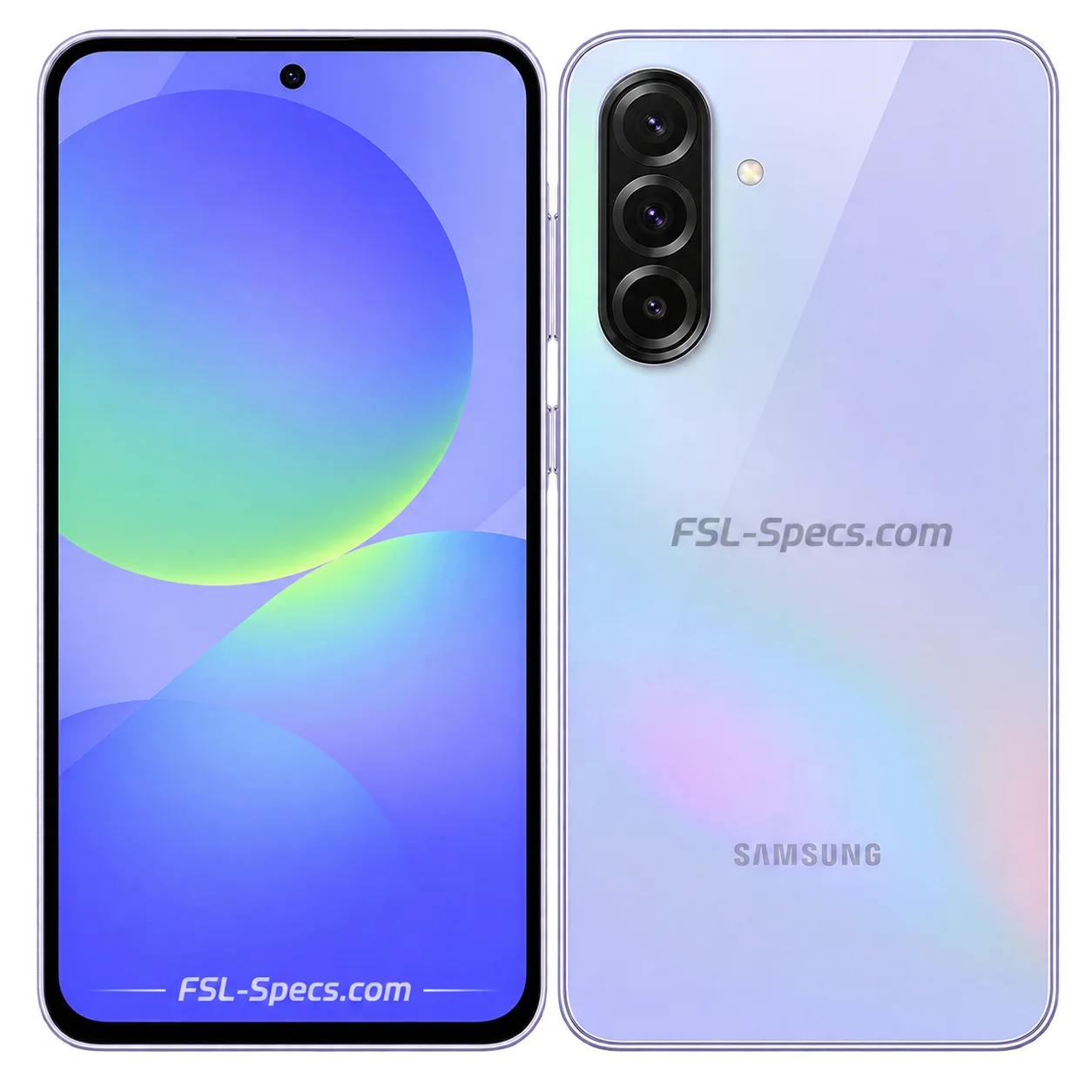











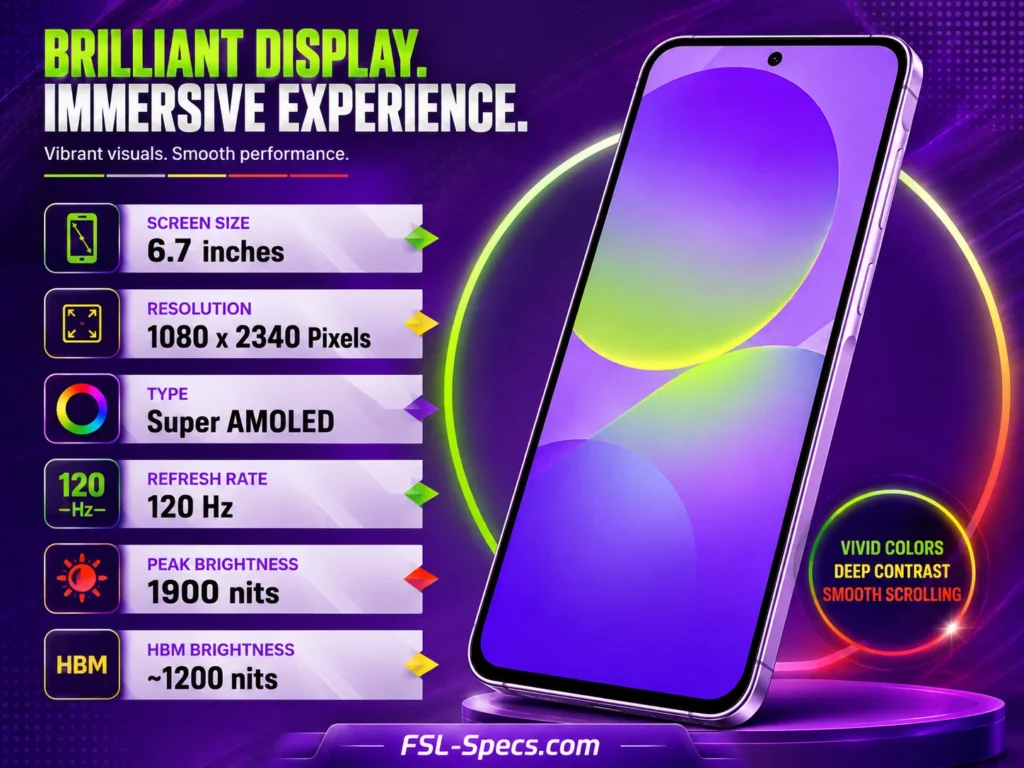
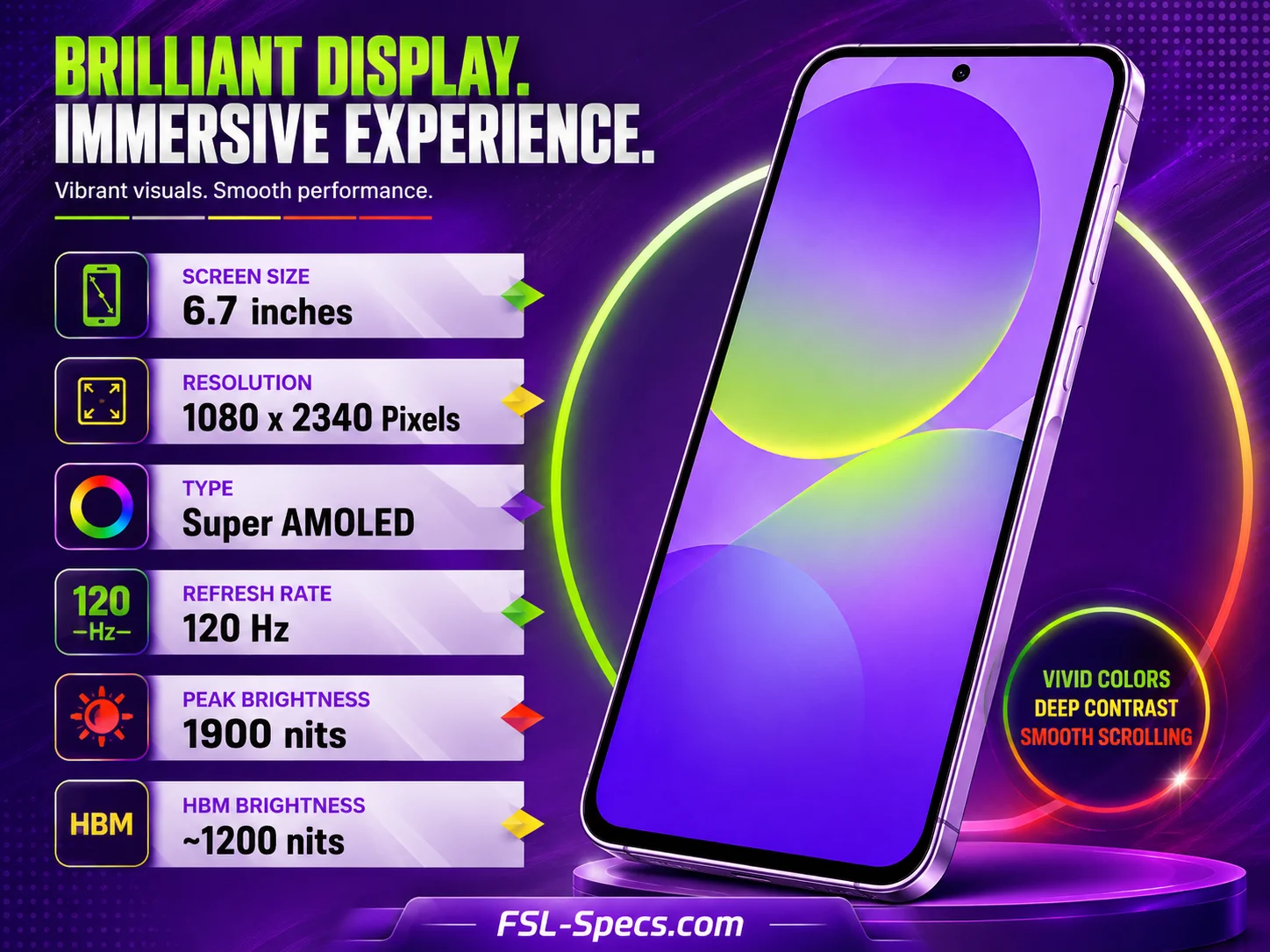
The Samsung Galaxy A36 uses a 6.7-inch Super AMOLED panel at 1080 x 2340 pixels with a 120Hz refresh rate, backed by 1200 nits HBM and 1900 nits peak brightness under Gorilla Glass Victus+. At PKR 105,000, it’s the smallest screen in this group, and it’s also the only one capped at 120Hz while two rivals push higher.
The Infinix Note 60 Pro (PKR 110,000) counters with a larger 6.78-inch AMOLED at 1208 x 2644 pixels and a 144Hz refresh rate, plus a claimed 4500 nits peak brightness, well above the Samsung Galaxy A36’s 1900 nits, though real-world outdoor visibility rarely scales linearly with peak nits claims this high.
The Xiaomi Redmi Note 15 Pro (PKR 108,000) goes bigger still with a 6.83-inch AMOLED at a sharper 1280 x 2772 pixels, adding HDR10+ and Dolby Vision support that neither the A36 nor the Note 60 Pro offers, alongside a strong 3200 nits peak brightness.
The Nothing Phone (2a) (PKR 111,000) is the closest match to the Samsung Galaxy A36 in size at 6.7 inches and 1080 x 2412 pixels, but its 1300 nits peak brightness trails all three others, making it the weakest performer here for sunlight readability despite being the priciest option.
Verdict: The Samsung Galaxy A36 has the sharpest, most balanced AMOLED for everyday use, but the Redmi Note 15 Pro offers a genuinely bigger, HDR-capable screen for less money, making it the stronger pick for buyers who prioritize display specs over brand.