














• Mobiles
  • Processors
  • Mobiles
  • Processors
  • Mobiles
  • Processors

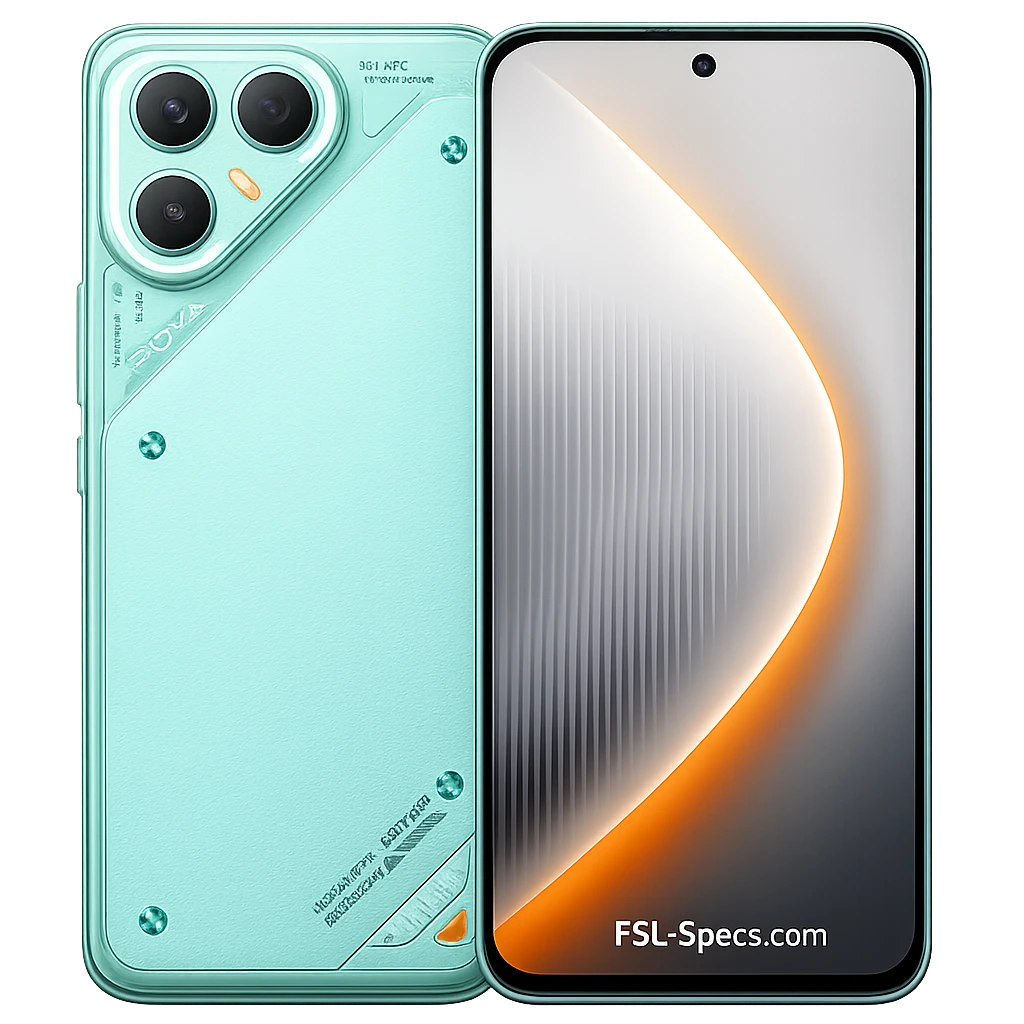
✪ Tecno Pova 7 Pro ✪

United States flag United States
$240 USD
…
Pakistan flag Pakistan (PKR)
75,000 PKR
India flag India (INR)
₹20,000 INR

✪ Tecno Pova 7 Pro ✪

Last Time Update : 7 October, 2026
0

Quick Specifications

Amoled

Display Type

Dimensity 7300

Processor

12 + 256 GB

Ram And Memory

64 + 8 MP

Camera

6000 mAH

Battery

45 W

Fast Charging

Full Specification

BASIC INFO
Mobile
Tecno Pova 7 Pro
Model
LJ8
Series
Pova Series
Category
Mid-Range
Release Date
4 July,2025
Year
2025
CONNECTIVITY
Sim
Nano-SIM + Nano-SIM
Network
4G / 4G+ / 5G
WiFi
Wi-Fi 6 (802.11 a/b/g/n/ac/ax)
Bluetooth
5.4
NFC
Yes
OS
Android 17 - HIOS 17
BODY
Dimensions
163.5 × 75.9 × 8.2 mm
Build
Plastic ( Frame And Back)
KG Weight
195 g
Screen Size
6.78 inch
Resolution
1224 × 2720 Pixels
Type
Amoled
Refresh Rate
144 Hz
Peak Brightness
4500 nits
Processor
Dimensity 7300
Max Clock
2.5 GHz
Lithography
4 nm
GPU
Mali-G615 MC2
CPU Cores
8 Cores
Antutu v11
690 K
Bootup Time
28s
Architecture
4×2.5 GHz Cortex-A78
4×2.0 GHz Cortex-A55
Ram Memory
12 + 256 GB
Ram Type
LPDDR4X
Storage Type
UFS 2.2
SD Card
No
Variants
8+128GB
8+256GB
12+256GB
MP
Rear Camera
64 + 8 MP
Front Camera
13 MP
SENSORS
Camera Sensors
64 MP = Sony IMX682 Exmor RS
RECORDING FPS
Main Recording
4K @ 30fps
1080p @ 60fps
Front Recording
4K @ 30fps
1080p @ 60fps
RESOLUTION
Main Resolution
9248 × 6936 Pixels
Front Resolution
4160 x 3120 Pixels
ZOOM
D Digital Zoom
10 X
Stabilization
Digital
FLASH
Flash
Dual-LED Flash
Front Flash
Dual-LED Flash
Capacity
6000 mAH
Fast Charging
45 W
Wireless Charging
30 W
Li Battery Type
Li-Po
REVERSE
Reverse Wired
10 W
OTHER
Battery PC Marks
12 Hours 30 Mints
Charging Time
70-80 Mints ( 0-100% )
AUDIO & SENSORS
Speaker
Dual Stereo Speaker
Fingerprint Sensor
Front Finger
Other Sensors
Fingerprint Sensor
Accelerometer (G-Sensor)
Gyroscope
Proximity Sensor
Ambient Light Sensor
Electronic Compass
Infrared Remote Control (IR Blaster)
 
Special Features

Status light LED (on the back)
Meca Design On Back

BASIC INFO
Mobile
Tecno Pova 7 Pro
Model
LJ8
Series
Pova Series
Category
Mid-Range
Release Date
4 July,2025
Year
2025
CONNECTIVITY
Sim
Nano-SIM + Nano-SIM
Network
4G / 4G+ / 5G
WiFi
Wi-Fi 6 (802.11 a/b/g/n/ac/ax)
Bluetooth
5.4
NFC
Yes
OS
Android 17 - HIOS 17
BODY
Dimensions
163.5 × 75.9 × 8.2 mm
Build
Plastic ( Frame And Back)
KG Weight
195 g
Screen Size
6.78 inch
Resolution
1224 × 2720 Pixels
Type
Amoled
Refresh Rate
144 Hz
Peak Brightness
4500 nits
Processor
Dimensity 7300
Max Clock
2.5 GHz
Lithography
4 nm
GPU
Mali-G615 MC2
CPU Cores
8 Cores
Antutu v11
690 K
Bootup Time
28s
Architecture
4×2.5 GHz Cortex-A78
4×2.0 GHz Cortex-A55
Ram Memory
12 + 256 GB
SD Card
No
Ram Type
LPDDR4X
Storage Type
UFS 2.2
Variants
8+128GB
8+256GB
12+256GB
MP
Rear Camera
64 + 8 MP
Front Camera
13 MP
SENSORS
Main Camera Sensors
64 MP = Sony IMX682 Exmor RS
RECORDING FPS
Main Recording
4K @ 30fps
1080p @ 60fps
Front Recording
4K @ 30fps
1080p @ 60fps
RESOLUTION
Main Resolution
9248 × 6936 Pixels
Front Resolution
4160 x 3120 Pixels
ZOOM
D Digital Zoom
10 X
Stabilization
Digital
FLASH
Flash
Dual-LED Flash
Front Flash
Dual-LED Flash
Capacity
6000 mAH
Fast Charging
45 W
Wireless Charging
30 W
Li Battery Type
Li-Po
REVERSE
Reverse Wired
10 W
OTHER
Battery Life PCMark
12 Hours 30 Mints
Charging Time
70-80 Mints ( 0-100% )
AUDIO & SENSORS
Speaker
Dual Stereo Speaker
Fingerprint Sensor
Front Finger
Other Sensors
Fingerprint Sensor
Accelerometer (G-Sensor)
Gyroscope
Proximity Sensor
Ambient Light Sensor
Electronic Compass
Infrared Remote Control (IR Blaster)
 
Special Features

Status light LED (on the back)
Meca Design On Back

Highlights & Review Of Tecno Pova 7 Pro

Tecno Pova 7 Pro processor FSL-Specs.com
Tecno Pova 7 Pro memory FSL-Specs.com
Tecno Pova 7 Pro camera FSL-Specs.com
Tecno Pova 7 Pro battery FSL-Specs.com

Display Review:

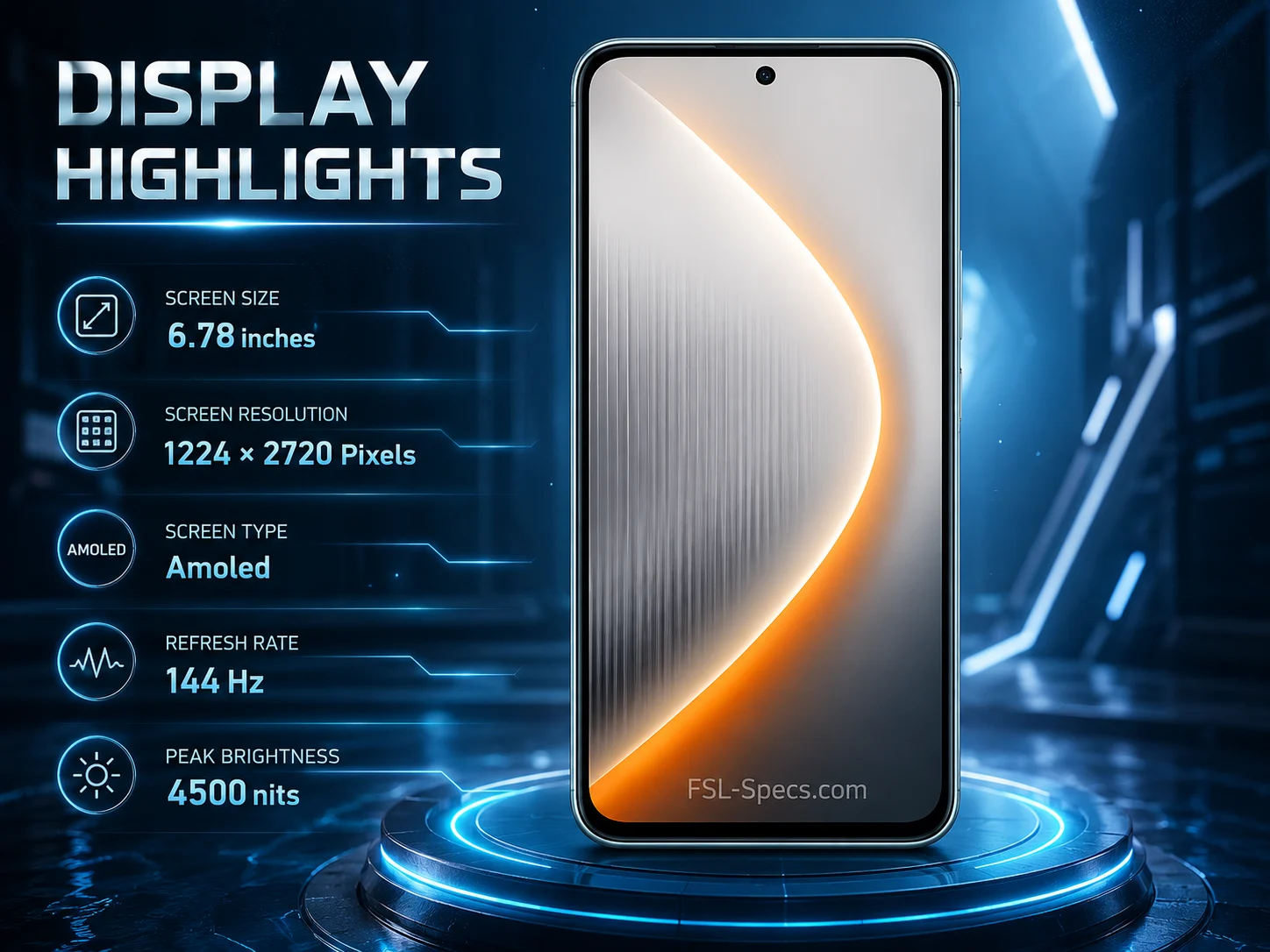
The Tecno Pova 7 Pro 5G runs a 6.78-inch AMOLED panel at 144Hz with 4500 nits peak brightness, matching the Infinix Note 60’s identical 6.78-inch AMOLED, 144Hz, and 4500 nits peak figures almost spec for spec, while the Nothing Phone (3a) Lite 5G and Vivo V50 both cap out at 120Hz on smaller 6.77-inch panels.

On resolution, the Pova 7 Pro 5G’s 1224 x 2720 output gives it the sharpest panel of the four at roughly 440ppi, ahead of the Note 60’s 1208 x 2644 (~429ppi), and comfortably ahead of the Nothing Phone (3a) Lite 5G and Vivo V50, which both share a lower 1080 x 2392 resolution at 388ppi. Touch response also favors the 144Hz pair, since 2304Hz PWM dimming on both the Pova 7 Pro 5G and Note 60 beats the Nothing Phone (3a) Lite 5G’s 2160Hz PWM, reducing eye strain risk at low brightness for the two higher-refresh phones.

Brightness tells a more layered story. Tecno lists only a 4500 nits peak figure for the Pova 7 Pro 5G with no separate HBM number disclosed. The Infinix Note 60 discloses the full range at 700 nits typical, 1600 nits HBM, and 4500 nits peak, giving buyers a clearer real-world picture. The Vivo V50 and Nothing Phone (3a) Lite 5G sit lower on HBM at 1300 nits and 1300 nits respectively, with peak brightness of 4500 nits and 3000 nits. Glass protection also splits the group: the Pova 7 Pro 5G and Note 60 both use Corning Gorilla Glass 7i, while Nothing relies on Panda Glass and Vivo uses its own Diamond Shield Glass.

Verdict: The Tecno Pova 7 Pro 5G and Infinix Note 60 are the sharper, smoother-feeling screens of this group on paper, but the Note 60’s fully disclosed HBM rating makes it the safer pick for guaranteed outdoor visibility over the Pova 7 Pro 5G’s unconfirmed sustained brightness.

Processor Review:

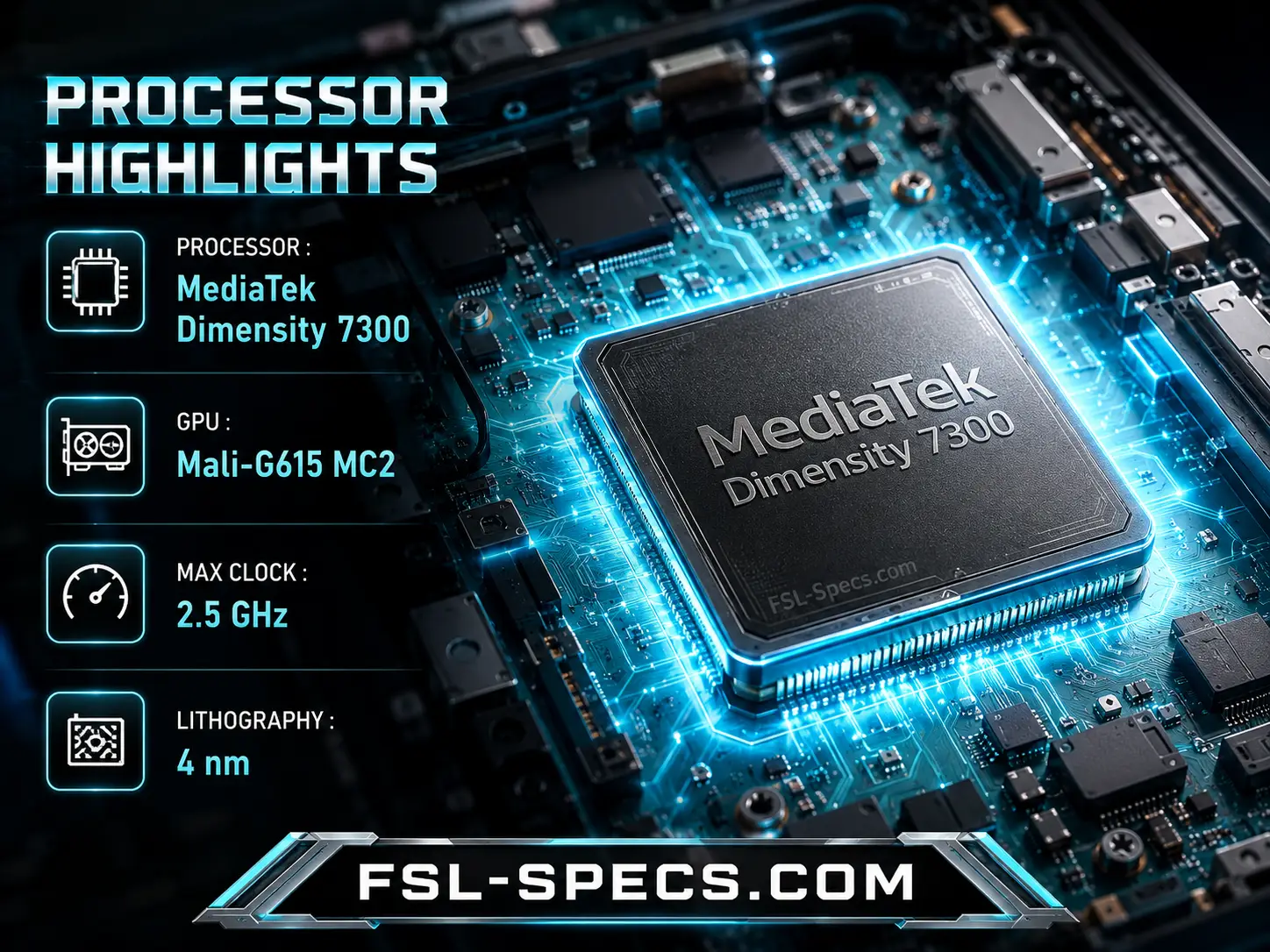
The Vivo V50’s Snapdragon 7 Gen 3 posts the highest AnTuTu v11 result in this group at 1,018,053, a figure backed by multiple independent user submissions clustered between 1,008,194 and 1,051,017, putting it clearly ahead of the Tecno Pova 7 Pro 5G’s Dimensity 7300 Ultimate at 931,014 (v11).

All three MediaTek-powered phones here, the Pova 7 Pro 5G, the Infinix Note 60 (Dimensity 7400 Ultimate), and the Nothing Phone (3a) Lite 5G (Dimensity 7300 Pro), share near-identical CPU architecture: eight cores split between Cortex-A78 performance cores and Cortex-A55 efficiency cores, paired with a Mali-G615 MC2 GPU. The gap between them comes down to clock speed and binning rather than a different chip class. The Note 60 clocks its A78 cores slightly higher at 2.6GHz versus 2.5GHz on the other two, which tracks with its stronger benchmark showing.

Sources differ on the Note 60’s AnTuTu v11 score: NanoReview measured 977,113, Kimovil measured 849,804, and Infinix’s own marketing claims over 990,000; this hasn’t been independently confirmed at one settled figure. The Nothing Phone (3a) Lite 5G shows a similar split, with Kimovil reporting 939,571 (v11) against NanoReview’s 884,207 (v11).

The Vivo V50 stands apart on GPU too, running Qualcomm’s Adreno 720 instead of Mali-G615 MC2, which typically gives it more headroom in graphics-heavy games at the same resolution, even before accounting for its higher overall AnTuTu total.

Verdict: The Vivo V50 has the clearest, most consistently verified performance lead in this group, while the Tecno Pova 7 Pro 5G’s Dimensity 7300 Ultimate holds its own against the similarly specced Note 60 and Nothing Phone (3a) Lite 5G, both of which carry disputed benchmark figures worth treating with some caution.

Ram & Memory Review:

At the requested 8GB + 256GB tier, the Tecno Pova 7 Pro 5G and Nothing Phone (3a) Lite 5G both run 8GB LPDDR4X RAM, while the Infinix Note 60 steps up to 8GB LPDDR5X, a newer memory standard that typically improves app-switching speed and bandwidth over LPDDR4X at the same 8GB capacity. The Vivo V50, reviewed here in its 12GB + 512GB configuration, uses 12GB LPDDR4X RAM, the largest capacity of the group even though it shares the same LPDDR4X generation as the Pova 7 Pro 5G and Nothing Phone (3a) Lite 5G.

Storage is more uniform: all four phones use UFS 2.2, so raw read and write speeds land in the same tier regardless of brand, and the real-world gap comes down to capacity rather than storage type. The Pova 7 Pro 5G, Nothing Phone (3a) Lite 5G, and Infinix Note 60 all ship 256GB at this tier, while the Vivo V50’s 512GB doubles that headroom, a meaningful advantage for anyone who shoots a lot of 4K video or installs large games.

Expandability is the sharpest differentiator here. The Nothing Phone (3a) Lite 5G is the only phone in this comparison with a microSDXC card slot, expandable up to 2TB, while the Tecno Pova 7 Pro 5G, Infinix Note 60, and Vivo V50 all lack a card slot entirely, locking buyers into whatever internal capacity they purchase upfront.

Verdict: The Vivo V50’s 12GB LPDDR4X and 512GB UFS 2.2 combination gives it the strongest raw multitasking and storage headroom, but the Nothing Phone (3a) Lite 5G’s microSD support is the more practical win for anyone who wants to expand storage later without paying for a higher tier upfront.

Cameras Review:

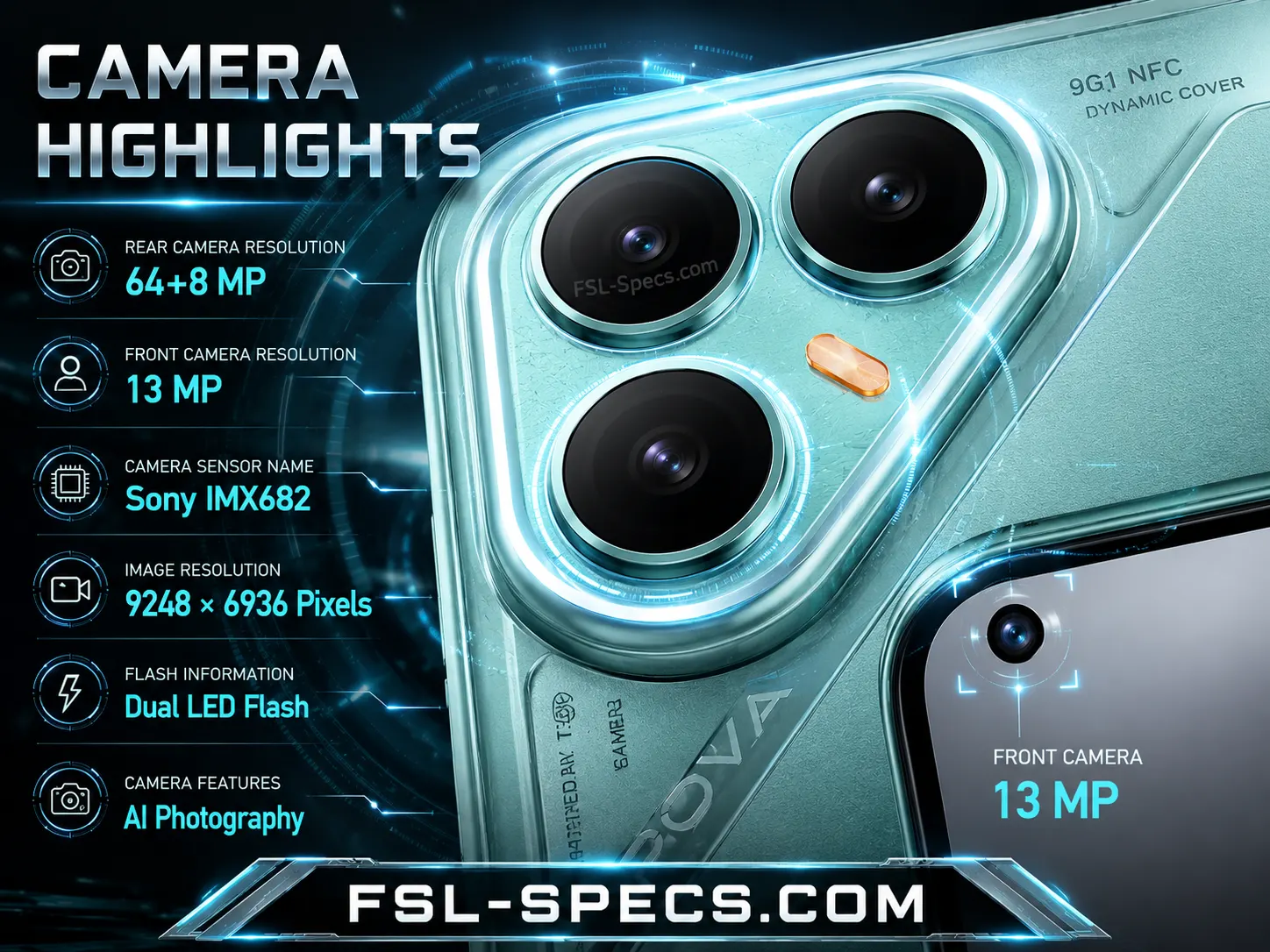
The Tecno Pova 7 Pro 5G ships the highest resolution main sensor in this group at 64MP, using a Sony IMX682 behind an f/1.7 lens, versus the 50MP sensors on the Nothing Phone (3a) Lite 5G, Infinix Note 60, and Vivo V50. Camera hardware confidence varies sharply across this set: the Sony IMX682 on the Pova 7 Pro 5G is named in Tecno’s own launch materials, and the Nothing Phone (3a) Lite 5G’s main sensor is a Samsung ISOCELL S5KGN9  identified in GSMArena’s teardown. The Vivo V50’s main sensor is widely reported as a Samsung JN1 [Reviewer-sourced], not officially named by Vivo, while the Infinix Note 60’s 50MP main sensor model is unknown, since Infinix hasn’t disclosed it and no independent teardown of the standard Note 60 has surfaced yet.

Stabilization is the clearest split in the group. The Nothing Phone (3a) Lite 5G, Infinix Note 60, and Vivo V50 all pack OIS on their main camera, but the Tecno Pova 7 Pro 5G’s 64MP shooter runs on PDAF alone with no OIS, a real handicap for low-light and handheld video despite its resolution advantage. Ultrawide cameras sit at 8MP on the Pova 7 Pro 5G and Note 60, while the Nothing Phone (3a) Lite 5G matches that at 8MP with a fixed-focus GalaxyCore sensor, and the Vivo V50 uses a 50MP autofocus ultrawide, the only one in this set that isn’t fixed-focus.

Front cameras run 13MP on the Pova 7 Pro 5G and Note 60, 16MP on the Nothing Phone (3a) Lite 5G, and 50MP on the Vivo V50, all fixed-focus. Rear video tops out at 4K@30fps on every phone, with the Note 60 and Nothing Phone (3a) Lite 5G adding 1080p@60fps and 1080p@120fps slow-motion options the other two lack.

Verdict: The Nothing Phone (3a) Lite 5G offers the most trustworthy camera hardware profile with a confirmed OIS main sensor, while the Tecno Pova 7 Pro 5G’s higher megapixel count is undercut by its missing OIS, a bigger practical drawback than the raw resolution number suggests.

Battery Review:

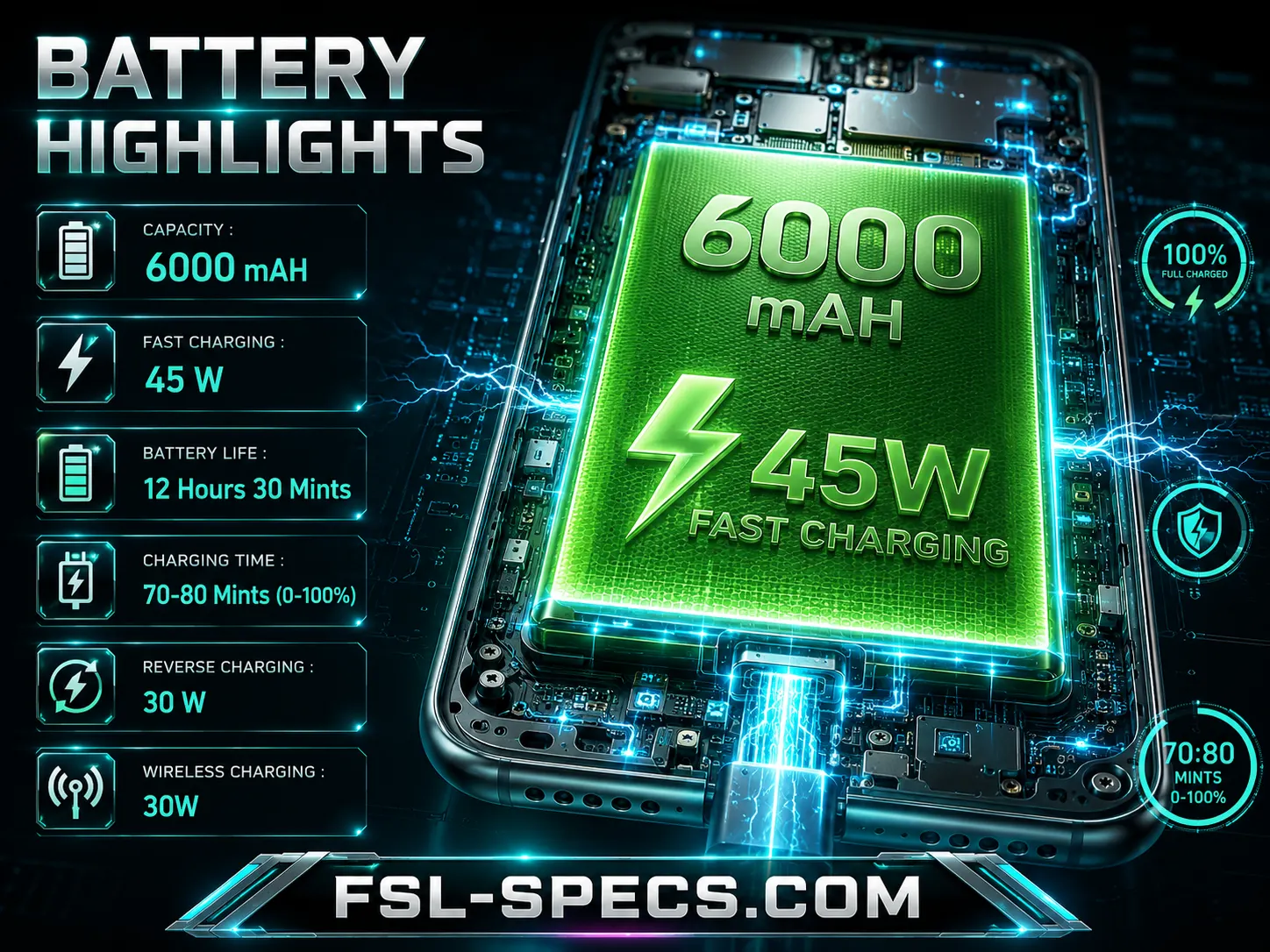
The Infinix Note 60 carries the largest cell in this group at 6500mAh, well ahead of the Tecno Pova 7 Pro 5G and Vivo V50, which both pack 6000mAh, and the Nothing Phone (3a) Lite 5G, the smallest at 5000mAh. Charging speed tells a different story, though, since capacity and charging power don’t move together here.

The Vivo V50 is the fastest charger of the four at 90W wired, reaching 71% in 30 minutes and a full charge in roughly 46 minutes in lab testing, despite carrying a similarly sized cell to the Pova 7 Pro 5G. The Tecno Pova 7 Pro 5G trails on wired speed at 45W (50% in 26 minutes, 100% in 61 minutes) but is the only phone here with 30W wireless charging, matched by the Infinix Note 60’s own 45W wired and 30W wireless combination, though official charging-time figures for the standard Note 60 remain [Unconfirmed],

with only crowdsourced estimates putting a full charge near 90 minutes. The Nothing Phone (3a) Lite 5G is the slowest of the group on paper at 33W wired, yet GSMArena’s lab test still clocked a full charge in 67 minutes, not far behind the much higher-wattage Note 60 estimate, and it has no wireless charging at all.

Reverse charging is available on three of the four phones. The Pova 7 Pro 5G offers 10W reverse wired, the Nothing Phone (3a) Lite 5G offers 5W reverse wired, and the Infinix Note 60 adds both 7.5W reverse wired and 5W reverse wireless. The Vivo V50 also supports reverse charging, though its exact wattage isn’t listed in available specs.

Verdict: The Vivo V50 pairs a large cell with the fastest charging in this comparison, making it the strongest all-round pick, while the Infinix Note 60’s bigger capacity and wireless charging make it the better choice for buyers who prioritize raw endurance over top-up speed.

Final Verdict :

Weighing performance, memory, camera trust, and battery together, the Vivo V50 comes out as the strongest all-round phone in this comparison. Its Snapdragon 7 Gen 3 posts the clearest, most consistently verified AnTuTu v11 lead in the group, its 12GB LPDDR4X + 512GB UFS 2.2 combination outsizes every rival at this tier, and its 90W charging is the fastest here by a wide margin. That said, it’s being compared here at a used-market price, which carries different risk than a boxed retail unit.

The Infinix Note 60 trails closely, matching the Vivo V50 on price while offering the largest battery, wireless charging, and a display every bit as sharp as the Tecno Pova 7 Pro 5G’s, though its processor benchmarks remain disputed across sources and its camera sensor is undisclosed. The Tecno Pova 7 Pro 5G doesn’t win any single category outright, its missing OIS is a real practical drawback for its camera, but at PKR 75,000-85,000 it undercuts every rival by at least PKR 10,000, which meaningfully changes the value equation even though it isn’t yet officially available in Pakistan and remains an import, box-packed purchase.

The Nothing Phone (3a) Lite 5G has the most trustworthy camera hardware of the four thanks to its confirmed OIS main sensor, but its smaller battery, slower charging, and lower-resolution display leave it behind on the metrics that affect daily use most.

Bottom line: The Vivo V50 is the best-specced phone here, the Infinix Note 60 is the strongest new-retail alternative at the same price, and the Tecno Pova 7 Pro 5G is the value pick for buyers willing to accept its import status and lack of OIS in exchange for a meaningfully lower price.

Ranking:

  1. Vivo V50 – PKR 100,000 (used market)
  2. Infinix Note 60 – PKR 100,000
  3. Tecno Pova 7 Pro 5G – PKR 75,000-85,000 ( box packed, not yet officially launched in Pakistan)
  4. Nothing Phone (3a) Lite 5G – PKR 95,000

Pros And Cons of Tecno Pova 7 Pro

Pros of Mobile

✅ 4nm Powerful Chipset
✅ 144Hz AMOLED Display
✅ 4500 Nits Brightness
✅ 64MP Sony Sensor
✅ 30W Wireless Charging
✅ 6000mAh Big Battery
✅ Stereo Dolby Atmos

Cons of Mobile

❌No OIS Stabilization
❌Only 13MP Selfie
❌No MicroSD Slot
❌No HDR Display

Best For - Not Best For

Best For

✅Heavy Battery Users
✅Budget Photo Lovers
✅Media & Entertainment
✅5G Network Users
✅Students & Youth

Not Best For

❌Selfie-focused Users
❌Slim Phone Fans
❌Large Storage Needs
❌Premium Build Seekers

Trailer And Unboxing of Tecno Pova 7 Pro

Disassembly Or Teardown And Gaming Test of Tecno Pova 7 Pro

Camera Test Tecno Pova 7 Pro

Nothing 3A Lite 5G
Vivo V50
Infinix Note 60
Tecno Pova 8 Pro
Poco X6 Pro
Oppo Reno 12 5G

FAQs Questions

Picture of Faisal Ur Rehman

Faisal Ur Rehman

Faisal Rehman is the founder and editor of FSL Specs, where he publishes in-depth smartphone specifications, comparisons, buying guides, and technology insights. With extensive experience in mobile hardware research and technical analysis, he provides accurate and up-to-date information on Android smartphones, processors, displays, cameras, batteries, performance benchmarks, and software features. His goal is to simplify complex specifications and help readers choose the right device with confidence.

The Tecno Pova 7 Pro features a 6.78-inch AMOLED display with 1.5K resolution (1224 × 2720 pixels), a 144Hz refresh rate, 2304Hz PWM dimming, and Corning Gorilla Glass 7i protection, 4500 Nits Peak Brightness.

The Tecno Pova 7 Pro runs on MediaTek Dimensity 7300 Ultimate chip, 4nm.

The Tecno Pova 7 Pro comes with 8GB or 12GB RAM and 128GB or 256GB storage. LPDDR4X Ram And UFS 2.2 Storage.

The Tecno Pova 7 Pro packs a 64MP Sony camera at the back plus an 8MP wide-angle lens. Sony sensors give good colors and sharp photos in daylight. Video shoots in 4K too. 13MP Front Camera

The Tecno Pova 7 Pro packs a 6,000 mAh battery with 45W wired fast charging support.

12+256GB = ~75,000 PKR | ~20,000 INR | ~240 $

TECNO Series Row
Scroll to Top