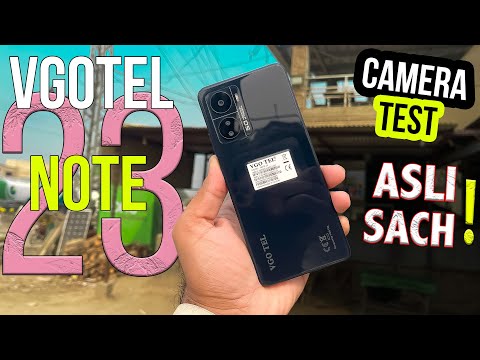

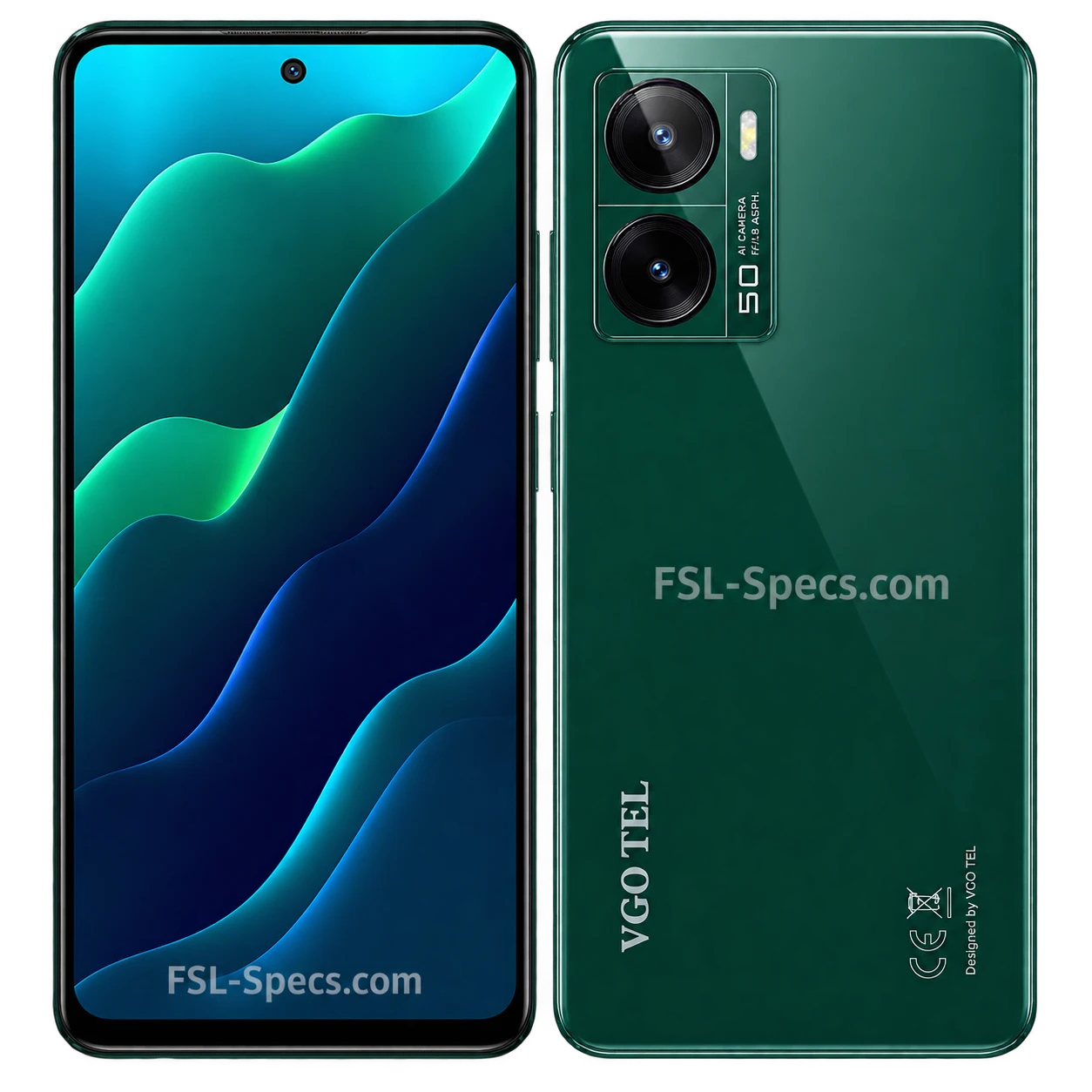


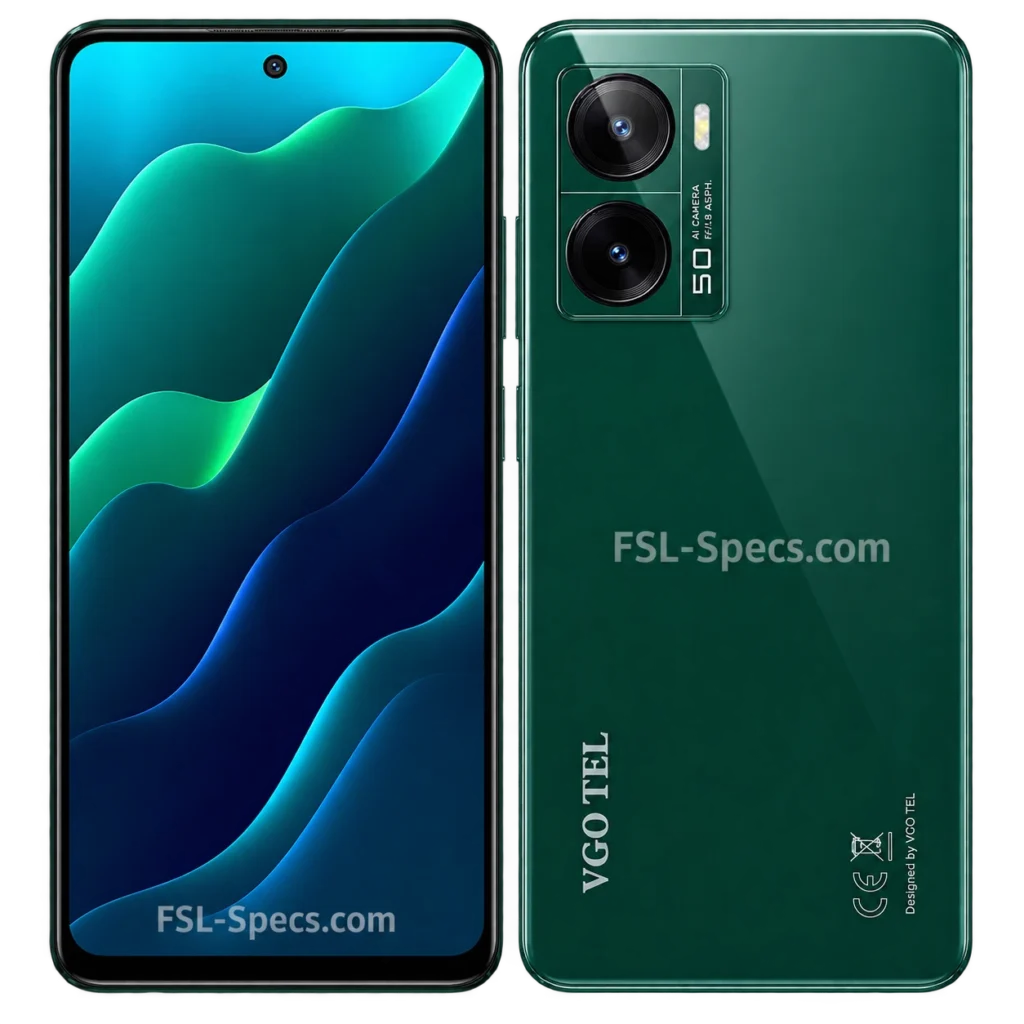
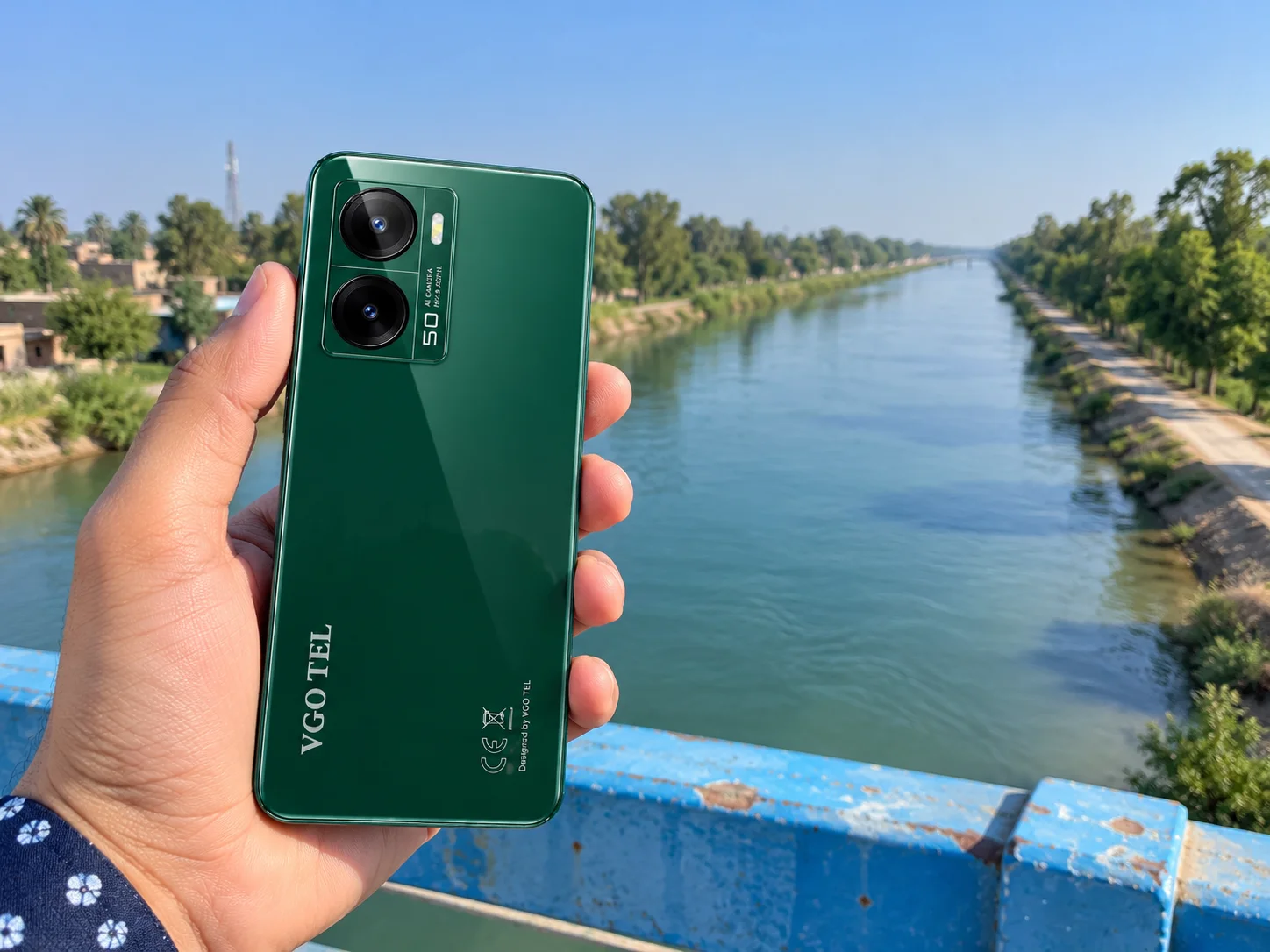
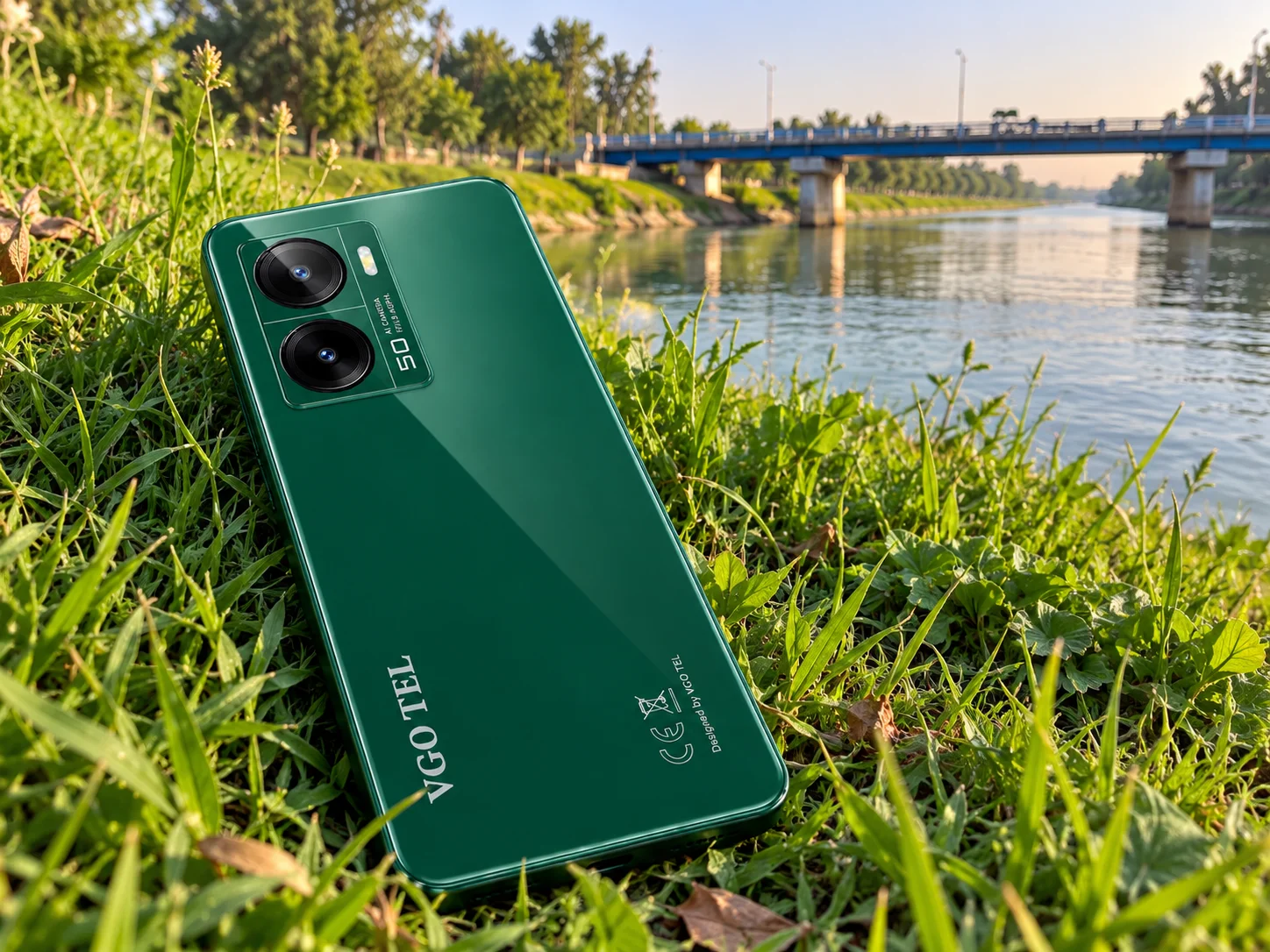
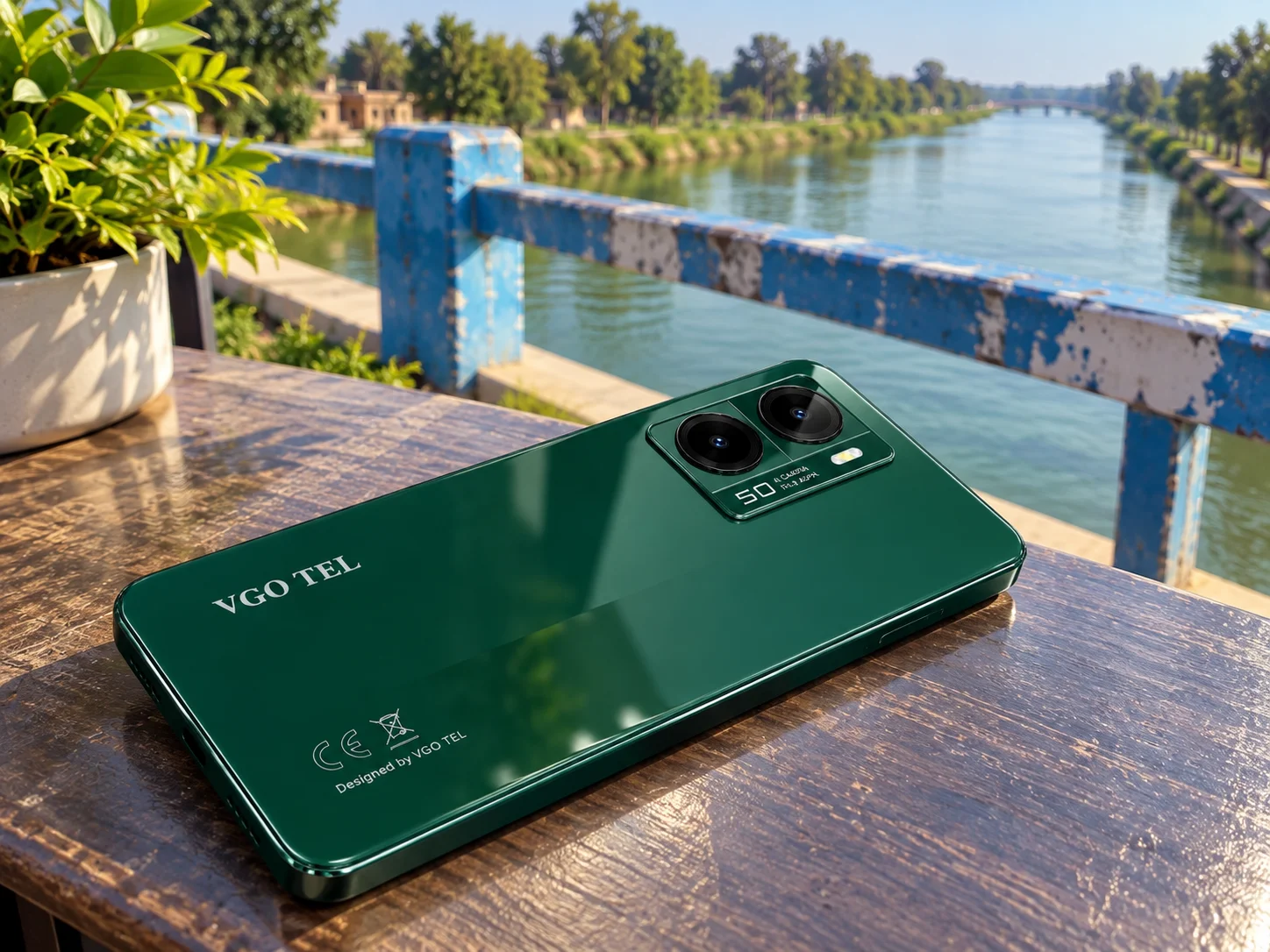


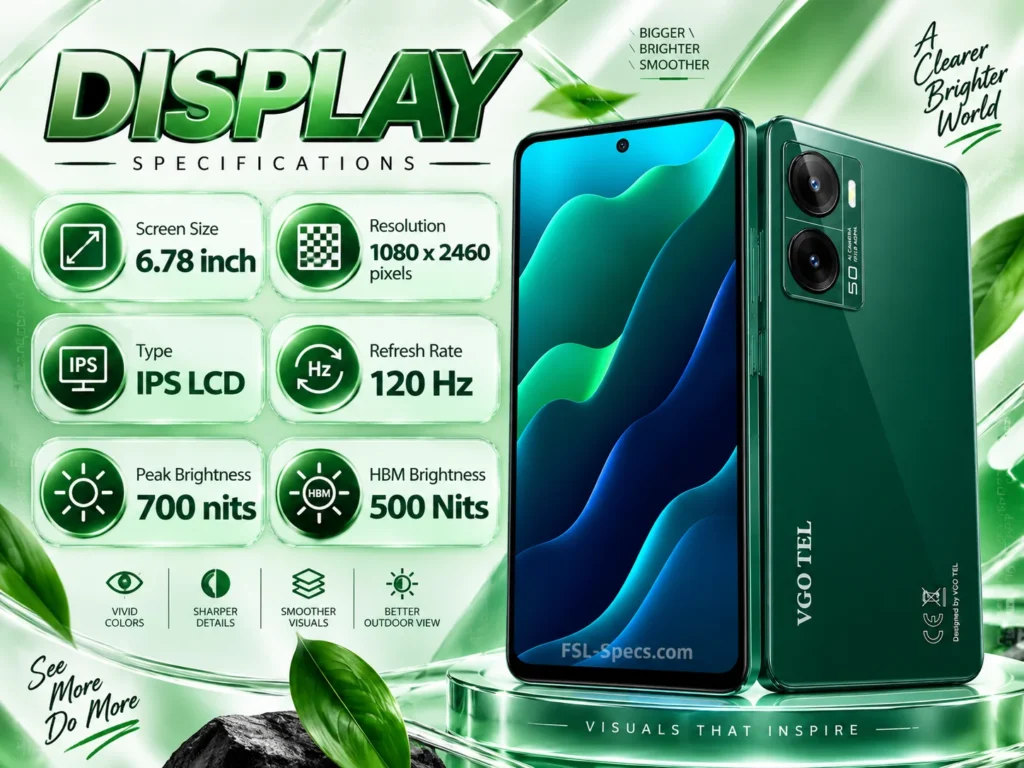


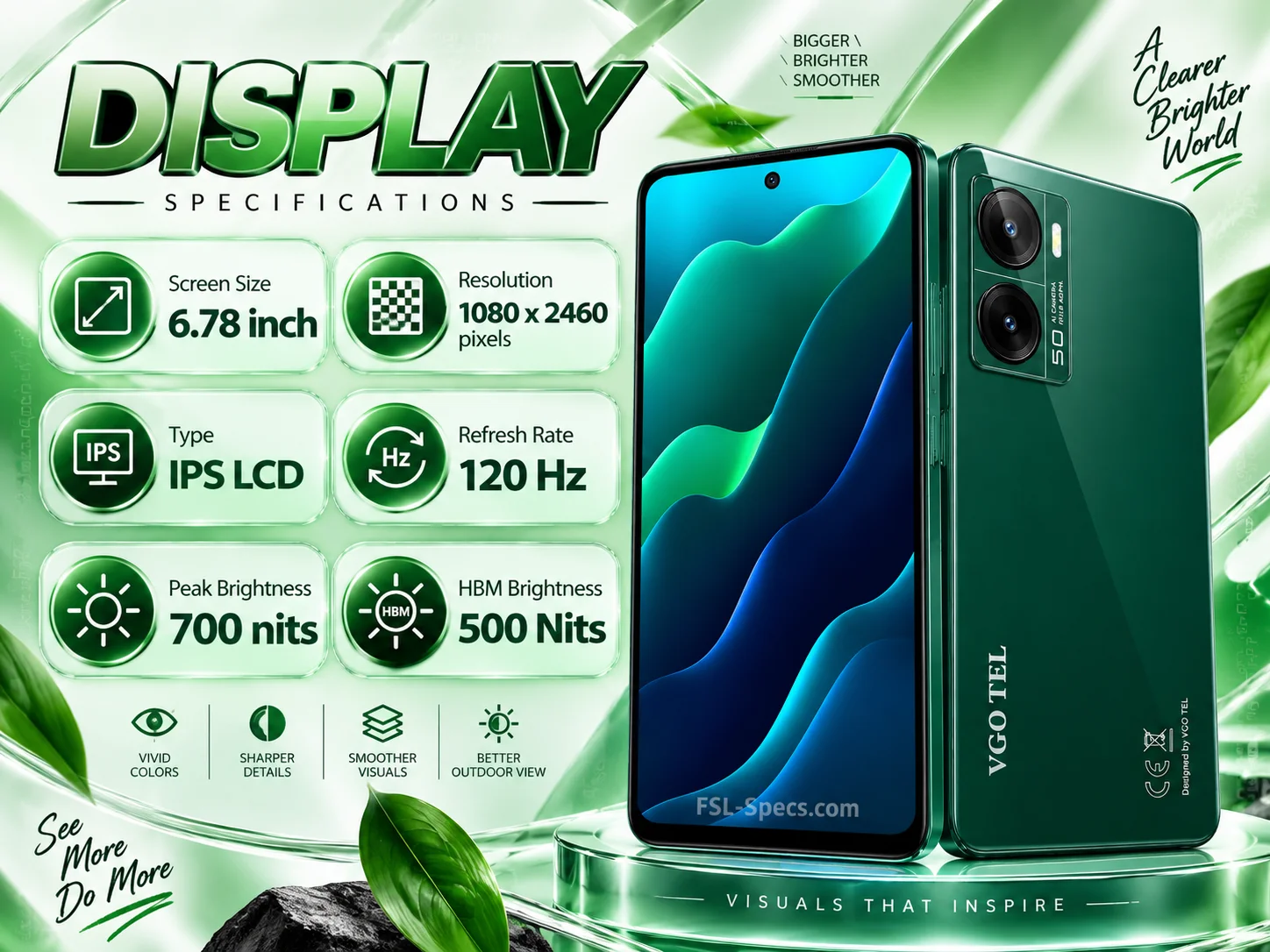
The VGO TEL Note 23 uses a 6.78-inch FHD+ (1080×2460) IPS LCD panel with a 120Hz refresh rate and a punch-hole cutout, the exact same panel specification carried over to the VGO TEL Note 24, so buyers weighing these two VGO TEL models on screen alone are looking at effectively identical hardware.
The Tecno Camon 20 G85 switches panel technology entirely, running a 6.67-inch AMOLED screen at 1080×2400, giving it deeper blacks and stronger contrast than either VGO TEL panel regardless of refresh rate. Sources differ on the Camon 20 G85’s refresh rate: the manufacturer’s own spec sheet and GSMArena list it at 60Hz, while some retail listings advertise 120Hz , a gap worth confirming before buying since it directly affects how smooth scrolling feels.
The ZTE Nubia V60 Design trails all three on sharpness with a 6.6-inch HD+ (720×1612) IPS LCD panel at 90Hz, a noticeably lower pixel density than the FHD+ panels on both VGO TEL phones, which shows up most in small text and video streaming. None of these four phones combines AMOLED and 120Hz together, so every buyer here is trading off resolution, panel type, or refresh rate rather than getting all three at once.
The AMOLED panel on the Tecno Camon 20 G85 should also hold up better against outdoor glare than any of the IPS LCD screens, though official peak brightness figures are across all four devices in this comparison.
Verdict: The VGO TEL Note 23 matches the VGO TEL Note 24 panel for panel on paper, so the real display differentiator in this price bracket is the Tecno Camon 20 G85’s AMOLED screen against three IPS LCD rivals, while the ZTE Nubia V60 Design’s HD+ resolution makes it the weakest pick for sharpness-focused buyers.