






















✪ vivo V70 ✪

Vivo V70 Specs, Price, Camera, Battery & Best Review (2026)
United States flag United States
$590 USD
Pakistan flag Pakistan (PKR)
162,000 PKR
India flag India (INR)
₹57,000 INR

✪ vivo V70 ✪

Vivo V70 Specs, Price, Camera, Battery & Best Review (2026)
Last Time Update : 13 August, 2026
0

Quick Specifications

Amoled

Display Type

Snapdragon 7 Gen 4

Processor

12 + 512 GB

Ram And Memory

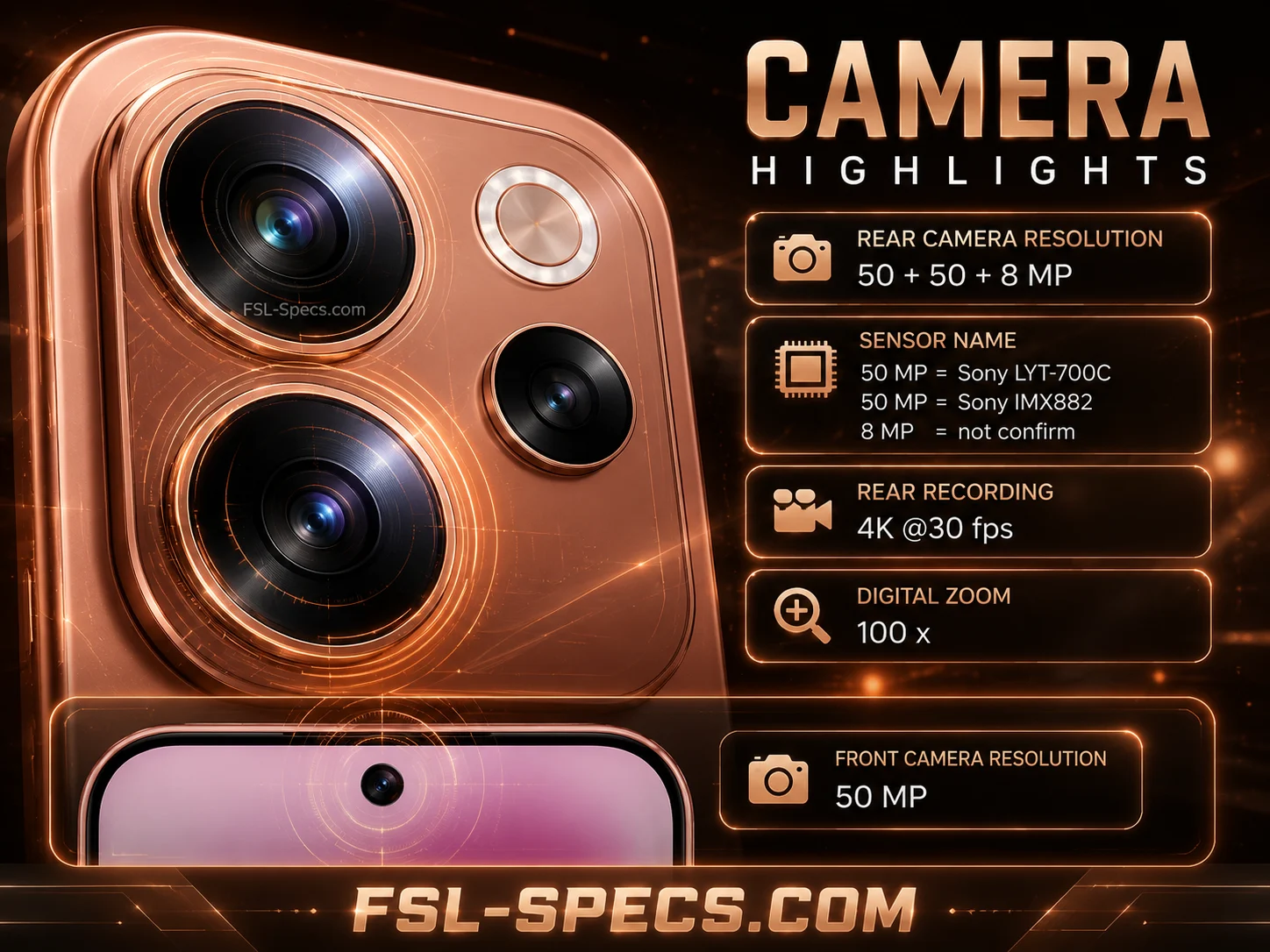
50 + 50 + 8 MP

Camera

6500 mAh

Battery

90 W

Fast Charging

Full Specification

BASIC INFO
Mobile
vivo V70
Model
vivo V70 (V2538)
Series
Vivo V Series
Category
Mid-Range
Release Date
26 February,2026
Year
2026
CONNECTIVITY
Sim
Nano-SIM + Nano-SIM
Network
4G / 4G+ / 5G
WiFi
Wi-Fi 6
Bluetooth
5.4
NFC
Yes
OS
Android 17
BODY
Dimensions
157.5 x 74.3 x 7.4/7.6 mm
Build
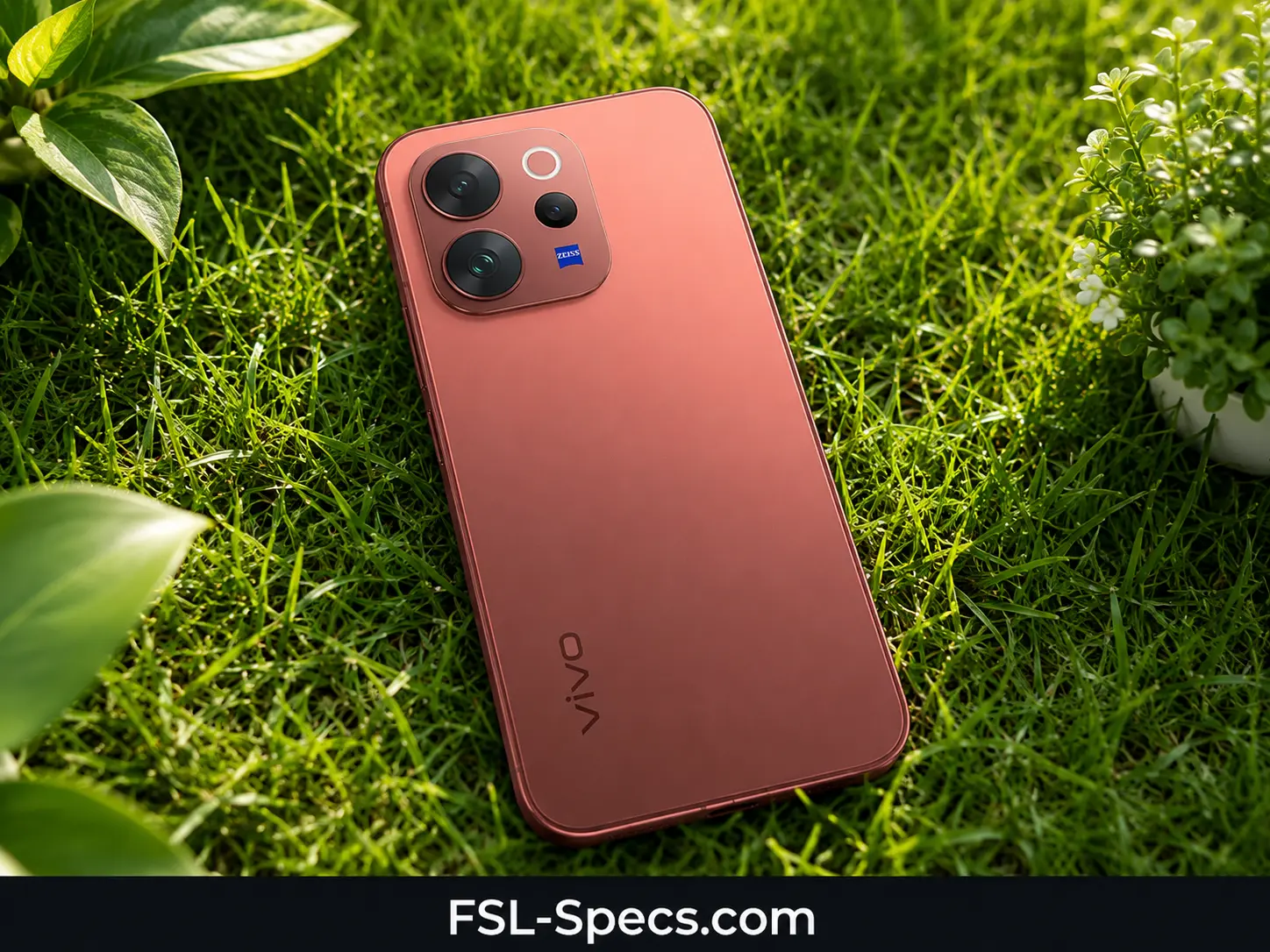
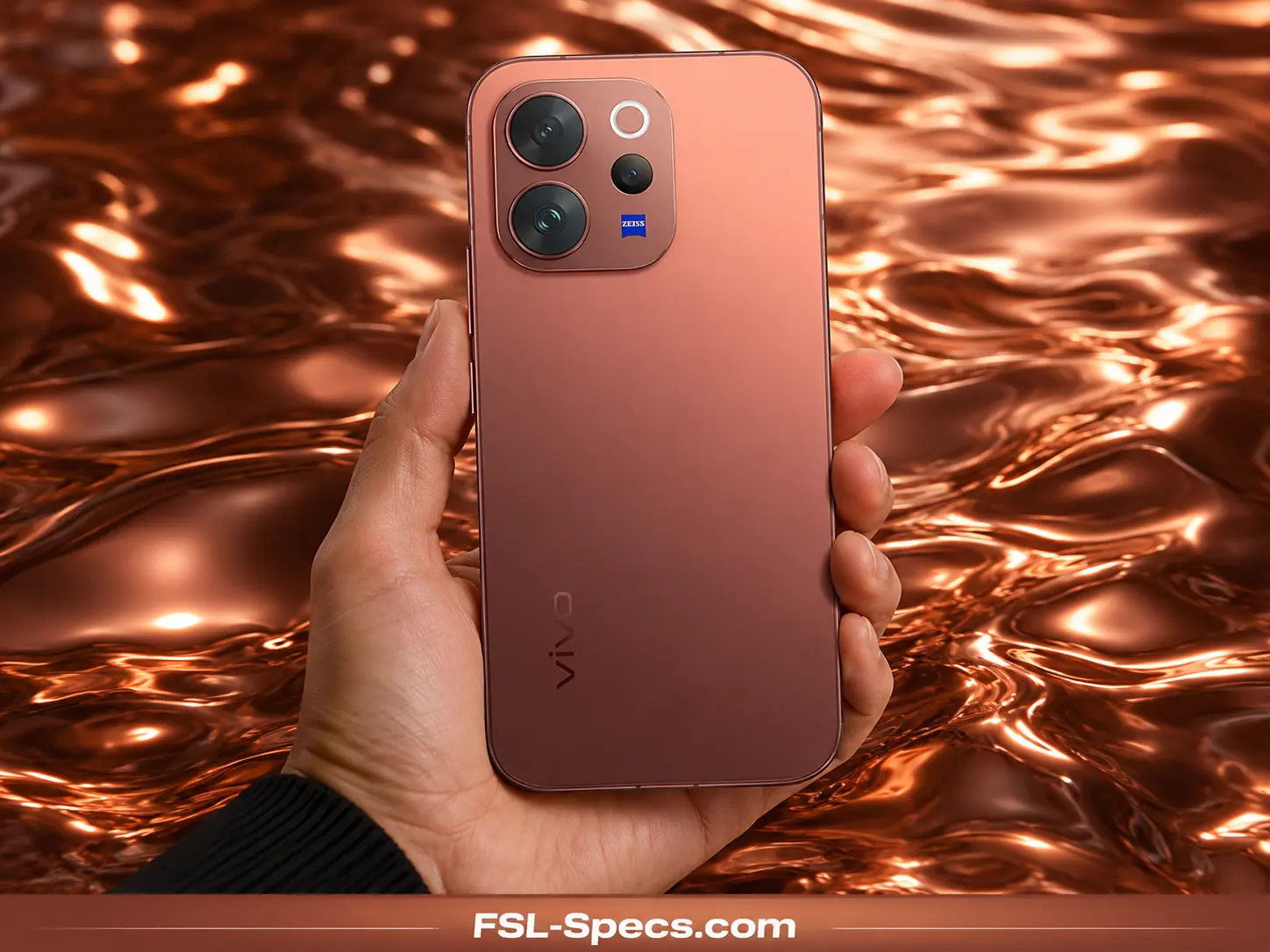
Aluminum Alloy Frame, Glassfiber Back
KG Weight
187 g / 194 g (variant dependent)
Screen Size
6.59 inch
Resolution
1260 x 2750 Pixels
Type
Amoled
Refresh Rate
120 Hz
Peak Brightness
5000 nits
HBM Brightness
1800 nits
Processor
Snapdragon 7 Gen 4
Max Clock
2.8 GHz
Lithography
4 nm
GPU
Adreno 722
CPU Cores
8 Cores
Antutu v11
1.1 M
Bootup Time
18 s
Architecture
1×2.8 GHz Cortex-A720
4×2.4 GHz Cortex-A720
3×1.8 GHz Cortex-A520
Ram Memory
12 + 512 GB
Ram Type
LPDDR5X
Storage Type
UFS 4.1
SD Card
No
Variants
8 + 256GB
12 + 256GB
8 + 512 GB
12 + 512GB
MP
Rear Camera
50 + 50 + 8 MP
Front Camera
50 MP
SENSORS
Camera Sensors
50 MP = Sony LYT-700C
50 MP = Sony IMX882
  8 MP =not confirm
Front Sensors
50 MP = Not Confirm
RECORDING FPS
Main Recording
4K @30 fps
1080p @30/60 fps
Front Recording
4K@ 30 fps
1080p @30/60fps
RESOLUTION
Main Resolution
8160 × 6144 pixels
Front Resolution
8192 x 6144 Pixels
ZOOM
Optical Zoom
3 x
D Digital Zoom
100 x
FLASH
Flash
Ring Light
Front Flash
Screen Flash
Capacity
6500 mAh
Fast Charging
90 W
Wireless Charging
No
Li Battery Type
Silicon-Carbon
REVERSE
Reverse Wired
Yes
Reverse Wireless
No
OTHER
Battery PC Marks
~13 hours
Charging Time
50m-60m (0% To 100%)
AUDIO & SENSORS
Speaker
Dual Stereo Speaker
Fingerprint Sensor
Front Finger
Other Sensors
Accelerometer
Gyroscope
Proximity
Compass
etc
Special Features

Zeiss co-engineered optics (all 4 cameras)
4,200mm² vapor chamber cooling, AI Magic Weather
AI Stage Mode, AI Audio Noise Erase
Ultra Game Mode, Bypass Charging,
Zeiss Natural Color portrait mode.

BASIC INFO
Mobile
vivo V70
Model
vivo V70 (V2538)
Series
Vivo V Series
Category
Mid-Range
Release Date
26 February,2026
Year
2026
CONNECTIVITY
Sim
Nano-SIM + Nano-SIM
Network
4G / 4G+ / 5G
WiFi
Wi-Fi 6
Bluetooth
5.4
NFC
Yes
OS
Android 17
BODY
Dimensions
157.5 x 74.3 x 7.4/7.6 mm
Build
Aluminum Alloy Frame, Glassfiber Back
KG Weight
187 g / 194 g (variant dependent)
Screen Size
6.59 inch
Resolution
1260 x 2750 Pixels
Type
Amoled
Refresh Rate
120 Hz
Peak Brightness
5000 nits
HBM Brightness
1800 nits
Processor
Snapdragon 7 Gen 4
Max Clock
2.8 GHz
Lithography
4 nm
GPU
Adreno 722
CPU Cores
8 Cores
Antutu v11
1.1 M
Bootup Time
18 s
Architecture
1×2.8 GHz Cortex-A720
4×2.4 GHz Cortex-A720
3×1.8 GHz Cortex-A520
Ram Memory
12 + 512 GB
SD Card
No
Ram Type
LPDDR5X
Storage Type
UFS 4.1
Variants
8 + 256GB
12 + 256GB
8 + 512 GB
12 + 512GB
MP
Rear Camera
50 + 50 + 8 MP
Front Camera
50 MP
SENSORS
Main Camera Sensors
50 MP = Sony LYT-700C
50 MP = Sony IMX882
  8 MP =not confirm
Front Camera Sensors
50 MP = Not Confirm
RECORDING FPS
Main Recording
4K @30 fps
1080p @30/60 fps
Front Recording
4K@ 30 fps
1080p @30/60fps
RESOLUTION
Main Resolution
8160 × 6144 pixels
Front Resolution
8192 x 6144 Pixels
ZOOM
Optical Zoom
3 x
D Digital Zoom
100 x
FLASH
Flash
Ring Light
Front Flash
Screen Flash
Capacity
6500 mAh
Fast Charging
90 W
Wireless Charging
No
Li Battery Type
Silicon-Carbon
REVERSE
Reverse Wired
Yes
Reverse Wireless
No
OTHER
Battery Life PCMark
~13 hours
Charging Time
50m-60m (0% To 100%)
AUDIO & SENSORS
Speaker
Dual Stereo Speaker
Fingerprint Sensor
Front Finger
Other Sensors
Accelerometer
Gyroscope
Proximity
Compass
etc
Special Features

Zeiss co-engineered optics (all 4 cameras)
4,200mm² vapor chamber cooling, AI Magic Weather
AI Stage Mode, AI Audio Noise Erase
Ultra Game Mode, Bypass Charging,
Zeiss Natural Color portrait mode.

Highlights & Review Of vivo V70

Display Review:

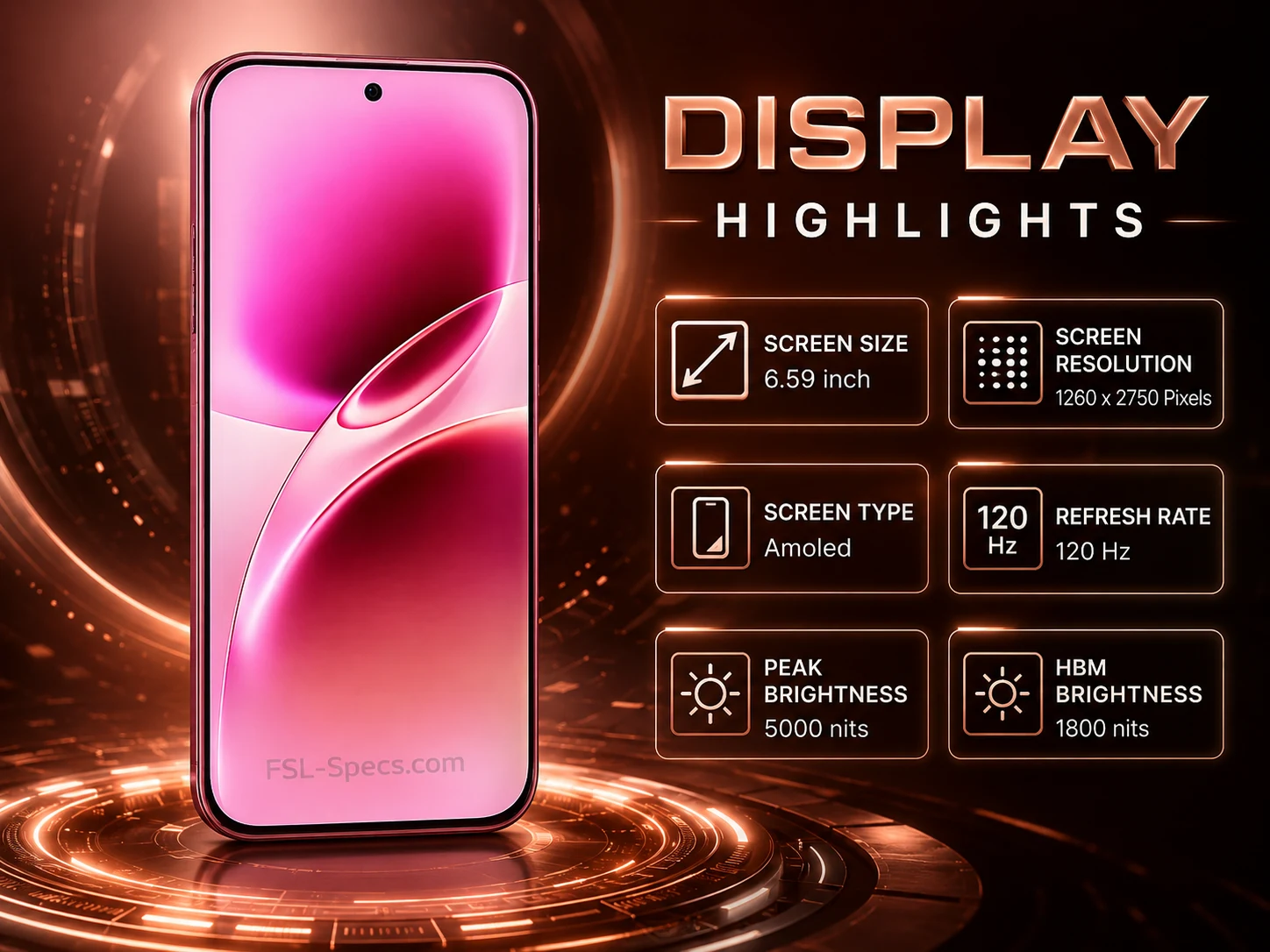
The Vivo V70 runs a 6.59-inch 1.5K AMOLED display with a 120Hz refresh rate and a genuinely high 5000-nit local peak brightness, one of the brightest panels in this entire price bracket.

Against the Xiaomi Redmi Note 15 Pro Plus (156,000 PKR): the Redmi wins on sheer size, its 6.83-inch CrystalRes AMOLED panel resolves at 2772×1280 (1.5K), noticeably larger than the V70’s 6.59-inch screen, and it’s protected by Corning Gorilla Glass Victus 2. But on brightness, the V70 pulls ahead clearly, its 5000-nit peak beats the Redmi’s 3200-nit peak (1800-nit HBM) by a wide margin, meaning the V70 will stay more visible under harsh outdoor sunlight despite its smaller size.

Against the Oppo Reno15 (165,000 PKR): the two phones are almost identical in screen size, the Reno15’s 6.59-inch AMOLED matches the V70 exactly, running at 1256×2760 (460ppi) with HDR10+ certification and 1200-nit HBM brightness. The V70’s 5000-nit peak brightness figure dwarfs the Reno15’s HBM rating, though peak and HBM aren’t directly comparable metrics, in real outdoor use the V70’s brighter panel should still feel like a meaningful edge for visibility.

What this means day to day: if you want the biggest possible screen, the Redmi Note 15 Pro Plus wins on size alone. But for outdoor visibility and HDR content, the Vivo V70’s brightness numbers are hard for either rival to match, this is shaping up to be the V70’s strongest spec in the whole comparison.

The honest verdict: the Vivo V70 has the brightest display of the three, a genuine advantage for Pakistan’s harsh sunlight conditions, but the Redmi Note 15 Pro Plus offers more screen real estate for anyone who prioritizes size over peak brightness. The Oppo Reno15 sits in between, matching the V70’s size but trailing on brightness.

Processor Review:

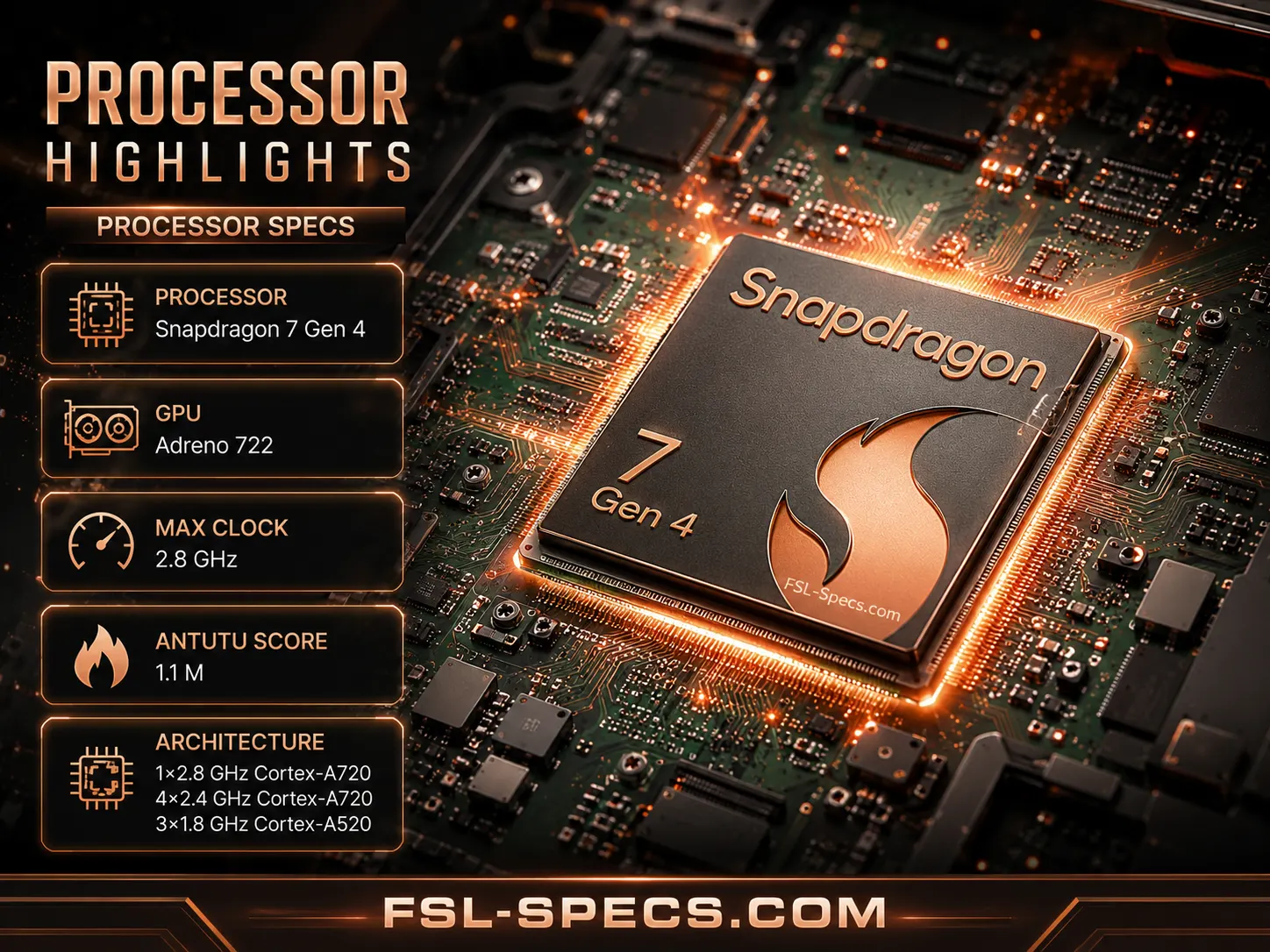
The Vivo V70 runs on the Snapdragon 7 Gen 4 (4nm), an octa-core setup with 1×2.8GHz Cortex-A720 prime core + 4×2.4GHz Cortex-A720 + 3×1.84GHz Cortex-A520. Its NanoReview AnTuTu v11 score lands at 1,410,609, comfortably the strongest of the three phones here.

Against the Xiaomi Redmi Note 15 Pro Plus (156,000 PKR): this is the biggest gap in the comparison. The Redmi’s Snapdragon 7s Gen 4 scores 1,024,234 on NanoReview’s AnTuTu v11, that’s 37.7% lower than the Vivo V70, despite being the newer-numbered chip. The “7s” naming is Qualcomm’s cost-reduced variant of the 7-series, lower clock speeds and a trimmed GPU configuration explain the gap. For a phone priced 7,000 PKR less than the V70, that’s a meaningful performance trade-off buyers should know about upfront.

Against the Oppo Reno15 (165,000 PKR): this is essentially a dead heat. The Reno15 runs the exact same Snapdragon 7 Gen 4 chipset as the Vivo V70, and its NanoReview AnTuTu v11 score of 1,394,716 sits just 1.1% below the V70’s score, well within normal benchmark run-to-run variance. For all practical purposes, these two phones will perform identically in daily use, gaming, and multitasking.

What this means day to day: the Vivo V70 and Oppo Reno15 are functionally tied on raw performance since they share the same silicon, so the real differentiator between them will come down to software optimization and thermal design, not the chipset itself. The Redmi Note 15 Pro Plus trails both by a wide margin, still capable for everyday tasks, but a clear step down for gaming or heavy multitasking.

The honest verdict: if raw performance is the deciding factor, the Vivo V70 and Oppo Reno15 are essentially equal, pick based on camera, display, or battery instead. The Redmi Note 15 Pro Plus is the clear performance compromise of the three, though it’s also the cheapest, so buyers prioritizing value over benchmark numbers may still find it reasonable.

Ram & Memory Review:

The Vivo V70 pairs 12GB LPDDR5X RAM with UFS 4.1 storage in your specified configuration, the most advanced memory combination of the three phones in this bracket.

Against the Xiaomi Redmi Note 15 Pro Plus (156,000 PKR): this is a significant gap. Xiaomi’s own spec sheet confirms the Redmi runs LPDDR4X RAM with UFS 2.2 storage, a full two generations behind the V70 on both counts. UFS 2.2 is a notably older storage standard, real-world app installs, game loading, and large file transfers will all be visibly slower on the Redmi despite it running the same 12GB capacity tier.

Against the Oppo Reno15 (165,000 PKR): closer, but the V70 still edges ahead. The Reno15 matches the V70 on RAM type with 12GB LPDDR5X, but its storage sits at UFS 3.1, one generation behind the V70’s UFS 4.1. UFS 4.1 offers meaningfully faster sequential read/write speeds over UFS 3.1, so while day-to-day multitasking will feel similar, heavy file transfers and game asset loading should be a touch quicker on the V70.

What this means day to day: the Vivo V70 has the newest memory hardware of the three, full stop. The Redmi Note 15 Pro Plus’s LPDDR4X and UFS 2.2 combination is the clearest weak point in this entire comparison, a real trade-off for buyers saving 7,000 PKR. The Oppo Reno15 comes close but still trails on storage generation.

The honest verdict: if memory performance and future-proofing matter to you, the Vivo V70 wins this round outright against both rivals. The Redmi Note 15 Pro Plus’s older UFS 2.2 storage is a genuine concession for its lower price, worth knowing before buying if you transfer large files or install games often.

Cameras Review:

The Vivo V70 runs a triple ZEISS-branded rear setup: 50MP main (Sony sensor, 1/1.56″, f/1.88, OIS), 50MP telephoto (Sony IMX882/LYT-700C, 1/1.95″, f/2.65, OIS), and an 8MP ultrawide (f/2.2, fixed focus). The 50MP autofocus selfie camera is a genuine standout. Video recording hits 4K@60fps on the main, telephoto, and front cameras alike, the ultrawide caps out at 1080p@30fps.

Against the Xiaomi Redmi Note 15 Pro Plus (156,000 PKR): the Redmi drops the telephoto lens entirely, running a 200MP main camera (1/1.4″ sensor, f/1.77, OIS) paired with just an 8MP ultrawide (f/2.2). The eye-catching 200MP resolution is a marketing win, but video recording only reaches 4K@30fps, half the frame rate of the V70’s 4K60, and the front camera is a lower 32MP with no autofocus mentioned. Without a telephoto lens, the Redmi also loses the V70’s optical zoom capability entirely.

Against the Oppo Reno15 (165,000 PKR): this is a close match, both phones run near-identical triple setups. The Reno15’s 50MP main (f/1.8, OIS) + 50MP telephoto (f/2.8, OIS, 3.5x optical zoom) + 8MP ultrawide (autofocus) trades blows with the V70 lens-for-lens, and its 50MP autofocus selfie camera matches the V70’s front setup too. Both phones share the same 4K@60fps video ceiling on their main cameras. The Reno15’s ultrawide adds autofocus where the V70’s is fixed-focus, a small edge for close-range wide shots.

What this means day to day: the Vivo V70 and Oppo Reno15 are the strongest camera performers here, near-identical hardware with genuine optical zoom and fast 4K60 video across the board. The Redmi Note 15 Pro Plus’s 200MP main sensor sounds impressive on a spec sheet, but the missing telephoto lens and lower video frame rate are real practical trade-offs for anyone who zooms or shoots video often.

The honest verdict: for photography and video versatility, the V70 and Reno15 are essentially tied, and both clearly beat the Redmi Note 15 Pro Plus, which trades zoom flexibility and frame rate for a bigger main sensor number. If camera performance is your top priority, either the V70 or Reno15 is the safer choice over the Redmi.

Battery Review:

The Vivo V70 packs a 6500mAh battery (6320mAh rated capacity) with 90W FlashCharge wired charging, no wireless charging support.

Against the Xiaomi Redmi Note 15 Pro Plus (156,000 PKR): Xiaomi wins outright on charging speed. The Redmi’s 6500mAh battery matches the V70 on capacity exactly, but its 100W wired charging (with 22.5W reverse wired charging) reaches a full charge in about 40 minutes, noticeably faster than what the V70’s 90W typically delivers. So for identical battery capacity, the Redmi charges quicker and adds reverse charging capability the V70 doesn’t offer.

Against the Oppo Reno15 (165,000 PKR): the V70 pulls ahead here. The Reno15’s 6500mAh battery again matches on capacity, but its 80W wired charging (0-100% in around 50 minutes) is slower than the V70’s 90W, even though the Reno15 does add reverse wired charging support that the V70 lacks.

What this means day to day: all three phones land on essentially the same 6500mAh capacity, so daily screen-on time should feel comparable across the board. Charging speed is where they separate, the Redmi Note 15 Pro Plus is the fastest at 100W, the V70 sits in the middle at 90W, and the Reno15 is the slowest of the three at 80W despite being the most expensive.

The honest verdict: if charging speed is the priority, the Redmi Note 15 Pro Plus wins clearly, and it’s also the cheapest of the three. The Vivo V70 offers a solid middle ground on speed, while the Oppo Reno15’s slower charging is a harder sell given it’s the priciest phone in this comparison. Reverse charging is available on the Redmi and Reno15 but missing on the V70, worth noting for buyers who want to use their phone as a power bank.

Final Verdict :

Across five rounds, display, processor, RAM & memory, camera, and battery, the Vivo V70 comes out as the most consistently strong performer of the three, winning or tying in nearly every category.

Where it wins: display brightness (5000-nit peak beats both rivals clearly), RAM and memory (newest LPDDR5X + UFS 4.1 combination in the bracket), and processor performance (tied with Reno15 for the lead, both clearly ahead of the Redmi).

Where it ties: camera, essentially matched with the Oppo Reno15 lens-for-lens, both comfortably ahead of the Redmi’s telephoto-less setup.

Where it loses: charging speed, both rivals offer faster or more feature-complete charging (Redmi at 100W, Reno15 with reverse charging), while the V70’s 90W sits in the middle without reverse charging support.

Ranking by priority:

Performance and memory focused buyers → Vivo V70 (163,000 PKR). The newest RAM and storage generation, brightest display, and tied-for-best processor make this the most technically complete phone in the bracket. The clear pick if you want the newest hardware across the board.

Value and fast-charging focused buyers → Xiaomi Redmi Note 15 Pro Plus (156,000 PKR). Cheapest of the three, fastest charging at 100W, and a genuinely eye-catching 200MP camera, but the trade-offs (older LPDDR4X/UFS 2.2 memory, weaker processor, no telephoto lens) are real. Best for buyers prioritizing price and charging speed over raw specs.

Balanced all-rounder buyers → Oppo Reno15 (165,000 PKR). Matches the V70 on processor and camera, adds reverse charging, but costs the most while trailing on memory generation and charging speed. A reasonable pick if brand preference or specific software features (ColorOS) matter more than winning every spec category.

The honest bottom line: the Vivo V70 is the strongest overall package in this comparison, it wins or ties in four of five categories and only loses on charging speed, a fairly minor day-to-day inconvenience given all three phones charge in under an hour. The Redmi Note 15 Pro Plus remains the value pick for budget-conscious buyers willing to accept older memory hardware, while the Reno15 struggles to justify being the most expensive option when it doesn’t clearly beat the V70 anywhere. For most buyers in this bracket, the V70 is the safer, more future-proof choice.

Pros And Cons of vivo V70

Pros of Mobile

✅ ZEISS Cameras (50MP Main + 50MP Telephoto + OIS)
✅ Bright AMOLED (6.59″ 120Hz, 5000 nits)
✅ Massive Battery (6500mAh)
✅ Fast Charging (90W FlashCharge)
✅ Premium Durability (IP68 + IP69)
✅ Fast Performance (Snapdragon 7 Gen 4, LPDDR5X, UFS 4.1)

Cons of Mobile

❌ No Card (No microSD slot)
❌ USB 2.0 (Slower transfers)
❌ Weak Ultrawide (8MP sensor)
❌ Midrange Chip (Not flagship-class SoC)

Best For - Not Best For

Best For

✅ Portrait Photography
✅ Daily Gaming
✅ Battery Backup
✅ Content Creation
✅ Outdoor Usage
✅ Premium Design

Not Best For

❌ 8K Recording
❌ Expandable Storage
❌ Fast File Transfers
❌ Audiophile Listening

Trailer And Unboxing of vivo V70

Disassembly Or Teardown And Gaming Test of vivo V70

Camera Test vivo V70

OPPO Reno 15
Nothing Phone 3A Pro
Xiaomi Redmi Note 15 Pro Plus
infinix gt 50 pro

Vivo Mobile Series

Vivo Mobile Series

Picture of Faisal Ur Rehman

Faisal Ur Rehman

Faisal Rehman is the founder and editor of FSL Specs, where he publishes in-depth smartphone specifications, comparisons, buying guides, and technology insights. With extensive experience in mobile hardware research and technical analysis, he provides accurate and up-to-date information on Android smartphones, processors, displays, cameras, batteries, performance benchmarks, and software features. His goal is to simplify complex specifications and help readers choose the right device with confidence.

FAQs Questions

The vivo V70 features a 6.59-inch 1.5K AMOLED display with a 120Hz refresh rate for smooth scrolling and gaming. It reaches 5,000 nits local peak brightness, making HDR content vibrant and outdoor visibility excellent.

Yes. Powered by the Snapdragon 7 Gen 4 (4nm) chipset with LPDDR5X RAM and UFS 4.1 storage, the vivo V70 handles multitasking, gaming, and everyday apps with ease while maintaining good power efficiency.

The vivo V70 is built for photography, featuring a 50MP ZEISS OIS main camera, 50MP ZEISS telephoto camera, 8MP ultra-wide camera, and a 50MP autofocus selfie camera. ZEISS optics and OIS help produce sharp portraits, detailed photos, and reliable results in various lighting conditions.

The 6500mAh BlueVolt battery comfortably lasts a full day, even with heavy use such as gaming, streaming, or photography. When it's time to recharge, 90W FlashCharge powers the phone up quickly, reducing downtime.

The vivo V70 supports dual 5G, NFC, dual-band Wi-Fi (2.4GHz & 5GHz), and Bluetooth 5.4. However, it does not support eSIM, Wi-Fi 6, or wireless charging.

Yes. The vivo V70 carries IP68 and IP69 ratings, offering excellent resistance against dust, water immersion, and high-pressure water jets. This makes it well suited for everyday use in challenging environments.

The vivo V70 is available in 8GB + 256GB, 12GB + 256GB, and 12GB + 512GB configurations, depending on the market. It uses LPDDR5X RAM and UFS 4.1 storage for fast app loading and smooth multitasking.

The vivo V70 supports 4K video recording on both the front and rear cameras, delivering crisp footage with excellent detail. It does not support 8K video recording, focusing instead on stable, high-quality 4K capture.

8 + 256 GB
₹54,000 INR | $ 560 | PKR ~145,000


12 + 256 GB
₹57,000 INR | $ 590 | PKR ~162,000


12 + 512 GB
₹62,000 INR | $ 660 | PKR ~180,000

Leave a Reply

Your email address will not be published. Required fields are marked *

Scroll to Top