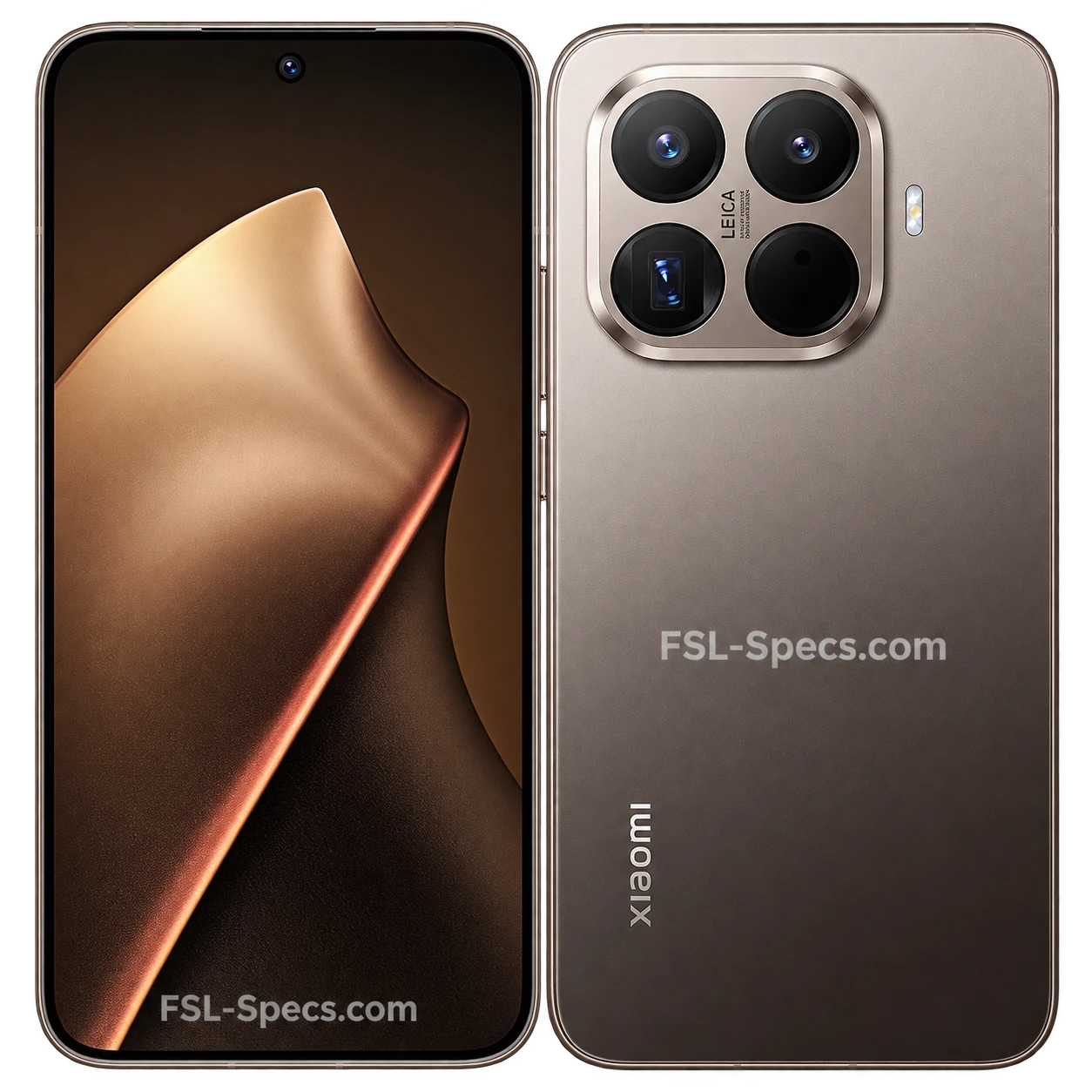
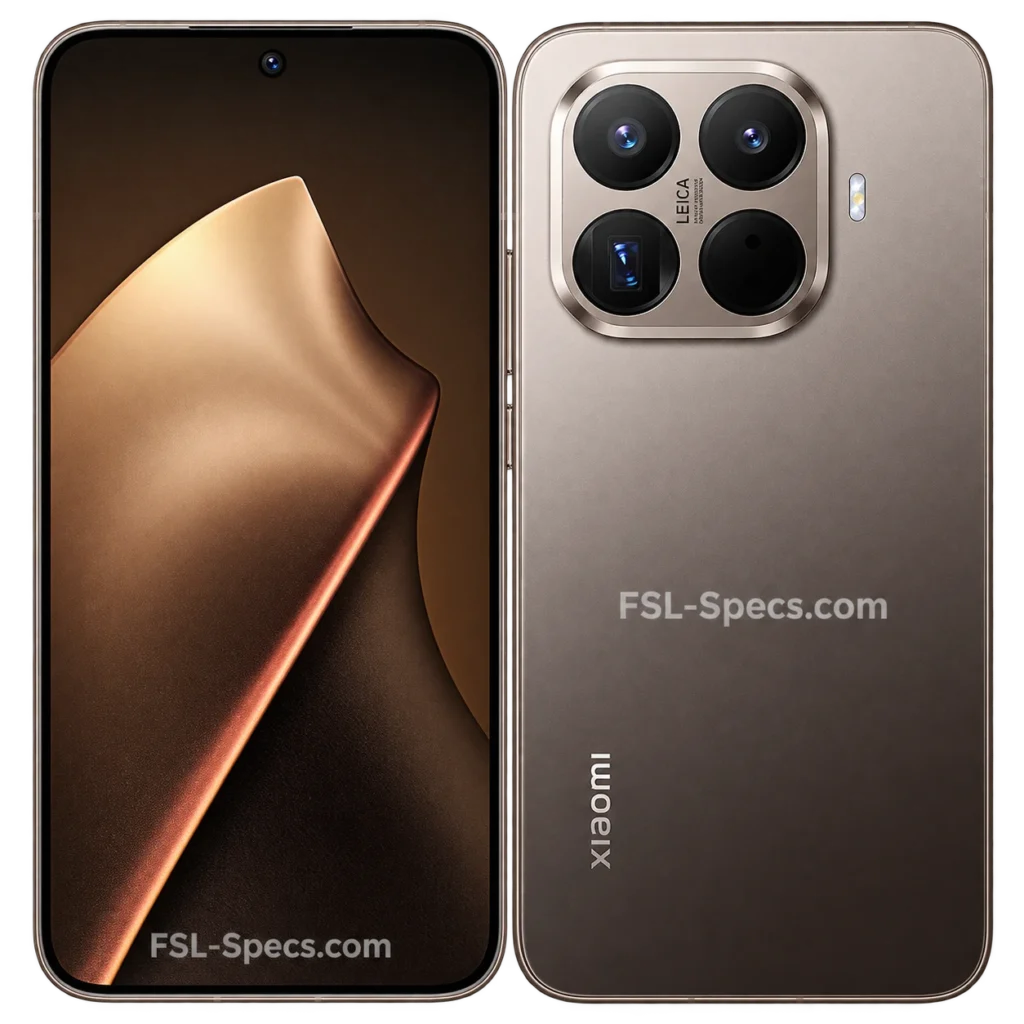
✪ Xiaomi 15T Pro ✪

Xiaomi 15T Pro
Last Time Update : 22 October, 2026
United States flagUnited States
700USD
…iPrice NoteYour Country price depends on USD. Prices may be different in your region due to taxes and duties.
Pakistan flagPakistan (PKR)
230000PKR
India flagIndia (INR)
70000INR

✪ Xiaomi 15T Pro ✪

Xiaomi 15T Pro
Quick Specs
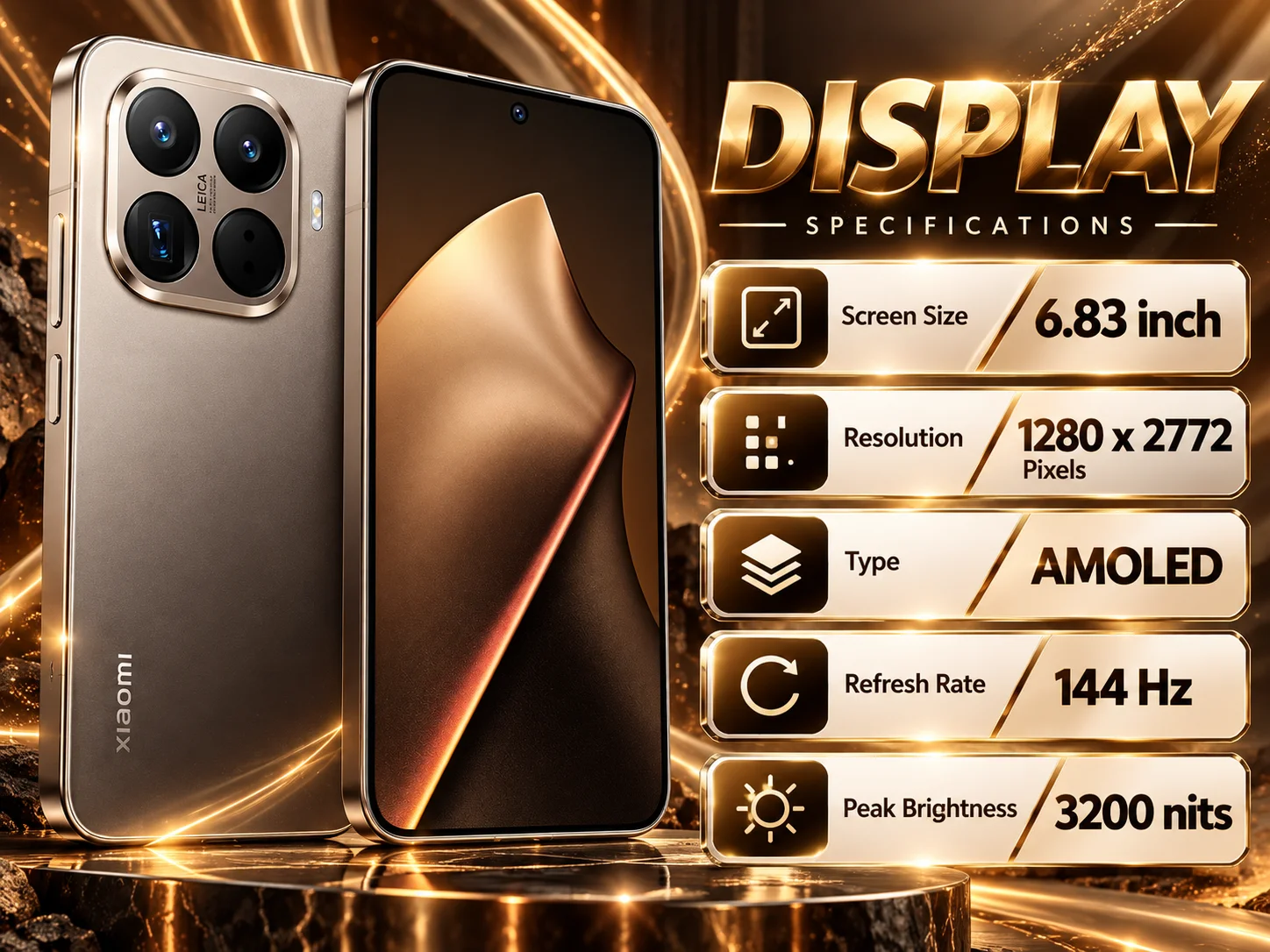
Display
6.83 inchAMOLED144 Hz
Processor
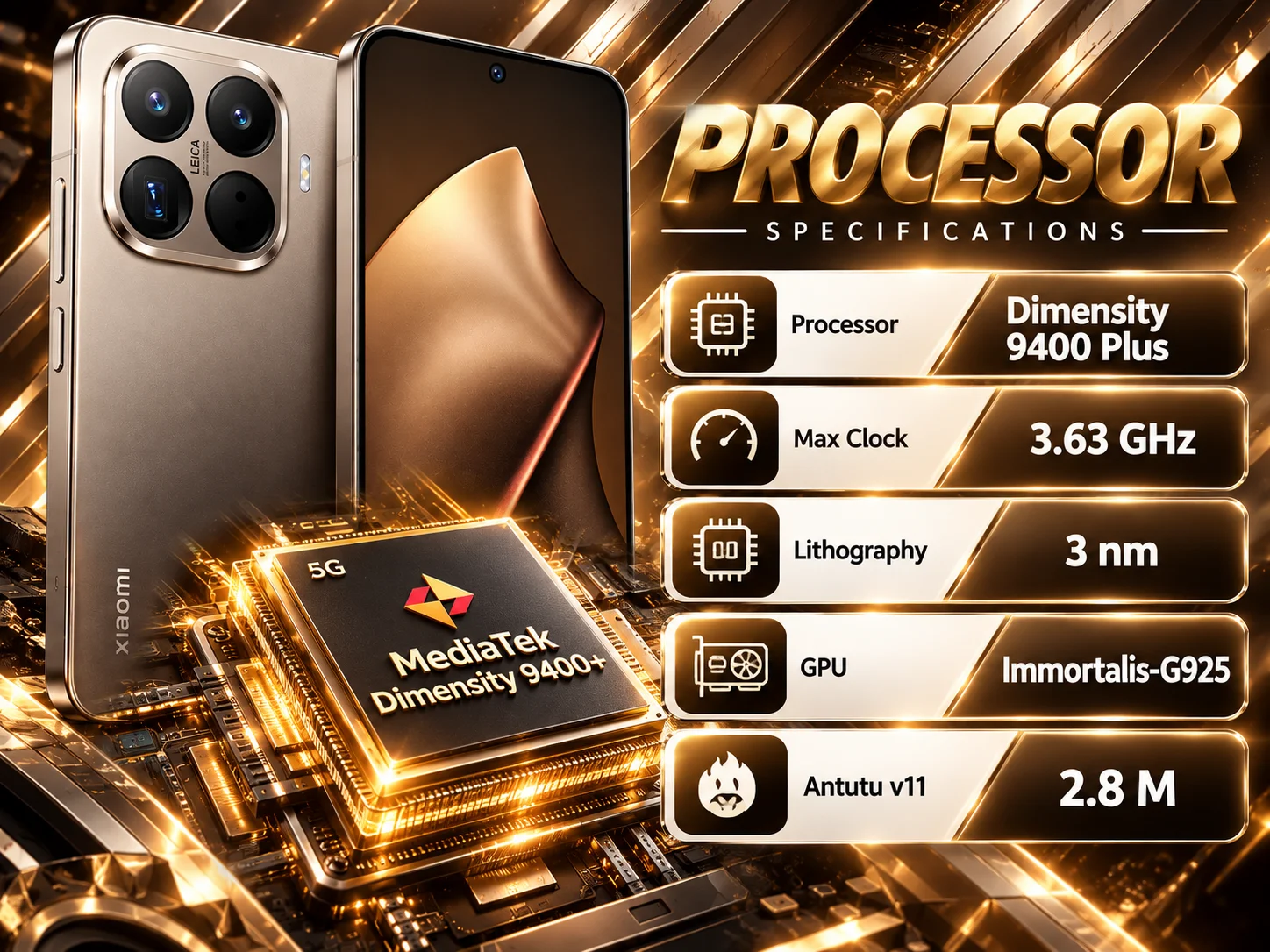
Dimensity 9400 Plus3.63 GHz
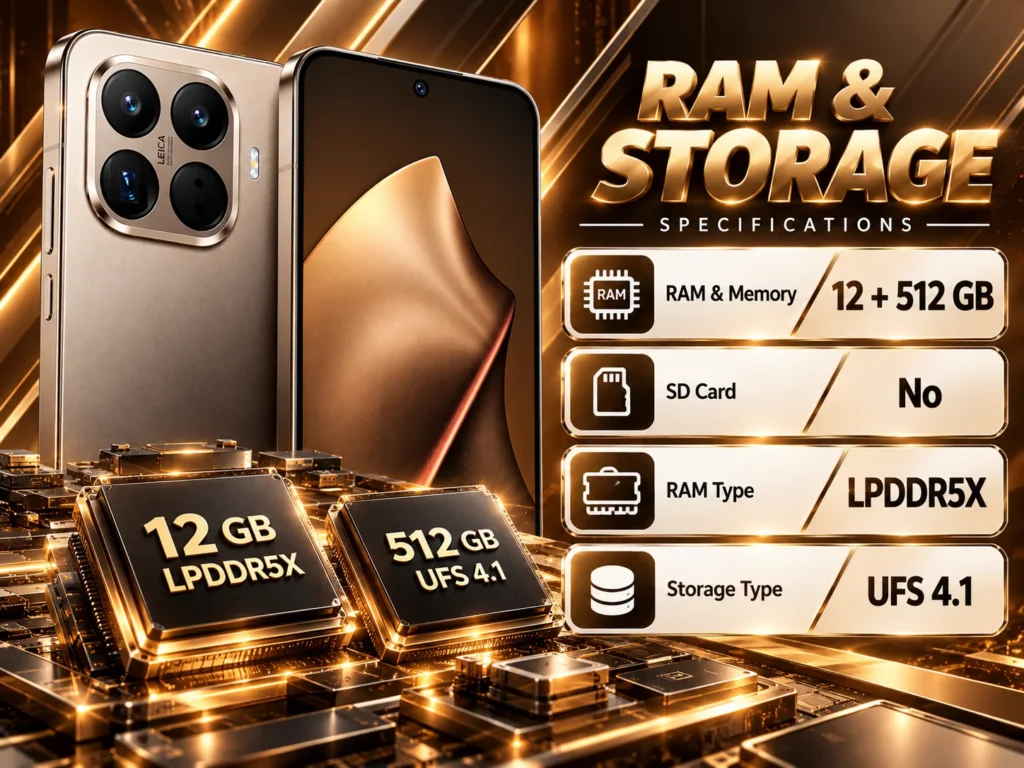
RAM & Storage
12 + 512 GB
Rear Camera
50 + 50 + 12 MP
Front Camera
32 MP
Battery & Charging
5500 mAh90 W50 W Wireless

Full Specification

!
IMPORTANT INFORMATION

Specifications Disclaimer

NOTICE

Specifications are collected from official manufacturers and trusted sources. Actual details may vary by region, model variant, or software updates. We strive for accuracy but cannot guarantee error-free information.

Basic Info

Mobile
Xiaomi 15T Pro
Model
2506BPN68G
Series
Xiaomi Number
Category
Flagship
Release Date
24 September,2025
Year
2025

Connectivity

SIM
Nano-SIM / E-Sim
Network
4G / 4G+ / 5G/ 5G+
WiFi
Wi-Fi 7
Bluetooth
6.0
NFC
Yes
OS
Android 15, upgradable to Android 17

Body

Dimensions
162.7 x 77.9 x 8 mm
Build
Aluminium Alloy + Plastic / Glass back
Weight
210 grams
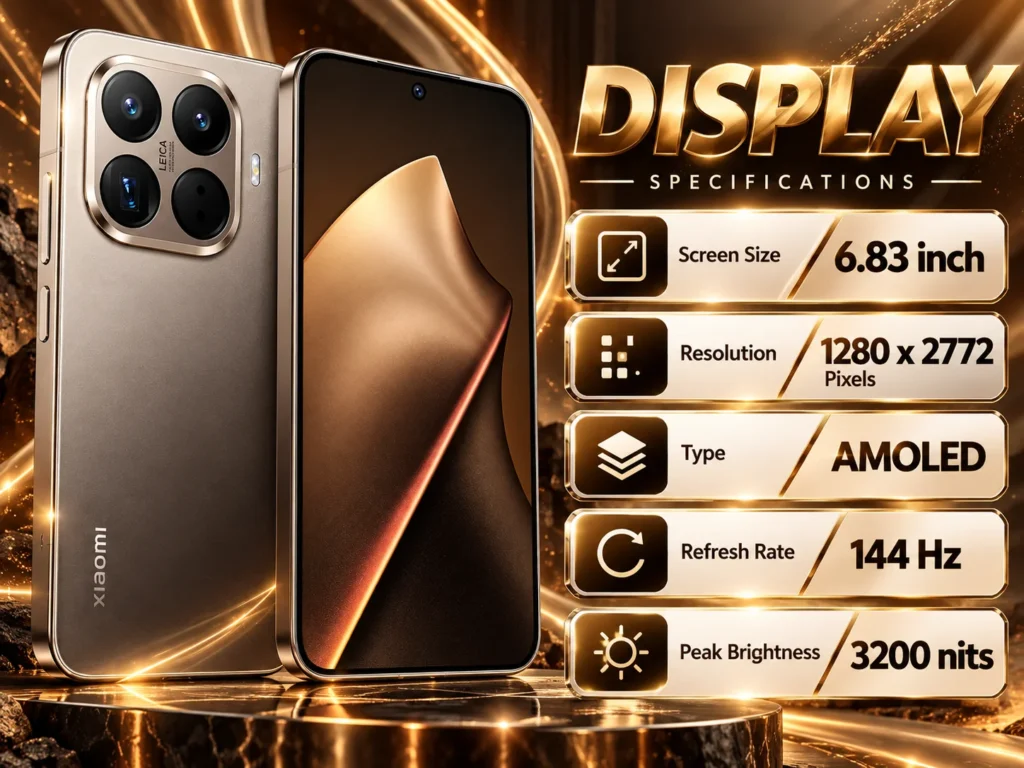
Screen Size
6.83 inch
Resolution
1280 x 2772 Pixels
Type
AMOLED
Refresh Rate
144 Hz
Peak Brightness
3200 nits
Processor Specs
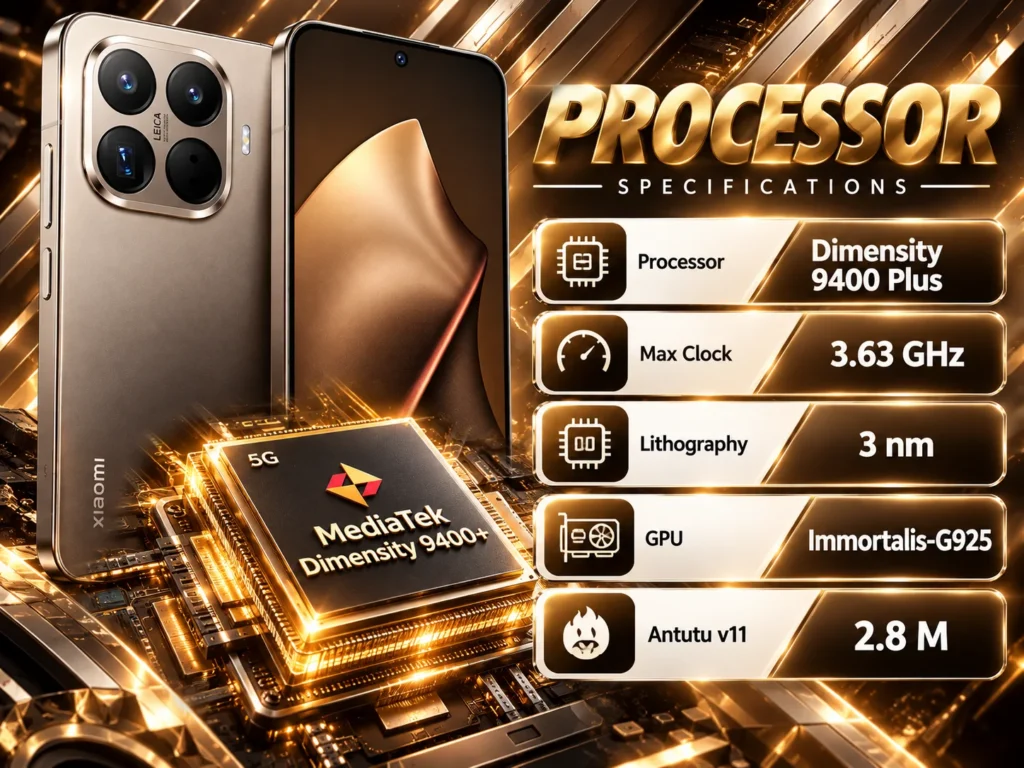
Processor
Dimensity 9400 Plus
Processor Link
Max Clock
3.63 GHz
Lithography
3 nm
GPU
Immortalis-G925
CPU Cores
Octa-core
Antutu v11
2.8 M
Architecture
1 x 3.63 GHz
3 x 3.3 GHz
4 x 2.4 GHz
RAM & ROM Specs
RAM Memory
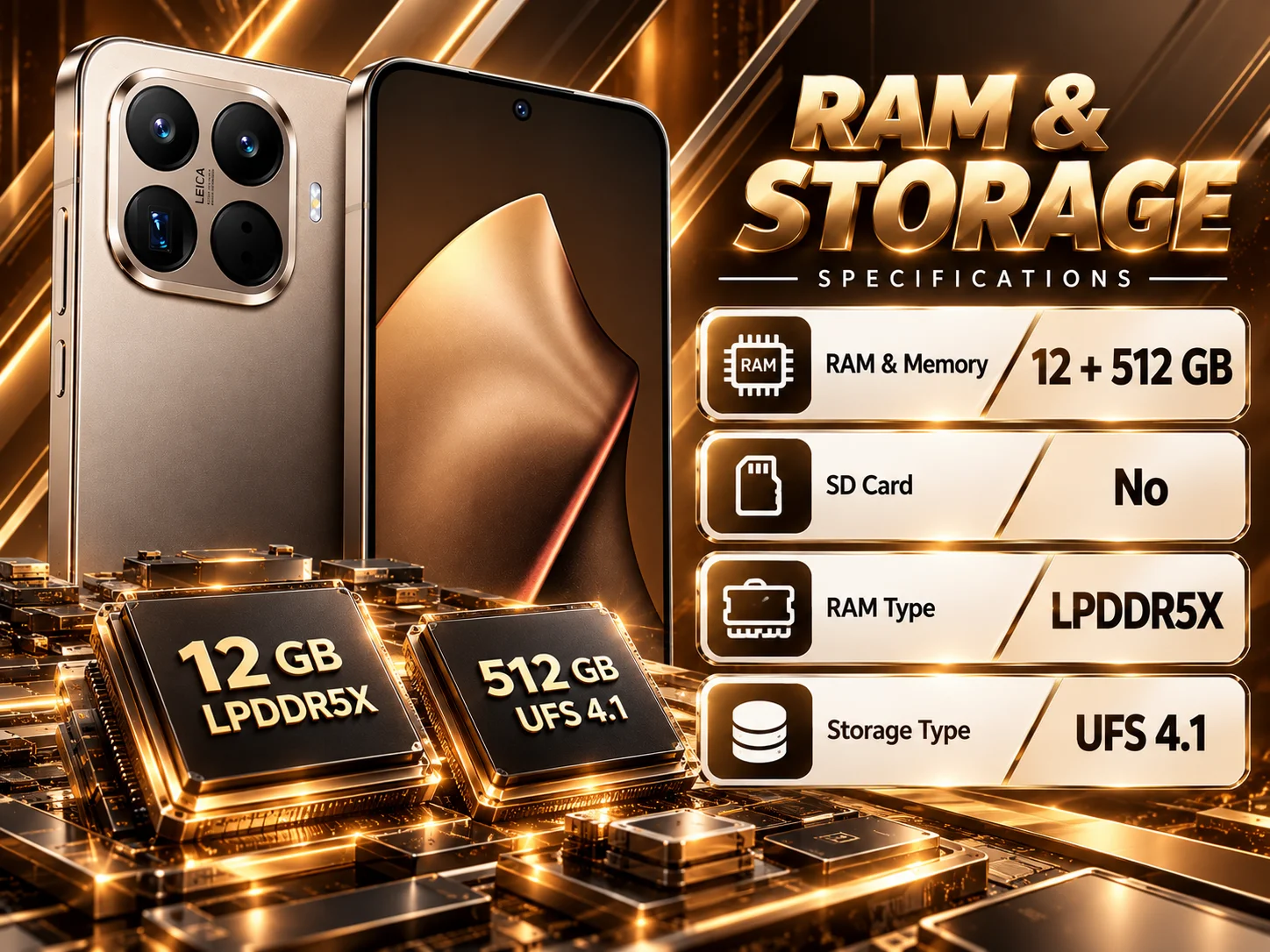
12 + 512 GB
RAM Type
LPDDR5X
Storage Type
UFS 4.1
SD Card
No
Variants
12 + 256 GB
12 + 512 GB
12 + 1TB
Camera Specs
MP
Rear Camera
50 + 50 + 12 MP
Front Camera
32 MP
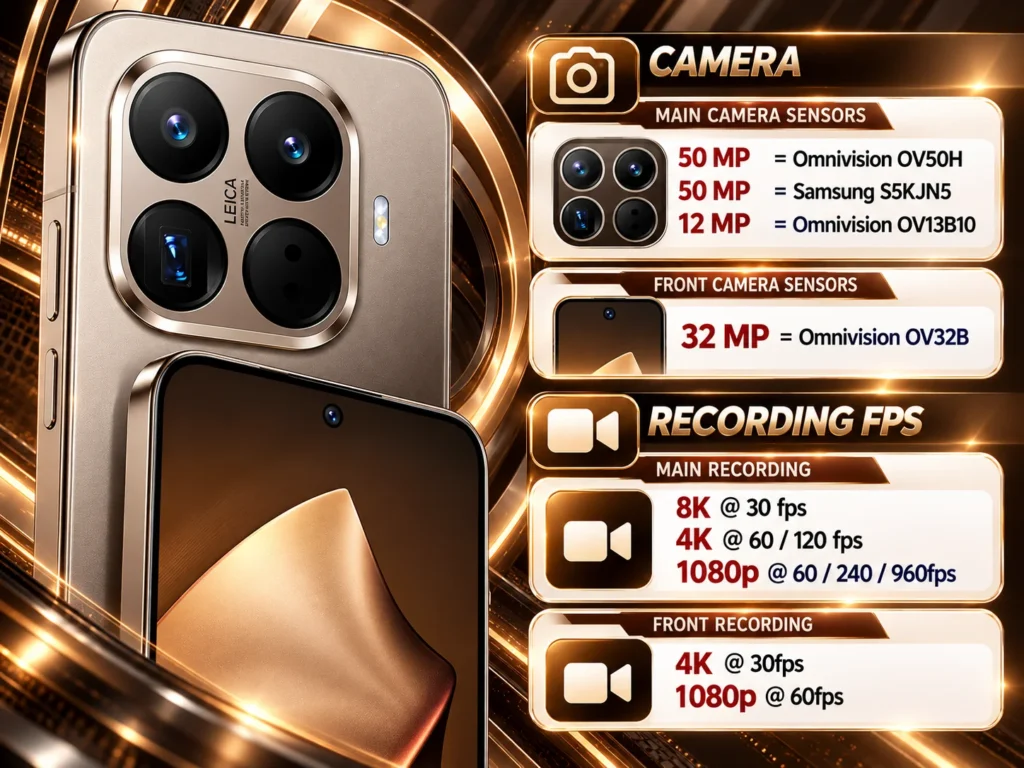
Sensors
Camera Sensors
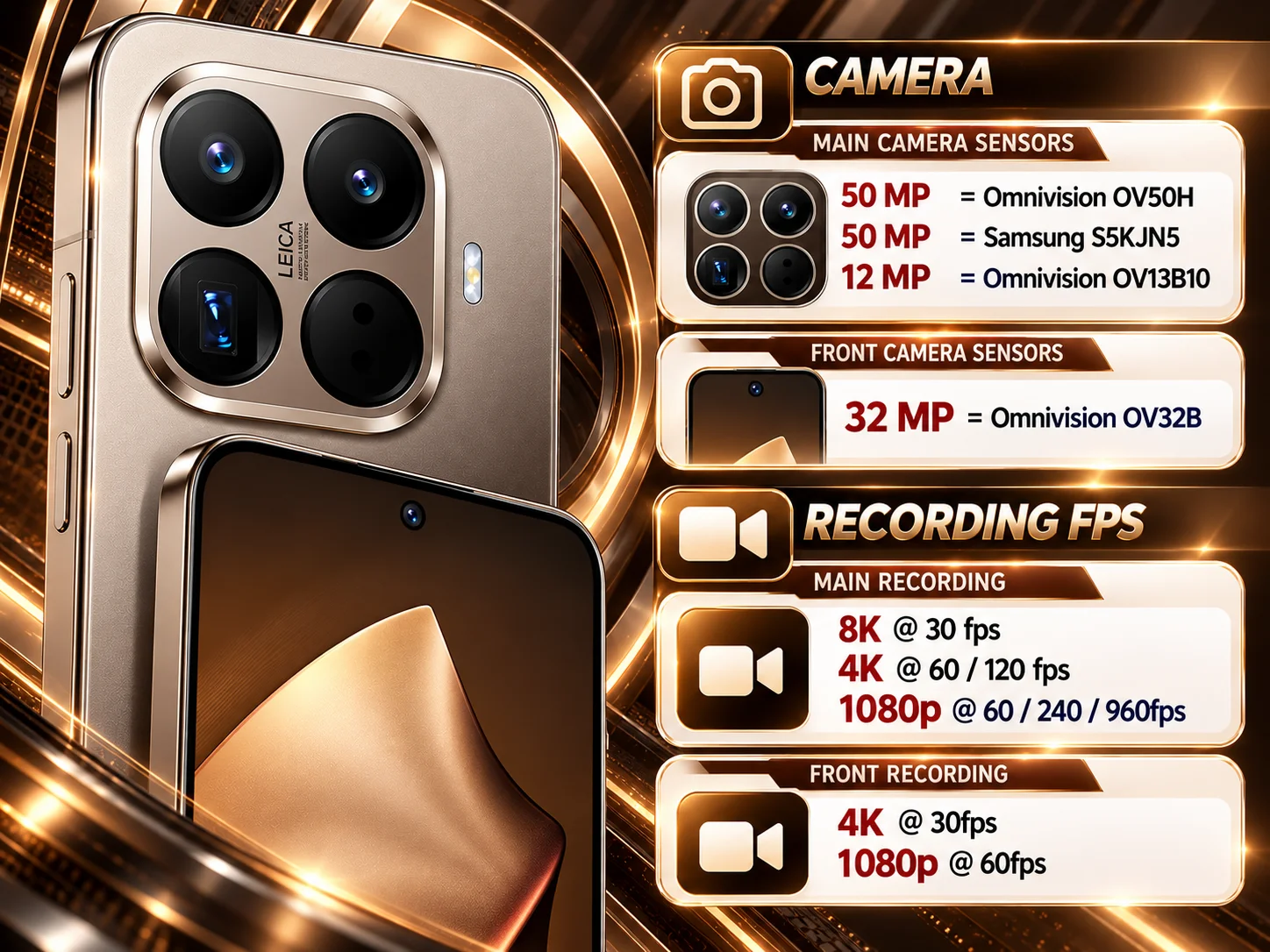
50 MP    = Omnivision OV50H
50 MP    = Samsung S5KJN5
12 MP    = Omnivision OV13B10
Front Sensors
32 MP = Omnivision OV32B
Recording FPS
Main Recording
8K@30 fps
4K@60 / 120 fps
1080p@60 / 240 / 960fps
Front Recording
4K @ 30fps
1080p @ 60fps
Zoom
Optical Zoom
5 x
Digital Zoom
100 x
Stabilization
Yes
Flash
Flash
Dual LED
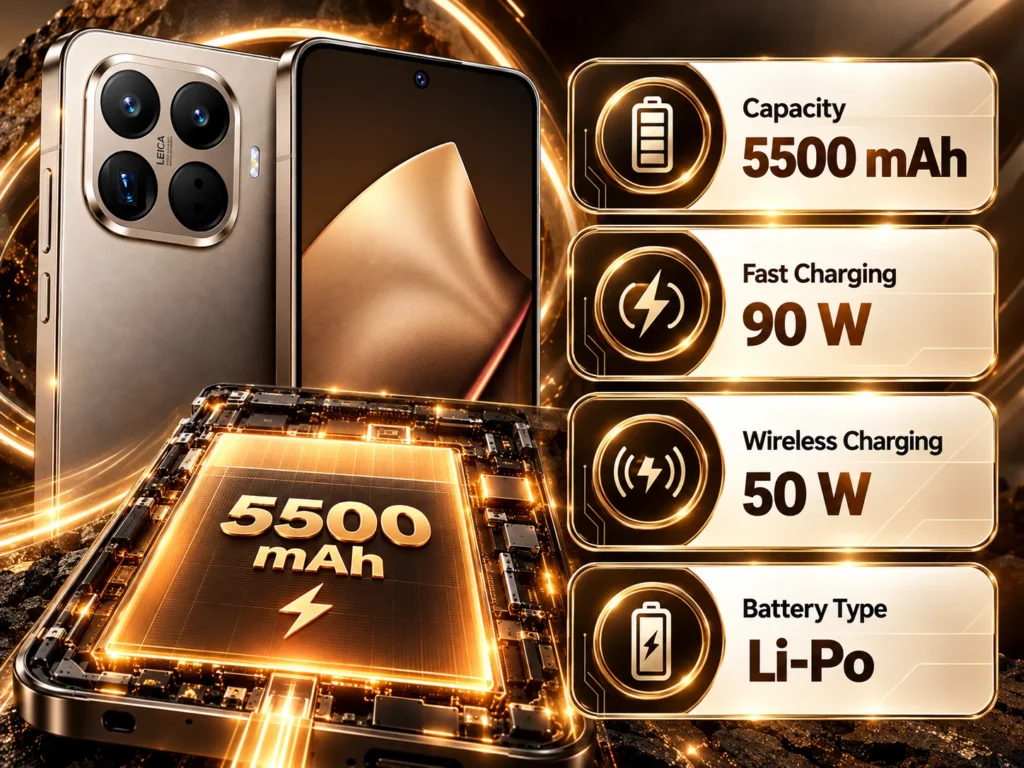
Battery Specs
Capacity
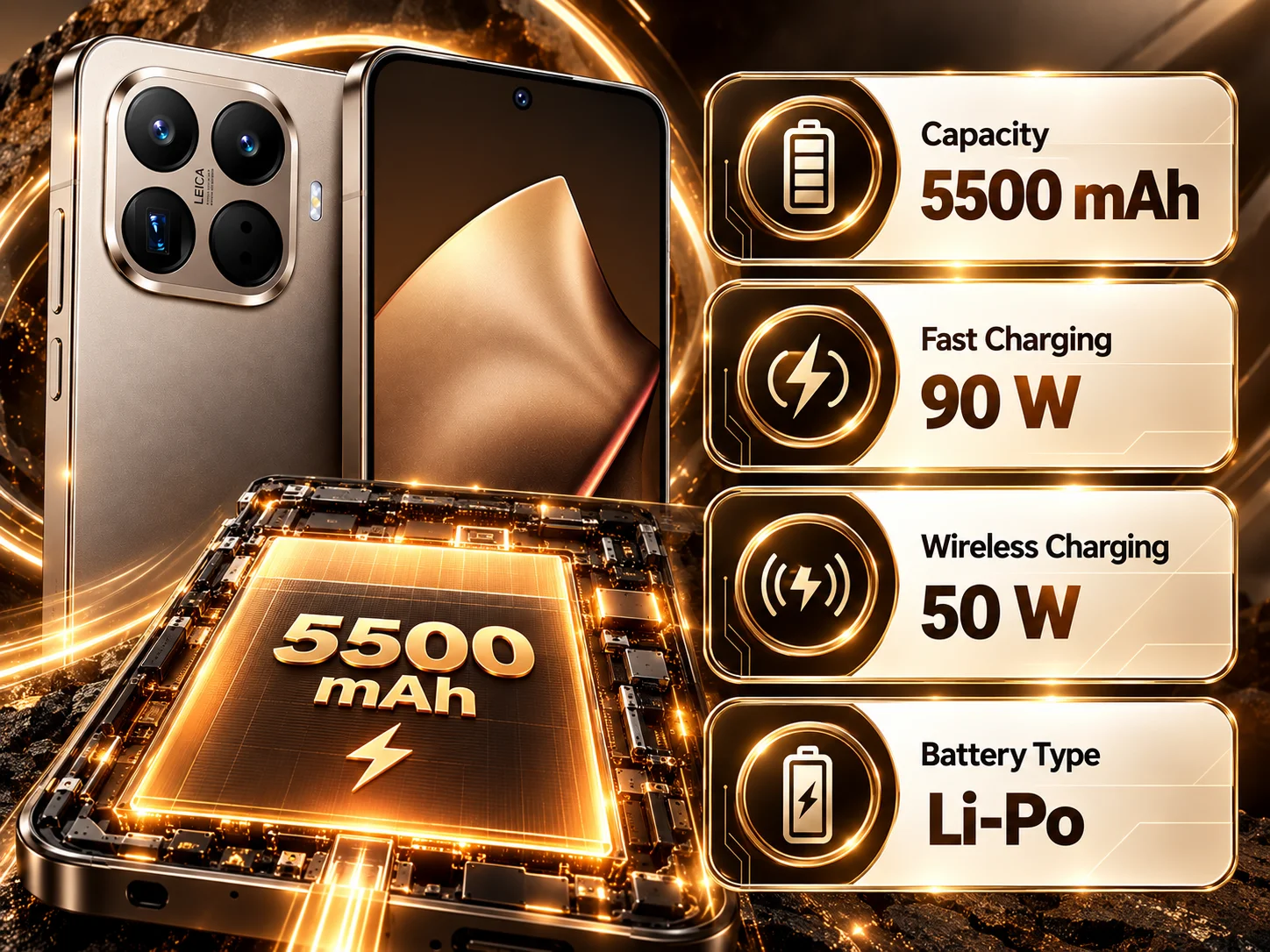
5500 mAh
Fast Charging
90 W
Wireless Charging
50 W
Battery Type
Li-Po
Reverse
Reverse Wired
Yes
Other Specs
Audio & Sensors
IP Rating
ip 68
Speaker
Dual Stereo Speaker
Fingerprint Sensor
Hyper Sonic Front Finger
Other Sensors
Proximity sensor
Gyroscope
Accelerometer
Ambient light sensor
Compass, etc
BASIC INFO
Mobile
Xiaomi 15T Pro
Model
2506BPN68G
Series
Xiaomi Number
Category
Flagship
Release Date
24 September,2025
Year
2025
CONNECTIVITY
Sim
Nano-SIM / E-Sim
Network
4G / 4G+ / 5G/ 5G+
WiFi
Wi-Fi 7
Bluetooth
6.0
NFC
Yes
OS
Android 15, upgradable to Android 17
BODY
Dimensions
162.7 x 77.9 x 8 mm
Build
Aluminium Alloy + Plastic / Glass back
Weight
210 grams
Screen Size
6.83 inch
Resolution
1280 x 2772 Pixels
Type
AMOLED
Refresh Rate
144 Hz
Peak Brightness
3200 nits
Processor
Dimensity 9400 Plus
Processor Link
Max Clock
3.63 GHz
Lithography
3 nm
GPU
Immortalis-G925
CPU Cores
Octa-core
Antutu v11
2.8 M
Architecture
1 x 3.63 GHz
3 x 3.3 GHz
4 x 2.4 GHz
Ram Memory
12 + 512 GB
SD Card
No
Ram Type
LPDDR5X
Storage Type
UFS 4.1
Variants
12 + 256 GB
12 + 512 GB
12 + 1TB
MP
Rear Camera
50 + 50 + 12 MP
Front Camera
32 MP
SENSORS
Main Camera Sensors
50 MP    = Omnivision OV50H
50 MP    = Samsung S5KJN5
12 MP    = Omnivision OV13B10
Front Camera Sensors
32 MP = Omnivision OV32B
RECORDING FPS
Main Recording
8K@30 fps
4K@60 / 120 fps
1080p@60 / 240 / 960fps
Front Recording
4K @ 30fps
1080p @ 60fps
RESOLUTION
Main Resolution
8160 × 6144 pixels
Front Resolution
6528 × 4896 Pixels
ZOOM
Optical Zoom
5 x
Digital Zoom
100 x
Stabilization
Yes
FLASH
Flash
Dual LED
Capacity
5500 mAh
Fast Charging
90 W
Wireless Charging
50 W
Battery Type
Li-Po
REVERSE
Reverse Wired
Yes
PROTECTION
IP Rating
ip 68
AUDIO & SENSORS
Speaker
Dual Stereo Speaker
Fingerprint Sensor
Hyper Sonic Front Finger
Other Sensors
Proximity sensor Gyroscope Accelerometer Ambient light sensor Compass, etc

Verify Mobile Specifications

Official information & trusted references

Official Manufacturer WebsiteExplore the original product information (opens in a new tab)

Trusted Specification Sources

Cross-reference · 6 sources

Links open third-party websites. The Purple ticks are a design marker only; they do not mean a source has verified these specifications or endorses FSL-Specs.

Last Time Update : 22 October, 2026

Highlights & Review Of Xiaomi 15T Pro

Display Highlights

Display Highlights

The Xiaomi 15T Pro offers a 6.83-inch, 144Hz AMOLED display, while the POCO F7 Pro provides a sharper 6.67-inch, 2K AMOLED panel with 526 ppi. The OPPO Reno15 Pro features a 120Hz AMOLED display, with specifications varying by regional model, and the Xiaomi 17T combines a 6.59-inch, 1.5K AMOLED screen with 460 ppi and a 120Hz refresh rate.

The Xiaomi 15T Pro supports 2,772 × 1,280 resolution, 447 ppi, 12-bit colour, Dolby Vision and HDR10+. Its advertised peak brightness reaches 3,200 nits across 25% of the display area, and Corning Gorilla Glass 7i protects the screen. The 144Hz refresh rate benefits supported games and scrolling, while the relatively large panel suits video streaming and everyday multitasking.

The POCO F7 Pro stands out with its 3,200 × 1,440 resolution, 526 ppi, 120Hz refresh rate and 3,200-nit peak brightness. Its higher pixel density produces sharper fine details, although it does not offer the Xiaomi 15T Pro’s maximum 144Hz refresh rate. Both phones support 12-bit colour, Dolby Vision and HDR10+.

The Xiaomi 17T provides 2,756 × 1,268 resolution, 460 ppi, 12-bit colour, Dolby Vision, HDR10+ and advertised 3,500-nit UHBM brightness under specified test conditions. The OPPO Reno15 Pro is listed with 2,772 × 1,272 resolution and 450 ppi in India, while its global model uses a 6.32-inch, 2,640 × 1,216 display with 460 ppi. The exact Pakistani regional version must be confirmed before making a direct comparison.

Display verdict: Xiaomi 15T Pro is the best overall balance of screen size, resolution and refresh rate. The POCO F7 Pro is preferable for maximum pixel density, while the Xiaomi 17T offers higher advertised brightness. Brightness figures use different measurement conditions and should not be treated as directly equivalent real-world results.

Performance Highlights

Performance Highlights

The Xiaomi 15T Pro leads this comparison with 2,785,245 points in AnTuTu v11, followed by the POCO F7 Pro at 2,301,212, the Xiaomi 17T at 2,173,332, and the OPPO Reno15 Pro at 2,057,699. These are NanoReview’s model-level benchmark averages, not guaranteed scores for every retail unit.

The Xiaomi 15T Pro uses the MediaTek Dimensity 9400+, built on a 3nm process. Its octa-core CPU combines one Cortex-X925 core clocked up to 3.73GHz, three Cortex-X4 cores up to 3.3GHz, and four Cortex-A720 cores up to 2.4GHz. Graphics are handled by the Immortalis-G925 MC12 GPU. NanoReview records 847,738 CPU points and 986,257 GPU points within its average AnTuTu v11 result. This makes Xiaomi 15T Pro the strongest benchmark performer here, particularly for demanding games and graphics-intensive applications.

The POCO F7 Pro features the Snapdragon 8 Gen 3, manufactured on a 4nm process, with a prime Cortex-X4 core reaching 3.3GHz and an Adreno 750 GPU. Its 2,301,212 AnTuTu v11 average is approximately 17.38% lower than Xiaomi 15T Pro’s score, but the chipset still offers strong flagship-level gaming and multitasking performance.

The Xiaomi 17T uses the Dimensity 8500-Ultra, a 4nm chipset with an all-big-core CPU configuration reaching 3.4GHz and a Mali-G720 MC8 GPU. Its 2,173,332 AnTuTu v11 average is approximately 21.97% lower than Xiaomi 15T Pro’s result.

The OPPO Reno15 Pro is listed by NanoReview with the Dimensity 8450, not the Snapdragon 7 Gen 4, and records 2,057,699 in AnTuTu v11. That score is approximately 26.12% lower than Xiaomi 15T Pro’s. NanoReview shows only two submitted AnTuTu v11 results for this OPPO model, so its average has a smaller sample base than the Xiaomi 15T Pro’s.

Performance verdict: Xiaomi 15T Pro wins on the available NanoReview AnTuTu v11 averages. The POCO F7 Pro is the second-ranked benchmark performer, while the Xiaomi 17T and OPPO Reno15 Pro remain capable options for everyday use. Benchmark scores do not directly establish gaming stability, thermal performance or battery efficiency under prolonged workloads.

RankSmartphoneProcessorAnTuTu v11 AverageDifference vs Xiaomi 15T Pro
🥇 1Xiaomi 15T ProDimensity 9400+2,785,245Reference
🥈 2POCO F7 ProSnapdragon 8 Gen 32,301,21217.38% lower
🥉 3Xiaomi 17TDimensity 8500-Ultra2,173,33221.97% lower
4OPPO Reno15 ProDimensity 8450*2,057,69926.12% lower


Memory & Storage Highlights

Memory & Storage Highlights

The Xiaomi 15T Pro, POCO F7 Pro and Xiaomi 17T all offer 12GB RAM and 512GB storage, but the OPPO Reno15 Pro uses a different storage interface. Xiaomi 15T Pro, POCO F7 Pro and Xiaomi 17T feature LPDDR5X RAM and UFS 4.1 storage, while the verified OPPO Reno15 Pro regional specifications list LPDDR5X RAM and UFS 3.1 storage. This makes the three Xiaomi/POCO models more evenly matched on paper for internal storage performance.

The Xiaomi 15T Pro (12GB/512GB) uses LPDDR5X RAM and UFS 4.1 storage. Its 12GB physical RAM capacity is suitable for demanding applications, multitasking and modern mobile games, while its 512GB internal storage offers substantial room for videos, photos and large game installations. The Dimensity 9400+ platform also makes it a powerful option for users who regularly run resource-intensive applications.

The POCO F7 Pro (12GB/512GB) also combines LPDDR5X RAM with UFS 4.1 storage. It matches the Xiaomi 15T Pro in nominal RAM and storage capacity, so neither phone has an advantage in total memory space. Both provide a strong configuration for multitasking and storing large applications, although overall performance also depends on processor capability, software optimization and thermal management.

The Xiaomi 17T (12GB/512GB) uses LPDDR5X RAM rated at up to 9,600Mbps and UFS 4.1 storage. This gives it the same stated RAM capacity and storage generation as the Xiaomi 15T Pro. Its configuration is well suited to users who want ample storage without upgrading to a more expensive 1TB model.

The OPPO Reno15 Pro (12GB/512GB) uses LPDDR5X RAM and UFS 3.1 storage according to OPPO’s regional specification pages. Its 12GB physical RAM and 512GB storage capacity match the other three phones, but UFS 3.1 is an older storage standard than UFS 4.1. Actual differences in app loading and file transfers depend on the workload and device implementation.

RAM and memory verdict: Xiaomi 15T Pro, POCO F7 Pro and Xiaomi 17T share the strongest confirmed storage configuration, with 12GB LPDDR5X RAM and 512GB UFS 4.1 storage. The OPPO Reno15 Pro matches their capacity but lists UFS 3.1 storage, making it less competitive on the documented storage specification alone.

Camera Highlights

Camera Highlights

The Xiaomi 15T Pro features a 50MP main camera, 50MP 5x periscope telephoto and 12MP ultra-wide camera. The POCO F7 Pro has a 50MP main camera and 8MP ultra-wide, while the OPPO Reno15 Pro combines a 200MP main camera, 50MP telephoto and 50MP ultra-wide. The Xiaomi 17T offers a 50MP main camera, 50MP 5x periscope telephoto and 12MP ultra-wide, making it a close camera-hardware alternative to the 15T Pro.

The Xiaomi 15T Pro uses a 50MP Light Fusion 900 main sensor measuring 1/1.31 inches, with an f/1.62 aperture and optical image stabilization (OIS). Its dedicated 50MP Leica telephoto camera offers 5x optical zoom, a 115mm equivalent focal length, an f/3.0 aperture and OIS. The 12MP ultra-wide camera has a 120° field of view. Rear video recording supports 8K at 30fps and 4K at up to 120fps, giving the phone considerable flexibility for photography and video creation.

The POCO F7 Pro features a 50MP Light Fusion 800 main sensor, a 1/1.55-inch sensor size, an f/1.6 aperture and OIS, alongside an 8MP f/2.2 ultra-wide camera. Its larger main-camera sensor specification is useful for light capture, but the absence of a dedicated telephoto camera and the lower-resolution ultra-wide system make it less versatile for distant subjects and wide-angle detail.

The OPPO Reno15 Pro has a 200MP main camera with an f/1.8 aperture and two-axis OIS, a 50MP telephoto camera with 3.5x optical zoom and OIS, and a 50MP autofocus ultra-wide camera with a 116° field of view. Its 50MP autofocus front camera offers a 100° field of view, making it particularly attractive for group selfies, vlogging and front-camera video. The rear cameras support 4K recording at 60fps.

The Xiaomi 17T features a 50MP Light Fusion 800 main sensor, a 50MP OIS-equipped 5x periscope telephoto camera, and a 12MP ultra-wide camera. It also supports 4K HDR10+ video recording at 60fps. Its dedicated periscope camera gives it a significant advantage over the POCO F7 Pro for zoom photography.

Camera verdict: Xiaomi 15T Pro is the strongest all-round choice for long-range photography and advanced video recording. The OPPO Reno15 Pro is a compelling alternative for users who prioritize a high-resolution main camera and ultra-wide selfies. The Xiaomi 17T offers similar telephoto versatility, while the POCO F7 Pro is better suited to users who prioritize its other hardware features over camera flexibility. Actual photo quality still depends on image processing and real-world camera tests, not megapixel counts alone.

Camera SpecificationXiaomi 15T ProPOCO F7 ProOPPO Reno15 ProXiaomi 17T
Main Camera50MP Light Fusion 90050MP Light Fusion 800200MP50MP Light Fusion 800
Main Sensor Size1/1.31-inch1/1.55-inchNot confirmed hereNot confirmed here
Main Camera OISYesYesYesYes
Telephoto Camera50MPNo dedicated telephoto50MP50MP
Optical Zoom5xNot available3.5x5x
Ultra-wide Camera12MP, 120°8MP50MP, 116°12MP
Front Camera32MP20MP50MP with autofocus32MP
Maximum Rear Video8K at 30fps; 4K at 120fps8K at 24fps; 4K at 60fps4K at 60fps4K HDR10+ at 60fps
Camera Strength5x optical zoom and advanced videoOIS-equipped main camera200MP main and high-resolution selfie camera5x periscope zoom

Battery & Charging Highlights

Battery & Charging Highlights

The Xiaomi 17T and Indian variant of the OPPO Reno15 Pro both advertise 6,500mAh batteries, while the POCO F7 Pro has a 6,000mAh battery and the Xiaomi 15T Pro uses a 5,500mAh battery. Charging also differs: Xiaomi 15T Pro supports 90W wired and 50W wireless charging, POCO F7 Pro offers 90W wired charging, Xiaomi 17T supports 67W wired charging, and OPPO advertises 80W wired charging.

The Xiaomi 15T Pro combines a 5,500mAh typical-capacity battery with 90W HyperCharge and 50W wireless HyperCharge. Although its battery is the smallest in this comparison, wireless charging adds convenience for users with compatible charging pads. Xiaomi recommends a 90W or higher compatible adapter, and the wireless charger is sold separately.

The POCO F7 Pro features a 6,000mAh battery and 90W HyperCharge. POCO advertises a full charge in approximately 37 minutes, starting at 1% under its specified laboratory conditions, with the display off and top-speed charging enabled. Actual results vary with temperature, settings and battery condition. Its official specifications list wired charging but do not advertise wireless charging.

The OPPO Reno15 Pro has a regional battery discrepancy. OPPO India lists 6,500mAh typical capacity (6,345mAh rated) and 80W SUPERVOOC charging, while OPPO UAE lists 6,200mAh typical capacity (6,035mAh rated) with the same maximum wired-charging power. OPPO’s Indian product page also advertises 50W AIRVOOC wireless charging and a laboratory charging time of about 51 minutes from 1% to 100%. The exact Pakistani variant should be verified before applying these figures to a local device.

The Xiaomi 17T offers a 6,500mAh silicon-carbon battery, 67W HyperCharge and up to 22.5W wired reverse charging. Xiaomi advertises a full charge in approximately 58 minutes under its specified test conditions. It also supports up to 50W charging through compatible PPS adapters; this is wired charging, not wireless charging.

Battery verdict: The Xiaomi 17T offers the strongest confirmed combination of battery capacity and reverse charging, while the Xiaomi 15T Pro is the better choice for buyers who want confirmed 50W wireless charging alongside 90W wired charging. The Indian OPPO Reno15 Pro may be more versatile if its advertised wireless-charging feature is present in the exact retail variant. Battery capacity alone does not establish which phone lasts longest under real-world use.

SpecificationXiaomi 15T ProPOCO F7 ProOPPO Reno15 Pro*Xiaomi 17T
Battery Capacity5,500mAh6,000mAh6,500mAh (India)6,500mAh
Wired Charging90W90W80W67W
Wireless Charging50WNot listed50W (India)Not listed
Reverse ChargingNot confirmed hereNot confirmed hereNot confirmed here22.5W wired
Advertised Full-Charge TimeNot confirmed here~37 minutes~51 minutes (India)~58 minutes
Battery TechnologyLithium-based; exact chemistry not confirmed hereNot confirmed hereNot confirmed hereSilicon-carbon
Battery AdvantageFast wired and wireless chargingFast 90W wired chargingHigh capacity and wireless charging in IndiaHigh capacity and wired reverse charging

Final Verdict

The Xiaomi 17T is the overall winner of this comparison at the supplied Pakistan retailer price of PKR 215,000. Its Dimensity 8500-Ultra, 12GB RAM and 512GB UFS 4.1 storage, 6,500mAh battery, and dedicated 50MP 5x periscope telephoto camera offer an excellent balance of performance, photography, endurance and value. It costs PKR 15,000 less than the Xiaomi 15T Pro while providing a larger battery and comparable storage capacity.

The Xiaomi 15T Pro remains the strongest alternative for users prioritizing raw processing power, advanced video recording and a large 6.83-inch, 144Hz AMOLED display. Its Dimensity 9400+ leads the available NanoReview AnTuTu v11 figures in this comparison, and its 50MP Light Fusion 900 main camera with OIS and 50MP 5x optical telephoto offer excellent hardware versatility. Its main disadvantages are the smaller 5,500mAh battery and higher purchase price.

The POCO F7 Pro is the budget-conscious option at PKR 200,000. Its 2K display, 12GB/512GB configuration, 6,000mAh battery and 90W charging make it attractive, although its Snapdragon 8 Gen 3 and lack of a dedicated telephoto camera place it behind the Xiaomi models for performance and camera versatility.

The OPPO Reno15 Pro stands out for its 200MP main camera, 50MP telephoto and 50MP ultra-wide cameras, plus a 50MP autofocus front camera. However, its regional specifications differ, and its listed UFS 3.1 storage is older than UFS 4.1 in the other three phones. Its supplied PKR 235,000 price also makes its value proposition less compelling. Confirm the Pakistani model’s exact configuration before purchase.

Quick winner-by-category summary

  • Overall and value: Xiaomi 17T
  • Processor and AnTuTu v11: Xiaomi 15T Pro
  • Display balance: Xiaomi 15T Pro
  • Camera hardware and advanced video: Xiaomi 15T Pro
  • Battery capacity: Xiaomi 17T
  • Budget-friendly flagship: POCO F7 Pro
  • High-resolution main and selfie cameras: OPPO Reno15 Pro

The Xiaomi 17T wins narrowly on the weighted overall assessment because its lower price and larger battery offset the Xiaomi 15T Pro’s performance advantage. Buyers who prioritize gaming performance and advanced video features should choose the Xiaomi 15T Pro, while users seeking a more balanced combination of battery, camera versatility and value should consider the Xiaomi 17T.

Ranking

The following ranking uses the requested weights: Performance 20%, Camera 20%, Display 15%, Battery 15%, RAM & Storage 10%, and Price / Value 20%. Scores are comparative editorial assessments based on specifications, available benchmark data and the supplied retailer prices dated 16 October 2026; they are not results from controlled physical testing.

RankPhonePrice (PKR)PerformanceCameraDisplayBatteryRAM/StorageOverall
1Xiaomi 17T (12GB/512GB)215,0008.79.28.89.79.49.16
2Xiaomi 15T Pro (12GB/512GB)230,0009.89.69.58.09.49.15
3POCO F7 Pro (12GB/512GB)200,0008.37.89.58.89.48.81
4OPPO Reno15 Pro (12GB/512GB)235,0008.09.58.68.08.38.32

The Xiaomi 17T and Xiaomi 15T Pro are effectively a close contest, with only 0.01 points separating their weighted scores. The Xiaomi 17T takes first place under this assessment primarily because of its battery and value advantages. The OPPO score is provisional because the exact Pakistani regional variant has not been confirmed.

Quick Comparison Table

PhoneProcessorAnTuTu v11 AverageRAM + StorageBatteryPrice
Xiaomi 15T ProDimensity 9400+2,788,43912GB + 512GB5,500mAh, 90W wired, 50W wirelessPKR 230K
POCO F7 ProSnapdragon 8 Gen 32,301,21212GB + 512GB6,000mAh, 90W wiredPKR 200K
OPPO Reno15 ProDimensity 8450*2,057,69912GB + 512GB6,200mAh UAE / 6,500mAh India; 80W wiredPKR 235K
Xiaomi 17TDimensity 8500-Ultra2,173,33212GB + 512GB6,500mAh, 67W wiredPKR 215K


Display Highlights

Display Highlights

The Xiaomi 15T Pro offers a 6.83-inch, 144Hz AMOLED display, while the POCO F7 Pro provides a sharper 6.67-inch, 2K AMOLED panel with 526 ppi. The OPPO Reno15 Pro features a 120Hz AMOLED display, with specifications varying by regional model, and the Xiaomi 17T combines a 6.59-inch, 1.5K AMOLED screen with 460 ppi and a 120Hz refresh rate.

The Xiaomi 15T Pro supports 2,772 × 1,280 resolution, 447 ppi, 12-bit colour, Dolby Vision and HDR10+. Its advertised peak brightness reaches 3,200 nits across 25% of the display area, and Corning Gorilla Glass 7i protects the screen. The 144Hz refresh rate benefits supported games and scrolling, while the relatively large panel suits video streaming and everyday multitasking.

The POCO F7 Pro stands out with its 3,200 × 1,440 resolution, 526 ppi, 120Hz refresh rate and 3,200-nit peak brightness. Its higher pixel density produces sharper fine details, although it does not offer the Xiaomi 15T Pro’s maximum 144Hz refresh rate. Both phones support 12-bit colour, Dolby Vision and HDR10+.

The Xiaomi 17T provides 2,756 × 1,268 resolution, 460 ppi, 12-bit colour, Dolby Vision, HDR10+ and advertised 3,500-nit UHBM brightness under specified test conditions. The OPPO Reno15 Pro is listed with 2,772 × 1,272 resolution and 450 ppi in India, while its global model uses a 6.32-inch, 2,640 × 1,216 display with 460 ppi. The exact Pakistani regional version must be confirmed before making a direct comparison.

Display verdict: Xiaomi 15T Pro is the best overall balance of screen size, resolution and refresh rate. The POCO F7 Pro is preferable for maximum pixel density, while the Xiaomi 17T offers higher advertised brightness. Brightness figures use different measurement conditions and should not be treated as directly equivalent real-world results.

Performance Highlights

Performance Highlights

The Xiaomi 15T Pro leads this comparison with 2,785,245 points in AnTuTu v11, followed by the POCO F7 Pro at 2,301,212, the Xiaomi 17T at 2,173,332, and the OPPO Reno15 Pro at 2,057,699. These are NanoReview’s model-level benchmark averages, not guaranteed scores for every retail unit.

The Xiaomi 15T Pro uses the MediaTek Dimensity 9400+, built on a 3nm process. Its octa-core CPU combines one Cortex-X925 core clocked up to 3.73GHz, three Cortex-X4 cores up to 3.3GHz, and four Cortex-A720 cores up to 2.4GHz. Graphics are handled by the Immortalis-G925 MC12 GPU. NanoReview records 847,738 CPU points and 986,257 GPU points within its average AnTuTu v11 result. This makes Xiaomi 15T Pro the strongest benchmark performer here, particularly for demanding games and graphics-intensive applications.

The POCO F7 Pro features the Snapdragon 8 Gen 3, manufactured on a 4nm process, with a prime Cortex-X4 core reaching 3.3GHz and an Adreno 750 GPU. Its 2,301,212 AnTuTu v11 average is approximately 17.38% lower than Xiaomi 15T Pro’s score, but the chipset still offers strong flagship-level gaming and multitasking performance.

The Xiaomi 17T uses the Dimensity 8500-Ultra, a 4nm chipset with an all-big-core CPU configuration reaching 3.4GHz and a Mali-G720 MC8 GPU. Its 2,173,332 AnTuTu v11 average is approximately 21.97% lower than Xiaomi 15T Pro’s result.

The OPPO Reno15 Pro is listed by NanoReview with the Dimensity 8450, not the Snapdragon 7 Gen 4, and records 2,057,699 in AnTuTu v11. That score is approximately 26.12% lower than Xiaomi 15T Pro’s. NanoReview shows only two submitted AnTuTu v11 results for this OPPO model, so its average has a smaller sample base than the Xiaomi 15T Pro’s.

Performance verdict: Xiaomi 15T Pro wins on the available NanoReview AnTuTu v11 averages. The POCO F7 Pro is the second-ranked benchmark performer, while the Xiaomi 17T and OPPO Reno15 Pro remain capable options for everyday use. Benchmark scores do not directly establish gaming stability, thermal performance or battery efficiency under prolonged workloads.

RankSmartphoneProcessorAnTuTu v11 AverageDifference vs Xiaomi 15T Pro
🥇 1Xiaomi 15T ProDimensity 9400+2,785,245Reference
🥈 2POCO F7 ProSnapdragon 8 Gen 32,301,21217.38% lower
🥉 3Xiaomi 17TDimensity 8500-Ultra2,173,33221.97% lower
4OPPO Reno15 ProDimensity 8450*2,057,69926.12% lower


Memory & Storage Highlights

Memory & Storage Highlights

The Xiaomi 15T Pro, POCO F7 Pro and Xiaomi 17T all offer 12GB RAM and 512GB storage, but the OPPO Reno15 Pro uses a different storage interface. Xiaomi 15T Pro, POCO F7 Pro and Xiaomi 17T feature LPDDR5X RAM and UFS 4.1 storage, while the verified OPPO Reno15 Pro regional specifications list LPDDR5X RAM and UFS 3.1 storage. This makes the three Xiaomi/POCO models more evenly matched on paper for internal storage performance.

The Xiaomi 15T Pro (12GB/512GB) uses LPDDR5X RAM and UFS 4.1 storage. Its 12GB physical RAM capacity is suitable for demanding applications, multitasking and modern mobile games, while its 512GB internal storage offers substantial room for videos, photos and large game installations. The Dimensity 9400+ platform also makes it a powerful option for users who regularly run resource-intensive applications.

The POCO F7 Pro (12GB/512GB) also combines LPDDR5X RAM with UFS 4.1 storage. It matches the Xiaomi 15T Pro in nominal RAM and storage capacity, so neither phone has an advantage in total memory space. Both provide a strong configuration for multitasking and storing large applications, although overall performance also depends on processor capability, software optimization and thermal management.

The Xiaomi 17T (12GB/512GB) uses LPDDR5X RAM rated at up to 9,600Mbps and UFS 4.1 storage. This gives it the same stated RAM capacity and storage generation as the Xiaomi 15T Pro. Its configuration is well suited to users who want ample storage without upgrading to a more expensive 1TB model.

The OPPO Reno15 Pro (12GB/512GB) uses LPDDR5X RAM and UFS 3.1 storage according to OPPO’s regional specification pages. Its 12GB physical RAM and 512GB storage capacity match the other three phones, but UFS 3.1 is an older storage standard than UFS 4.1. Actual differences in app loading and file transfers depend on the workload and device implementation.

RAM and memory verdict: Xiaomi 15T Pro, POCO F7 Pro and Xiaomi 17T share the strongest confirmed storage configuration, with 12GB LPDDR5X RAM and 512GB UFS 4.1 storage. The OPPO Reno15 Pro matches their capacity but lists UFS 3.1 storage, making it less competitive on the documented storage specification alone.

Camera Highlights

Camera Highlights

The Xiaomi 15T Pro features a 50MP main camera, 50MP 5x periscope telephoto and 12MP ultra-wide camera. The POCO F7 Pro has a 50MP main camera and 8MP ultra-wide, while the OPPO Reno15 Pro combines a 200MP main camera, 50MP telephoto and 50MP ultra-wide. The Xiaomi 17T offers a 50MP main camera, 50MP 5x periscope telephoto and 12MP ultra-wide, making it a close camera-hardware alternative to the 15T Pro.

The Xiaomi 15T Pro uses a 50MP Light Fusion 900 main sensor measuring 1/1.31 inches, with an f/1.62 aperture and optical image stabilization (OIS). Its dedicated 50MP Leica telephoto camera offers 5x optical zoom, a 115mm equivalent focal length, an f/3.0 aperture and OIS. The 12MP ultra-wide camera has a 120° field of view. Rear video recording supports 8K at 30fps and 4K at up to 120fps, giving the phone considerable flexibility for photography and video creation.

The POCO F7 Pro features a 50MP Light Fusion 800 main sensor, a 1/1.55-inch sensor size, an f/1.6 aperture and OIS, alongside an 8MP f/2.2 ultra-wide camera. Its larger main-camera sensor specification is useful for light capture, but the absence of a dedicated telephoto camera and the lower-resolution ultra-wide system make it less versatile for distant subjects and wide-angle detail.

The OPPO Reno15 Pro has a 200MP main camera with an f/1.8 aperture and two-axis OIS, a 50MP telephoto camera with 3.5x optical zoom and OIS, and a 50MP autofocus ultra-wide camera with a 116° field of view. Its 50MP autofocus front camera offers a 100° field of view, making it particularly attractive for group selfies, vlogging and front-camera video. The rear cameras support 4K recording at 60fps.

The Xiaomi 17T features a 50MP Light Fusion 800 main sensor, a 50MP OIS-equipped 5x periscope telephoto camera, and a 12MP ultra-wide camera. It also supports 4K HDR10+ video recording at 60fps. Its dedicated periscope camera gives it a significant advantage over the POCO F7 Pro for zoom photography.

Camera verdict: Xiaomi 15T Pro is the strongest all-round choice for long-range photography and advanced video recording. The OPPO Reno15 Pro is a compelling alternative for users who prioritize a high-resolution main camera and ultra-wide selfies. The Xiaomi 17T offers similar telephoto versatility, while the POCO F7 Pro is better suited to users who prioritize its other hardware features over camera flexibility. Actual photo quality still depends on image processing and real-world camera tests, not megapixel counts alone.

Camera SpecificationXiaomi 15T ProPOCO F7 ProOPPO Reno15 ProXiaomi 17T
Main Camera50MP Light Fusion 90050MP Light Fusion 800200MP50MP Light Fusion 800
Main Sensor Size1/1.31-inch1/1.55-inchNot confirmed hereNot confirmed here
Main Camera OISYesYesYesYes
Telephoto Camera50MPNo dedicated telephoto50MP50MP
Optical Zoom5xNot available3.5x5x
Ultra-wide Camera12MP, 120°8MP50MP, 116°12MP
Front Camera32MP20MP50MP with autofocus32MP
Maximum Rear Video8K at 30fps; 4K at 120fps8K at 24fps; 4K at 60fps4K at 60fps4K HDR10+ at 60fps
Camera Strength5x optical zoom and advanced videoOIS-equipped main camera200MP main and high-resolution selfie camera5x periscope zoom

Battery & Charging Highlights

Battery & Charging Highlights

The Xiaomi 17T and Indian variant of the OPPO Reno15 Pro both advertise 6,500mAh batteries, while the POCO F7 Pro has a 6,000mAh battery and the Xiaomi 15T Pro uses a 5,500mAh battery. Charging also differs: Xiaomi 15T Pro supports 90W wired and 50W wireless charging, POCO F7 Pro offers 90W wired charging, Xiaomi 17T supports 67W wired charging, and OPPO advertises 80W wired charging.

The Xiaomi 15T Pro combines a 5,500mAh typical-capacity battery with 90W HyperCharge and 50W wireless HyperCharge. Although its battery is the smallest in this comparison, wireless charging adds convenience for users with compatible charging pads. Xiaomi recommends a 90W or higher compatible adapter, and the wireless charger is sold separately.

The POCO F7 Pro features a 6,000mAh battery and 90W HyperCharge. POCO advertises a full charge in approximately 37 minutes, starting at 1% under its specified laboratory conditions, with the display off and top-speed charging enabled. Actual results vary with temperature, settings and battery condition. Its official specifications list wired charging but do not advertise wireless charging.

The OPPO Reno15 Pro has a regional battery discrepancy. OPPO India lists 6,500mAh typical capacity (6,345mAh rated) and 80W SUPERVOOC charging, while OPPO UAE lists 6,200mAh typical capacity (6,035mAh rated) with the same maximum wired-charging power. OPPO’s Indian product page also advertises 50W AIRVOOC wireless charging and a laboratory charging time of about 51 minutes from 1% to 100%. The exact Pakistani variant should be verified before applying these figures to a local device.

The Xiaomi 17T offers a 6,500mAh silicon-carbon battery, 67W HyperCharge and up to 22.5W wired reverse charging. Xiaomi advertises a full charge in approximately 58 minutes under its specified test conditions. It also supports up to 50W charging through compatible PPS adapters; this is wired charging, not wireless charging.

Battery verdict: The Xiaomi 17T offers the strongest confirmed combination of battery capacity and reverse charging, while the Xiaomi 15T Pro is the better choice for buyers who want confirmed 50W wireless charging alongside 90W wired charging. The Indian OPPO Reno15 Pro may be more versatile if its advertised wireless-charging feature is present in the exact retail variant. Battery capacity alone does not establish which phone lasts longest under real-world use.

SpecificationXiaomi 15T ProPOCO F7 ProOPPO Reno15 Pro*Xiaomi 17T
Battery Capacity5,500mAh6,000mAh6,500mAh (India)6,500mAh
Wired Charging90W90W80W67W
Wireless Charging50WNot listed50W (India)Not listed
Reverse ChargingNot confirmed hereNot confirmed hereNot confirmed here22.5W wired
Advertised Full-Charge TimeNot confirmed here~37 minutes~51 minutes (India)~58 minutes
Battery TechnologyLithium-based; exact chemistry not confirmed hereNot confirmed hereNot confirmed hereSilicon-carbon
Battery AdvantageFast wired and wireless chargingFast 90W wired chargingHigh capacity and wireless charging in IndiaHigh capacity and wired reverse charging

Final Verdict

The Xiaomi 17T is the overall winner of this comparison at the supplied Pakistan retailer price of PKR 215,000. Its Dimensity 8500-Ultra, 12GB RAM and 512GB UFS 4.1 storage, 6,500mAh battery, and dedicated 50MP 5x periscope telephoto camera offer an excellent balance of performance, photography, endurance and value. It costs PKR 15,000 less than the Xiaomi 15T Pro while providing a larger battery and comparable storage capacity.

The Xiaomi 15T Pro remains the strongest alternative for users prioritizing raw processing power, advanced video recording and a large 6.83-inch, 144Hz AMOLED display. Its Dimensity 9400+ leads the available NanoReview AnTuTu v11 figures in this comparison, and its 50MP Light Fusion 900 main camera with OIS and 50MP 5x optical telephoto offer excellent hardware versatility. Its main disadvantages are the smaller 5,500mAh battery and higher purchase price.

The POCO F7 Pro is the budget-conscious option at PKR 200,000. Its 2K display, 12GB/512GB configuration, 6,000mAh battery and 90W charging make it attractive, although its Snapdragon 8 Gen 3 and lack of a dedicated telephoto camera place it behind the Xiaomi models for performance and camera versatility.

The OPPO Reno15 Pro stands out for its 200MP main camera, 50MP telephoto and 50MP ultra-wide cameras, plus a 50MP autofocus front camera. However, its regional specifications differ, and its listed UFS 3.1 storage is older than UFS 4.1 in the other three phones. Its supplied PKR 235,000 price also makes its value proposition less compelling. Confirm the Pakistani model’s exact configuration before purchase.

Quick winner-by-category summary

  • Overall and value: Xiaomi 17T
  • Processor and AnTuTu v11: Xiaomi 15T Pro
  • Display balance: Xiaomi 15T Pro
  • Camera hardware and advanced video: Xiaomi 15T Pro
  • Battery capacity: Xiaomi 17T
  • Budget-friendly flagship: POCO F7 Pro
  • High-resolution main and selfie cameras: OPPO Reno15 Pro

The Xiaomi 17T wins narrowly on the weighted overall assessment because its lower price and larger battery offset the Xiaomi 15T Pro’s performance advantage. Buyers who prioritize gaming performance and advanced video features should choose the Xiaomi 15T Pro, while users seeking a more balanced combination of battery, camera versatility and value should consider the Xiaomi 17T.

Ranking

The following ranking uses the requested weights: Performance 20%, Camera 20%, Display 15%, Battery 15%, RAM & Storage 10%, and Price / Value 20%. Scores are comparative editorial assessments based on specifications, available benchmark data and the supplied retailer prices dated 16 October 2026; they are not results from controlled physical testing.

RankPhonePrice (PKR)PerformanceCameraDisplayBatteryRAM/StorageOverall
1Xiaomi 17T (12GB/512GB)215,0008.79.28.89.79.49.16
2Xiaomi 15T Pro (12GB/512GB)230,0009.89.69.58.09.49.15
3POCO F7 Pro (12GB/512GB)200,0008.37.89.58.89.48.81
4OPPO Reno15 Pro (12GB/512GB)235,0008.09.58.68.08.38.32

The Xiaomi 17T and Xiaomi 15T Pro are effectively a close contest, with only 0.01 points separating their weighted scores. The Xiaomi 17T takes first place under this assessment primarily because of its battery and value advantages. The OPPO score is provisional because the exact Pakistani regional variant has not been confirmed.

Quick Comparison Table

PhoneProcessorAnTuTu v11 AverageRAM + StorageBatteryPrice
Xiaomi 15T ProDimensity 9400+2,788,43912GB + 512GB5,500mAh, 90W wired, 50W wirelessPKR 230K
POCO F7 ProSnapdragon 8 Gen 32,301,21212GB + 512GB6,000mAh, 90W wiredPKR 200K
OPPO Reno15 ProDimensity 8450*2,057,69912GB + 512GB6,200mAh UAE / 6,500mAh India; 80W wiredPKR 235K
Xiaomi 17TDimensity 8500-Ultra2,173,33212GB + 512GB6,500mAh, 67W wiredPKR 215K


Pros and Cons

Pros

  • Powerful Dimensity Chipset
  • Bright 144Hz Display
  • Excellent Telephoto Camera
  • Fast Wired Charging
  • Wireless Charging Support
  • IP68 Water Resistance

Cons

  • Weak Ultrawide Camera
  • No LTPO Display
  • USB 2.0 Port
  • Sustained Gaming Heat

Who Is It Best For?

Best For

  • Mobile Photography
  • Long-Range Zoom
  • High-End Gaming
  • Multimedia Entertainment
  • Fast Daily Charging
  • Premium Display Lovers

Not Best For

  • Ultrawide Photography
  • Lightweight Phone Seekers
  • LTPO Display Enthusiasts
Video Reviews & Tests
// hands-on videos for this phone

Official Trailer

Launch Teaser
Official Trailer

Unboxing

What's In The Box
Unboxing

Disassembly / Teardown

Inside Look
Disassembly / Teardown

PUBG Gaming Test

FPS & Heat Test
PUBG Gaming Test

Camera Test

Photo & Video Samples
Camera Test

Related Comparisions

Xiaomi Series Row
Redmi Series Row
POCO Series Row
Picture of Faisal Ur Rehman

Faisal Ur Rehman

Faisal Rehman is the founder and editor of FSL Specs, where he publishes in-depth smartphone specifications, comparisons, buying guides, and technology insights. With extensive experience in mobile hardware research and technical analysis, he provides accurate and up-to-date information on Android smartphones, processors, displays, cameras, batteries, performance benchmarks, and software features. His goal is to simplify complex specifications and help readers choose the right device with confidence.

FAQs Questions

The Xiaomi 15T Pro is a flagship-level Android smartphone featuring a 6.83-inch 1.5K AMOLED display, MediaTek Dimensity 9400+ processor, 5,500mAh battery, and 90W wired charging. It also offers a Leica-tuned triple camera system, 5G connectivity, and up to 1TB of internal storage.

Yes. The phone has a 6.83-inch AMOLED display with 2772 x 1280 resolution, 144Hz refresh rate, HDR10+, Dolby Vision, and up to 3,200 nits peak brightness. Its large, bright screen and high refresh rate make it excellent for gaming, streaming, and outdoor visibility.

The Xiaomi 15T Pro runs on the MediaTek Dimensity 9400+ chipset, built on an efficient 3nm process. It is designed for demanding gaming, heavy multitasking, AI features, and high-performance camera processing

The Xiaomi 15T Pro includes a 50MP main camera with OIS, a 50MP periscope telephoto camera with 5x optical zoom, and a 12MP ultra-wide camera. It also has a 32MP front camera for selfies and video calls.

The Xiaomi 15T Pro has a 5,500mAh battery and supports 90W wired HyperCharge charging. This combination is designed to deliver all-day battery life while allowing fast top-ups when needed

Yes, the Xiaomi 15T Pro supports 5G, 4G LTE, 3G, and 2G networks. However, supported bands can differ by regional variant, so buyers should confirm compatibility with their local carrier before purchasing

Scroll to Top