





























✪ Redmi Note 17 Pro Max ✪

redmi note 17 pro max
United States flag United States
$620 USD
Pakistan flag Pakistan (PKR)
200,000 PKR
India flag India (INR)
₹57,000 INR

✪ Redmi Note 17 Pro Max ✪

redmi note 17 pro max
Last Time Update : 5 September, 2026
0

Quick Specifications

AMOLED

Display Type

Snapdragon 6 Gen 5

Processor

8 + 512 GB

Ram And Memory

50 + 8 MP

Camera

10,000 mAh

Battery

100 W

Fast Charging

Full Specification

BASIC INFO
Mobile
Redmi Note 17 Pro Max
Model
2609FRA74G
Series
redmi Note
Category
Mid Range
Release Date
28 August,2026
Year
2026
CONNECTIVITY
Sim
Nano-SIM / E-Sim
Network
4G / 4G+ / 5G
WiFi
Wi-Fi 6
Bluetooth
6.0
NFC
Yes / region dependent
OS
Android 16
BODY
Dimensions
163.4 x 78.3 x 8.6 mm
Build
plastic back, plastic frame
KG Weight
229 grams
Screen Size
6.83 inch
Resolution
1280 × 2772 Pixels
Type
AMOLED
Refresh Rate
120 Hz
Peak Brightness
3500 nits
HBM Brightness
2000 nits
Processor
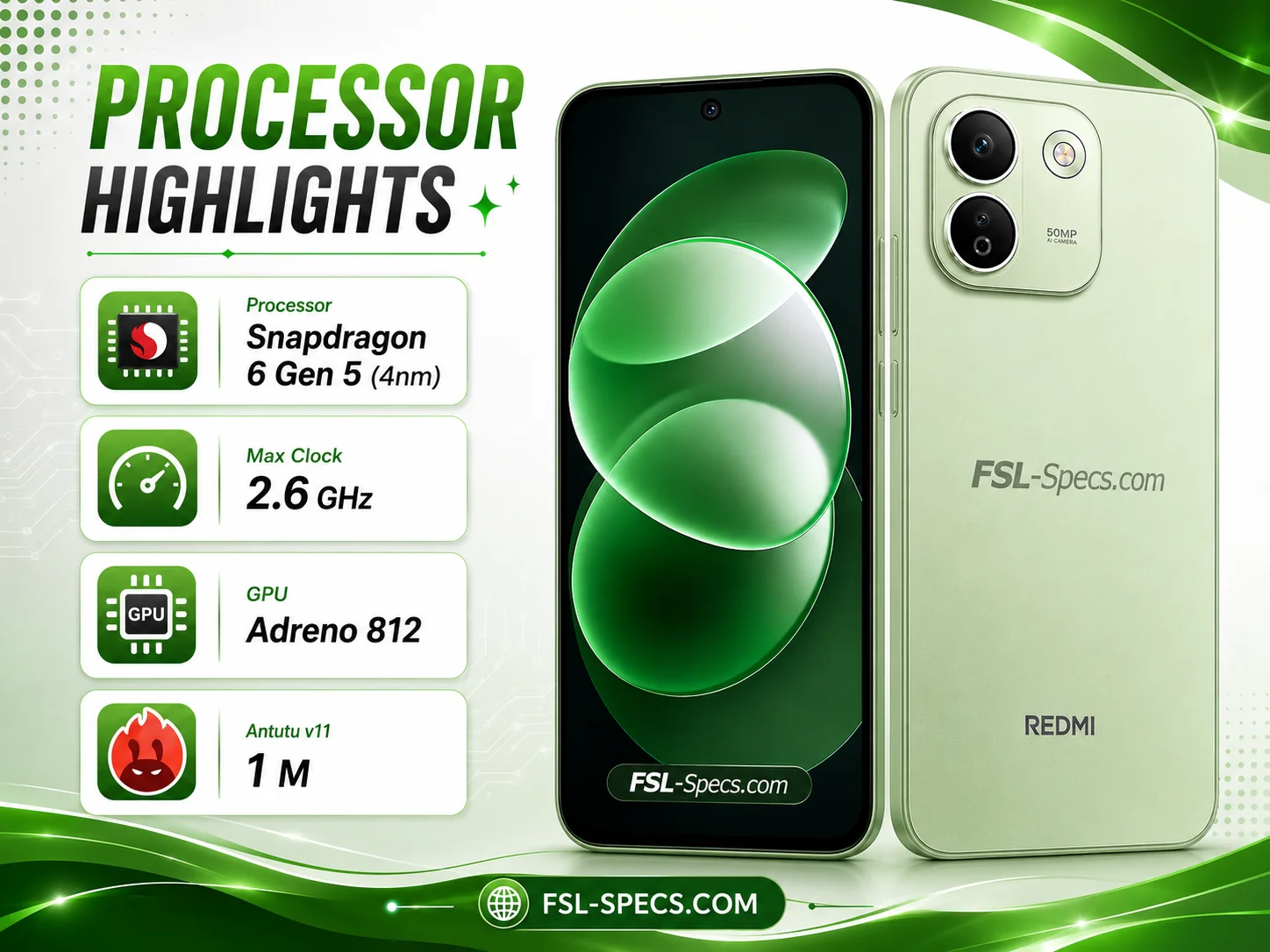
Snapdragon 6 Gen 5
Max Clock
2.6 GHz
Lithography
4 nm
GPU
Adreno 812
CPU Cores
Octa-core
Antutu v11
1 M
Antutu v10
670 K
Architecture
4 cores at 2 GHz: Cortex-A55
4 cores at 2.6 GHz: Cortex-A78
Ram Memory
8 + 512 GB
Ram Type
LPDDR5X
Storage Type
UFS 4.1 (256GB / 512GB) , UFS 2.2 (128GB)
SD Card
No
Variants
8 + 128GB
8 + 256GB
8 + 512GB
12 + 256GB
MP
Rear Camera
50 + 8 MP
Front Camera
32 MP
SENSORS
Camera Sensors
50 MP    = Samsung S5KJN5< /strong>
8 MP    = UnknownF
RECORDING FPS
Main Recording
4K@ 30 fps
1080p @ 30/60/120fps
Front Recording
4K@ 30 fps
1080p @ 30/60/120fps
RESOLUTION
Main Resolution
8150 x 6150 Pixels
Front Resolution
6532 × 4899 pixels
Stabilization
Yes
FLASH
Flash
LED
Capacity
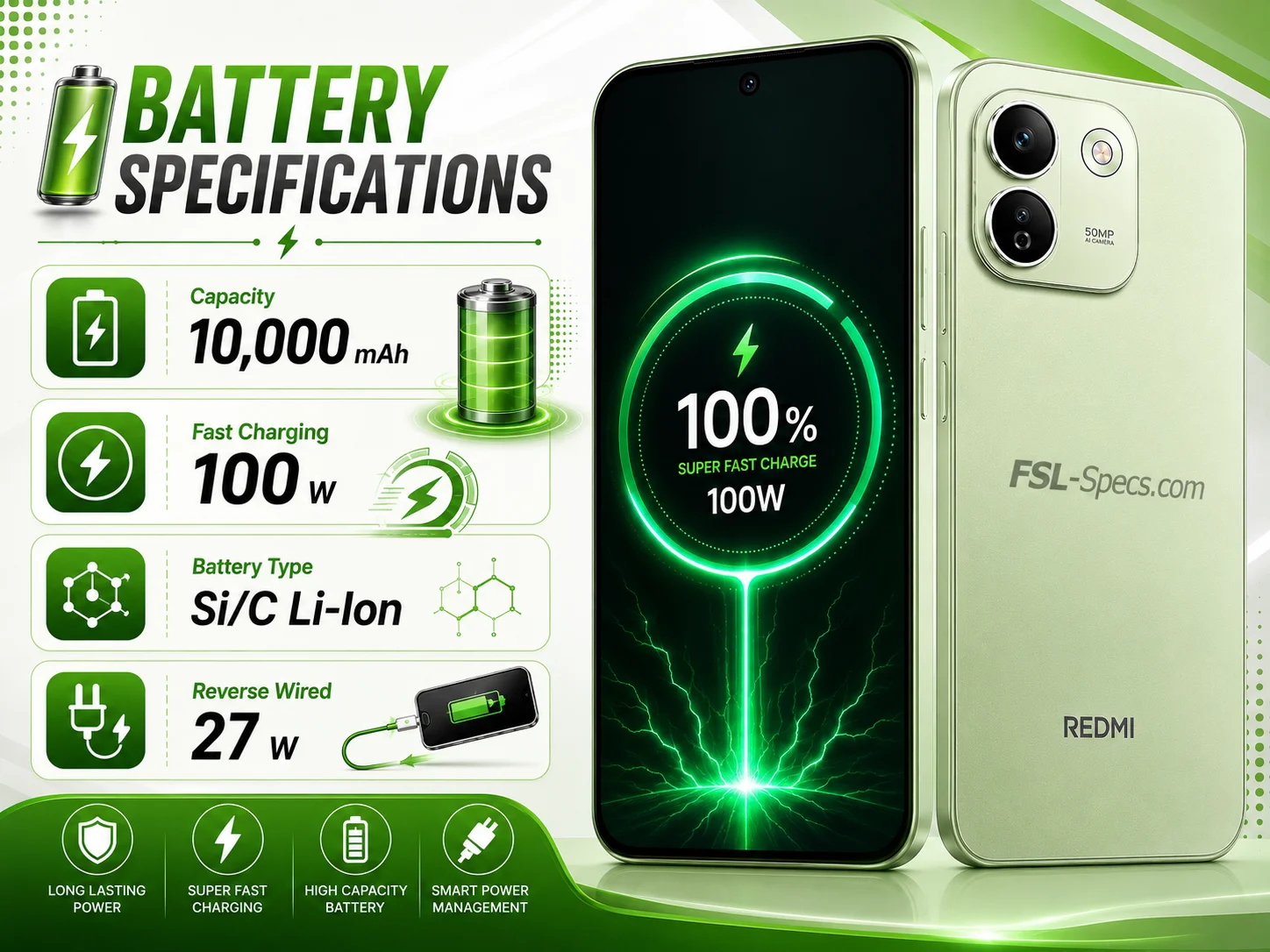
10,000 mAh
Fast Charging
100 W
Wireless Charging
No
Li Battery Type
Si/C Li-Ion
REVERSE
Reverse Wired
27 W
Reverse Wireless
No
OTHER
Charging Time
1:01 hr tested by Nanoreview
AUDIO & SENSORS
Speaker
Dual Stereo Speaker
Fingerprint Sensor
Front Finger
Other Sensors
Proximity sensor
Gyroscope
Accelerometer
Ambient light sensor
Compass, etc
BASIC INFO
Mobile
Redmi Note 17 Pro Max
Model
2609FRA74G
Series
redmi Note
Category
Mid Range
Release Date
28 August,2026
Year
2026
CONNECTIVITY
Sim
Nano-SIM / E-Sim
Network
4G / 4G+ / 5G
WiFi
Wi-Fi 6
Bluetooth
6.0
NFC
Yes / region dependent
OS
Android 16
BODY
Dimensions
163.4 x 78.3 x 8.6 mm
Build
plastic back, plastic frame
KG Weight
229 grams
Screen Size
6.83 inch
Resolution
1280 × 2772 Pixels
Type
AMOLED
Refresh Rate
120 Hz
Peak Brightness
3500 nits
HBM Brightness
2000 nits
Processor
Snapdragon 6 Gen 5
Max Clock
2.6 GHz
Lithography
4 nm
GPU
Adreno 812
CPU Cores
Octa-core
Antutu v11
1 M
Antutu v10
670 K
Architecture
4 cores at 2 GHz: Cortex-A55
4 cores at 2.6 GHz: Cortex-A78
Ram Memory
8 + 512 GB
SD Card
No
Ram Type
LPDDR5X
Storage Type
UFS 4.1 (256GB / 512GB) , UFS 2.2 (128GB)
Variants
8 + 128GB
8 + 256GB
8 + 512GB
12 + 256GB
MP
Rear Camera
50 + 8 MP
Front Camera
32 MP
SENSORS
Main Camera Sensors
50 MP    = Samsung S5KJN5< /strong>
8 MP    = UnknownF
RECORDING FPS
Main Recording
4K@ 30 fps
1080p @ 30/60/120fps
Front Recording
4K@ 30 fps
1080p @ 30/60/120fps
RESOLUTION
Main Resolution
8150 x 6150 Pixels
Front Resolution
6532 × 4899 pixels
Stabilization
Yes
FLASH
Flash
LED
Capacity
10,000 mAh
Fast Charging
100 W
Wireless Charging
No
Li Battery Type
Si/C Li-Ion
REVERSE
Reverse Wired
27 W
Reverse Wireless
No
OTHER
Charging Time
1:01 hr tested by Nanoreview
AUDIO & SENSORS
Speaker
Dual Stereo Speaker
Fingerprint Sensor
Front Finger
Other Sensors
Proximity sensor
Gyroscope
Accelerometer
Ambient light sensor
Compass, etc

Highlights & Review Of Redmi Note 17 Pro Max

Display Review:

Display Review:

The Redmi Note 17 Pro Max uses a 6.83-inch AMOLED panel at 1280 x 2772 resolution (447ppi), running 120Hz with 1800 nits HBM and 3500 nits peak brightness, protected by Gorilla Glass Victus 2 with HDR10+ and Dolby Vision support. This is essentially the same panel Xiaomi carried over from the Redmi Note 15 series, just with a brighter peak rating.

Against the Redmi Note 15 Pro+, the difference is minimal since both share a 6.83-inch AMOLED, 1280 x 2772, 120Hz panel with 1800 nits HBM. The only gap is peak brightness, where the Redmi Note 17 Pro Max’s 3500 nits edges out the Note 15 Pro+’s 3200 nits, a difference you will barely notice outdoors in daily use.

The Vivo V70 takes a different approach with a smaller but sharper 6.59-inch AMOLED at 1260 x 2750 (459ppi), also 120Hz, matching the 1800 nits HBM but pushing local peak brightness to 5000 nits, meaning HDR highlights and direct sunlight visibility will look noticeably punchier than on the Redmi.

The Infinix GT 50 Pro goes the gaming route with a 6.78-inch AMOLED at 1224 x 2720 (440ppi) but a much faster 144Hz refresh rate, well above the 120Hz on all three rivals here, at the cost of a lower 1600 nits HBM and 4500 nits peak, meaning smoother scrolling and touch response but slightly dimmer sustained brightness than the V70.

Verdict: For sheer brightness and HDR punch, the Vivo V70 has the edge; for competitive gaming smoothness, the Infinix GT 50 Pro’s 144Hz wins. The Redmi Note 17 Pro Max’s display is solid but not a meaningful upgrade over the cheaper Redmi Note 15 Pro+, so buyers chasing display gains alone should look elsewhere in this bracket.

Processor Review:

The Redmi Note 17 Pro Max runs on the Snapdragon 6 Gen 5 (4nm), an octa-core chip with Adreno 812 graphics. AnTuTu scores for it are inconsistent across sources: Kimovil lists 678,000 (v10), while another review site reports 1,012,134 (v10) for the same chip, an unresolved gap this large means the AnTuTu figure isn’t independently confirmed yet. GeekBench 7 listings are more consistent, showing 924 single-core and 2,923 multi-core.

The Redmi Note 15 Pro+ uses the Snapdragon 7s Gen 4 (4nm) with Adreno 810, officially benchmarked by GSMArena at 817,755 AnTuTu (v10) and 3,060 GeekBench (v6), a confirmed, apples-to-apples figure unlike the Note 17 Pro Max’s disputed score.

The Vivo V70 pairs a Snapdragon 7 Gen 4 (4nm) with Adreno 722. Kimovil lists 1,010,000 AnTuTu (v10), while a separate lab test reports 1,433,274, without confirming the AnTuTu version used, so this comparison also isn’t fully apples-to-apples.

The Infinix GT 50 Pro leans hardest into raw power with the Dimensity 8400 Ultimate (4nm) and Mali-G720 MC7 GPU, plus a dedicated HydroFlow liquid cooling system for sustained gaming loads. Sources differ here too: Kimovil lists 1,934,579 AnTuTu (v11), while a reviewer citing Infinix’s own figures reports 2,060,404 (v11), both on the newer v11 scale, which is not directly comparable to the v10 scores above.

Verdict: On the confirmed numbers, the Infinix GT 50 Pro’s Dimensity 8400 Ultimate is the strongest performer of the four, especially for sustained gaming thanks to its liquid cooling, followed by the Vivo V70. The Redmi Note 17 Pro Max’s benchmark story remains genuinely unclear until Xiaomi’s official Pakistan listing settles the numbers, so buyers prioritizing raw performance today are better served by the GT 50 Pro or V70.

Ram & Memory Review:

The Redmi Note 17 Pro Max, in its 8GB+256GB configuration, pairs 8GB of LPDDR5X RAM with 256GB of UFS 4.0 storage and no microSD slot, meaning storage is fixed at purchase.

Against the Redmi Note 15 Pro+ in its 12GB+512GB variant, the gap is significant: 12GB RAM versus the Redmi Note 17 Pro Max’s 8GB, and 512GB versus 256GB of storage, giving noticeably more multitasking headroom and double the space, though the Note 15 Pro+ runs on the older UFS 2.2 standard rather than UFS 4.0, which is a real-world trade-off since UFS 2.2 has slower sequential read/write speeds despite the bigger capacity.

The Vivo V70 in its 12GB+256GB configuration also outpaces the Note 17 Pro Max on RAM, with 12GB LPDDR5X against 8GB, while matching it at 256GB of storage. The V70 does hold a real edge in storage speed, running UFS 4.1, meaning faster app loading and file transfers than either Redmi in this comparison.

The Infinix GT 50 Pro, also configured at 12GB+256GB, matches the V70’s 12GB LPDDR5X RAM and 256GB UFS 4.1 storage, putting it on equal footing for both capacity and speed. None of these four phones offer a microSD card slot, so storage choice at checkout is permanent for all of them.

Verdict: On RAM and storage speed, the Vivo V70 and Infinix GT 50 Pro are tied for the best setup here with 12GB RAM and UFS 4.1 storage, while the Redmi Note 17 Pro Max’s 8GB RAM in this configuration is the weakest of the four on paper. Buyers who want more RAM without upgrading to the Redmi Note 17 Pro Max’s 12GB variant (once local pricing is confirmed) may find better value in the Note 15 Pro+, V70, or GT 50 Pro instead.

Cameras Review:

The Redmi Note 17 Pro Max carries a 50MP main camera at f/1.5 with OIS, paired with an 8MP ultrawide at f/2.2, and no telephoto lens. Xiaomi hasn’t disclosed the main sensor brand, so buyers are trusting stabilization and processing rather than a known hardware name. Rear video tops out at 4K@30fps, dropping to 1080p@30/60fps. The 32MP front camera shoots at f/2.2 with the same 4K@30fps ceiling.

The Redmi Note 15 Pro+ jumps to a 200MP main sensor at f/1.7 with OIS, plus the same 8MP ultrawide at f/2.2, and its main sensor brand is also undisclosed. It edges ahead on rear video with 1080p up to 120fps alongside 4K@30fps, and a matching 32MP, f/2.2 front camera at 1080p@30/60fps.

The Vivo V70 is the only phone here with a real telephoto: a 50MP main at f/1.9 with OIS, a 50MP, f/2.65 telephoto (3x optical) also with OIS, and an 8MP ultrawide at f/2.2. Sources differ on the main sensor name, GSMArena’s review calls it a Sony IMX766 while other listings say Sony LYT-700C, so treat the exact sensor as unconfirmed. It also has the strongest selfie camera here at 50MP, f/2.0 with autofocus, and both rear and front cameras shoot 4K@30/60fps.

The Infinix GT 50 Pro sticks to 50MP main (f/1.8, OIS) plus 8MP ultrawide (f/2.2), with a lower-res 13MP front camera at f/2.2. Rear video reaches 4K@30/60fps with 1080p slow-motion up to 240fps, while front video caps at 4K@30fps.

Verdict: The Vivo V70 has the most versatile and best-documented camera hardware here thanks to its telephoto and confirmed Sony sensor lineage, making it the pick for anyone who actually zooms or shoots selfies often. The Redmi Note 17 Pro Max’s undisclosed main sensor and lack of telephoto make it the weakest camera choice of the four on paper.

Battery Review:

The Redmi Note 17 Pro Max has a genuine capacity conflict: Xiaomi’s official EU spec sheet lists 9,210mAh (typ) silicon-carbon, while the phone’s own global launch marketing calls it a 10,000mAh battery, so which figure applies to the eventual Pakistan unit isn’t confirmed. Charging is rated at 100W wired HyperCharge, with Xiaomi claiming a full day’s charge in around 20 minutes, plus 27W wired reverse charging. There’s no wireless charging, and the exact 0-100% time hasn’t been independently confirmed.

The Redmi Note 15 Pro+ carries a smaller but confirmed 6,500mAh Si/C cell, charging at 100W wired with an official 0-100% time of 40 minutes, plus 22.5W wired reverse charging. No wireless charging here either.

The Vivo V70 matches that with its own 6,500mAh Si/C Li-Ion battery, but charges slower at 90W wired using Vivo’s proprietary FlashCharge protocol, meaning it needs its own charger and cable to hit full speed. It supports wired reverse charging and bypass charging, but GSMArena’s review didn’t publish an exact 0-100% minute figure, so that number isn’t confirmed. No wireless charging on this model.

The Infinix GT 50 Pro has its own capacity conflict, GSMArena’s own listing shows “6150mAh or 6500mAh” without settling on one. Charging tops out at 45W wired and 30W wireless, both slower than the Redmi Note 15 Pro+ or Vivo V70’s wired speeds, but it’s the only phone here with wireless charging at all, plus 10W reverse wired and 5W reverse wireless charging.

Verdict: For guaranteed fast wired charging with a confirmed capacity, the Redmi Note 15 Pro+ is the safest bet at 100W and 40 minutes flat. The Infinix GT 50 Pro is the only one offering wireless charging, a real convenience edge despite its slower wired speed and unresolved capacity figure, while the Redmi Note 17 Pro Max’s disputed capacity numbers make it the hardest of the four to evaluate with confidence right now.

Final Verdict :

At an estimated PKR 160,000-190,000 (unofficial, since the Redmi Note 17 Pro Max hasn’t launched in Pakistan yet), it’s the most expensive and least certain phone in this comparison, coming with a weaker 8GB RAM configuration, a dual-camera setup with an undisclosed main sensor, and a battery capacity that’s still disputed between 9,210mAh and 10,000mAh depending on the source.

The Vivo V70 at PKR 170,000 delivers the strongest overall package for the money: 12GB RAM, UFS 4.1 storage, a triple-camera setup with a confirmed telephoto lens, and the brightest display of the group, making it the best value pick here even though it isn’t the cheapest. The Infinix GT 50 Pro at PKR 167,000 is close behind, with the strongest confirmed processor and the only wireless charging in this lineup, though its IP64 rating and unresolved 6,150mAh/6,500mAh battery listing hold it back slightly.

The Redmi Note 15 Pro+ at PKR 158,000 is the cheapest of the four and still delivers a 200MP camera and the fastest confirmed wired charging (100W, 40 minutes), making it a strong budget-conscious alternative, even with older UFS 2.2 storage. On pure price-to-spec ratio, the Vivo V70 is the strongest value pick overall, not the Redmi Note 17 Pro Max.

Final Verdict:

Across display, processor, memory, camera, and battery, the Vivo V70 comes out ahead of the Redmi Note 17 Pro Max in nearly every category that matters day to day: it has a brighter screen, a confirmed and more versatile triple-camera system with real telephoto reach, faster RAM and storage in its 12GB configuration, and performance that’s at least competitive with, if not better than, the Redmi Note 17 Pro Max’s still-unverified benchmark scores.

The Infinix GT 50 Pro is the strongest pick for gamers thanks to its Dimensity 8400 Ultimate chip and 144Hz display, while the Redmi Note 15 Pro+ remains the most budget-friendly option without giving up much in camera resolution or charging speed. The Redmi Note 17 Pro Max’s main advantages, battery size and build durability, aren’t enough to offset its higher price, weaker RAM tier, and camera uncertainty. Bottom line: unless Xiaomi confirms sharper pricing and a 12GB variant at launch, the Vivo V70 is the smarter buy in this bracket.

Ranking:

  1. Vivo V70 – PKR 170,000
  2. Infinix GT 50 Pro – PKR 167,000
  3. Redmi Note 15 Pro+ – PKR 158,000
  4. Redmi Note 17 Pro Max – PKR 160,000-190,000 (est.)

Pros And Cons of Redmi Note 17 Pro Max

Pros of Mobile

✅ Massive Battery 🔋 — 9,210–10,000mAh battery
✅ 100W Fast Charging ⚡ — 100W HyperCharge
✅ Bright AMOLED Display 🌈 — 6.83″ 1.5K AMOLED, 120Hz
✅ Strong Durability 🛡️ — Gorilla Glass Victus 2 + IP69K
✅ OIS Main Camera 📸 — 50MP OIS main camera
✅ Long Battery Life ⏳ — Up to 3-day use

Cons of Mobile

❌ Weak Performance 🎮 — Snapdragon 6 Gen 5
❌ Basic Ultrawide Camera 📷 — 8MP ultrawide
❌ No Telephoto Camera 🔭 — No dedicated telephoto
❌ Heavy Build ⚖️ — Around 225–230g
❌ Limited Gaming Power 🎮 — Older A78/A55 cores
❌ UFS 2.2 Base 💾 — 128GB variant uses slower storage

Best For - Not Best For

Best For

🎯 Heavy Battery Users 🔋
🎯 Long Screen Time ⏱️
🎯 Media Consumption 🎬
🎯 Bright Display Lovers 🌈
🎯 Durability Seekers 🛡️
🎯 Fast Charging Fans ⚡

Not Best For

🚫 Hardcore Gamers 🎮
🚫 Camera Enthusiasts 📸
🚫 Zoom Photography 🔭
🚫 Lightweight Phone Fans ⚖️
🚫 Performance Seekers 🚀
🚫 Flagship Users 👑

Trailer And Unboxing of Redmi Note 17 Pro Max

Disassembly Or Teardown And Gaming Test of Redmi Note 17 Pro Max

Camera Test Redmi Note 17 Pro Max

Rival Mobiles

Redmi Note 15 Pro Plus 5G
Vivo V70
Infinix GT 50 Pro
Redmi Note 17 Pro

Xiaomi Series Row
POCO Series Row
Redmi Series Row
Picture of Faisal Ur Rehman

Faisal Ur Rehman

Faisal Rehman is the founder and editor of FSL Specs, where he publishes in-depth smartphone specifications, comparisons, buying guides, and technology insights. With extensive experience in mobile hardware research and technical analysis, he provides accurate and up-to-date information on Android smartphones, processors, displays, cameras, batteries, performance benchmarks, and software features. His goal is to simplify complex specifications and help readers choose the right device with confidence.

FAQs Questions

It's powered by the Qualcomm Snapdragon 6 Gen 5, a 4nm chip paired with Adreno 812 graphics. It's built more for smooth daily performance and efficiency than heavy gaming benchmarks.

You get a large 6.83-inch AMOLED screen with 1.5K resolution and a 120Hz refresh rate. It's a genuine step up from typical mid-range panels, especially for video and scrolling.

Global units get a massive 10,000mAh battery (9,210mAh in Europe/Australia due to a dual-cell design), paired with 100W wired charging. Xiaomi claims a full charge in a little over an hour, which is genuinely fast for this battery size.

The main rear camera is a 200MP sensor with an f/1.7 aperture, optical image stabilization, and multidirectional phase-detection autofocus, using a 1/1.4-inch sensor size. It's paired with an 8MP ultrawide lens. On the front, there's a 32MP selfie camera. Video recording supports up to 4K at 24 or 30fps, along with 1080p at higher frame rates including slow motion options.

The Redmi Note 15 Pro Plus is available with up to 16GB of RAM and up to 512GB of internal storage using UFS 4.0, which is a notable jump in read and write speeds compared to older UFS 2.2 storage. There's no microSD card slot, so whatever storage variant you pick is fixed, with no option to expand it later.

It comes in 8GB and 12GB RAM options with LPDDR5X, and storage goes up to 512GB. The 256GB and 512GB variants use faster UFS 4.1 storage, while the base 128GB model uses UFS 2.1.

Yes, it offers up to 22.5–27W reverse wired charging, so you can top up earbuds or another phone directly from it. That's a handy extra on top of its already large battery.

It launches on Android 16 with HyperOS 3 on top, and Xiaomi is promising 6 years of security updates. That's a strong update commitment for this price segment.

8 + 256 GB ₨ 180,000 | ₹55,000 | $600

Leave a Reply

Your email address will not be published. Required fields are marked *

Scroll to Top