
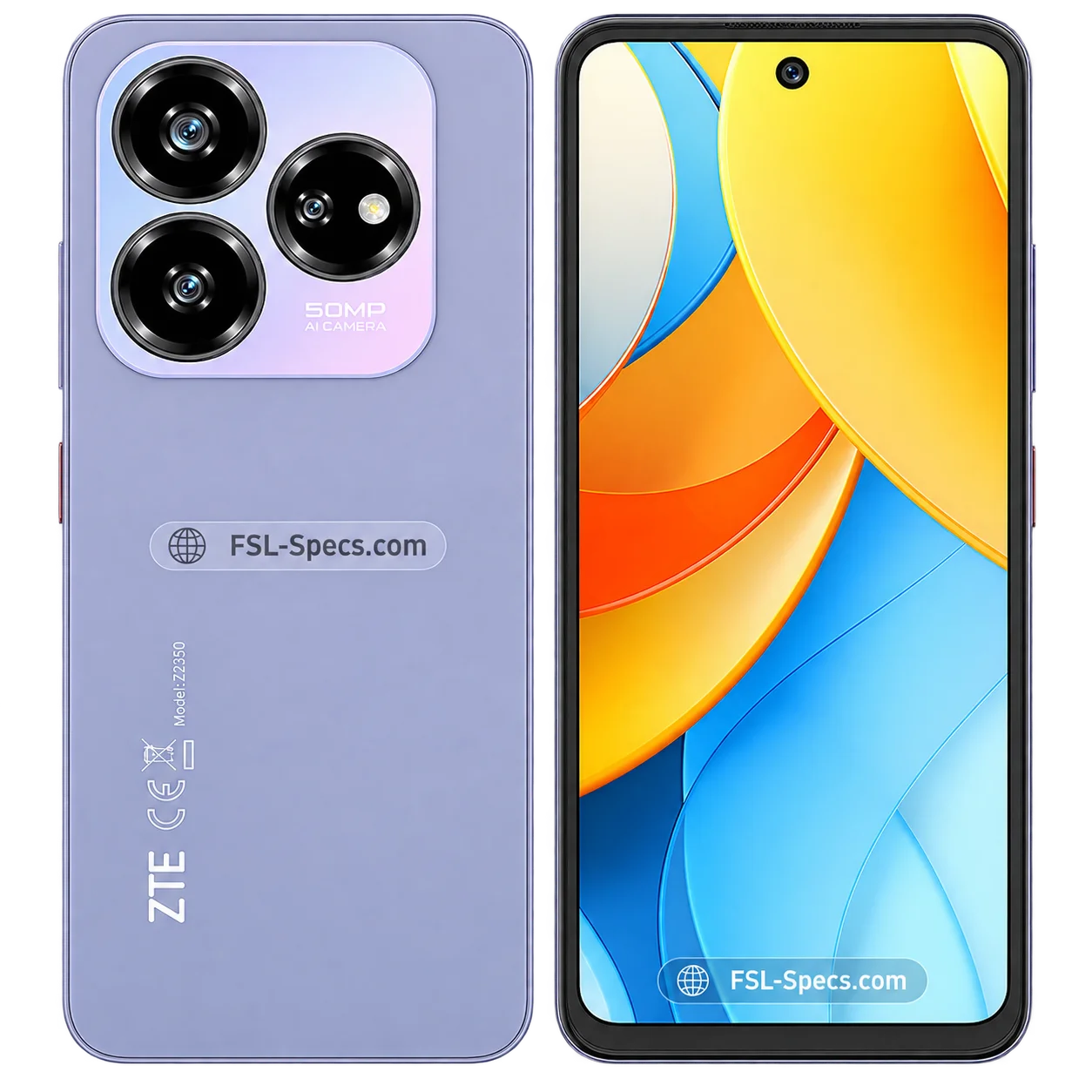
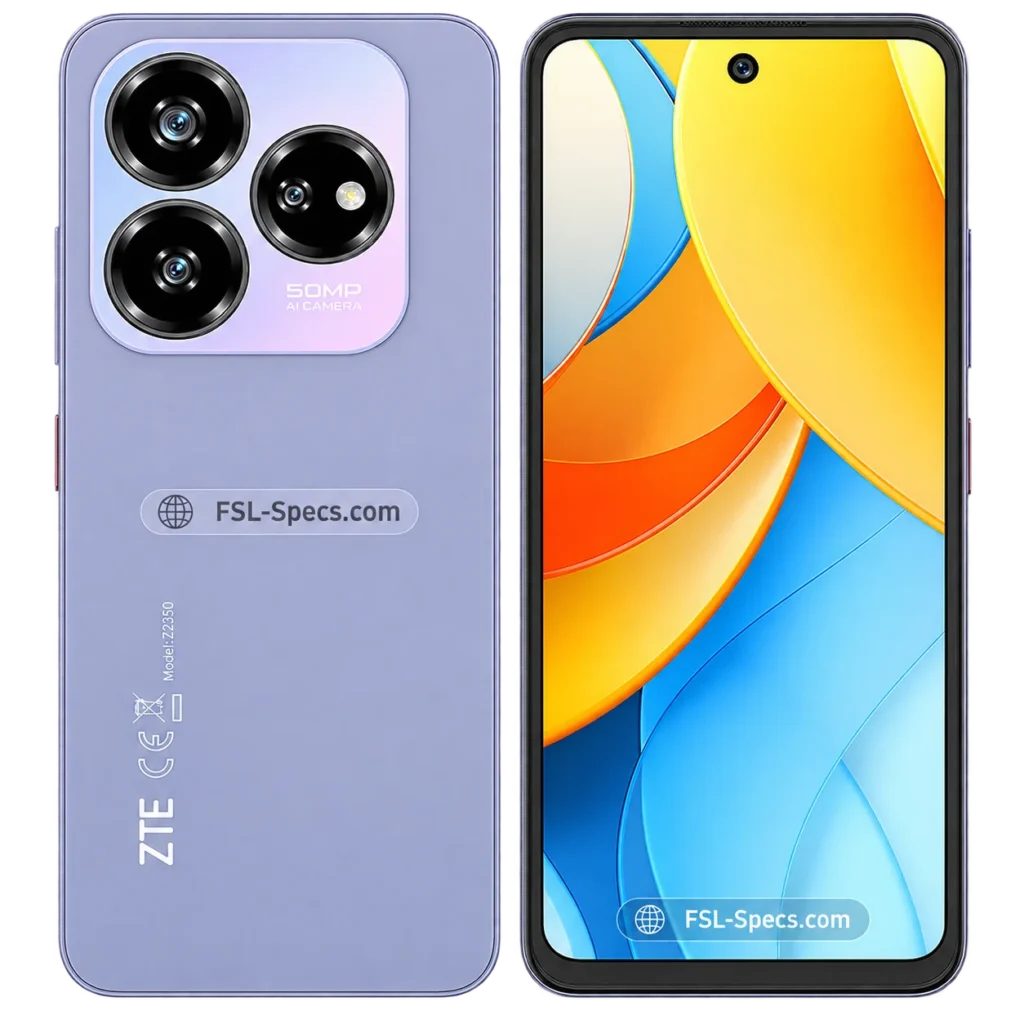
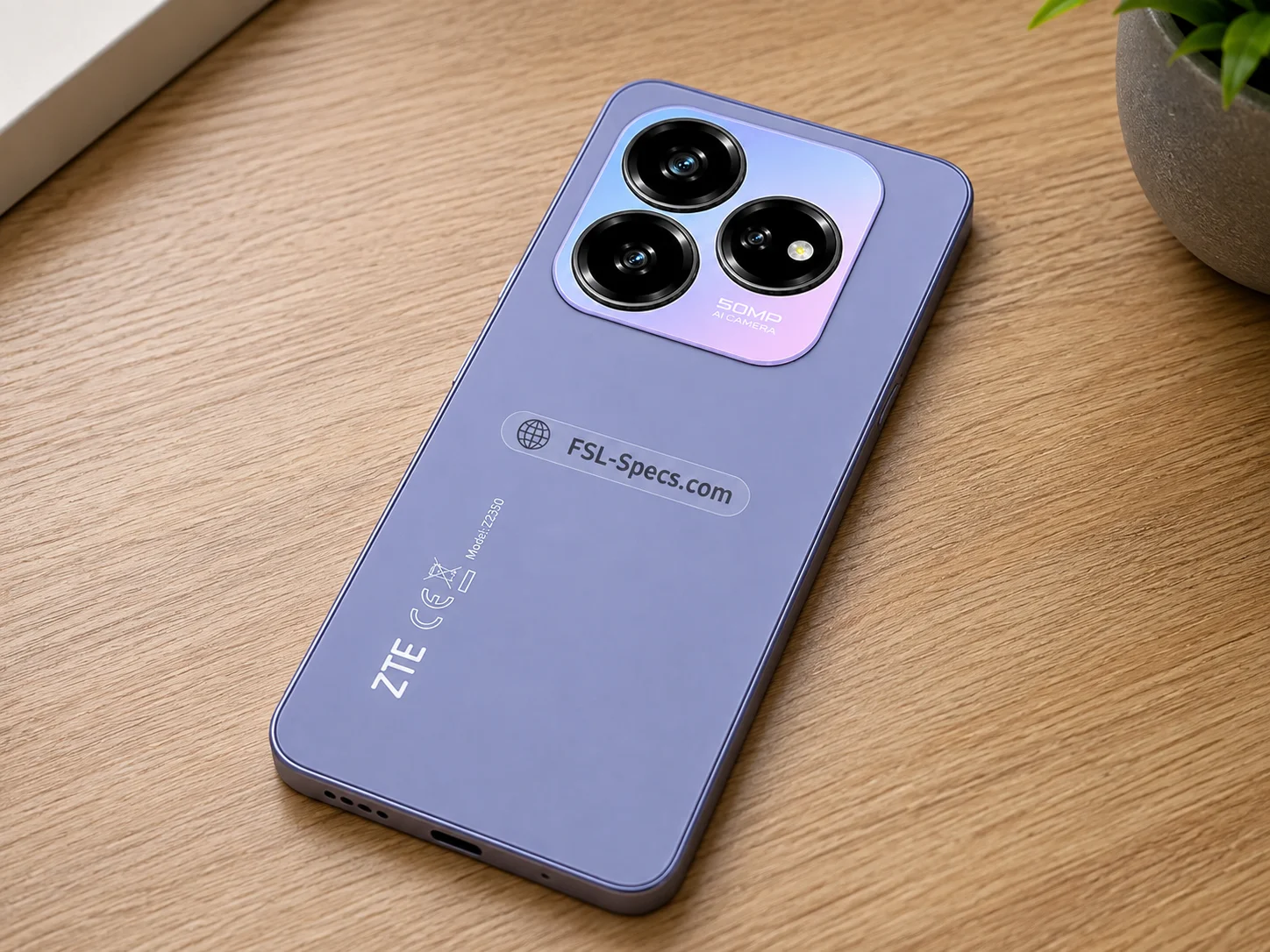
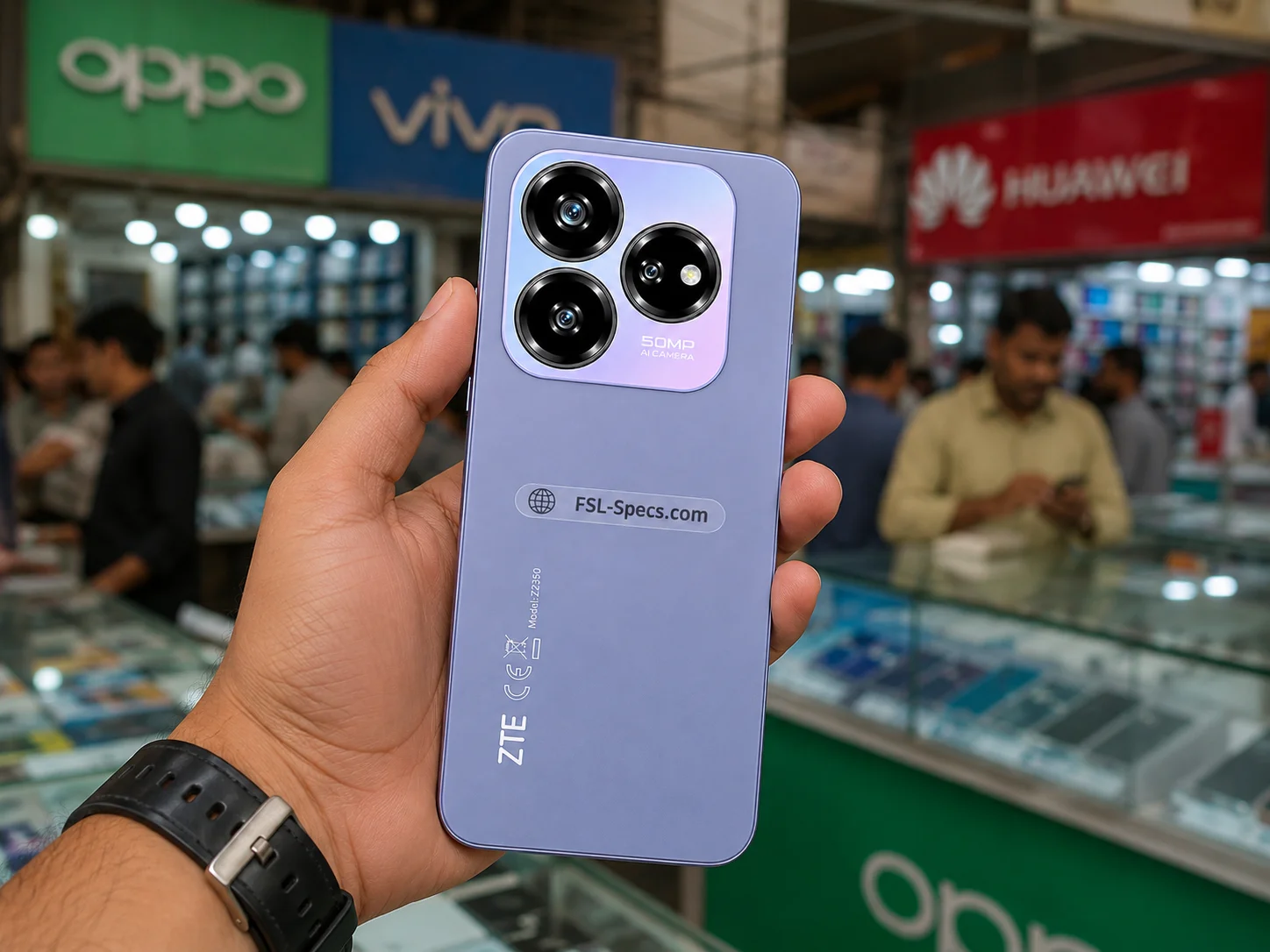
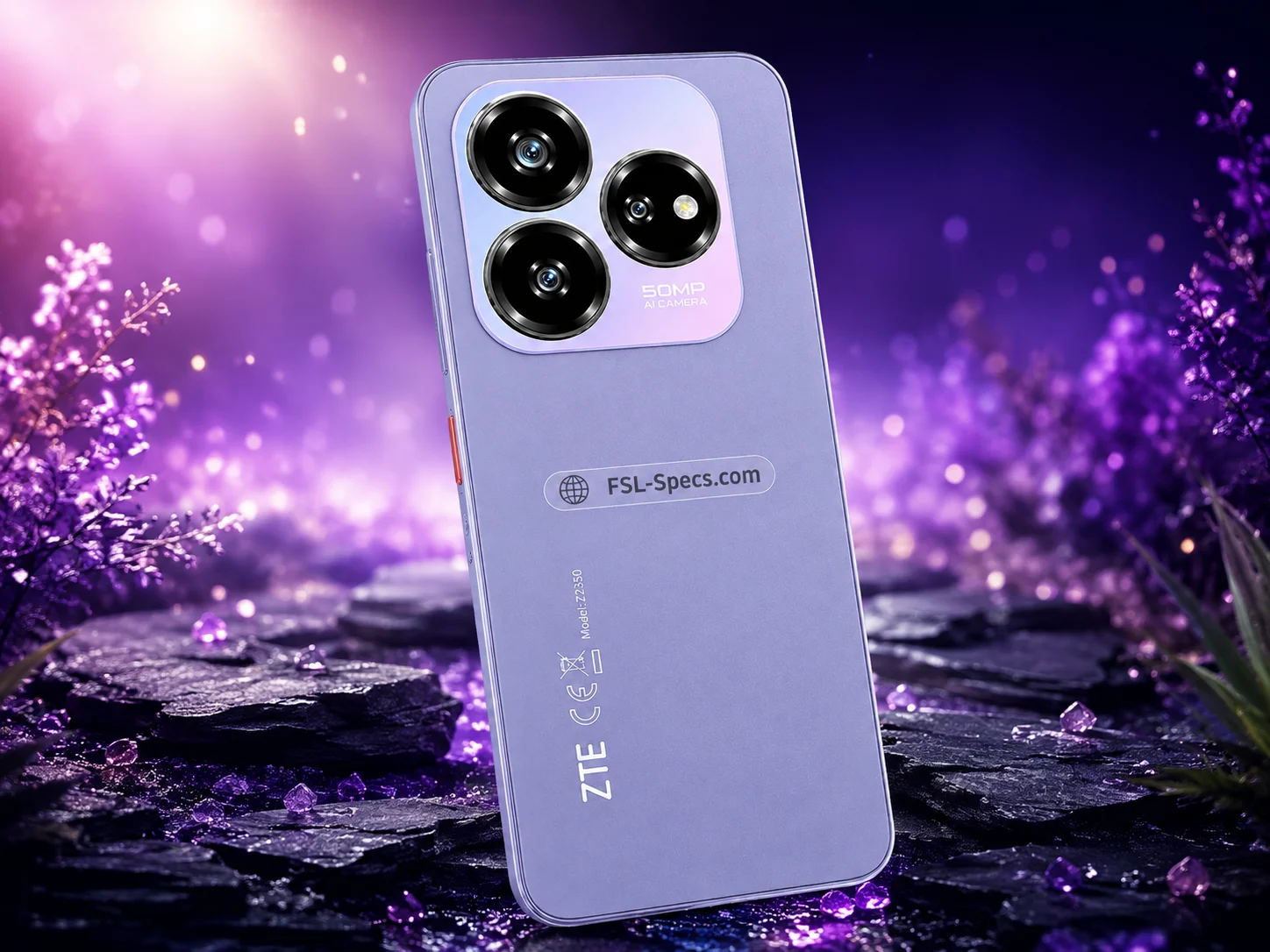
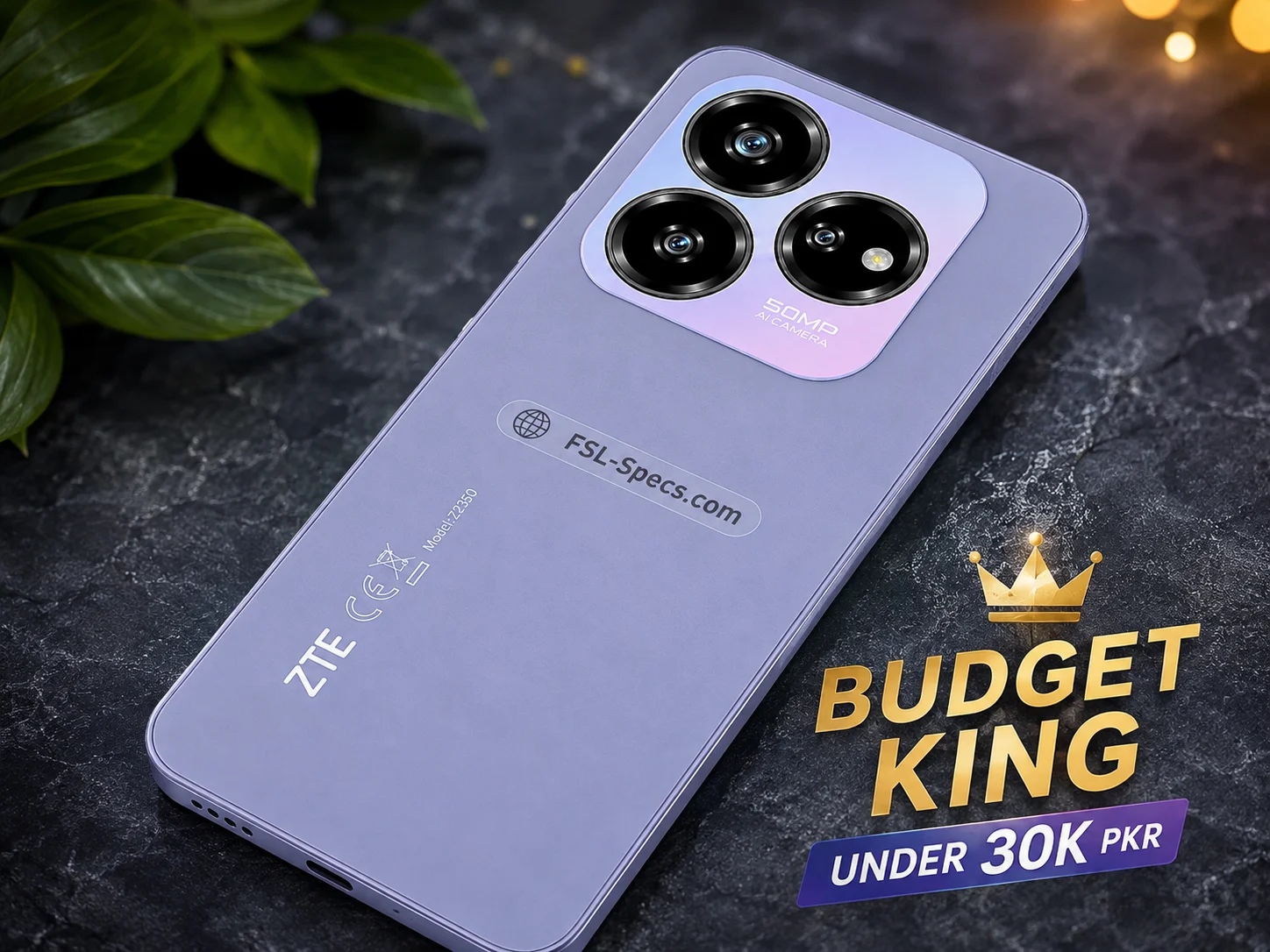












✪ ZTE Nubia V60 Design ✪

ZTE Nubia V60 Design Specs, Price, Camera, Battery & Best Review
United States flag United States
$90 USD
Pakistan flag Pakistan (PKR)
32,000 PKR
India flag India (INR)
₹8,500 INR

✪ ZTE Nubia V60 Design ✪

ZTE Nubia V60 Design Specs, Price, Camera, Battery & Best Review
Last Time Update : 21 August, 2026
0

Quick Specifications

IPS LCD

Display Type

Unisoc T606

Processor

8+ 256 GB

Ram And Memory

50 MP

Camera

5000 mAh

Battery

22.5 W

Fast Charging

Full Specification

BASIC INFO
Mobile
ZTE Nubia V60 Design
Series
Nubia V
Category
Budget
Release Date
1 June,2024
Year
2024
CONNECTIVITY
Sim
Dual Nano Sim
Network
4G
WiFi
Wi-Fi 5
Bluetooth
5.2
NFC
No
OS
Android 13
BODY
Dimensions
164.2 x 75.3 x 8.6 mm
Build
Plastic Frame & Glass Back
KG Weight
198 g
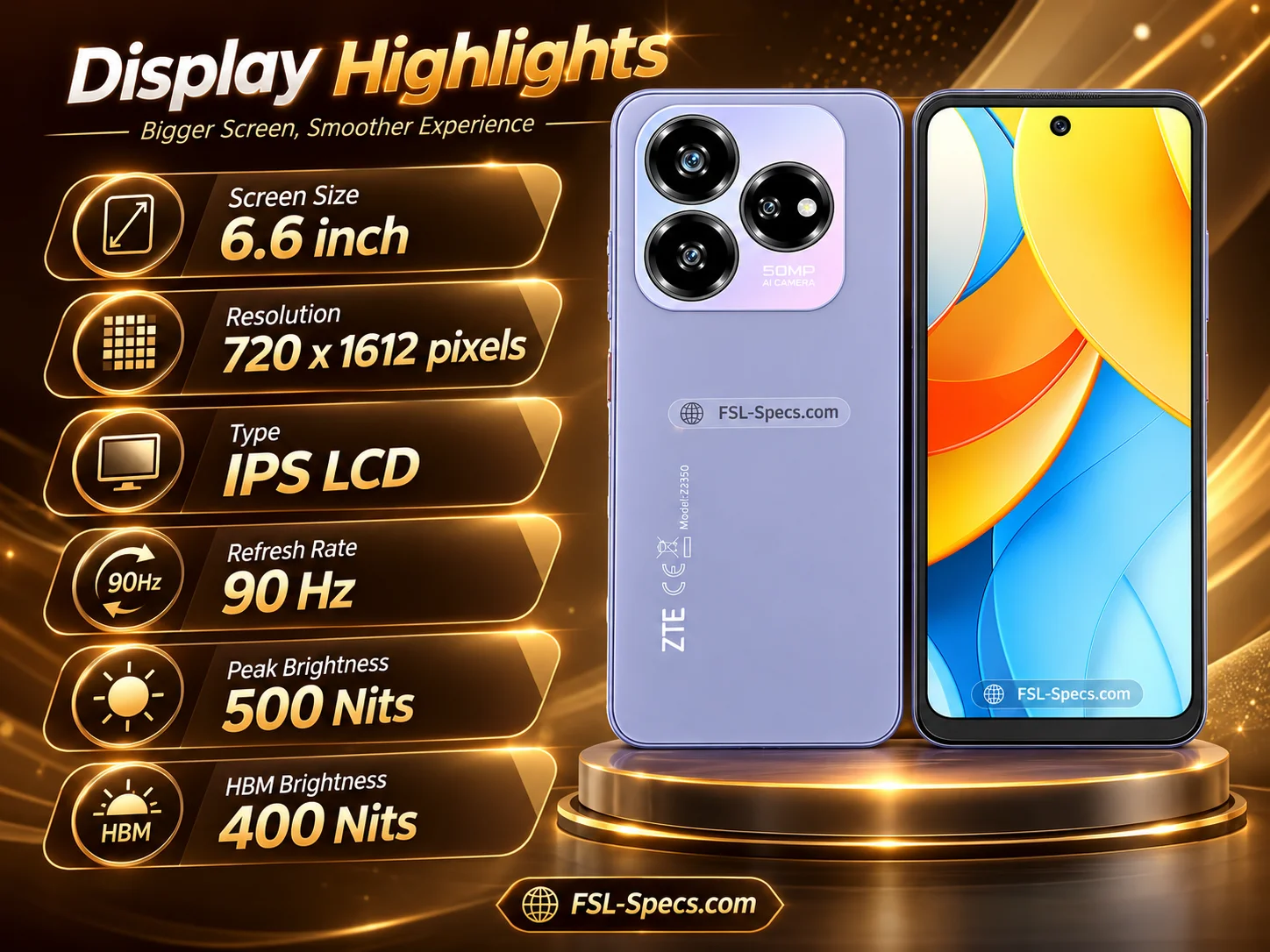
Screen Size
6.6 inch
Resolution
720 x 1612 pixels
Type
IPS LCD
Refresh Rate
90 Hz
Peak Brightness
500 Nits
HBM Brightness
400 Nits
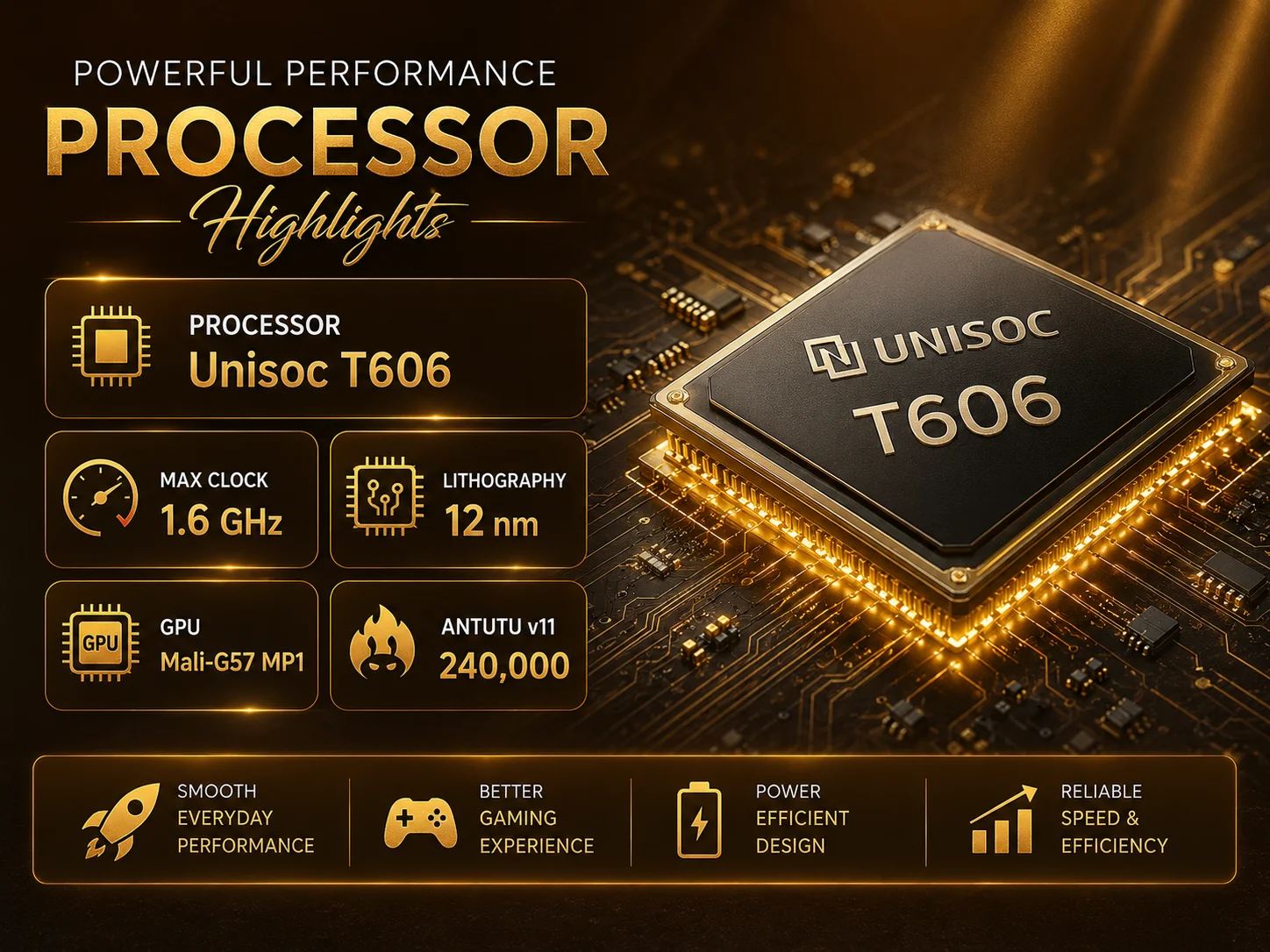
Processor
Unisoc T606
Max Clock
1.6 GHz
Lithography
12 nm
GPU
Mali-G57 MP1
CPU Cores
8 Cores
Antutu v11
240,000
Bootup Time
-
Architecture
2×1.6 GHz Cortex-A75
6×1.6 GHz Cortex-A55
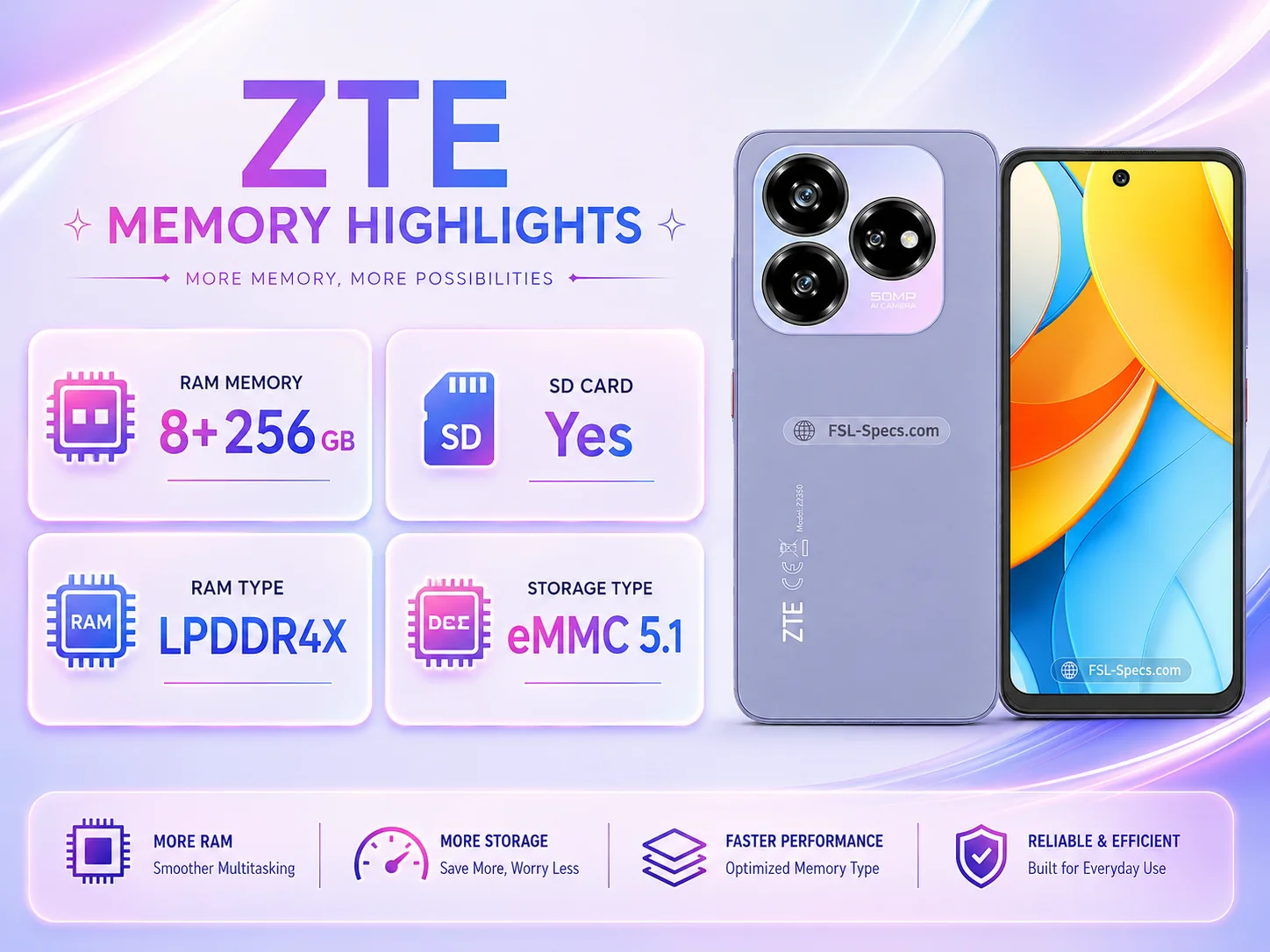
Ram Memory
8+ 256 GB
Ram Type
LPDDR4X
Storage Type
eMMC 5.1
SD Card
Yes
Variants
6 + 256 GB 
8 + 256 GB 
MP
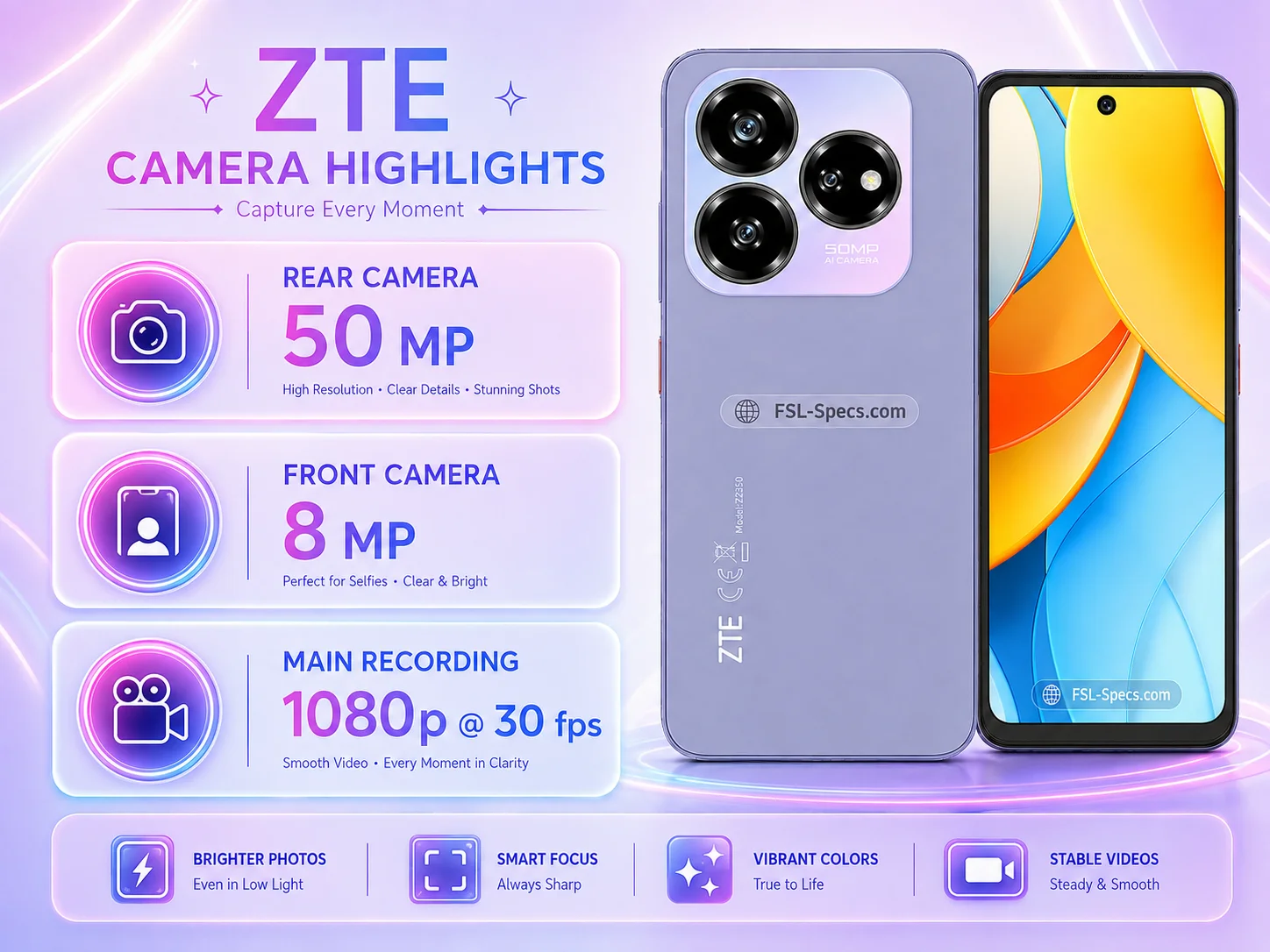
Rear Camera
50 MP
Front Camera
8 MP
SENSORS
Camera Sensors
50 MP = Not Confirm
Front Sensors
8 MP = Not Confirm
RECORDING FPS
Main Recording
1080p @ 30 fps
Front Recording
1080p @ 30/60 fps
RESOLUTION
Main Resolution
8192 × 6144 pixels
Front Resolution
3840 x 2160 pixels
ZOOM
Optical Zoom
-
D Digital Zoom
10 X
Stabilization
No
FLASH
Flash
Flash
Front Flash
Not confirm
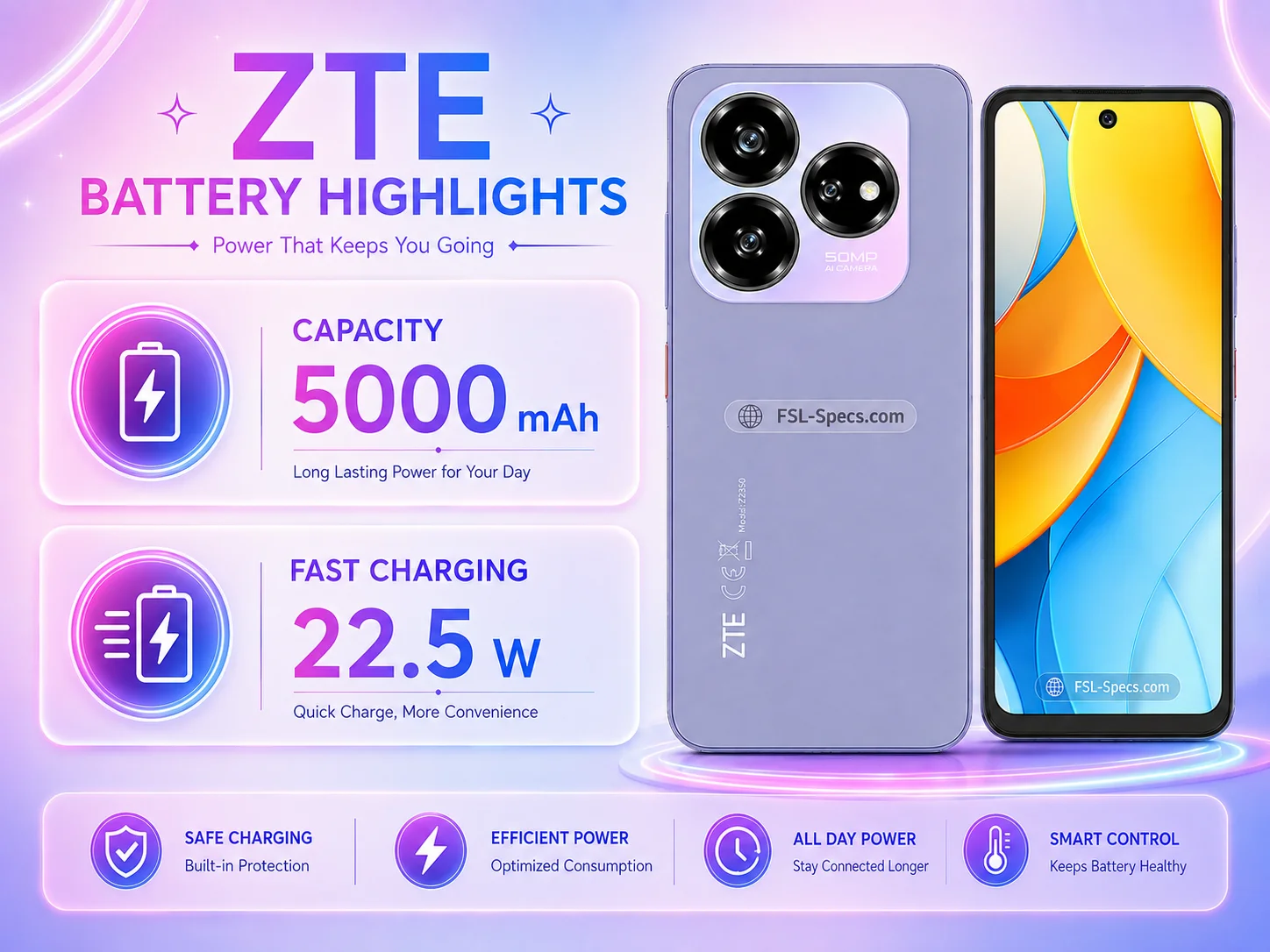
Capacity
5000 mAh
Fast Charging
22.5 W
Wireless Charging
No
Li Battery Type
Li-Ion
REVERSE
Reverse Wired
No
Reverse Wireless
-
OTHER
Battery PC Marks
-
Charging Time
-
AUDIO & SENSORS
Speaker
Dual Stereo Speaker
Fingerprint Sensor
Side Mounted
BASIC INFO
Mobile
ZTE Nubia V60 Design
Series
Nubia V
Category
Budget
Release Date
1 June,2024
Year
2024
CONNECTIVITY
Sim
Dual Nano Sim
Network
4G
WiFi
Wi-Fi 5
Bluetooth
5.2
NFC
No
OS
Android 13
BODY
Dimensions
164.2 x 75.3 x 8.6 mm
Build
Plastic Frame & Glass Back
KG Weight
198 g
Screen Size
6.6 inch
Resolution
720 x 1612 pixels
Type
IPS LCD
Refresh Rate
90 Hz
Peak Brightness
500 Nits
HBM Brightness
400 Nits
Processor
Unisoc T606
Max Clock
1.6 GHz
Lithography
12 nm
GPU
Mali-G57 MP1
CPU Cores
8 Cores
Antutu v11
240,000
Bootup Time
-
Architecture
2×1.6 GHz Cortex-A75
6×1.6 GHz Cortex-A55
Ram Memory
8+ 256 GB
SD Card
Yes
Ram Type
LPDDR4X
Storage Type
eMMC 5.1
Variants
6 + 256 GB 
8 + 256 GB 
MP
Rear Camera
50 MP
Front Camera
8 MP
SENSORS
Main Camera Sensors
50 MP = Not Confirm
Front Camera Sensors
8 MP = Not Confirm
RECORDING FPS
Main Recording
1080p @ 30 fps
Front Recording
1080p @ 30/60 fps
RESOLUTION
Main Resolution
8192 × 6144 pixels
Front Resolution
3840 x 2160 pixels
ZOOM
Optical Zoom
-
D Digital Zoom
10 X
Stabilization
No
FLASH
Flash
Flash
Front Flash
Not confirm
Capacity
5000 mAh
Fast Charging
22.5 W
Wireless Charging
No
Li Battery Type
Li-Ion
REVERSE
Reverse Wired
No
Reverse Wireless
-
OTHER
Battery Life PCMark
-
Charging Time
-
AUDIO & SENSORS
Speaker
Dual Stereo Speaker
Fingerprint Sensor
Side Mounted

Highlights & Review Of ZTE Nubia V60 Design

Display Review:

The ZTE Nubia V60 Design at PKR 33,000 uses a 6.6-inch IPS LCD with 720 × 1612 resolution and a 90Hz refresh rate. The 90Hz refresh rate keeps scrolling and basic animations reasonably smooth, but the HD+ resolution limits sharpness compared with the used alternatives.

The itel S25, available to you at around PKR 32,000 used, is in a completely different display class with a 6.78-inch AMOLED panel, 1080 × 2436 resolution, and 120Hz refresh rate. Its roughly 393 PPI density is substantially higher than the Nubia’s roughly 267 PPI, so text, images, and videos should look noticeably sharper. Its 1200-nit HBM and 1800-nit peak brightness also give it a major advantage for outdoor viewing.

The Infinix Note 30, which you can find used for about PKR 30,000 with 8+256GB, also beats the ZTE Nubia V60 Design on display specifications. It has a 6.78-inch IPS LCD, 1080 × 2460 resolution, and 120Hz refresh rate. Its reported 580-nit peak brightness is also higher than what is specified for the Nubia, although the Nubia’s available specification does not provide a brightness figure, so a direct brightness comparison cannot be confirmed.

The itel S24, at around PKR 30,000 used with 8+256GB, is the closest match in panel technology, using a 6.6-inch IPS LCD, 720 × 1612 resolution, and 90Hz refresh rate. Its 480-nit peak brightness is documented, while the ZTE Nubia V60 Design’s brightness figure is not confirmed in the sources checked.

Verdict: The ZTE Nubia V60 Design loses the display comparison to all three rivals on overall specification value, with the itel S25 clearly the strongest display choice, while the itel S24 offers essentially the same resolution and refresh rate as the Nubia at a lower used price

Processor Review:

The ZTE Nubia V60 Design at PKR 33,000 is powered by the Unisoc T606, a 12nm octa-core chipset with 2× Cortex-A75 at 1.6GHz and 6× Cortex-A55 at 1.6GHz, paired with a Mali-G57 MP1 GPU. NanoReview-based figures reported for the T606 put it around 245K AnTuTu v10, with approximately 371 single-core and 1,391 multi-core Geekbench 6 scores. That makes the ZTE Nubia V60 Design suitable for everyday apps, social media, video streaming and light gaming, but its performance is clearly entry-level.

The itel S25, at around PKR 32,000 used, uses the Unisoc T620. NanoReview lists the T620 at 443,956 AnTuTu v11, with 497 single-core and 1,541 multi-core Geekbench 6 scores. Its newer benchmark results and higher CPU performance give the S25 more headroom for multitasking and gaming than the T606.

The biggest performance advantage belongs to the Infinix Note 30, available used for roughly PKR 30,000 with 8+256GB. Its MediaTek Helio G99 reaches an average 554,635 AnTuTu v11, with 745 single-core and 2,025 multi-core Geekbench 6 scores. That is a substantial step above the T606, particularly for CPU-heavy apps and gaming.

The itel S24, also around PKR 30,000 used with 8+256GB, runs the Helio G91. NanoReview reports about 361,872 AnTuTu v11, while its 405 single-core and 1,407 multi-core Geekbench 6 results put it ahead of the ZTE Nubia V60 Design in overall processing performance.

Verdict: The Infinix Note 30 is the clear performance winner, followed by the itel S25, while the ZTE Nubia V60 Design is the weakest performer despite costing more new.

Ram & Memory Review:

The ZTE Nubia V60 Design at PKR 33,000 comes with 8GB physical RAM and 256GB internal storage, giving it a strong capacity advantage over the itel S25 at around PKR 32,000 used, which has 128GB storage. Nubia also supports dynamic RAM expansion, although ZTE’s regional specification lists the configuration as 6GB + 10GB Dynamic RAM, while Pakistani listings for the 8GB variant confirm 8GB physical RAM. Therefore, the safer comparison is the confirmed 8GB physical RAM + 256GB storage, rather than treating expanded RAM as real physical memory.

The itel S25 officially lists 128GB ROM with extended-RAM configurations, including 8GB + 8GB extended RAM. For storage-heavy users, the Nubia’s 256GB gives twice the internal capacity, which is a meaningful advantage for installing games and keeping photos, videos and apps without relying on cloud storage.

The Infinix Note 30, available used for around PKR 30,000, matches the ZTE Nubia V60 Design with 8GB RAM + 256GB storage, but adds UFS storage and a dedicated microSDXC slot. Infinix also advertises up to 8GB extended RAM, making its memory package more flexible than the Nubia’s, especially for users who need additional storage expansion.

The itel S24, at around PKR 30,000 used, also offers 8GB RAM + 256GB storage and supports a microSD card up to 256GB. Its official specifications additionally advertise 8GB extended RAM and Atom Storage Tech.

Verdict: The ZTE Nubia V60 Design has good 8GB + 256GB capacity, but the Infinix Note 30 is the strongest memory package because it combines the same capacity with UFS storage and dedicated microSD expansion, while the itel S24 offers similar capacity plus microSD at a lower used price.

Cameras Review:

The ZTE Nubia V60 Design at PKR 33,000 has a 50MP main camera with autofocus and an f/1.8 aperture, supported by additional AI/depth cameras. It records rear video at up to 1080p@30fps, while the front camera is only 8MP. The hardware is reasonable for basic daylight photography, but the absence of a confirmed main-camera sensor model makes it difficult to judge its image-processing potential against phones with better-documented camera hardware.

The itel S25, available used around PKR 32,000, also uses a 50MP rear camera, but its selfie camera is substantially stronger at 32MP compared with the Nubia’s 8MP. itel also lists features including Super Night Mode, AI Clear Portrait, HDR, Pro Mode and 2K video recording, giving the S25 a more feature-rich camera package.

The Infinix Note 30, available used for around PKR 30,000 with 8+256GB, moves ahead with a 64MP f/1.7 main camera, 2MP depth camera and QVGA auxiliary camera. Its 16MP front camera is also twice the Nubia’s resolution, while rear video supports up to 1440p@30fps. This gives the Note 30 the strongest overall camera hardware among these four phones, particularly for rear-camera detail and selfie resolution.

The itel S24, at roughly PKR 30,000 used, has the highest stated rear-camera resolution at 108MP, with an f/1.6 aperture, autofocus and a 1/1.67-inch sensor. However, its front camera is only 8MP, matching the Nubia. It supports 1440p@30fps rear video according to the specifications checked.

Verdict: The Infinix Note 30 is the strongest balanced camera choice, while the itel S24 offers the highest rear-camera resolution. The ZTE Nubia V60 Design  50MP + 8MP setup is usable, but at PKR 33,000 new, it gives up too much camera hardware to cheaper used rivals.

Battery Review:

The ZTE Nubia V60 Design at PKR 33,000 packs a 5000mAh battery with 22.5W wired fast charging. ZTE specifically confirms the 5000mAh capacity and 22.5W charging system, giving the Nubia a solid battery foundation for a budget phone. However, no verified 0-100% charging time is provided in the sources checked, so it would be misleading to claim an exact full-charge time.

The itel S25, available used for around PKR 32,000, also has a 5000mAh battery, but its charging is limited to 18W. That gives the Nubia a 4.5W charging advantage, meaning the ZTE Nubia V60 Design should have the faster wired charging system on paper. The S25 does, however, support Bypass Charging, which can power the phone directly during gaming or watching while reducing battery involvement and heat.

The Infinix Note 30, available used for about PKR 30,000, is the strongest charging competitor here. It combines the same 5000mAh battery with substantially faster 45W charging. Infinix states that its 45W system can charge the battery to 75% in 30 minutes, making it far more convenient when you need a quick top-up.

The itel S24, also around PKR 30,000 used, has another 5000mAh battery but only 18W Type-C charging. itel claims 50% charge in 40 minutes, along with Bypass Charging, 7 hours of video playback and 5 hours of gaming under its stated test conditions.

Verdict: The Nubia V60 Design offers a good 5000mAh + 22.5W combination, but the Infinix Note 30 clearly wins the battery and charging comparison because its 45W system is twice as powerful as the Nubia’s 22.5W charging.

Final Verdict :

At PKR 33,000 new, the ZTE Nubia V60 Design 8+256GB is attractive mainly because you get a box-packed phone with 256GB storage. Its 5000mAh battery, 22.5W charging, and 8GB RAM are respectable, and it also supports a microSD card. However, the Unisoc T606 and 6.6-inch 720p/90Hz LCD leave it behind the used alternatives in several important areas. The verified 8GB/256GB configuration and T606 chipset are also confirmed by current Pakistani listings.

The itel S25 used at PKR 32,000 is the strongest alternative if display quality matters. Its 6.78-inch AMOLED, 1080p resolution and 120Hz refresh rate are a major upgrade over the ZTE Nubia V60 Design’s 720p/90Hz LCD, while its T620 processor is also ahead of the T606.

The Infinix Note 30 used at PKR 30,000 is my overall winner. You get 8+256GB, a 120Hz 1080p display, Helio G99 performance, a 64MP camera, and 45W charging for less money than the new Nubia. Its combination of performance, camera, display and charging makes it the best value in this comparison.

The itel S24 used at PKR 30,000 is also excellent value, particularly for buyers wanting a 108MP camera and 8+256GB. Its display and processor are still stronger than the Nubia in several areas, but the Note 30 offers the more balanced package.

Final Ranking:
🥇 1. Infinix Note 30 Used — Best Overall Value
🥈 2. itel S25 Used — Best Display
🥉 3. itel S24 Used — Best Camera Value
4️⃣ ZTE Nubia V60 Design New — Best for Box-Pack/New Phone

Pros And Cons of ZTE Nubia V60 Design

Pros of Mobile

256GB Storage 💾
90Hz Refresh 🖥️
5000mAh Battery
22.5W Charging ⚡
50MP Camera 📸
MicroSD Support 💾

Cons of Mobile

HD+ Resolution 📉
T606 Processor 🐢
8MP Selfie 🤳
No 5G 📶
198g Weight ⚖️
Android 13 📱

Best For - Not Best For

Best For

Daily Usage 📱
Large Storage 💾
Social Media 📲
Casual Photography 📸
Long Battery 🔋

Not Best For

Heavy Gaming 🎮
Sharp Displays 🔍
5G Users 📶
Selfie Photography 🤳
High Performance 🚀

Trailer And Unboxing of ZTE Nubia V60 Design

Disassembly Or Teardown And Gaming Test of ZTE Nubia V60 Design

Camera Test ZTE Nubia V60 Design

zte nubia v80 max
infinix note 30
itel s25
itel s24

ZTE Series Row
Picture of Faisal Ur Rehman

Faisal Ur Rehman

Faisal Rehman is the founder and editor of FSL Specs, where he publishes in-depth smartphone specifications, comparisons, buying guides, and technology insights. With extensive experience in mobile hardware research and technical analysis, he provides accurate and up-to-date information on Android smartphones, processors, displays, cameras, batteries, performance benchmarks, and software features. His goal is to simplify complex specifications and help readers choose the right device with confidence.

FAQs Questions

It runs on the Unisoc T606 chipset, built on a 12nm process, with an octa-core CPU made up of 2x1.6 GHz Cortex-A75 cores and 6x1.6 GHz Cortex-A55 cores, paired with a Mali-G57 MP1 GPU. This is very much an entry-level chipset, fine for calling, browsing, social media, and light gaming, but it's not built for anything demanding.

It has a 6.6-inch IPS LCD panel with a 90Hz refresh rate, offering a resolution of 720 x 1612 pixels in a 20:9 aspect ratio, which works out to roughly 267 pixels per inch. It's worth noting this is an HD+ resolution panel, not Full HD, so text and fine details won't look as sharp as pricier phones in this segment.

It comes in 4GB and 6GB RAM configurations, both paired with 256GB of internal storage. Many retail listings also market it with RAM expansion technology, boosting the usable RAM figure well beyond the physical amount by borrowing space from storage, so you'll often see it advertised as "6+10GB" on shelves even though the real hardware RAM is 6GB

The rear camera is a dual setup with a 50MP main sensor at f/1.8 with PDAF, backed by an auxiliary lens, LED flash, HDR, and panorama support, while video tops out at 1080p at 30fps. The front camera is a single 8MP sensor at f/2.0. This is a fairly basic camera system for the price, decent in good daylight but not built for low-light or fast-motion shots.

It packs a non-removable 5000mAh battery with 22.5W wired charging.

Yes, it has a microSD card slot, though it shares the same tray as the SIM cards rather than having a dedicated slot.

It supports GSM, HSPA, and LTE network technology with Wi-Fi 802.11 a/b/g/n/ac in dual-band, Bluetooth 5.2

32,000 PKR | 8,500 INR | 90 $

Leave a Reply

Your email address will not be published. Required fields are marked *

Scroll to Top