
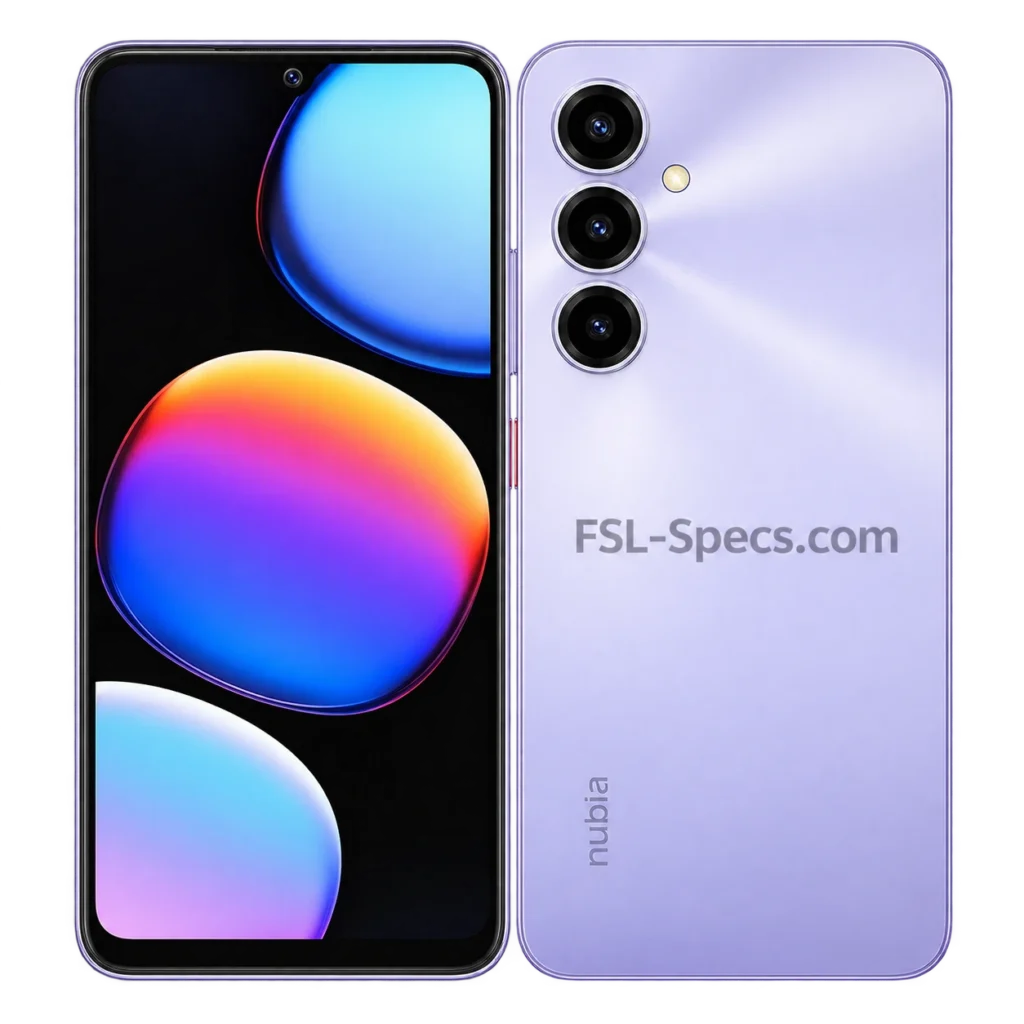












✪ ZTE Nubia V80 Max ✪

ZTE Nubia V80 Max
United States flag United States
$140 USD
Pakistan flag Pakistan (PKR)
40,000 PKR
India flag India (INR)
₹12,500 INR

✪ ZTE Nubia V80 Max ✪

ZTE Nubia V80 Max
Last Time Update : 15 September, 2026
0

Quick Specifications

IPS LCD

Display Type

Unisoc T7250

Processor

8+ 256 GB

Ram And Memory

50 MP

Camera

6000 mAh

Battery

22.5 W

Fast Charging

Full Specification

BASIC INFO
Mobile
ZTE Nubia V80 Max
Series
Nubia V
Category
Budget
Release Date
31 January,2026
Year
2026
CONNECTIVITY
Sim
Nano-SIM + Nano-SIM
Network
4G
WiFi
Wi-Fi 5
Bluetooth
5.2
NFC
Yes / region dependent
OS
Android 16
BODY
Dimensions
171.6 x 77.8 x 8.3 mm
Build
Plastic Frame & Glass Back
KG Weight
191 g
Screen Size
6.9 inch
Resolution
720 x 1640 pixels
Type
IPS LCD
Refresh Rate
120 Hz
HBM Brightness
780 Nits
Processor
Unisoc T7250
Max Clock
1.8 GHz
Lithography
12 nm
GPU
Mali-G57 MP1
CPU Cores
8 Cores
Antutu v11
350 K
Antutu v10
300 K
Architecture
2x 1.8 GHz Cortex-A75
6x 1.6 GHz Cortex-A55
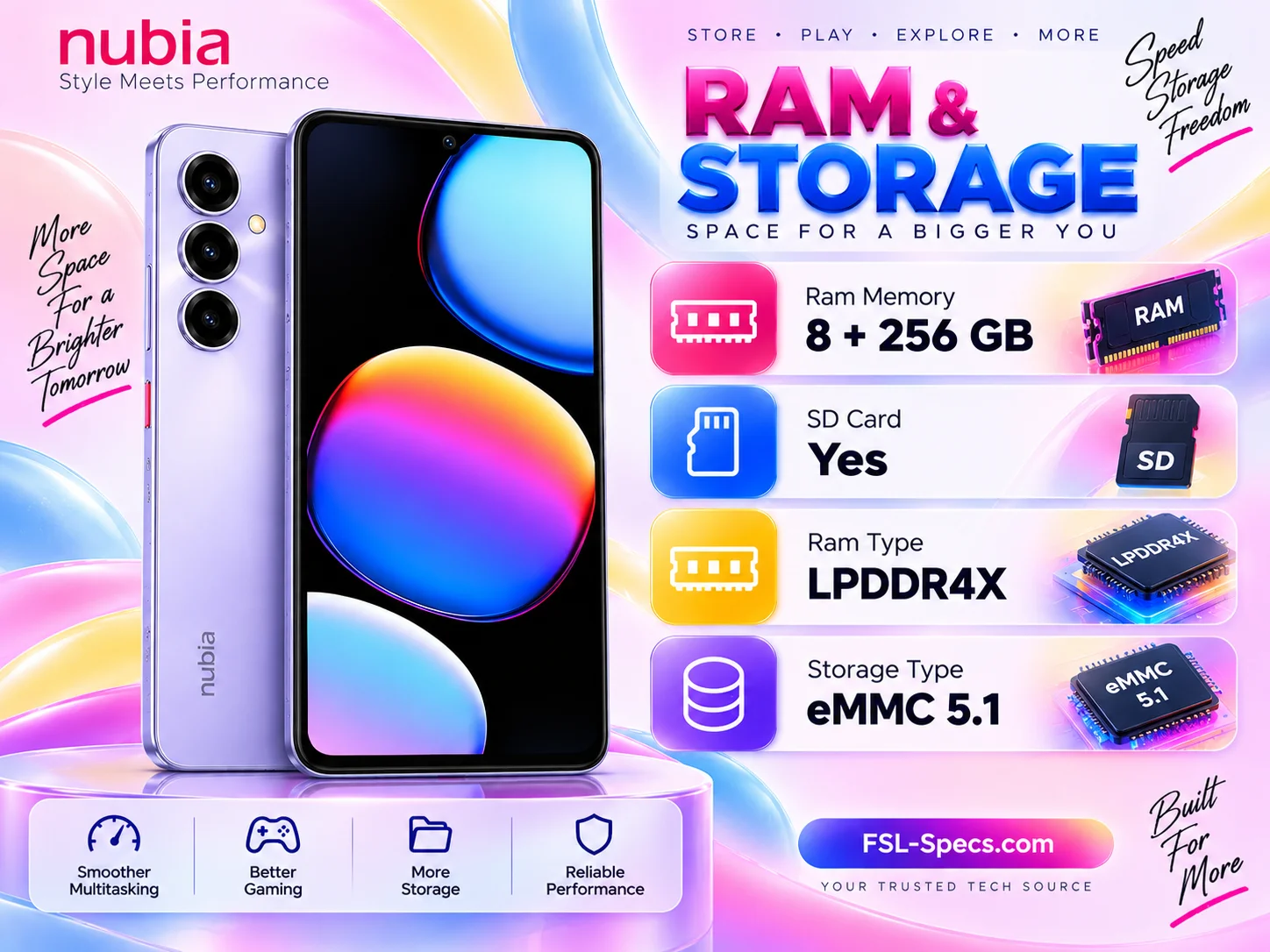
Ram Memory
8+ 256 GB
Ram Type
LPDDR4X
Storage Type
eMMC 5.1
SD Card
Yes
Variants
8 + 256 GB 
8 + 128 GB 
MP
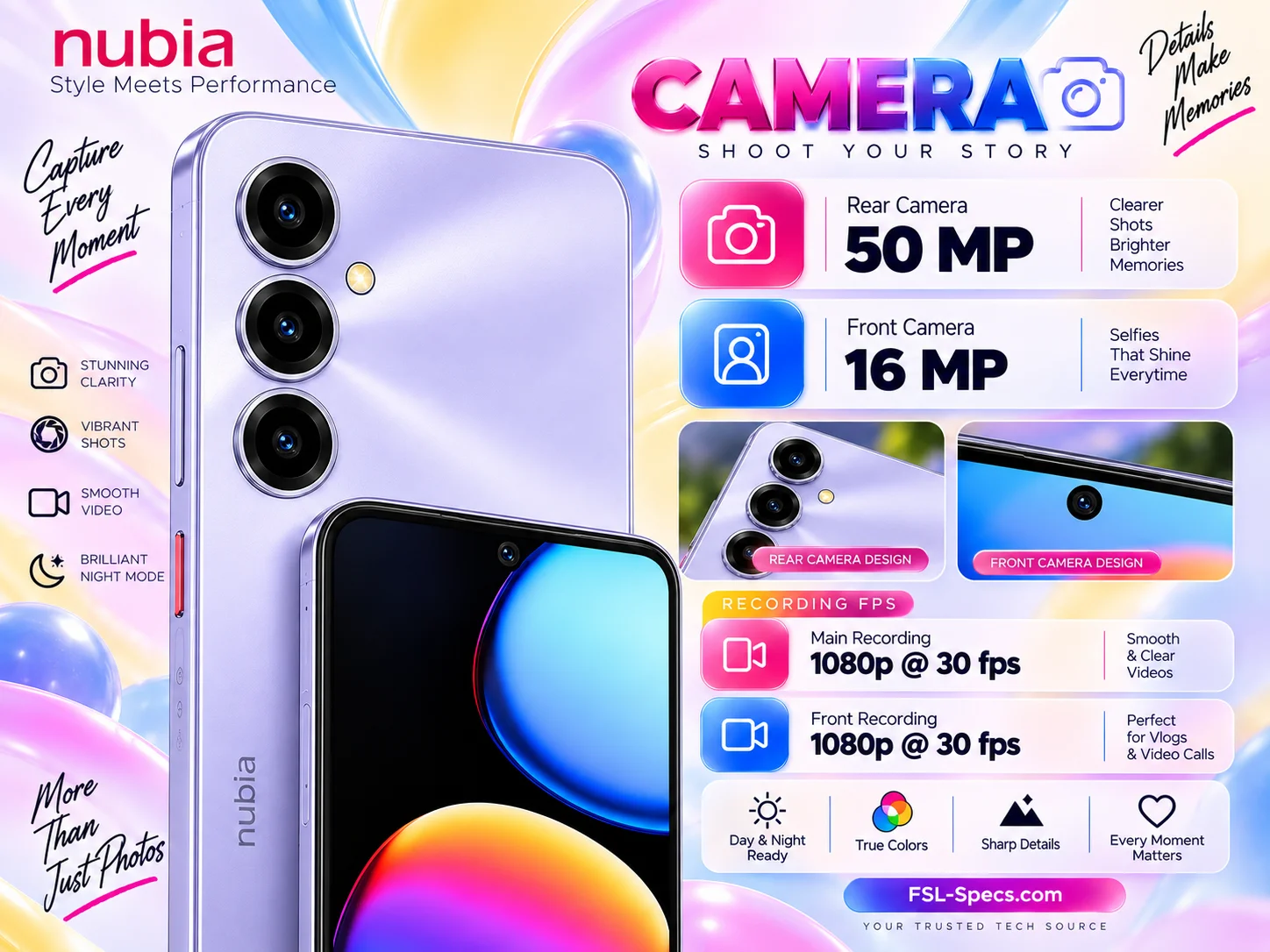
Rear Camera
50 MP
Front Camera
16 MP
RECORDING FPS
Main Recording
1080p @ 30 fps
Front Recording
1080p @ 30 fps
RESOLUTION
Main Resolution
8192 × 6144 pixels
Stabilization
No
FLASH
Flash
Flash
Capacity
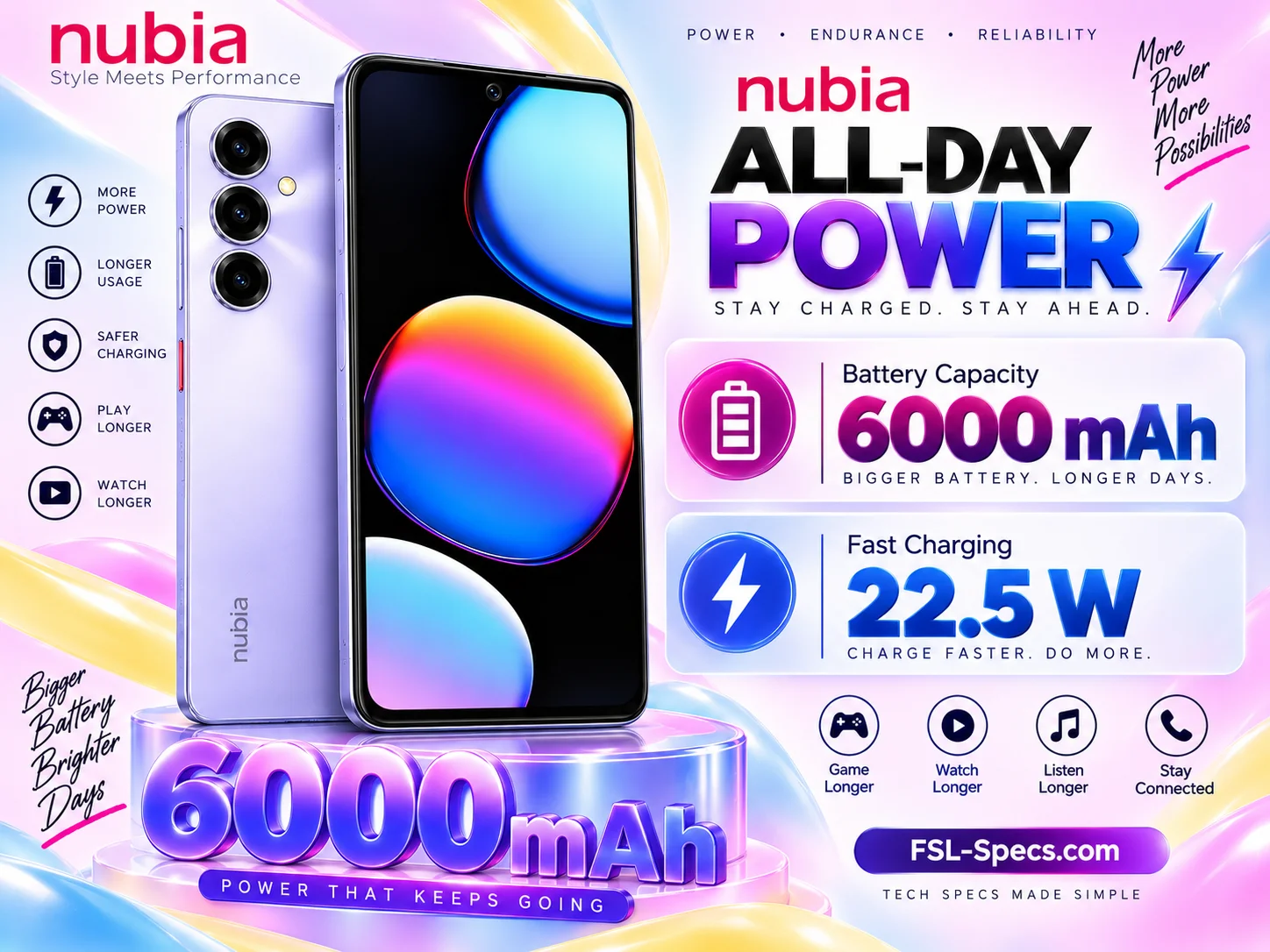
6000 mAh
Fast Charging
22.5 W
Wireless Charging
No
Li Battery Type
Li-Ion
REVERSE
Reverse Wired
10 W
AUDIO & SENSORS
Speaker
Single Mono Speaker
Fingerprint Sensor
Side Mounted
BASIC INFO
Mobile
ZTE Nubia V80 Max
Series
Nubia V
Category
Budget
Release Date
31 January,2026
Year
2026
CONNECTIVITY
Sim
Nano-SIM + Nano-SIM
Network
4G
WiFi
Wi-Fi 5
Bluetooth
5.2
NFC
Yes / region dependent
OS
Android 16
BODY
Dimensions
171.6 x 77.8 x 8.3 mm
Build
Plastic Frame & Glass Back
KG Weight
191 g
Screen Size
6.9 inch
Resolution
720 x 1640 pixels
Type
IPS LCD
Refresh Rate
120 Hz
HBM Brightness
780 Nits
Processor
Unisoc T7250
Max Clock
1.8 GHz
Lithography
12 nm
GPU
Mali-G57 MP1
CPU Cores
8 Cores
Antutu v11
350 K
Antutu v10
300 K
Architecture
2x 1.8 GHz Cortex-A75
6x 1.6 GHz Cortex-A55
Ram Memory
8+ 256 GB
SD Card
Yes
Ram Type
LPDDR4X
Storage Type
eMMC 5.1
Variants
8 + 256 GB 
8 + 128 GB 
MP
Rear Camera
50 MP
Front Camera
16 MP
RECORDING FPS
Main Recording
1080p @ 30 fps
Front Recording
1080p @ 30 fps
RESOLUTION
Main Resolution
8192 × 6144 pixels
Stabilization
No
FLASH
Flash
Flash
Capacity
6000 mAh
Fast Charging
22.5 W
Wireless Charging
No
Li Battery Type
Li-Ion
REVERSE
Reverse Wired
10 W
AUDIO & SENSORS
Speaker
Single Mono Speaker
Fingerprint Sensor
Side Mounted

Highlights & Review Of ZTE Nubia V80 Max

Display Review:

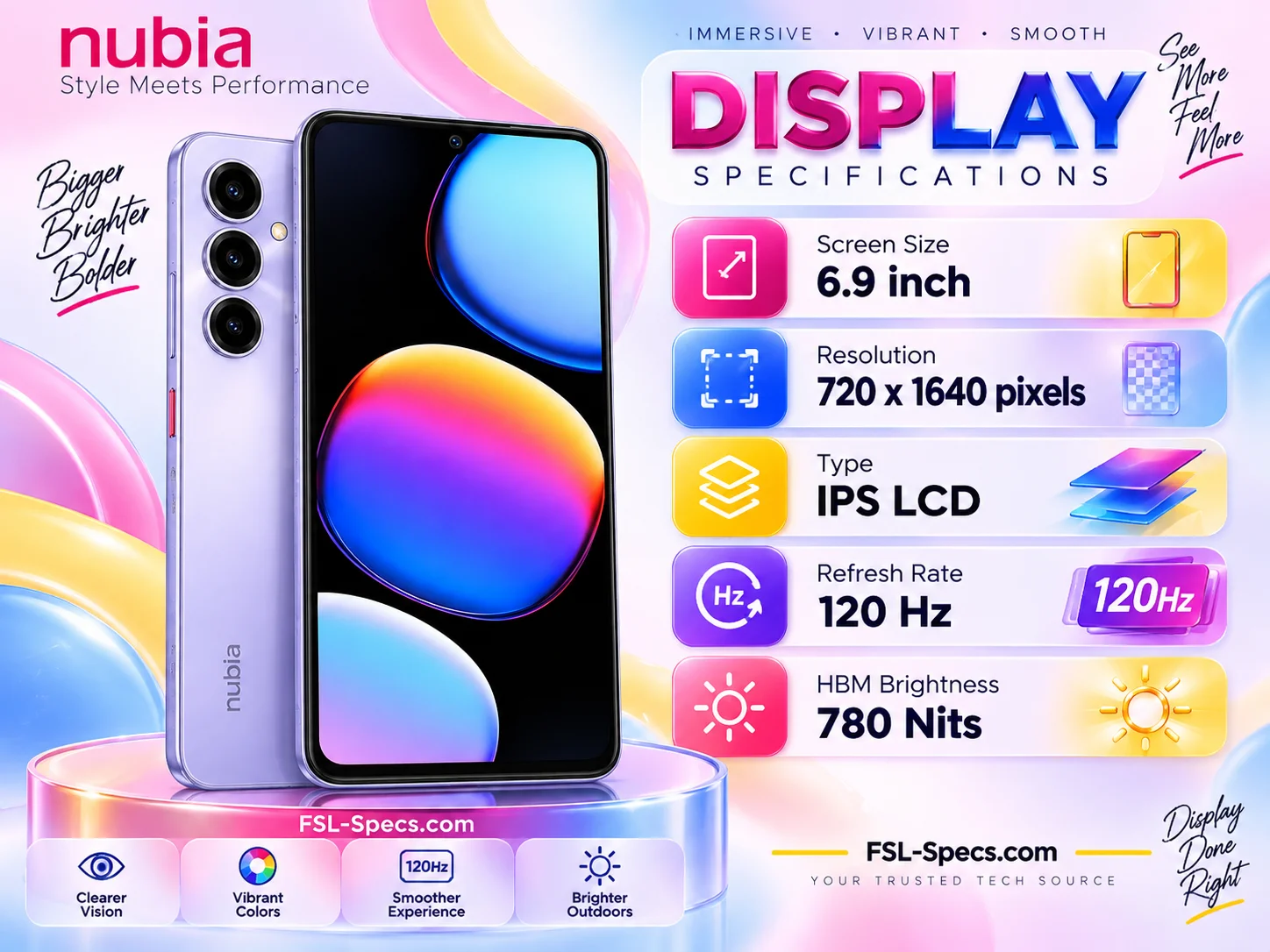
The ZTE Nubia V80 Max, priced at PKR 40,000 (box packed, official retail), runs a 6.9-inch IPS LCD panel at 720 x 1640 resolution with a 120Hz refresh rate and 780 nits peak brightness . That resolution works out to roughly 260ppi, the lowest pixel density in this comparison, since all three rivals here use FHD+ panels. The Tecno Camon 20 Pro (PKR 35,000, used market) fits a 6.67-inch AMOLED at 1080 x 2400 (~395ppi) with an always-on display feature the Nubia V80 Max doesn’t offer.

The Tecno Spark 30 Pro (PKR 37,000, used market) goes further with a 6.78-inch AMOLED at 1080 x 2436 (~393ppi) rated at 1700 nits peak brightness , more than double the Nubia V80 Max’s figure. The Tecno Pova 5 Pro (PKR 40,000, used market) uses a 6.78-inch IPS LCD at 1080 x 2460 (~396ppi) rated at 580 nits peak, independently measured at 509 nits by GSMArena.

The Nubia V80 Max is the only phone in this group without an FHD+ panel, so text and icons will look visibly softer next to the Camon 20 Pro or Spark 30 Pro, both of which cost the same or less on the used market. The Spark 30 Pro’s AMOLED panel and near-1700 nit brightness make it the strongest outdoor-visibility pick of the four, while the Camon 20 Pro’s always-on display adds a convenience none of the others match.

The Nubia V80 Max’s only real edge is raw screen size at 6.9 inches, which doesn’t offset the resolution gap against the Pova 5 Pro at the identical PKR 40,000 price point.

Verdict: At the same PKR 40,000, the Tecno Pova 5 Pro’s sharper 1080 x 2460 LCD outresolves the Nubia V80 Max’s 720 x 1640 panel, and anyone prioritizing display quality over factory-sealed condition gets more from the Spark 30 Pro’s AMOLED and 1700-nit brightness instead.

Processor Review:

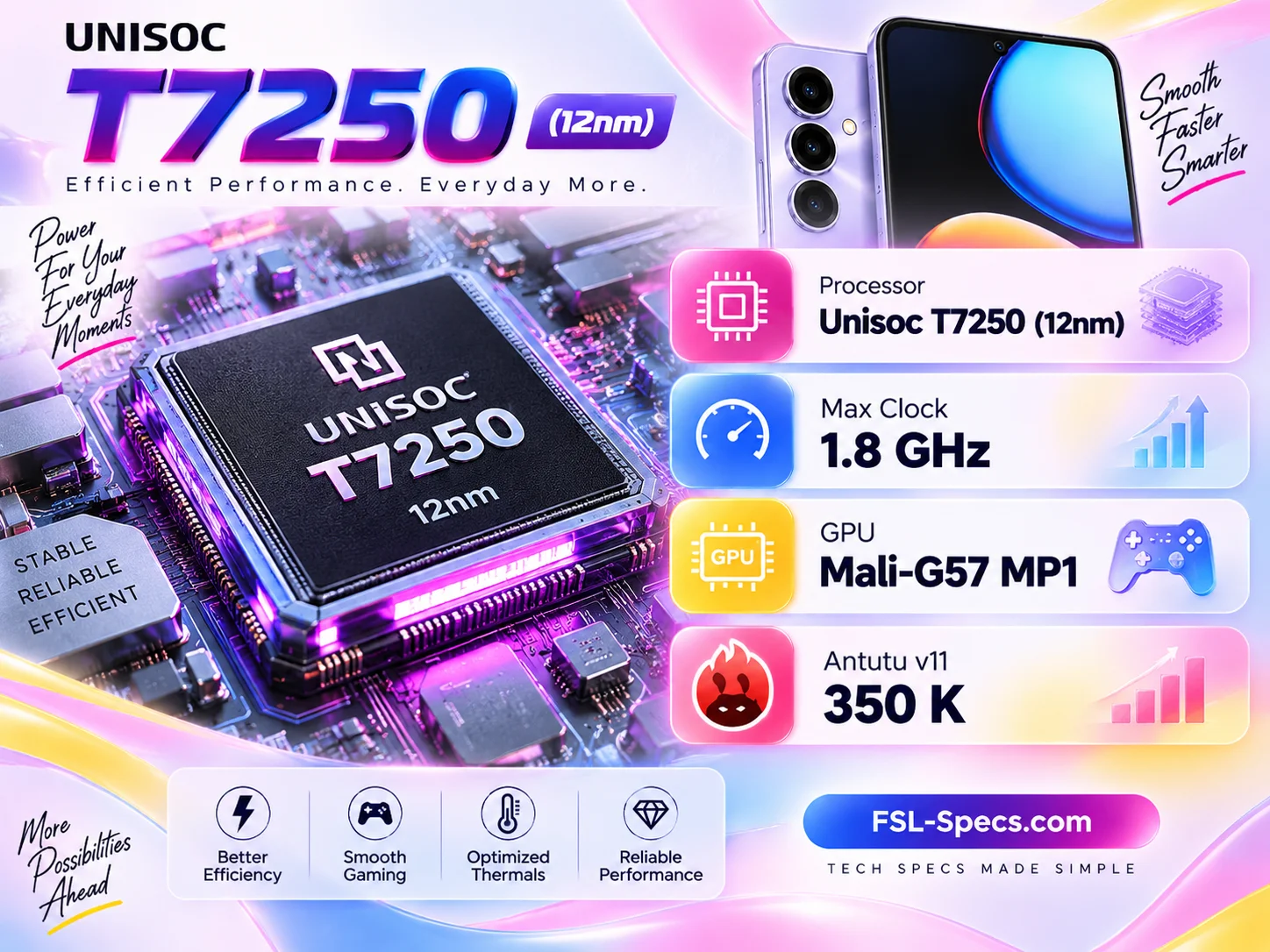
The ZTE Nubia V80 Max runs on the Unisoc T7250, an entry-level 12nm chip with 2×1.8GHz Cortex-A75 and 6×1.6GHz Cortex-A55 cores paired with a single-shader Mali-G57 MP1 GPU, and no device-specific AnTuTu score has been published for it yet . That puts it a clear step behind all three rivals here on paper, which pack newer 6nm silicon with dual-shader GPUs.

The Tecno Camon 20 Pro runs the Helio G99 (2×2.2GHz Cortex-A76, 6×2.0GHz Cortex-A55, Mali-G57 MC2) at 416,544 AnTuTu (v10), per Kimovil testing . The Tecno Spark 30 Pro, on the newer Helio G100 with the same core layout, scores 420,000 AnTuTu (v10) , essentially tied with the Camon 20 Pro on this generation of the benchmark.

The Tecno Pova 5 Pro leads the group at 423,437 AnTuTu (v10) on its Dimensity 6080 chipset, a figure from GSMArena’s own device testing [Reviewer-sourced], and it’s the only phone of the four with 5G connectivity. All three rivals share the same AnTuTu v10 suite, so that three-way comparison is fair, but the Nubia V80 Max can’t be placed on the same chart since it lacks a matching test.

Architecturally, the Unisoc T7250’s single-shader GPU and lower clock speeds mean the Nubia V80 Max will struggle with anything past light gaming, while the Camon 20 Pro, Spark 30 Pro, and Pova 5 Pro sit close enough to each other that day-to-day speed differences between them will be minor. The bigger real-world gap is between the Nubia V80 Max and everything else in this comparison, not among the three Tecno phones.

Verdict: At PKR 40,000, the Tecno Pova 5 Pro’s Dimensity 6080 outperforms the Nubia V80 Max’s Unisoc T7250 by a wide margin and adds 5G, making it the stronger processor pick at the same price, while the Nubia V80 Max’s chip is the weakest in this entire comparison group.

Ram & Memory Review:

The ZTE Nubia V80 Max pairs 8GB of RAM with 256GB storage at PKR 40,000 (box packed), and while GSMArena confirms a dedicated microSDXC slot for expansion, the RAM type and storage type (UFS or eMMC) haven’t been disclosed . The Tecno Camon 20 Pro (PKR 35,000, used market) matches it on capacity with 8GB LPDDR4X RAM and 256GB UFS storage , plus a microSD slot rated for cards up to 1TB, both a named RAM standard and a named storage standard the Nubia V80 Max’s listing doesn’t provide.

The Tecno Spark 30 Pro (PKR 37,000, used market) uses the same 8GB LPDDR4X RAM running at 2133MHz on UFS 2.0 storage , but only in 128GB, half the capacity of the other three phones in this set, and Tecno’s own listing adds up to 8GB of virtual RAM extension on top, a feature not confirmed on any rival here. The Tecno Pova 5 Pro (PKR 40,000, used market) sticks with 8GB RAM and 256GB storage, with a dedicated microSDXC slot confirmed, though its exact RAM and storage type are unspecified in GSMArena’s listing.

Storage capacity is where the real trade-off shows up. The Spark 30 Pro’s 128GB is the smallest of the four at nearly the same used-market price as the 256GB Camon 20 Pro, which matters more for a phone’s long-term usability than any RAM number on the box. All four phones support microSD expansion, so none of them locks a buyer out of adding storage later, but the Camon 20 Pro’s confirmed LPDDR4X and UFS naming gives buyers more certainty about what they’re getting than the Nubia V80 Max’s unlisted memory specs.

Verdict: For the same PKR 40,000, the Tecno Pova 5 Pro matches the Nubia V80 Max’s 8GB/256GB configuration but with a confirmed microSDXC slot, while the Tecno Camon 20 Pro offers the same 256GB at a lower PKR 35,000, making the Nubia V80 Max’s memory setup the least competitive of the three used-market rivals on value.

Cameras Review:

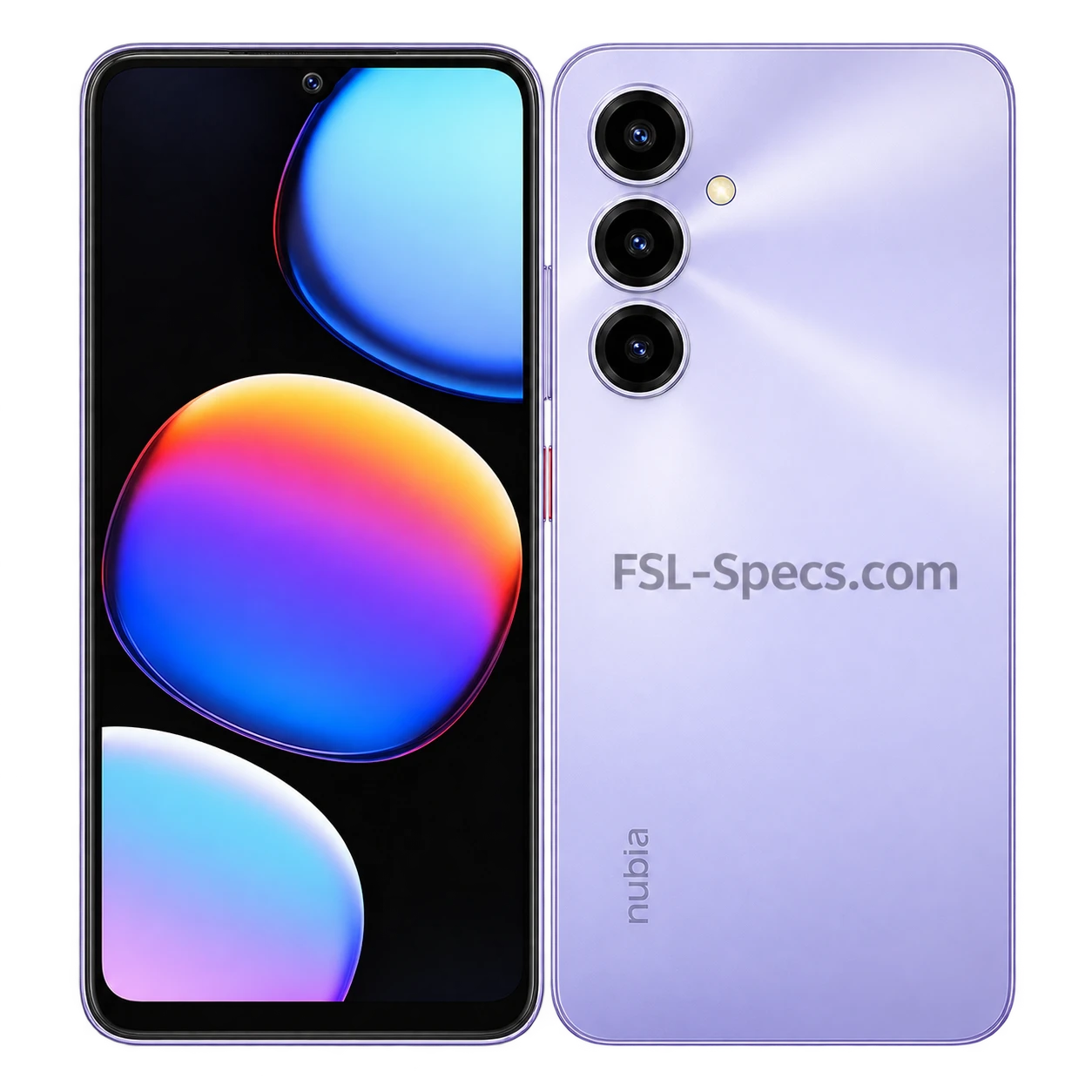
The ZTE Nubia V80 Max is marketed with a triple rear camera, but GSMArena’s spec sheet only documents one lens, a 50MP, f/1.8 wide unit with PDAF; the other two housings on the back go unnamed, and a hands-on report from GadgetByteNepal states plainly that one of the three is decorative rather than functional .

The Tecno Camon 20 Pro (PKR 35,000, used market) has three genuinely working lenses: a 64MP, f/1.7, 1/1.7″ main sensor with PDAF, a 2MP depth sensor, and a low-resolution QVGA third lens . The Tecno Spark 30 Pro (PKR 37,000, used market) goes single-lens with a 108MP, f/1.9 sensor at 1/1.52″, identified by Kimovil as a Samsung ISOCELL HM6, a physically larger sensor than the Camon 20 Pro’s despite the resolution gap running the other way.

The Tecno Pova 5 Pro (PKR 40,000, used market) uses a single 50MP, f/1.6 wide sensor with PDAF , tying the Nubia V80 Max on megapixel count but without the undocumented extra lenses. None of the four phones include OIS, so stabilization is software-only across the board. Front cameras run 16MP on the Nubia V80 Max and Pova 5 Pro, 32MP on the Camon 20 Pro, and 13MP on the Spark 30 Pro, none with autofocus. Rear video tops out at 1080p@30fps on the Nubia V80 Max and Camon 20 Pro, while the Spark 30 Pro and Pova 5 Pro both reach 1440p@30fps.

The Camon 20 Pro is the only phone here with three confirmed working lenses instead of a padded spec sheet, while the Spark 30 Pro’s larger sensor and higher rear video resolution make it the strongest single-camera setup of the four.

Verdict: The Nubia V80 Max is the least transparent camera setup in this comparison, with two of its three advertised lenses undocumented and one reported as non-functional, and buyers who care about a fully working camera system get more certainty from either the Camon 20 Pro’s confirmed triple setup or the Spark 30 Pro’s larger 108MP sensor.

Battery Review:

The ZTE Nubia V80 Max carries the largest cell in this comparison at 6000mAh, charging at 22.5W wired with 10W reverse wired charging, and independent testing puts a full 0-100% charge at roughly 2 hours 7 minutes. The Tecno Camon 20 Pro (PKR 35,000, used market) runs a smaller 5000mAh cell at 33W wired charging, with no confirmed 0-100% time for this Helio G99 variant and no wireless or reverse charging.

The Tecno Spark 30 Pro (PKR 37,000, used market) also uses a 5000mAh battery at 33W, with third-party estimates suggesting a full charge lands around the one-hour mark, though this hasn’t been independently verified for this exact unit. The Tecno Pova 5 Pro (PKR 40,000, used market) sticks to 5000mAh as well, but its 68W wired charging is confirmed by GSMArena to hit 50% in 15 minutes, making it by far the fastest-charging phone of the four.

This is a straightforward capacity-versus-speed trade-off. The Nubia V80 Max has 1000mAh more capacity than any rival here and is the only phone in the group with reverse charging, useful for topping up earbuds or another device, but its 22.5W charging speed means that extra capacity takes noticeably longer to refill than any of the three smaller-battery Tecno phones.

The Pova 5 Pro flips that trade-off entirely: less capacity, but a 68W charger that can push it past the halfway mark in a quarter of an hour, something none of the other three phones come close to matching.

Verdict: The Nubia V80 Max wins on raw capacity and is the only phone here with reverse charging, but buyers who value quick top-ups over endurance get far more from the Tecno Pova 5 Pro’s 68W charging at the same PKR 40,000 price.

Final Verdict :

Across display, processor, memory, camera, and battery, the Tecno Pova 5 Pro comes out as the strongest overall package in this comparison, backed by the highest confirmed AnTuTu score (423,437, v10), the fastest charging in the group (68W, 50% in 15 minutes), and a full 256GB/8GB configuration at the same PKR 40,000 price as the ZTE Nubia V80 Max, without giving up meaningful ground on display sharpness.

The Tecno Camon 20 Pro is close behind and arguably the smarter buy at PKR 35,000, since it matches the Pova 5 Pro’s processor tier, carries the only genuinely transparent triple-camera setup in this group, and undercuts every rival on price for the same 256GB storage. The Tecno Spark 30 Pro has the best display brightness and the largest single camera sensor of the four, but its 128GB storage on the tested variant is a real step down from the 256GB the other three phones offer at similar used-market prices.

The ZTE Nubia V80 Max trails in every section except battery capacity: its Unisoc T7250 has no published device benchmark and is architecturally behind all three rivals, two of its three advertised rear lenses are undocumented or non-functional, and its 6.9-inch display runs a lower resolution than any phone here. Its one clear advantage, a 6000mAh cell with reverse charging, plus being box-packed rather than used, are the only things it has over the other three at the same or lower price.

Bottom line: For PKR 35,000 to 40,000, the Tecno Pova 5 Pro and Tecno Camon 20 Pro both outperform the ZTE Nubia V80 Max on hardware, and the Nubia V80 Max only makes sense for buyers who specifically want a factory-sealed unit and the largest possible battery over everything else.

Ranking:

  1. Tecno Pova 5 Pro – PKR 40,000 (used market)
  2. Tecno Camon 20 Pro – PKR 35,000 (used market)
  3. Tecno Spark 30 Pro – PKR 37,000 (used market)
  4. ZTE Nubia V80 Max – PKR 40,000 (box packed)

Pros And Cons of ZTE Nubia V80 Max

Pros of Mobile

✅ Massive battery capacity — 6000mAh cell 🔋
✅ Fast refresh display — 120Hz  📱
✅ Large immersive screen — 6.9-inch panel 📱
✅ Splash resistance rating — IP64 certified 💧
✅ Expandable storage option — microSDXC card slot 💾

Cons of Mobile

❌ No 5G connectivity — LTE only 📶
❌ Entry-level chipset — Unisoc T7250 🧠
❌ Slow charging speed — 22.5W wired ⚡
❌ Low-res HD+ IPS panel — 720×1640 pixels 📱
❌ Fake third camera — decorative lens 📷
❌ 1080p video cap — no 4K recording 🎥

Best For - Not Best For

Best For

🎯 Battery-life priorities
🎯 Budget-conscious buyers
🎯 Casual daily browsing
🎯 Large-screen preference
🎯 Basic social media
🎯 Splash-prone environments

Not Best For

🚫 Mobile gaming needs
🚫 5G network users
🚫 Photography enthusiasts
🚫 Heavy multitaskers
🚫 Sharp display seekers
🚫 Fast-charging demands

Trailer And Unboxing of ZTE Nubia V80 Max

Disassembly Or Teardown And Gaming Test of ZTE Nubia V80 Max

Camera Test ZTE Nubia V80 Max

zte nubia v80 max
zte nubia v60 Design
Tecno Camon 20 Pro
Tecno Spark 30 Pro
Tecno Spark 50
Tecno Pova 5 Pro
infinix note 30
itel s25

ZTE Series Row
Picture of Faisal Ur Rehman

Faisal Ur Rehman

Faisal Rehman is the founder and editor of FSL Specs, where he publishes in-depth smartphone specifications, comparisons, buying guides, and technology insights. With extensive experience in mobile hardware research and technical analysis, he provides accurate and up-to-date information on Android smartphones, processors, displays, cameras, batteries, performance benchmarks, and software features. His goal is to simplify complex specifications and help readers choose the right device with confidence.

FAQs Questions

It runs on the Unisoc T7250, a 12nm octa-core chip built for basic day-to-day tasks like calls, texting, and light browsing. It's not built for gaming or heavy multitasking, so keep expectations realistic here.

It has a large 6.9-inch IPS LCD panel with a 120Hz refresh rate and up to 780 nits brightness. The catch is the resolution sits at just 720 x 1640, so text and images won't look as sharp as pricier AMOLED rivals.

Yes, it carries an IP64 rating for dust and splash resistance, plus drop resistance up to 1.8 meters. That's genuinely useful for buyers who want a rugged daily driver without paying flagship prices.

It has a 50MP main camera on the back — the other visible lenses are largely decorative — paired with a 16MP front camera for selfies. Reviewers note it handles daylight shots reasonably well but struggles in low light.


It packs a 6,000mAh battery with 22.5W charging support. That's a solid capacity for all-day use, even if the charging speed itself is fairly modest.

It comes with 8GB RAM (expandable up to 16GB using storage space) and either 128GB or 256GB of storage, plus microSD support in some markets. That's generous headroom for a phone in this price tier.

It ships with MyOS 16 based on Android 16, and includes ZTE's AI tools like scam detection, smart replies, and real-time translation through a dedicated AI button. It's a surprising amount of AI functionality for a budget device.

8+256 GB - 40,000 pkr price in pakistan 

Leave a Reply

Your email address will not be published. Required fields are marked *

Scroll to Top