















• Mobiles
  • Processors
  • Mobiles
  • Processors
  • Mobiles
  • Processors

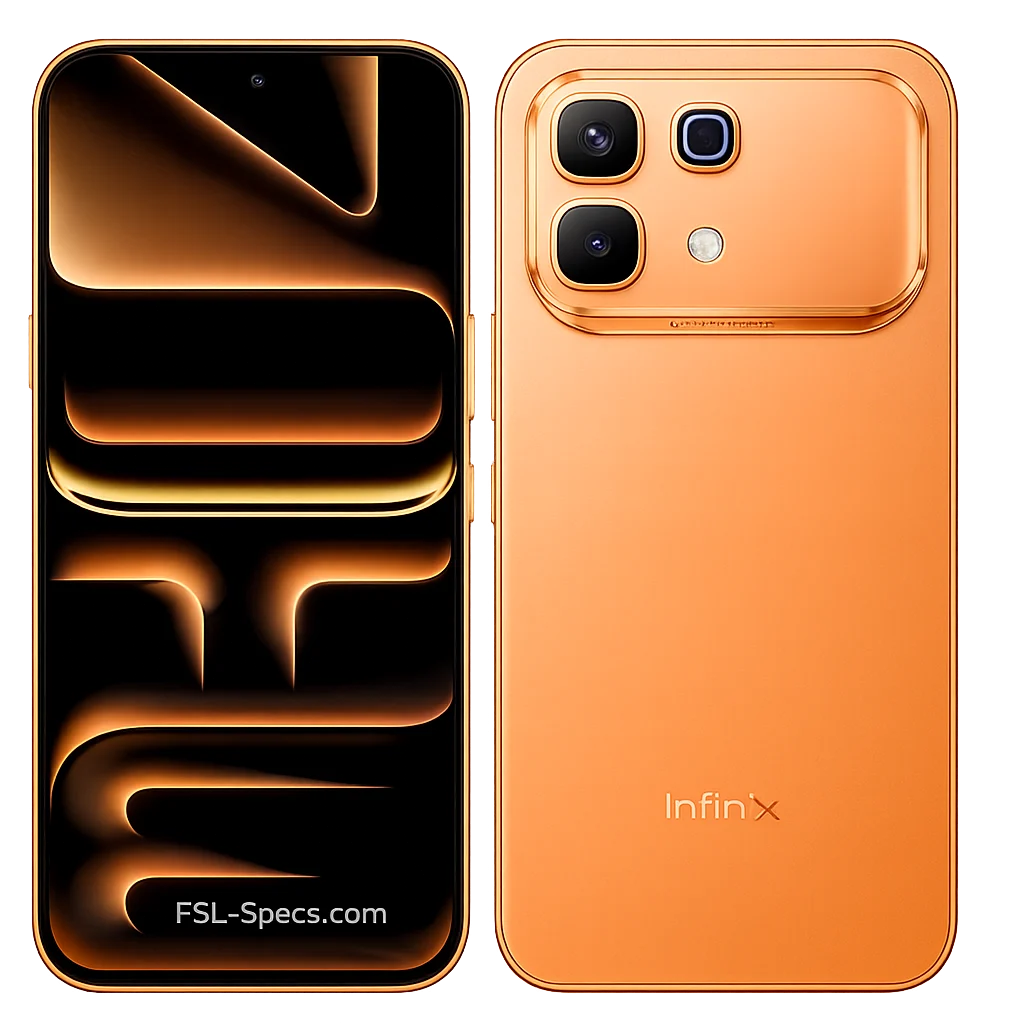
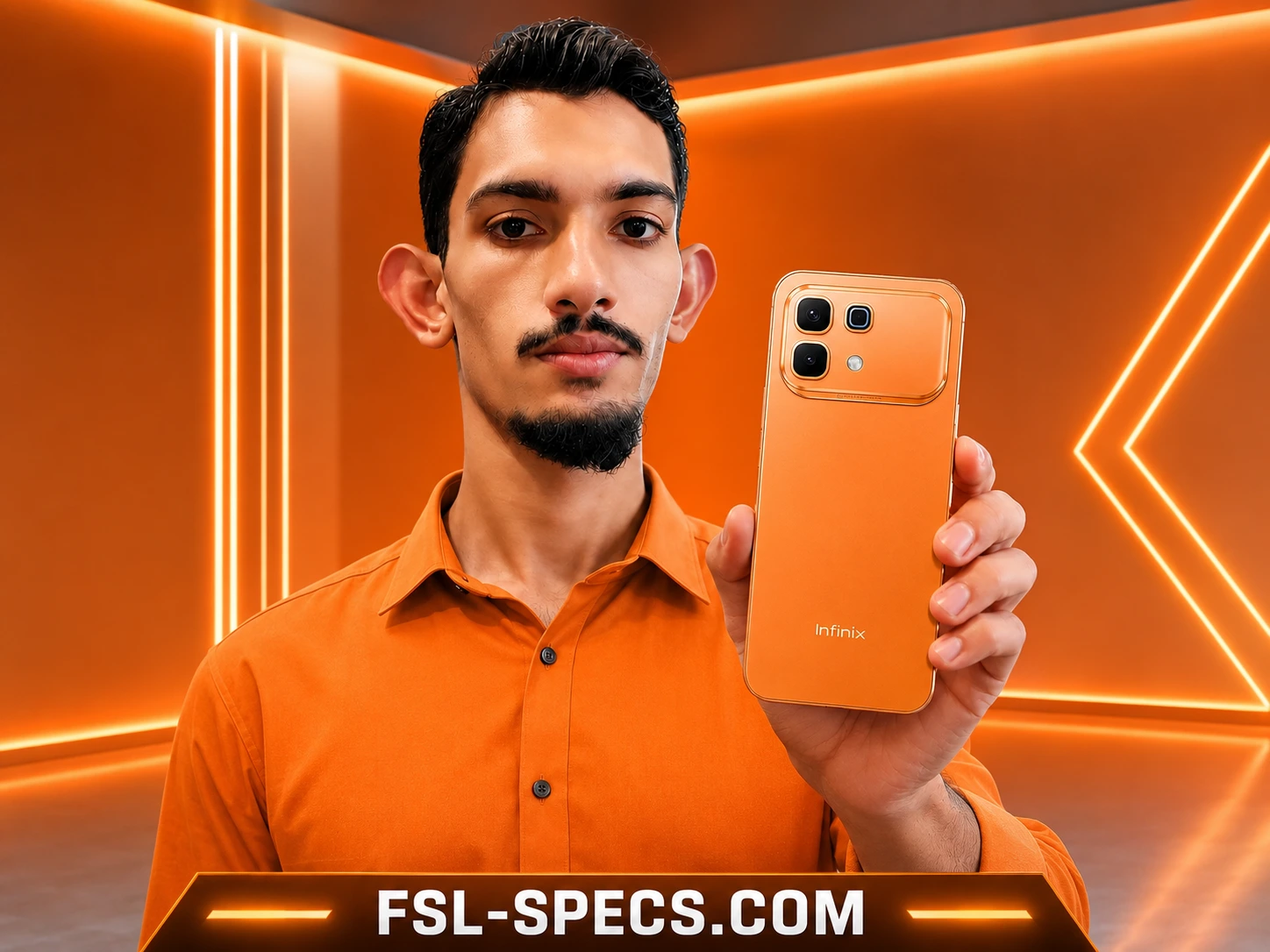
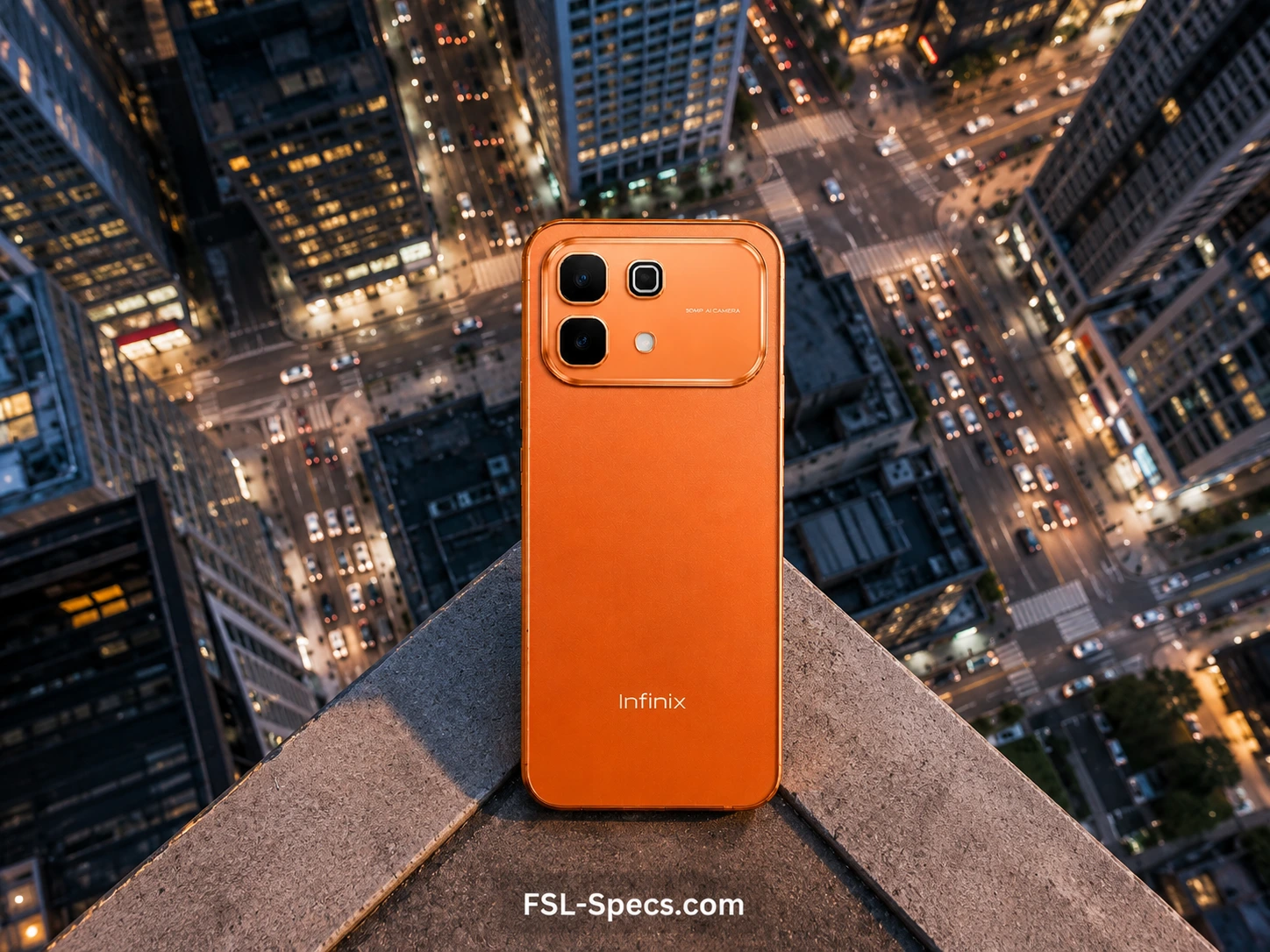
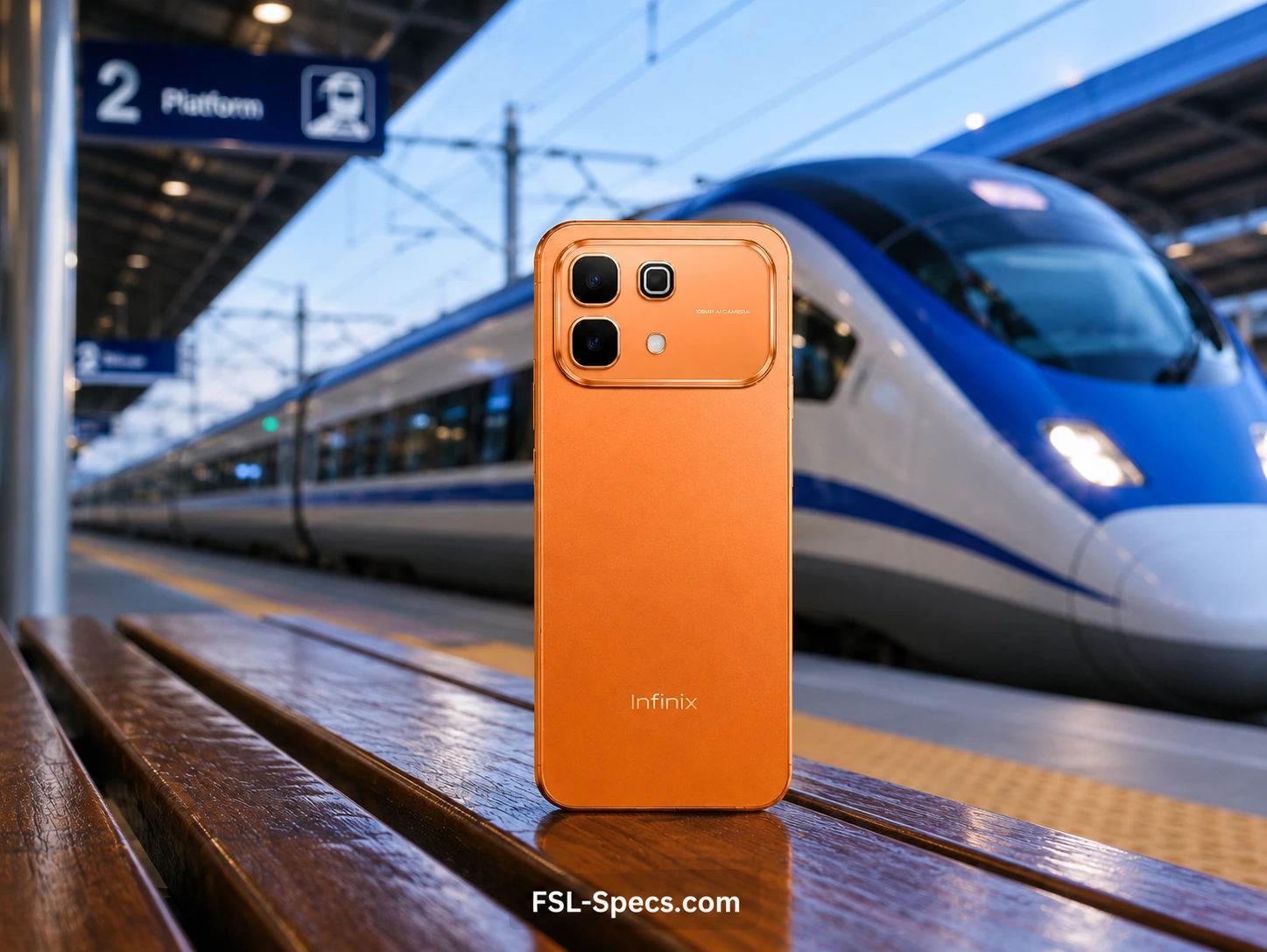
✪ Infinix Note 60 Pro ✪

infinix Note 60 Pro Specs, Price, Camera, Battery & Best Review (2026)
United States flag United States
$360 USD
…
Pakistan flag Pakistan (PKR)
118,000 PKR
India flag India (INR)
₹34,000 INR

✪ Infinix Note 60 Pro ✪

infinix Note 60 Pro Specs, Price, Camera, Battery & Best Review (2026)
Last Time Update : 7 October, 2026
0

Quick Specifications

AMOLED

Display Type

Snapdragon 7s Gen 4

Processor

8 + 256 GB

Ram And Memory

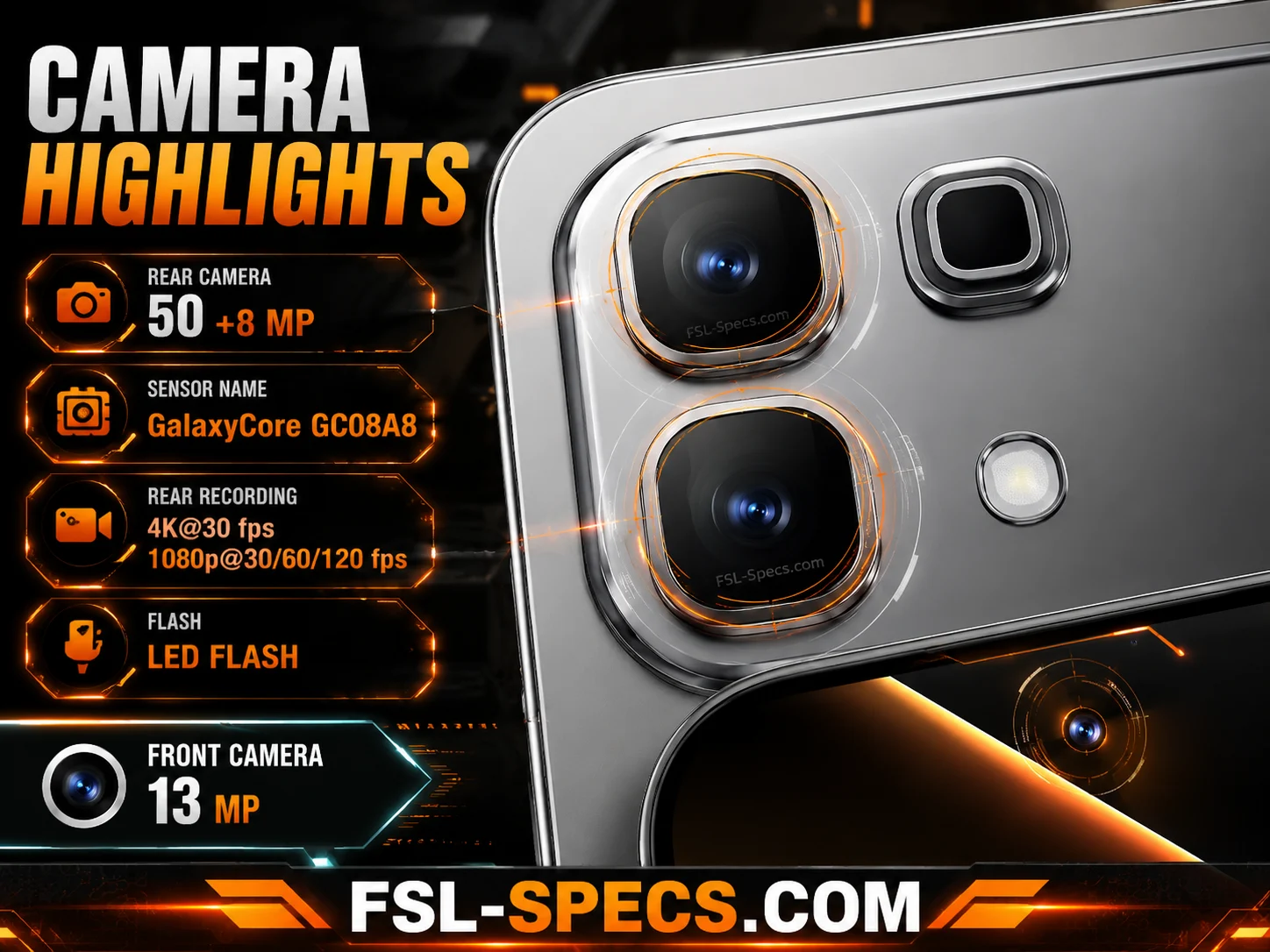
50 +8 MP

Camera

6500 mAH

Battery

90 W

Fast Charging

Full Specification

BASIC INFO
Mobile
Infinix Note 60 Pro
Model
X6878
Series
Note Series
Category
Uper Mid Range
Release Date
1 March,2026
Year
2026
CONNECTIVITY
Sim
Dual SIM, Nano-SIM
Network
4G / 4G+ / 5G
WiFi
Wi-Fi 6
Bluetooth
5.4
NFC
Yes
OS
Android 17 , XOS 17
BODY
Dimensions
162.4 x 77.2 x 7.4 mm
Build
Aluminum ( Frame And Back)
KG Weight
201 grams
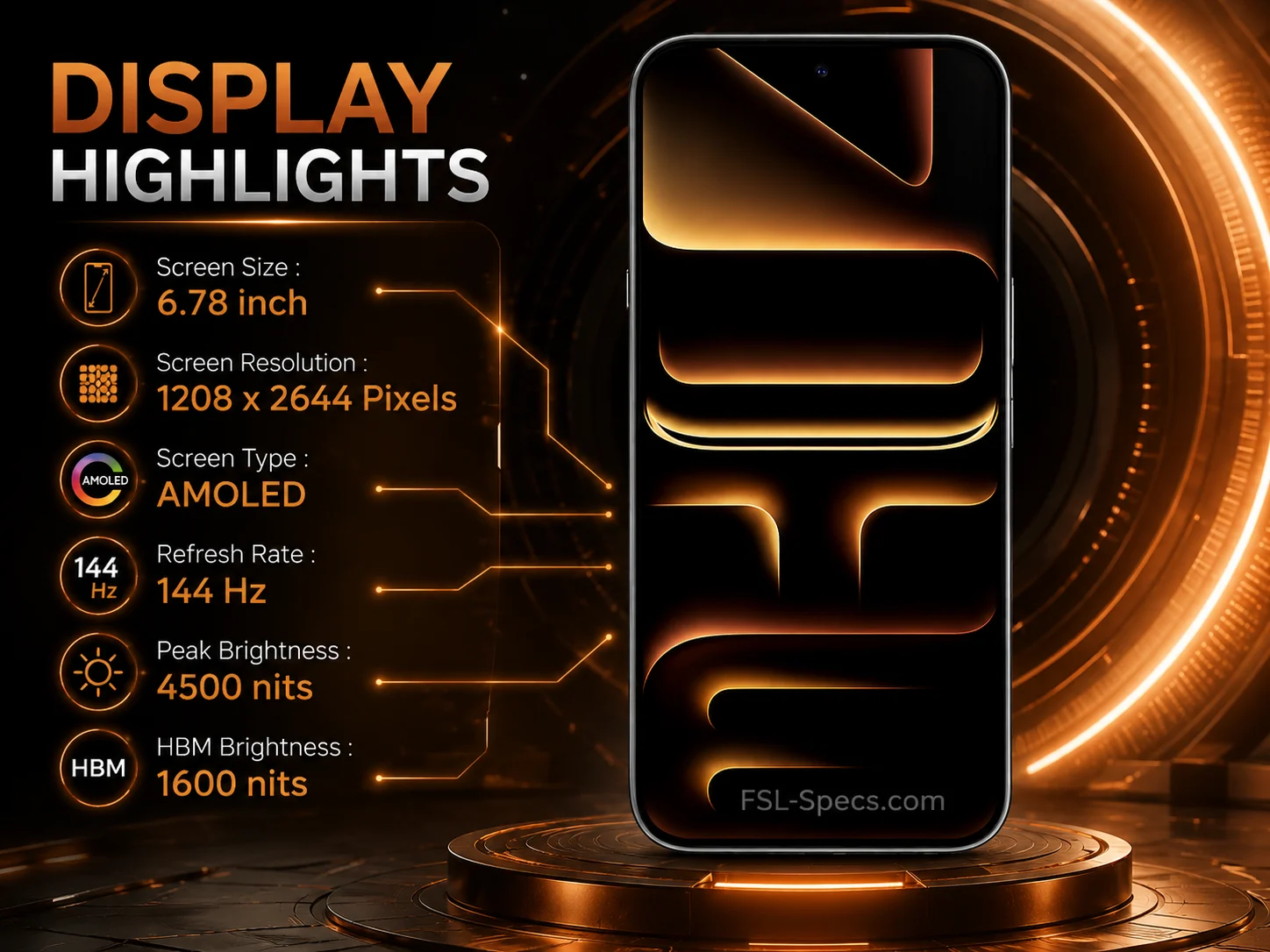
Screen Size
6.78 inch
Resolution
1208 x 2644 Pixels
Type
AMOLED
Refresh Rate
144 Hz
Peak Brightness
4500 nits
HBM Brightness
1600 nits
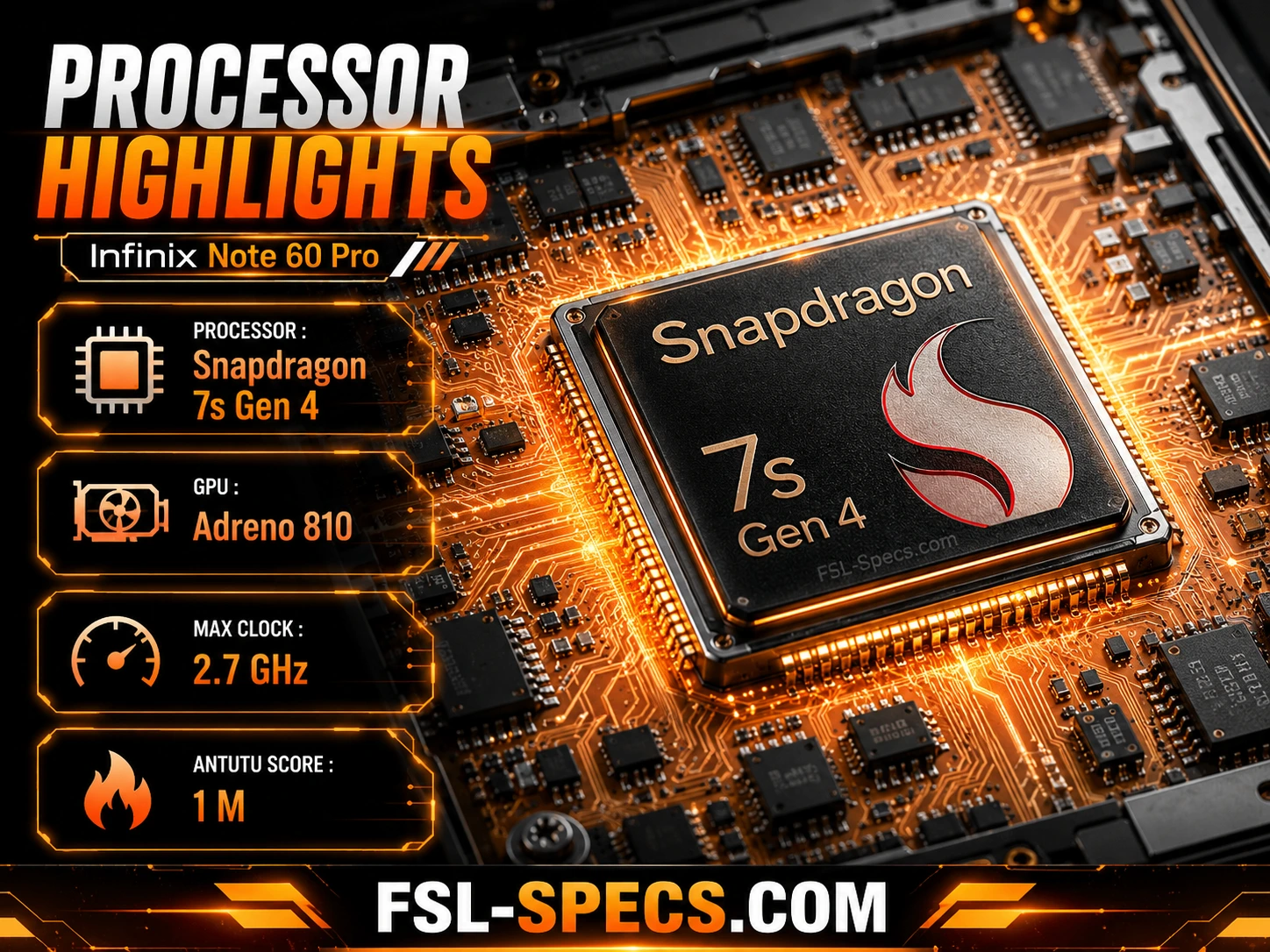
Processor
Snapdragon 7s Gen 4
Max Clock
2.7 GHz
Lithography
4 nm
GPU
Adreno 810
CPU Cores
8 Cores
Antutu v11
1 M
Architecture
1 x 2.7GHz Cortex-A720
3 x 2.4GHz Cortex-A720
4 x 1.8GHz Cortex-A520
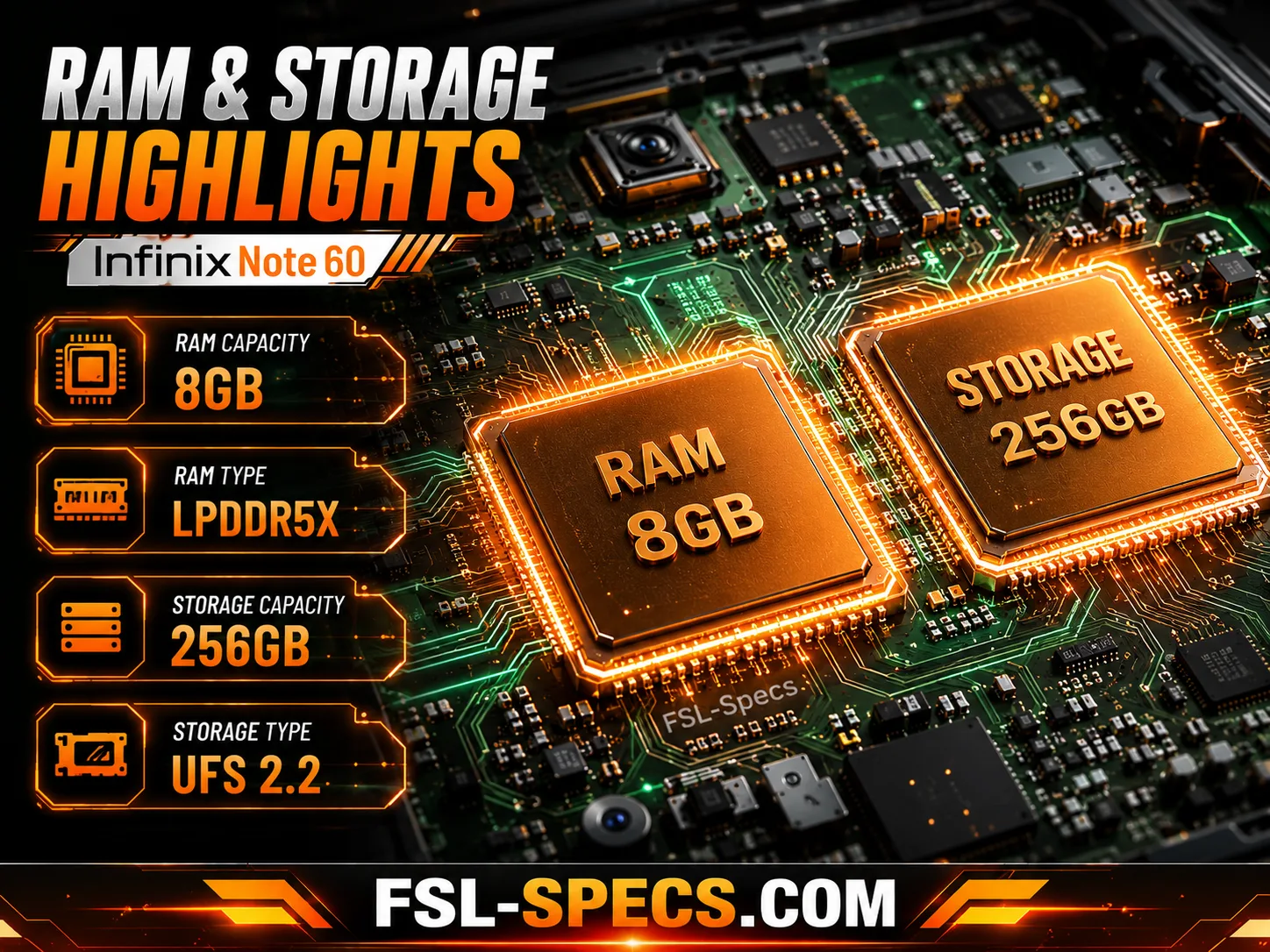
Ram Memory
8 + 256 GB
Ram Type
LPDDR5X
Storage Type
UFS 2.2
SD Card
Not Confirm
Variants
8+ 256GB
MP
Rear Camera
50 +8 MP
Front Camera
13 MP
SENSORS
Front Sensors
13 MP = GalaxyCore GC13AO
RECORDING FPS
Main Recording
4K@30 fps
1080p@30/60/120 fps
Front Recording
4K@30 fps
1080p@30/60 fps
RESOLUTION
Main Resolution
8160 × 6144 Pixels
Front Resolution
4,160 x 3,120 Pixels
Stabilization
Digital
FLASH
Flash
Dual-LED Flash
Capacity
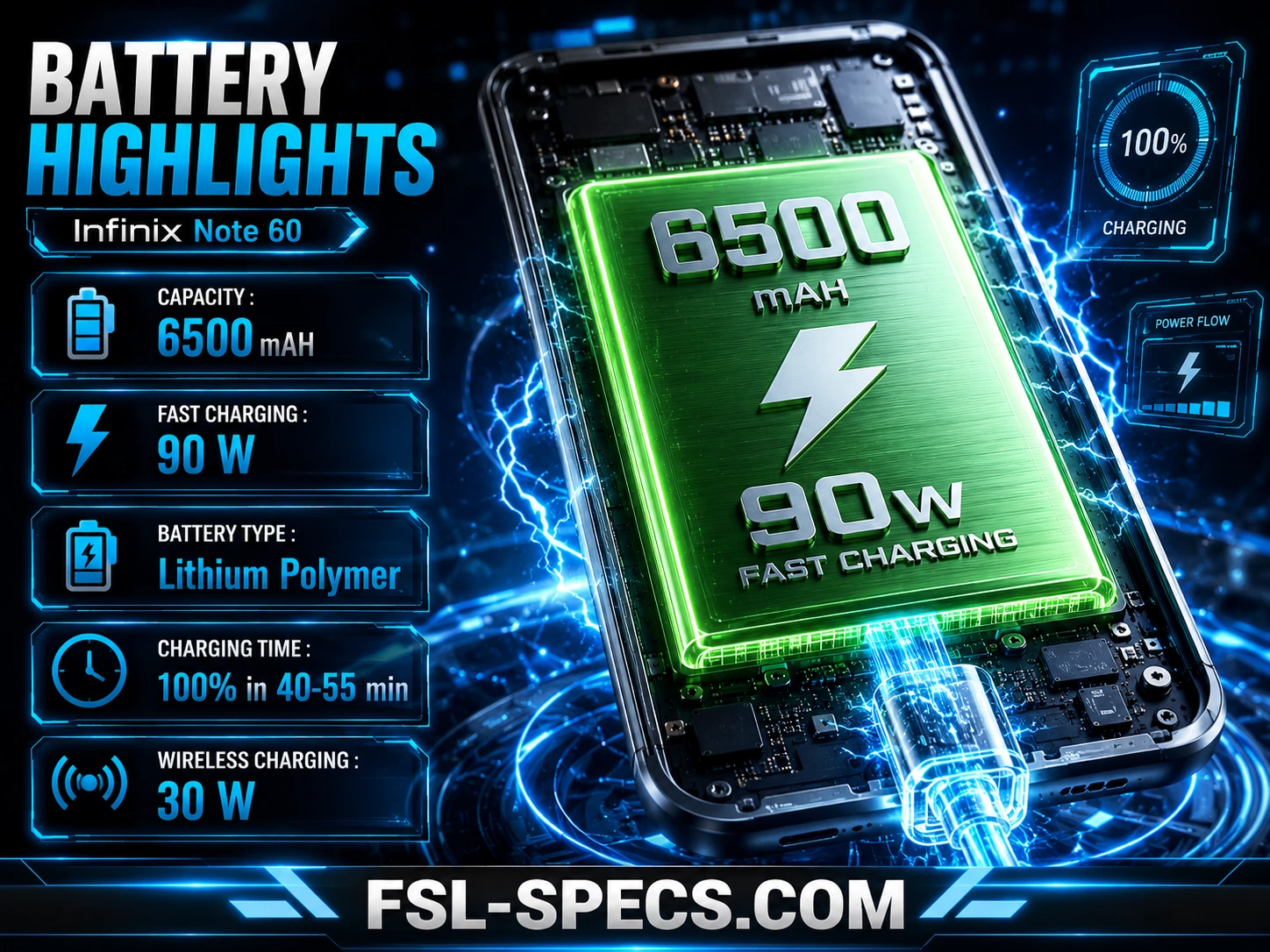
6500 mAH
Fast Charging
90 W
Wireless Charging
30 W
Li Battery Type
Lithium Polymer
REVERSE
Reverse Wired
7.5 W
Reverse Wireless
5 W
OTHER
Battery PC Marks
12h 39m
Charging Time
100% in 45-60 min
AUDIO & SENSORS
Speaker
Dual Stereo Speaker
Fingerprint Sensor
Front Finger
Other Sensors
Accelerometer
Gyroscope
Proximity Sensor
Ambient Light Sensor
Electronic Compass (Magnetometer)
Gravity Sensor
Pedometer
IR Blaster
Special Features

RGB notification light on the back

BASIC INFO
Mobile
Infinix Note 60 Pro
Model
X6878
Series
Note Series
Category
Uper Mid Range
Release Date
1 March,2026
Year
2026
CONNECTIVITY
Sim
Dual SIM, Nano-SIM
Network
4G / 4G+ / 5G
WiFi
Wi-Fi 6
Bluetooth
5.4
NFC
Yes
OS
Android 17 , XOS 17
BODY
Dimensions
162.4 x 77.2 x 7.4 mm
Build
Aluminum ( Frame And Back)
KG Weight
201 grams
Screen Size
6.78 inch
Resolution
1208 x 2644 Pixels
Type
AMOLED
Refresh Rate
144 Hz
Peak Brightness
4500 nits
HBM Brightness
1600 nits
Processor
Snapdragon 7s Gen 4
Max Clock
2.7 GHz
Lithography
4 nm
GPU
Adreno 810
CPU Cores
8 Cores
Antutu v11
1 M
Architecture
1 x 2.7GHz Cortex-A720
3 x 2.4GHz Cortex-A720
4 x 1.8GHz Cortex-A520
Ram Memory
8 + 256 GB
SD Card
Not Confirm
Ram Type
LPDDR5X
Storage Type
UFS 2.2
Variants
8+ 256GB
MP
Rear Camera
50 +8 MP
Front Camera
13 MP
SENSORS
Front Camera Sensors
13 MP = GalaxyCore GC13AO
RECORDING FPS
Main Recording
4K@30 fps
1080p@30/60/120 fps
Front Recording
4K@30 fps
1080p@30/60 fps
RESOLUTION
Main Resolution
8160 × 6144 Pixels
Front Resolution
4,160 x 3,120 Pixels
Stabilization
Digital
FLASH
Flash
Dual-LED Flash
Capacity
6500 mAH
Fast Charging
90 W
Wireless Charging
30 W
Li Battery Type
Lithium Polymer
REVERSE
Reverse Wired
7.5 W
Reverse Wireless
5 W
OTHER
Battery Life PCMark
12h 39m
Charging Time
100% in 45-60 min
AUDIO & SENSORS
Speaker
Dual Stereo Speaker
Fingerprint Sensor
Front Finger
Other Sensors
Accelerometer
Gyroscope
Proximity Sensor
Ambient Light Sensor
Electronic Compass (Magnetometer)
Gravity Sensor
Pedometer
IR Blaster
Special Features

RGB notification light on the back

Highlights & Review Of Infinix Note 60 Pro

Display Review:

The Motorola Edge 70 Fusion sets the pace here with a 6.78-inch AMOLED panel running at 144Hz alongside a 5,200 nits peak brightness claim, edging out the Infinix Note 60 Pro’s otherwise near-identical 6.78-inch, 144Hz, 1208 x 2644 AMOLED screen that tops out at a claimed 4,500 nits. Both panels sit in the same 1.5K-class sharpness bracket, with the Note 60 Pro measuring 429ppi against the Edge 70 Fusion’s 449ppi, so the Motorola reads marginally crisper in side-by-side text and icons. Independent lab testing tells a more grounded story than the marketing figures:

GSMArena measured the Infinix Note 60 Pro’s real peak at 1,971 nits under a 10% test patch, well short of its 4,500 nits claim, though still bright enough for outdoor use with 704 nits of sustained manual brightness. The Vivo V60 drops to a 120Hz refresh rate and a lower-resolution 1080 x 2392 FHD+ panel at 388ppi, the softest of the four despite its own 5,000 nits peak claim, though GSMArena’s lab clocked a strong 760 nits manual and 1,456 nits auto brightness in practice, ahead of the Note 60 Pro’s tested numbers.

The Vivo V70 FE keeps the 120Hz refresh rate and a sharper 1260 x 2800, 449ppi panel, but its 1,900 nits brightness ceiling is the lowest of the group by a wide margin, a real difference for outdoor visibility under Pakistan’s harsh summer sun even though its resolution matches the Note 60 Pro and Edge 70 Fusion. For buyers prioritizing smoothness, the 144Hz tier of the Note 60 Pro and Edge 70 Fusion clearly outclasses the 120Hz tier of the V60 and V70 FE on paper, though only the Note 60 Pro and V60 have independently verified lab brightness numbers behind their claims.

Verdict: The Motorola Edge 70 Fusion edges out the Infinix Note 60 Pro on brightness and sharpness by a small margin, but the Note 60 Pro remains the stronger display value at its lower price, while the Vivo V70 FE’s 1,900 nits ceiling is the group’s clearest outdoor-visibility trade-off.

Processor Review:

Independent lab testing puts the Motorola Edge 70 Fusion ahead of the Infinix Note 60 Pro on real silicon, scoring 951,047 on AnTuTu v11 against the Note 60 Pro’s tested 884,000, even though Infinix’s own marketing claims a v11 score of over 1,100,000 for its Snapdragon 7s Gen 4 chip, a gap between brand claim and third-party test that buyers should weigh before trusting the spec sheet number.

The Edge 70 Fusion carries a genuine variant complication worth flagging here: the India-market unit runs a Snapdragon 7s Gen 4 clocked at 2.7GHz, while the global-market unit instead ships with a Snapdragon 7s Gen 3 at 2.5GHz, so buyers in Pakistan should confirm which chip their specific unit carries before assuming the 951,047 score applies to their phone. The Vivo V70 FE, running a MediaTek Dimensity 7360 Turbo, lands close behind at 933,342 on AnTuTu v11, putting three of the four phones within roughly 70,000 points of each other on the same benchmark version, a gap that barely registers in everyday app switching or scrolling.

The Vivo V60’s Snapdragon 7 Gen 4 has no independently published v11 score yet, only a tested v10 result of 981,381, which isn’t directly comparable to the other three phones’ v11 figures and should not be read as the V60 leading or trailing the group. For sustained gaming, the Edge 70 Fusion and Note 60 Pro’s Adreno GPUs generally hold frame rates better under load than the V70 FE’s Mali-G615 MC2, even though the FE’s total AnTuTu score sits marginally higher.

Verdict: On independently tested AnTuTu v11 scores, the Motorola Edge 70 Fusion is the strongest performer of the four, but the margin over the Vivo V70 FE and Infinix Note 60 Pro is small enough that camera or battery priorities should decide the purchase before raw processor benchmarks do.

Ram & Memory Review:

The Vivo V60 and Motorola Edge 70 Fusion both carry 12GB of RAM in this comparison, ahead of the Infinix Note 60 Pro and Vivo V70 FE’s 8GB, but that capacity edge doesn’t tell the full story once RAM generation and storage speed are factored in. The Vivo V60 pairs its 12GB with older LPDDR4X memory, a generation behind the Motorola Edge 70 Fusion’s 12GB of LPDDR5X, which reads and writes noticeably faster in real-world app switching and background-task retention even at matching capacity.

The Infinix Note 60 Pro and Vivo V70 FE both run newer LPDDR5, splitting the difference between the two rivals on raw memory bandwidth despite their smaller 8GB allotment. On storage, the Vivo V70 FE’s UFS 3.1 is the fastest of the four for app load times and file transfers, while the Infinix Note 60 Pro, Vivo V60, and Motorola Edge 70 Fusion all use the older UFS 2.2 standard, a real but easy-to-overlook difference for anyone installing large games or shooting a lot of 4K video. All four phones ship with 256GB of storage in the variants compared here, so capacity itself is a wash.

MicroSD expandability is where the listings genuinely disagree: official spec databases list no card slot on the Infinix Note 60 Pro, Vivo V60, Motorola Edge 70 Fusion, or Vivo V70 FE, though a handful of third-party listings claim the Note 60 Pro supports a card up to 1TB, a conflict that hasn’t been independently resolved and shouldn’t be assumed true at purchase time.

Verdict: The Motorola Edge 70 Fusion offers the strongest combination of RAM capacity and RAM speed in this group, but the Vivo V70 FE’s faster UFS 3.1 storage makes it the better pick for anyone who prioritizes app loading and file-transfer speed over sheer memory size.

Cameras Review:

Camera hardware transparency splits this group in two. The Motorola Edge 70 Fusion names its main sensor directly, the Sony LYT-710, at f/1.8 with OIS, and the Vivo V60 and Vivo V70 FE similarly have their sensors independently confirmed:

the Sony IMX766 (f/1.88, OIS) on the V60, and the 200MP Samsung ISOCELL HP5 (f/1.9, OIS) on the V70 FE. The Infinix Note 60 Pro is the outlier here. Its 50MP, f/1.6 main sensor with OIS carries no disclosed brand or model from Infinix or independent teardown, so buyers are trusting resolution and aperture numbers without knowing which sensor sits behind them. Autofocus on the secondary cameras is where the real differentiation shows up.

The Infinix Note 60 Pro’s 8MP ultrawide and the Motorola Edge 70 Fusion’s 13MP ultrawide both carry autofocus, useful for close-up and macro shots, while the Vivo V70 FE’s 8MP ultrawide (GalaxyCore GC08A8) is fixed-focus, a genuine limitation beyond landscape framing. Selfie hardware follows a similar pattern: the Vivo V70 FE’s 32MP front camera is also fixed-focus, the Motorola Edge 70 Fusion’s 32MP and Infinix Note 60 Pro’s 13MP units aren’t documented with autofocus either, and only the Vivo V60’s 50MP ZEISS-tuned front camera with its 92° field of view stands out for framing flexibility.

On video, the Vivo V70 FE caps rear recording at 4K30/1080p60 and front at 4K30, matching the Motorola Edge 70 Fusion’s ceiling, while the Infinix Note 60 Pro adds 1080p120 slow-motion on the rear that neither Vivo phone offers.

Verdict: The Vivo V60’s triple-camera setup, with a confirmed Sony main sensor plus a dedicated 3x periscope telephoto, makes it the most versatile and best-documented camera system here, while the Infinix Note 60 Pro’s undisclosed main sensor is the one buying-confidence gap worth knowing about before purchase.

Battery Review:

The Infinix Note 60 Pro is the only phone in this comparison with wireless charging, pairing its 6,500mAh cell with 90W wired and 30W wireless charging, while the Vivo V60, Motorola Edge 70 Fusion, and Vivo V70 FE all charge wired-only. Independent lab testing backs up the Note 60 Pro’s speed claim: GSMArena measured 47% in 15 minutes, 81% in 30 minutes, and a full charge in 41 minutes, the fastest 0-100% result of the four.

The Vivo V60 matches the Note 60 Pro’s 6,500mAh capacity and 90W wired rating but skips wireless entirely, and its tested 38% in 15 minutes trails the Note 60 Pro by a noticeable margin despite the identical wattage claim on paper. The Vivo V70 FE steps up to a larger 7,000mAh cell at the same 90W wired rating, but its tested full charge takes 60 minutes, roughly 20 minutes longer than the Note 60 Pro, the tradeoff of pushing more capacity through the same charging speed.

The Motorola Edge 70 Fusion charges slowest on paper at 68W wired, though it carries a genuine regional variant complication worth flagging again here: some markets get a 5,200mAh cell while others, including the India-spec unit, get a 7,000mAh cell, so buyers in Pakistan should confirm which capacity their specific unit ships with before comparing runtime claims. Reverse wired charging and bypass charging are explicitly listed for the Infinix Note 60 Pro and Vivo V60, while the Motorola Edge 70 Fusion’s documentation stays silent on both.

Verdict: The Infinix Note 60 Pro offers the best all-round charging package here, combining the fastest tested full-charge time with the only wireless charging support in the group, while the Vivo V70 FE’s larger 7,000mAh cell suits buyers who prioritize raw capacity over charging speed.

Final Verdict :

Across display, processor, and RAM benchmarks, the Motorola Edge 70 Fusion comes out ahead most consistently in this comparison, backed by the highest independently tested AnTuTu v11 score, the fastest LPDDR5X memory, and a marginally brighter and sharper 144Hz panel than the Infinix Note 60 Pro, its closest rival on paper. That lead comes with real caveats, though.

The Edge 70 Fusion ships in at least two distinct chipset and battery configurations depending on region, so a buyer in Pakistan cannot assume the benchmark numbers quoted here apply to their exact unit without checking first, and it carries the highest price of the four at PKR 134,000. The Infinix Note 60 Pro, priced lowest at PKR 118,000, counters with the best charging experience in the group,

the only wireless charging support, and the fastest tested full-charge time, even though its main camera sensor remains undisclosed and its own AnTuTu v11 marketing claim overstates its independently tested result by more than 200,000 points. The Vivo V60 falls behind on raw processor and memory benchmarks but wins decisively on camera versatility, its ZEISS-tuned triple setup with a confirmed Sony telephoto sensor outclassing every rival here for anyone who shoots regularly.

The Vivo V70 FE sits in the middle across most categories, its 200MP main sensor delivering strong resolution but undercut by a fixed-focus ultrawide and front camera that limit everyday shooting flexibility, despite offering the largest battery capacity of the four.

Bottom line: The Motorola Edge 70 Fusion is the strongest all-round performer on tested specs, but the Infinix Note 60 Pro is the smarter buy for most people at PKR 118,000 given its faster charging and lower price, while the Vivo V60 remains the pick specifically for camera-focused buyers.

Ranking:

  1. Motorola Edge 70 Fusion – PKR 134,000
  2. Infinix Note 60 Pro – PKR 118,000
  3. Vivo V60 – PKR 130,000
  4. Vivo V70 FE – PKR 120,000

Pros And Cons of Infinix Note 60 Pro

Pros of Mobile

✅Bright AMOLED display
✅144Hz refresh rate
✅Snapdragon 7s Gen 4
✅50MP OIS camera
✅ 6500mAh Silicon Carbon battery
✅Fast 90W charging
✅90W Wireless charging
✅Metal frame build

Cons of Mobile

❌Only UFS 2.2 storage
❌No telephoto lens
❌Basic IP64 rating
❌No telephoto lens
❌No SD card slot
❌No 3.5mm jack
❌No front flash

Best For - Not Best For

Best For

✅ Power users
✅ All-day battery users
✅ Mobile gamers
✅ Fast charging priority
✅ Wireless Charging Users
✅Bright display lovers

Not Best For

❌Zoom photography
❌Expandable storage needs
❌Wired audio listeners
❌Deep water exposure

Trailer And Unboxing of Infinix Note 60 Pro

Disassembly Or Teardown And Gaming Test of Infinix Note 60 Pro

Camera Test Infinix Note 60 Pro

Vivo V70 FE
Motorola Edge 70 Fusion
Vivo V60
infinix Note 60
Tecno Camon 50 Ultra
Realme 15 Pro
Xiaomi Poco X8
infinix GT 30 Pro

Infinix Series Row
Picture of Faisal Ur Rehman

Faisal Ur Rehman

Faisal Rehman is the founder and editor of FSL Specs, where he publishes in-depth smartphone specifications, comparisons, buying guides, and technology insights. With extensive experience in mobile hardware research and technical analysis, he provides accurate and up-to-date information on Android smartphones, processors, displays, cameras, batteries, performance benchmarks, and software features. His goal is to simplify complex specifications and help readers choose the right device with confidence.

FAQs Questions

infinix Note 60 Pro has AMOLED, 6.78-inch, 144Hz refresh rate. Peak brightness hits 4500 nits, with HBM at 1600 nits very bright for the price segment.

infinix Note 60 Pro has  Qualcomm Snapdragon 7s Gen 4, a 4nm octa-core chip paired with an Adreno 810 GPU, scoring over 1,064,000 on AnTuTu.

infinix Note 60 Pro has LPDDR5X RAM (8GB), UFS 2.2 internal storage (128GB or 256GB variants).

infinix Note 60 Pro has 50MP  + 8MP  Secondary ultrawide. 13 MP Front Camera. 

infinix Note 60 Pro has packs with 6500mAh with 45W wired fast charging. Also supports 30W wireless charging.

8+ 256GB = 118,000 PKR | 380 $ | 37,000 INR

Scroll to Top