












✪ Oppo Reno 16 ✪

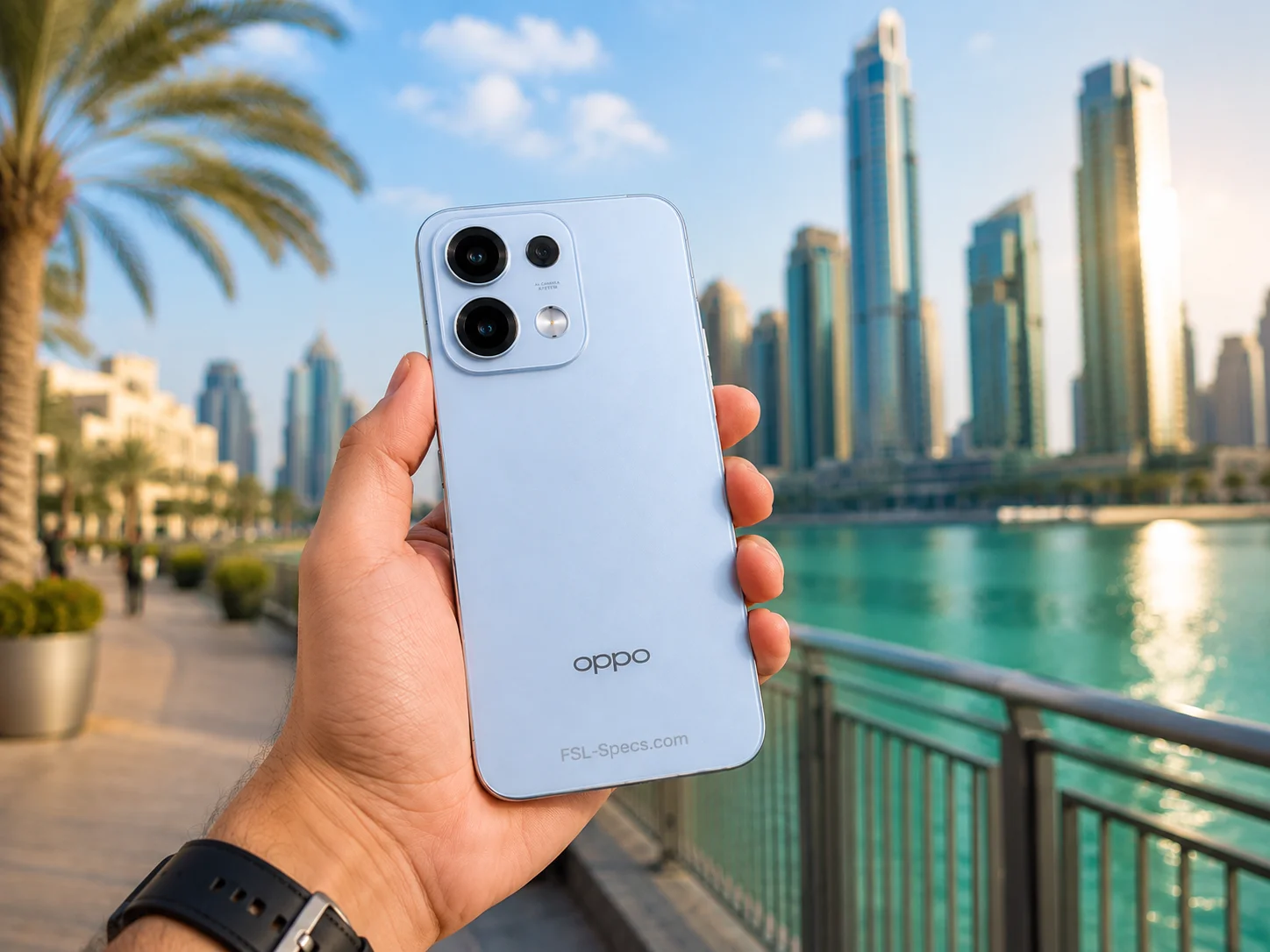
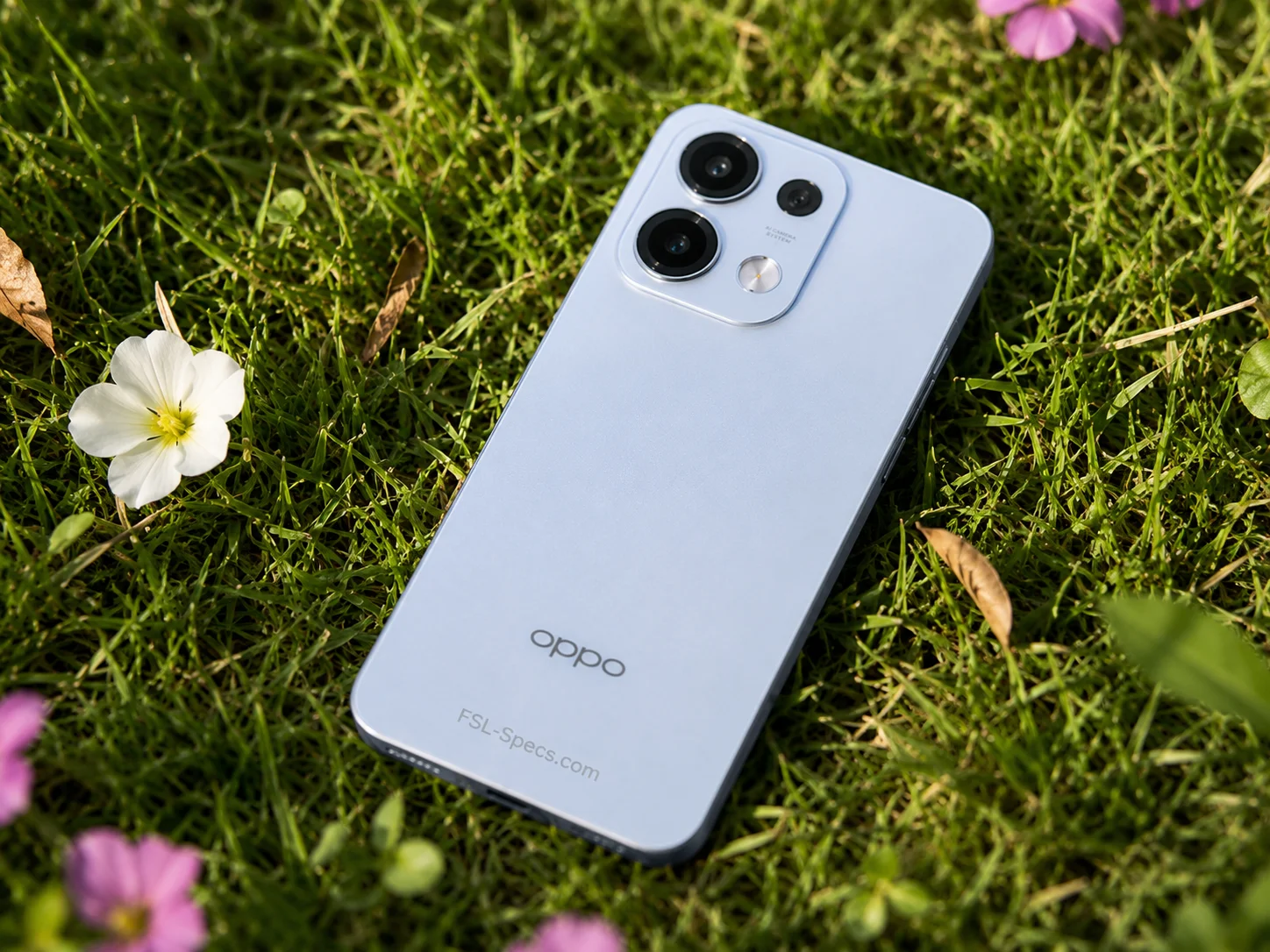
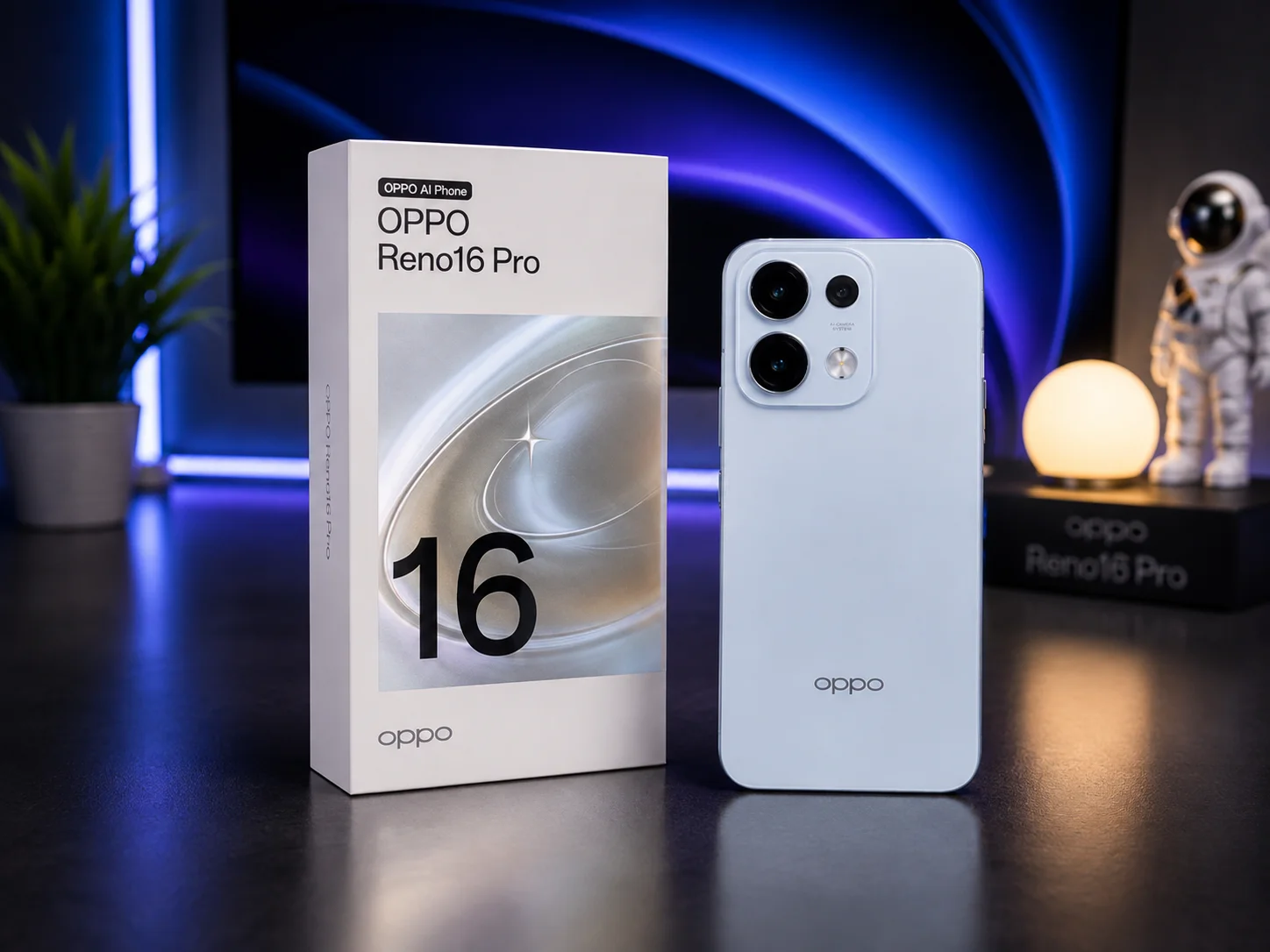
Oppo Reno 16 png image
United States flag United States
$700 USD
Pakistan flag Pakistan (PKR)
200,000 PKR
India flag India (INR)
₹68,000 INR

✪ Oppo Reno 16 ✪

Oppo Reno 16 png image
Last Time Update : 3 September, 2026
0

Quick Specifications

Amoled

Display Type

Snapdragon 7 Gen 4

Processor

12 + 256 GB

Ram And Memory

50 + 50 + 50 MP

Camera

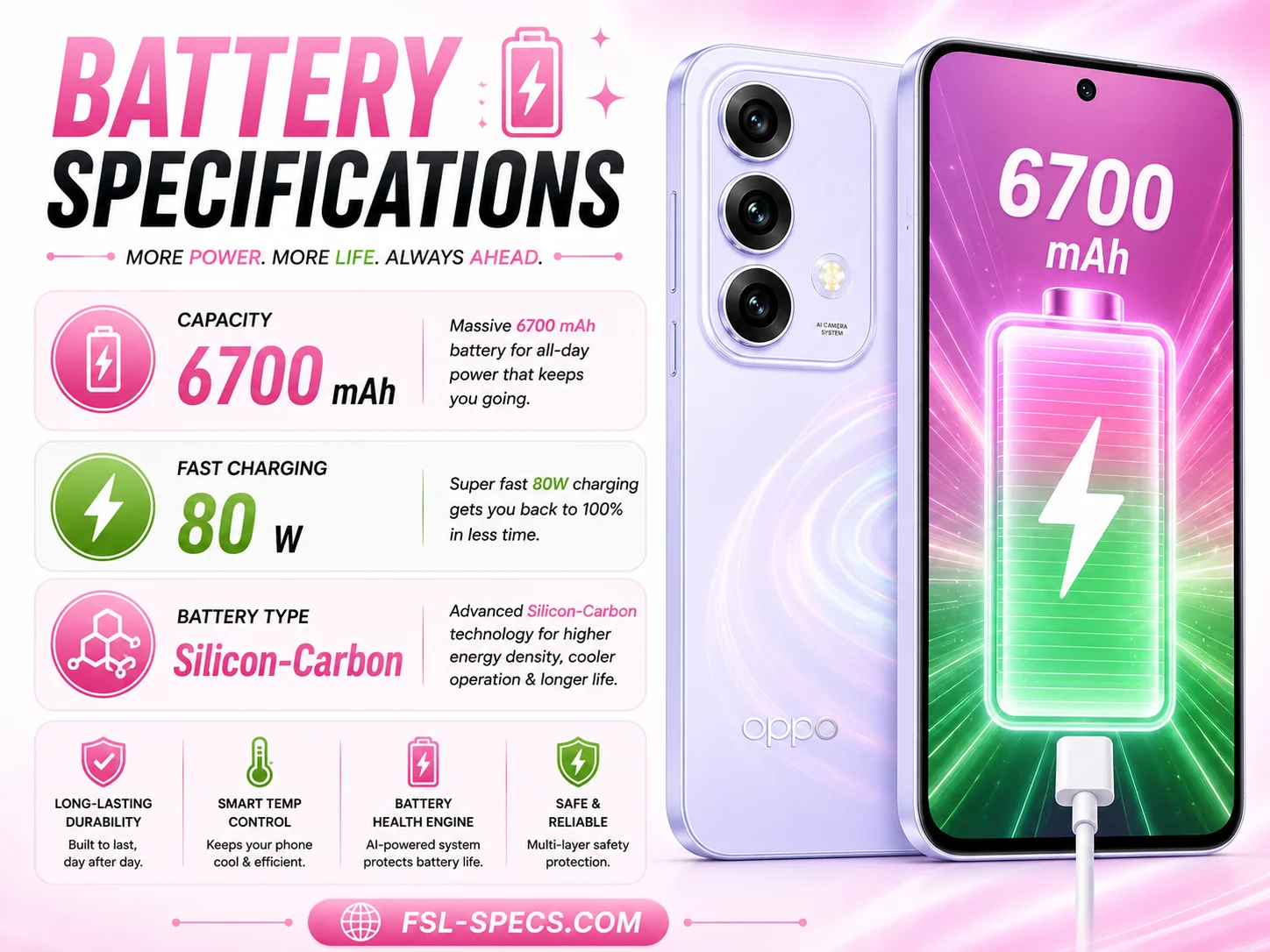
6700 mAh

Battery

80 W

Fast Charging

Full Specification

BASIC INFO
Mobile
Oppo Reno 16
Model
CPH2865
Series
Oppo Reno Series
Category
Mid Range
Release Date
9 July,2026
Year
2026
CONNECTIVITY
Sim
Nano-SIM / E-Sim
Network
4G / 4G+ / 5G
WiFi
WiFi 6
Bluetooth
5.4
NFC
Yes
OS
Android 16
BODY
Dimensions
151.2 x 72.4 x 8.2 mm or 8.4 mm
Build
aluminum frame, glass back
KG Weight
188 g
Screen Size
6.32 inch
Resolution
1216 x 2640 pixels
Type
Amoled
Refresh Rate
120 Hz
Peak Brightness
3600
HBM Brightness
1800 nits
Processor
Snapdragon 7 Gen 4
Max Clock
2.8 GHz
Lithography
4 nm
GPU
Adreno 722
CPU Cores
8 Cores
Antutu v11
1.45 M
Antutu v10
1.12 M
Bootup Time
21 s
Architecture
1 x 2.8 GHz Cortex-720
4 x 2.4 GHz Cortex-720
3 x 1.8 GHz Cortex-520
Ram Memory
12 + 256 GB
Ram Type
LPDDR5X
Storage Type
UFS 3.1
SD Card
No
Variants
8/12 + 256 GB
8/12 +  512 GB
MP
Rear Camera
50 + 50 + 50 MP
Front Camera
50 MP
RECORDING FPS
Main Recording
4K @ 30/60 fps
1080p @ 30/60/120 fps
Front Recording
4K @ 30/60 fps
1080p @ 30/60 fps
RESOLUTION
Main Resolution
8150 x 6150 pixels
Front Resolution
8192 x 6144 Pixels
ZOOM
Optical Zoom
3.5 x
D Digital Zoom
18 x
Stabilization
Yes
FLASH
Flash
Multi-focus LED flash
Front Flash
Screen Flash
Capacity
6700 mAh
Fast Charging
80 W
Wireless Charging
No
Li Battery Type
Silicon-Carbon
REVERSE
Reverse Wired
Yes
Reverse Wireless
No
OTHER
Battery PC Marks
23h 48m - 91 Mobiles
Charging Time
1h 2m - 91 Mobiles
AUDIO & SENSORS
Speaker
Dual Stereo Speaker
Fingerprint Sensor
Front Finger
Other Sensors
Accelerometer
Gyroscope
Proximity
Compass
etc.
BASIC INFO
Mobile
Oppo Reno 16
Model
CPH2865
Series
Oppo Reno Series
Category
Mid Range
Release Date
9 July,2026
Year
2026
CONNECTIVITY
Sim
Nano-SIM / E-Sim
Network
4G / 4G+ / 5G
WiFi
WiFi 6
Bluetooth
5.4
NFC
Yes
OS
Android 16
BODY
Dimensions
151.2 x 72.4 x 8.2 mm or 8.4 mm
Build
aluminum frame, glass back
KG Weight
188 g
Screen Size
6.32 inch
Resolution
1216 x 2640 pixels
Type
Amoled
Refresh Rate
120 Hz
Peak Brightness
3600
HBM Brightness
1800 nits
Processor
Snapdragon 7 Gen 4
Max Clock
2.8 GHz
Lithography
4 nm
GPU
Adreno 722
CPU Cores
8 Cores
Antutu v11
1.45 M
Antutu v10
1.12 M
Bootup Time
21 s
Architecture
1 x 2.8 GHz Cortex-720
4 x 2.4 GHz Cortex-720
3 x 1.8 GHz Cortex-520
Ram Memory
12 + 256 GB
SD Card
No
Ram Type
LPDDR5X
Storage Type
UFS 3.1
Variants
8/12 + 256 GB
8/12 +  512 GB
MP
Rear Camera
50 + 50 + 50 MP
Front Camera
50 MP
RECORDING FPS
Main Recording
4K @ 30/60 fps
1080p @ 30/60/120 fps
Front Recording
4K @ 30/60 fps
1080p @ 30/60 fps
RESOLUTION
Main Resolution
8150 x 6150 pixels
Front Resolution
8192 x 6144 Pixels
ZOOM
Optical Zoom
3.5 x
D Digital Zoom
18 x
Stabilization
Yes
FLASH
Flash
Multi-focus LED flash
Front Flash
Screen Flash
Capacity
6700 mAh
Fast Charging
80 W
Wireless Charging
No
Li Battery Type
Silicon-Carbon
REVERSE
Reverse Wired
Yes
Reverse Wireless
No
OTHER
Battery Life PCMark
23h 48m - 91 Mobiles
Charging Time
1h 2m - 91 Mobiles
AUDIO & SENSORS
Speaker
Dual Stereo Speaker
Fingerprint Sensor
Front Finger
Other Sensors
Accelerometer
Gyroscope
Proximity
Compass
etc.

Highlights & Review Of Oppo Reno 16

Display Review:

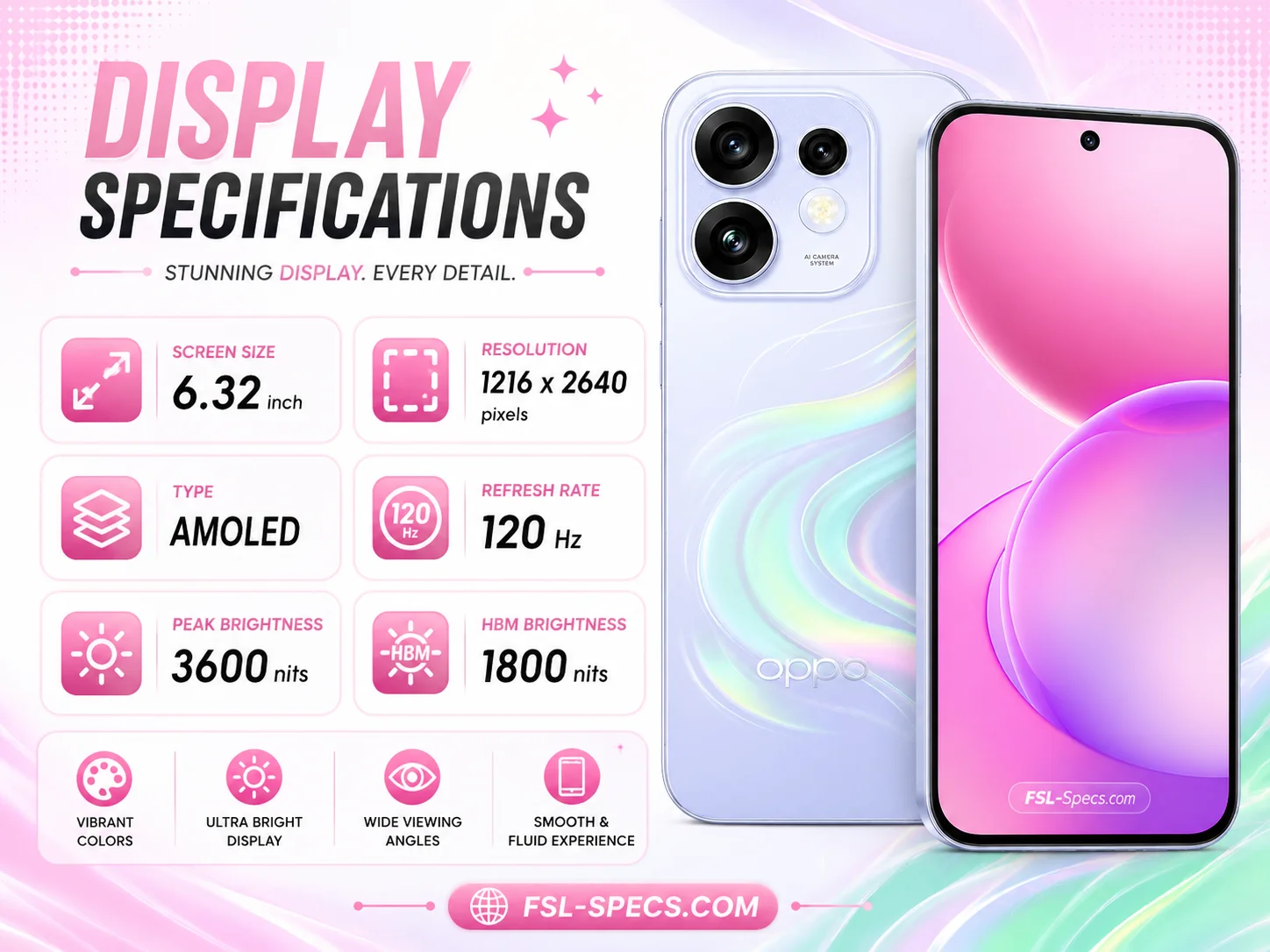
The Oppo Reno 16 5G (12GB+256GB, PKR 200,000) uses a 6.32-inch AMOLED panel with 1216 x 2640 resolution (~460 ppi) and a 120Hz refresh rate, backed by HDR10+, 1800 nits HBM, and a 3600 nits peak brightness rating.

The Xiaomi 17T (12+512GB, PKR 217,000) counters with a larger 6.59-inch AMOLED, 1.5K (2756 x 1268) resolution, the same 120Hz refresh rate, and a claimed 3500 nits peak brightness, though its HBM figure hasn’t been disclosed, making a direct sunlight-readability comparison incomplete.

The Oppo Reno 15 (12+512GB, PKR 185,000) offers a 6.59-inch AMOLED at 1256 x 2760 (460 ppi), 120Hz, 10-bit color, and a lower 1200 nits HBM, meaning the Oppo Reno 16 should be noticeably brighter outdoors despite costing PKR 15,000 more.

The Samsung Galaxy S25 (12+256GB, PKR 210,000) sticks to a compact 6.2-inch Dynamic AMOLED 2X at 1080 x 2340 (FHD+), 120Hz, 1400 nits HBM, and 2600 nits peak, trading screen real estate and resolution for a smaller, one-hand-friendly body.

On sharpness, the Oppo Reno 16’s 1216 x 2640 panel and Xiaomi 17T’s 1.5K resolution both edge out the Galaxy S25’s FHD+ screen, while the Reno 15 posts the highest raw pixel count of the group at 1256 x 2760. On brightness, the Reno 16’s 1800 nits HBM is the strongest confirmed figure here, giving it a real outdoor-visibility edge over both Oppo’s own Oppo Reno 15 and Samsung’s S25.

Verdict: The Oppo Reno 16 5G has the most complete, best-documented display in this bracket, combining sharp resolution with the highest confirmed HBM brightness, making it the strongest all-round screen choice at PKR 200,000.

Processor Review:

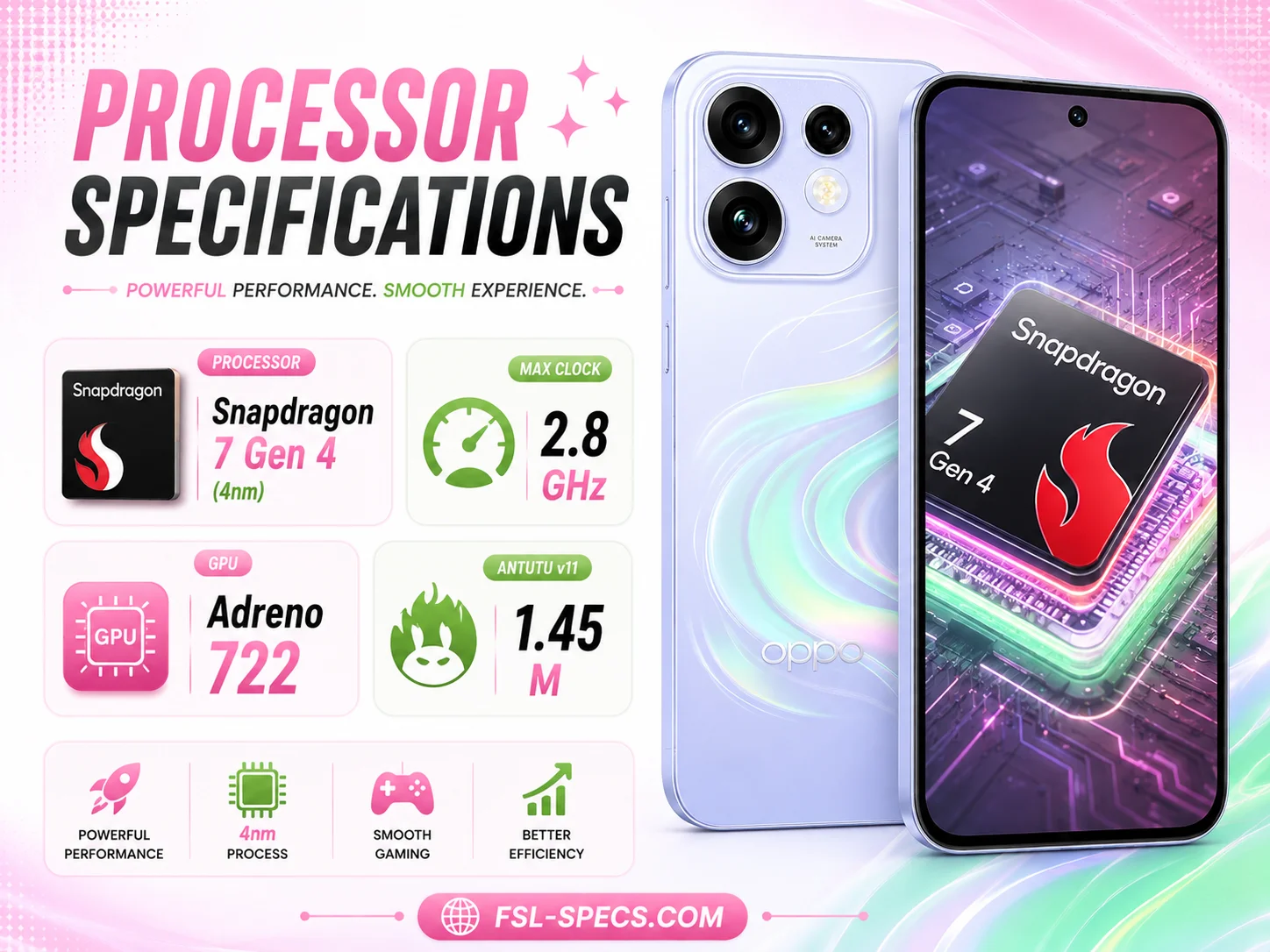
The Oppo Reno 16 5G (PKR 200,000) runs a Snapdragon 7 Gen 4 chipset built on a 4nm process, paired with an Adreno 722 GPU and an octa-core CPU topping out at 2.8GHz. GSMArena’s own testing puts it at 1,458,076 in AnTuTu v11.

The Xiaomi 17T (PKR 217,000) uses the Dimensity 8500 Ultra, also 4nm, with a Mali-G720 MC8/MP8 GPU and a peak clock of 3.4GHz, scoring around 2.4 million in AnTuTu v11, meaning it outperforms the Oppo Reno 16 by roughly 65% despite costing only PKR 17,000 more.

The Oppo Reno 15 (PKR 185,000) shares the exact same Snapdragon 7 Gen 4 platform as the Reno 16, with an identical Adreno 722 GPU and 2.8GHz clock, scoring 1,394,716 in AnTuTu v11, essentially matching the Oppo Reno 16’s performance for PKR 15,000 less.

The Samsung Galaxy S25 (PKR 210,000) is built around the Snapdragon 8 Elite (3nm), with an octa-core CPU reaching 4.47GHz, scoring roughly 2.2 million in AnTuTu,  lists an Adreno 840, while other sources (Notebookcheck, RFSafe) list Adreno 830 for the same Snapdragon 8 Elite for Galaxy chip; this hasn’t been independently confirmed.

For gaming and multitasking headroom, the Xiaomi 17T and Galaxy S25 sit in a clearly higher performance tier than either Oppo, with roughly 50 to 65% higher AnTuTu output.

Verdict: At PKR 200,000, the Reno 16 5G is outgunned on raw performance by both the Xiaomi 17T and Galaxy S25, and it doesn’t even outperform Oppo’s own cheaper Reno 15. Buyers prioritizing chipset power should lean toward the Xiaomi 17T instead.

Ram & Memory Review:

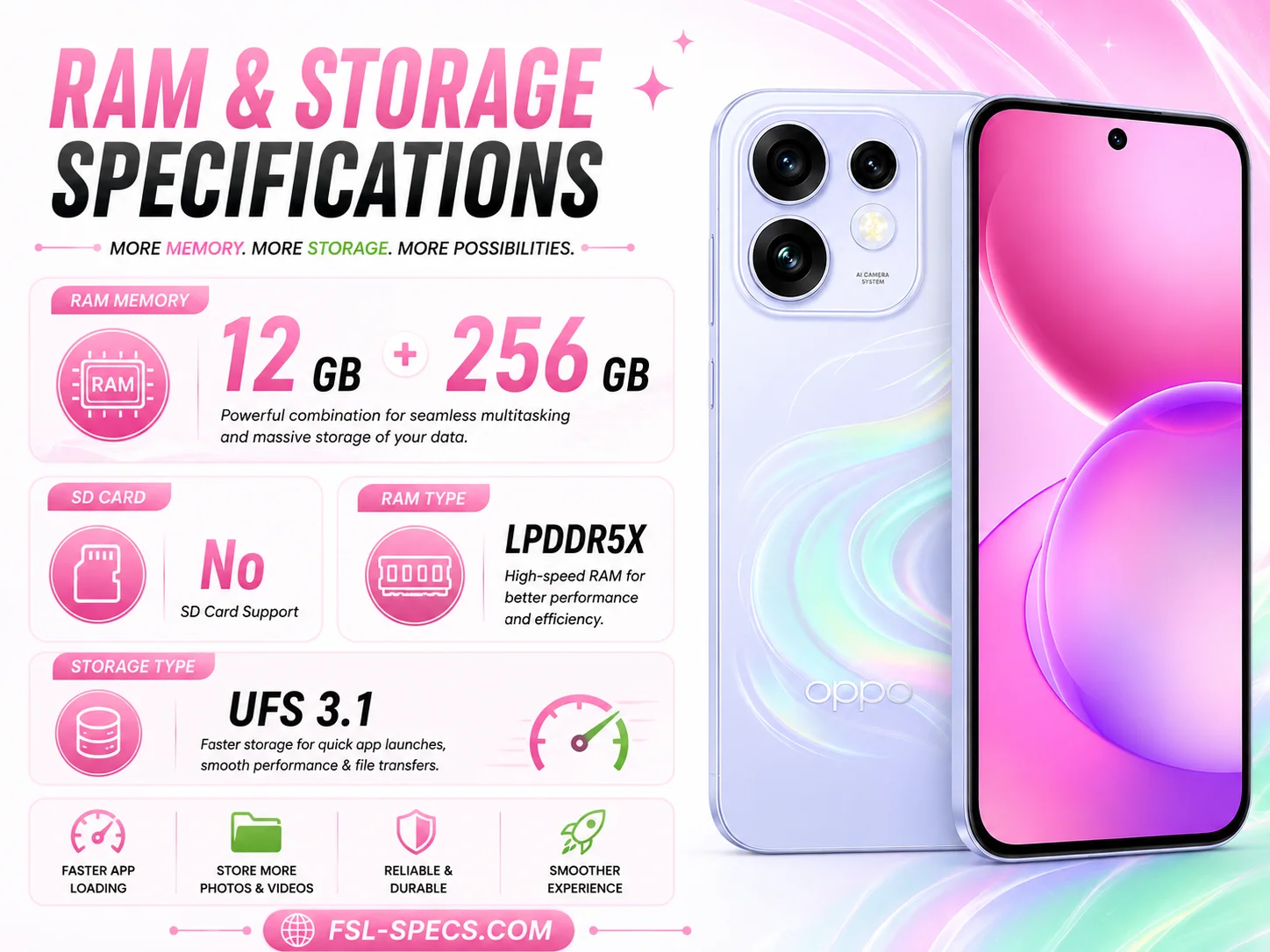
The Oppo Reno 16 5G (12GB+256GB, PKR 200,000) pairs LPDDR5X RAM with UFS 3.1 storage and has no microSD support. The Xiaomi 17T (12GB+512GB, PKR 217,000) uses the same LPDDR5X RAM type but rated at 9600Mbps, paired with faster UFS 4.1 storage, also without microSD expansion.

The Oppo Reno 15 (12GB+512GB, PKR 185,000) matches the Reno 16’s setup almost exactly, with LPDDR5X RAM and UFS 3.1 storage and no card slot, meaning Oppo’s own cheaper sibling offers double the storage at the same memory speed tier for PKR 15,000 less. The Samsung Galaxy S25 (12GB+256GB, PKR 210,000) also runs LPDDR5X RAM but steps up to UFS 4.0 storage on its 256GB and 512GB variants, and likewise skips microSD.

On raw storage speed, the Xiaomi 17T’s UFS 4.1 and the Galaxy S25’s UFS 4.0 should both feel noticeably snappier for large file transfers, app installs, and sustained 4K video recording than the Reno 16 and Reno 15’s older UFS 3.1 standard, even though everyday app switching and multitasking will feel similar across all four thanks to the shared 12GB LPDDR5X RAM.

On raw capacity, the Reno 16’s 256GB trails both the Xiaomi 17T and Reno 15’s 512GB, meaning heavy users storing large game libraries or 4K footage will run out of room faster on the Reno 16 without any microSD fallback to fall back on, a trade-off every phone in this comparison shares.

Verdict: The Oppo Reno 16 5G’s memory hardware is the weakest in this group, held back by both older UFS 3.1 storage and half the capacity of the Xiaomi 17T and Reno 15. Buyers who need faster storage or more space should consider the Xiaomi 17T instead.

Cameras Review:

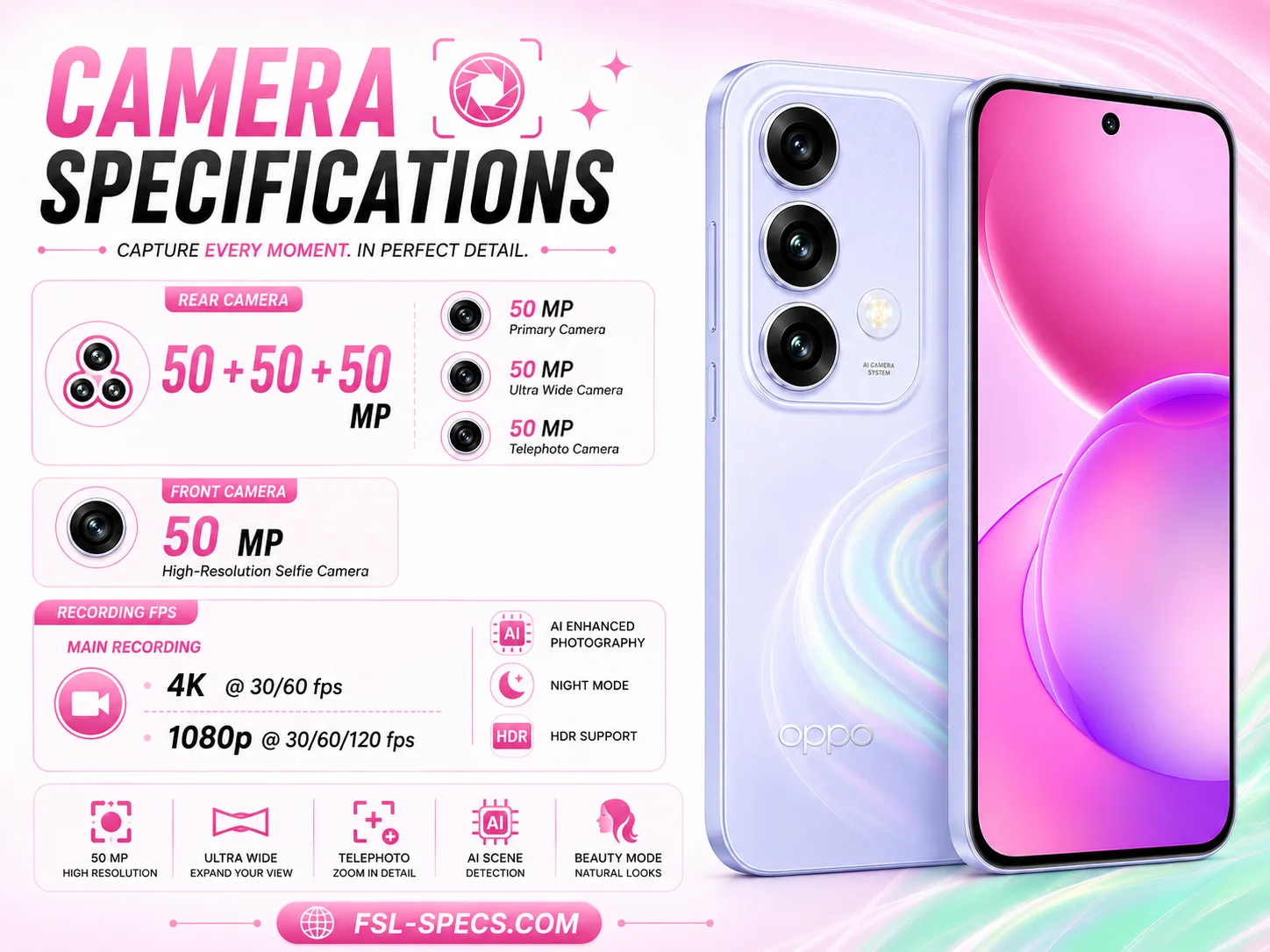
The Oppo Reno 16 5G (PKR 200,000) uses a 50MP f/1.8 main camera (1/1.95″, OIS), a 50MP f/2.8 telephoto with 3.5x optical zoom and OIS, and a 50MP f/2.0 ultrawide with autofocus but no OIS. The specific sensor brand isn’t disclosed on GSMArena, so image-quality confidence rests on OPPO’s own tuning rather than a verified sensor name.

The Xiaomi 17T (PKR 217,000) names its hardware clearly: a 50MP Light Fusion 800 main sensor at f/1.7 (1/1.55″, OIS), a 50MP f/3.0 periscope telephoto with 5x optical zoom and OIS, and a 12MP f/2.2 ultrawide with fixed focus. The Oppo Reno 15 (PKR 185,000) also confirms its main sensor, a 50MP Sony LYT-600 at f/1.8 (1/1.95″, OIS), plus an 8MP f/2.2 ultrawide and a 50MP f/2.8 telephoto with 3.5x optical zoom and 2-axis OIS.

The Samsung Galaxy S25 (PKR 210,000) uses a 50MP Samsung ISOCELL GN3 main sensor at f/1.8 with OIS, a 12MP Sony IMX564 ultrawide, and a 10MP telephoto with 3x optical zoom and OIS.

For front cameras, the Reno 16 and Reno 15 both use 50MP selfie shooters, while the Xiaomi 17T drops to 32MP f/2.2 and the Galaxy S25 uses a 12MP Samsung S5K3LU. On rear video, the Reno 16 and Xiaomi 17T both cap at 4K@30/60fps, matching the Reno 15’s 4K@30/60fps on main and telephoto,

while the Galaxy S25 goes furthest with 8K@30fps plus 4K@30/60fps. Front video maxes out at 4K@30/60fps on the Reno 16, Reno 15, and Xiaomi 17T, while the Galaxy S25’s front camera reaches 4K@60fps.

Verdict: The Xiaomi 17T has the strongest verified rear hardware here, with a named flagship sensor and a rare 5x optical telephoto at this price. The Galaxy S25 wins on video ceiling with 8K rear capture, while the Reno 16’s undisclosed sensor brand makes it the least verifiable of the four despite its capable-looking spec sheet.

Battery Review:

The Oppo Reno 16 5G (PKR 200,000) packs the largest cell here, a 6700mAh Si/C Li-Ion battery, with 80W wired charging reaching 100% in 59 minutes and support for reverse wired charging, though it skips wireless charging entirely. The Xiaomi 17T (PKR 217,000) uses a 6500mAh (typ) silicon-carbon battery with 67W HyperCharge wired charging, taking roughly 70 to 80 minutes for a full charge and offering 22.5W reverse wired charging, also with no wireless support.

The Oppo Reno 15 (PKR 185,000) carries a 6500mAh battery with 80W SUPERVOOC wired charging, reaching 100% in around 50 minutes from OPPO’s own testing, though reverse charging support isn’t confirmed for this variant and wireless charging isn’t offered.

The Samsung Galaxy S25 (PKR 210,000) has by far the smallest capacity at 4000mAh, with slower 25W wired charging taking 70 to 80 minutes, but it’s the only phone here with 15W wireless charging and 4.5W reverse wireless charging, though it lacks wired reverse charging.

On raw capacity and wired charging speed, the Reno 16 leads the pack with the biggest battery and the fastest confirmed 0-100% time. The Galaxy S25 trails badly on both capacity and wired speed but wins decisively on charging versatility thanks to wireless support, something none of the three Chinese-brand phones offer.

Verdict: For raw battery capacity and fast wired charging, the Reno 16 5G is the strongest choice at PKR 200,000. Buyers who specifically want wireless charging convenience will need to accept the Galaxy S25’s much smaller 4000mAh cell as a trade-off, since none of the other three phones offer it at all.

Final Verdict :

At PKR 200,000, the Oppo Reno 16 5G is outclassed on price-to-spec ratio by its own cheaper sibling, the Oppo Reno 15 (PKR 185,000), which offers virtually the same Snapdragon 7 Gen 4 chipset, the same 6500mAh-class battery, and 512GB storage (double the Reno 16’s 256GB) for PKR 15,000 less.

The Xiaomi 17T (PKR 217,000) costs the most in this group but backs it up with the strongest AnTuTu score, a 512GB base, faster UFS 4.1 storage, and a genuinely rare 5x optical zoom telephoto camera, making its premium easier to justify for buyers who prioritize raw performance and camera versatility.

The Samsung Galaxy S25 (PKR 210,000) asks a flagship-adjacent price for the smallest battery (4000mAh) and smallest screen (6.2-inch) of the four, though it’s the only phone here with wireless charging. Overall, the Oppo Reno 15 delivers the strongest value for money in this comparison, matching or beating the primary phone on nearly every spec while undercutting it on price.

Best For / Not Best For:

Best For:

  • Buyers wanting the biggest battery and fastest wired charging (Oppo Reno 16 5G)
  • Buyers wanting the best raw performance and camera zoom (Xiaomi 17T)
  • Budget-conscious buyers wanting Reno 16-level specs for less (Oppo Reno 15)
  • Buyers who specifically want wireless charging (Samsung Galaxy S25)
  • Buyers wanting the highest verified video recording ceiling, 8K (Samsung Galaxy S25)
  • Buyers wanting a compact, one-hand-friendly flagship (Samsung Galaxy S25)

Not Best For:

  • Buyers wanting the best price-to-performance ratio (Oppo Reno 16 5G, outdone by its own Reno 15)
  • Buyers wanting the largest battery on a budget (Samsung Galaxy S25, smallest cell here)
  • Buyers wanting microSD expansion (none of these four phones support it)
  • Buyers wanting wireless charging on a Chinese-brand phone (Reno 16, Reno 15, and 17T all skip it)
  • Buyers wanting the cheapest entry point with flagship chipset (Galaxy S25 and 17T both cost more)

Final Verdict:

Across display, processor, memory, camera, and battery, the Xiaomi 17T comes out as the strongest all-round performer in this bracket, combining the highest AnTuTu score, the fastest storage, and a rare 5x optical telephoto, though it’s also the most expensive at PKR 217,000. The Oppo Reno 15 is the smartest value pick, nearly matching the primary phone’s Reno 16 5G spec-for-spec while costing PKR 15,000 less and offering double the storage.

The Samsung Galaxy S25 trades battery and screen size for flagship polish and the group’s only wireless charging. The Oppo Reno 16 5G itself is solid but not exceptional at PKR 200,000, its main advantage being the largest battery and fastest wired charging, while its chipset and camera hardware documentation are matched or beaten by cheaper or pricier rivals. Bottom line: buyers chasing outright performance should go with the Xiaomi 17T, while budget-conscious buyers are better served by Oppo’s own Reno 15.

Ranking

  1. Xiaomi 17T – PKR 217,000
  2. Oppo Reno 15 – PKR 185,000
  3. Samsung Galaxy S25 – PKR 210,000
  4. Oppo Reno 16 5G – PKR 200,000

Pros And Cons of Oppo Reno 16

Pros of Mobile

✅ 120Hz AMOLED Display 📱
✅ Triple 50MP Cameras 📸
✅ 3.5x Optical Zoom 🔭
✅ 6700mAh Large Battery 🔋
✅ 80W Fast Charging ⚡
✅ IP69K Protection 🛡️

Cons of Mobile

❌ No Wireless Charging 🔋
❌ No MicroSD Slot 💾
❌ No NFC Pakistan 📲
❌ No Headphone Jack 🎧
❌ Limited 256GB Storage 💾
❌ FHD+ Resolution Only 🖥️

Best For - Not Best For

Best For

🎯 Portrait Photography 📸
🎯 Content Creators 🎥
🎯 Gaming & Performance 🎮
🎯 Long Battery Users 🔋
🎯 Fast Charging Fans ⚡
🎯 Compact Phone Lovers 📱

Not Best For

🚫 Wireless Charging Fans 🔋
🚫 Expandable Storage Users 💾
🚫 Audiophile Wired Users 🎧
🚫 Huge Screen Lovers 🖥️
🚫 Ultra-High Resolution Fans 🔍
🚫 Budget Buyers 💰

Trailer And Unboxing of Oppo Reno 16

Disassembly Or Teardown And Gaming Test of Oppo Reno 16

Picture of Faisal Ur Rehman

Faisal Ur Rehman

Faisal Rehman is the founder and editor of FSL Specs, where he publishes in-depth smartphone specifications, comparisons, buying guides, and technology insights. With extensive experience in mobile hardware research and technical analysis, he provides accurate and up-to-date information on Android smartphones, processors, displays, cameras, batteries, performance benchmarks, and software features. His goal is to simplify complex specifications and help readers choose the right device with confidence.

OPPO Series Row

FAQs Questions

It runs on the Qualcomm Snapdragon 7 Gen 4, a 4nm chip with an 8-core setup topping out at 2.8GHz, paired with Adreno 722 graphics. It's a solid step up in raw performance compared to the Reno 16F's MediaTek chip.

It has a compact 6.32-inch AMOLED display, smaller than most rivals in its class, aimed at buyers who want flagship-style compactness. Oppo positions this as a deliberate choice for one-handed use.

The rear camera pairs a 50MP main sensor with a 50MP ultra-wide lens, while the front gets a 50MP ultra-wide selfie camera with autofocus. It's a triple-50MP setup that's genuinely rare at this price point.

It packs a 6,700mAh Silicon-Carbon battery (6,000mAh in Europe) with 80W SuperVOOC wired charging, getting to 100% in about 59 minutes. That's a strong balance of endurance and quick top-ups.

It comes in 8GB/256GB, 12GB/256GB, and 8GB/512GB configurations with UFS 3.1 storage, though there's no microSD card slot. So it's worth picking your storage carefully upfront.

It ships with ColorOS 16 on top of Android 16, and Oppo promises 5 years of major OS updates plus 6 years of security patches. That's a genuinely strong software commitment for this segment.

Yes, it includes reverse wired charging along with 5G, eSIM, Wi-Fi 6, Bluetooth 5.4, and NFC. It's well-equipped on the connectivity front for a mid-range phone.

12 + 256 GB
 | ~₹68,000 | ~$700 | ~ 190,000-200,000  PKR

Leave a Reply

Your email address will not be published. Required fields are marked *

Scroll to Top