
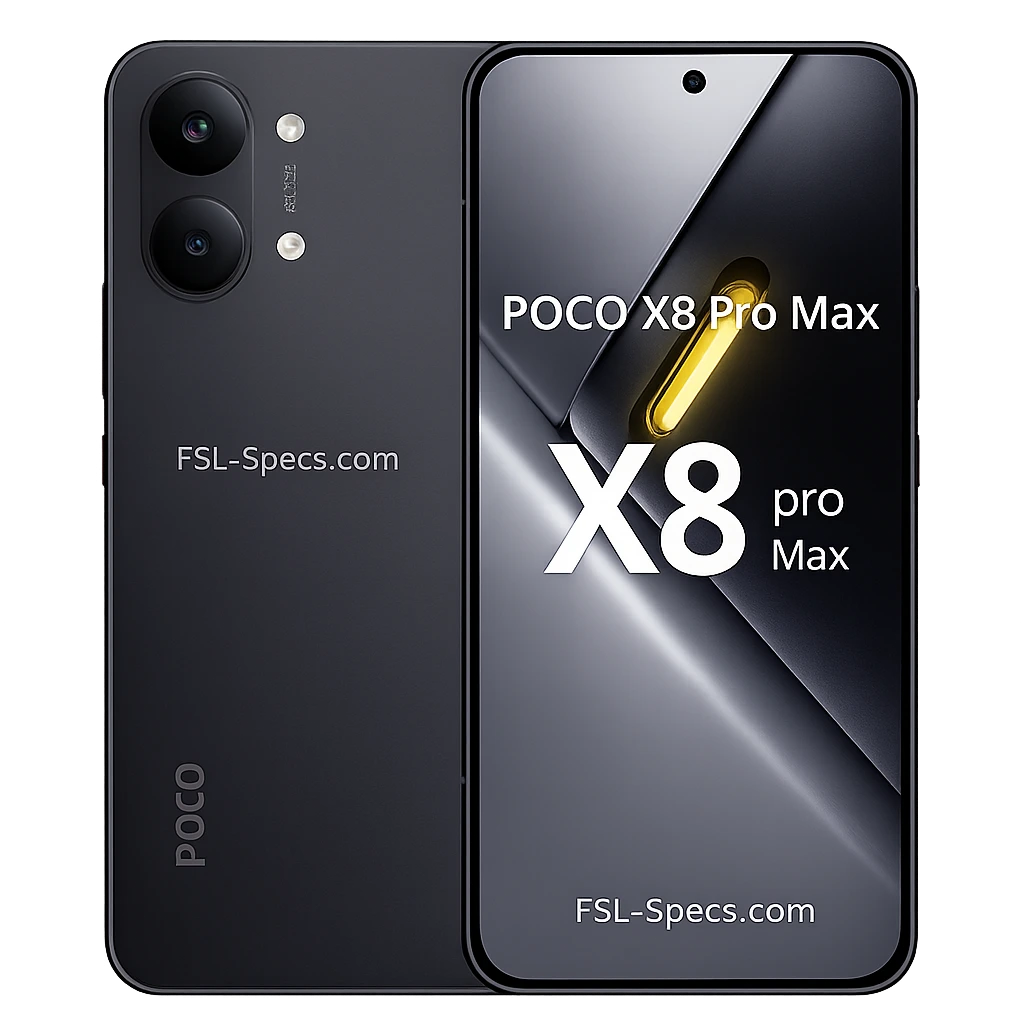


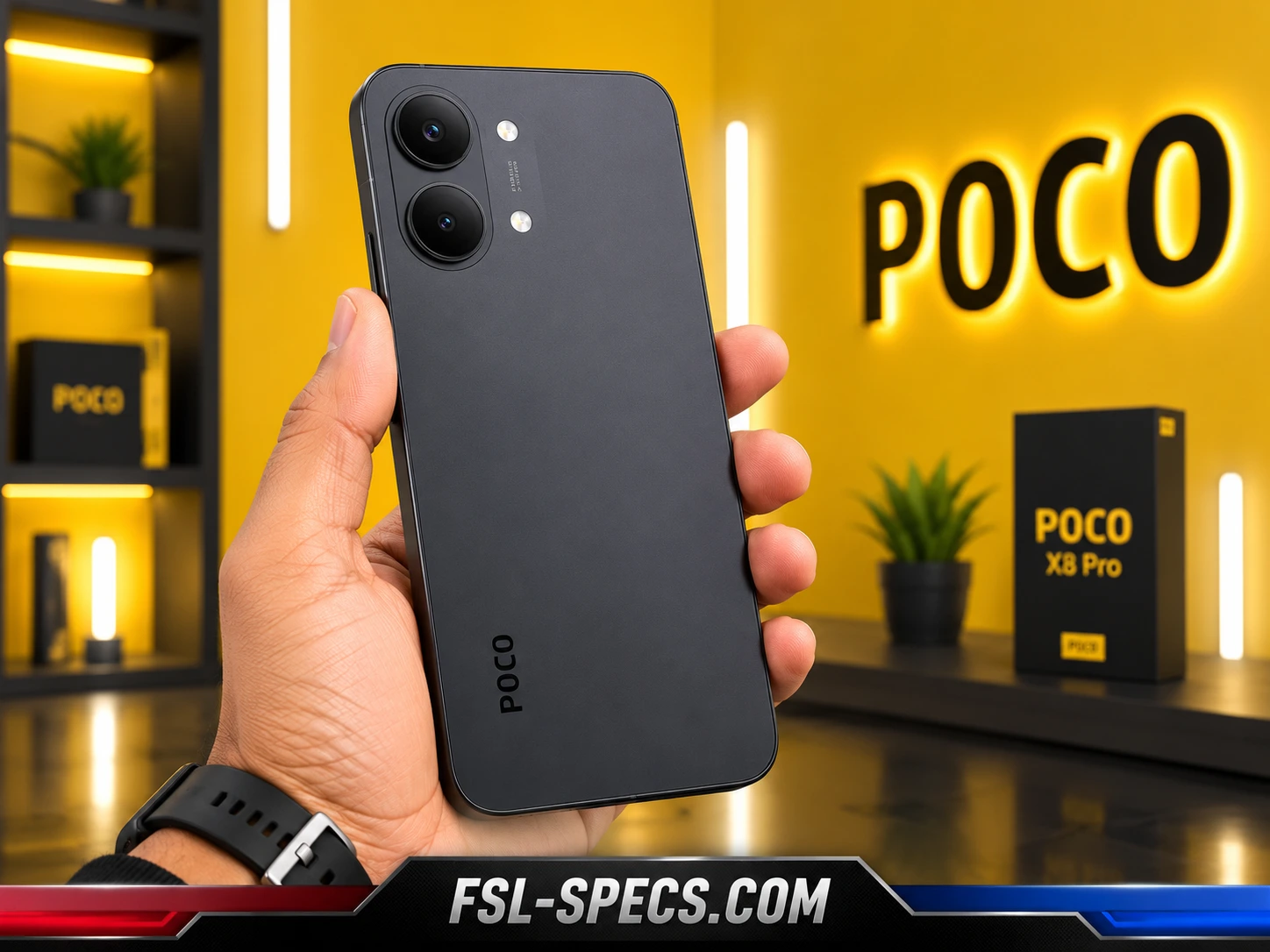











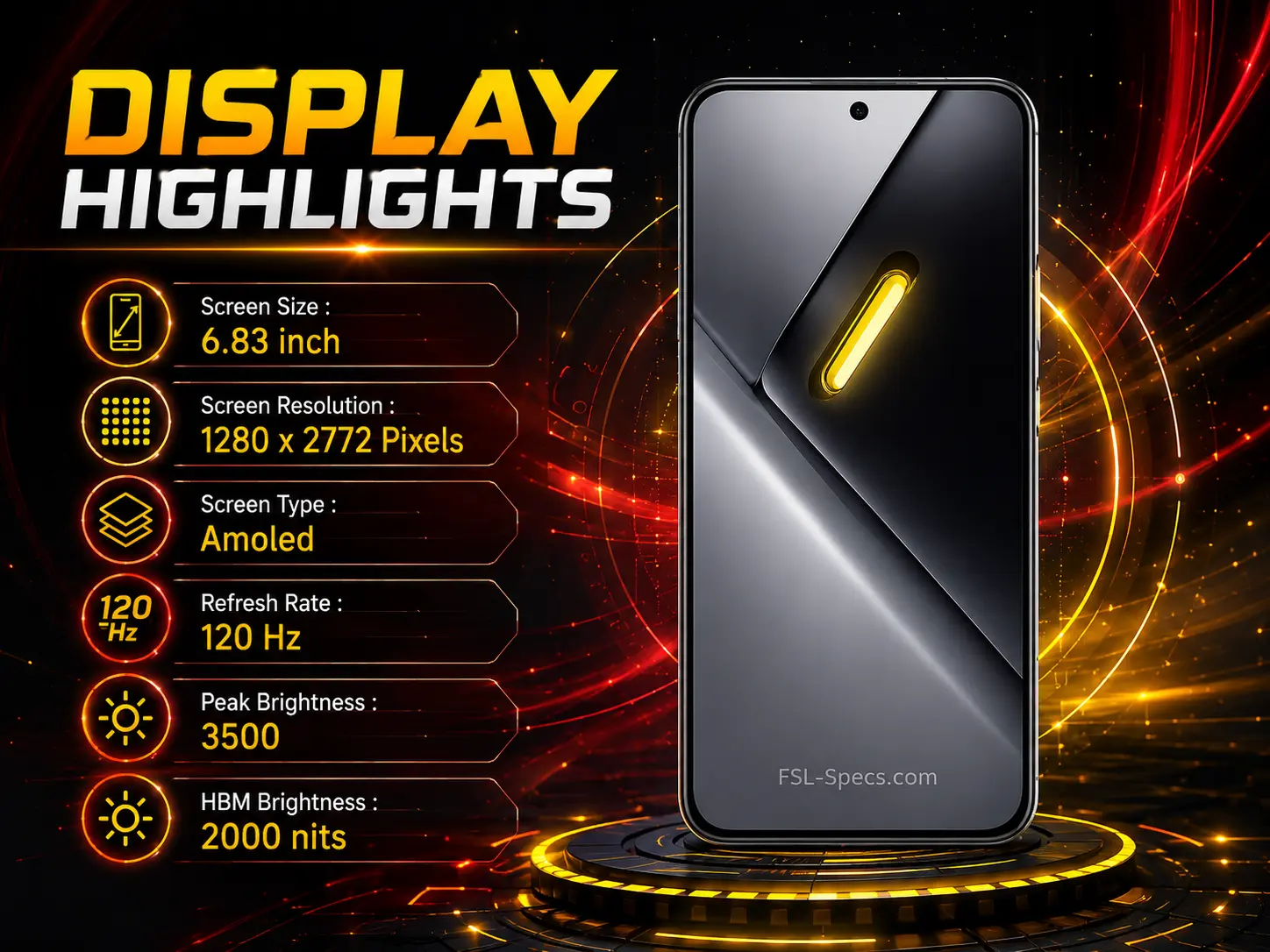
The POCO X8 Pro Max pairs a 6.83-inch AMOLED display with 2772 × 1280 resolution, 120Hz refresh rate and 2,000-nit HBM brightness. Compared with it, the POCO F7 Pro has a sharper 6.67-inch, 3200 × 1440 panel at 526 ppi, while the X8 Pro Max offers a larger screen and higher listed HBM brightness at 2,000 nits versus 1,800 nits.
For fine text and detailed images, the F7 Pro has the edge: its higher pixel density gives it a visibly sharper specification on paper than the X8 Pro Max’s approximately 447 ppi. The X8 Pro Max counters with more screen area for video and gaming, and its 3,500-nit peak brightness is specified for a 25% display area. Peak brightness and HBM are different measurements, so the 3,500-nit figure should not be read as the panel’s sustained full-screen brightness.
The other rivals push refresh rate and resolution further. The Motorola Edge 70 Max lists a 6.82-inch, 1440 × 3168 Quad HD+ display with a 144Hz refresh rate; the iQOO 15R has a more compact 6.59-inch, 2750 × 1260 AMOLED screen, also rated at 144Hz. iQOO specifies 1,800-nit HBM and 5,000-nit local peak brightness, while Motorola’s official material confirms Quad HD+ and 144Hz; the detailed 510 ppi and 7,000-nit peak figures are listed by GSMArena.
All four offer high-resolution AMOLED-class viewing, but their strengths differ: the F7 Pro leads on pixel density, the Motorola and iQOO advertise higher refresh rates, and the X8 Pro Max combines the largest screen with verified 2,000-nit HBM. Those higher refresh rates matter most where supported, so they do not automatically make every app or everyday interaction feel proportionally smoother.
Verdict: The POCO X8 Pro Max is the strong large-screen choice, but the POCO F7 Pro delivers sharper pixels and the Motorola Edge 70 Max and iQOO 15R offer higher 144Hz refresh rates.