
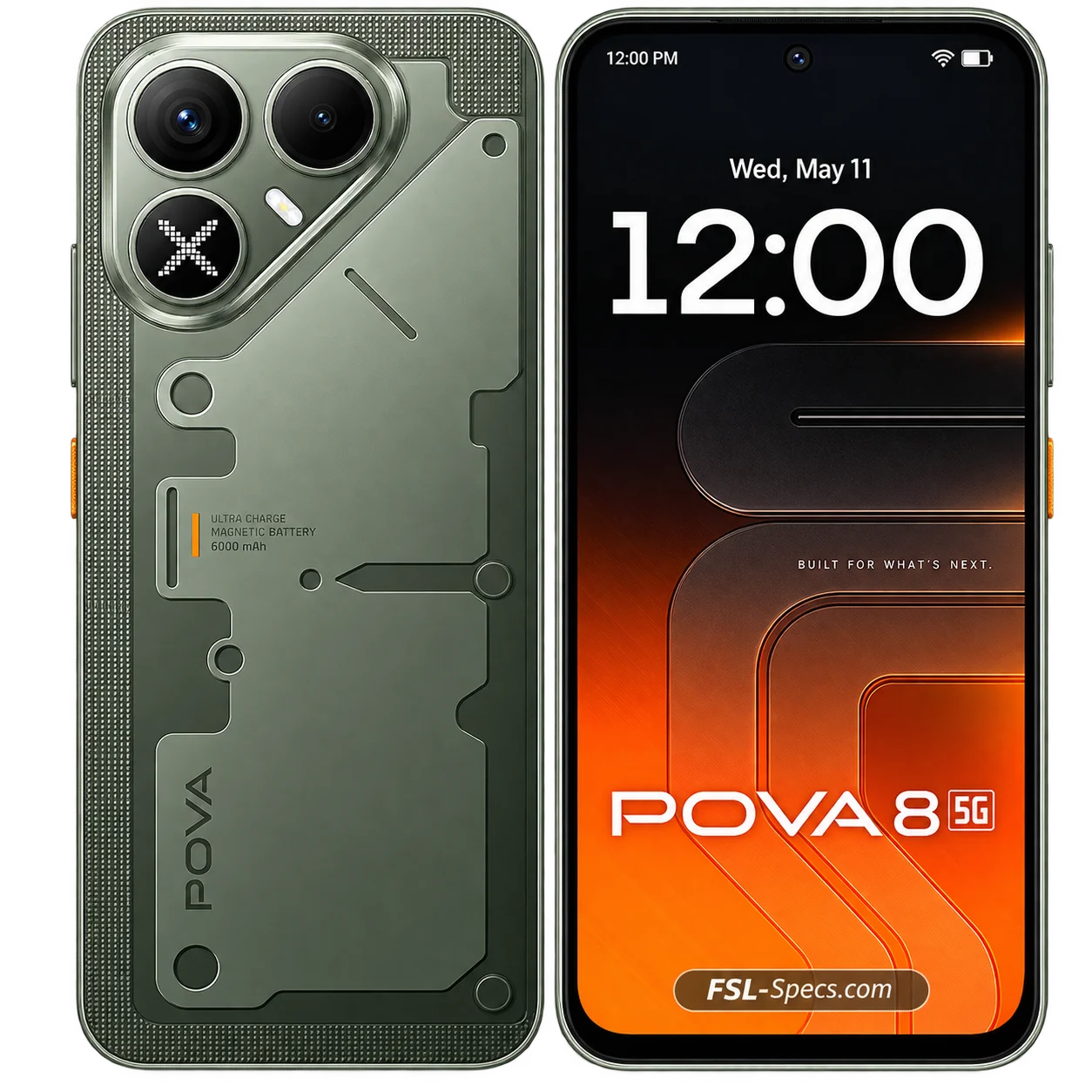









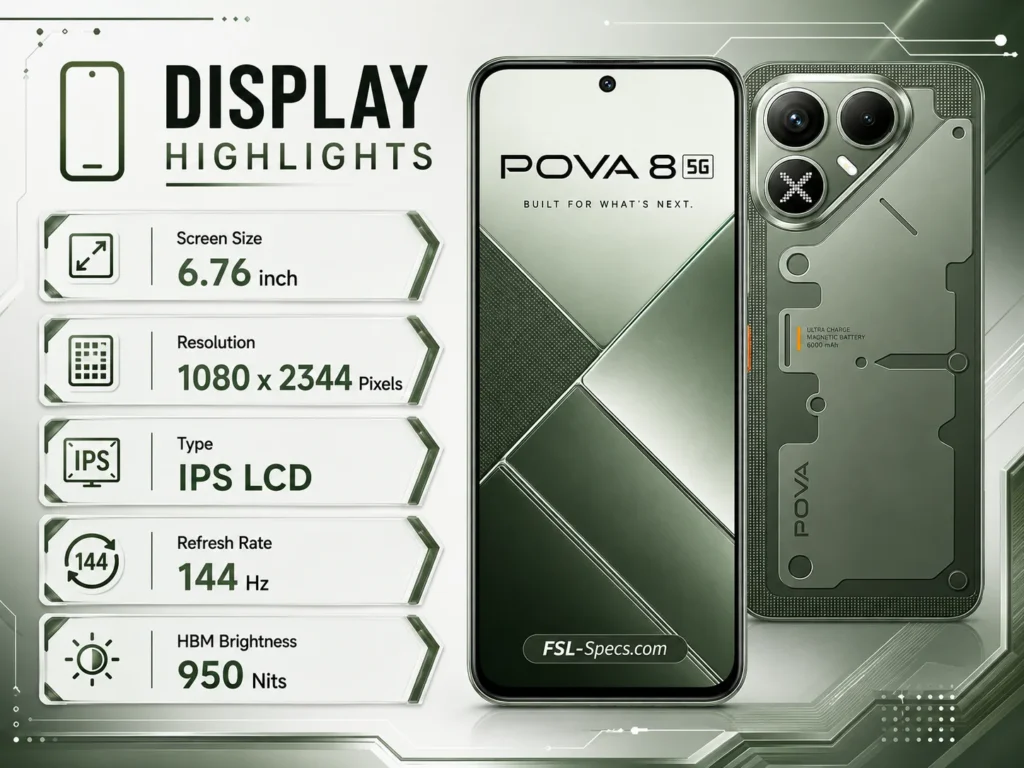
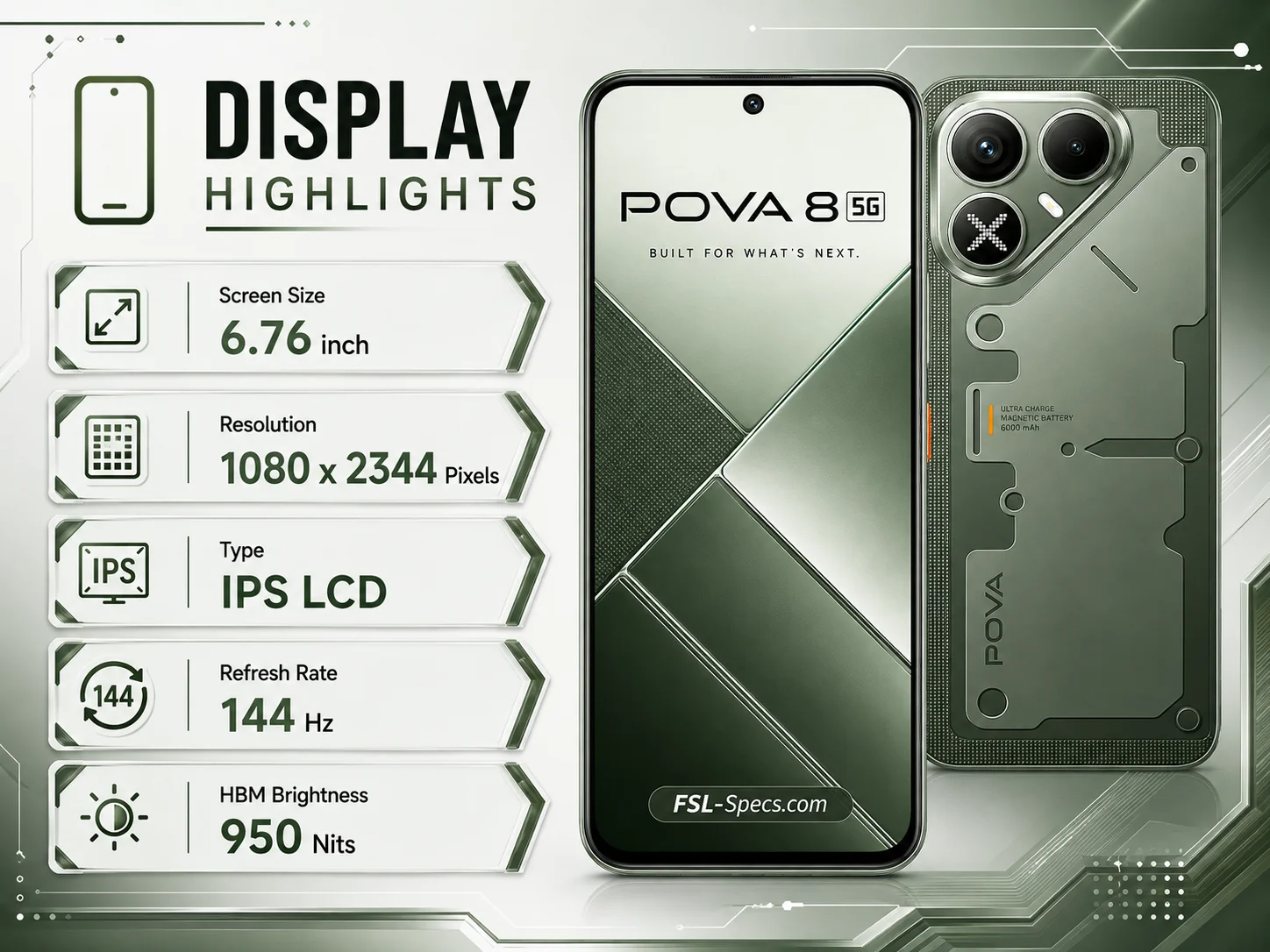
The Tecno Pova 8 uses a 6.76-inch IPS LCD display at 1080 x 2344 pixels, supporting up to 144Hz, with Tecno’s official spec sheet listing 760 nits typical / 950 nits HBM brightness. Sources differ here though: GSMArena’s lab tests measured only around 650 nits manually and just under 1000 nits with auto brightness and HBM combined, noticeably below Tecno’s own claims. At PKR 115,000-120,000, the LCD panel is already the clearest weak point against three AMOLED rivals.
The Tecno Camon 50 Ultra (PKR 117,000) uses a 6.78-inch curved AMOLED at 1208 x 2644 pixels (1.5K), matching the Tecno Pova 8’s 144Hz ceiling. Tecno markets this panel at up to 4500 nits peak, but GSMArena’s lab measurements came in far lower at 1302 nits HBM and 1667 nits peak on a 10% patch, an unresolved gap between marketing and tested performance. Even at the lower measured figures, it still comfortably beats the Tecno Pova 8’s LCD on contrast and color.
The Vivo V70 FE (PKR 121,000) offers the largest and sharpest screen here, a 6.83-inch AMOLED at 1260 x 2800 pixels (1.5K), though it caps out at 120Hz versus the 144Hz on the other three phones. Its 1900 nits HBM rating is the highest official figure in this group, giving it strong outdoor visibility despite the lower refresh rate.
The Infinix Note 60 Pro (PKR 118,000) matches the Camon 50 Ultra’s 6.78-inch AMOLED, 1208 x 2644 resolution, and 144Hz refresh rate, with a brightness rating of 1600 nits HBM and 4500 nits peak.
Verdict: The Tecno Pova 8’s IPS LCD panel is the clear loser here against three AMOLED rivals, and buyers who care about display quality should look at the Infinix Note 60 Pro or Vivo V70 FE instead, both of which pair strong brightness with sharper, richer AMOLED screens for similar money.