

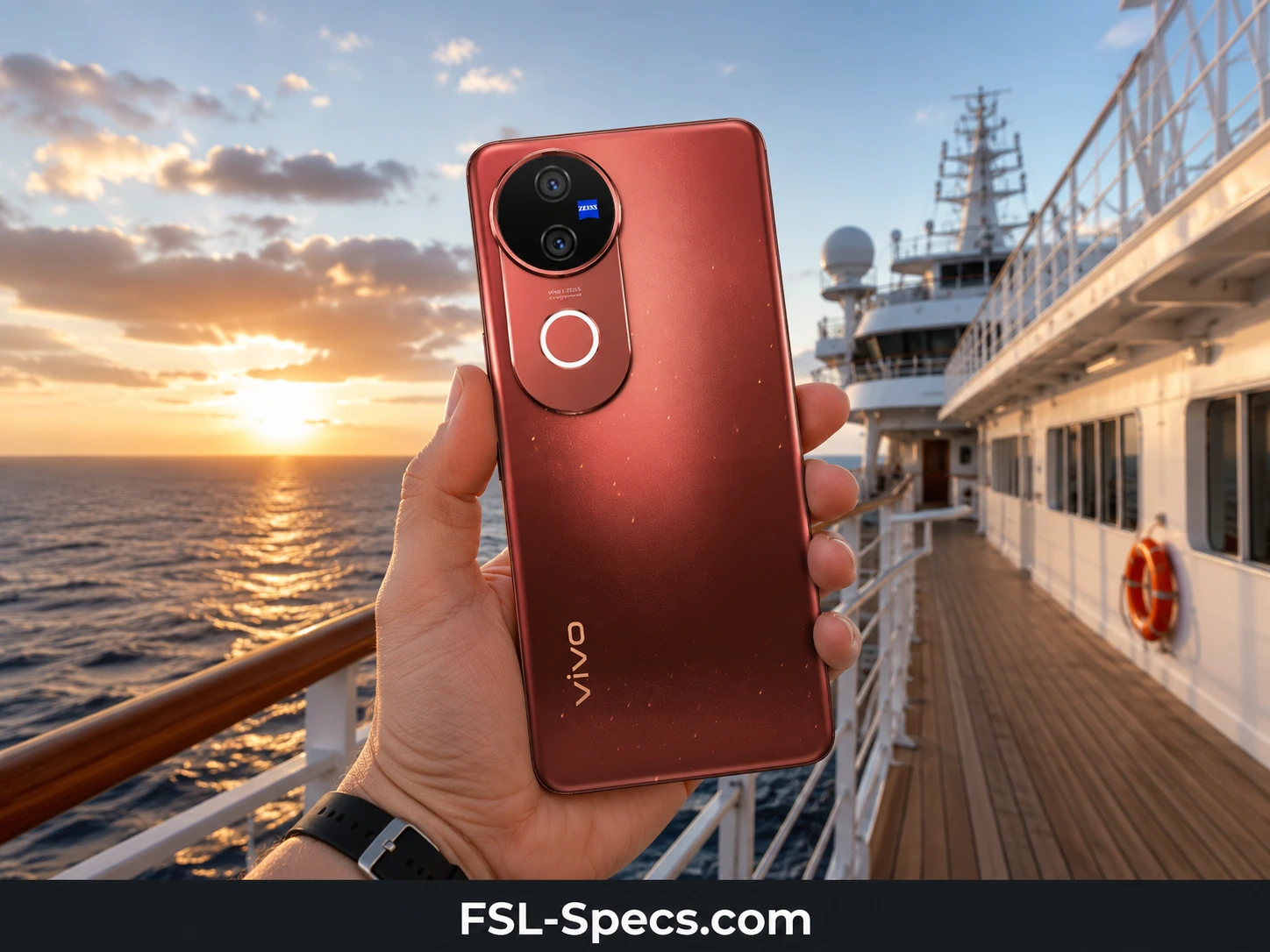
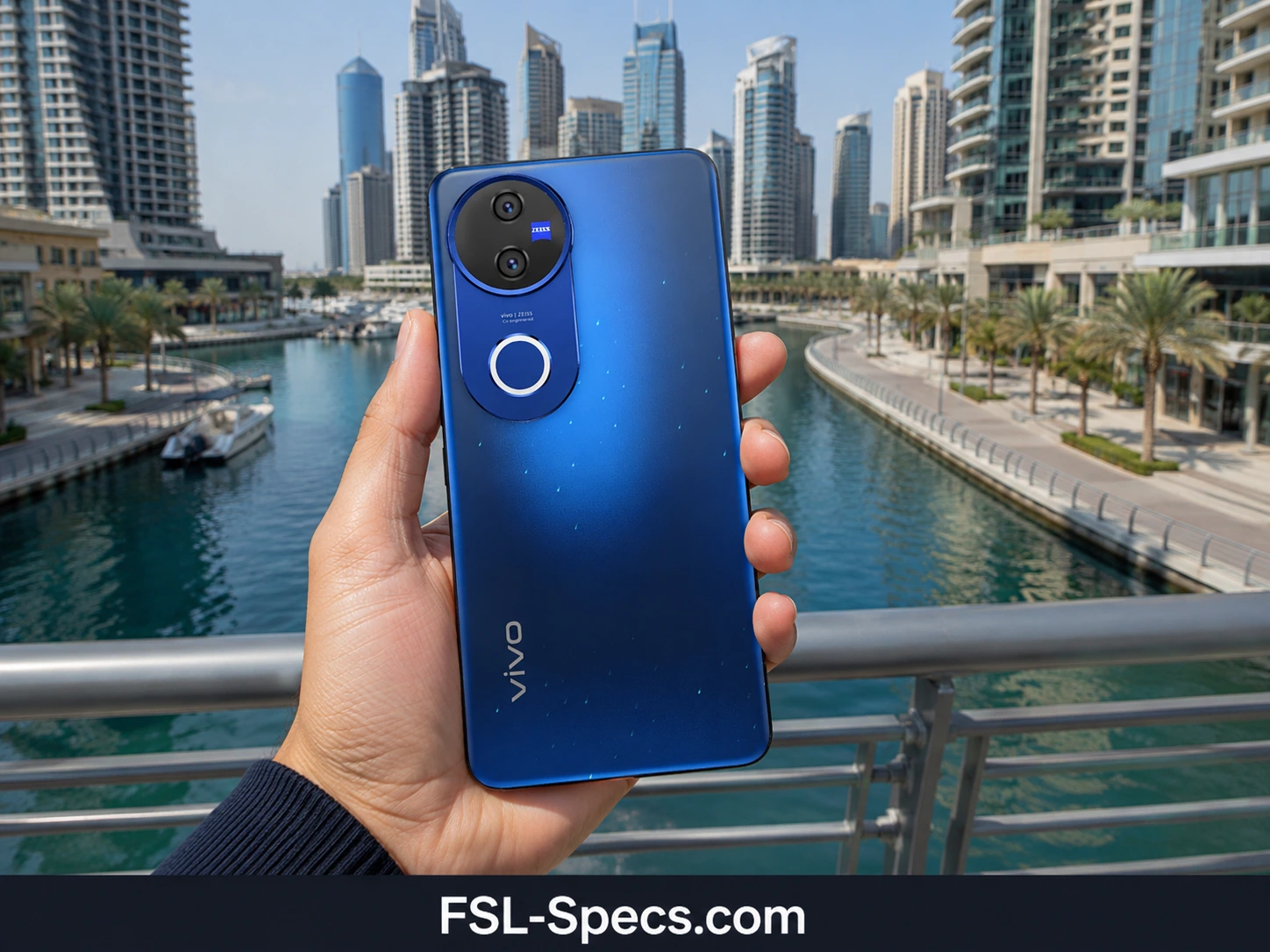
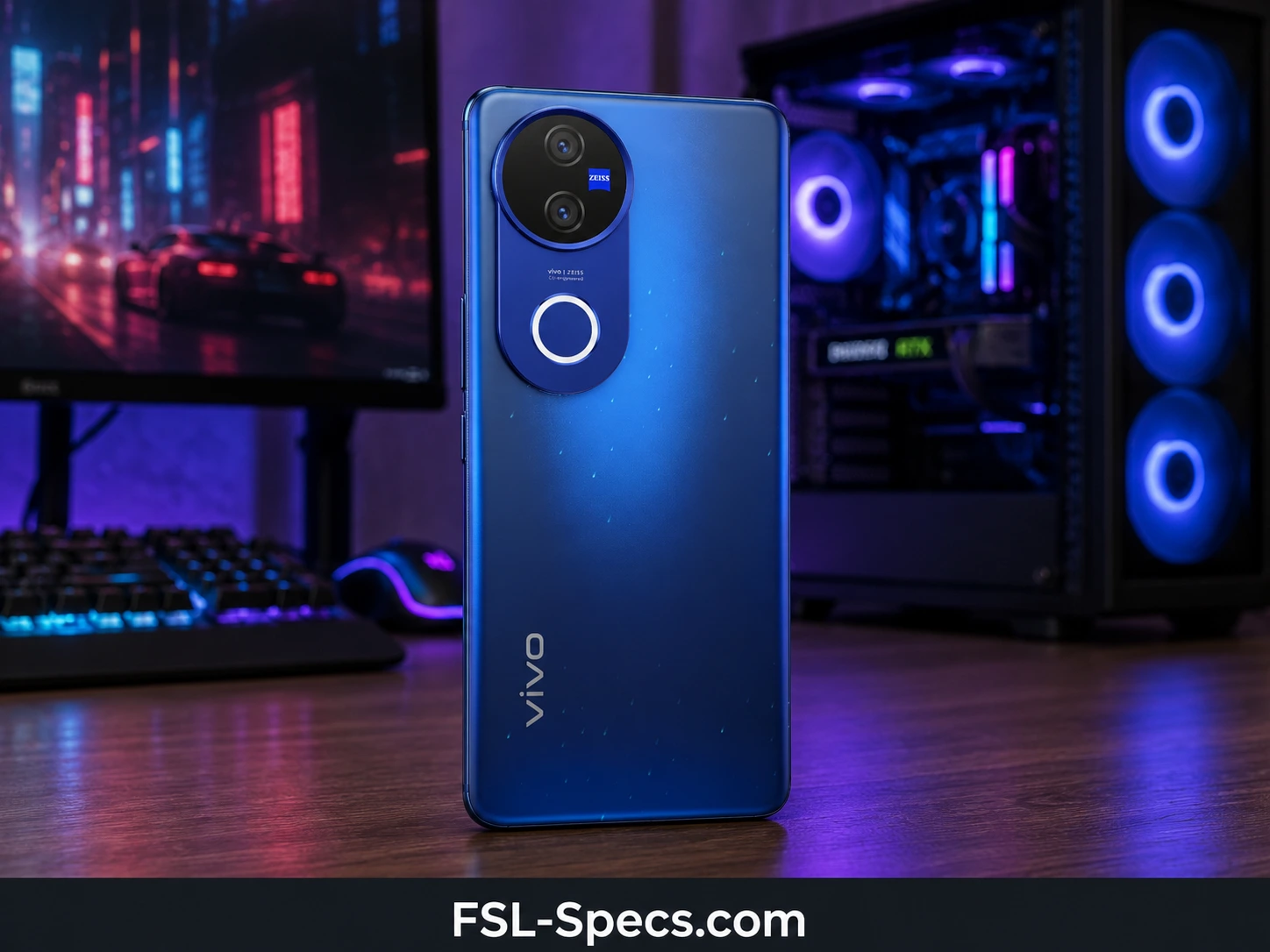
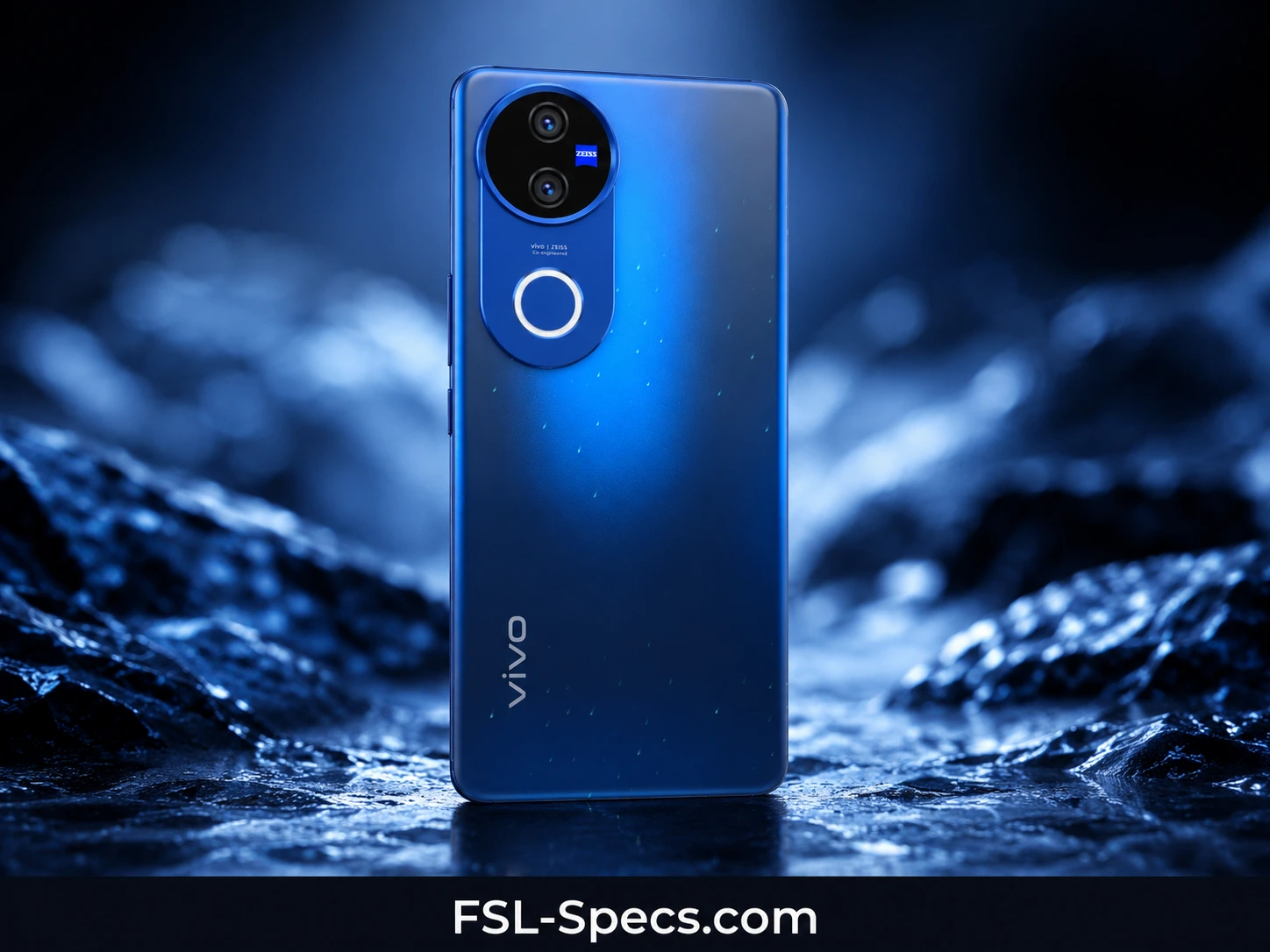


















✪ vivo V50 ✪

Vivo V50 Specs, Price, Camera, Battery & Best Review (2026)
United States flag United States
$380 USD
Pakistan flag Pakistan (PKR)
110,000 PKR
India flag India (INR)
₹36,500 INR

✪ vivo V50 ✪

Vivo V50 Specs, Price, Camera, Battery & Best Review (2026)
Last Time Update : 17 August, 2026
0

Quick Specifications

Amoled

Display Type

Snapdragon 7 Gen 3

Processor

12 + 256 GB

Ram And Memory

50 + 50 MP

Camera

6000 mAh

Battery

90 W

Fast Charging

Full Specification

BASIC INFO
Mobile
vivo V50
Model
vivo V50 (V2427)
Series
Vivo V Series
Category
Mid-Range
Release Date
25 February,2025
Year
2025
CONNECTIVITY
Sim
Nano-SIM + Nano-SIM
Network
4G / 4G+ / 5G
WiFi
Wi-Fi 6 / Wi-Fi 5
Bluetooth
5.4
NFC
Yes
OS
Android 17
BODY
Dimensions
163.3 x 76.7 x 7.4/7.6/7.7 mm
Build
plastic frame, plastic back / glass back
KG Weight
189 g or 199 g
Screen Size
6.77 inch
Resolution
1080 x 2392 Pixels
Type
Amoled
Refresh Rate
120 Hz
Peak Brightness
4500 nits
HBM Brightness
1300 nits
Processor
Snapdragon 7 Gen 3
Max Clock
2.63 GHz
Lithography
4 nm
GPU
Adreno 720
CPU Cores
8 Cores
Antutu v11
1 M
Bootup Time
22 s
Architecture
1 x 2.63 GHz Cortex-A715
3 x 2.4 GHz Cortex-A715
4 x 1.8 GHz Cortex-A510
Ram Memory
12 + 256 GB
Ram Type
LPDDR4X
Storage Type
UFS 2.2
SD Card
No
Variants
8 + 128GB
8 + 256GB
12 + 256GB
12 + 512GB
MP
Rear Camera
50 + 50 MP
Front Camera
50 MP
SENSORS
Camera Sensors
50 MP = Omnivision OV50E
50 MP = Samsung S5KJN1
Front Sensors
50 MP = Samsung S5KJN1
RECORDING FPS
Main Recording
4K @30 fps
1080p @30/60 fps
Front Recording
4K@ 60fps
1080p @30/60fps
RESOLUTION
Main Resolution
8160 × 6144 pixels
Front Resolution
8192 x 6144 Pixels
ZOOM
Optical Zoom
-
D Digital Zoom
20 x
FLASH
Flash
Ring Light
Front Flash
Not confirm
Capacity
6000 mAh
Fast Charging
90 W
Wireless Charging
No
Li Battery Type
Silicon-Carbon
REVERSE
Reverse Wired
Yes
Reverse Wireless
No
OTHER
Battery PC Marks
~12 hours
Charging Time
50m-60m (0% To 100%)
AUDIO & SENSORS
Speaker
Dual Stereo Speaker
Fingerprint Sensor
Front Finger
Other Sensors
Accelerometer
Gyroscope
Proximity
Compass
etc
Special Features

Zeiss co-engineered optics (all 3 cameras)
Aura Light LED ring flash
Live Call Translation,Transcript Assist
Screen Translation, Circle to Search
vapor-chamber cooling, DC Dimming

BASIC INFO
Mobile
vivo V50
Model
vivo V50 (V2427)
Series
Vivo V Series
Category
Mid-Range
Release Date
25 February,2025
Year
2025
CONNECTIVITY
Sim
Nano-SIM + Nano-SIM
Network
4G / 4G+ / 5G
WiFi
Wi-Fi 6 / Wi-Fi 5
Bluetooth
5.4
NFC
Yes
OS
Android 17
BODY
Dimensions
163.3 x 76.7 x 7.4/7.6/7.7 mm
Build
plastic frame, plastic back / glass back
KG Weight
189 g or 199 g
Screen Size
6.77 inch
Resolution
1080 x 2392 Pixels
Type
Amoled
Refresh Rate
120 Hz
Peak Brightness
4500 nits
HBM Brightness
1300 nits
Processor
Snapdragon 7 Gen 3
Max Clock
2.63 GHz
Lithography
4 nm
GPU
Adreno 720
CPU Cores
8 Cores
Antutu v11
1 M
Bootup Time
22 s
Architecture
1 x 2.63 GHz Cortex-A715
3 x 2.4 GHz Cortex-A715
4 x 1.8 GHz Cortex-A510
Ram Memory
12 + 256 GB
SD Card
No
Ram Type
LPDDR4X
Storage Type
UFS 2.2
Variants
8 + 128GB
8 + 256GB
12 + 256GB
12 + 512GB
MP
Rear Camera
50 + 50 MP
Front Camera
50 MP
SENSORS
Main Camera Sensors
50 MP = Omnivision OV50E
50 MP = Samsung S5KJN1
Front Camera Sensors
50 MP = Samsung S5KJN1
RECORDING FPS
Main Recording
4K @30 fps
1080p @30/60 fps
Front Recording
4K@ 60fps
1080p @30/60fps
RESOLUTION
Main Resolution
8160 × 6144 pixels
Front Resolution
8192 x 6144 Pixels
ZOOM
Optical Zoom
-
D Digital Zoom
20 x
FLASH
Flash
Ring Light
Front Flash
Not confirm
Capacity
6000 mAh
Fast Charging
90 W
Wireless Charging
No
Li Battery Type
Silicon-Carbon
REVERSE
Reverse Wired
Yes
Reverse Wireless
No
OTHER
Battery Life PCMark
~12 hours
Charging Time
50m-60m (0% To 100%)
AUDIO & SENSORS
Speaker
Dual Stereo Speaker
Fingerprint Sensor
Front Finger
Other Sensors
Accelerometer
Gyroscope
Proximity
Compass
etc
Special Features

Zeiss co-engineered optics (all 3 cameras)
Aura Light LED ring flash
Live Call Translation,Transcript Assist
Screen Translation, Circle to Search
vapor-chamber cooling, DC Dimming

Highlights & Review Of vivo V50

Display Review:

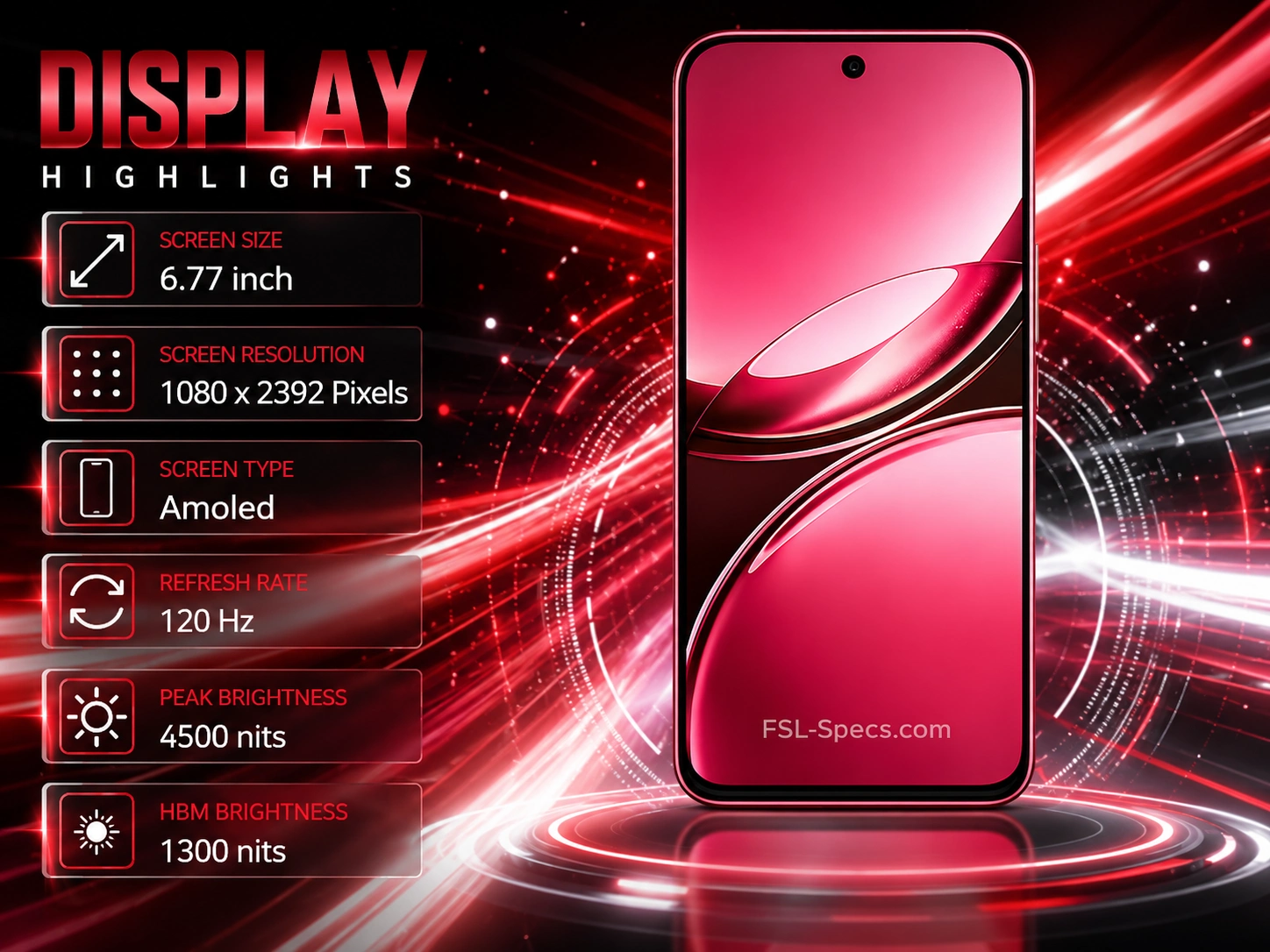
The Vivo V50 comes with a 6.77-inch Quad Curved AMOLED display offering FHD+ resolution (1080 x 2392px), a 120Hz refresh rate, and brightness rated at 1,300 nits HBM with a 4,500 nits peak. At PKR 120,000, this is a solid but no longer class-leading panel against its 2026 rivals.

The Vivo V70 FE (PKR 124,000) steps up to a larger 6.83-inch AMOLED panel with a sharper 1260 x 2800px resolution and a notably higher 1,900 nits HBM rating, meaning text and images look crisper and the screen stays more legible under harsh sunlight.

The Realme 15 Pro (PKR 132,000) pushes brightness even further with its 6.8-inch OLED, 1280 x 2800px, 144Hz display rated at 1,800 nits HBM and 6,500 nits peak, giving it both the smoothest scrolling of the group and the brightest screen on paper, a genuine advantage for outdoor visibility.

Meanwhile, the Vivo V60 (PKR 132,000) sticks closer to the V50’s own formula with a 6.77-inch AMOLED, 1080 x 2392px, 120Hz panel, but improves brightness to 1,500 nits HBM and 5,000 nits peak, still ahead of the V50 despite sharing the same resolution and refresh rate.

Across the board, the V50’s resolution and brightness numbers lag behind all three rivals, and its 120Hz refresh rate is also matched by everyone except the Realme 15 Pro, which jumps to 144Hz.

Verdict: The Vivo V50’s display is the weakest in this lineup on both sharpness and brightness. Buyers prioritizing display quality should lean toward the Realme 15 Pro for its 144Hz panel and superior brightness, though the Vivo V60 offers a closer, same-price upgrade path if staying within the Vivo ecosystem matters.

Processor Review:

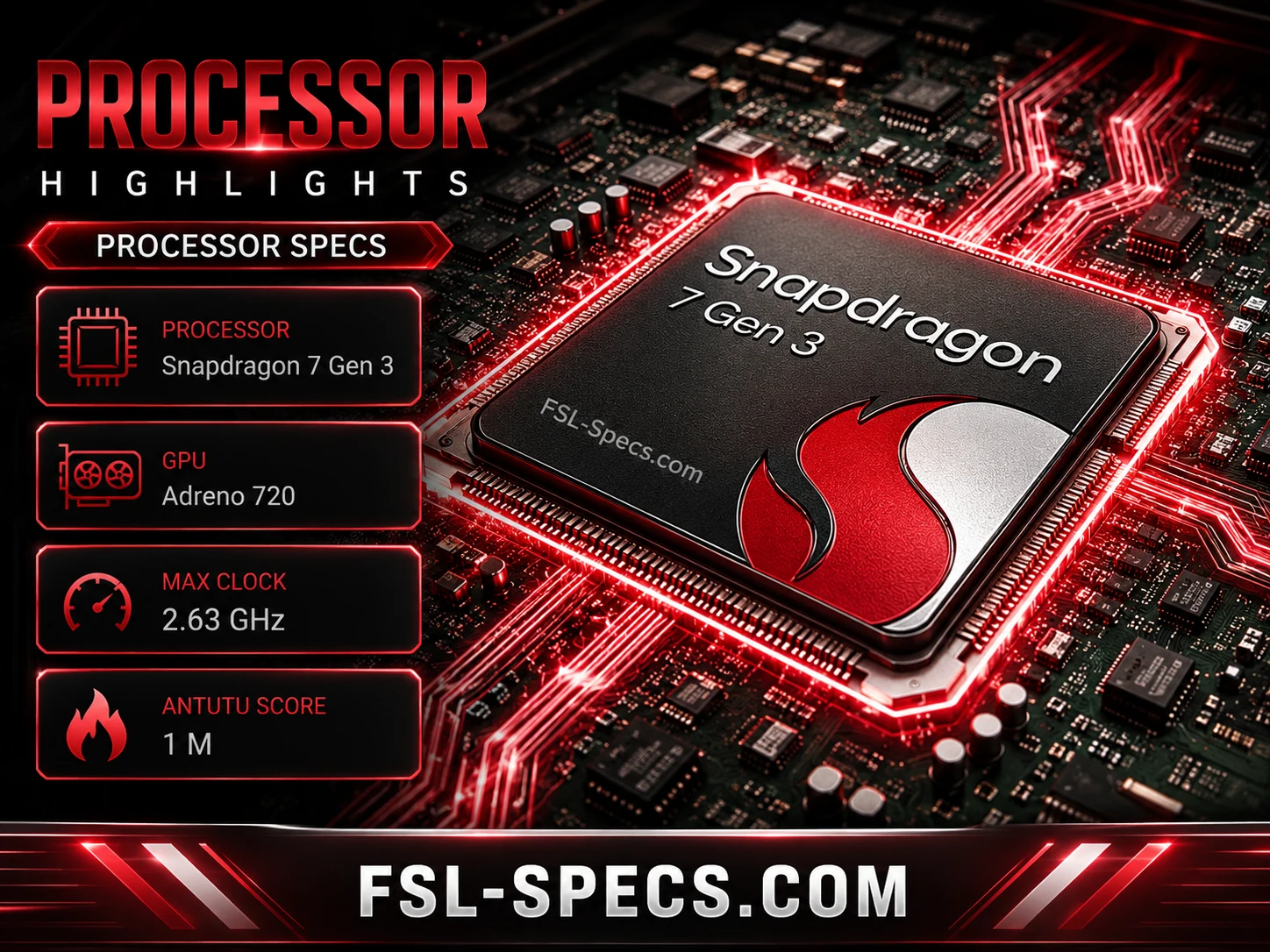
The Vivo V50 runs on the Snapdragon 7 Gen 3 (4nm) chipset, which posts an AnTuTu v11 score of around 1,018,053. At PKR 120,000, this puts the V50 at the back of the pack in this comparison, since all three rivals use newer silicon.

The Vivo V70 FE (PKR 124,000) switches to a MediaTek Dimensity 7360 Turbo (4nm) paired with a Mali-G615 MC2 GPU, scoring around 1,183,301 on AnTuTu v11, roughly 16% higher than the V50, though its CPU cluster of 4×2.5GHz Cortex-A78 and 4×2.0GHz Cortex-A55 cores is a more dated big.LITTLE layout compared to the V50’s own core setup.

The Realme 15 Pro (PKR 132,000) steps further ahead with the Snapdragon 7 Gen 4 (4nm) and Adreno 722 GPU, landing around 1,235,431 on AnTuTu v11, about 21% higher than the V50, translating into noticeably smoother multitasking and better sustained gaming performance.

The Vivo V60 (also PKR 132,000) uses the same Snapdragon 7 Gen 4 chipset and posts the strongest result of the group at around 1,261,932 on AnTuTu v11, roughly 24% ahead of the V50, making it the fastest phone in this lineup on paper.

All four AnTuTu figures here are drawn from AnTuTu v11 benchmarks, so the comparison is apples to apples across the board. The gap between the V50 and its three rivals isn’t massive in day to day use, but it becomes noticeable in heavier games and multitasking-heavy workflows.

Verdict: The Vivo V50’s Snapdragon 7 Gen 3 is the weakest performer here, trailing all three rivals by a meaningful margin. Buyers who prioritize raw performance should lean toward the Vivo V60 or Realme 15 Pro, both running the newer Snapdragon 7 Gen 4.

Ram & Memory Review:

The Vivo V50 ships with 12GB of LPDDR4X RAM and 512GB of UFS 2.2 storage in this configuration, with no microSD expansion. At PKR 120,000, the storage speed is where the V50 falls behind, since UFS 2.2 is now an older standard for a phone at this price.

The Vivo V70 FE (PKR 124,000, 12GB/256GB) upgrades to LPDDR5 RAM paired with UFS 3.1 storage, also without a card slot, meaning noticeably faster app installs, game loading, and file transfers than the V50 despite offering less base storage in this trim.

The Realme 15 Pro (PKR 132,000, 12GB/512GB) also uses UFS 3.1 storage, matching the V70 FE’s storage speed while keeping the same 512GB capacity as the V50, though the RAM type hasn’t been confirmed on the spec sheets checked.

The Vivo V60 (PKR 132,000, 12GB/256GB) sticks with LPDDR4X RAM and UFS 2.2 storage, the same aging combination as the V50, so despite costing more, it doesn’t offer a memory speed advantage over the primary phone. None of these four phones support microSD expansion, so buyers are locked into whichever onboard capacity they choose at purchase.

In real-world terms, the V70 FE and Realme 15 Pro will feel snappier when installing large games or moving big files, while the V50 and V60 share the same storage bottleneck despite their price difference.

Verdict: The Vivo V50 is not the weakest here since the V60 uses the same LPDDR4X and UFS 2.2 combination despite costing more. Buyers who want faster storage should look at the Vivo V70 FE or Realme 15 Pro, both of which move to UFS 3.1.

Cameras Review:

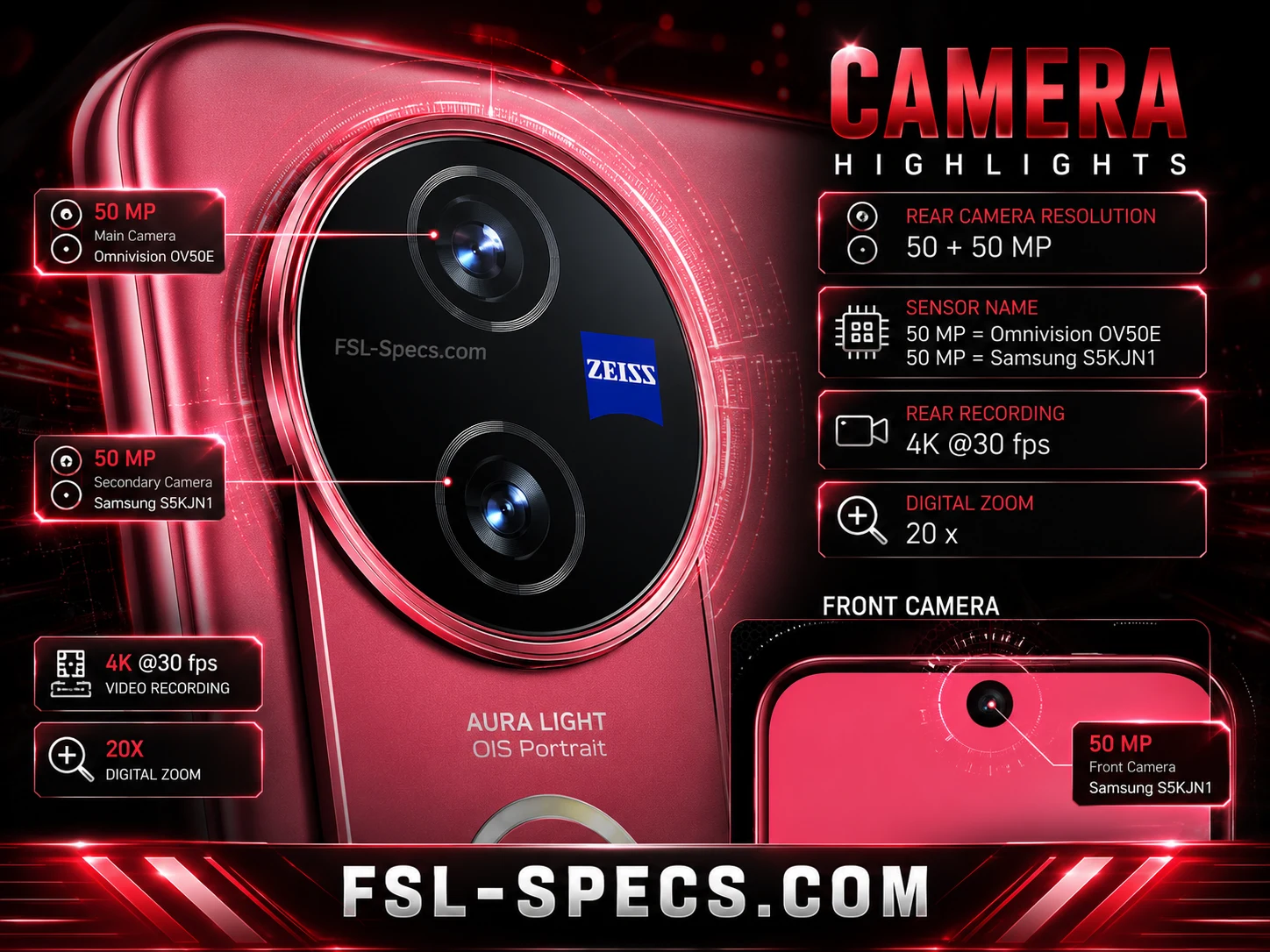
The Vivo V50 relies on a dual rear setup with a 50MP OmniVision OV50E main sensor (f/1.9, OIS, PDAF) and a 50MP Samsung ISOCELL S5KJN1 ultrawide (f/2.0, autofocus), both capable of 4K@30fps video, backed by a 50MP Samsung ISOCELL S5KJN1 front camera (f/2.0, autofocus, 4K@30fps).

At PKR 120,000, the V50 has verifiable, named sensors across the board but lacks any telephoto lens. The Vivo V70 FE (PKR 124,000) jumps to a 200MP Samsung ISOCELL HP5 main sensor (f/1.9, OIS, PDAF) paired with an 8MP ultrawide (f/2.2) and a 32MP front camera (f/2.2), all shooting 4K video, giving it far higher resolution for cropping and detail despite also skipping a telephoto lens.

The Realme 15 Pro (PKR 132,000) uses a 50MP main sensor (f/1.8, OIS, PDAF) and a 50MP ultrawide (f/2.0), though the specific sensor brands haven’t been disclosed, plus a 50MP selfie camera (f/2.4), with 4K@30/60fps recording on both rear and front.

The Vivo V60 (PKR 132,000) is the only phone here with a true telephoto, pairing a 50MP Sony IMX766 main (f/1.9, OIS) with a 50MP Sony IMX882 3x periscope telephoto (f/2.7, OIS) and an 8MP OmniVision OV08D ultrawide (f/2.0, no autofocus), plus a 50MP Samsung S5KJN1 front camera (f/2.2), all at 4K@30fps.

Among these four, only the V60 offers real optical zoom, while the V70 FE stands out for pure resolution with its 200MP main sensor.

Verdict: The Vivo V50’s camera hardware is solid and fully disclosed but the most basic of the group, missing both a telephoto and the resolution edge of the V70 FE. Buyers who want zoom versatility should pick the Vivo V60, while those chasing raw detail should look at the Vivo V70 FE.

Battery Review:

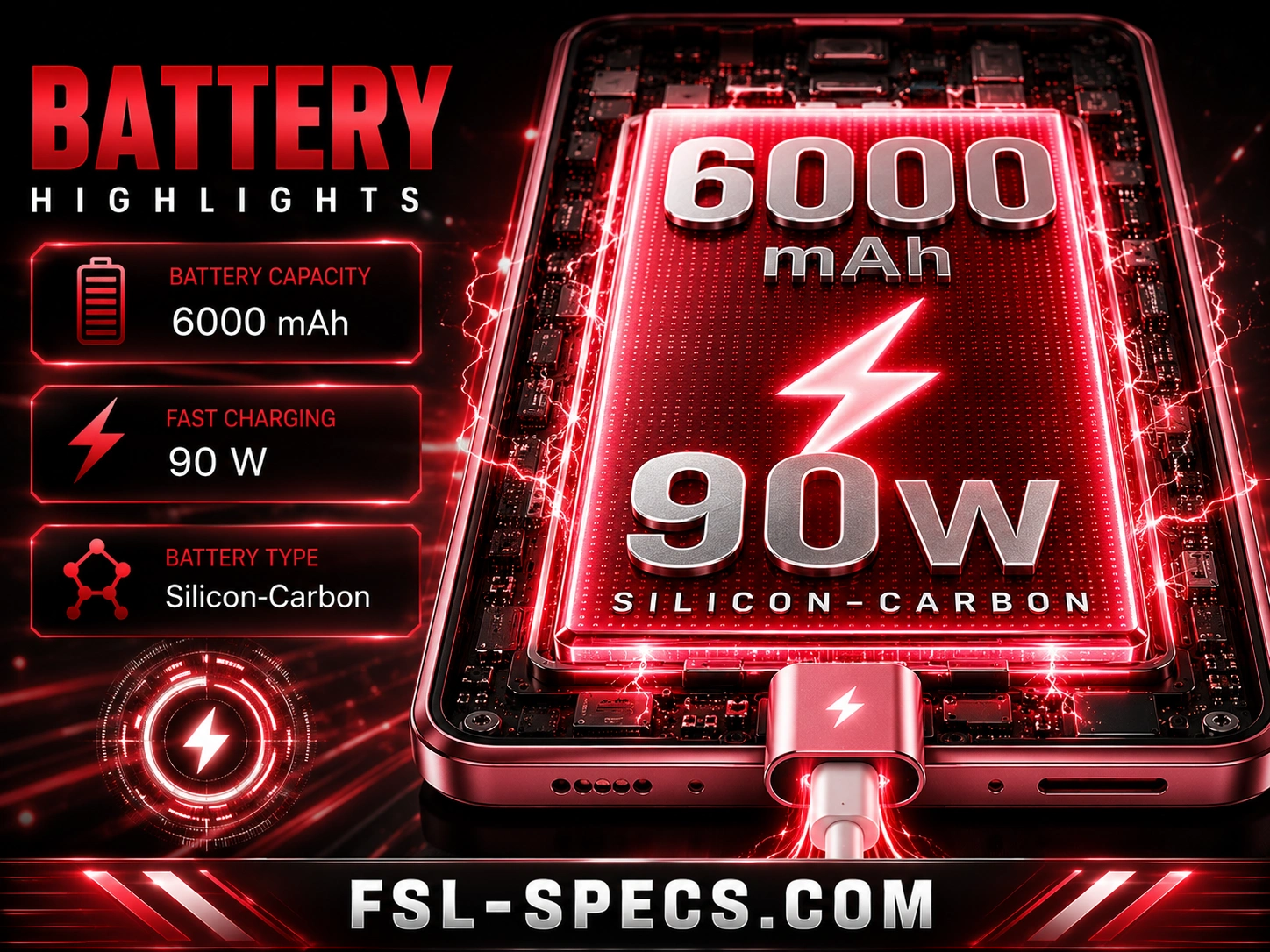
The Vivo V50 packs a 6,000mAh Si/C battery with 90W wired FlashCharge, reaching 40% in 15 minutes and 71% in 30 minutes in lab testing, though its exact 0-100% time and wireless charging support are not confirmed on the spec sheet.

At PKR 120,000, this trades off some capacity for the thinner, camera-focused design vivo went for. The Vivo V70 FE (PKR 124,000) jumps to a much larger 7,000mAh Si/C battery, still on 90W wired charging, but officially reaches 100% in 60 minutes and adds reverse wired charging, meaning both more battery and a full-charge time close to what the V50 achieves with a smaller cell.

The Realme 15 Pro (PKR 132,000) also carries a 7,000mAh battery but charges at 80W SuperVOOC, hitting 50% in 25 minutes and 100% in 61 minutes, essentially matching the V70 FE’s full-charge speed despite the lower wattage rating, likely due to charging curve optimization.

The Vivo V60 (PKR 132,000) rounds things out with a 6,500mAh Si/C battery on 90W wired charging, plus reverse wired charging and bypass charging support, giving it a capacity between the V50 and the two larger-battery rivals.

None of these four phones offer wireless charging, so the comparison comes down to capacity and wired charging speed alone. The V50’s 6,000mAh cell is the smallest in this group by at least 500mAh, and both the V70 FE and Realme 15 Pro offer a full 1,000mAh more capacity at comparable or better charging speeds.

Verdict: The Vivo V50 has the smallest battery of the four despite being the primary phone, and buyers who prioritize all-day battery life should lean toward the Vivo V70 FE or Realme 15 Pro, both of which pack larger 7,000mAh cells without sacrificing charging speed.

Final Verdict :

Across display, processor, memory, camera, and battery, the Vivo V50 consistently lands at or near the bottom of this four-way comparison despite being the primary phone under review. Its 6.77-inch FHD+ AMOLED display trails the sharper, brighter panels on the Vivo V70 FE and Realme 15 Pro, its Snapdragon 7 Gen 3 chipset posts the lowest AnTuTu v11 score of the group, its LPDDR4X/UFS 2.2 memory combo is matched only by the similarly dated Vivo V60, its dual camera setup lacks the telephoto found on the V60 or the resolution edge of the V70 FE, and its 6,000mAh battery is the smallest capacity here by a clear margin.

The strongest all-round performer is the Vivo V70 FE at PKR 124,000, just PKR 4,000 more than the V50, since it combines a brighter 1,900 nits HBM display, faster UFS 3.1 storage, a 200MP main camera, and a larger 7,000mAh battery with quick 60-minute full charging.

The Realme 15 Pro is a close second, winning on raw processor speed and refresh rate but sitting PKR 12,000 above the V50. The Vivo V60 earns its price with the only telephoto camera in the lineup and the fastest chipset, but its memory and display don’t improve meaningfully over the V50 despite costing more.

Bottom line: At PKR 120,000, the Vivo V50 is outclassed on nearly every spec by rivals within PKR 12,000 of its price, making the Vivo V70 FE the strongest overall value pick in this comparison.

Ranking (best to weakest overall):

  1. Vivo V70 FE (PKR 124,000) — best balance of display, storage speed, camera resolution, and battery.
  2. Realme 15 Pro (PKR 132,000) — fastest refresh rate and near-top processor performance, at the highest price.
  3. Vivo V60 (PKR 132,000) — only phone with a telephoto camera and the fastest chipset, held back by dated UFS 2.2 storage.
  4. Vivo V50 (PKR 120,000) — cheapest of the four, but consistently behind on display, memory, camera versatility, and battery capacity.

Pros And Cons of vivo V50

Pros of Mobile

✅ ZEISS Cameras (50MP Main + 50MP Ultrawide + 50MP Selfie)
✅ Huge Battery (6000mAh BlueVolt)
✅ Fast Charging (90W FlashCharge)
✅ Curved AMOLED (6.77″, 120Hz)
✅ Premium Protection (IP68 + IP69)
✅ Reliable Performance (Snapdragon 7 Gen 3, 4nm)

Cons of Mobile

❌ UFS 2.2 (Older storage)
❌ LPDDR4X RAM (Not LPDDR5)
❌ No microSD (Storage fixed)
❌ USB 2.0 (Slow transfers)
❌ No Wireless (Charging absent)
❌ Midrange Chip (Not flagship-level)

Best For - Not Best For

Best For

✅ Portrait Photography
✅ Battery Backup
✅ Daily Gaming
✅ Outdoor Usage
✅ Content Creation
✅ Premium Design

Not Best For

❌ Expandable Storage
❌ Wireless Charging
❌ Fast Transfers

Trailer And Unboxing of vivo V50

Disassembly Or Teardown And Gaming Test of vivo V50

Camera Test vivo V50

Vivo V70 FE
Realme 15 Pro
Samsung A56
Vivo V60

Vivo Mobile Series

Vivo Mobile Series

Picture of Faisal Ur Rehman

Faisal Ur Rehman

Faisal Rehman is the founder and editor of FSL Specs, where he publishes in-depth smartphone specifications, comparisons, buying guides, and technology insights. With extensive experience in mobile hardware research and technical analysis, he provides accurate and up-to-date information on Android smartphones, processors, displays, cameras, batteries, performance benchmarks, and software features. His goal is to simplify complex specifications and help readers choose the right device with confidence.

FAQs Questions

The vivo V50 features a 6.77-inch Quad Curved AMOLED display with a 120Hz refresh rate and Full HD+ resolution. It offers 1,300 nits High Brightness Mode (HBM) and up to 4,500 nits local peak brightness, delivering vibrant colors and excellent visibility even under bright sunlight.

Yes. The Snapdragon 7 Gen 3 (4nm) processor provides smooth performance for daily tasks, multitasking, and popular games. Combined with LPDDR4X RAM and UFS 2.2 storage, the phone feels responsive for everyday use while maintaining good power efficiency.

The vivo V50 focuses on photography with a 50MP ZEISS OIS main camera, 50MP ultra-wide camera, and a 50MP autofocus selfie camera. It captures detailed photos with natural-looking colors, while the autofocus front camera produces sharp selfies and clear video calls in different lighting conditions.

The 6000mAh BlueVolt battery comfortably lasts a full day, even with gaming, streaming, and heavy social media use. When you need to recharge, 90W FlashCharge quickly restores power, reducing the time spent waiting for the battery to fill.

The vivo V50 supports dual 5G, NFC, Wi-Fi 6, and Bluetooth 5.4 for fast and reliable wireless connectivity. However, eSIM and wireless charging are not available on this device.

Yes. The vivo V50 is rated IP68 and IP69, providing strong protection against dust, water immersion, and high-pressure water jets. This added durability makes it more dependable for everyday use in different environments.

The vivo V50 is available in 8GB + 128GB, 8GB + 256GB, 12GB + 256GB, and 12GB + 512GB variants. These options let users choose between affordable storage or extra space for apps, games, and media.

The vivo V50 supports 4K video recording on both the rear and front cameras, making it a solid choice for content creators and vloggers. However, it does not support 8K video recording.

8GB + 128GB
₹33,000 INR | $340 | PKR ~90,000


8GB + 256GB
₹35,000 INR | $360 | PKR ~100,000


12GB + 256GB
₹36,500 INR | $380 | PKR ~110,000


12GB + 512GB
₹38,000 INR | $400 | PKR ~125,000

Leave a Reply

Your email address will not be published. Required fields are marked *

Scroll to Top