
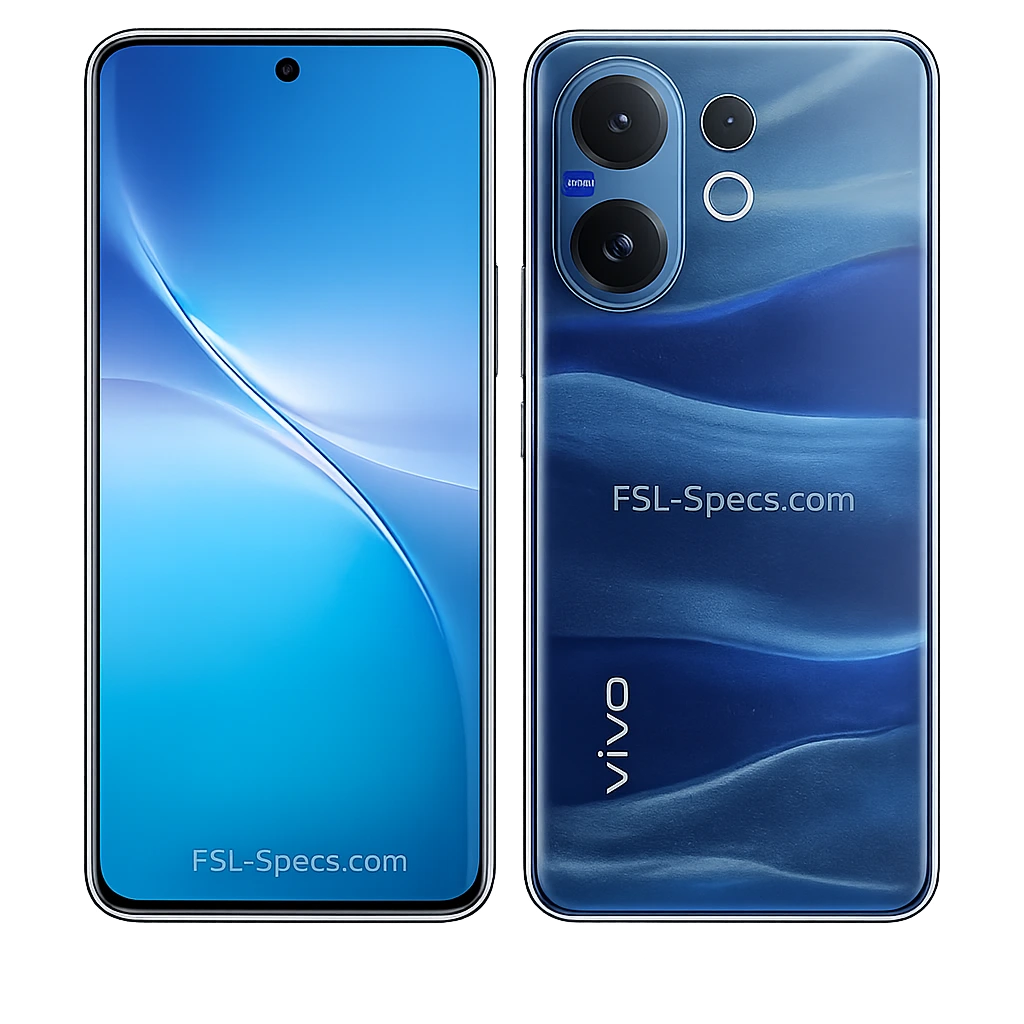
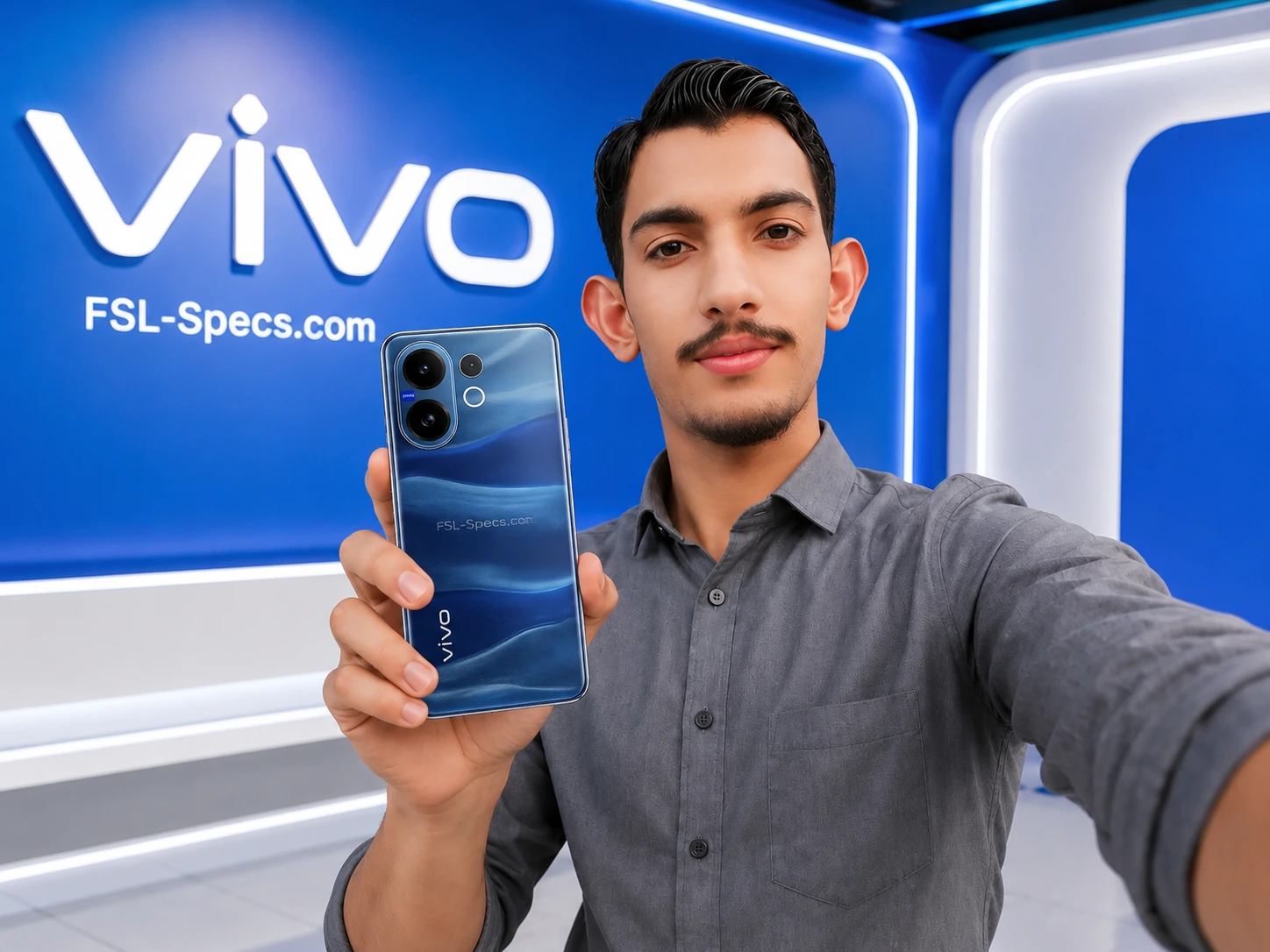
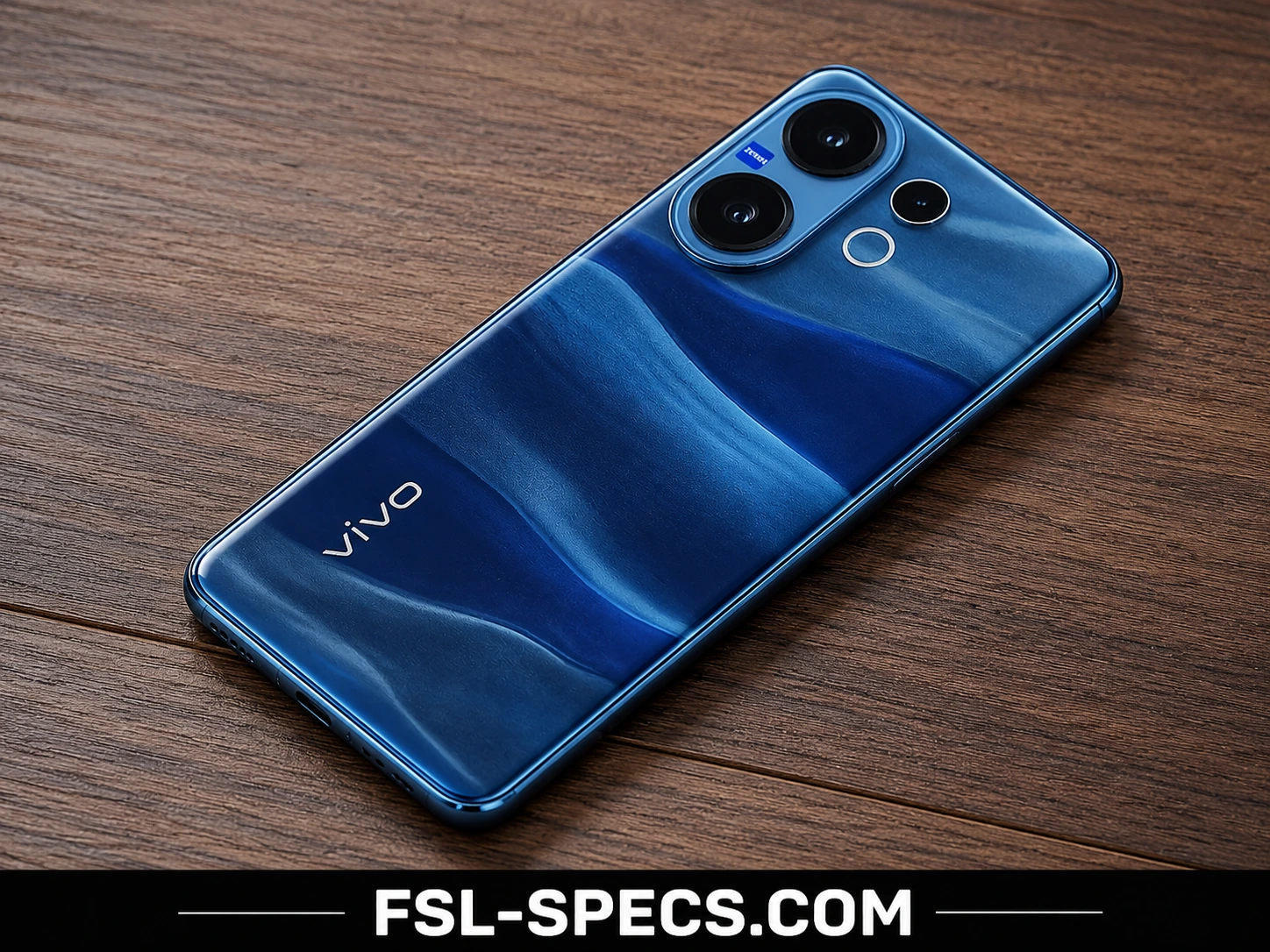


















✪ vivo V60 ✪

Vivo V60 Specs, Price, Camera, Battery & Best Review (2026)
United States flag United States
$470 USD
Pakistan flag Pakistan (PKR)
144,000 PKR
India flag India (INR)
₹45,000 INR

✪ vivo V60 ✪

Vivo V60 Specs, Price, Camera, Battery & Best Review (2026)
Last Time Update : 17 August, 2026
0

Quick Specifications

Amoled

Display Type

Snapdragon 7 Gen 4

Processor

12 + 512 GB

Ram And Memory

50 + 50 + 8 MP

Camera

6500 mAh

Battery

90 W

Fast Charging

Full Specification

BASIC INFO
Mobile
vivo V60
Model
V2511
Series
Vivo V Series
Category
Mid-Range
Release Date
19 August,2025
Year
2025
CONNECTIVITY
Sim
Nano-SIM + Nano-SIM
Network
4G / 4G+ / 5G
WiFi
Wi-Fi 6 / Wi-Fi 5
Bluetooth
5.4
NFC
Yes
OS
Android 17
BODY
Dimensions
163.5 x 77 x 7.5 mm
Build
plastic frame, plastic back / glass back
KG Weight
192 g or 201 g
Screen Size
6.77 inch
Resolution
1080 x 2392 Pixels
Type
Amoled
Refresh Rate
120 Hz
Peak Brightness
5000 nits
HBM Brightness
1500 nits
Processor
Snapdragon 7 Gen 4
Max Clock
2.8 GHz
Lithography
4 nm
GPU
Adreno 722
CPU Cores
8 Cores
Antutu v11
1.1 M
Bootup Time
18 s
Architecture
1×2.8 GHz Cortex-A720
4×2.4 GHz Cortex-A720
3×1.8 GHz Cortex-A520
Ram Memory
12 + 512 GB
Ram Type
LPDDR4X
Storage Type
UFS 2.2
SD Card
No
Variants
8GB + 256GB
12GB + 256GB
12GB + 512GB
MP
Rear Camera
50 + 50 + 8 MP
Front Camera
50 MP
SENSORS
Camera Sensors
50 MP = Sony IMX766
50 MP = Sony IMX882
  8 MP =Omnivision OV08D10
Front Sensors
50 MP = Samsung S5KJN1
RECORDING FPS
Main Recording
4K @30 fps
1080p @30/60 fps
Front Recording
4K@ 30/60fps
1080p @30/60fps
RESOLUTION
Main Resolution
8160 × 6144 pixels
Front Resolution
8192 x 6144 Pixels
ZOOM
Optical Zoom
3 x
D Digital Zoom
100 x
FLASH
Flash
Ring Light
Front Flash
Not confirm
Capacity
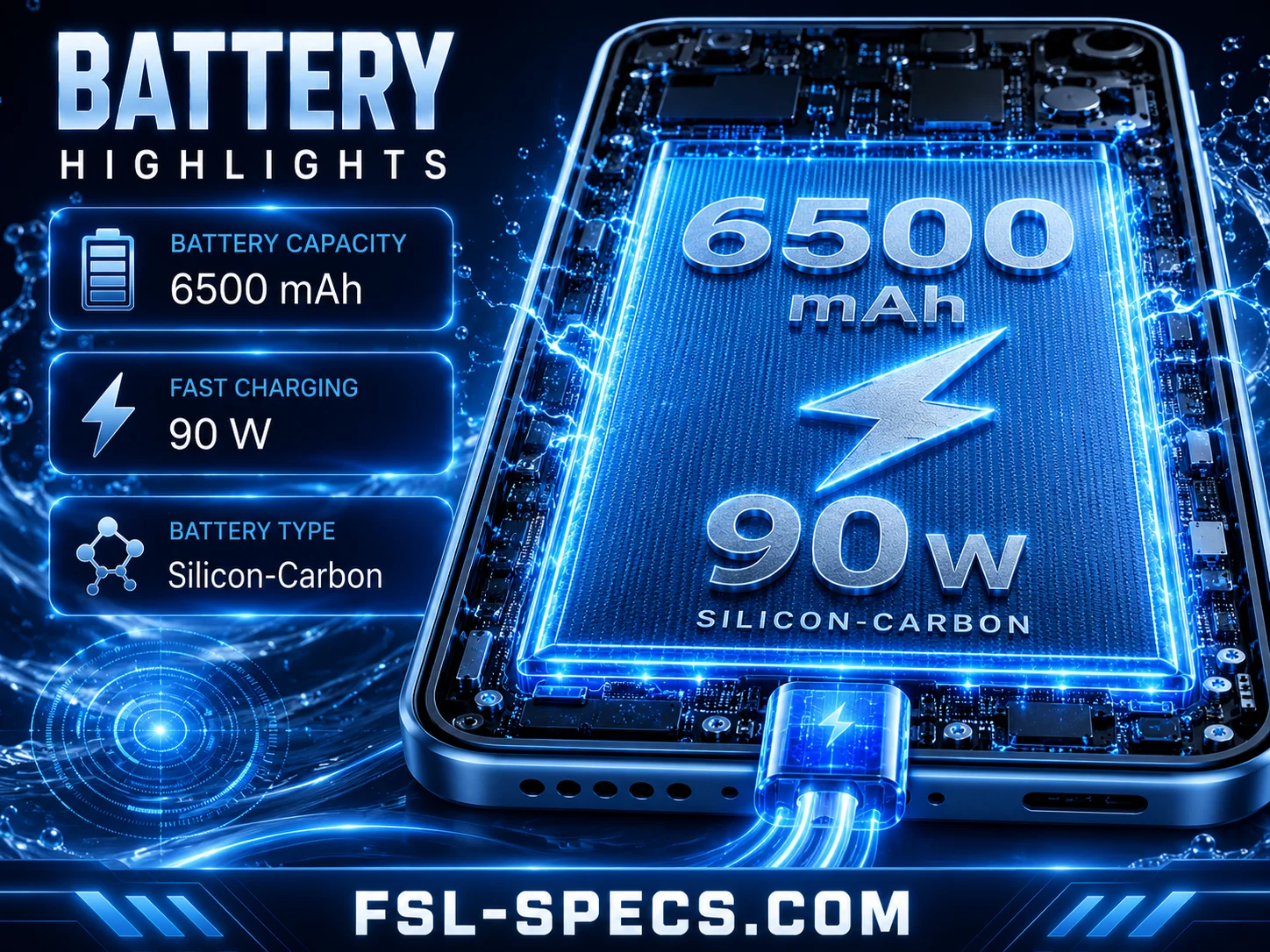
6500 mAh
Fast Charging
90 W
Wireless Charging
No
Li Battery Type
Silicon-Carbon
REVERSE
Reverse Wired
Yes
Reverse Wireless
No
OTHER
Battery PC Marks
~13 hours
Charging Time
50m-60m (0% To 100%)
AUDIO & SENSORS
Speaker
Dual Stereo Speaker
Fingerprint Sensor
Front Finger
Other Sensors
Accelerometer
Gyroscope
Proximity
Compass
etc
Special Features

Ring Light
Zeiss optics on rear and front cameras
Silicon-Carbon battery technology
4 major Android OS upgrades + 6 years security updates
IP68/IP69 dust and water resistance

BASIC INFO
Mobile
vivo V60
Model
V2511
Series
Vivo V Series
Category
Mid-Range
Release Date
19 August,2025
Year
2025
CONNECTIVITY
Sim
Nano-SIM + Nano-SIM
Network
4G / 4G+ / 5G
WiFi
Wi-Fi 6 / Wi-Fi 5
Bluetooth
5.4
NFC
Yes
OS
Android 17
BODY
Dimensions
163.5 x 77 x 7.5 mm
Build
plastic frame, plastic back / glass back
KG Weight
192 g or 201 g
Screen Size
6.77 inch
Resolution
1080 x 2392 Pixels
Type
Amoled
Refresh Rate
120 Hz
Peak Brightness
5000 nits
HBM Brightness
1500 nits
Processor
Snapdragon 7 Gen 4
Max Clock
2.8 GHz
Lithography
4 nm
GPU
Adreno 722
CPU Cores
8 Cores
Antutu v11
1.1 M
Bootup Time
18 s
Architecture
1×2.8 GHz Cortex-A720
4×2.4 GHz Cortex-A720
3×1.8 GHz Cortex-A520
Ram Memory
12 + 512 GB
SD Card
No
Ram Type
LPDDR4X
Storage Type
UFS 2.2
Variants
8GB + 256GB
12GB + 256GB
12GB + 512GB
MP
Rear Camera
50 + 50 + 8 MP
Front Camera
50 MP
SENSORS
Main Camera Sensors
50 MP = Sony IMX766
50 MP = Sony IMX882
  8 MP =Omnivision OV08D10
Front Camera Sensors
50 MP = Samsung S5KJN1
RECORDING FPS
Main Recording
4K @30 fps
1080p @30/60 fps
Front Recording
4K@ 30/60fps
1080p @30/60fps
RESOLUTION
Main Resolution
8160 × 6144 pixels
Front Resolution
8192 x 6144 Pixels
ZOOM
Optical Zoom
3 x
D Digital Zoom
100 x
FLASH
Flash
Ring Light
Front Flash
Not confirm
Capacity
6500 mAh
Fast Charging
90 W
Wireless Charging
No
Li Battery Type
Silicon-Carbon
REVERSE
Reverse Wired
Yes
Reverse Wireless
No
OTHER
Battery Life PCMark
~13 hours
Charging Time
50m-60m (0% To 100%)
AUDIO & SENSORS
Speaker
Dual Stereo Speaker
Fingerprint Sensor
Front Finger
Other Sensors
Accelerometer
Gyroscope
Proximity
Compass
etc
Special Features

Ring Light
Zeiss optics on rear and front cameras
Silicon-Carbon battery technology
4 major Android OS upgrades + 6 years security updates
IP68/IP69 dust and water resistance

Highlights & Review Of vivo V60

Display Review:

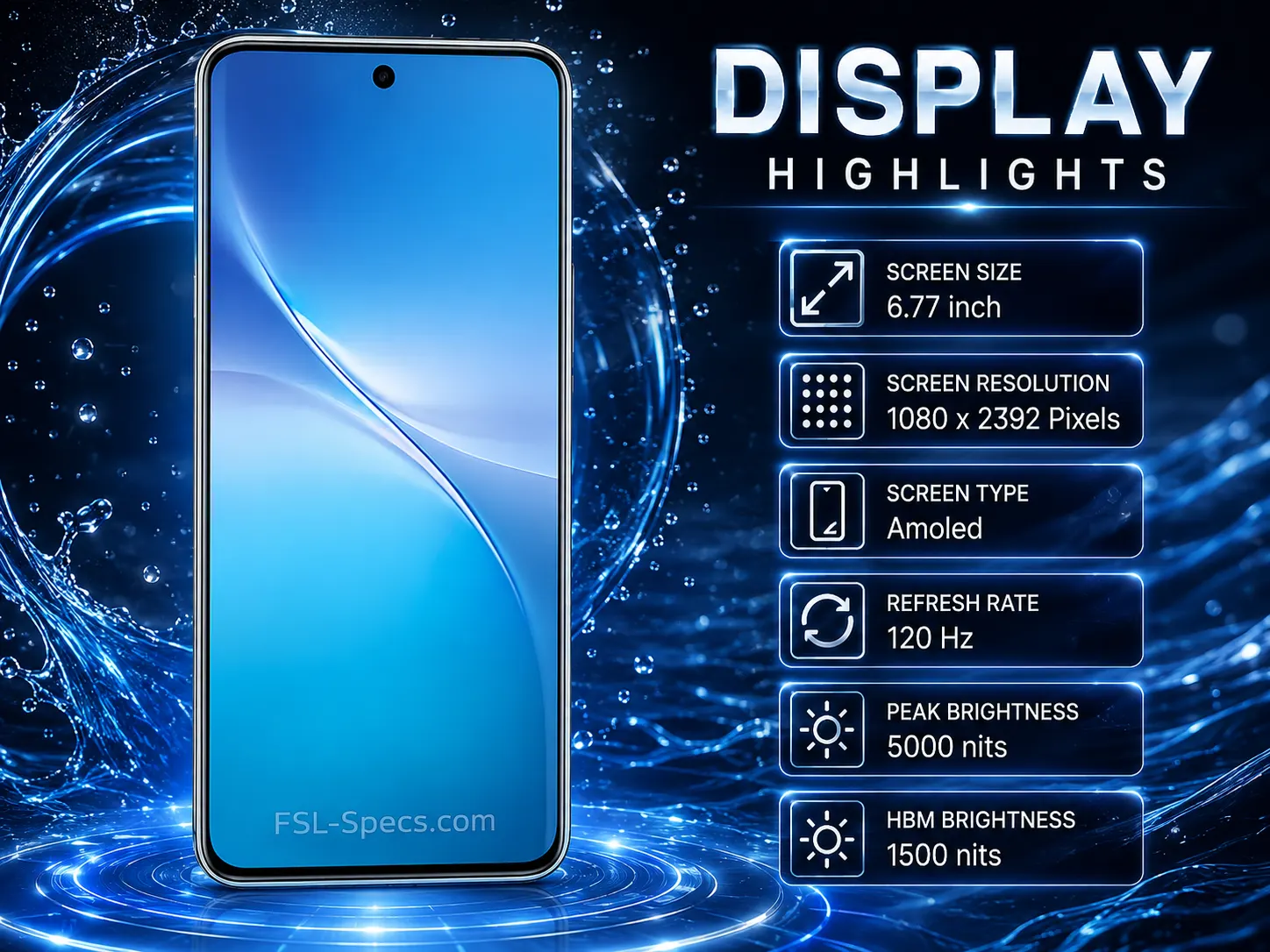
The Vivo V60 (PKR 140,000) uses a 6.77-inch AMOLED panel with FHD+ 1080 x 2392 resolution, a 120Hz refresh rate, 1500 nits HBM, and 5000 nits peak brightness. Against the Vivo V70 (PKR 145,000), the V60 falls behind on sharpness: the V70’s smaller 6.59-inch AMOLED runs a 1.5K 1260 x 2750 panel, meaning noticeably tighter pixel density despite the smaller size. The V70 also pushes 1800 nits HBM versus the V60’s 1500 nits, giving it an edge in sunlight readability, even though both share the same 5000 nits peak figure and 120Hz refresh rate.

The Realme 15 Pro (PKR 131,000) widens the gap further. Its 6.8-inch AMOLED uses a 1.5K 1280 x 2800 resolution at a faster 144Hz refresh rate, so scrolling and gaming feel noticeably smoother than on the V60’s 120Hz screen. Brightness is stronger too, with 1800 nits HBM and a 6500 nits peak, meaning the Realme handles direct sunlight better than the V60 while undercutting its price by PKR 9,000.

The OPPO Reno 15 (PKR 156,000) sticks to FHD+ like the V60, at 2760 x 1256 on a 6.59-inch AMOLED, with a matching 120Hz refresh rate. Brightness favors the V60 here: OPPO’s official figure is 1200 nits HBM, well below the V60’s 1500 nits. OPPO has not published a peak brightness figure for the Reno 15, so a direct peak comparison isn’t possible without inventing a number.

Verdict: The V60 has the dimmest and lowest-resolution screen of the four phones at this price point. The Realme 15 Pro offers the sharpest, brightest, and fastest display for less money, making it the clear display pick over the V60.

Processor Review:

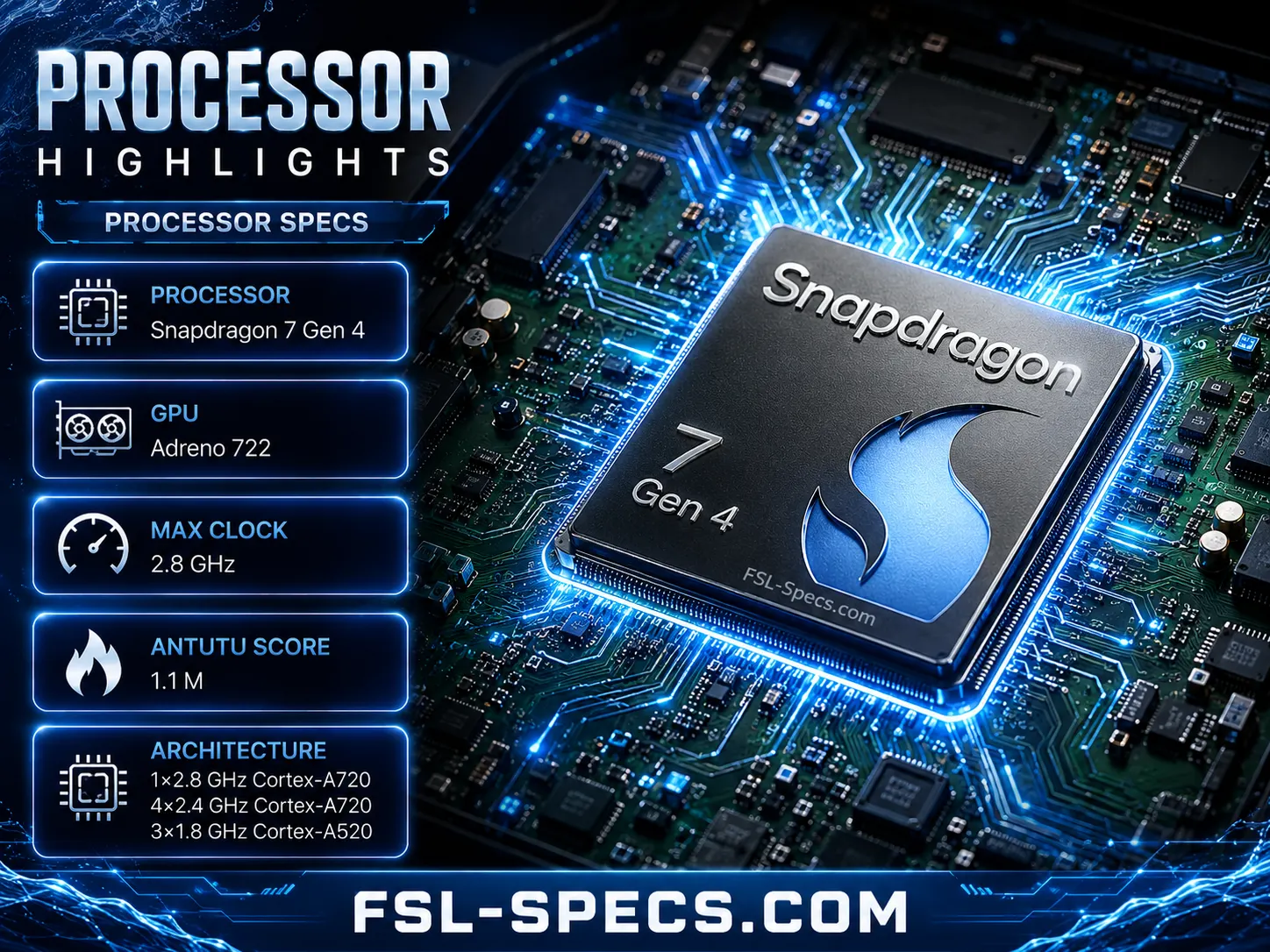
All four phones share the exact same silicon. The Vivo V60, Vivo V70, Realme 15 Pro, and OPPO Reno 15 all run the Qualcomm Snapdragon 7 Gen 4 (SM7750-AB) octa-core chip with the same Adreno 722 GPU, so raw benchmark ceilings land close together. On Kimovil’s AnTuTu v10 test, the V60 scores 1,015,000, the V70 sits at 1,010,000, the Realme 15 Pro matches the V60 at 1,015,000, and the Reno 15 comes in at 1,010,000, meaning the four phones are within roughly 0.5% of each other on raw chipset power, not a meaningful real-world gap.

Where the phones actually separate is memory configuration. The V60’s 12GB LPDDR5X RAM pairs with UFS 4.1 storage, matched by the V70’s LPDDR5X and UFS 4.1 combination, giving both phones faster app installs and file transfers. The Reno 15 also uses LPDDR5X, but drops to UFS 3.1 storage, meaning slightly slower large file writes despite equal RAM speed.

The Realme 15 Pro (PKR 131,000) is the outlier, its 12GB RAM runs LPDDR4X paired with UFS 3.1, meaning that despite matching the V60’s AnTuTu score, its memory subsystem is a generation behind, so multitasking and app-reload speed likely lag the V60 in daily use even though the chipset score says otherwise.

Note also that different sources report AnTuTu figures using different benchmark versions (v10 vs v11), so cross-source scores for these phones aren’t perfectly apples-to-apples; the v10 numbers above come from the same testing source for consistency.

Verdict: All four phones perform almost identically on paper since they share the same chipset, so the V60 doesn’t lose or win here. The Realme 15 Pro’s older LPDDR4X and UFS 3.1 combo makes it the one to watch for real-world slowdowns despite its matching AnTuTu score.

Ram & Memory Review:

The Vivo V60 (PKR 140,000) runs 12GB LPDDR5X RAM paired with 512GB UFS 4.1 storage and has no microSD slot. Against the Vivo V70 (PKR 145,000, 8GB/256GB), the V60 actually has more RAM and double the storage, while both phones share the same LPDDR5X and UFS 4.1 combination, meaning the V60 has the multitasking and storage-speed edge here for less money than the V70, despite the V70’s smaller base configuration.

The Realme 15 Pro (PKR 131,000, 12+512GB) matches the V60 on RAM and storage capacity, but the memory type is a generation older: LPDDR4X RAM and UFS 3.1 storage, versus the V60’s LPDDR5X and UFS 4.1. That means slower RAM bandwidth and slower file read/write speeds for large app installs, big game downloads, or 4K video transfers, even though the two phones look identical on the spec sheet at a glance. Neither phone offers a microSD slot.

The OPPO Reno 15 (PKR 156,000, 12+256GB) splits the difference. It matches the V60 on LPDDR5X RAM, but its UFS 3.1 storage is a step behind the V60’s UFS 4.1, meaning file transfers and large installs will still lag the V60 despite equally fast RAM. The Reno 15 also gives less base storage than the V60 for a higher price, and it too skips microSD expansion.

Verdict: The V60 has the best memory setup of the four phones, pairing LPDDR5X RAM with UFS 4.1 storage at 512GB for PKR 140,000. The Realme 15 Pro matches its capacity but not its speed, and the pricier Reno 15 falls short on both storage speed and base capacity, making the V60 the clear winner in this category.

Cameras Review:

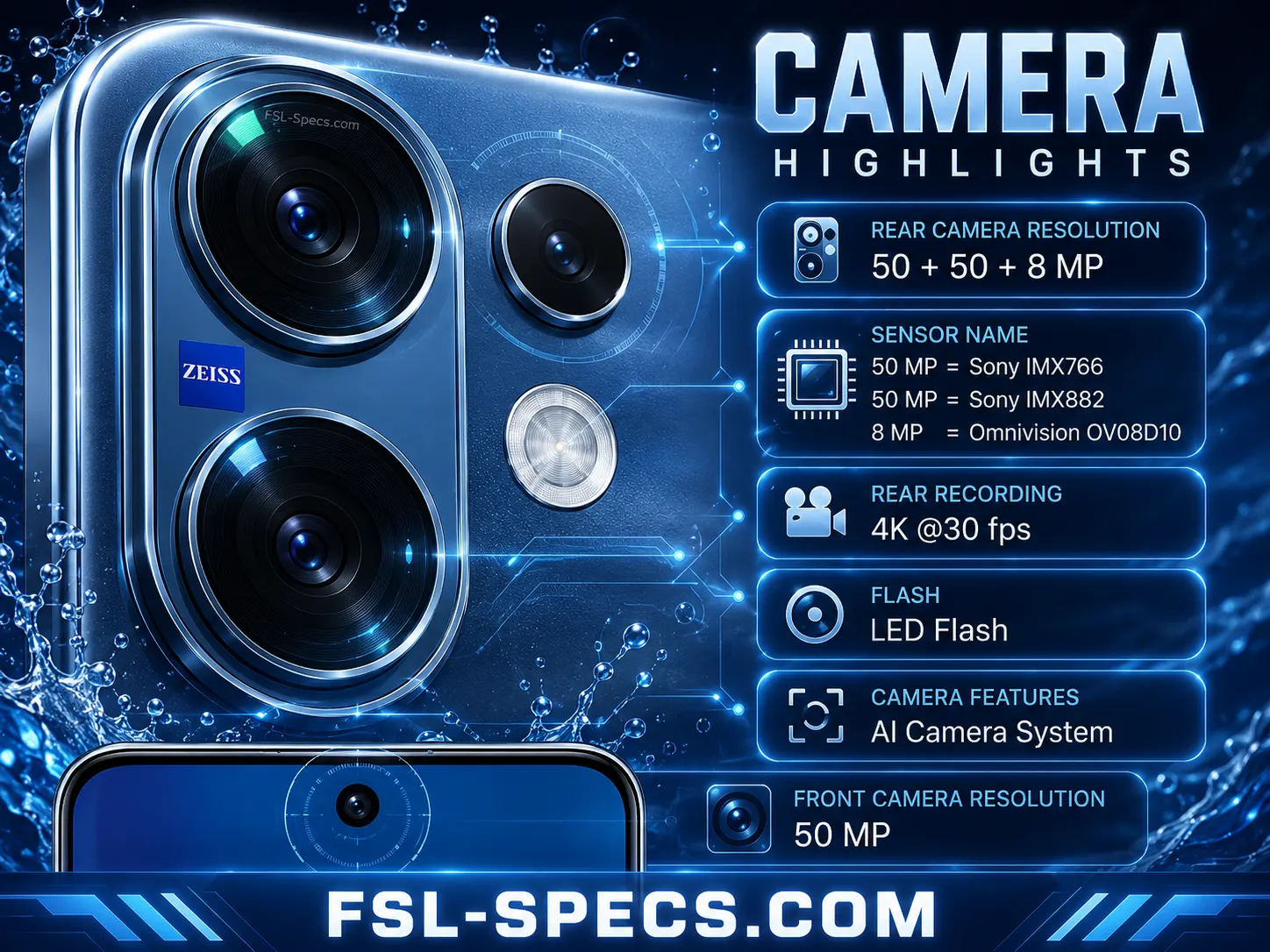
The Vivo V60 (PKR 140,000) carries a 50MP Sony IMX766 main sensor at f/1.88 with OIS, a 50MP Sony IMX882 telephoto at f/2.65 with OIS and 3x optical zoom, and an 8MP ultrawide at f/2.2. The 50MP front camera shoots at f/2.0 but tops out at 4K30 video, while the rear main and telephoto both record 4K60.

The Vivo V70 (PKR 145,000) uses the same Sony IMX766 main and Sony IMX882 telephoto hardware at matching apertures and OIS, so stills quality should be near-identical to the V60. The real difference is the front camera: the V70’s 50MP Samsung ISOCELL JN1 selfie sensor records 4K60 video, twice the frame quality ceiling of the V60’s 4K30 front camera, meaning the V70 is the better pick for selfie vloggers.

The Realme 15 Pro (PKR 131,000) drops the telephoto entirely, offering only a 50MP Sony IMX896 main camera at f/1.8 with OIS and a 50MP ultrawide at f/2.0, both recording 4K60 rear video. Its 50MP front camera sits at f/2.4 and is limited to 4K30, meaning buyers who want zoomed portraits lose that option completely on the Realme despite its lower price.

The OPPO Reno 15 (PKR 156,000) keeps a triple setup: 50MP main at f/1.8 with OIS, a 50MP telephoto at f/2.8 with OIS stretching to 3.5x optical zoom, and an 8MP ultrawide. Its 50MP front camera matches the V70 with 4K60 video. However, OPPO’s official spec sheet doesn’t disclose the sensor brand or model for any of the Reno 15’s cameras, so buyers can’t verify hardware quality the way they can on the Vivo or Realme models.

Verdict: The V70 edges out the V60 with a much stronger selfie camera at nearly the same price. Buyers who value confirmed hardware over specs on paper should lean toward the V60 or V70 rather than the Reno 15’s undisclosed sensors.

Battery Review:

The Vivo V60 (PKR 140,000) packs a 6500mAh battery with 90W wired charging, no wireless charging, and confirmed wired reverse charging, reaching a full charge in roughly 55 minutes. The Vivo V70 (PKR 145,000) matches it almost spec for spec: same 6500mAh capacity, same 90W wired charging, no wireless, and confirmed reverse wired charging, with GSMArena’s lab tests showing full charge times close to the V60’s, meaning there’s effectively no practical difference in charging speed between these two.

The Realme 15 Pro (PKR 131,000) pulls ahead on raw capacity with a 7000mAh typical battery (6830mAh rated), the largest of the four, paired with 80W SUPERVOOC wired charging. Independent lab testing clocked a full charge in under an hour despite the bigger cell, meaning the Realme charges nearly as fast as the V60 while offering roughly 500mAh more capacity. It has no wireless charging, and reverse charging isn’t listed on Realme’s official spec sheet, so that feature can’t be confirmed the way it can on the two Vivo phones.

The OPPO Reno 15 (PKR 156,000) uses a smaller 6500mAh battery (6335mAh rated) with 80W SUPERVOOC and 80W UFCS wired charging. GSMArena’s lab test measured a full charge in 57 minutes, meaning it charges at essentially the same speed as the V60 despite the lower wattage rating. Like the Realme, OPPO’s official listing for this base Reno 15 model doesn’t confirm reverse charging, so that’s unconfirmed rather than absent.

Verdict: The Realme 15 Pro offers the best capacity-to-charging-speed trade-off with its 7000mAh cell charging in under an hour, all for the lowest price of the four. The V60 remains competitive with confirmed reverse charging and near-identical charge times, but buyers chasing raw battery capacity get better value from the Realme.

Final Verdict :

Across five categories, no single phone sweeps the comparison, which is exactly why the Vivo V60 (PKR 140,000) doesn’t run away with this matchup. The Realme 15 Pro (PKR 131,000) takes the strongest overall position: it wins the Display Review with its 144Hz, 1.5K, 6500 nits peak panel, wins the Battery Review with the largest 7000mAh cell charging in under an hour, and does both while undercutting the V60 by PKR 9,000.

Its weaknesses are real, though. It drops the telephoto camera entirely, and its LPDDR4X/UFS 3.1 memory is a generation behind despite matching the V60’s AnTuTu score, so multitasking and file transfers won’t feel as snappy in daily use. The Vivo V70 (PKR 145,000) wins the Camera Review on the strength of its 4K60 selfie camera, and it shares the V60’s excellent LPDDR5X/UFS 4.1 memory setup, but its smaller base 8GB/256GB configuration and higher price make it a harder sell than the V60 for buyers who want more storage. The OPPO Reno 15 (PKR 156,000) is the most expensive of the four and doesn’t win a single category outright, held back by its undisclosed camera sensors and UFS 3.1 storage.

Bottom line: For most buyers at this price point, the Realme 15 Pro is the smarter purchase over the V60, offering a better screen and battery for less money, while the V60 only pulls ahead for buyers who specifically want the fastest storage and confirmed reverse charging.


Ranking (best to worst value at this price bracket):

  1. Realme 15 Pro (PKR 131,000) — best display, best battery, lowest price; held back by no telephoto and older UFS 3.1/LPDDR4X memory.
  2. Vivo V60 (PKR 140,000) — best memory setup, confirmed reverse charging, strong all-round camera; loses out on display sharpness and refresh rate.
  3. Vivo V70 (PKR 145,000) — best selfie camera video, matches V60’s fast memory; smaller base storage and higher price hold it back.
  4. OPPO Reno 15 (PKR 156,000) — highest price with no category win; undisclosed camera sensors hurt buyer confidence versus the named Sony hardware on both Vivo phones.

Pros And Cons of vivo V60

Pros of Mobile

✅ 6500mAh Battery
✅ 90W Fast Charging
✅ 3x Telephoto Camera
✅ IP68/IP69 Protection
✅ Snapdragon 7 Gen 4
✅ ZEISS Portrait Cameras

Cons of Mobile

❌ UFS 2.2 Storage
❌ LPDDR4X RAM
❌ No Wireless Charging
❌ No Expandable Storage
❌ Average Ultrawide Camera
❌ Optical Fingerprint Sensor

Best For - Not Best For

Best For

✅ Portrait Photography
✅ Long Battery Life
✅ Telephoto Photography
✅ Outdoor Durability
✅ Daily Multitasking
✅ Fast Wired Charging

Not Best For

❌ Wireless Charging Users
❌ Expandable Storage Users
❌ Ultrawide Photography
❌ Flagship Performance
❌ Fast Storage Seekers

Trailer And Unboxing of vivo V60

Disassembly Or Teardown And Gaming Test of vivo V60

Camera Test vivo V60

Vivo V70
Realme 15 Pro
Oppo Reno 15
Redmi Note 15 Pro Plus

Vivo Mobile Series

Vivo Mobile Series

Picture of Faisal Ur Rehman

Faisal Ur Rehman

Faisal Rehman is the founder and editor of FSL Specs, where he publishes in-depth smartphone specifications, comparisons, buying guides, and technology insights. With extensive experience in mobile hardware research and technical analysis, he provides accurate and up-to-date information on Android smartphones, processors, displays, cameras, batteries, performance benchmarks, and software features. His goal is to simplify complex specifications and help readers choose the right device with confidence.

FAQs Questions

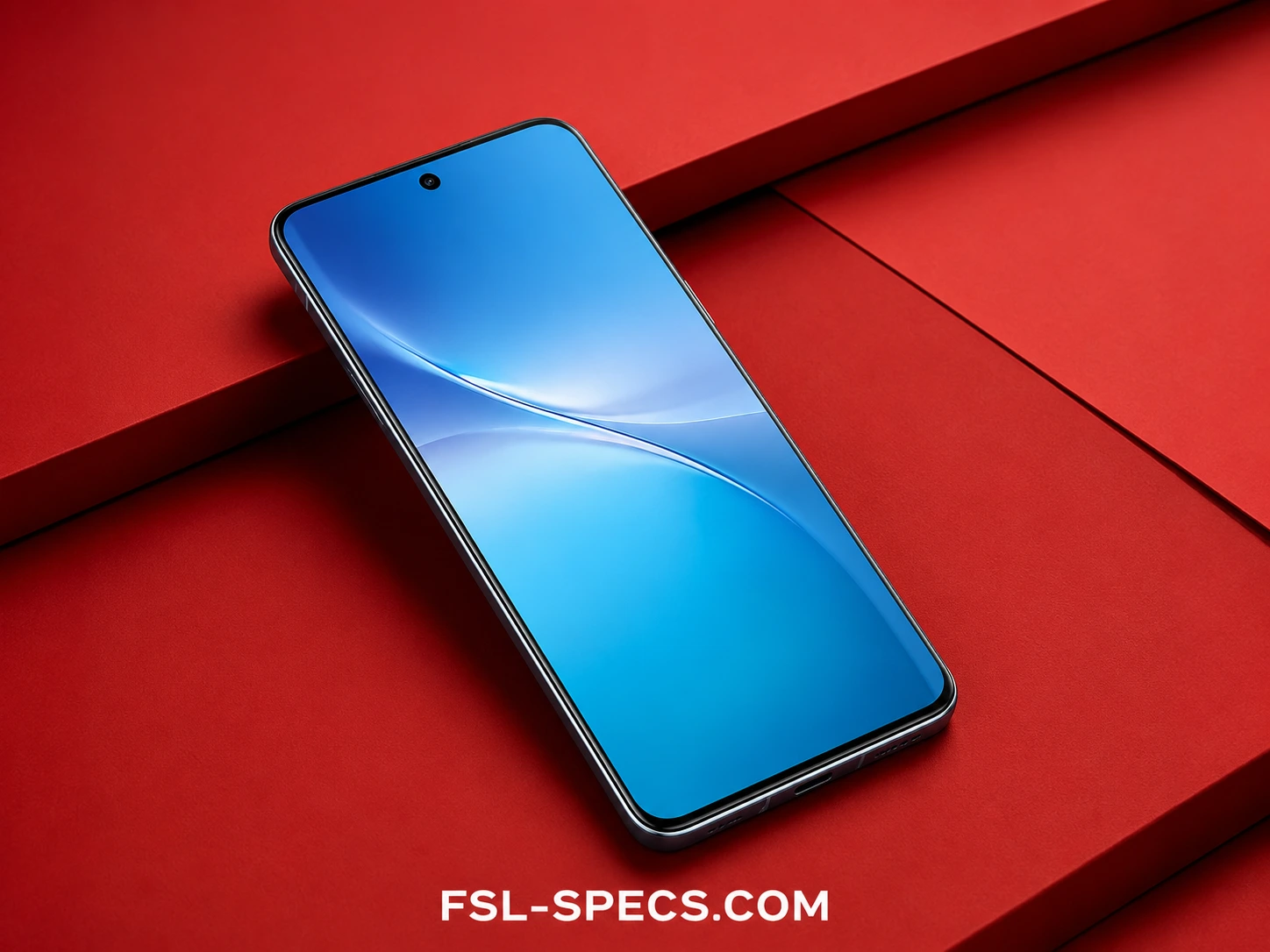
The vivo V60 features a 6.77-inch AMOLED display with a 120Hz refresh rate and Full HD+ resolution. With 1,500 nits High Brightness Mode (HBM) and 5,000 nits local peak brightness, the display stays clear outdoors and delivers vivid colors for videos, gaming, and HDR content.

Yes. The Snapdragon 7 Gen 4 chipset, paired with LPDDR5X RAM and UFS 4.1 storage, provides a smooth experience for multitasking, gaming, and everyday use. Most popular games run comfortably on high graphics settings while maintaining good power efficiency.

Photography is one of the vivo V60's biggest strengths. It combines a 50MP ZEISS OIS main camera, 50MP ZEISS telephoto camera with 3x optical zoom, 8MP ultra-wide camera, and a 50MP autofocus selfie camera. Portraits look natural, zoom shots retain impressive detail, and selfies remain sharp even in challenging lighting.

The 6500mAh BlueVolt battery easily powers the phone through a full day of gaming, streaming, photography, and social media. When the battery runs low, 90W FlashCharge refills it quickly, so you spend less time connected to the charger.

The vivo V60 supports dual 5G, NFC, Wi-Fi 6, and Bluetooth 5.4 for fast and reliable connectivity. However, eSIM and wireless charging are not available on this model.

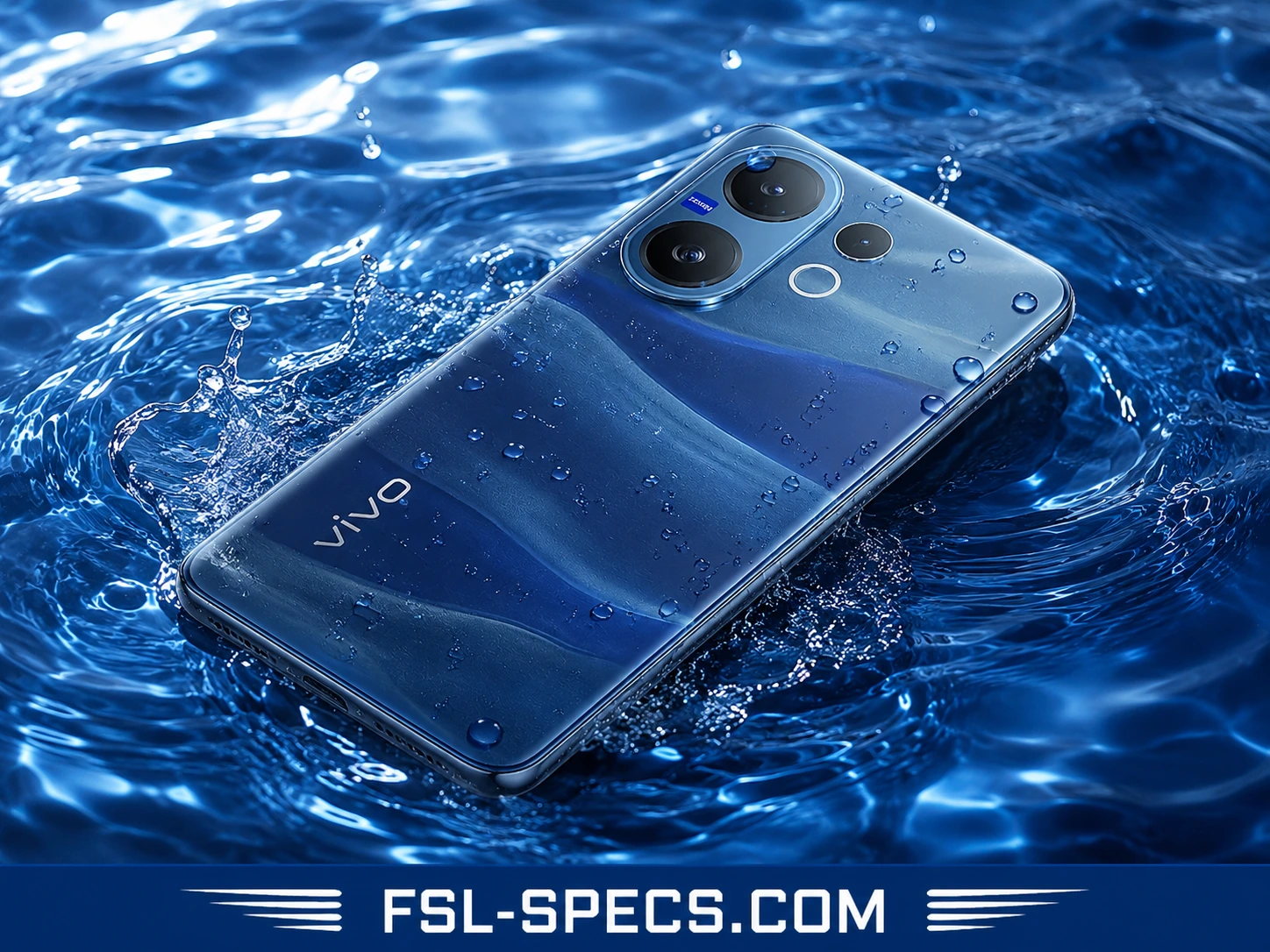
Yes. The vivo V60 comes with IP68 and IP69 certification, making it resistant to dust, water immersion, and high-pressure water jets. It also uses Schott Xensation Core glass for added protection against everyday scratches and minor drops.


The vivo V60 is available in 12GB + 256GB and 12GB + 512GB variants. The combination of fast memory and storage helps apps open quickly, improves multitasking, and provides plenty of space for photos, videos, and games.

The vivo V60 supports 4K video recording on both the front and rear cameras, producing detailed and stable footage for everyday content creation. It does not support 8K video recording.

8GB + 256GB
₹39,000 INR | $ 400 | PKR ~125,000


12GB + 256GB
₹42,000 INR | $ 440 | PKR ~135,000


12GB + 512GB
₹45,000 INR | $ 470 | PKR ~144,000


Leave a Reply

Your email address will not be published. Required fields are marked *

Scroll to Top