



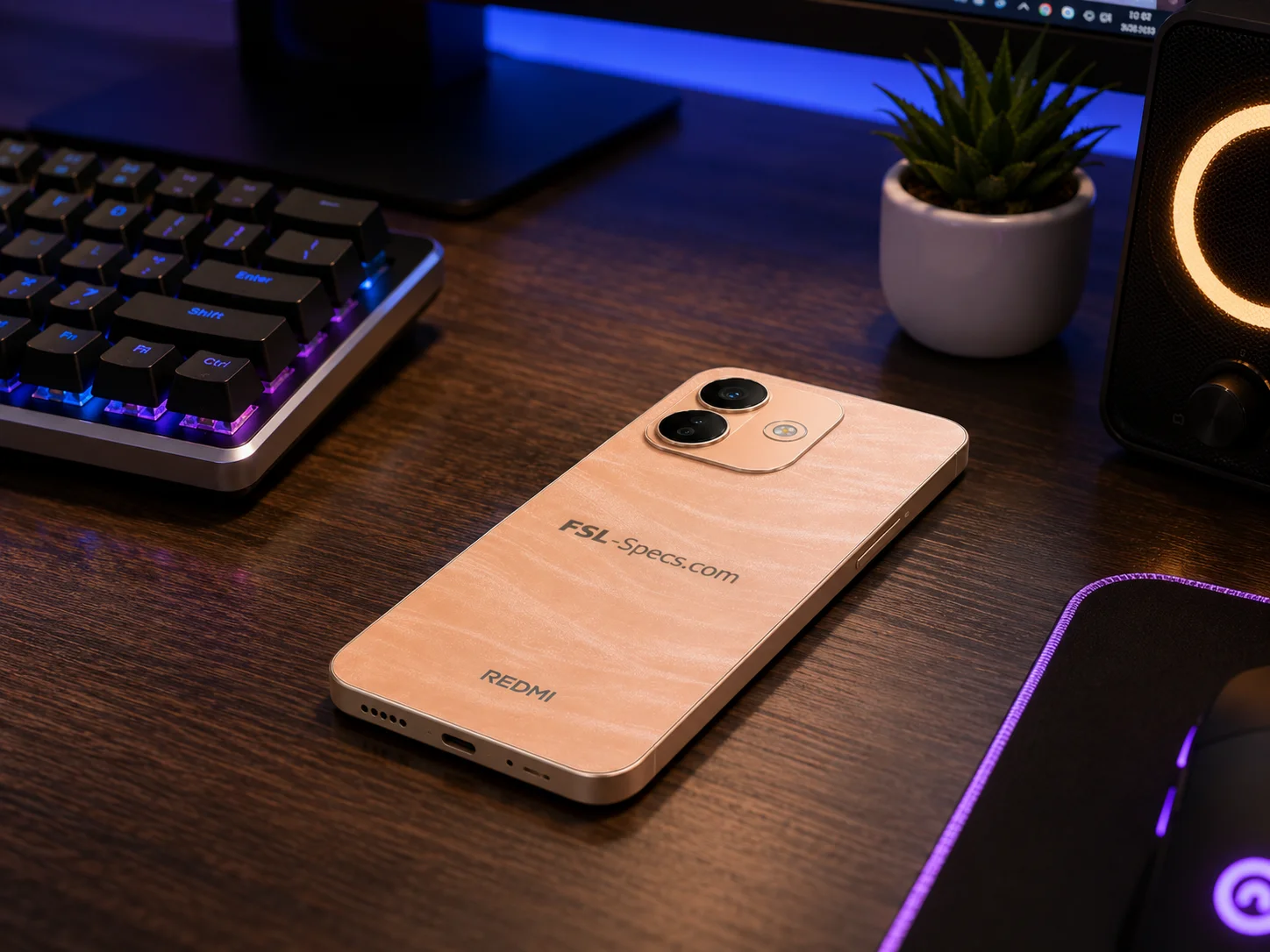






















✪ Redmi Note 17 Pro ✪

Redmi Note 17 Pro image
United States flag United States
$500 USD
Pakistan flag Pakistan (PKR)
120,000 PKR
India flag India (INR)
₹35,000 INR

✪ Redmi Note 17 Pro ✪

Redmi Note 17 Pro image
Last Time Update : 5 September, 2026
0

Quick Specifications

AMOLED

Display Type

Snapdragon 6s Gen 4

Processor

6 + 256 GB

Ram And Memory

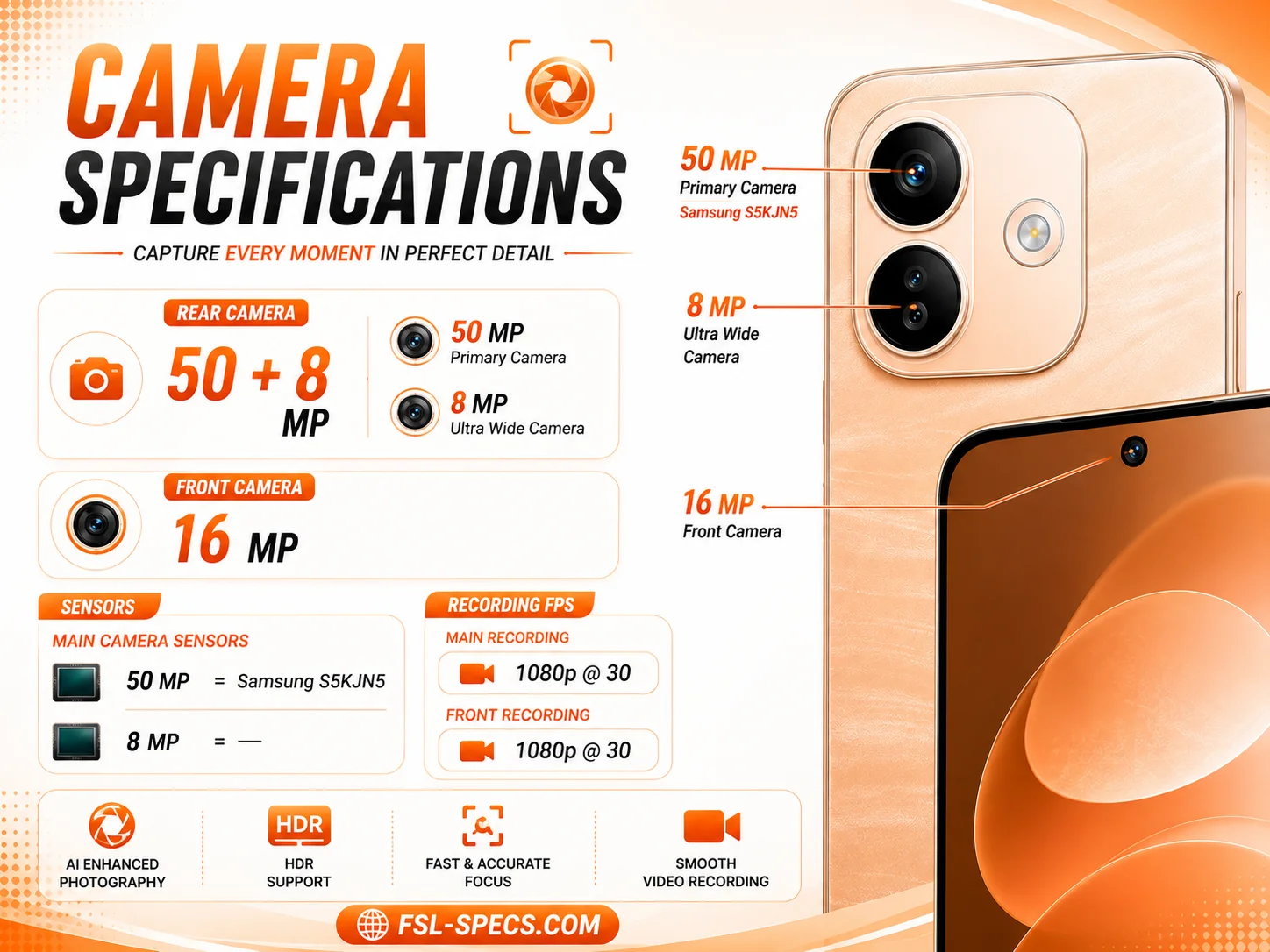
50 + 8 MP

Camera

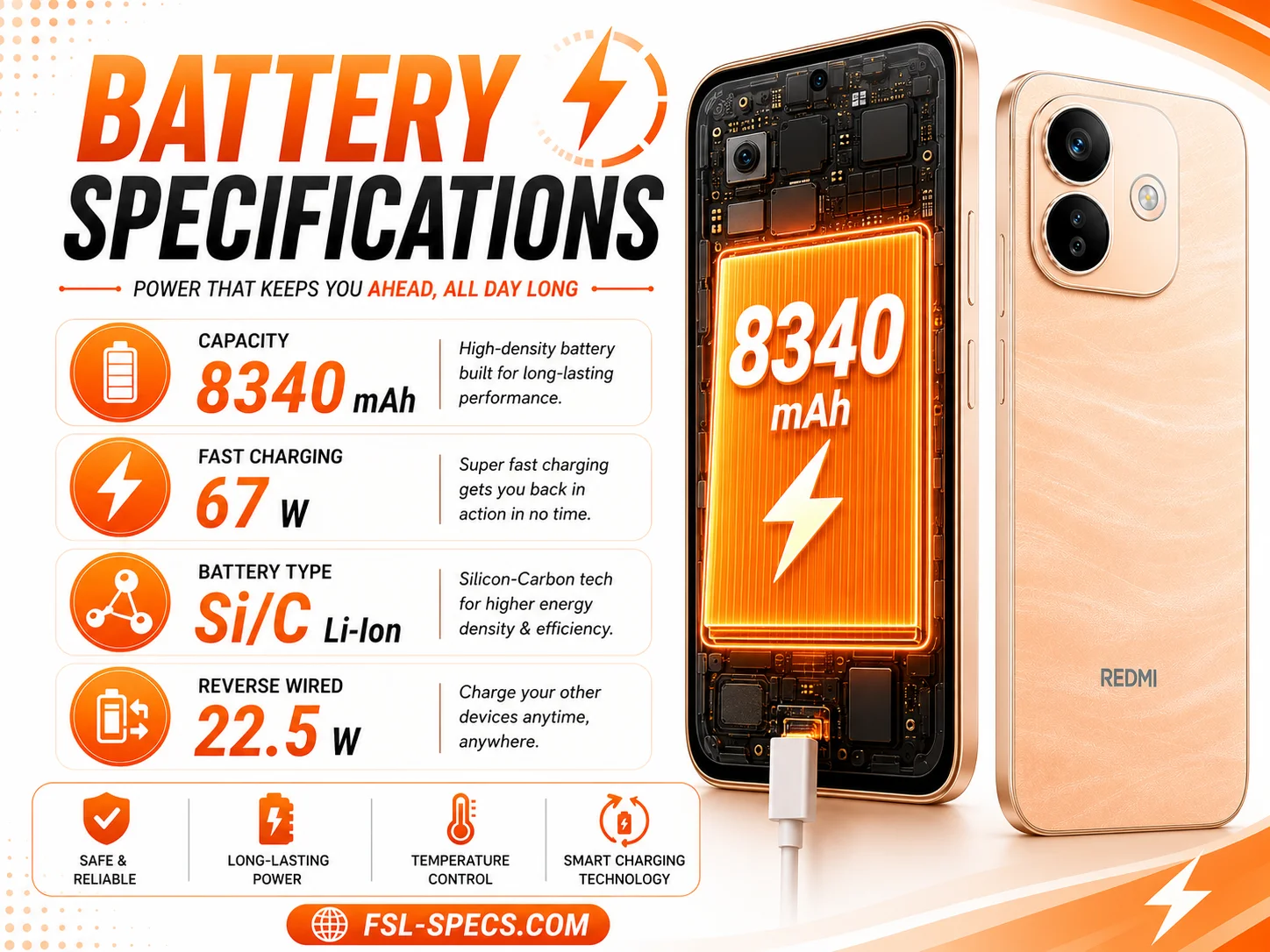
8340 mAh

Battery

67 W

Fast Charging

Full Specification

BASIC INFO
Mobile
Redmi Note 17 Pro
Model
2609FRA74G
Series
redmi Note
Category
Mid Range
Release Date
28 August,2026
Year
2026
CONNECTIVITY
Sim
Nano-SIM + Nano-SIM
Network
4G / 4G+ / 5G
WiFi
Wi-Fi 5
Bluetooth
5.1
NFC
Yes / region dependent
OS
Android 16
BODY
Dimensions
2607DRA18G
Build
plastic back, plastic frame
KG Weight
223 grams
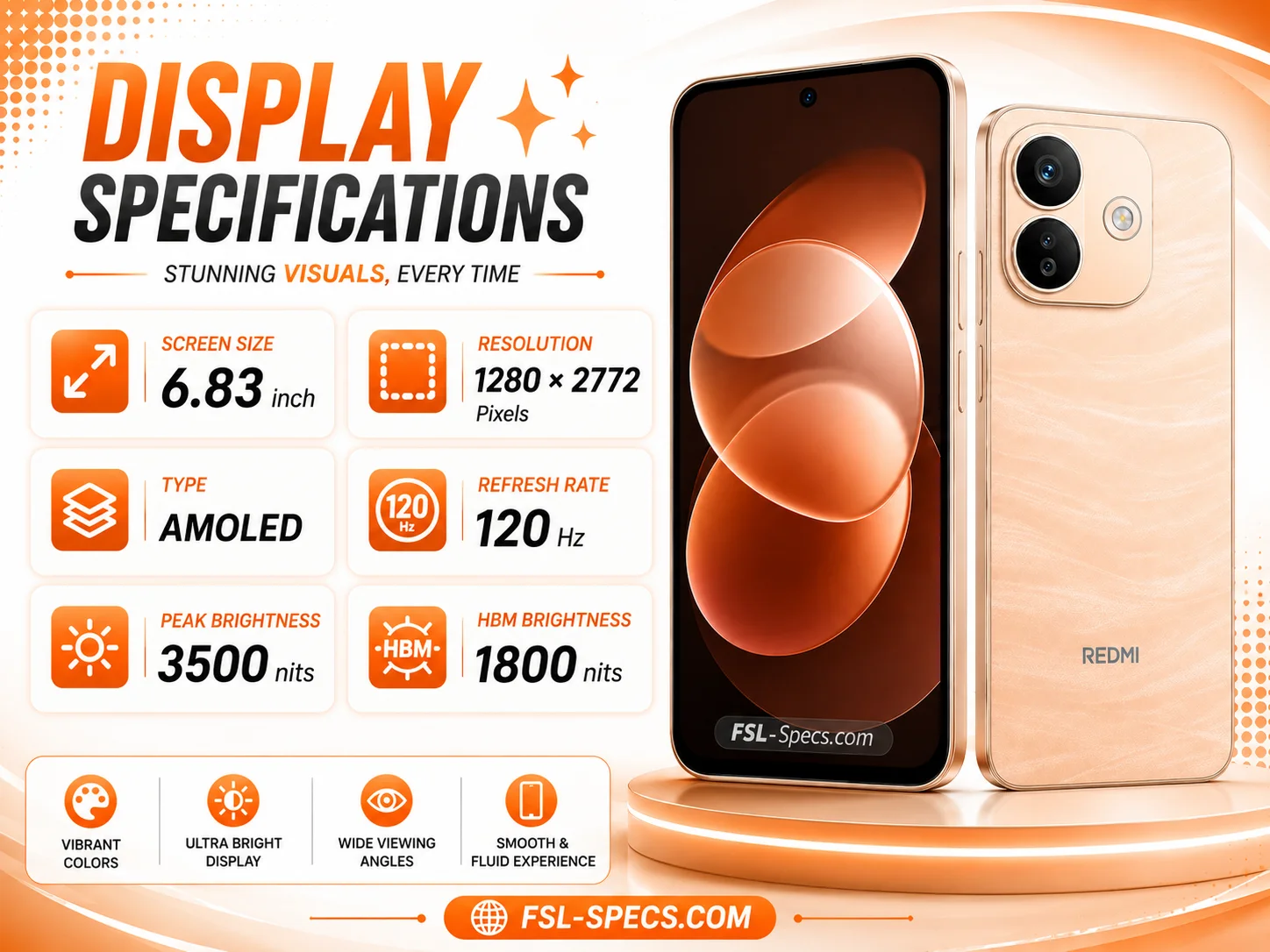
Screen Size
6.83 inch
Resolution
1280 × 2772 Pixels
Type
AMOLED
Refresh Rate
120 Hz
Peak Brightness
3500 nits
HBM Brightness
1800 nits
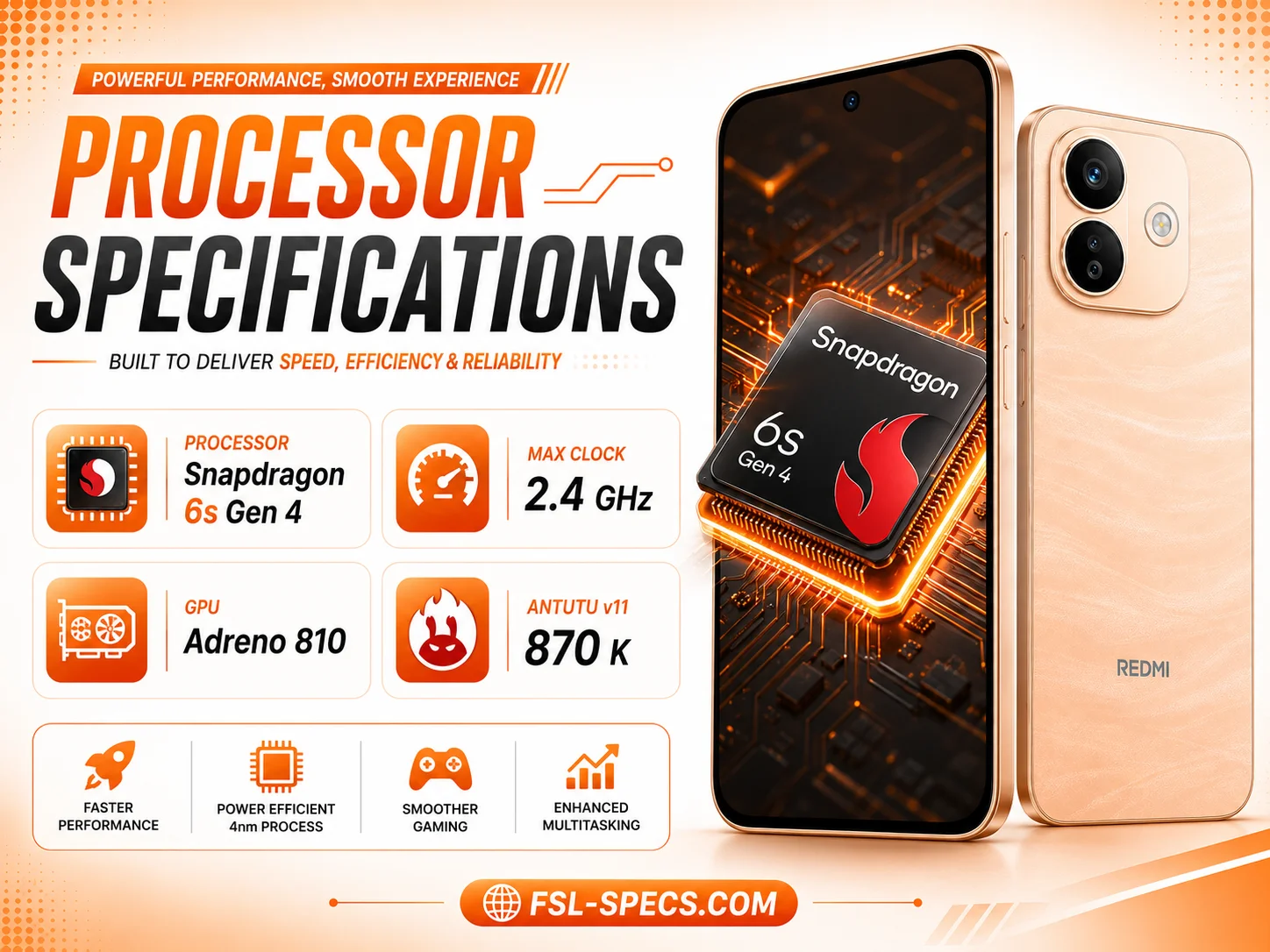
Processor
Snapdragon 6s Gen 4
Max Clock
2.4 GHz
Lithography
4 nm
GPU
Adreno 810
CPU Cores
Octa-core
Antutu v11
870 K
Antutu v10
670 K
Architecture
4 x 2.4 GHz Cortex-A78
4 x 1.8 GHz Cortex-A55
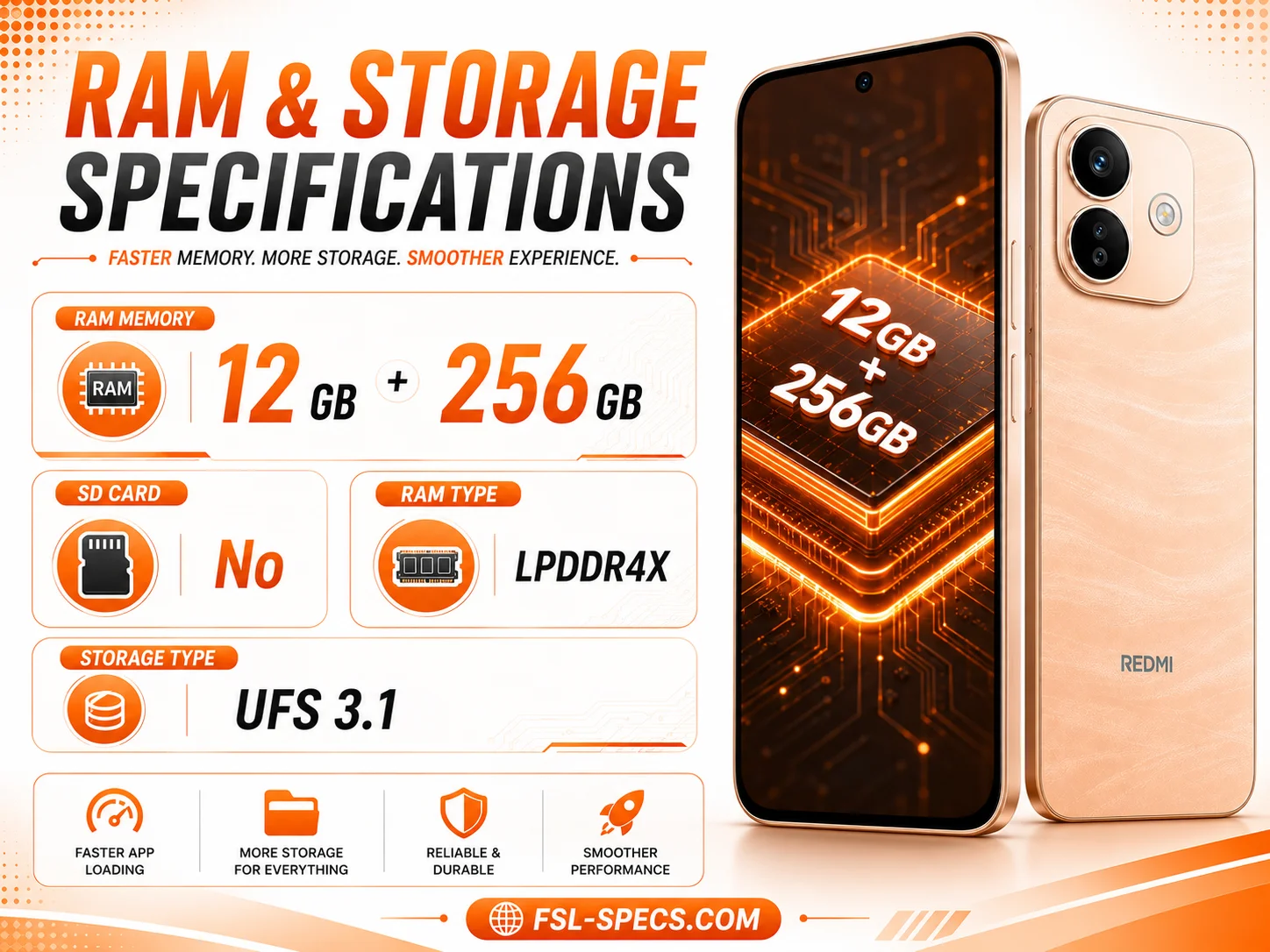
Ram Memory
6 + 256 GB
Ram Type
LPDDR4X
Storage Type
UFS 3.1
SD Card
No
Variants
6 + 128/256
8 + 256GB
8 + 512GB
12 + 256GB
MP
Rear Camera
50 + 8 MP
Front Camera
16 MP
SENSORS
Camera Sensors
50 MP    = Samsung S5KJN5< /strong>
8 MP    = Unknown
RECORDING FPS
Main Recording
1080p @ 30
Front Recording
1080p @ 30
RESOLUTION
Main Resolution
8150 x 6150 Pixels
Front Resolution
4608 × 3456 pixels
FLASH
Flash
LED
Capacity
8340 mAh
Fast Charging
67 W
Wireless Charging
No
Li Battery Type
Si/C Li-Ion
REVERSE
Reverse Wired
22.5 W
Reverse Wireless
No
AUDIO & SENSORS
Speaker
Dual Stereo Speaker
Fingerprint Sensor
Front Finger
Other Sensors
Proximity sensor
Gyroscope
Accelerometer
Ambient light sensor
Compass, etc
BASIC INFO
Mobile
Redmi Note 17 Pro
Model
2609FRA74G
Series
redmi Note
Category
Mid Range
Release Date
28 August,2026
Year
2026
CONNECTIVITY
Sim
Nano-SIM + Nano-SIM
Network
4G / 4G+ / 5G
WiFi
Wi-Fi 5
Bluetooth
5.1
NFC
Yes / region dependent
OS
Android 16
BODY
Dimensions
2607DRA18G
Build
plastic back, plastic frame
KG Weight
223 grams
Screen Size
6.83 inch
Resolution
1280 × 2772 Pixels
Type
AMOLED
Refresh Rate
120 Hz
Peak Brightness
3500 nits
HBM Brightness
1800 nits
Processor
Snapdragon 6s Gen 4
Max Clock
2.4 GHz
Lithography
4 nm
GPU
Adreno 810
CPU Cores
Octa-core
Antutu v11
870 K
Antutu v10
670 K
Architecture
4 x 2.4 GHz Cortex-A78
4 x 1.8 GHz Cortex-A55
Ram Memory
6 + 256 GB
SD Card
No
Ram Type
LPDDR4X
Storage Type
UFS 3.1
Variants
6 + 128/256
8 + 256GB
8 + 512GB
12 + 256GB
MP
Rear Camera
50 + 8 MP
Front Camera
16 MP
SENSORS
Main Camera Sensors
50 MP    = Samsung S5KJN5< /strong>
8 MP    = Unknown
RECORDING FPS
Main Recording
1080p @ 30
Front Recording
1080p @ 30
RESOLUTION
Main Resolution
8150 x 6150 Pixels
Front Resolution
4608 × 3456 pixels
FLASH
Flash
LED
Capacity
8340 mAh
Fast Charging
67 W
Wireless Charging
No
Li Battery Type
Si/C Li-Ion
REVERSE
Reverse Wired
22.5 W
Reverse Wireless
No
AUDIO & SENSORS
Speaker
Dual Stereo Speaker
Fingerprint Sensor
Front Finger
Other Sensors
Proximity sensor
Gyroscope
Accelerometer
Ambient light sensor
Compass, etc

Highlights & Review Of Redmi Note 17 Pro

Display Review:

The Redmi Note 17 Pro features a 6.83-inch AMOLED display with a 1280 x 2772 pixel resolution, a 120Hz refresh rate, and Gorilla Glass Victus 2 protection. Official brightness figures list 1060 nits typical, 1800 nits HBM, and a 3500 nits peak rating, among the highest peak-brightness claims in this price bracket. Expected at PKR 110,000-120,000, the panel’s sharpness and protection are strong for the segment, though it’s the only phone here still capped at 120Hz.

The Vivo V70 FE (PKR 121,000) uses a 6.83-inch AMOLED at a slightly higher 1260 x 2800 resolution, and its official 1900 nits HBM brightness edges out the Redmi’s 1800 nits, meaning the two phones deliver a near-identical outdoor viewing experience despite the Redmi’s higher peak-brightness claim. Its refresh rate matches the Redmi at 120Hz.

The Infinix Note 60 Pro (PKR 118,000) pulls ahead on smoothness with a 6.78-inch AMOLED at 144Hz, and it beats both rivals so far on peak brightness at 4500 nits, though its 1600 nits HBM trails the Redmi and Vivo. This means faster scrolling and gaming feel noticeably smoother than either the Redmi Note 17 Pro or Vivo V70 FE.

The Realme 15 Pro (PKR 128,000) leads outright with a 6.8-inch AMOLED at 1280 x 2800, 144Hz, 1800 nits HBM, and a class-topping 6500 nits peak brightness. GSMArena’s own lab test measured 1862 nits in real-world auto mode, the brightest verified result of any phone in this comparison.

Verdict: For its expected price, the Redmi Note 17 Pro’s display is competitive on brightness but its 120Hz refresh rate is a real weak point against two 144Hz rivals. Buyers who prioritize smooth scrolling and gaming should lean toward the Infinix Note 60 Pro or Realme 15 Pro instead.

Processor Review:

The Redmi Note 17 Pro runs the Qualcomm Snapdragon 6s Gen 4 (4nm) with an octa-core setup of 4×2.4GHz Cortex-A78 and 4×1.8GHz Cortex-A55 cores, paired with an Adreno 710 GPU. The only published AnTuTu figure available is 678,000 on v10, and since every rival here is scored on v11, this comparison isn’t perfectly apples to apples.

The Vivo V70 FE (PKR 121,000) uses the MediaTek Dimensity 7360 Turbo (4nm) with 4×2.5GHz Cortex-A78 and 4×2.0GHz Cortex-A55 cores plus a Mali-G615 MC2 GPU. Sources differ on its AnTuTu v11 score: the phone’s own spec sheet lists 990K, while third-party testing puts it at 1,183,301; this hasn’t been independently confirmed. Either figure comfortably outscores the Redmi’s v10 result, though the chipsets aren’t directly comparable given the version gap.

The Infinix Note 60 Pro (PKR 118,000) runs the Snapdragon 7s Gen 4 (4nm), a 1×2.7GHz plus 3×2.4GHz Cortex-A720 and 4×1.8GHz Cortex-A520 arrangement, with an Adreno 810 GPU, scoring over 1,064,000 on AnTuTu v11, the most consistently reported figure across this group.

The Realme 15 Pro (PKR 128,000) tops the lineup with the Snapdragon 7 Gen 4 (SM7750-AB, 4nm), an octa-core 1×2.8GHz plus 4×2.4GHz Cortex-A720 and 3×1.8GHz Cortex-A520 layout, and an Adreno 722 GPU. Sources differ here too: Realme’s own marketing claims over 1.1 million on AnTuTu, third-party testing lists 1,015,000 on v10, and another outlet reports 1.23 million; none of these confirm a matching benchmark version, so treat the “fastest chip” claim with caution.

Verdict: The Infinix Note 60 Pro has the most reliably confirmed AnTuTu score in this group, while the Redmi Note 17 Pro’s older v10 benchmark makes direct comparison unfair to itself. Buyers chasing raw power should wait for a verified v11 Realme 15 Pro score before assuming it wins outright.

Ram & Memory Review:

The Redmi Note 17 Pro’s confirmed global lineup runs 6GB+128GB, 6GB+256GB, 8GB+256GB, 8GB+512GB, and 12GB+256GB, using LPDDR4X RAM with UFS 3.1 storage on the 256GB/512GB tiers and UFS 2.2 on the 128GB tier, with no memory card slot. Your target configuration of 8GB+128GB does not appear in Xiaomi’s official variant list, so at the expected PKR 110,000-120,000 price, buyers should confirm this exact combination exists for the Pakistan market before relying on it. The closest confirmed options are 6GB+128GB or 8GB+256GB.

The Vivo V70 FE (PKR 121,000, 8GB+256GB) pairs LPDDR5 RAM with UFS 3.1 storage and also skips a memory card slot, giving it a faster storage standard than the Redmi’s 128GB tier despite using an older LPDDR5 generation rather than LPDDR4X.

The Infinix Note 60 Pro (PKR 118,000) is specified here at 12GB+256GB, running LPDDR5X RAM with UFS 2.2 storage. Sources differ on this RAM figure: the phone’s own manufacturer listing and several Pakistani retailers show only an 8GB+256GB configuration, while other regional retail listings describe a single 12GB+256GB variant as the only one sold; this hasn’t been independently confirmed for the Pakistani market specifically.

The Realme 15 Pro (PKR 128,000, 12GB+512GB) is the standout on raw capacity, doubling the storage of every other phone here, and runs LPDDR4X RAM with UFS 3.1 storage, matching the Redmi’s storage generation while beating it comfortably on space.

Verdict: The Realme 15 Pro wins outright on storage headroom, while the Redmi Note 17 Pro’s specific 8GB+128GB target configuration needs confirming before purchase since it isn’t part of the confirmed lineup. The Infinix Note 60 Pro’s RAM figure also needs checking locally given the conflicting reports.

Cameras Review:

The Redmi Note 17 Pro carries a 50MP Samsung S5KJN5 main sensor at 1/2.76″ with f/1.8 aperture, PDAF, and OIS, paired with an 8MP f/2.2 ultrawide whose sensor brand hasn’t been disclosed. Its 16MP front camera shoots at f/2.4. Rear video tops out at just 1080p@30fps, no 4K recording is listed, the weakest video spec in this comparison at its price point.

The Vivo V70 FE (PKR 121,000) uses a 200MP Samsung ISOCELL HP5 main sensor at 1/1.56″ with f/1.9 and OIS, the highest resolution and only other confirmed sensor name here besides the Redmi’s, alongside an 8MP undisclosed ultrawide. Its 32MP front camera (50MP in India) records up to 4K30, and rear video reaches 4K30/1080p60, both ahead of the Redmi’s 1080p-only ceiling.

The Infinix Note 60 Pro (PKR 118,000) pairs an undisclosed 50MP f/1.6 main sensor with PDAF and OIS with an 8MP f/2.2 ultrawide, and its 13MP front camera uses a confirmed GalaxyCore GC13AO sensor. Rear video matches the Vivo at 4K30/1080p up to 120fps, adding slow motion the other two lack.

The Realme 15 Pro (PKR 128,000) leads on confirmed hardware with a 50MP Sony IMX896 main sensor at 1/1.56″, f/1.8, OIS, and a genuine 50MP f/2.0 ultrawide, plus a 50MP f/2.4 selfie camera. It’s the only phone here recording 4K60 on both rear and front cameras.

Verdict: The Redmi Note 17 Pro’s camera hardware is the weakest in this group, with only 1080p video and an undisclosed ultrawide sensor. The Realme 15 Pro offers the most verified hardware and the best video specs, making it the stronger camera choice at PKR 128,000.

Battery Review:

The Redmi Note 17 Pro packs a large Si/C 8340mAh battery with 67W wired charging (PD3.0, 50% in 34 minutes) and 22.5W reverse wired charging, but no wireless option. At its expected PKR 110,000-120,000 price, that’s the biggest cell in this comparison by a wide margin, though its charging speed is the slowest of the four wired-only phones here.

The Vivo V70 FE (PKR 121,000) uses a smaller 7000mAh Silicon-Carbon cell with faster 90W FlashCharge wired charging and no wireless support, GSMArena’s lab test clocked a full 0-100% charge in 62 minutes, reaching 49% at the half-hour mark, quicker to top up than the Redmi despite the smaller pack. Reverse wired charging isn’t confirmed for this phone.

The Infinix Note 60 Pro (PKR 118,000) has the smallest capacity here at 6500mAh but is the only phone offering wireless charging at 30W, plus 7.5W reverse wired and 5W reverse wireless. Its wired charging matches the Vivo at 90W, with a spec-sheet charging time of 45-60 minutes, though one lab test recorded a faster 41-minute full charge, treat the exact figure as approximate.

The Realme 15 Pro (PKR 128,000) carries a 7000mAh cell (6830mAh rated) with 80W SUPERVOOC wired charging and no wireless option. GSMArena’s testing showed roughly two-thirds charged in 30 minutes and a full top-up in just under an hour, landing it between the Vivo and Infinix on charging speed.

Verdict: The Redmi Note 17 Pro wins on raw capacity but trails on charging speed and lacks wireless charging entirely. For buyers who value convenience over sheer battery size, the Infinix Note 60 Pro’s wireless charging support makes it the more practical pick at a lower price.

Final Verdict :

Across display, processor, memory, camera, and battery, the Redmi Note 17 Pro struggles to justify its PKR 110,000-120,000 target price against three rivals that already exist confirmed in the market. Its 120Hz display, 1080p-only video, and slowest charging speed are real weaknesses, and its exact 8GB+128GB configuration isn’t even confirmed to exist, only its massive 8340mAh battery stands out as a genuine strength.

The Vivo V70 FE (PKR 121,000) earns its keep with the highest-resolution main camera sensor and a confirmed 200MP Samsung ISOCELL HP5, but it shares the Redmi’s 120Hz display cap and lacks wireless charging.

The Infinix Note 60 Pro (PKR 118,000) is the strongest all-rounder at this price: a 144Hz display with the highest peak brightness, the most reliably confirmed AnTuTu score, and the only wireless charging in the group, though its RAM configuration and camera sensor brand both carry unresolved conflicts.

The Realme 15 Pro (PKR 128,000), the most expensive here, backs that premium with the best-verified display brightness, the most confirmed camera hardware including 4K60 video on both cameras, and double the storage of every rival.

Bottom line: The Infinix Note 60 Pro is the best value for money at PKR 118,000, while the Realme 15 Pro is worth the extra PKR 10,000 if display quality, camera hardware, and storage matter more than saving money. The Redmi Note 17 Pro’s real-world pricing and exact specs need confirming in Pakistan before it can be fairly judged against either.

Ranking:
  1. Realme 15 Pro — PKR 128,000
  2. Infinix Note 60 Pro — PKR 118,000
  3. Vivo V70 FE — PKR 121,000
  4. Redmi Note 17 Pro — PKR 110,000-120,000 (expected, unlaunched)

Pros And Cons of Redmi Note 17 Pro

Pros of Mobile

✅ Huge 8340mAh Battery 🔋
✅ 120Hz AMOLED Display 📱
✅ 3500-Nit Brightness ☀️
✅ Victus 2 Protection 🛡️
✅ 50MP OIS Camera 📸
✅ IP68 Water Resistance 💧

Cons of Mobile

❌ Snapdragon 6s Gen 4 ⚙️
❌ 8MP Ultrawide Camera 📷
❌ No Telephoto Lens 🔭
❌ No MicroSD Support 💾
❌ UFS 2.2 Base 📦

Best For - Not Best For

Best For

🎯 Long Battery Life 🔋
🎯 Media Consumption 🎬
🎯 Bright Outdoor Viewing ☀️
🎯 Casual Gaming 🎮
🎯 Durability Seekers 🛡️
🎯 Everyday Photography 📸

Not Best For

🚫 Hardcore Gaming 🎮
🚫 Zoom Photography 🔭
🚫 Pro Videography 🎥
🚫 Expandable Storage 💾
🚫 Lightweight Phone Fans ⚖️
🚫 Flagship Performance 🚀

Trailer And Unboxing of Redmi Note 17 Pro

Disassembly Or Teardown And Gaming Test of Redmi Note 17 Pro

Camera Test Redmi Note 17 Pro

Vivo V70 FE
Tecno Camon 50
Tecno Camon 50 Ultra
infinix Note 60
infinix Note 60 Pro
Realme 15 Pro
infinix Note 15 Pro

Xiaomi Series Row
POCO Series Row
Redmi Series Row
Picture of Faisal Ur Rehman

Faisal Ur Rehman

Faisal Rehman is the founder and editor of FSL Specs, where he publishes in-depth smartphone specifications, comparisons, buying guides, and technology insights. With extensive experience in mobile hardware research and technical analysis, he provides accurate and up-to-date information on Android smartphones, processors, displays, cameras, batteries, performance benchmarks, and software features. His goal is to simplify complex specifications and help readers choose the right device with confidence.

FAQs Questions

It runs on the Snapdragon 6s Gen 4 chipset, built on a 4nm process with Adreno 710 graphics. It's a step below the Pro Max's Snapdragon 6 Gen 5, but still solid for everyday multitasking and light gaming.

It features a 6.83-inch 1.5K AMOLED display with a 120Hz refresh rate. That's a genuinely sharp, smooth panel for a mid-range phone, great for streaming and scrolling alike.

It packs an 8,340mAh Silicon-Carbon battery — a big jump from the 6,580mAh on the previous Note 15 Pro — paired with 67W HyperCharge that gets you to 50% in about 34 minutes. Xiaomi rates it for around 28 hours of video playback on a single charge.

You get a 50MP main camera with OIS alongside an 8MP ultra-wide lens on the back, plus a 16MP front camera for selfies and video calls. It skips the 200MP sensor seen on older Redmi Note Pro models in favor of a more balanced pairing.

It comes in 6GB, 8GB, or 12GB RAM (LPDDR4X) with 128GB, 256GB, or 512GB storage. Only the base 128GB variant uses the slower UFS 2.2 standard — the rest get faster UFS 3.1 storage.

It launches on Android 16 with HyperOS 3, and Xiaomi is backing it with 6 years of security updates. That's a strong software commitment for a mid-ranger.

The Pro Max steps up to the Snapdragon 6 Gen 5, a bigger 9,210–10,000mAh battery, and faster 100W charging, while the standard Pro sticks with the 6s Gen 4 chip and 67W charging. If raw performance and battery size matter most to you, the Pro Max is the one to stretch for.

6 + 256 GB
 | ₹45,000 | $500

Leave a Reply

Your email address will not be published. Required fields are marked *

Scroll to Top