
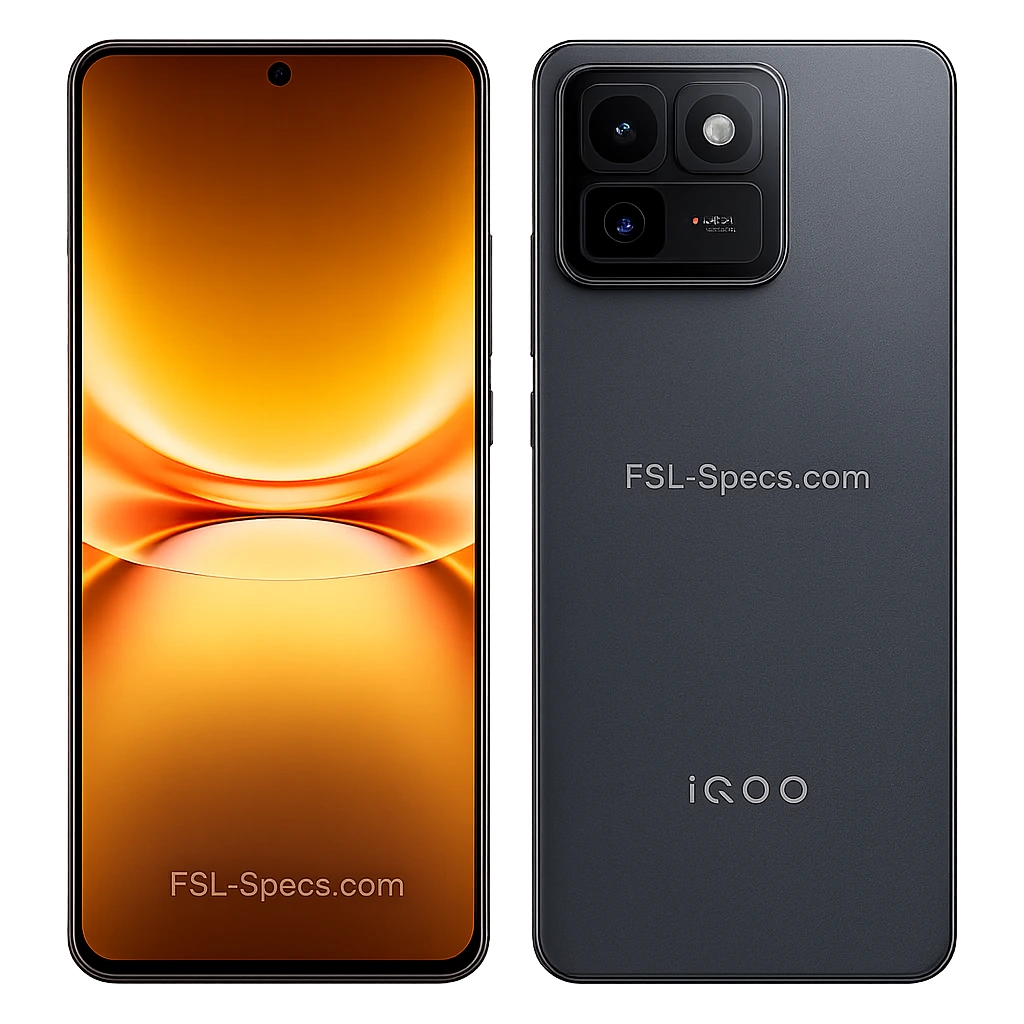







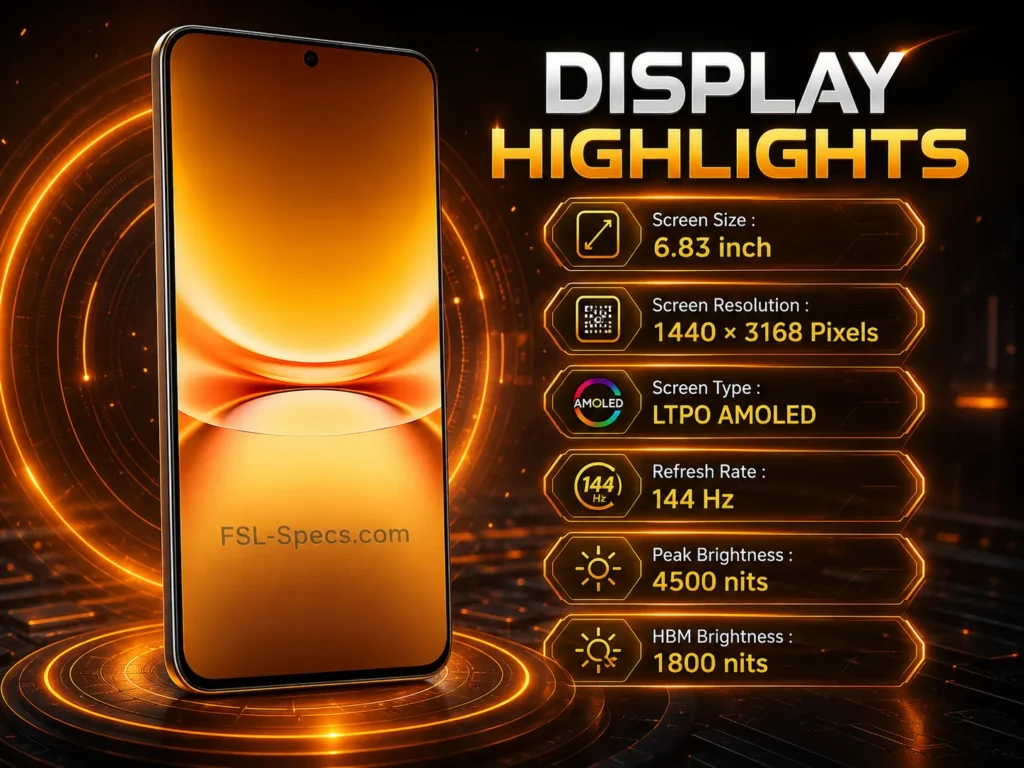


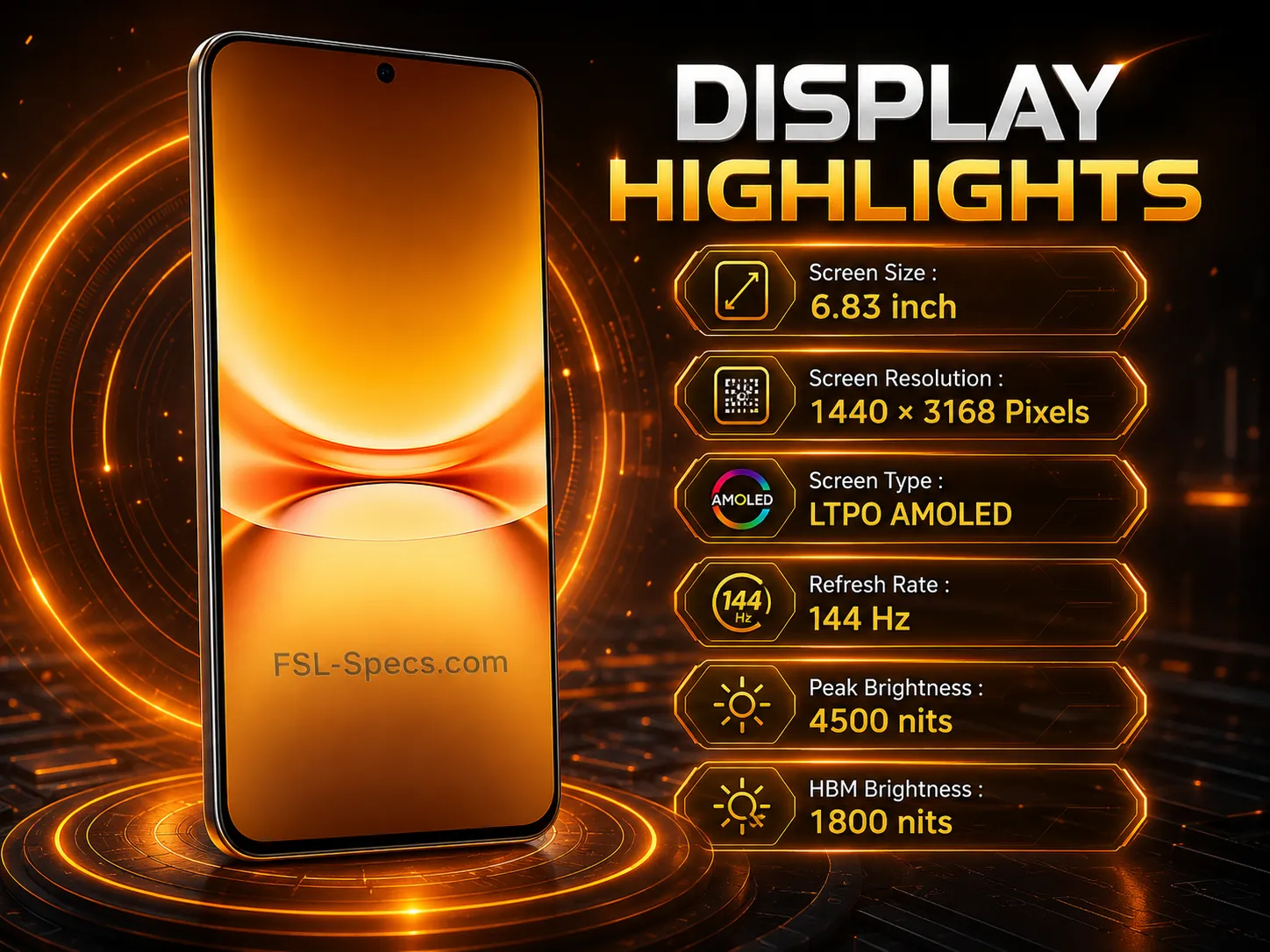
The iQOO 15T 12GB/512GB uses a 6.82-inch Q10+ LTPO AMOLED panel with 3168 × 1440 resolution, adaptive 1–144Hz refresh rate, 1,800-nit global peak brightness and 4,500-nit local peak brightness. It is the sharpest and most adaptive screen in this comparison, with roughly 510 ppi. The iQOO 15T is a China-market model, so the 12GB/512GB configuration refers to that regional variant.
The POCO F7 Ultra 16GB/512GB has a smaller 6.67-inch WQHD+ Flow AMOLED display at 3200 × 1440, 526 ppi and 120Hz. It is slightly denser than the iQOO’s panel on paper, but does not match its 144Hz ceiling or LTPO’s variable refresh range. POCO lists 1,800-nit HBM brightness and 3,200-nit peak brightness.
The Xiaomi 17T Pro 12GB/512GB offers a larger 6.83-inch AMOLED screen at 2772 × 1280, 447 ppi and 144Hz. Xiaomi lists 2,000-nit HBM and 3,500-nit peak brightness; these brightness modes are not directly equivalent to the iQOO’s global and local peak figures. The Xiaomi’s display is smoother than the POCO’s on supported content, but is less sharp than both the iQOO 15T and F7 Ultra.
The nubia RedMagic 11 Pro 16GB/512GB is built around gaming with a 6.85-inch, 2688 × 1216 AMOLED display, 144Hz refresh rate, and 1,800-nit stated brightness. At around 431 ppi, it is less dense than the other three. Its 144Hz panel and full-screen design are gaming-focused, while the iQOO 15T combines similarly high refresh with a higher 2K-class resolution and LTPO refresh-rate adjustment.
At the prices you provided, the iQOO 15T and Xiaomi 17T Pro are both PKR 270,000, the F7 Ultra is PKR 250,000, and the RedMagic 11 Pro is PKR 315,000.
Verdict: The iQOO 15T offers the strongest combination of 2K sharpness, 144Hz motion and adaptive LTPO refresh; the POCO F7 Ultra has marginally higher pixel density, while the Xiaomi 17T Pro is brighter on its listed HBM specification.