
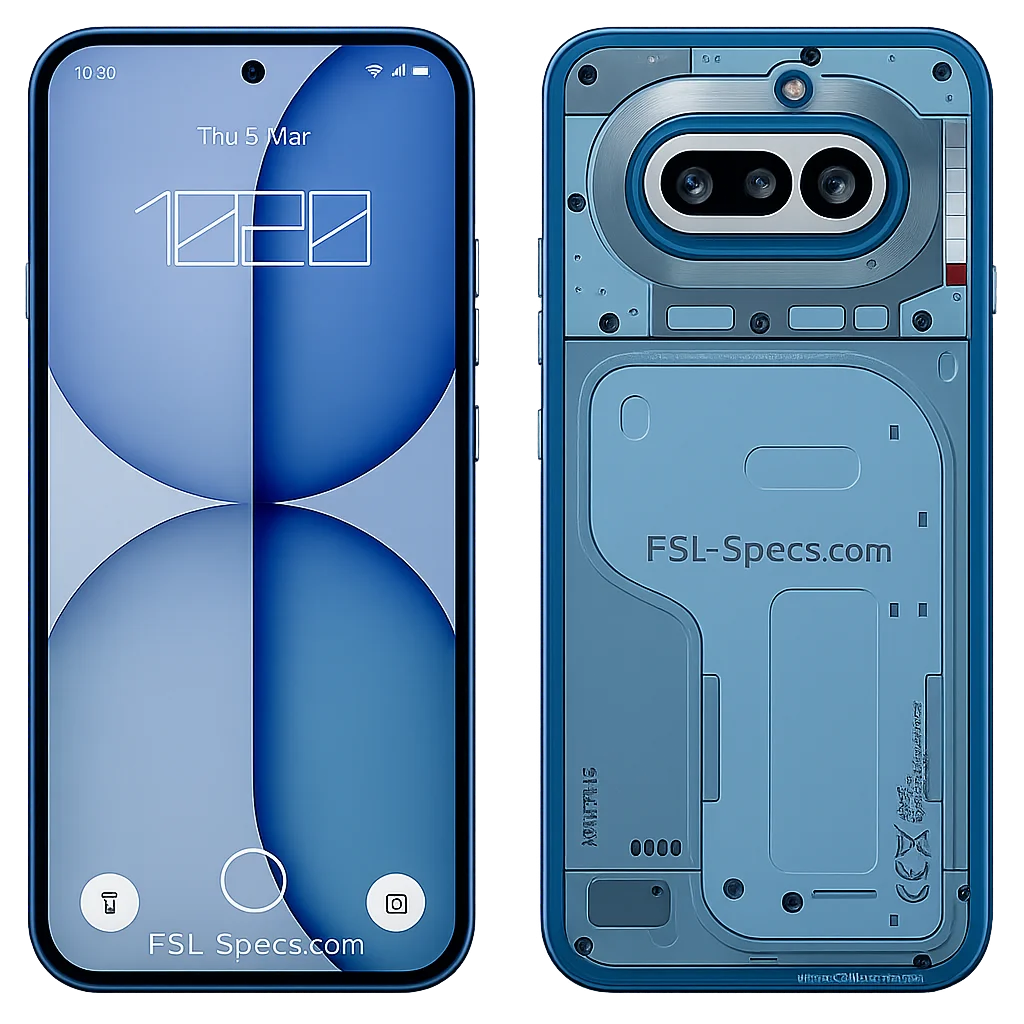

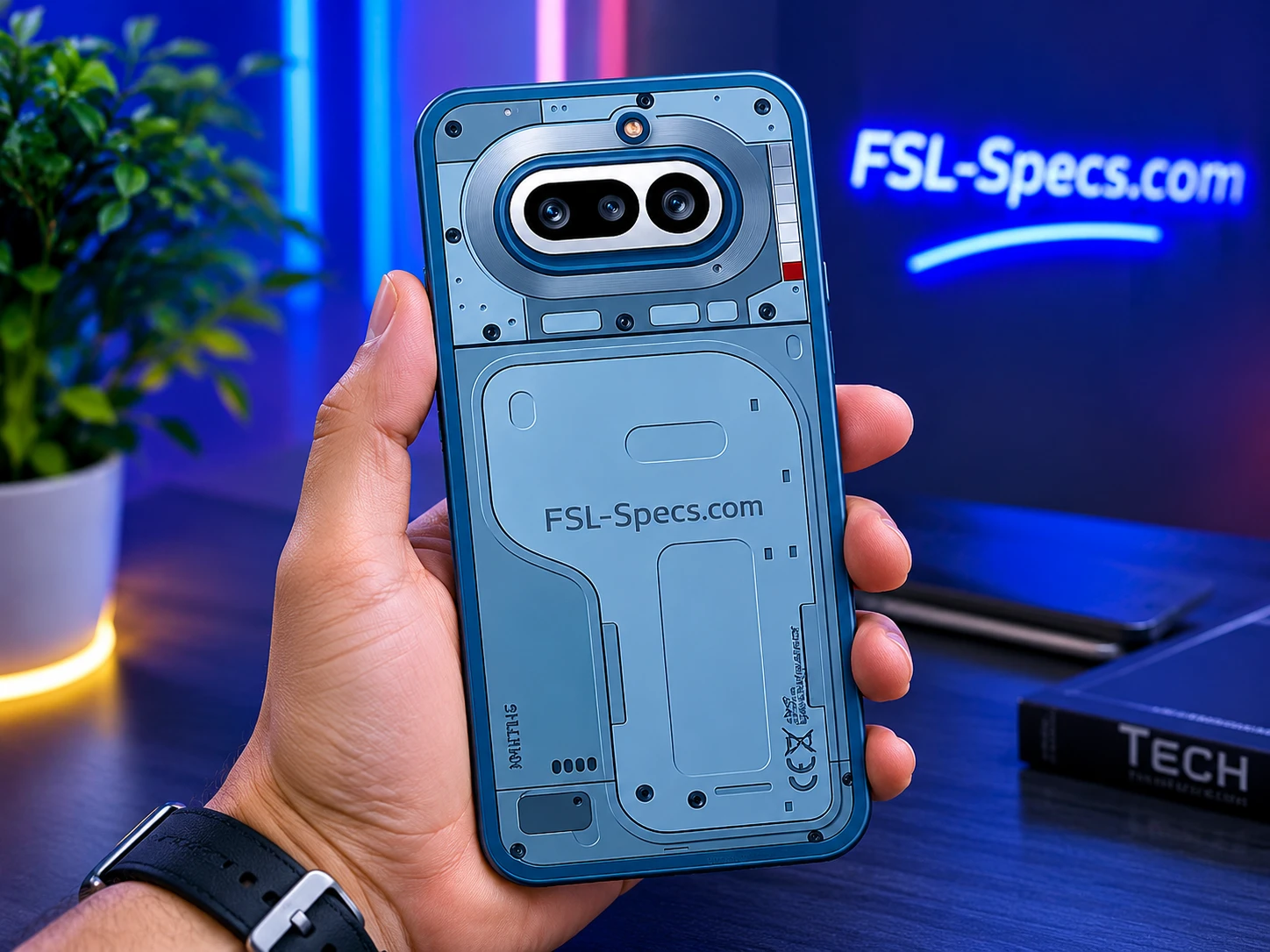
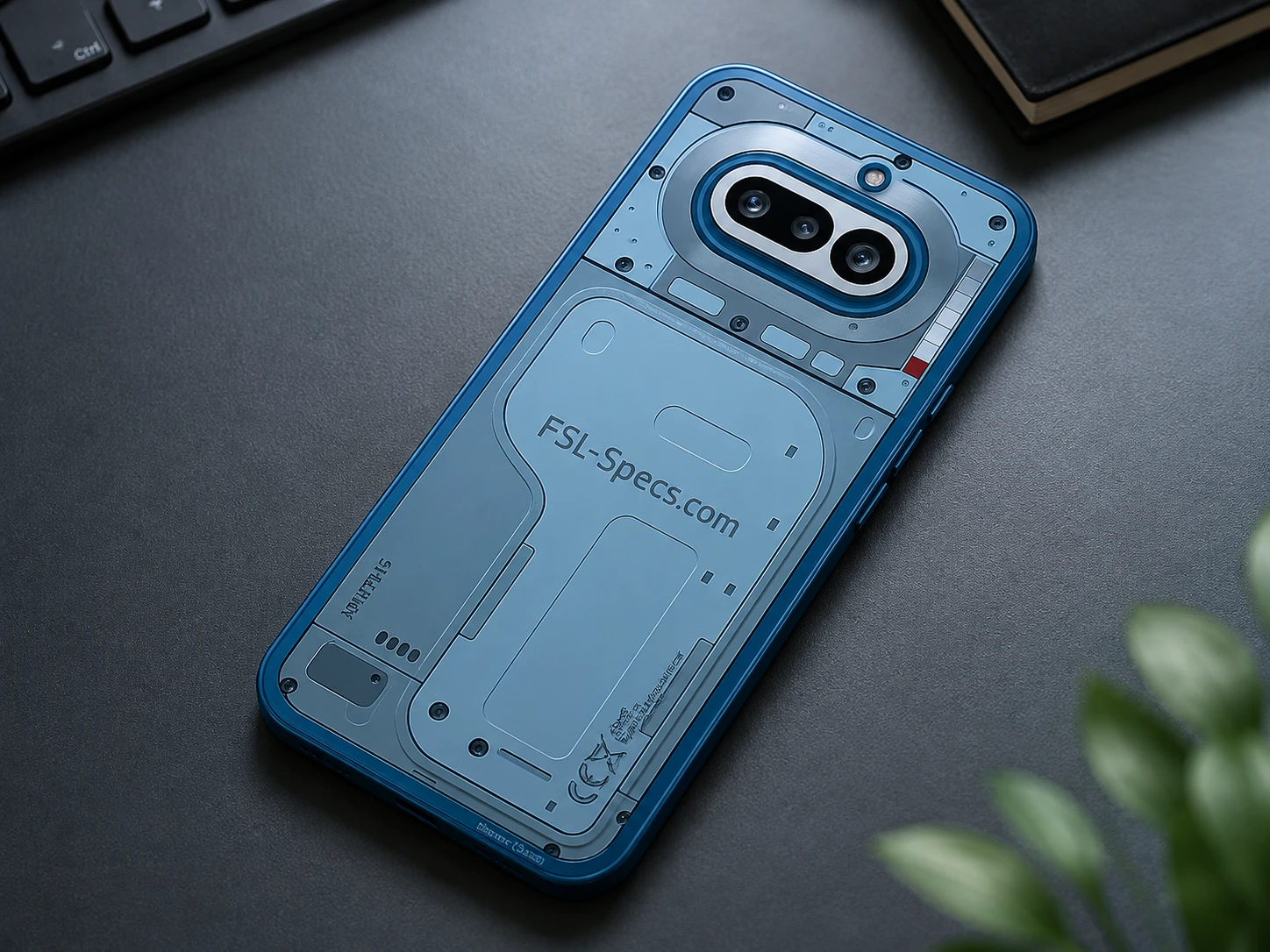
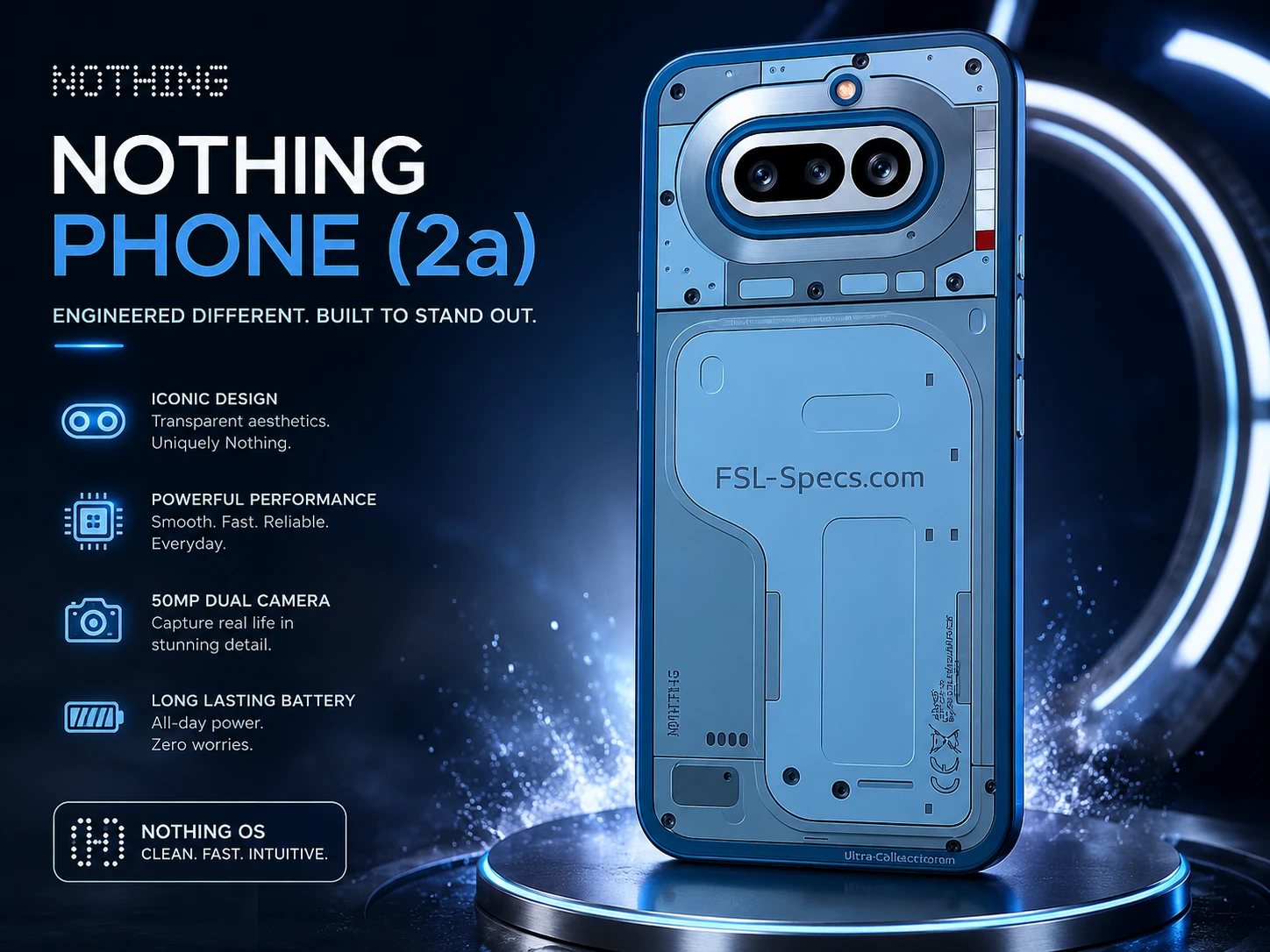












✪ Nothing Phone (4a) ✪

Nothing Phone 4a Specs, Price, Camera, Battery & Best Review (2026)
United States flag United States
$450 USD
Pakistan flag Pakistan (PKR)
170,000 PKR
India flag India (INR)
₹41,000 INR

✪ Nothing Phone (4a) ✪

Nothing Phone 4a Specs, Price, Camera, Battery & Best Review (2026)
Last Time Update : 16 August, 2026
0

Quick Specifications

Flexible AMOLED

Display Type

Snapdragon 7s Gen 4

Processor

8 + 256 GB

Ram And Memory

50 + 50 + 8 MP

Camera

5080

Battery

50 W

Fast Charging

Full Specification

BASIC INFO
Mobile
Nothing Phone (4a)
Model
A069
Series
Nothing a
Category
Mid Range
Release Date
5 March,2026
Year
2026
CONNECTIVITY
Sim
Dual SIM, Nano-SIM
Network
4G / 4G+ / 5G
WiFi
WiFi 6
Bluetooth
5.4
NFC
Yes
OS
Android 17 ( up to 2 major OS updates )
BODY
Dimensions
164 x 77.6 x 8.6 mm
Build
Frame Plastic And Glass Back
KG Weight
204 g
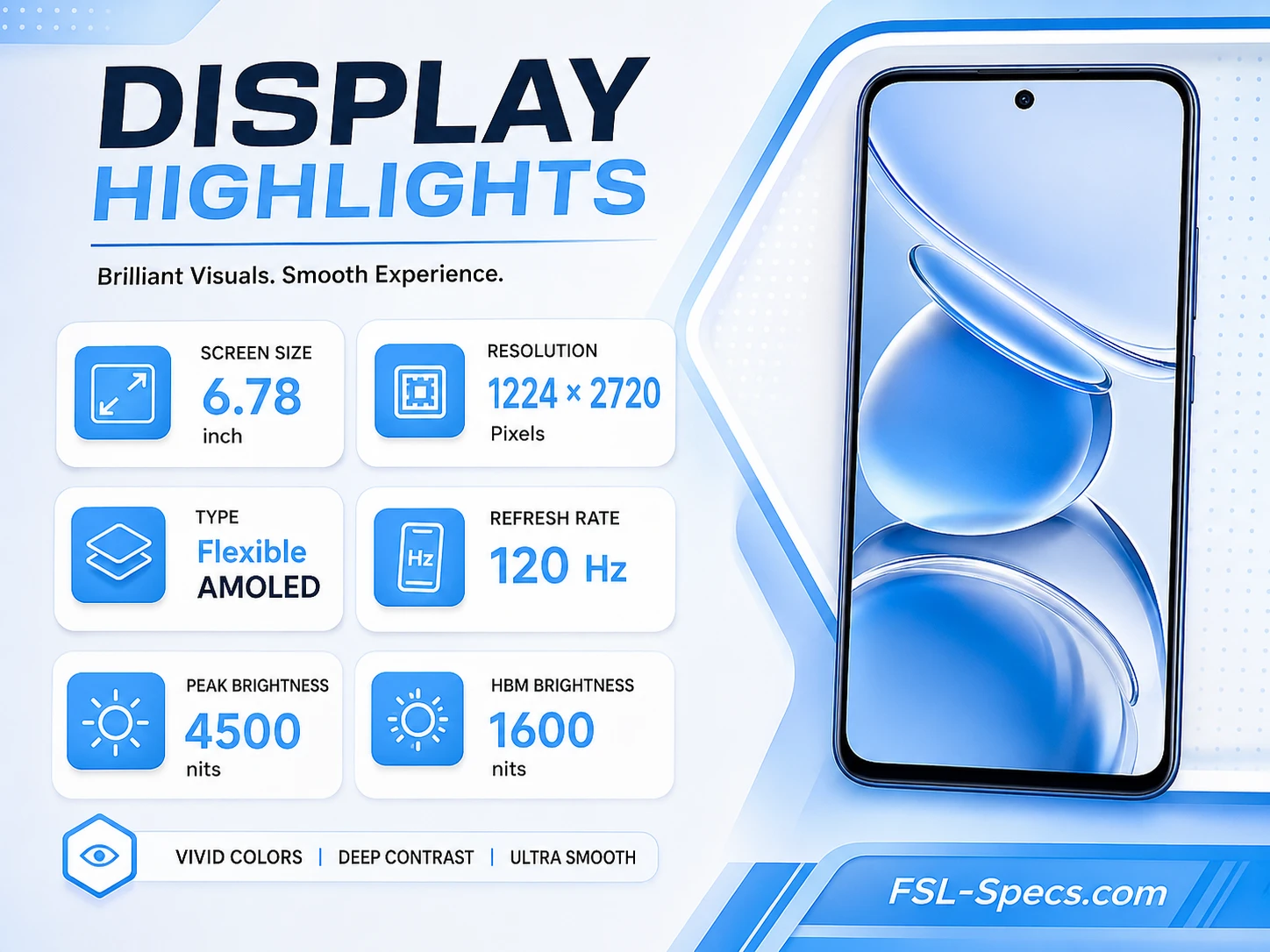
Screen Size
6.78 inch
Resolution
1224 × 2720 Pixels
Type
Flexible AMOLED
Refresh Rate
120 Hz
Peak Brightness
4500 nits
HBM Brightness
1600 nits
Processor
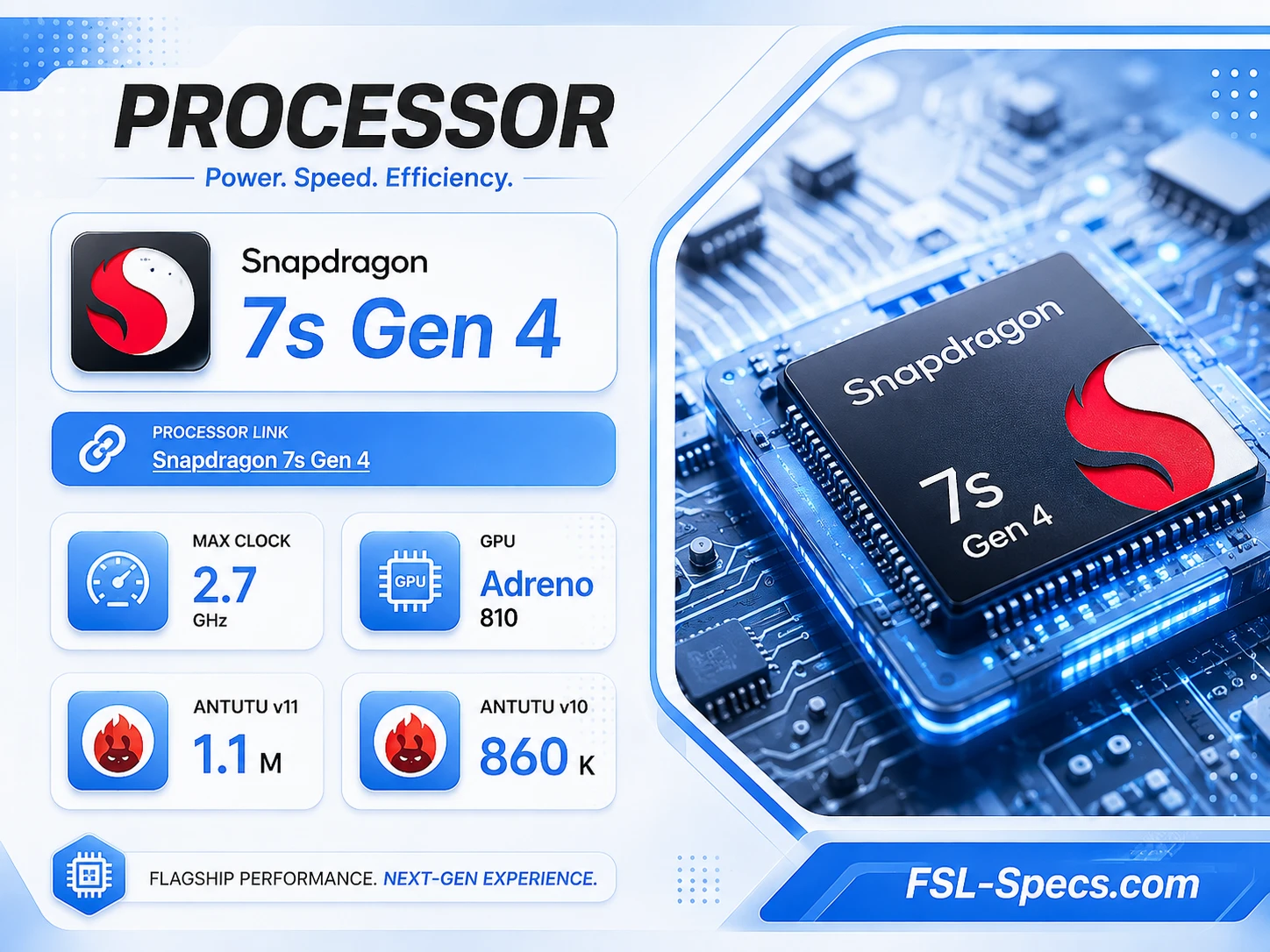
Snapdragon 7s Gen 4
Processor Link
Max Clock
2.7 GHz
Lithography
4 nm
GPU
Adreno 810
CPU Cores
8 Cores
Antutu v11
1.1 M
Antutu v10
860 K
Bootup Time
21 s
Architecture
1 × 2.7 GHz Cortex-A720
3 × 2.4 GHz Cortex-A720
4 × 1.8 GHz Cortex-A520
Ram Memory
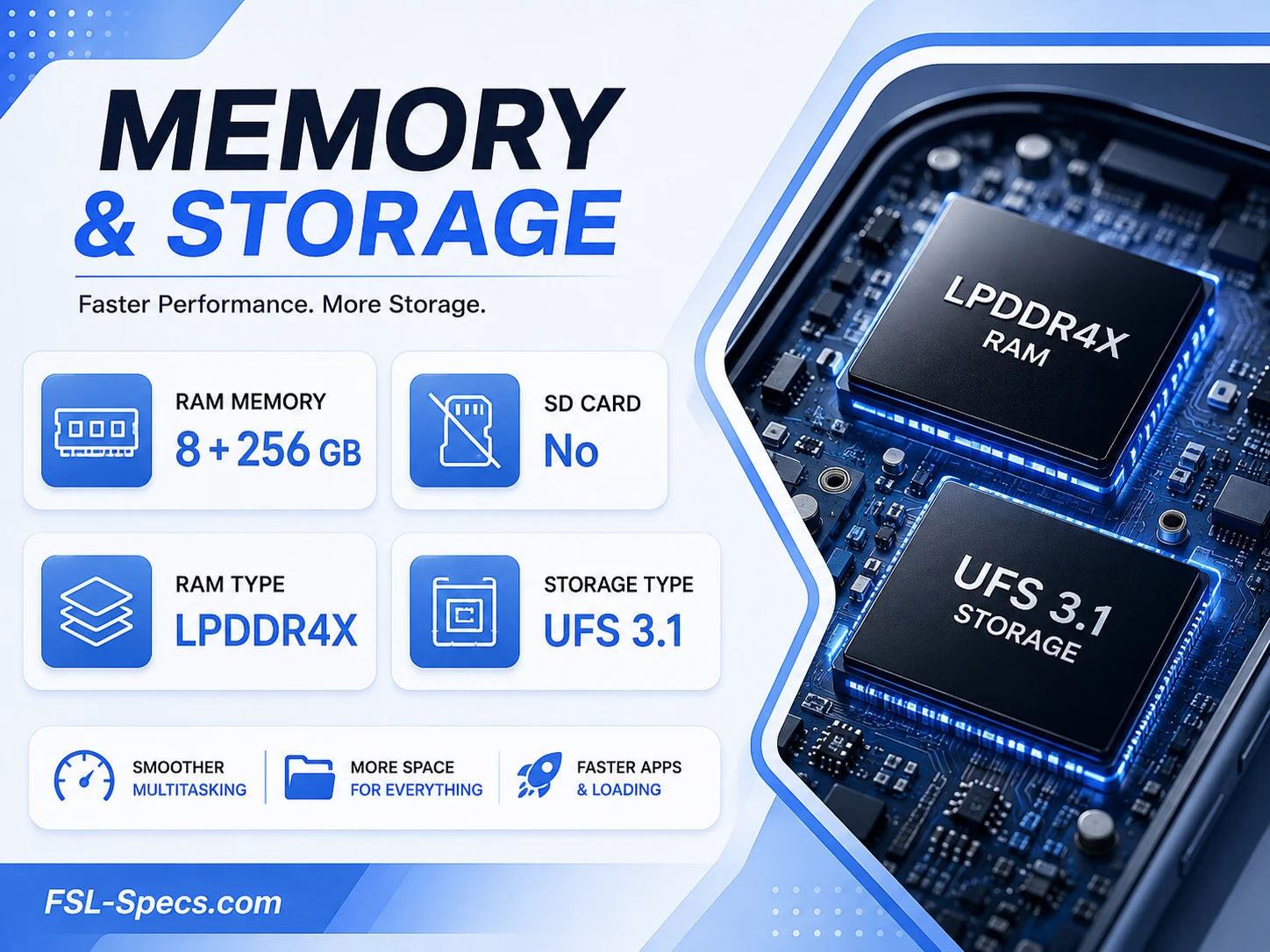
8 + 256 GB
Ram Type
LPDDR4X
Storage Type
UFS 3.1
SD Card
No
Variants
8 + 128 GB
8 + 256 GB
12 + 256 GB
MP
Rear Camera
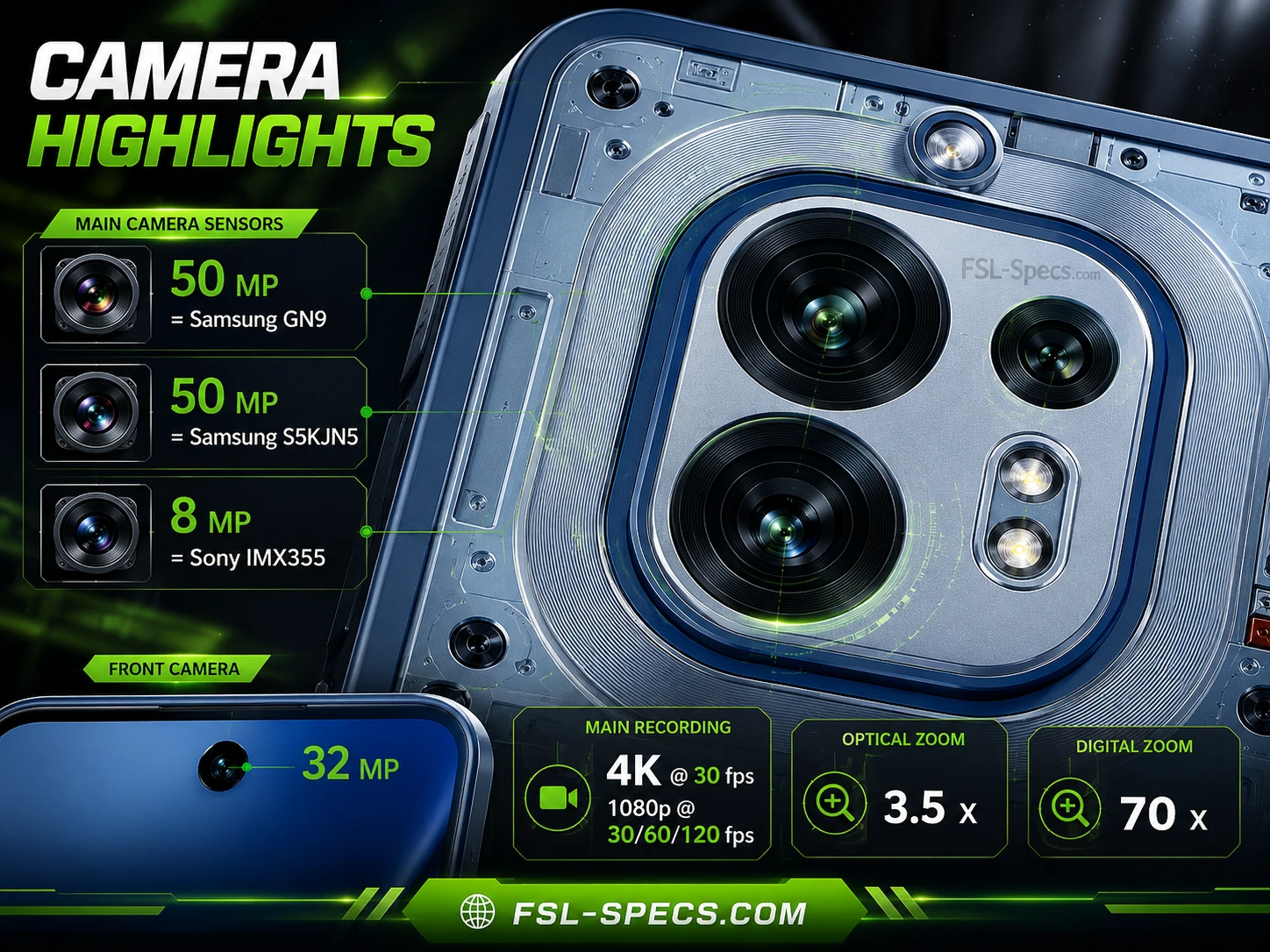
50 + 50 + 8 MP
Front Camera
32 MP
SENSORS
Camera Sensors
50 MP = Samsung GN9
50 MP = Samsung S5KJN5
8MP = Sony IMX355
Front Sensors
RECORDING FPS
Main Recording
4K @ 30 fps
1080p @ 30/60/120 fps
Front Recording
1080p @ 30 fps
RESOLUTION
Main Resolution
8150 x 6150 pixels
Front Resolution
6532 × 4899 MP
ZOOM
Optical Zoom
3.5 x
D Digital Zoom
70 x
Stabilization
Yes (main + telephoto)
FLASH
Flash
LED Flash
Front Flash
Screen Flash
Capacity
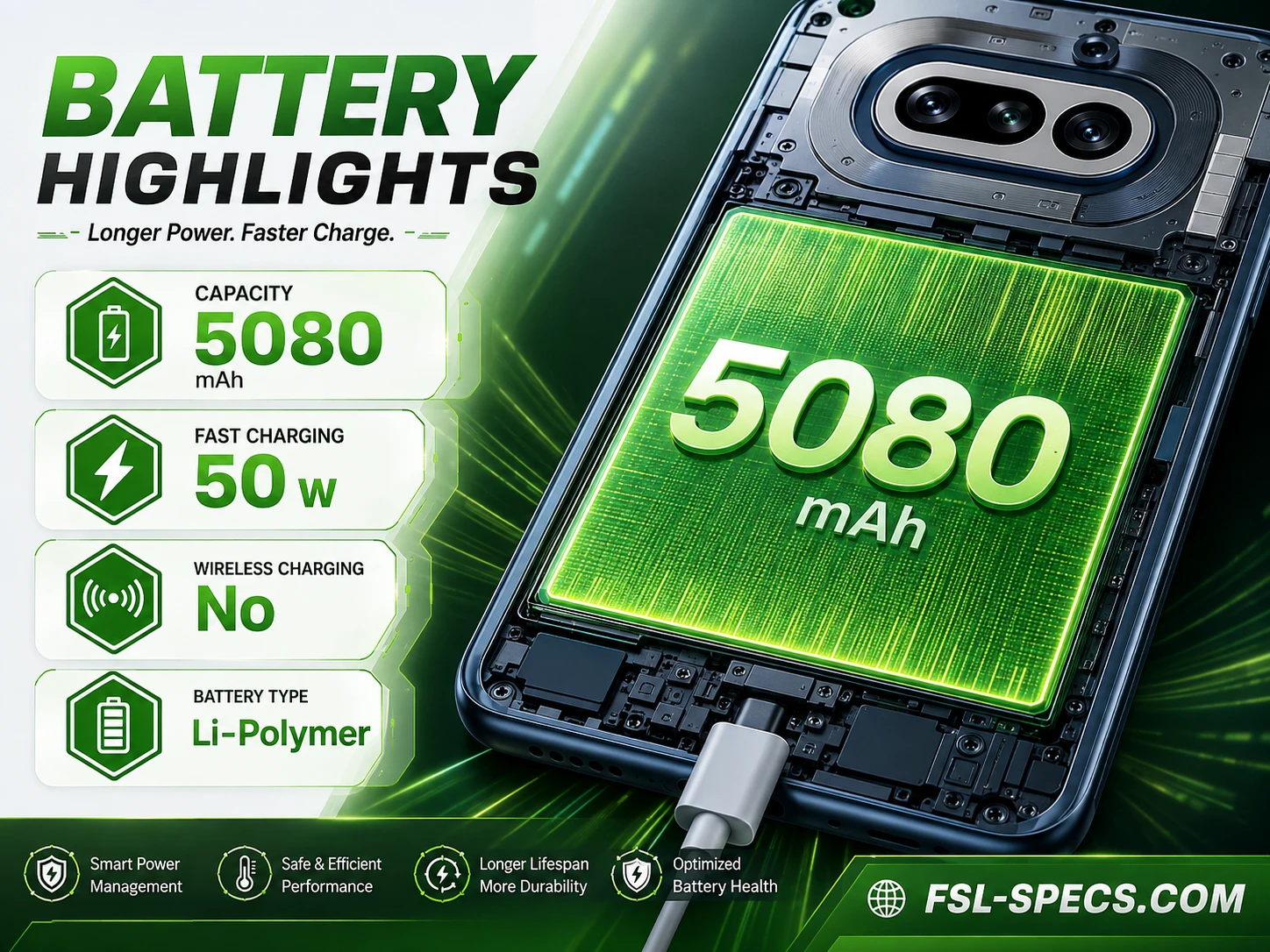
5080
Fast Charging
50 W
Wireless Charging
No
Li Battery Type
Li-Polymer
REVERSE
Reverse Wired
7.5 W
Reverse Wireless
No
OTHER
Battery PC Marks
-
Charging Time
1h ( 0%→100% )
AUDIO & SENSORS
Speaker
Dual Stereo Speaker
Fingerprint Sensor
Front Finger
Other Sensors
Accelerometer
Gyroscope
Proximity
Compass
Hall sensor
RGB/color spectrum sensor
Special Features

1-Back panel with 63 mini-LEDs (Glyph-style notification lighting)
2-Corning Gorilla Glass 7i protection (Mohs level 5)
3-IP64 dust/splash resistance
4- Next 2 years OS updates, 6 years security updates
5-EU Energy Label: Class B efficiency, Class C free-fall (100 drops), Class C repairability
6-Ultra HDR image support
7-Dolby Vision HDR video recording

BASIC INFO
Mobile
Nothing Phone (4a)
Model
A069
Series
Nothing a
Category
Mid Range
Release Date
5 March,2026
Year
2026
CONNECTIVITY
Sim
Dual SIM, Nano-SIM
Network
4G / 4G+ / 5G
WiFi
WiFi 6
Bluetooth
5.4
NFC
Yes
OS
Android 17 ( up to 2 major OS updates )
BODY
Dimensions
164 x 77.6 x 8.6 mm
Build
Frame Plastic And Glass Back
KG Weight
204 g
Screen Size
6.78 inch
Resolution
1224 × 2720 Pixels
Type
Flexible AMOLED
Refresh Rate
120 Hz
Peak Brightness
4500 nits
HBM Brightness
1600 nits
Processor
Snapdragon 7s Gen 4
Processor Link
Max Clock
2.7 GHz
Lithography
4 nm
GPU
Adreno 810
CPU Cores
8 Cores
Antutu v11
1.1 M
Antutu v10
860 K
Bootup Time
21 s
Architecture
1 × 2.7 GHz Cortex-A720
3 × 2.4 GHz Cortex-A720
4 × 1.8 GHz Cortex-A520
Ram Memory
8 + 256 GB
SD Card
No
Ram Type
LPDDR4X
Storage Type
UFS 3.1
Variants
8 + 128 GB
8 + 256 GB
12 + 256 GB
MP
Rear Camera
50 + 50 + 8 MP
Front Camera
32 MP
SENSORS
Main Camera Sensors
50 MP = Samsung GN9
50 MP = Samsung S5KJN5
8MP = Sony IMX355
Front Camera Sensors
RECORDING FPS
Main Recording
4K @ 30 fps
1080p @ 30/60/120 fps
Front Recording
1080p @ 30 fps
RESOLUTION
Main Resolution
8150 x 6150 pixels
Front Resolution
6532 × 4899 MP
ZOOM
Optical Zoom
3.5 x
D Digital Zoom
70 x
Stabilization
Yes (main + telephoto)
FLASH
Flash
LED Flash
Front Flash
Screen Flash
Capacity
5080
Fast Charging
50 W
Wireless Charging
No
Li Battery Type
Li-Polymer
REVERSE
Reverse Wired
7.5 W
Reverse Wireless
No
OTHER
Battery Life PCMark
-
Charging Time
1h ( 0%→100% )
AUDIO & SENSORS
Speaker
Dual Stereo Speaker
Fingerprint Sensor
Front Finger
Other Sensors
Accelerometer
Gyroscope
Proximity
Compass
Hall sensor
RGB/color spectrum sensor
Special Features

1-Back panel with 63 mini-LEDs (Glyph-style notification lighting)
2-Corning Gorilla Glass 7i protection (Mohs level 5)
3-IP64 dust/splash resistance
4- Next 2 years OS updates, 6 years security updates
5-EU Energy Label: Class B efficiency, Class C free-fall (100 drops), Class C repairability
6-Ultra HDR image support
7-Dolby Vision HDR video recording

Highlights & Review Of Nothing Phone (4a)

Display Review:

The Nothing Phone (4a) runs a 6.78-inch AMOLED display at 1224×2720, 120Hz refresh rate, and 4500-nit peak brightness, protected by Corning Gorilla Glass 7i.

Against the Infinix GT 50 Pro (160,000 PKR), the Nothing loses on refresh rate. Per your site’s verified data, the GT 50 Pro’s 6.78″ AMOLED panel (1208×2644) pushes 144Hz with 1600-nit HBM brightness, a genuine smoothness edge for scrolling and gaming that the Nothing’s 120Hz can’t match, even though both phones are nearly identical in screen size.

Against the Oppo Reno15 (165,000 PKR) The Reno15 runs a 6.59″ AMOLED at 120Hz, smaller than the Nothing’s 6.78″ but with HDR10+ certification for accurate color reproduction. It’s essentially a size-vs-density trade, the Nothing wins on screen real estate, the Reno15 counters with a slightly denser panel in a more pocketable body.

Against the Samsung Galaxy S25 FE (180,000 PKR), the Nothing actually wins on resolution. Per GSMArena’s official spec sheet, the S25 FE’s 6.7″ AMOLED runs at only 1080×2340, a notably lower resolution than the Nothing’s 1224×2720, despite the S25 FE costing 10,000 PKR more. Samsung compensates with Gorilla Glass Victus and its typically excellent panel tuning, but on raw sharpness, the Nothing genuinely out-resolves this pricier Samsung flagship.

What this means day to day: the Nothing Phone (4a)’s display holds up well in this bracket. It loses only to the GT 50 Pro’s 144Hz refresh rate, but matches or beats the Reno15 and S25 FE on size and resolution respectively.

The honest verdict: buyers who want a big, sharp screen without paying flagship money, the Nothing Phone (4a) genuinely competes above its price point here, beating the costlier S25 FE on resolution, if smoothness is the priority, the GT 50 Pro’s 144Hz wins outright.

Processor Review:

The Nothing Phone (4a) runs on the Snapdragon 7s Gen 4 (4nm), an octa-core chip with 1×2.7GHz Cortex-A720 + 3×2.4GHz Cortex-A720 + 4×1.8GHz Cortex-A520 cores paired with an Adreno 810 GPU. Its AnTuTu v11 score sits around 1,001,000, a solid mid-range figure but the weakest of the four phones in this comparison.

Against the Infinix GT 50 Pro (160,000 PKR): this is the biggest gap in the whole lineup. Per your site’s verified data, the GT 50 Pro’s Dimensity 8400 Ultimate scores around 2,100,000 on AnTuTu v11, that’s roughly +110% higher than the Nothing Phone (4a), effectively double the raw benchmark power. The GT 50 Pro’s all-big-core CPU design (no small efficiency cores dragging down peak performance) plus its Mali-G720 7-core GPU puts it in a completely different performance tier, this is a dedicated gaming chipset, and it shows.

Against the Oppo Reno15 (165,000 PKR): the gap narrows but still favors Oppo. The Reno15’s Snapdragon 7 Gen 4 (a step above the Nothing’s 7s Gen 4) scores 1,394,716 on AnTuTu v11, that’s about +39% higher than the Nothing Phone (4a). Both chips share the same core architecture family, but the Reno15’s higher clock speeds and full-fat “7 Gen 4” naming (versus the Nothing’s “7s” cost-reduced variant) translate directly into that benchmark advantage.

Against the Samsung Galaxy S25 FE (180,000 PKR): the Nothing falls behind by a wide margin again. The S25 FE’s Exynos 2400 (deca-core, with a Cortex-X4 prime core) scores 2,075,966 on AnTuTu v11, roughly +107% higher than the Nothing Phone (4a). That said, real-world reviews note the Exynos 2400 throttles heavily under sustained load (dropping over 60% from peak performance in stress tests), so the benchmark gap doesn’t fully translate to gaming, Samsung’s chip wins on paper but runs hot and inconsistent during long sessions.

What this means day to day: the Nothing Phone (4a) is genuinely the slowest chip of the four on raw numbers, every single rival beats it by 39% to 110%. For everyday tasks (browsing, social media, calls) this gap won’t be very noticeable, Nothing OS is famously clean and lightweight. But for gaming or heavy multitasking, the difference becomes real, especially against the GT 50 Pro, which is built specifically for that use case.

The honest verdict: if raw performance and gaming headroom matter to you, the Infinix GT 50 Pro is the clear winner here by a huge margin, and it’s also the cheapest of the four rivals. The Oppo Reno15 and Samsung S25 FE both beat the Nothing meaningfully too, though the S25 FE’s thermal throttling means its benchmark lead doesn’t fully hold up under sustained gaming. The Nothing Phone (4a) makes its case elsewhere, design, software experience, camera balance, not on the processor spec sheet.

Ram & Memory Review:

The Nothing Phone (4a) pairs 8GB or 12GB of LPDDR4X RAM with 128GB or 256GB of UFS 3.1 storage. This is a real weak point by the numbers, LPDDR4X is a generation behind where most 2026 rivals sit at this price.

Against the Infinix GT 50 Pro (160,000 PKR): the GT 50 Pro skips the lower tier entirely, starting at 12GB LPDDR5X RAM paired with UFS 4.1 storage (256GB/512GB variants). That’s a full two generations ahead of the Nothing on both RAM and storage type, LPDDR5X offers meaningfully higher bandwidth for multitasking, and UFS 4.1 roughly doubles real-world read/write speeds over UFS 3.1.

Against the Oppo Reno15 (165,000 PKR): the Reno15 runs 12GB LPDDR5X RAM with UFS 3.1 storage in your specified 12+512GB configuration. It matches the GT 50 Pro on RAM type (LPDDR5X, a full generation ahead of the Nothing’s LPDDR4X) but sticks with the same UFS 3.1 storage standard as the Nothing Phone (4a), so the real-world speed difference here comes mostly from RAM bandwidth, not storage.

Against the Samsung Galaxy S25 FE (180,000 PKR): Samsung uses 8GB LPDDR5X RAM with UFS 4.0 storage. Even at just 8GB, matching the Nothing’s base tier, the RAM type alone (LPDDR5X vs LPDDR4X) and the storage jump to UFS 4.0 put the S25 FE ahead on raw memory performance despite no capacity advantage.

What this means day to day: the Nothing Phone (4a) is the only phone in this comparison still running LPDDR4X, every single rival, including the cheaper GT 50 Pro, has moved to LPDDR5X. That translates to real differences in multitasking smoothness and app-switching speed under heavy load, even if basic browsing and social media feel fine at spec-sheet capacity alone.

The honest verdict: this is a clear weak spot for the Nothing Phone (4a) in this bracket. All three rivals beat it on RAM type, and the GT 50 Pro adds a storage-speed advantage too with UFS 4.1. If memory performance and future-proofing matter to you, any of the three rivals gives you newer, faster memory hardware for the money, the Nothing’s advantage here has to come from software optimization (Nothing OS is known for running lighter) rather than raw spec-sheet numbers.

Cameras Review:

The Nothing Phone (4a) runs a triple setup: 50MP main (Samsung GN9 sensor, f/1.9, OIS), a 50MP telephoto (Samsung JN5 sensor, 3.5x optical zoom, OIS), and an 8MP ultrawide (Sony sensor, fixed focus). Front camera is 32MP. Video tops out at 4K@30fps on the main and telephoto cameras, with 1080p@60fps as the secondary mode; the ultrawide is capped at 1080p@30fps and doesn’t go higher.

Against the Infinix GT 50 Pro (160,000 PKR):  the GT 50 Pro drops the telephoto entirely, running just 50MP main (Sony IMX896, OIS) + 8MP ultrawide (GalaxyCore GC08A8), with a 13MP front (GalaxyCore GC13A0). It actually edges ahead on video, recording 4K@60fps on the main camera versus the Nothing’s 4K@30fps cap, useful for smoother action footage. But losing the telephoto entirely means no real optical zoom at all, just 10x digital, so the Nothing’s 3.5x OIS periscope is the clear win for anyone who zooms often.

Against the Oppo Reno15 (165,000 PKR): this is the closest match camera-wise. The Reno15 also runs a 50MP main (f/1.8, OIS) + 50MP telephoto (f/2.8, 3.5x optical zoom, OIS) + 8MP ultrawide (AF-enabled), essentially matching the Nothing’s setup lens-for-lens, but with autofocus on the ultrawide where the Nothing’s is fixed-focus. The Reno15 also wins clearly on selfies with a 50MP front camera (autofocus) against the Nothing’s 32MP, and its video recording goes to 4K@60fps on both main and telephoto, plus 1080p@120fps for slow-motion, all ahead of the Nothing’s 4K30 ceiling.

Against the Samsung Galaxy S25 FE (180,000 PKR): Samsung brings the strongest overall camera hardware here. The 50MP main (Samsung GN3 sensor, f/1.8, OIS) is paired with a 12MP ultrawide (f/2.2) and an 8MP telephoto (OmniVision OV08A10, 3x optical zoom, OIS), plus a 12MP selfie camera. Where Samsung really pulls ahead is video, the main camera shoots up to 8K@30fps and 4K@120fps, categories the Nothing Phone (4a) doesn’t touch at all. That said, DXOMARK testing notes the S25 FE’s telephoto and ultrawide modules underperform for their price class, so the headline video specs don’t tell the whole story on stills quality.

What this means day to day: the Nothing Phone (4a) holds its own against the Reno15 on paper (near-identical zoom setup) but loses on video resolution to every single rival here, all three top out higher than its 4K30 ceiling. The GT 50 Pro’s 4K60 and the S25 FE’s 8K30 are meaningful gaps for anyone who shoots video regularly.

The honest verdict: The Samsung S25 FE has the most complete camera spec sheet, but real-world testing shows its secondary lenses don’t fully live up to the numbers.  for photography with real optical zoom, the Nothing Phone (4a) and Reno15 are evenly matched, though the Reno15 wins on selfies and video frame rates. The GT 50 Pro is the weakest overall camera package despite its faster video, no telephoto means no real zoom flexibility at all.

Battery Review:

The Nothing Phone (4a) packs a 5080mAh battery with 50W wired charging (wired-only, no wireless), reaching 50% in 22 minutes and 100% in about 64 minutes in GSMArena’s lab tests, plus 7.5W reverse wired charging.

Against the Infinix GT 50 Pro (160,000 PKR): the GT 50 Pro’s larger 6500mAh Silicon-Carbon cell outsizes the Nothing by over 1400mAh, and it adds real charging versatility with 45W wired + 30W wireless + 10W reverse wired + 5W reverse wireless, a full charge lands in 45-60 minutes. So while the GT 50 Pro’s wired speed is technically slower on paper (45W vs 50W), its bigger capacity and wireless charging support make it the more complete package overall.

Against the Oppo Reno15 (165,000 PKR): this is where the Nothing falls furthest behind. The Reno15’s 6500mAh battery pairs with 80W wired charging (plus 80W UFCS, 55W PPS, and reverse wired support), reaching 100% in around 50 minutes despite carrying 1400mAh more capacity than the Nothing. More capacity and faster charging is a difficult combination to beat, this is the strongest all-round battery setup in the bracket.

Against the Samsung Galaxy S25 FE (180,000 PKR): Samsung actually has the smallest battery here at 4900mAh, even less than the Nothing Phone (4a). But it charges at 45W wired (65% in 30 minutes, full charge in under an hour) plus 15W wireless charging and reverse wireless charging, features the Nothing doesn’t offer at all. So Samsung trades raw capacity for charging flexibility and convenience.

What this means day to day: the Nothing Phone (4a) has the smallest realistic charging ecosystem of the four, no wireless charging at all, and both the GT 50 Pro and Reno15 beat it on capacity while matching or exceeding its wired speed. The Reno15 in particular is a clear step up on every battery metric that matters.

The honest verdict: if raw capacity and fast wired charging are the priority, the Oppo Reno15 wins outright, bigger battery and nearly double the charging speed. If wireless charging convenience matters more than capacity, the Samsung S25 FE and GT 50 Pro both offer it while the Nothing doesn’t. The Nothing Phone (4a)’s battery setup is functional but the least competitive spec in this entire comparison, every rival beats it on at least one meaningful battery metric, and two beat it on nearly all of them.

Final Verdict :

Final Verdict & Ranking: Nothing Phone (4a) vs Rivals (160,000-180,000 PKR Bracket)

Across five rounds, display, processor, RAM & memory, camera, and battery, the Nothing Phone (4a) has a rough scorecard: it wins one, ties one, and loses clearly in the other three.

Where it wins: display resolution, the Nothing’s 1224×2720 panel actually beats the pricier Samsung S25 FE’s 1080×2340, and it holds its own in size against all three rivals.

Where it ties: camera zoom hardware nearly matches the Oppo Reno15 lens-for-lens, both run 50MP main + 50MP telephoto (3.5x OIS) + 8MP ultrawide, though the Reno15 wins on selfies and video frame rates.

Where it loses clearly: processor (39% to 110% behind all three rivals), RAM type (still on LPDDR4X while every rival has moved to LPDDR5X), and battery (smaller charging ecosystem, no wireless charging, and both the GT 50 Pro and Reno15 beat it on capacity and speed).

Ranking by priority:

Performance and gaming focused buyers → Infinix GT 50 Pro (160,000 PKR). Roughly double the AnTuTu score, faster wireless-capable charging, and it’s the cheapest of the three rivals. The clear pick if raw power is what you’re paying for.

All-round balance buyers → Oppo Reno15 (165,000 PKR). Matches the Nothing’s camera zoom setup while beating it on selfies, video, RAM speed, and battery, easily the most complete package in this bracket for the price.

Software and design focused buyers → Nothing Phone (4a) (170,000 PKR). Despite losing most spec battles, Nothing OS’s clean, lightweight software and the Glyph Bar’s distinctive identity are things no rival here replicates. It wins on experience, not hardware.

Camera completeness and long-term support buyers → Samsung Galaxy S25 FE (180,000 PKR). Smallest battery and weakest raw performance of the four, but the most complete camera spec sheet (8K video, wireless charging) and Samsung’s seven-year update commitment justify the premium for buyers planning to keep the phone long-term.

The honest bottom line: on pure specifications, the Nothing Phone (4a) is the weakest phone in this comparison, it loses processor, memory, and battery rounds outright, and even its display and camera wins are narrow. Its case rests almost entirely on software experience and design identity rather than hardware numbers. Buyers who value Nothing OS and the transparent design will find it worth the price; buyers chasing raw performance or value-for-spec will find better options at every point in this bracket, especially the Infinix GT 50 Pro at 10,000 PKR less.

Pros And Cons of Nothing Phone (4a)

Pros of Mobile

✅120Hz AMOLED 📱
✅6.78″ Display 🖥️
✅Snapdragon 7s Gen 4 🚀
✅Dual 50MP Cameras 📸
✅50W Fast Charging ⚡

Cons of Mobile

❌No IP68 Rating 💧
❌Plastic Frame 🧱
❌No Wireless Charging 🔌
❌Glyph Limited 💡
❌No Telephoto Lens 🔍

Best For - Not Best For

Best For

🎯Everyday Users 📲
🎯Photography Fans 📷
🎯Fast Charging Needs ⚡
🎯Bright Outdoor Use ☀️
🎯Software Longevity 🤖
🎯Mid-Range Buyers 💰

Not Best For

🚫Rugged Use 🏔️
🚫Wireless Charging Fans 🔋
🚫Zoom Photography 🔭
🚫Ultra-Lightweight Seekers ⚖️
🚫Premium Flagship Buyers 🏆
🚫Waterproof Requirers 🌊

Trailer And Unboxing of Nothing Phone (4a)

Disassembly Or Teardown And Gaming Test of Nothing Phone (4a)

Camera Test Nothing Phone (4a)

Infinix GT 50 Pro
Oppo Reno 15
Samsung Galaxy S25 FE
xiaomi  remi note 15 pro plus
Nothing Phone 3A Pro

Nothing Series Row
Picture of Faisal Ur Rehman

Faisal Ur Rehman

Faisal Rehman is the founder and editor of FSL Specs, where he publishes in-depth smartphone specifications, comparisons, buying guides, and technology insights. With extensive experience in mobile hardware research and technical analysis, he provides accurate and up-to-date information on Android smartphones, processors, displays, cameras, batteries, performance benchmarks, and software features. His goal is to simplify complex specifications and help readers choose the right device with confidence.

FAQs Questions

It runs a 6.78-inch AMOLED panel with 1224x2720 resolution, a 120Hz refresh rate, and 4500-nit peak brightness. It's protected by Corning Gorilla Glass 7i.

It uses the Snapdragon 7s Gen 4, 4nm, an octa-core chip paired with an Adreno 810 GPU. Its AnTuTu v11 score sits around 1,001,000, a mid-range figure that trails most 2026 rivals at this price.

No, it charges via 50W wired only, reaching 50% in 22 minutes and a full charge in about 64 minutes. It does offer 7.5W reverse wired charging for topping up accessories.

A triple rear system: 50MP main, Samsung GN9, OIS, 50MP periscope telephoto with 3.5x optical zoom and OIS, and an 8MP ultrawide. The front camera is 32MP, and video tops out at 4K@30fps.

It comes with 8GB or 12GB LPDDR4X RAM and 128GB or 256GB UFS 3.1 storage. LPDDR4X is a generation behind most rivals in this price bracket, which now use LPDDR5X.

Yes, it's rated IP64, dust-tight and splash-resistant, but not built for submersion. Nothing rates it water-resistant up to 25cm for 20 minutes under lab conditions.

It packs a 5080mAh battery, roughly average for this segment. Rivals like the Oppo Reno15 and Infinix GT 50 Pro both carry noticeably larger 6500mAh cells at similar prices.


Its biggest strengths aren't raw numbers, it's the Glyph Bar LED interface, the distinctive semi-transparent design, and Nothing OS 4.1's clean, lightweight software experience that most competitors can't replicate.

8 + 256 GB
| ~₹38,000 | ~$ 400 | 170,000 PKR

12 + 256 GB
 | ~₹41,000 | ~$ 450 | 200,000 PKR

Leave a Reply

Your email address will not be published. Required fields are marked *

Scroll to Top