
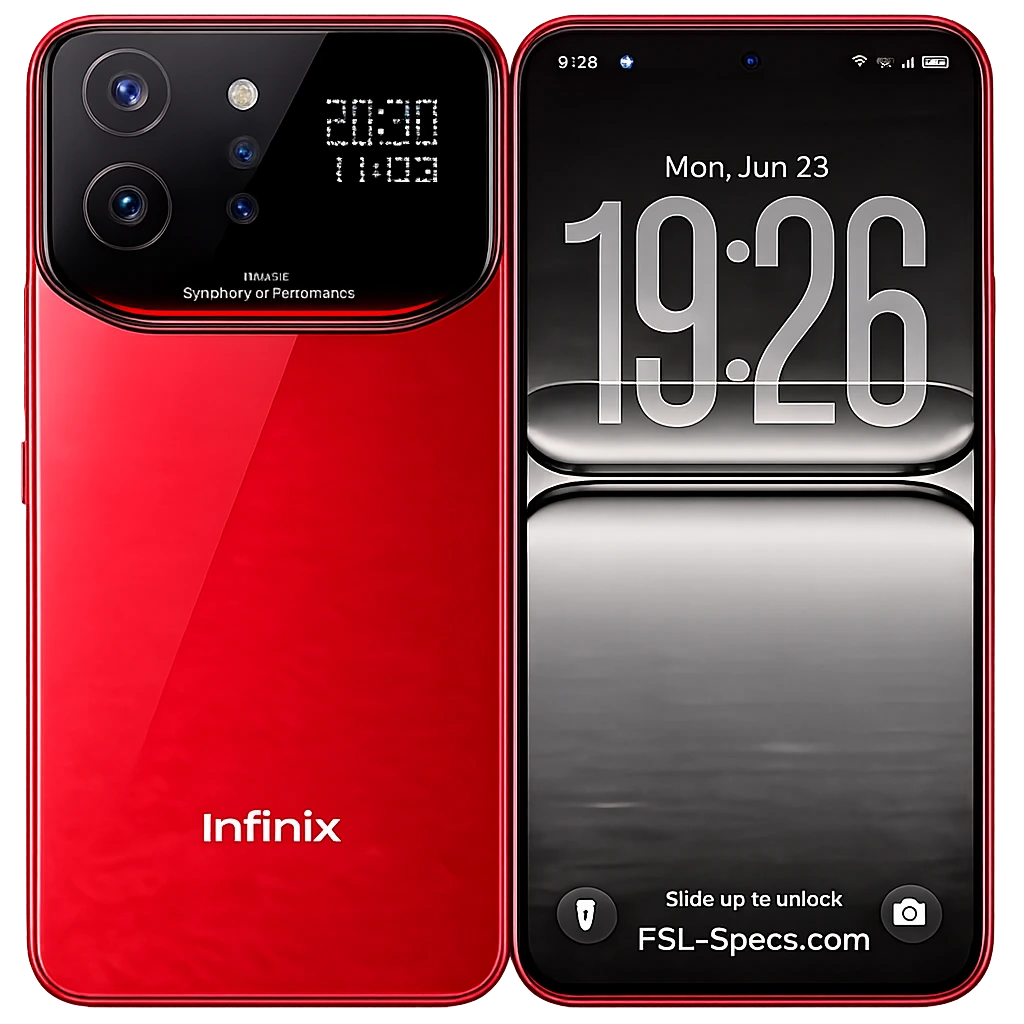










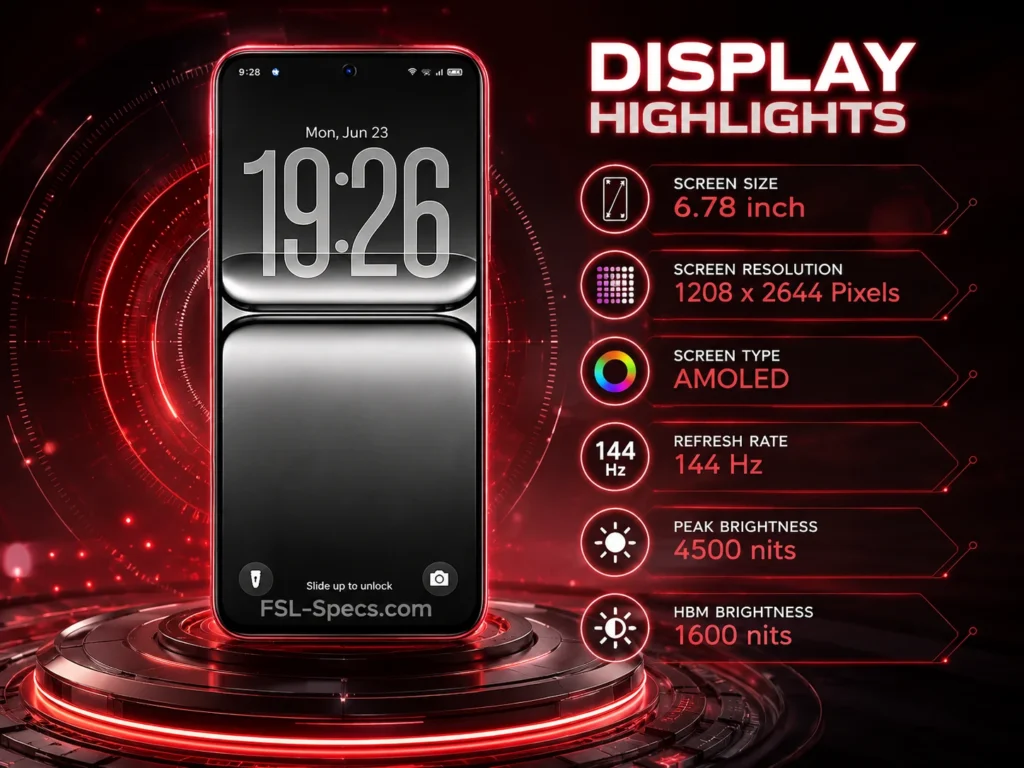


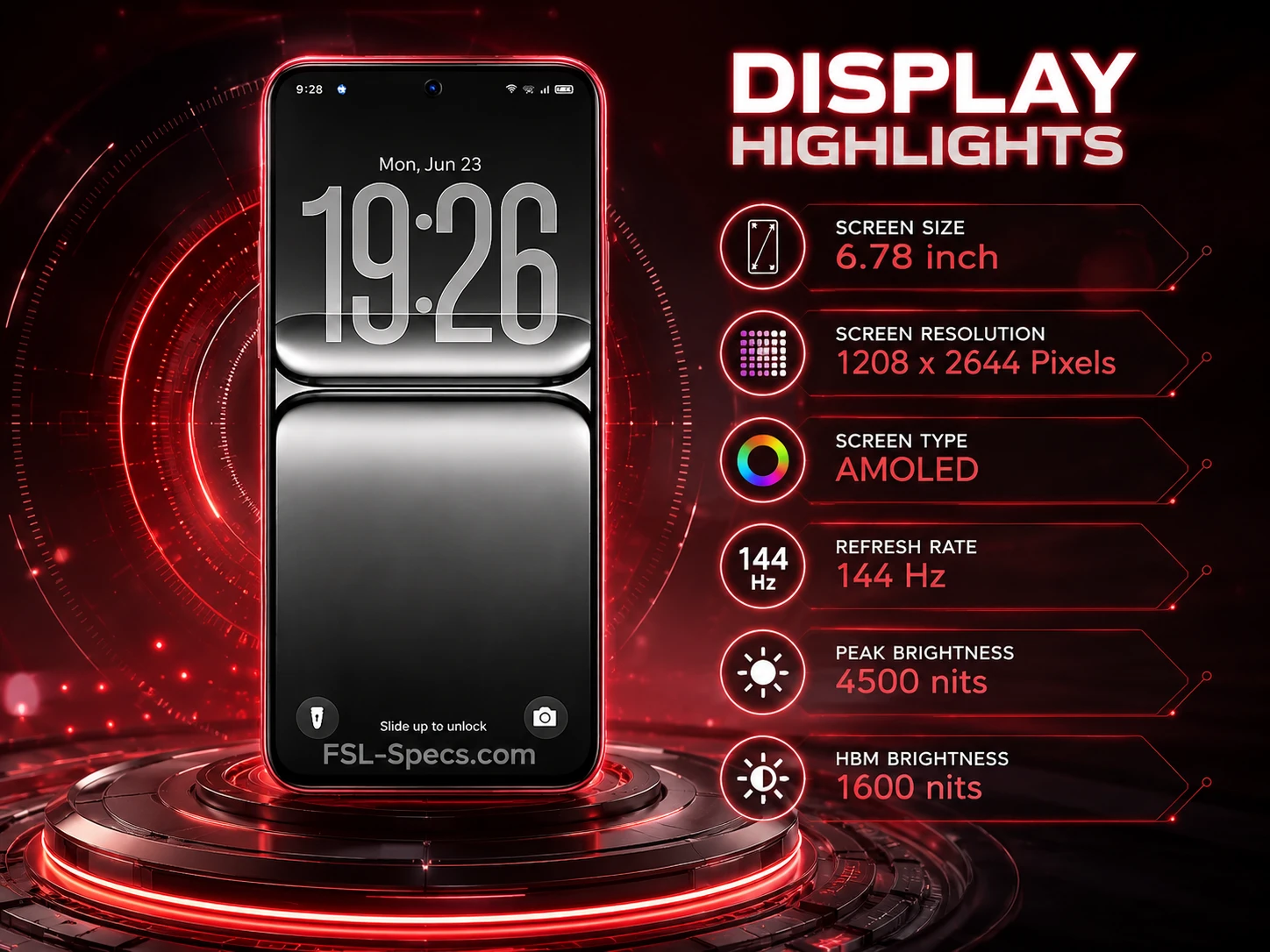
The Infinix Note 60 Ultra brings a 6.78-inch AMOLED panel with 1208 × 2644 resolution, a 144Hz refresh rate, 1600 nits HBM brightness and up to 4500 nits peak brightness. At your listed PKR 240,000, its combination of a large screen and 144Hz refresh rate makes it particularly attractive for users who prioritize smooth scrolling, gaming and a bigger viewing area. FSL-Specs lists these display specifications directly on the Note 60 Ultra page.
The vivo X300 FE, listed by you at PKR 244,000, takes a different approach with a smaller 6.31-inch LTPO AMOLED display at 1440 × 3168 resolution and 120Hz refresh rate. Its higher pixel count gives it a sharper image than the Infinix, while LTPO technology allows adaptive refresh-rate behavior. vivo also rates the panel at up to 5000 nits local peak brightness, giving it a higher headline brightness figure than Infinix’s 4500 nits.
The OPPO Reno 15 Pro is even more compact, using a 6.32-inch AMOLED display with 1216 × 2640 resolution and 120Hz refresh rate. Its 1800 nits HBM is higher than the Infinix’s 1600 nits HBM, but its smaller screen and lower refresh rate make the Note 60 Ultra more appealing for users who value a large, fluid display.
The Xiaomi 17T Pro is arguably the strongest all-round display rival. Its 6.83-inch 1.5K panel matches Infinix’s large-screen philosophy while increasing brightness to 3500 nits peak and retaining 144Hz, alongside 12-bit color depth and 100% DCI-P3 coverage.
Verdict: The Infinix Note 60 Ultra offers an excellent large 144Hz AMOLED, but the Xiaomi 17T Pro has the more complete display package, while the vivo X300 FE wins for compact size, sharpness and adaptive LTPO technology.