
















✪ Oppo Reno 16F ✪

Oppo Reno 16F png image
Pakistan flag Pakistan (PKR)
150,000 PKR

✪ Oppo Reno 16F ✪

Oppo Reno 16F png image
Last Time Update : 3 September, 2026
0

Quick Specifications

Amoled

Display Type

Mediatek Dimensity 7300

Processor

8 + 256 GB

Ram And Memory

50 + 50 + 8 MP

Camera

7000 mAh

Battery

80 W

Fast Charging

Full Specification

BASIC INFO
Mobile
Oppo Reno 16F
Model
CPH2859
Series
Oppo Reno Series
Category
Mid Range
Release Date
13 July,2026
Year
2026
CONNECTIVITY
Sim
Nano-SIM / E-Sim
Network
4G / 4G+ / 5G
WiFi
WiFi 6
Bluetooth
5.4
NFC
Yes
OS
Android 16
BODY
Dimensions
158.2 x 74.5 x 8.4 mm or 8.6 mm
Build
glass back and plastic back
KG Weight
195 g
Screen Size
6.57 inch
Resolution
1080 x 2372 pixels
Type
Amoled
Refresh Rate
120 Hz
HBM Brightness
1400 nits
Processor
Mediatek Dimensity 7300
Max Clock
2.5 GHz
Lithography
4 nm
GPU
Mali-G615 MC2
CPU Cores
8 Cores
Antutu v11
990 K
Antutu v10
790 K
Architecture
4 x 2.5 GHz Cortex-A78
4 x 2.0 GHz Cortex-A55
Ram Memory
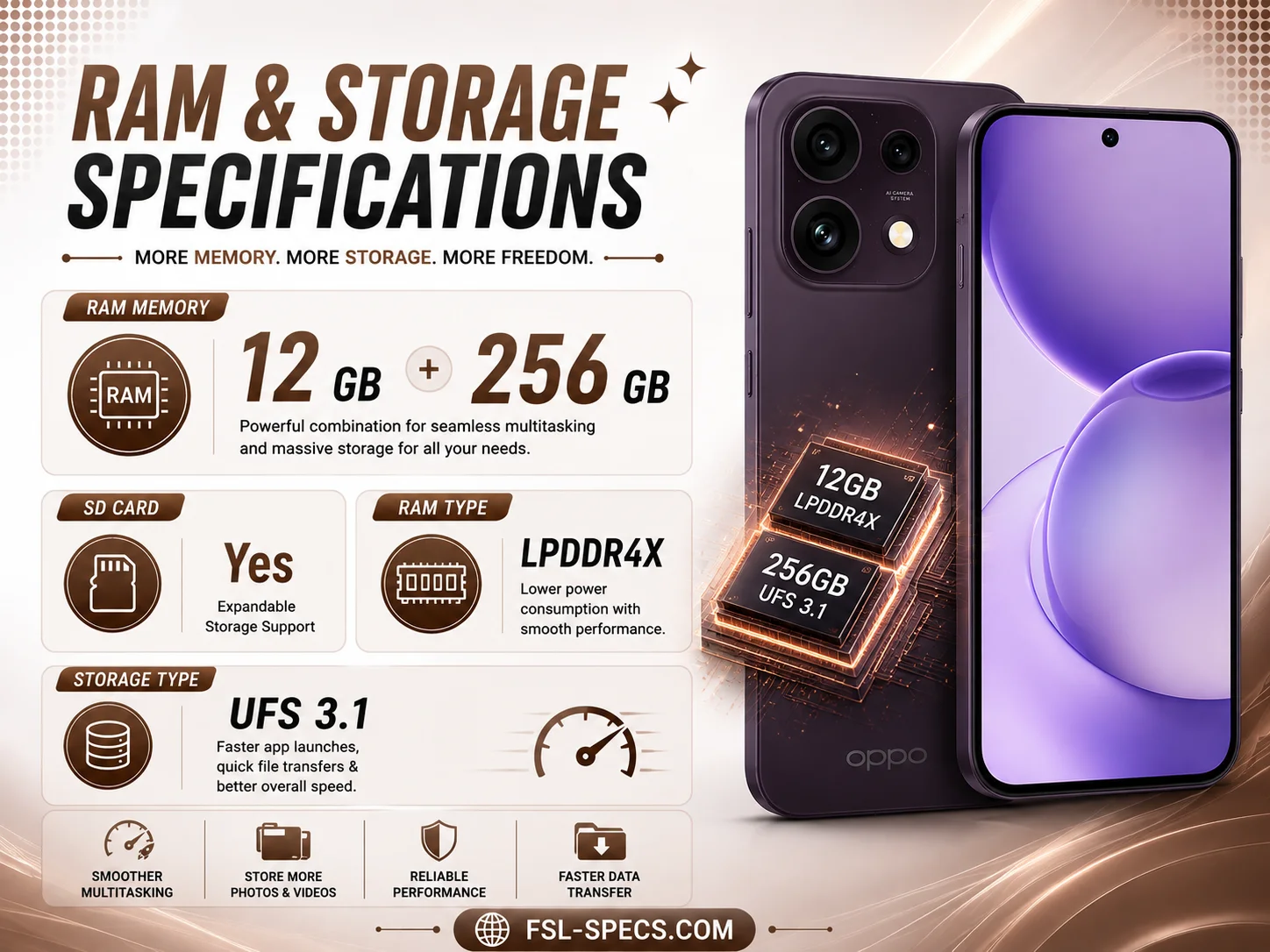
8 + 256 GB
Ram Type
LPDDR4X
Storage Type
UFS 3.1
SD Card
Yes
Variants
8 + 128 GB
8/12 + 256 GB
MP
Rear Camera
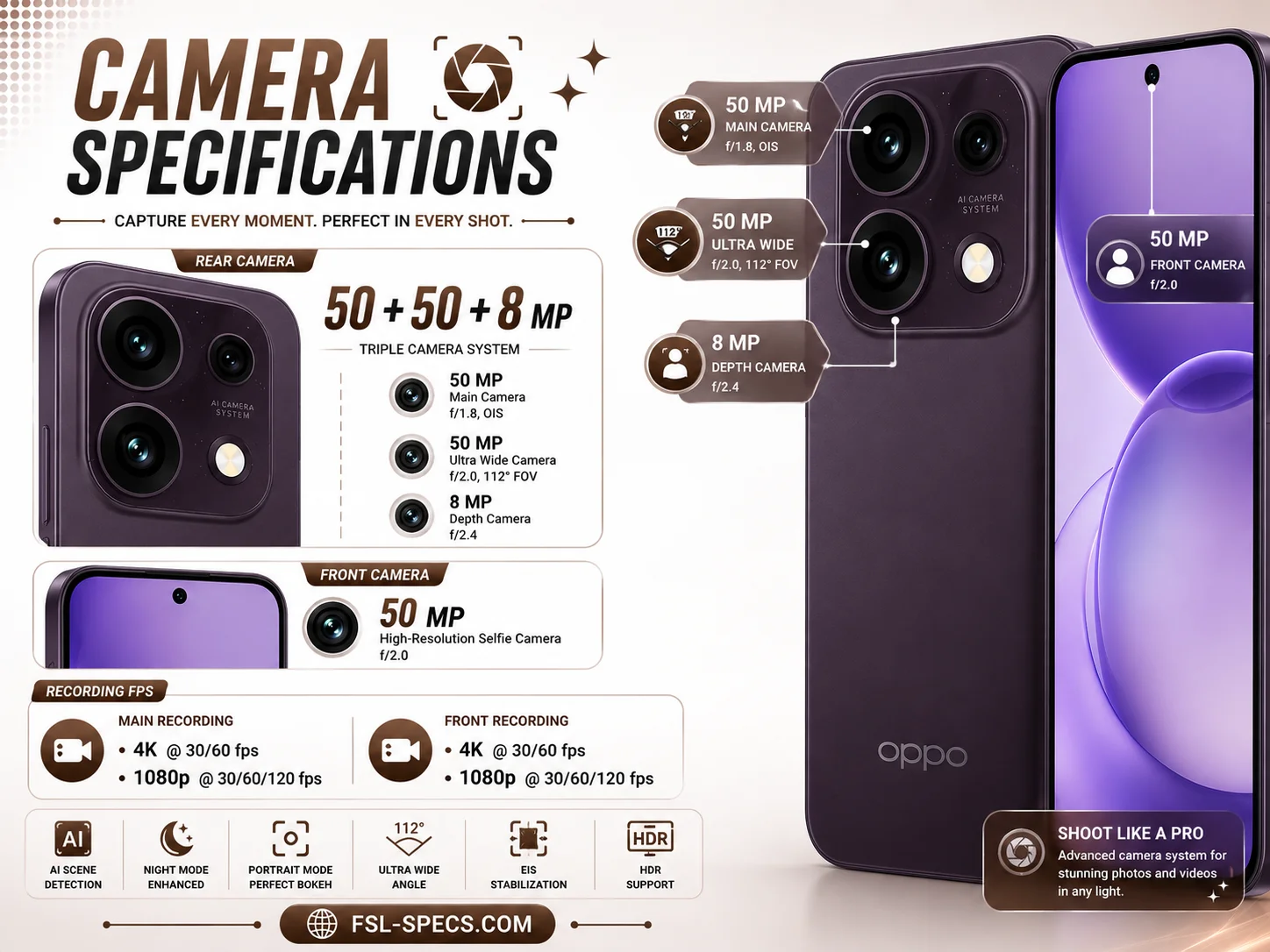
50 + 50 + 8 MP
Front Camera
50 MP
RECORDING FPS
Main Recording
4K @ 30/60 fps
1080p @ 30/60/120 fps
Front Recording
4K @ 30 fps
1080p @ 30 fps
RESOLUTION
Main Resolution
8150 x 6150 pixels
Front Resolution
8192 x 6144 Pixels
ZOOM
Optical Zoom
3.5 x
D Digital Zoom
10 x
Stabilization
Yes
FLASH
Flash
Multi-focus LED flash
Front Flash
Screen Flash
Capacity
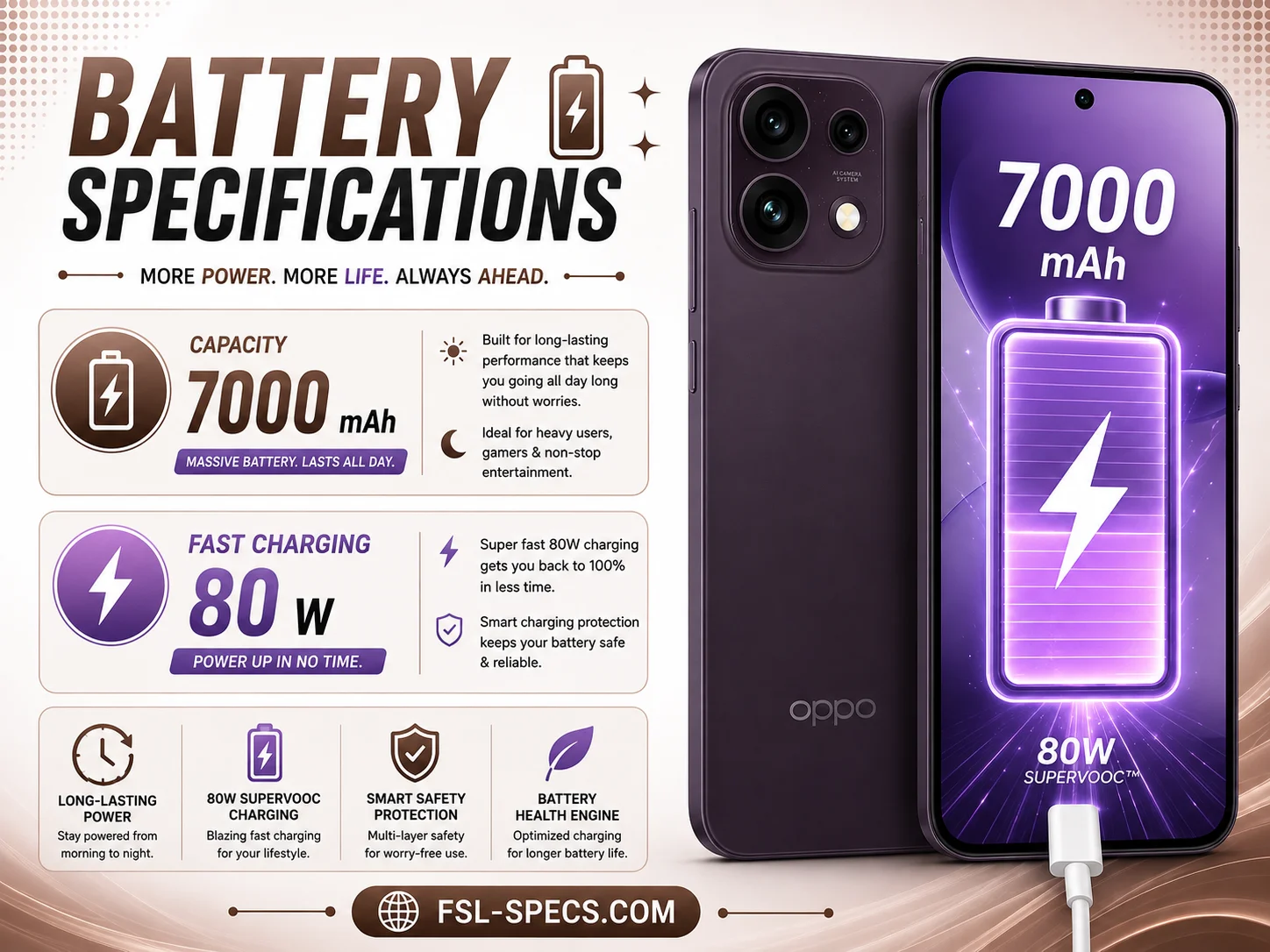
7000 mAh
Fast Charging
80 W
Wireless Charging
No
Li Battery Type
Silicon-Carbon
REVERSE
Reverse Wired
Yes
Reverse Wireless
No
OTHER
Battery PC Marks
1:02 hr
Charging Time
Yes (50% in 30 min)
AUDIO & SENSORS
Speaker
Dual Stereo Speaker
Fingerprint Sensor
Front Finger
Other Sensors
Accelerometer
Gyroscope
Proximity
Compass
etc.
BASIC INFO
Mobile
Oppo Reno 16F
Model
CPH2859
Series
Oppo Reno Series
Category
Mid Range
Release Date
13 July,2026
Year
2026
CONNECTIVITY
Sim
Nano-SIM / E-Sim
Network
4G / 4G+ / 5G
WiFi
WiFi 6
Bluetooth
5.4
NFC
Yes
OS
Android 16
BODY
Dimensions
158.2 x 74.5 x 8.4 mm or 8.6 mm
Build
glass back and plastic back
KG Weight
195 g
Screen Size
6.57 inch
Resolution
1080 x 2372 pixels
Type
Amoled
Refresh Rate
120 Hz
HBM Brightness
1400 nits
Processor
Mediatek Dimensity 7300
Max Clock
2.5 GHz
Lithography
4 nm
GPU
Mali-G615 MC2
CPU Cores
8 Cores
Antutu v11
990 K
Antutu v10
790 K
Architecture
4 x 2.5 GHz Cortex-A78
4 x 2.0 GHz Cortex-A55
Ram Memory
8 + 256 GB
SD Card
Yes
Ram Type
LPDDR4X
Storage Type
UFS 3.1
Variants
8 + 128 GB
8/12 + 256 GB
MP
Rear Camera
50 + 50 + 8 MP
Front Camera
50 MP
RECORDING FPS
Main Recording
4K @ 30/60 fps
1080p @ 30/60/120 fps
Front Recording
4K @ 30 fps
1080p @ 30 fps
RESOLUTION
Main Resolution
8150 x 6150 pixels
Front Resolution
8192 x 6144 Pixels
ZOOM
Optical Zoom
3.5 x
D Digital Zoom
10 x
Stabilization
Yes
FLASH
Flash
Multi-focus LED flash
Front Flash
Screen Flash
Capacity
7000 mAh
Fast Charging
80 W
Wireless Charging
No
Li Battery Type
Silicon-Carbon
REVERSE
Reverse Wired
Yes
Reverse Wireless
No
OTHER
Battery Life PCMark
1:02 hr
Charging Time
Yes (50% in 30 min)
AUDIO & SENSORS
Speaker
Dual Stereo Speaker
Fingerprint Sensor
Front Finger
Other Sensors
Accelerometer
Gyroscope
Proximity
Compass
etc.

Highlights & Review Of Oppo Reno 16F

Display Review:

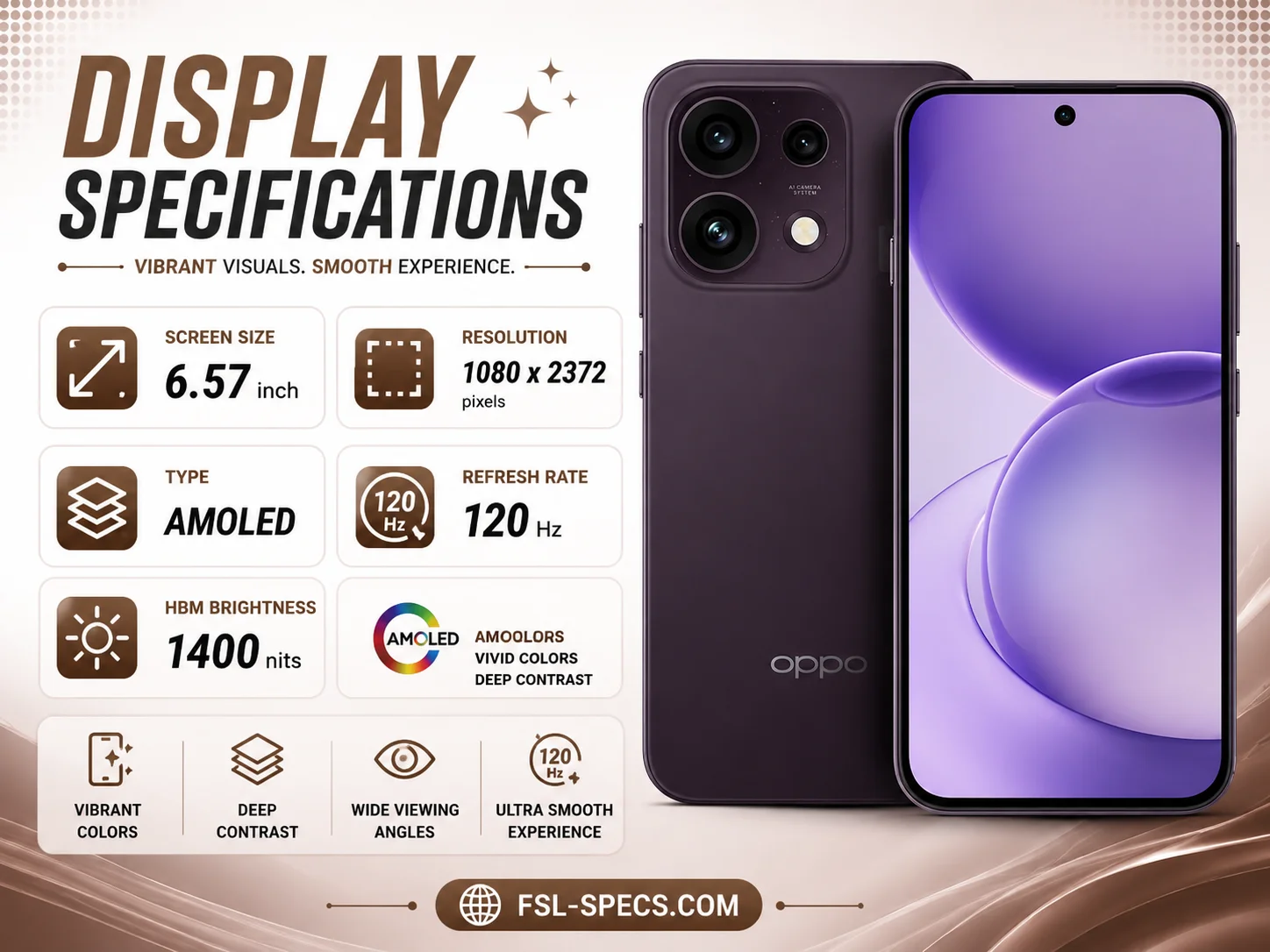
The Oppo Reno 16F 5G comes with a 6.57-inch AMOLED display at 1080 x 2372 pixels, a 120Hz refresh rate, and brightness rated at 600 nits typical with a 1400 nits HBM peak. At PKR 150,000, this is a solid but unremarkable panel next to the three rivals here.

The Oppo Reno 15 Pro (PKR 159,000) uses a smaller 6.32-inch AMOLED at 1216 x 2640 pixels, sharing the same 120Hz refresh rate as the OPPO Reno 16F, but its brightness is rated significantly higher at 1800 nits HBM, meaning it stays visible in direct sunlight where the 16F’s screen would start to wash out.

The Realme 15 Pro (PKR 132,000) is the cheapest phone in this group yet has the most capable screen on paper, with a 6.8-inch AMOLED at 1280 x 2800 pixels, a faster 144Hz refresh rate, and brightness rated at 1800 nits HBM with a 6500 nits peak. That combination of size, sharpness, and brightness for PKR 18,000 less than the Oppo Reno 16F makes the Reno 16F’s display look weak by comparison.

The Vivo V70 (PKR 160,000) offers a 6.59-inch AMOLED at 1260 x 2750 pixels with a 120Hz refresh rate, plus 1800 nits global peak brightness and 5000 nits local peak brightness, both well ahead of the Reno 16F’s 1400 nits HBM ceiling, giving it a clear edge for outdoor use despite the near-identical screen size.

Verdict: The Oppo Reno 16F’s display is the weakest of the four on resolution and brightness, and the Realme 15 Pro undercuts it on price while beating it on every display metric, making the Realme the strongest pick for anyone prioritizing screen quality in this bracket.

Processor Review:

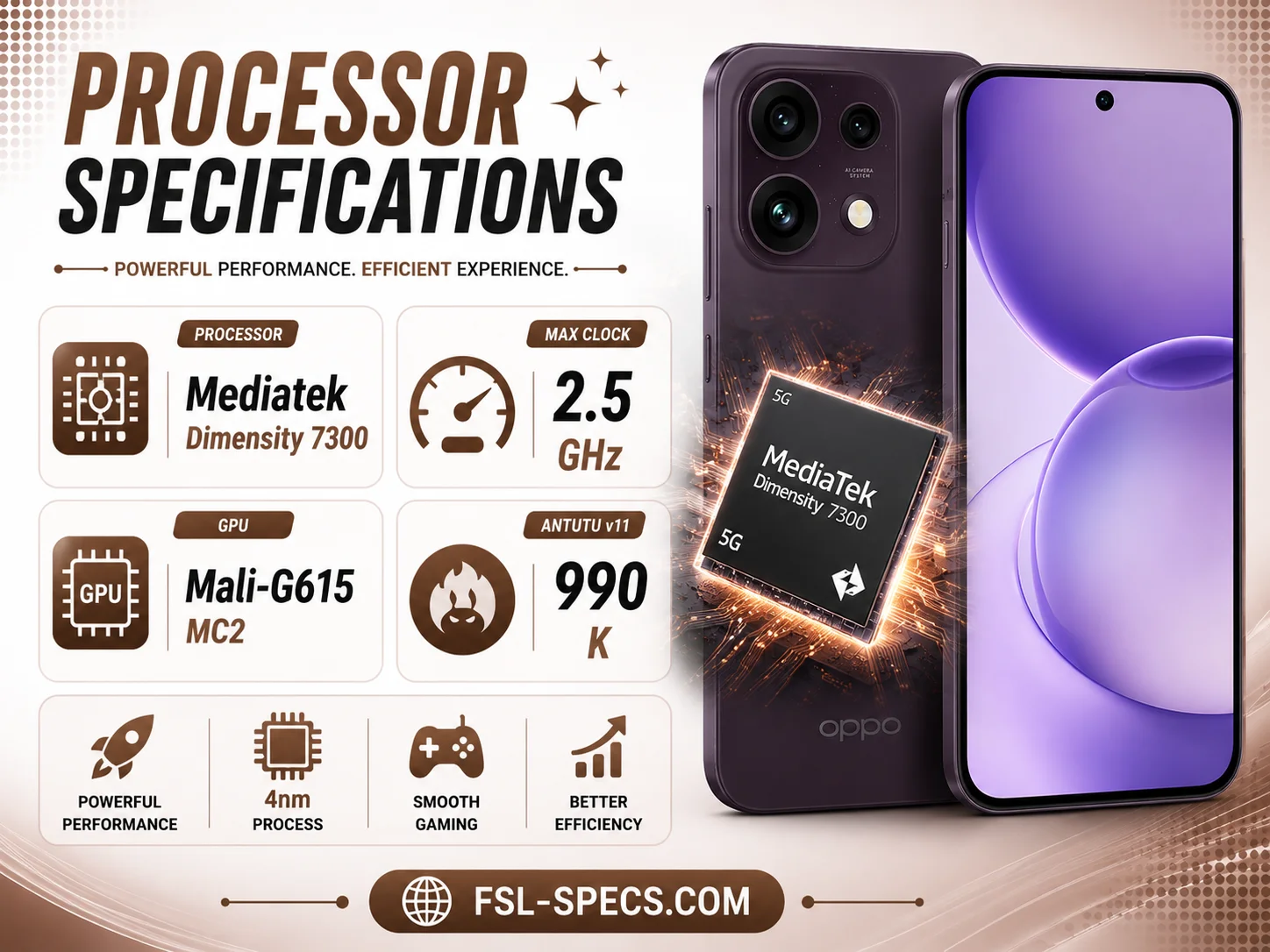
The Oppo Reno 16F 5G runs on the MediaTek Dimensity 7300 Energy, an octa-core chip (4×2.5GHz Cortex-A78 + 4×2.0GHz Cortex-A55) paired with a Mali-G615 MC2 GPU, scoring 789,658 on AnTuTu 11. At PKR 150,000, this is the weakest chipset in the group by a wide margin, and it shows in the numbers below.

The Oppo Reno 15 Pro (PKR 159,000) steps up to the Dimensity 8450, an octa-core Cortex-A725 setup with a Mali-G720 MC7 GPU, scoring 2,050,891 on AnTuTu 11, roughly 160% higher than the Oppo Reno 16F. That gap is not subtle: the Reno 15 Pro is in a completely different performance class, translating to noticeably faster app loading, smoother multitasking, and far more gaming headroom.

The Realme 15 Pro (PKR 132,000) uses the Snapdragon 7 Gen 4, an octa-core 1+4+3 setup (1×2.8GHz + 4×2.4GHz + 3×1.8GHz) with an Adreno 722 GPU, scoring 1,235,431 on AnTuTu 11, about 56% higher than the Reno 16F, while undercutting it by PKR 18,000.

The Vivo V70 (PKR 160,000) uses the same Snapdragon 7 Gen 4 and Adreno 722 GPU as the Realme 15 Pro, but scores 1,437,195 on AnTuTu 11, about 82% higher than the Oppo Reno 16F and noticeably ahead of the Realme despite sharing identical silicon, likely down to memory configuration and software tuning differences between the two brands. All four scores above are drawn from AnTuTu 11 for a consistent comparison.

Verdict: The Oppo Reno 16F’s Dimensity 7300 Energy is clearly the slowest chip here, and even the cheaper Realme 15 Pro beats it by more than half in raw performance, making the Reno 15 Pro the strongest performance pick overall despite its higher price.

Ram & Memory Review:

The Oppo Reno 16F 5G ships with 8GB LPDDR4X RAM and 256GB UFS 3.1 storage, and unlike every rival here, it supports a microSDXC card slot for expansion. At PKR 150,000, that expandability is a genuine advantage, though the RAM type itself is a generation behind the competition.

The Oppo Reno 15 Pro (PKR 159,000) jumps to 12GB LPDDR5X RAM with the same 256GB UFS 3.1 storage, but drops the memory card slot entirely. The extra 4GB and the faster LPDDR5X standard mean noticeably better background app retention and multitasking speed than the Reno 16F, at the cost of expandability.

The Realme 15 Pro (PKR 132,000) also runs 12GB of RAM, though its memory is LPDDR4X, the same generation as the Oppo Reno 16F rather than the newer standard. It pairs this with a generous 512GB UFS 3.1 storage, double the Oppo Reno 16F’s capacity, and like the Reno 15 Pro, it has no card slot. At PKR 18,000 less than the Reno 16F, the larger fixed storage largely offsets the lack of expansion.

The Vivo V70 (PKR 160,000) matches the Reno 16F’s 8GB RAM capacity but uses the faster LPDDR5X standard, paired with 256GB UFS 4.1 storage, the fastest storage standard of the four phones here, meaning quicker app installs and file transfers than any of the others. It also has no microSD slot.

Verdict: The Oppo Reno 16F is the only phone here with expandable storage, which matters for buyers who shoot a lot of video, but its LPDDR4X RAM and UFS 3.1 storage lag behind the Reno 15 Pro and Vivo V70 on raw speed, while the Realme 15 Pro offers the best fixed-storage value with double the capacity for less money.

Cameras Review:

The Oppo Reno 16F 5G carries a triple rear setup: a 50MP main at f/1.8 with a 1/2.0″ sensor and OIS, a 50MP telephoto at f/2.8 offering 3.5x optical zoom, and an 8MP ultrawide at f/2.2. The sensor brands for all three haven’t been disclosed. Video tops out at 4K@30fps on the rear and the same on the 50MP selfie camera. At PKR 150,000, this is a competent but unremarkable setup next to what the rivals below offer.

The Oppo Reno 15 Pro (PKR 159,000) uses a verified 200MP Samsung ISOCELL HP5 main sensor at f/1.8 with OIS, a 50MP Samsung ISOCELL JN5 telephoto at f/2.8 with 3.5x optical zoom and OIS, and a 50MP GalaxyCore ultrawide at f/2.0, all confirmed hardware rather than the Reno 16F’s undisclosed sensors. Rear video hits 4K@60fps, and the 50MP selfie camera records up to 4K@60fps too, both ahead of the Reno 16F.

The Realme 15 Pro (PKR 132,000) drops the telephoto entirely, pairing a 50MP Sony IMX896 main at f/1.8 with OIS and a 50MP ultrawide at f/2.0. Rear video reaches 4K@60fps and the 50MP selfie matches that. It undercuts the Reno 16F by PKR 18,000 but buyers lose zoom versatility in the trade.

The Vivo V70 (PKR 160,000) pairs a 50MP Sony LYT700V main at f/1.88 with OIS, a 50MP Sony IMX882 telephoto at f/2.65 with 3x optical zoom and OIS, and an 8MP ultrawide at f/2.2, plus a 50MP ZEISS-tuned selfie camera. Rear video reaches 4K@60fps.

Verdict: The Oppo Reno 16F’s undisclosed sensors and 4K@30fps ceiling make it the weakest camera system here, while the Reno 15 Pro’s confirmed 200MP main sensor and 4K@60fps across the board make it the strongest overall camera pick in this group.

Battery Review:

The Oppo Reno 16F 5G packs the largest cell here at 7000mAh, paired with 80W wired charging that takes the phone from 0 to 100% in 62 minutes. It supports reverse wired charging but has no wireless charging. At PKR 150,000, the massive capacity is the standout feature, even if the charging speed itself is the slowest of the four.

The Oppo Reno 15 Pro (PKR 159,000) has a smaller 6200mAh battery, a trade-off for its compact 6.32-inch body, but its 80W SuperVOOC charging gets it to full in just 53 minutes, faster than the Reno 16F despite similar wattage, since there’s less capacity to fill. It also supports reverse wired charging but skips wireless charging.

The Realme 15 Pro (PKR 132,000) matches the Oppo Reno 16F’s 7000mAh capacity while undercutting it by PKR 18,000, and its 80W SUPERVOOC charging reaches full in just under an hour, noticeably faster than the Reno 16F’s 62 minutes despite carrying the same size battery. No wireless charging is offered, and reverse charging support hasn’t been confirmed for this model.

The Vivo V70 (PKR 160,000) has the smallest capacity of the group at 6500mAh, but its 90W FlashCharge is the fastest wired standard here, with Vivo’s own figures putting a full charge at around 50 minutes. It supports reverse charging and, like every phone in this comparison, skips wireless charging entirely.

Verdict: The Oppo Reno 16F wins on raw capacity but loses on charging speed, and the Realme 15 Pro matches its battery size while charging noticeably faster and costing less, making the Realme the stronger battery value pick, while the Vivo V70 is the best choice for buyers who prioritize topping up quickly over maximum capacity.

Final Verdict :

Across display, processor, RAM, camera, and battery, the Oppo Reno 16F 5G (PKR 150,000) comes out as the weakest phone in this comparison, losing on refresh rate and brightness, trailing badly on AnTuTu with the Dimensity 7300 Energy, using an older LPDDR4X memory standard, shipping undisclosed camera sensors capped at 4K@30fps, and charging the slowest despite having the largest battery.

Its only genuine win is the microSDXC card slot, which none of the three rivals offer. The Realme 15 Pro (PKR 132,000) is the standout value pick, undercutting the Reno 16F on price while beating it on display, storage capacity, and charging speed, even though it drops the telephoto lens entirely.

The Oppo Reno 15 Pro (PKR 159,000) is the strongest all-round performer, with a verified 200MP camera system, the fastest AnTuTu score by a wide margin, and 4K@60fps video across both rear and front cameras, making it the pick for buyers who want the most capable phone regardless of price.

The Vivo V70 (PKR 160,000) is the most expensive of the four, and while its 90W charging and ZEISS-tuned telephoto camera are genuine strengths, its smaller 6500mAh battery and identical Snapdragon 7 Gen 4 chipset to the far cheaper Realme 15 Pro make it harder to justify at the top of this price bracket.

Bottom line: Skip the Reno 16F unless expandable storage is a hard requirement, since the Realme 15 Pro beats it on nearly every spec for less money, while the Reno 15 Pro is worth the extra cost only if camera quality and raw performance are the top priority.

Ranking:

  1. Realme 15 Pro – PKR 132,000
  2. Oppo Reno 15 Pro – PKR 159,000
  3. Vivo V70 – PKR 160,000
  4. Oppo Reno 16F 5G – PKR 150,000

Pros And Cons of Oppo Reno 16F

Pros of Mobile

✅ 7000mAh Large Battery 🔋
✅ 80W Fast Charging ⚡
✅ 50MP OIS Camera 📸
✅ 3.5x Optical Zoom 🔭
✅ IP69K Protection 🛡️

Cons of Mobile

❌ Dimensity 7300 Performance ⚙️
❌ 8MP Ultrawide Camera 📷
❌ No Wireless Charging 🔋
❌ No Headphone Jack 🎧
❌ No eSIM Support 📶

Best For - Not Best For

Best For

🎯 Long Battery Users 🔋
🎯 Portrait Photography 📸
🎯 Content Creators 🎥
🎯 Fast Charging Fans ⚡
🎯 AMOLED Lovers 📱
🎯 Durability Seekers 🛡️

Not Best For

🚫 Hardcore Gamers 🎮
🚫 Ultrawide Photography 📷
🚫 Wireless Charging Fans 🔋
🚫 Wired Audio Users 🎧
🚫 eSIM Users 📶
🚫 Flagship Performance 🚀

Trailer And Unboxing of Oppo Reno 16F

Disassembly Or Teardown And Gaming Test of Oppo Reno 16F

Picture of Faisal Ur Rehman

Faisal Ur Rehman

Faisal Rehman is the founder and editor of FSL Specs, where he publishes in-depth smartphone specifications, comparisons, buying guides, and technology insights. With extensive experience in mobile hardware research and technical analysis, he provides accurate and up-to-date information on Android smartphones, processors, displays, cameras, batteries, performance benchmarks, and software features. His goal is to simplify complex specifications and help readers choose the right device with confidence.

OPPO Series Row

FAQs Questions

It runs on the MediaTek Dimensity 7300 Energy, a 4nm chip paired with Mali-G615 MC2 graphics. It's tuned more for battery efficiency and smooth daily use than raw gaming power.

It has a 6.57-inch AMOLED screen with 1080 x 2372 resolution, a 120Hz refresh rate, and up to 1400 nits peak brightness. Colors and outdoor visibility are genuinely strong for this price segment.

You get a 50MP main camera with OIS, a 50MP telephoto lens offering 3.5x optical zoom with its own OIS, and an 8MP ultra-wide — a rare combo at this level. The front camera is a 50MP ultra-wide selfie shooter with autofocus.

It packs a 7,000mAh battery, one of the largest in its class, supporting up to 80W SUPERVOOC fast charging. That combination gives you both long endurance and quick top-ups when needed.

Yes, it carries an IP68/IP69K rating, meaning it can handle submersion as well as high-pressure water jets. That's a genuinely flagship-level durability rating for a mid-range phone.

It comes in 8GB and 12GB RAM options with 128GB or 256GB storage, and supports microSD expansion. That gives you flexibility whether you prioritize multitasking or storage space.

It ships with Android 16 and ColorOS 16 on top. Oppo typically backs its Reno series with multiple years of OS and security updates.

It's officially priced starting at Rs. 125,999 for the 8GB/128GB variant, with higher RAM and storage options available at a premium.

Leave a Reply

Your email address will not be published. Required fields are marked *

Scroll to Top