
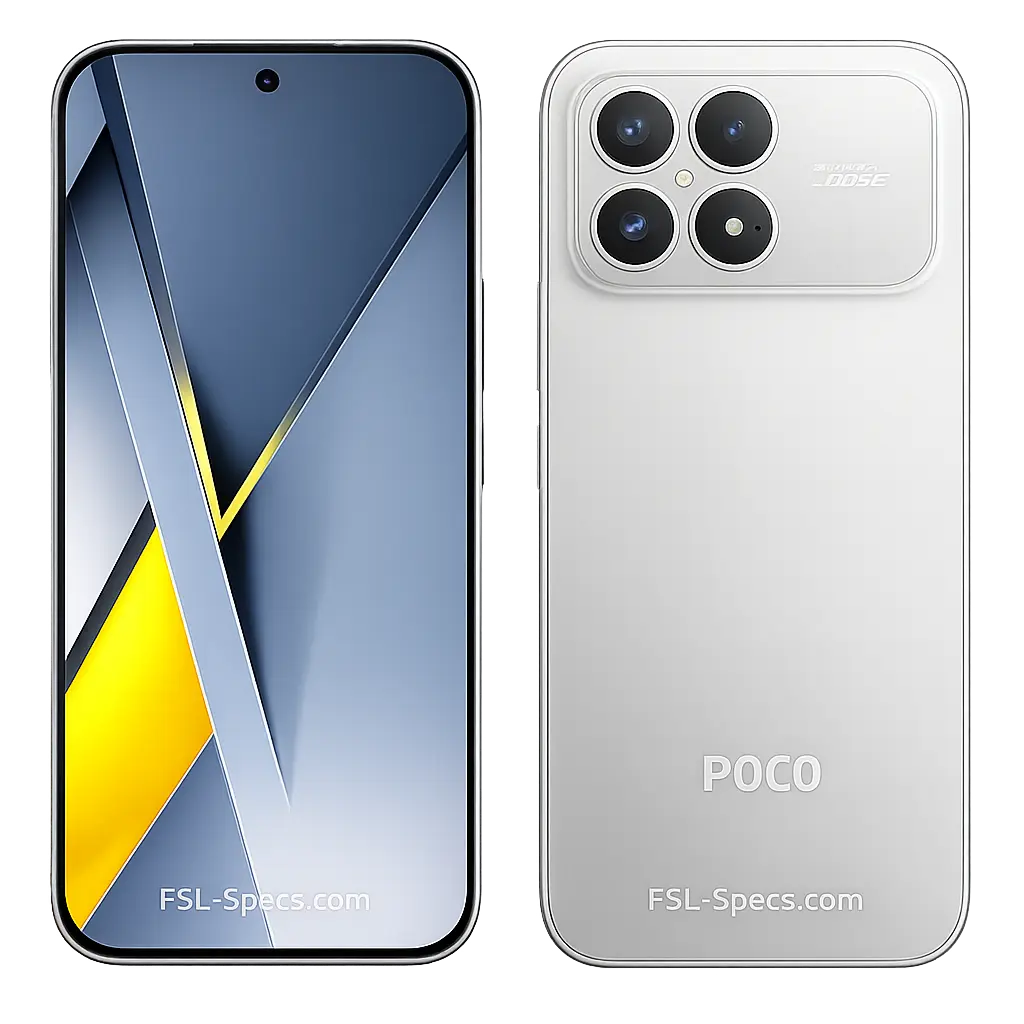
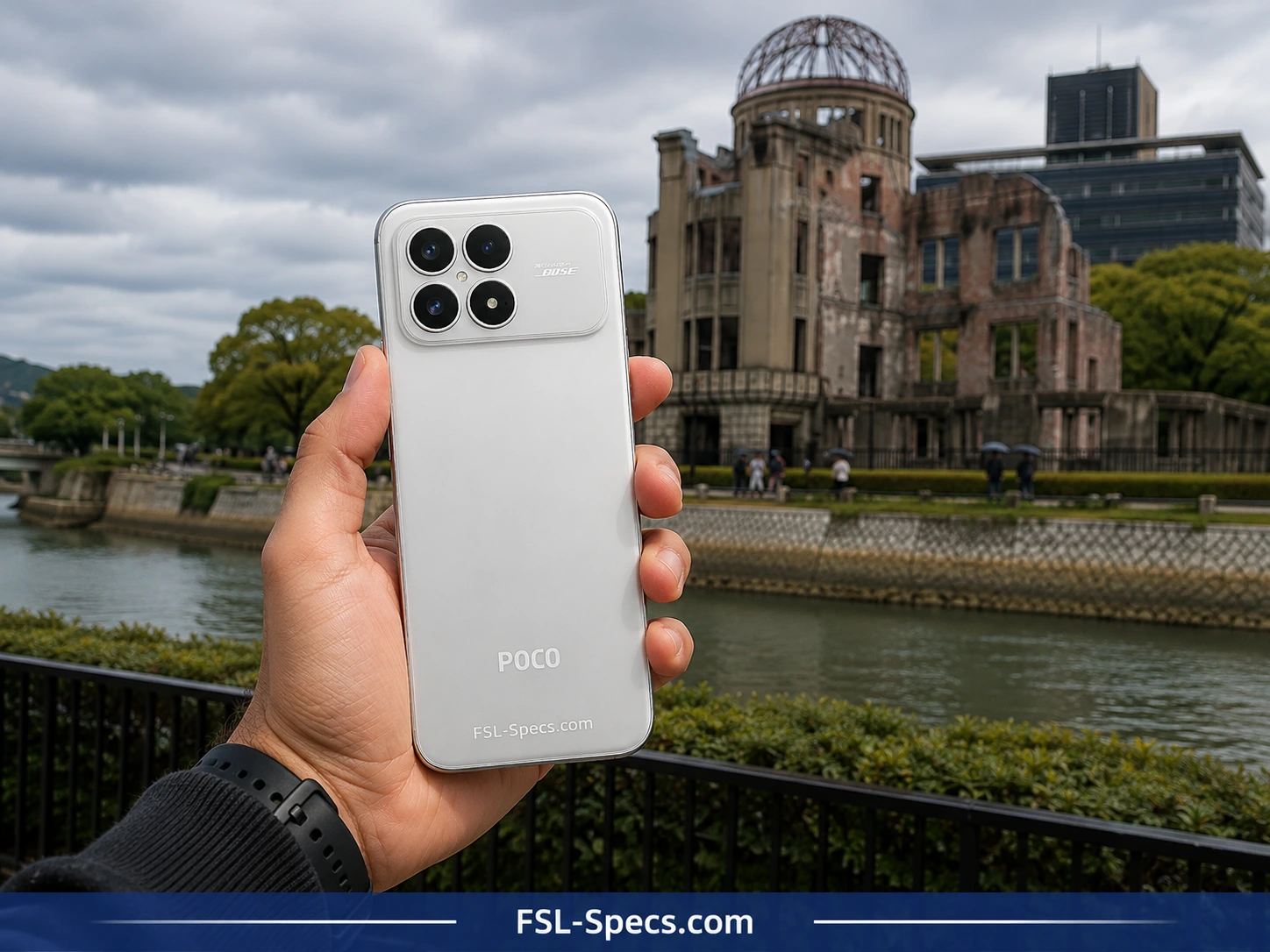
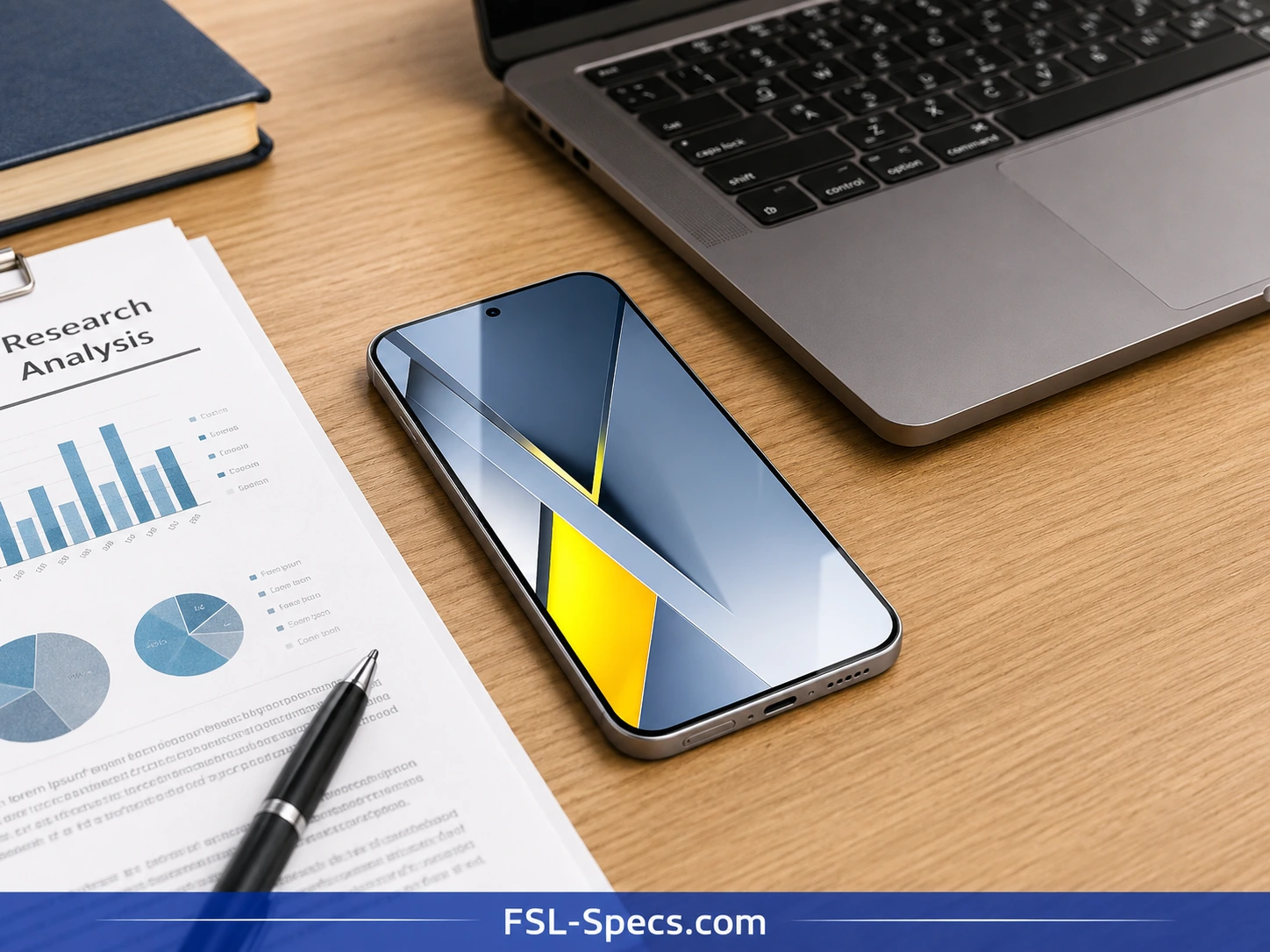
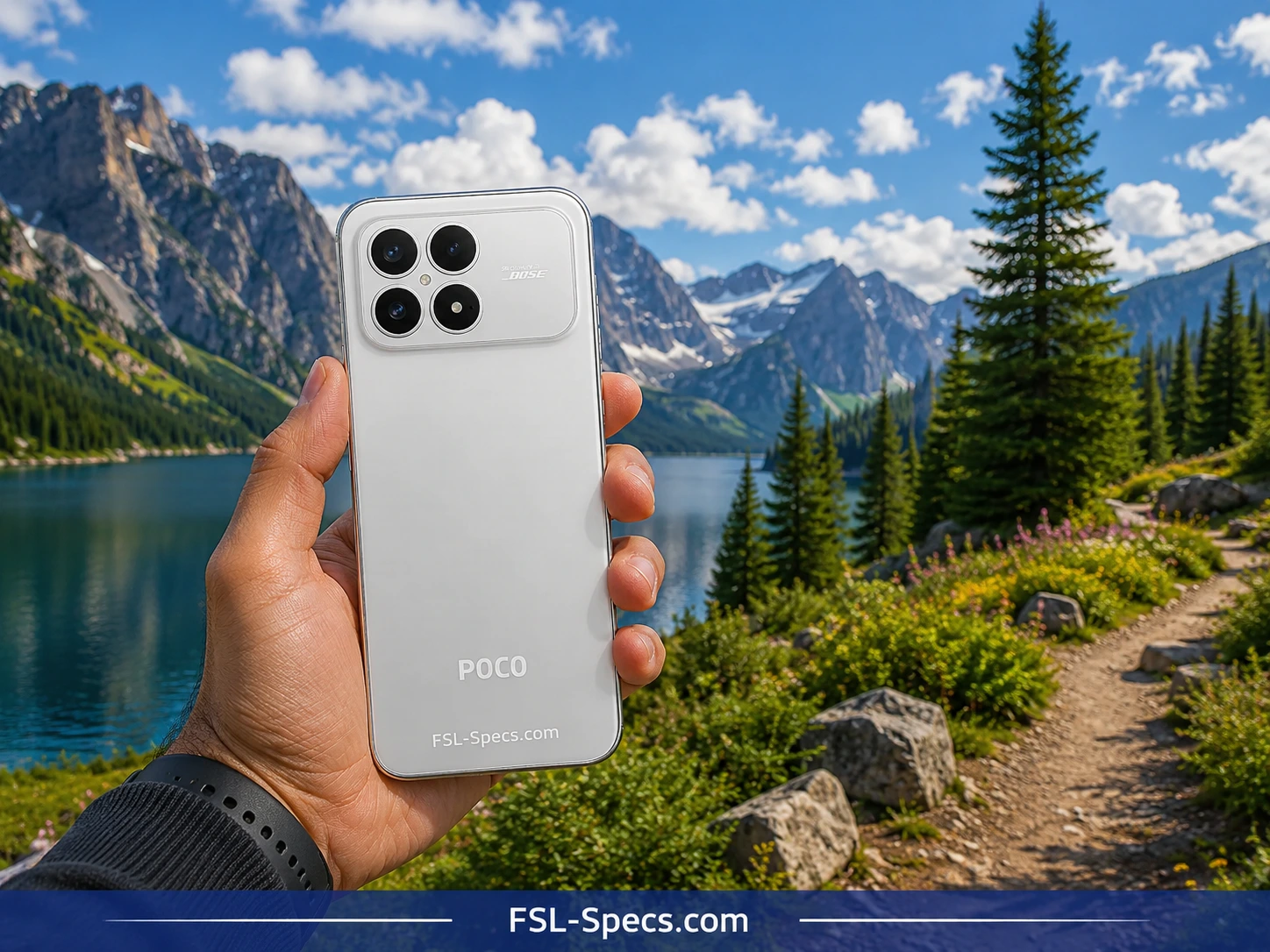




✪ Poco F8 Pro ✪

Poco F8 Pro Specs, Price, Camera, Battery & Best Review (2026)
Last Time Update : 20 October, 2026
United States flagUnited States
600USD
…iPrice NoteYour Country price depends on USD. Prices may be different in your region due to taxes and duties.
Pakistan flagPakistan (PKR)
230000PKR
India flagIndia (INR)
58000INR

✪ Poco F8 Pro ✪

Poco F8 Pro Specs, Price, Camera, Battery & Best Review (2026)
Quick Specs
Display
6.9 inchAMOLED120 Hz
Processor
Snapdragon 8 Elite Gen 54.32 GHz
RAM & Storage
12 + 512 GB
Rear Camera
50 + 50 + 8 MP
Front Camera
20 MP
Battery & Charging
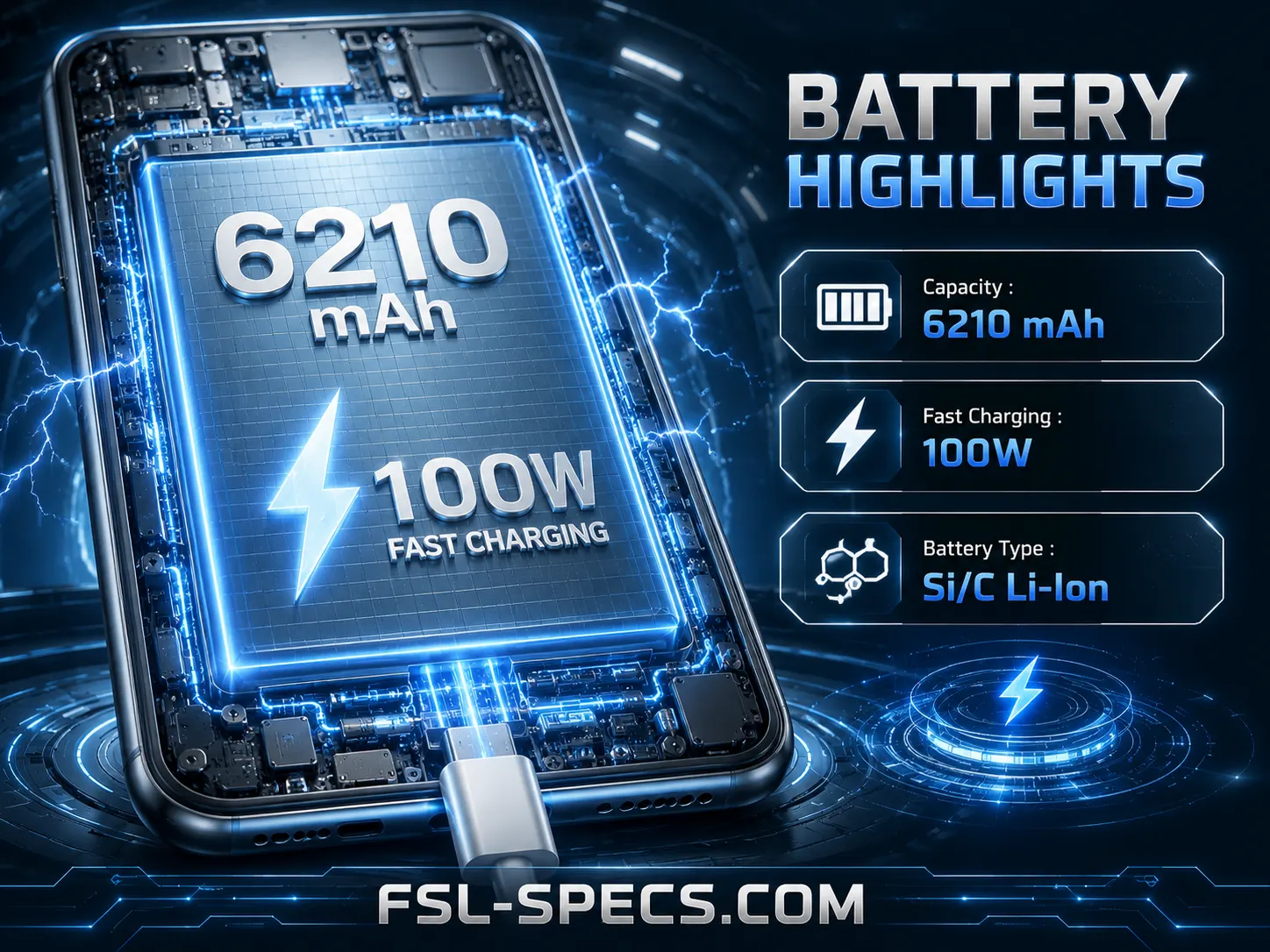
6210 mAh100 W

Full Specification

!
IMPORTANT INFORMATION

Specifications Disclaimer

NOTICE

Specifications are collected from official manufacturers and trusted sources. Actual details may vary by region, model variant, or software updates. We strive for accuracy but cannot guarantee error-free information.

Basic Info

Mobile
Poco F8 Pro
Model
2510DPC44G
Series
Poco F
Category
Flagship
Release Date
26 November,2025
Year
2025

Connectivity

SIM
Nano-SIM / E-Sim
Network
4G / 4G+ / 5G/ 5G+
WiFi
Wi-Fi 7
Bluetooth
5.4
NFC
Yes
OS
Android 17 , HyperOS 4

Body

Dimensions
157.5 x 75.2 x 8.0 mm
Build
Aluminium Frame+ glass back
Weight
199 grams
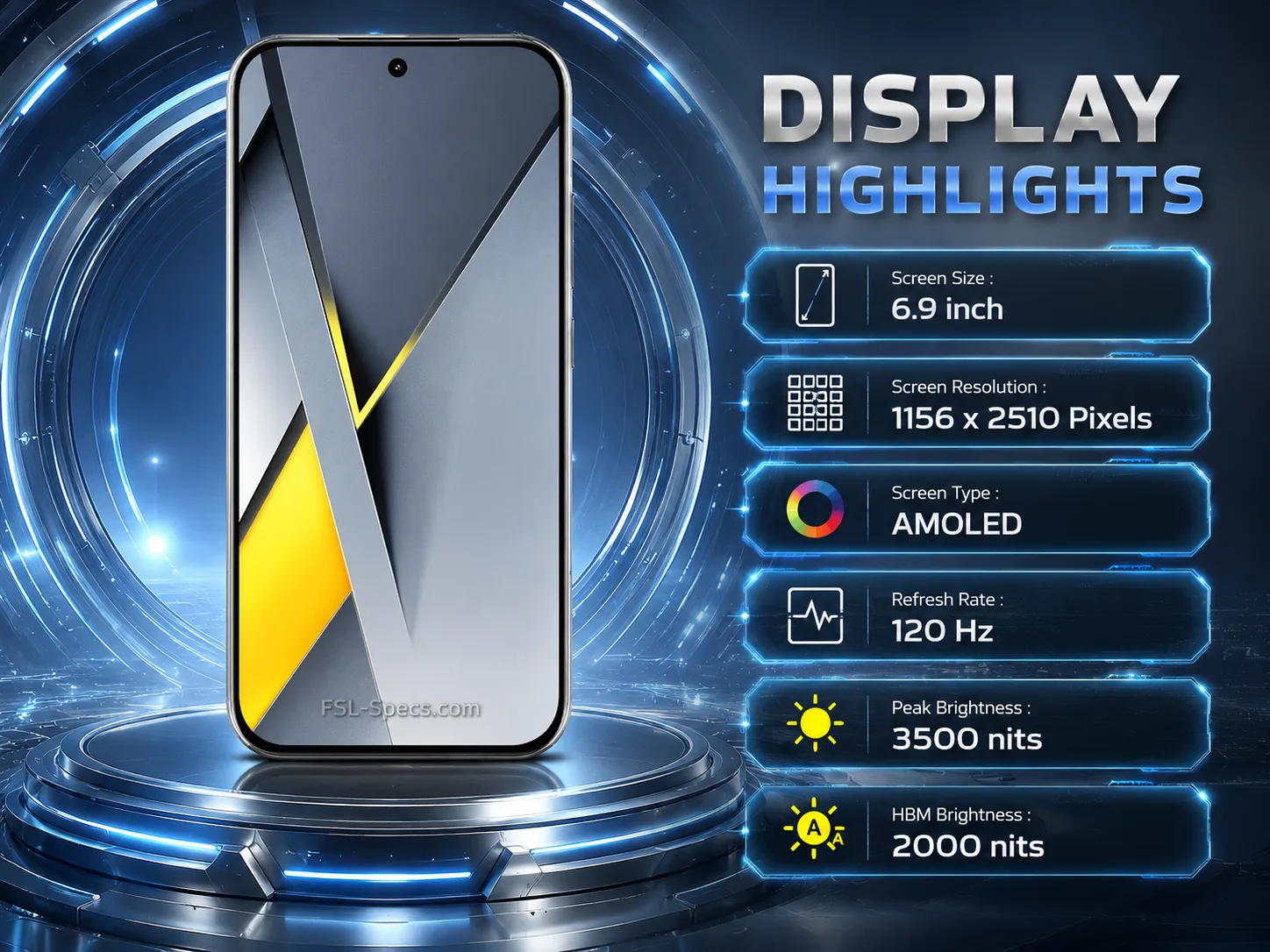
Screen Size
6.9 inch
Resolution
1156 x 2510 Pixels
Type
AMOLED
Refresh Rate
120 Hz
Peak Brightness
3500 nits
HBM Brightness
2000 nits
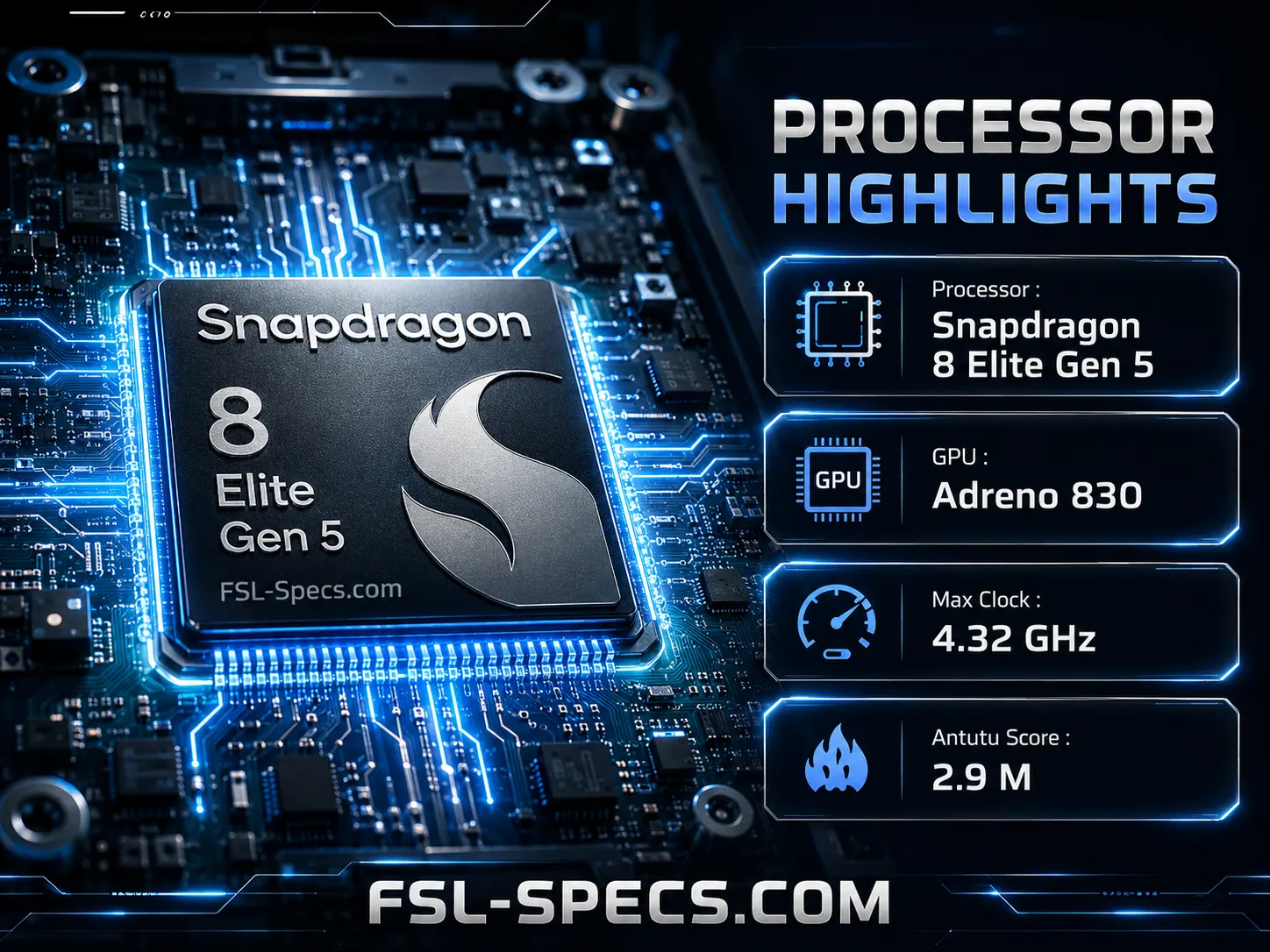
Processor Specs
Processor
Snapdragon 8 Elite Gen 5
Max Clock
4.32 GHz
Lithography
3 nm
GPU
Adreno 830
CPU Cores
Octa-core
Antutu v11
2.9 M
Antutu v10
3.1 M
Architecture
2 x 4.32 GHz Oryon V2 Phoenix L
6 x 3.53 GHz Oryon V2 Phoenix M
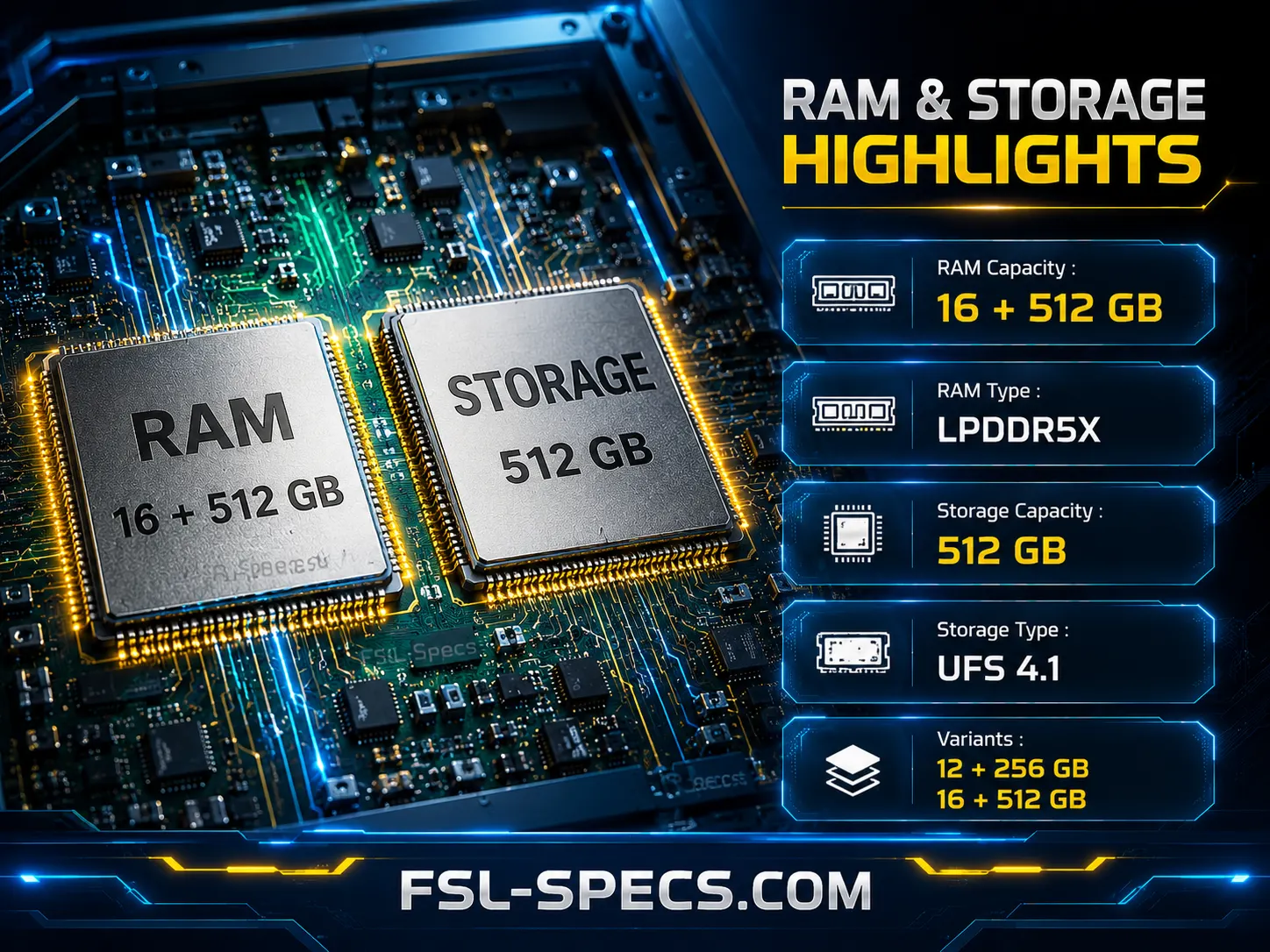
RAM & ROM Specs
RAM Memory
12 + 512 GB
RAM Type
LPDDR5X
Storage Type
UFS 4.1
SD Card
No
Variants
12 + 256 GB
12 + 512 GB
Camera Specs
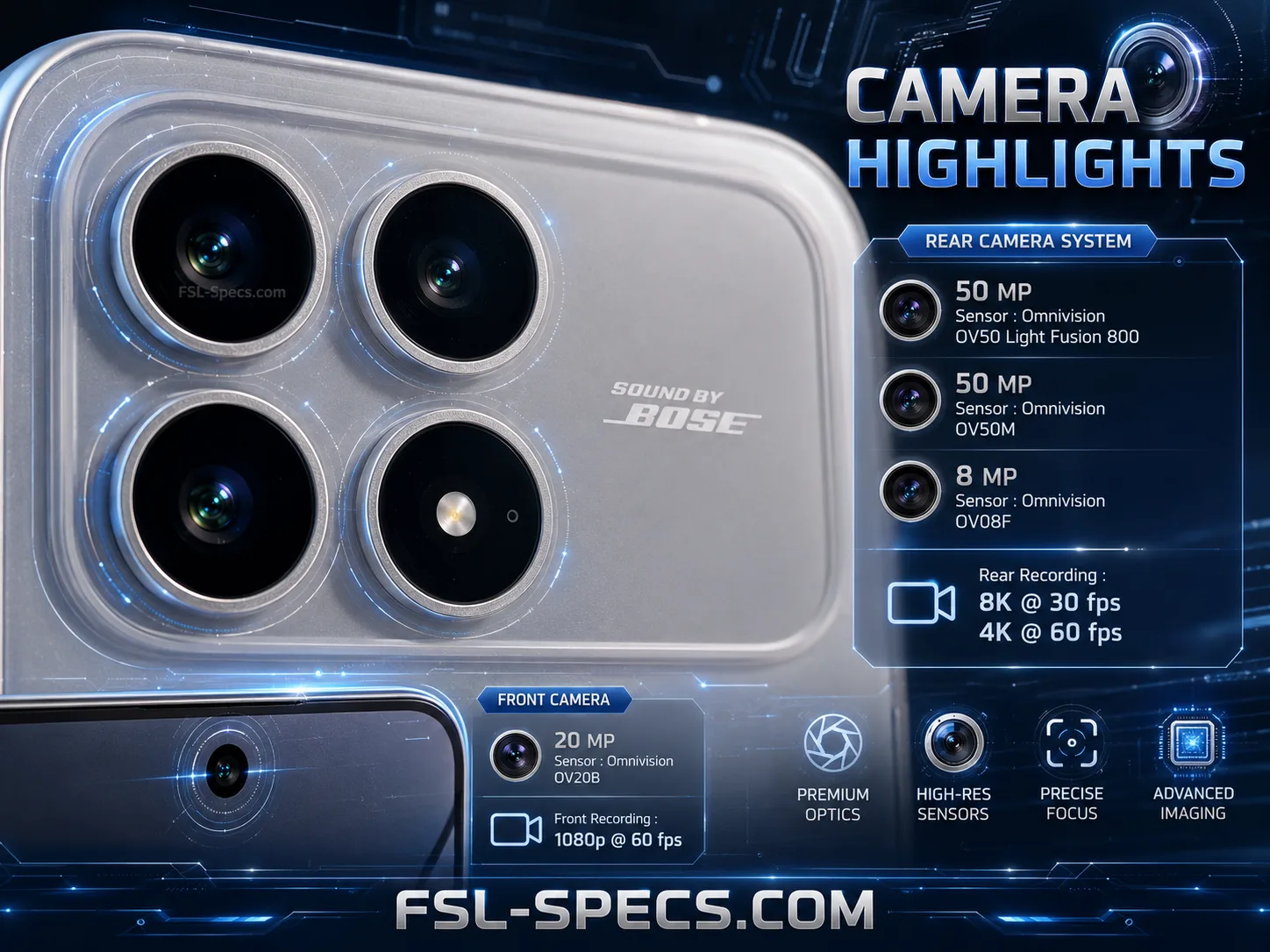
MP
Rear Camera
50 + 50 + 8 MP
Front Camera
20 MP
Sensors
Camera Sensors
50 MP    = Omnivision OV50 Light Fusion 800
50 MP    = Omnivision OV50M
8 MP      = Omnivision OV08F
Front Sensors
20 MP    = Omnivision OV20B
Recording FPS
Main Recording
8K @ 30 fps
4K @ 60 fps
1080p @ 960 fps
Front Recording
1080p @ 60 fps
Zoom
Optical Zoom
5 x
Digital Zoom
30 x
Flash
Flash
Dual LED
Front Flash
Screen Flash
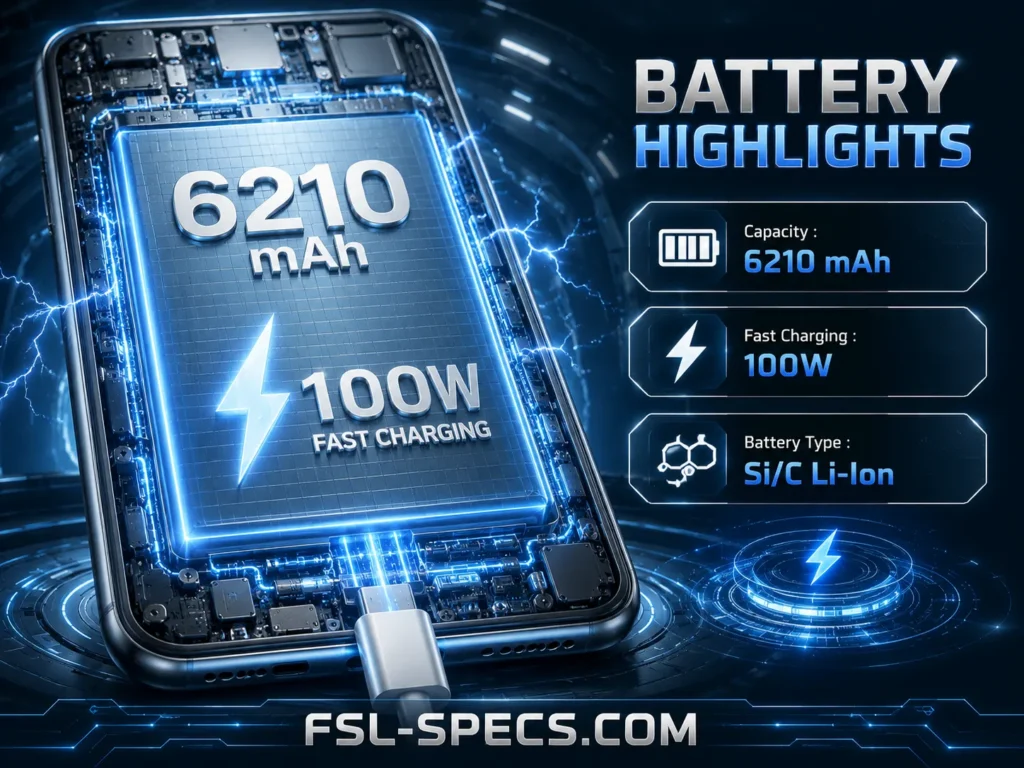
Battery Specs
Capacity
6210 mAh
Fast Charging
100 W
Wireless Charging
No
Battery Type
Si/C Li-Ion
Reverse
Reverse Wired
22.5 W
Reverse Wireless
No
Other
Charging Time
35–40 minutes ( 0-100% )
Other Specs
Audio & Sensors
Speaker
Dual Stereo Speaker
Fingerprint Sensor
Hyper Sonic Front Finger
Other Sensors
Proximity sensor
Gyroscope
Accelerometer
Ambient light sensor
Compass, rgb sensor etc
Special Features

Stereo speakers with Dolby Atmos, tuned by Bose
Corning Gorilla Glass 7i front protection
2.5x optical zoom telephoto with OIS
Fast 100W wired charging with 22.5W wired reverse charging
No wireless charging (a key differentiator from the F8 Ultra)

BASIC INFO
Mobile
Poco F8 Pro
Model
2510DPC44G
Series
Poco F
Category
Flagship
Release Date
26 November,2025
Year
2025
CONNECTIVITY
Sim
Nano-SIM / E-Sim
Network
4G / 4G+ / 5G/ 5G+
WiFi
Wi-Fi 7
Bluetooth
5.4
NFC
Yes
OS
Android 17 , HyperOS 4
BODY
Dimensions
157.5 x 75.2 x 8.0 mm
Build
Aluminium Frame+ glass back
Weight
199 grams
Screen Size
6.9 inch
Resolution
1156 x 2510 Pixels
Type
AMOLED
Refresh Rate
120 Hz
Peak Brightness
3500 nits
HBM Brightness
2000 nits
Processor
Snapdragon 8 Elite Gen 5
Max Clock
4.32 GHz
Lithography
3 nm
GPU
Adreno 830
CPU Cores
Octa-core
Antutu v11
2.9 M
Antutu v10
3.1 M
Architecture
2 x 4.32 GHz Oryon V2 Phoenix L
6 x 3.53 GHz Oryon V2 Phoenix M
Ram Memory
12 + 512 GB
SD Card
No
Ram Type
LPDDR5X
Storage Type
UFS 4.1
Variants
12 + 256 GB
12 + 512 GB
MP
Rear Camera
50 + 50 + 8 MP
Front Camera
20 MP
SENSORS
Main Camera Sensors
50 MP    = Omnivision OV50 Light Fusion 800
50 MP    = Omnivision OV50M
8 MP      = Omnivision OV08F
Front Camera Sensors
20 MP    = Omnivision OV20B
RECORDING FPS
Main Recording
8K @ 30 fps
4K @ 60 fps
1080p @ 960 fps
Front Recording
1080p @ 60 fps
RESOLUTION
Main Resolution
8160 × 6144 pixels
Front Resolution
5184 × 3888 pixels
ZOOM
Optical Zoom
5 x
Digital Zoom
30 x
FLASH
Flash
Dual LED
Front Flash
Screen Flash
Capacity
6210 mAh
Fast Charging
100 W
Wireless Charging
No
Battery Type
Si/C Li-Ion
REVERSE
Reverse Wired
22.5 W
Reverse Wireless
No
OTHER
Charging Time
35–40 minutes ( 0-100% )
AUDIO & SENSORS
Speaker
Dual Stereo Speaker
Fingerprint Sensor
Hyper Sonic Front Finger
Other Sensors
Proximity sensor Gyroscope Accelerometer Ambient light sensor Compass, rgb sensor etc
Special Features

Stereo speakers with Dolby Atmos, tuned by Bose Corning Gorilla Glass 7i front protection 2.5x optical zoom telephoto with OIS Fast 100W wired charging with 22.5W wired reverse charging No wireless charging (a key differentiator from the F8 Ultra)

Verify Mobile Specifications

Official information & trusted references

Official Manufacturer WebsiteExplore the original product information (opens in a new tab)

Trusted Specification Sources

Cross-reference · 4 sources

Links open third-party websites. The Purple ticks are a design marker only; they do not mean a source has verified these specifications or endorses FSL-Specs.

Last Time Update : 20 October, 2026

Highlights & Review Of Poco F8 Pro

Display Highlights

Display Highlights

The Poco F8 Pro, in the selected 12GB + 512GB variant and priced at PKR 230,000–240,000 at Pakistani retailers, features a 6.59-inch HyperRGB AMOLED display with 2510 × 1156 resolution, about 419 ppi, and a 120Hz refresh rate. It supports HDR10+, Dolby Vision, 2560Hz PWM dimming, and up to 3500 nits local peak brightness on 25% of the screen; its stated high-brightness-mode level is 1000 nits global brightness. The HyperRGB subpixel layout is designed to deliver sharp-looking text and graphics while using less power than a conventional RGB arrangement.

The Poco F7 Ultra, priced at approximately PKR 250,000 at retailers, has a larger 6.67-inch WQHD+ AMOLED display with 3200 × 1440 resolution, about 526 ppi, and a 120Hz refresh rate. It supports 3200 nits local peak brightness and 1800 nits HBM brightness. Compared with the F8 Pro, the F7 Ultra offers higher resolution and pixel density, while the Poco F8 Pro has a newer HyperRGB panel and a higher advertised local peak-brightness figure.

The Xiaomi 15T Pro, available for around PKR 235,000 at retailers, offers the largest screen here, with a 6.83-inch AMOLED display, 2772 × 1280 resolution, approximately 447 ppi, and a 144Hz refresh rate. It supports 12-bit colour, HDR10+, Dolby Vision, and up to 3200 nits peak brightness over 25% of the display area. Its 144Hz refresh rate is higher than the two Poco phones, although its pixel density sits between the Poco F8 Pro and F7 Ultra.

The iQOO 13, priced at approximately PKR 230,000–240,000 at retailers, has a 6.82-inch 2K LTPO AMOLED display with 3168 × 1440 resolution, around 510 ppi, and a variable 1–144Hz refresh rate. Its listed brightness reaches 1800 nits HBM and up to 4500 nits peak. The iQOO’s high resolution, adaptive refresh rate, and peak-brightness specification make it the strongest all-round display on paper, while the Xiaomi 15T Pro offers a slightly larger viewing area.

Verdict: The iQOO 13 leads on display specifications with its 2K LTPO panel, adaptive 144Hz refresh rate, and quoted 4500 nits peak brightness. The Poco F7 Ultra has the sharpest image at about 526 ppi, while the Xiaomi 15T Pro has the largest screen and 144Hz refresh rate. The Poco F8 Pro remains a capable, bright 120Hz AMOLED option, but its FHD+-class resolution and lower refresh rate place it behind these rivals for screen detail and smoothness.
Performance Highlights

Performance Highlights

The Poco F8 Pro, in the 12GB + 512GB variant priced at PKR 230,000–240,000 at Pakistani retailers, uses the Qualcomm Snapdragon 8 Elite. GSMArena’s AnTuTu v11 comparison recorded 3,023,050 points for the F8 Pro, placing it first among these four phones in the cited results. That flagship-class chipset is well suited to demanding games, intensive multitasking, and high-resolution video editing.

The Poco F7 Ultra, with 16GB + 512GB at approximately PKR 250,000, also uses the Snapdragon 8 Elite. Xiaomi lists an AnTuTu score of 2,843,461, about 5.9% below the F8 Pro’s cited result. Both phones share the same chipset family, so differences in cooling, software tuning, and testing conditions matter more than the small benchmark gap when considering gaming performance.

The Xiaomi 15T Pro, with 12GB + 512GB at around PKR 235,000, runs on the MediaTek Dimensity 9400+. A published AnTuTu v11 result is 2,777,735, approximately 8.1% below the F8 Pro. The 15T Pro remains a high-performance phone, but its benchmark result places it behind both Poco models in this comparison.

The iQOO 13, in the specified 16GB + 512GB configuration and priced at PKR 230,000–240,000, is powered by the Snapdragon 8 Elite. A published AnTuTu v11 result is 2,678,003, around 11.4% below the F8 Pro. This is not NanoReview’s v11 average: NanoReview’s available iQOO 13 benchmark page reports v10 data, so the v11 figure should be treated as a separate benchmark result rather than directly attributed to NanoReview.

Verdict: The Poco F8 Pro leads the available AnTuTu v11 results at 3,023,050 points, while the Poco F7 Ultra follows at approximately 5.9% lower. The Xiaomi 15T Pro and iQOO 13 also deliver flagship-level performance, but their cited v11 scores are lower. These percentages compare published results, not guaranteed differences in everyday speed; benchmark scores vary with test build, firmware, temperature, and performance mode.

Memory & Storage Highlights

Memory & Storage Highlights

The iQOO 13 offers 16GB RAM and 512GB storage, matching the specified 16GB/512GB POCO F7 Ultra. The POCO F8 Pro and Xiaomi 15T Pro each provide 12GB RAM and 512GB storage in the variants being compared. All four therefore offer 512GB of internal storage, but iQOO and F7 Ultra have the higher physical RAM capacity.

The POCO F8 Pro officially supports 12GB LPDDR5X RAM and 512GB UFS 4.1 storage. This combination provides space for large games, video recordings, downloaded media and demanding applications. LPDDR5X describes the physical RAM technology, while UFS 4.1 identifies the internal storage standard.

The POCO F7 Ultra uses 16GB LPDDR5X RAM and 512GB UFS 4.1 storage in the specified version. It matches iQOO in nominal memory and storage capacity, making cooling, performance, software and price more important than capacity alone when comparing the two phones.

The Xiaomi 15T Pro offers 12GB LPDDR5X RAM and 512GB UFS 4.1 storage. Its configuration is sufficient for demanding applications and multitasking, although it has 4GB less physical RAM than the specified iQOO 13 and POCO F7 Ultra.

The iQOO 13 supports 16GB RAM and 512GB storage in the Indian variant listed by its manufacturer. Its official product information specifies UFS 4.1 storage for the 16GB/512GB edition, while the 12GB/256GB edition has a different storage-interface note. The 16GB/512GB configuration should therefore be checked against the exact device supplied by the Pakistani retailer.

RAM and storage winner: iQOO 13 and POCO F7 Ultra. Both offer 16GB physical RAM and 512GB storage, giving them the highest nominal memory capacity in this comparison. The iQOO has the stronger overall performance package on the available benchmark evidence, while both phones provide substantial room for multitasking.

Camera Highlights

Camera Highlights

The Poco F8 Pro, in the 12GB + 512GB variant priced at PKR 230,000–240,000 at Pakistani retailers, has a 50MP main camera with OIS, a 50MP 2.5x telephoto camera, and an 8MP ultrawide camera. Its main camera records up to 8K at 30fps and 4K at 60fps; the telephoto camera also supports 4K at 60fps. The main camera offers slow-motion modes up to 1080p at 960fps according to the manufacturer’s specifications. The front camera is 20MP and records up to 1080p at 60fps. OIS is confirmed on the main camera, but not on the ultrawide or selfie camera.

The Poco F7 Ultra, available for around PKR 250,000 at retailers, features a 50MP OIS main camera, a 50MP OIS 2.5x telephoto camera, and a 32MP ultrawide camera. Its rear system records up to 8K at 24fps, 4K at 60fps, and 1080p at 240fps; the selfie camera records up to 1080p at 60fps. The main and telephoto cameras have OIS, while gyro-EIS supports video stabilization.

The Xiaomi 15T Pro, priced at approximately PKR 235,000 at retailers, uses a 50MP OIS main camera, a 50MP 5x telephoto camera with OIS, and a 12MP ultrawide camera. The main camera records up to 8K at 30fps and 4K at 120fps; the telephoto camera supports 4K at 60fps. The ultrawide and front cameras record up to 4K at 30fps. Its 4K120 option is a key advantage for capturing fast action, but it is available only from the main camera.

The iQOO 13, in the 16GB + 512GB variant priced at PKR 230,000–240,000, has a 50MP OIS main camera, a 50MP OIS 2x telephoto camera, and a 50MP ultrawide camera. Its rear cameras support 8K at 30fps, 4K at 60fps, and 1080p at up to 240fps. The 32MP selfie camera records up to 4K at 60fps. Standard gyro-EIS is available for rear video, with stronger stabilization modes depending on resolution.

The Xiaomi 15T Pro has the best zoom camera among the alternatives. Its 50MP telephoto camera offers 5x optical zoom, OIS, and a 115mm-equivalent focal length, so it can capture distant subjects with more native optical reach than the other two phones.

The Poco F7 Ultra has a 50MP telephoto camera with 2.5x optical zoom and OIS, while the iQOO 13 offers a 50MP OIS telephoto camera with 2x optical zoom.

Zoom ranking: Xiaomi 15T Pro first, Poco F7 Ultra second, iQOO 13 third. The 15T Pro’s 5x optical reach makes it the strongest pick for distant subjects, though its f/3.0 telephoto lens may be less capable in low light.

Verdict: The Xiaomi 15T Pro leads for rear-video flexibility with 4K at 120fps and OIS on its main and telephoto cameras. The iQOO 13 is the strongest choice for high-resolution selfie video, supporting 4K at 60fps on the front camera. The Poco F8 Pro and F7 Ultra both offer OIS-equipped main and telephoto cameras with 8K recording, but the Poco F8 Pro adds 8K at 30fps while the F7 Ultra is limited to 8K at 24fps.

Battery & Charging Highlights

Battery & Charging Highlights

The POCO F8 Pro has a 6,210mAh battery and 100W wired charging, while the iQOO 13’s Indian variant provides a 6,000mAh silicon-anode battery and 120W charging. The POCO F7 Ultra combines a 5,300mAh battery with 120W wired and 50W wireless charging, while the Xiaomi 15T Pro provides a 5,500mAh battery, 90W wired charging and 50W wireless charging.

The POCO F8 Pro combines the largest stated battery capacity in this group at 6,210mAh with 100W HyperCharge and up to 22.5W wired reverse charging. This arrangement suits users who prioritize battery capacity and the ability to charge compatible accessories or other devices through a cable. Actual endurance depends on screen brightness, gaming load, network conditions and software behavior, so capacity alone cannot confirm the longest-lasting phone.

The POCO F7 Ultra has a 5,300mAh battery, 120W wired HyperCharge and 50W wireless HyperCharge. Wireless charging is its major differentiator against the F8 Pro, particularly for buyers who already own compatible wireless chargers. The actual charging rate depends on the charging equipment, temperature and operating conditions.

The Xiaomi 15T Pro provides a 5,500mAh Xiaomi Surge battery, 90W wired HyperCharge and 50W wireless HyperCharge. Its wireless charging makes it more flexible than a phone that supports only wired charging, although its capacity is lower than the F8 Pro’s. Xiaomi specifies that the wireless charger is sold separately and that a power adapter is not included in the box for the global model. Package contents can vary by region.

The iQOO 13 offers a 6,000mAh equivalent silicon-anode battery and 120W FlashCharge in its Indian variant. iQOO’s official product information also provides laboratory charging claims, but those conditions should not be assumed identical to tests for other models. The exact imported variant supplied in Pakistan should be checked because battery specifications and regional configurations can differ.

Battery winner: POCO F8 Pro for stated capacity; POCO F7 Ultra and Xiaomi 15T Pro for wireless charging. The iQOO 13 offers the highest wired-charging power alongside the F7 Ultra, but controlled endurance testing would be needed to establish which model lasts longest in actual use.

Final Verdict

The Poco F8 Pro is the best overall value at PKR 230,000–240,000 for the 12GB + 512GB variant. Its Snapdragon 8 Elite, 3,023,050 AnTuTu v11 score, 6210mAh battery, 100W wired charging, and 512GB UFS 4.1 storage make it a strong choice for gaming and everyday flagship performance at a lower price than the Poco F7 Ultra. It lacks wireless charging, and its 120Hz FHD+-class display is less sharp than the F7 Ultra’s QHD+ panel.

The Poco F7 Ultra, at approximately PKR 250,000 for the 16GB + 512GB model, is the best pick for buyers who prioritize display sharpness, extra RAM, and wireless charging. Its Snapdragon 8 Elite, QHD+ 120Hz screen, 120W wired charging, and 50W wireless charging form a premium package. Its AnTuTu result is about 5.9% lower than the F8 Pro’s cited score, but that gap is small in practical use, and the F7 Ultra adds features the F8 Pro lacks.

The Xiaomi 15T Pro, priced near PKR 235,000 for the 12GB + 512GB variant, is a compelling camera and display alternative. It offers the Dimensity 9400+, a 144Hz AMOLED screen, 5x telephoto camera, 90W wired charging, and 50W wireless charging. Its cited 2,777,735 AnTuTu v11 result is about 8.1% below the F8 Pro’s, but the Xiaomi provides a higher refresh rate and wireless charging for roughly the same price.

The iQOO 13, priced at PKR 230,000–240,000 for the 16GB + 512GB configuration, delivers flagship Snapdragon 8 Elite performance, a 2K 144Hz display, 120W charging, and 16GB RAM. Its cited 2,678,003 AnTuTu v11 score is about 11.4% below the F8 Pro’s, although these results come from different sources and test conditions. It is a strong gaming alternative, but lacks wireless charging and offers a smaller battery than the F8 Pro.

Bottom line: Choose the Poco F8 Pro for the best overall value and large battery, the Poco F7 Ultra for its sharper display and wireless charging, the Xiaomi 15T Pro for camera flexibility and a 144Hz screen, or the iQOO 13 for extra RAM and gaming-focused features.

Ranking:

  1. Poco F8 Pro, 12GB + 512GB – PKR 230,000–240,000

  2. Poco F7 Ultra, 16GB + 512GB – PKR 250,000

  3. Xiaomi 15T Pro, 12GB + 512GB – PKR 235,000

  4. iQOO 13, 16GB + 512GB – PKR 230,000–240,000

Display Highlights

Display Highlights

The Poco F8 Pro, in the selected 12GB + 512GB variant and priced at PKR 230,000–240,000 at Pakistani retailers, features a 6.59-inch HyperRGB AMOLED display with 2510 × 1156 resolution, about 419 ppi, and a 120Hz refresh rate. It supports HDR10+, Dolby Vision, 2560Hz PWM dimming, and up to 3500 nits local peak brightness on 25% of the screen; its stated high-brightness-mode level is 1000 nits global brightness. The HyperRGB subpixel layout is designed to deliver sharp-looking text and graphics while using less power than a conventional RGB arrangement.

The Poco F7 Ultra, priced at approximately PKR 250,000 at retailers, has a larger 6.67-inch WQHD+ AMOLED display with 3200 × 1440 resolution, about 526 ppi, and a 120Hz refresh rate. It supports 3200 nits local peak brightness and 1800 nits HBM brightness. Compared with the F8 Pro, the F7 Ultra offers higher resolution and pixel density, while the Poco F8 Pro has a newer HyperRGB panel and a higher advertised local peak-brightness figure.

The Xiaomi 15T Pro, available for around PKR 235,000 at retailers, offers the largest screen here, with a 6.83-inch AMOLED display, 2772 × 1280 resolution, approximately 447 ppi, and a 144Hz refresh rate. It supports 12-bit colour, HDR10+, Dolby Vision, and up to 3200 nits peak brightness over 25% of the display area. Its 144Hz refresh rate is higher than the two Poco phones, although its pixel density sits between the Poco F8 Pro and F7 Ultra.

The iQOO 13, priced at approximately PKR 230,000–240,000 at retailers, has a 6.82-inch 2K LTPO AMOLED display with 3168 × 1440 resolution, around 510 ppi, and a variable 1–144Hz refresh rate. Its listed brightness reaches 1800 nits HBM and up to 4500 nits peak. The iQOO’s high resolution, adaptive refresh rate, and peak-brightness specification make it the strongest all-round display on paper, while the Xiaomi 15T Pro offers a slightly larger viewing area.

Verdict: The iQOO 13 leads on display specifications with its 2K LTPO panel, adaptive 144Hz refresh rate, and quoted 4500 nits peak brightness. The Poco F7 Ultra has the sharpest image at about 526 ppi, while the Xiaomi 15T Pro has the largest screen and 144Hz refresh rate. The Poco F8 Pro remains a capable, bright 120Hz AMOLED option, but its FHD+-class resolution and lower refresh rate place it behind these rivals for screen detail and smoothness.
Performance Highlights

Performance Highlights

The Poco F8 Pro, in the 12GB + 512GB variant priced at PKR 230,000–240,000 at Pakistani retailers, uses the Qualcomm Snapdragon 8 Elite. GSMArena’s AnTuTu v11 comparison recorded 3,023,050 points for the F8 Pro, placing it first among these four phones in the cited results. That flagship-class chipset is well suited to demanding games, intensive multitasking, and high-resolution video editing.

The Poco F7 Ultra, with 16GB + 512GB at approximately PKR 250,000, also uses the Snapdragon 8 Elite. Xiaomi lists an AnTuTu score of 2,843,461, about 5.9% below the F8 Pro’s cited result. Both phones share the same chipset family, so differences in cooling, software tuning, and testing conditions matter more than the small benchmark gap when considering gaming performance.

The Xiaomi 15T Pro, with 12GB + 512GB at around PKR 235,000, runs on the MediaTek Dimensity 9400+. A published AnTuTu v11 result is 2,777,735, approximately 8.1% below the F8 Pro. The 15T Pro remains a high-performance phone, but its benchmark result places it behind both Poco models in this comparison.

The iQOO 13, in the specified 16GB + 512GB configuration and priced at PKR 230,000–240,000, is powered by the Snapdragon 8 Elite. A published AnTuTu v11 result is 2,678,003, around 11.4% below the F8 Pro. This is not NanoReview’s v11 average: NanoReview’s available iQOO 13 benchmark page reports v10 data, so the v11 figure should be treated as a separate benchmark result rather than directly attributed to NanoReview.

Verdict: The Poco F8 Pro leads the available AnTuTu v11 results at 3,023,050 points, while the Poco F7 Ultra follows at approximately 5.9% lower. The Xiaomi 15T Pro and iQOO 13 also deliver flagship-level performance, but their cited v11 scores are lower. These percentages compare published results, not guaranteed differences in everyday speed; benchmark scores vary with test build, firmware, temperature, and performance mode.

Memory & Storage Highlights

Memory & Storage Highlights

The iQOO 13 offers 16GB RAM and 512GB storage, matching the specified 16GB/512GB POCO F7 Ultra. The POCO F8 Pro and Xiaomi 15T Pro each provide 12GB RAM and 512GB storage in the variants being compared. All four therefore offer 512GB of internal storage, but iQOO and F7 Ultra have the higher physical RAM capacity.

The POCO F8 Pro officially supports 12GB LPDDR5X RAM and 512GB UFS 4.1 storage. This combination provides space for large games, video recordings, downloaded media and demanding applications. LPDDR5X describes the physical RAM technology, while UFS 4.1 identifies the internal storage standard.

The POCO F7 Ultra uses 16GB LPDDR5X RAM and 512GB UFS 4.1 storage in the specified version. It matches iQOO in nominal memory and storage capacity, making cooling, performance, software and price more important than capacity alone when comparing the two phones.

The Xiaomi 15T Pro offers 12GB LPDDR5X RAM and 512GB UFS 4.1 storage. Its configuration is sufficient for demanding applications and multitasking, although it has 4GB less physical RAM than the specified iQOO 13 and POCO F7 Ultra.

The iQOO 13 supports 16GB RAM and 512GB storage in the Indian variant listed by its manufacturer. Its official product information specifies UFS 4.1 storage for the 16GB/512GB edition, while the 12GB/256GB edition has a different storage-interface note. The 16GB/512GB configuration should therefore be checked against the exact device supplied by the Pakistani retailer.

RAM and storage winner: iQOO 13 and POCO F7 Ultra. Both offer 16GB physical RAM and 512GB storage, giving them the highest nominal memory capacity in this comparison. The iQOO has the stronger overall performance package on the available benchmark evidence, while both phones provide substantial room for multitasking.

Camera Highlights

Camera Highlights

The Poco F8 Pro, in the 12GB + 512GB variant priced at PKR 230,000–240,000 at Pakistani retailers, has a 50MP main camera with OIS, a 50MP 2.5x telephoto camera, and an 8MP ultrawide camera. Its main camera records up to 8K at 30fps and 4K at 60fps; the telephoto camera also supports 4K at 60fps. The main camera offers slow-motion modes up to 1080p at 960fps according to the manufacturer’s specifications. The front camera is 20MP and records up to 1080p at 60fps. OIS is confirmed on the main camera, but not on the ultrawide or selfie camera.

The Poco F7 Ultra, available for around PKR 250,000 at retailers, features a 50MP OIS main camera, a 50MP OIS 2.5x telephoto camera, and a 32MP ultrawide camera. Its rear system records up to 8K at 24fps, 4K at 60fps, and 1080p at 240fps; the selfie camera records up to 1080p at 60fps. The main and telephoto cameras have OIS, while gyro-EIS supports video stabilization.

The Xiaomi 15T Pro, priced at approximately PKR 235,000 at retailers, uses a 50MP OIS main camera, a 50MP 5x telephoto camera with OIS, and a 12MP ultrawide camera. The main camera records up to 8K at 30fps and 4K at 120fps; the telephoto camera supports 4K at 60fps. The ultrawide and front cameras record up to 4K at 30fps. Its 4K120 option is a key advantage for capturing fast action, but it is available only from the main camera.

The iQOO 13, in the 16GB + 512GB variant priced at PKR 230,000–240,000, has a 50MP OIS main camera, a 50MP OIS 2x telephoto camera, and a 50MP ultrawide camera. Its rear cameras support 8K at 30fps, 4K at 60fps, and 1080p at up to 240fps. The 32MP selfie camera records up to 4K at 60fps. Standard gyro-EIS is available for rear video, with stronger stabilization modes depending on resolution.

The Xiaomi 15T Pro has the best zoom camera among the alternatives. Its 50MP telephoto camera offers 5x optical zoom, OIS, and a 115mm-equivalent focal length, so it can capture distant subjects with more native optical reach than the other two phones.

The Poco F7 Ultra has a 50MP telephoto camera with 2.5x optical zoom and OIS, while the iQOO 13 offers a 50MP OIS telephoto camera with 2x optical zoom.

Zoom ranking: Xiaomi 15T Pro first, Poco F7 Ultra second, iQOO 13 third. The 15T Pro’s 5x optical reach makes it the strongest pick for distant subjects, though its f/3.0 telephoto lens may be less capable in low light.

Verdict: The Xiaomi 15T Pro leads for rear-video flexibility with 4K at 120fps and OIS on its main and telephoto cameras. The iQOO 13 is the strongest choice for high-resolution selfie video, supporting 4K at 60fps on the front camera. The Poco F8 Pro and F7 Ultra both offer OIS-equipped main and telephoto cameras with 8K recording, but the Poco F8 Pro adds 8K at 30fps while the F7 Ultra is limited to 8K at 24fps.

Battery & Charging Highlights

Battery & Charging Highlights

The POCO F8 Pro has a 6,210mAh battery and 100W wired charging, while the iQOO 13’s Indian variant provides a 6,000mAh silicon-anode battery and 120W charging. The POCO F7 Ultra combines a 5,300mAh battery with 120W wired and 50W wireless charging, while the Xiaomi 15T Pro provides a 5,500mAh battery, 90W wired charging and 50W wireless charging.

The POCO F8 Pro combines the largest stated battery capacity in this group at 6,210mAh with 100W HyperCharge and up to 22.5W wired reverse charging. This arrangement suits users who prioritize battery capacity and the ability to charge compatible accessories or other devices through a cable. Actual endurance depends on screen brightness, gaming load, network conditions and software behavior, so capacity alone cannot confirm the longest-lasting phone.

The POCO F7 Ultra has a 5,300mAh battery, 120W wired HyperCharge and 50W wireless HyperCharge. Wireless charging is its major differentiator against the F8 Pro, particularly for buyers who already own compatible wireless chargers. The actual charging rate depends on the charging equipment, temperature and operating conditions.

The Xiaomi 15T Pro provides a 5,500mAh Xiaomi Surge battery, 90W wired HyperCharge and 50W wireless HyperCharge. Its wireless charging makes it more flexible than a phone that supports only wired charging, although its capacity is lower than the F8 Pro’s. Xiaomi specifies that the wireless charger is sold separately and that a power adapter is not included in the box for the global model. Package contents can vary by region.

The iQOO 13 offers a 6,000mAh equivalent silicon-anode battery and 120W FlashCharge in its Indian variant. iQOO’s official product information also provides laboratory charging claims, but those conditions should not be assumed identical to tests for other models. The exact imported variant supplied in Pakistan should be checked because battery specifications and regional configurations can differ.

Battery winner: POCO F8 Pro for stated capacity; POCO F7 Ultra and Xiaomi 15T Pro for wireless charging. The iQOO 13 offers the highest wired-charging power alongside the F7 Ultra, but controlled endurance testing would be needed to establish which model lasts longest in actual use.

Final Verdict

The Poco F8 Pro is the best overall value at PKR 230,000–240,000 for the 12GB + 512GB variant. Its Snapdragon 8 Elite, 3,023,050 AnTuTu v11 score, 6210mAh battery, 100W wired charging, and 512GB UFS 4.1 storage make it a strong choice for gaming and everyday flagship performance at a lower price than the Poco F7 Ultra. It lacks wireless charging, and its 120Hz FHD+-class display is less sharp than the F7 Ultra’s QHD+ panel.

The Poco F7 Ultra, at approximately PKR 250,000 for the 16GB + 512GB model, is the best pick for buyers who prioritize display sharpness, extra RAM, and wireless charging. Its Snapdragon 8 Elite, QHD+ 120Hz screen, 120W wired charging, and 50W wireless charging form a premium package. Its AnTuTu result is about 5.9% lower than the F8 Pro’s cited score, but that gap is small in practical use, and the F7 Ultra adds features the F8 Pro lacks.

The Xiaomi 15T Pro, priced near PKR 235,000 for the 12GB + 512GB variant, is a compelling camera and display alternative. It offers the Dimensity 9400+, a 144Hz AMOLED screen, 5x telephoto camera, 90W wired charging, and 50W wireless charging. Its cited 2,777,735 AnTuTu v11 result is about 8.1% below the F8 Pro’s, but the Xiaomi provides a higher refresh rate and wireless charging for roughly the same price.

The iQOO 13, priced at PKR 230,000–240,000 for the 16GB + 512GB configuration, delivers flagship Snapdragon 8 Elite performance, a 2K 144Hz display, 120W charging, and 16GB RAM. Its cited 2,678,003 AnTuTu v11 score is about 11.4% below the F8 Pro’s, although these results come from different sources and test conditions. It is a strong gaming alternative, but lacks wireless charging and offers a smaller battery than the F8 Pro.

Bottom line: Choose the Poco F8 Pro for the best overall value and large battery, the Poco F7 Ultra for its sharper display and wireless charging, the Xiaomi 15T Pro for camera flexibility and a 144Hz screen, or the iQOO 13 for extra RAM and gaming-focused features.

Ranking:

  1. Poco F8 Pro, 12GB + 512GB – PKR 230,000–240,000

  2. Poco F7 Ultra, 16GB + 512GB – PKR 250,000

  3. Xiaomi 15T Pro, 12GB + 512GB – PKR 235,000

  4. iQOO 13, 16GB + 512GB – PKR 230,000–240,000

Pros and Cons

Pros

  • ✅ Elite Performance (Snapdragon 8 Elite, 3nm)
  • ✅ Bright AMOLED (6.59″ 120Hz, 3500 nits)
  • ✅ Fast Charging (6210mAh + 100W HyperCharge)
  • ✅ Telephoto Camera (50MP 2.5× OIS lens)
  • ✅ Premium Audio (Bose stereo speakers)
  • ✅ IP68 Rating (Water & dust resistant)

Cons

  • ❌ Weak Ultrawide (8MP ultra-wide camera)
  • ❌ No Wireless (No wireless charging)
  • ❌ Basic Selfies (20MP, no autofocus)
  • ❌ No LTPO (Standard 120Hz AMOLED)
  • ❌ Charger Missing (No adapter in some regions)
  • ❌ Large Display (6.59-inch size)

Who Is It Best For?

Best For

  • ✅ Hardcore Gaming
  • ✅ Power Users
  • ✅ Fast Charging
  • ✅ Zoom Photography
  • ✅ Media Streaming
  • ✅ Daily Multitasking

Not Best For

  • ❌ Selfie Lovers (20 MP)
  • ❌ Wireless Charging
  • ❌ Ultrawide Photos
  • ❌ Compact Fans
  • ❌ Vlog Creators
  • ❌ LTPO Seekers
Video Reviews & Tests
// hands-on videos for this phone

Official Trailer

Launch Teaser
Official Trailer

Unboxing

What's In The Box
Unboxing

Disassembly / Teardown

Inside Look
Disassembly / Teardown

PUBG Gaming Test

FPS & Heat Test
PUBG Gaming Test

Camera Test

Photo & Video Samples
Camera Test
Xiaomi Series Row
Redmi Series Row
POCO Series Row
Picture of Faisal Ur Rehman

Faisal Ur Rehman

Faisal Rehman is the founder and editor of FSL Specs, where he publishes in-depth smartphone specifications, comparisons, buying guides, and technology insights. With extensive experience in mobile hardware research and technical analysis, he provides accurate and up-to-date information on Android smartphones, processors, displays, cameras, batteries, performance benchmarks, and software features. His goal is to simplify complex specifications and help readers choose the right device with confidence.

FAQs Questions

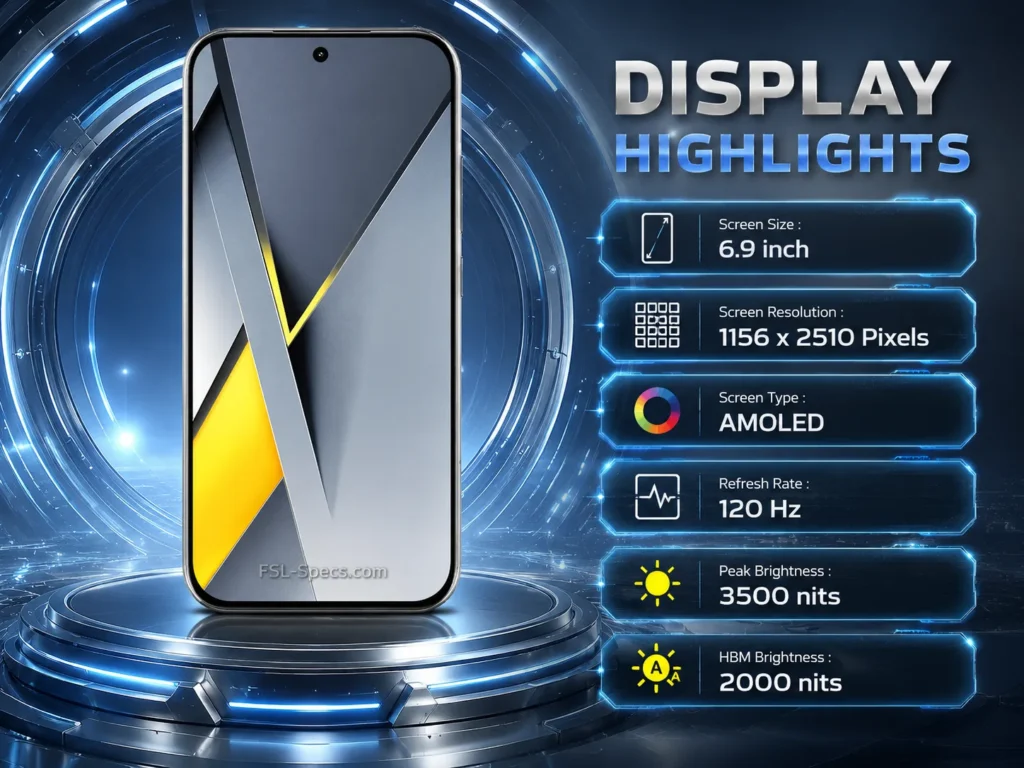
The Poco F8 Pro features a 6.9-inch AMOLED display with a smooth 120Hz refresh rate and a sharp 1156 × 2510 resolution. It reaches up to 3500 nits peak brightness and 2000 nits HBM brightness, making the screen easy to view even under bright outdoor sunlight.

Yes. Powered by the Snapdragon 8 Elite Gen 5 with the Adreno 830 GPU, the phone handles demanding games, multitasking, and daily apps effortlessly. Its 3nm chipset also improves efficiency, keeping performance fast and consistent during extended use.

The triple rear camera setup combines 50MP + 50MP + 8MP sensors to capture detailed photos with natural colors in a variety of lighting conditions. The 20MP front camera produces clear selfies and is well suited for video calls and social media content.

Its 6210mAh Si/C Li-Ion battery comfortably lasts a full day of heavy use, including gaming, streaming, and photography. When you need power, the 100W fast charging quickly gets the battery back up, minimizing downtime.

Yes, the phone supports 5G, eSIM, NFC, Bluetooth 5.4, and the latest Wi-Fi 7 for fast and reliable connectivity. It does not support wireless charging, but it offers 22.5W reverse wired charging for powering compatible devices.

The front of the Poco F8 Pro is protected by Corning Gorilla Glass 7i, helping resist everyday scratches and minor drops. However, there is no officially confirmed IP water or dust resistance rating, so it's best to keep the phone away from water.

The Poco F8 Pro is available in 12GB + 256GB and 12GB + 512GB configurations. It uses LPDDR5X RAM and UFS 4.1 storage, delivering fast app launches, smooth multitasking, and quick file transfers.

Yes. The rear camera supports 8K recording at 30fps and 4K recording at 60fps, making it suitable for high-quality video capture. The front camera records up to 1080p at 60fps, which is ideal for vlogging and video calls.

12 + 512 GB


₹52,000-56000 INR


| $550-$600


| PKR 200,000-230,000

Scroll to Top