
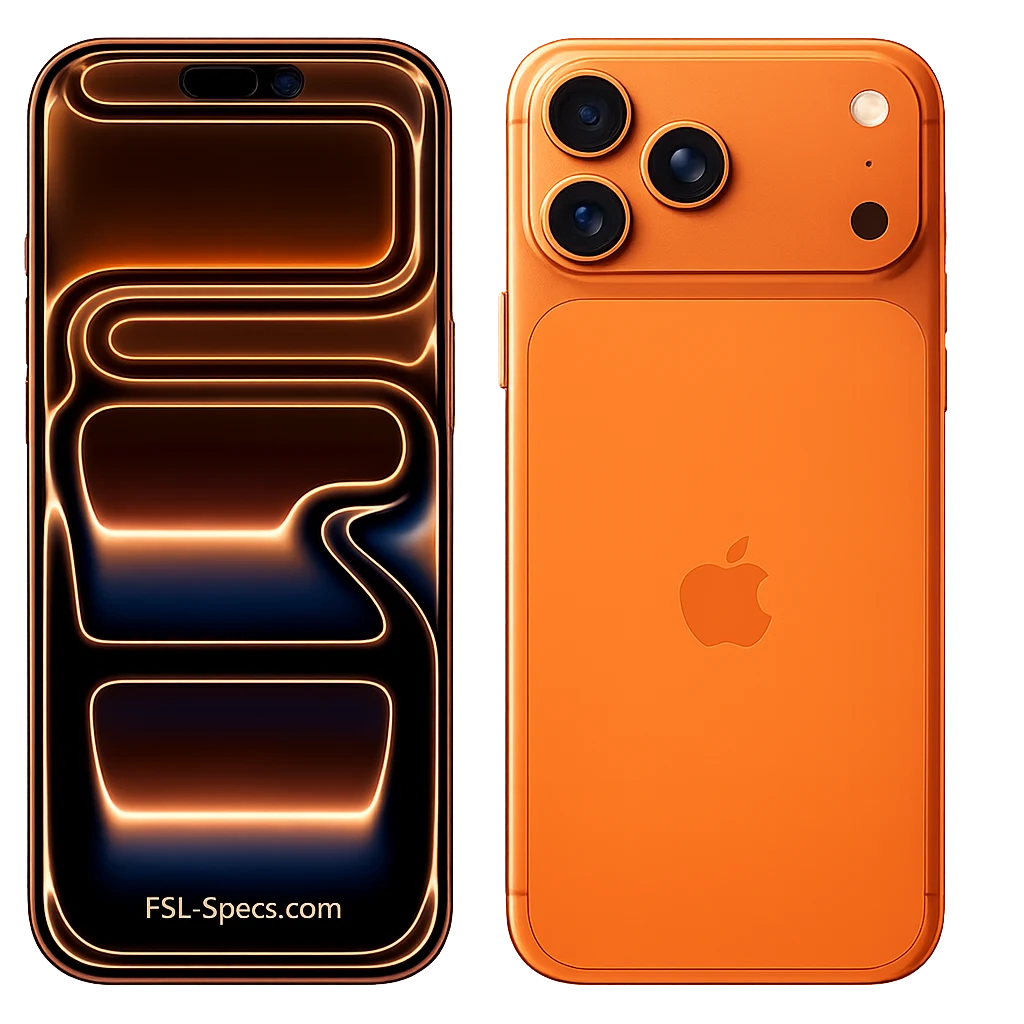









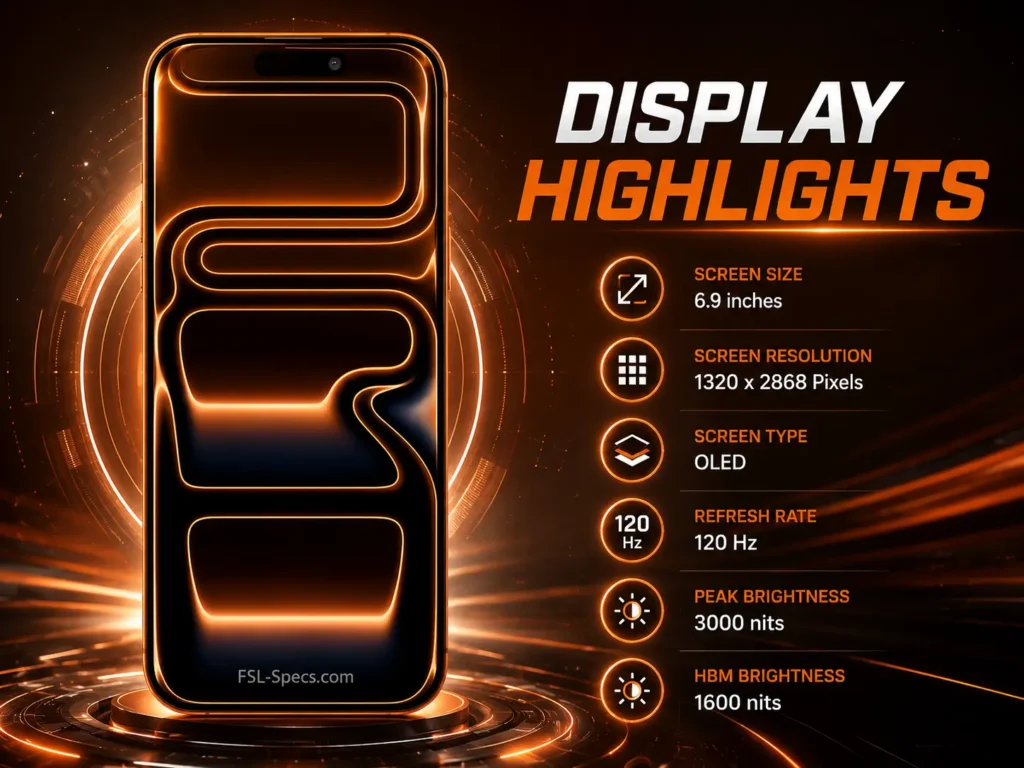

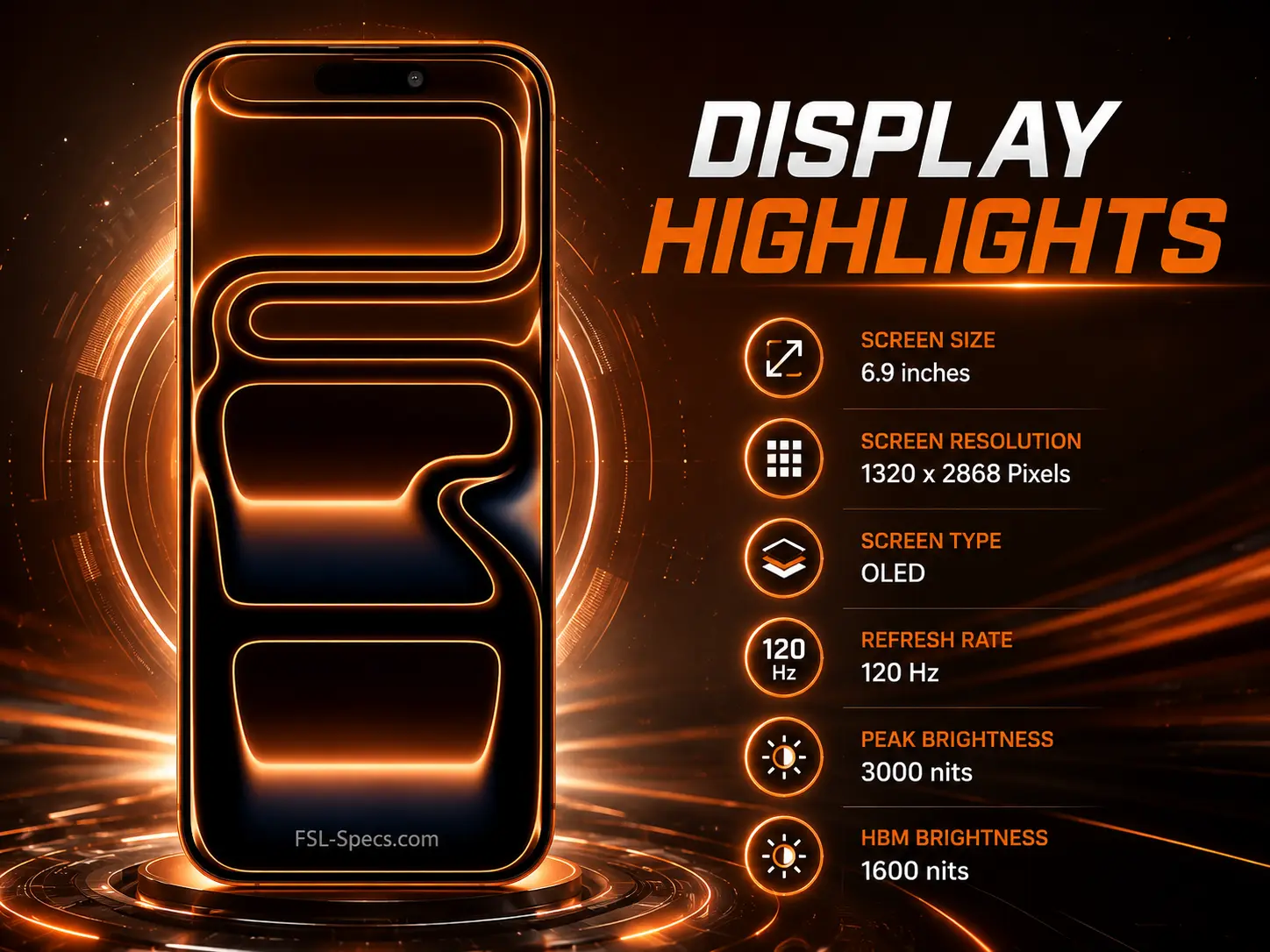
The iPhone 17 Pro Max features a 6.9-inch Super Retina XDR OLED display with 2868 × 1320 resolution, 460 ppi, ProMotion adaptive refresh rates up to 120Hz, Always-On functionality, HDR and up to 3000 nits outdoor peak brightness. Apple also rates its typical brightness at 1000 nits and HDR peak brightness at 1600 nits.
The Samsung Galaxy S26 Ultra matches the iPhone’s 6.9-inch screen size but moves ahead on resolution with 3120 × 1440, using a Dynamic AMOLED 2X panel with adaptive 120Hz refresh rate. Samsung lists up to 2600 nits brightness, while the display also adds an anti-reflective treatment and Samsung’s new built-in Privacy Display feature.
The Xiaomi 17 Ultra takes a different approach with a 6.9-inch HyperRGB OLED panel at 2608 × 1200 resolution and up to 120Hz refresh rate. Its display reaches 3500 nits multi-scenario peak brightness and 2000 nits HBM, giving it a strong outdoor-visibility advantage on paper. Xiaomi also specifies Dolby Vision, HDR10+, 12-bit color and DC dimming.
The iQOO 15 Ultra is the most performance-focused display here. It uses a 6.85-inch Samsung M14 AMOLED panel with 3168 × 1440 resolution, 508 ppi and up to 144Hz refresh rate. Its published figures include 2600 nits HBM and up to 8000 nits local peak brightness, although these peak figures represent different brightness measurements and should not be treated as equivalent to typical full-screen brightness.
Verdict: The iQOO 15 Ultra wins on refresh rate and pixel density, the Galaxy S26 Ultra leads on resolution and anti-reflective technology, the Xiaomi 17 Ultra offers the strongest published peak-brightness figure, while the iPhone 17 Pro Max remains a premium 6.9-inch OLED display with 120Hz ProMotion and 3000-nit outdoor brightness. For pure gaming smoothness, the iQOO 15 Ultra has the clearest advantage with 144Hz; for a balanced flagship display experience, the Galaxy S26 Ultra is the strongest overall rival to the iPhone.